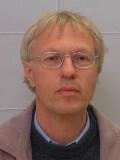
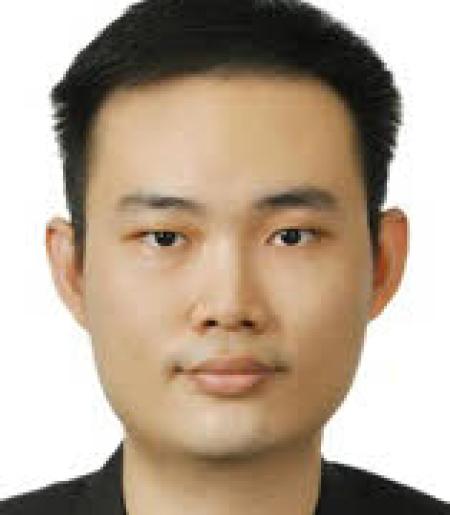
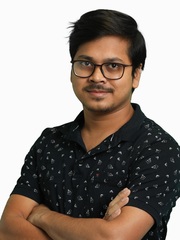
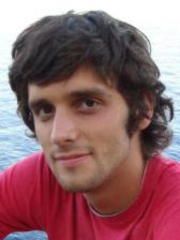
Emmanuel Varvarigos is a Professor at the School of Electrical and Computer Engineering of the National Technical University of Athens (NTUA), where he directs the High Speed Communication Networks Laboratory (HSCNL). He holds a B.E. from NTUA (1988) and a Ph.D. from MIT (1992). His career includes roles as Assistant/Associate Professor at UCSB (1992–1998), Associate Professor at TU Delft (1998–1999), and Professor at the University of Patras (1999–2015). He has led major research initiatives, including directorships at the Greek School Network and EAIT/ICT-Diofantos. His research focuses on optical networks, smart grids, cloud computing, and network algorithms. Education: B.E. in Electrical & Computer Engineering, NTUA (1988) Ph.D. in Electrical Engineering & Computer Science, MIT (1992) His research interests span optical networking (flexible OFDM, elastic bandwidth), smart grid optimization, cloud-edge computing, and distributed system protocols. He has authored over 450 publications and led 35+ EU projects, including coordinations of H2020 initiatives like ORCHESTRA and FLEXGRID. Awards include the Vinton Hayes Award and NSF recognition. Current roles include HSCNL directorship, overseeing 5 postdocs and 10+ PhD students. His HSCNL lab addresses challenges in high-speed networks, data centers, and energy grids, collaborating globally on projects like ORCHESTRA (optical networks) and SOCIALENERGY (smart grids).
Franz Aurenhammer is a University Professor (Univ.-Prof.) at the Institute of Machine Learning and Neural Computation, Graz University of Technology, Austria. He holds the academic title DI Dr. techn. and has been active in computational geometry research for several decades. His position as Full Professor was appointed in October 1992 at the Institute of Theoretical Computer Science, where he also served as head of the research group on algorithms, geometry, and optimization. Professor Aurenhammer earned his academic credentials at Graz University of Technology: his MS degree (Dipl. Ing.) in Technical Mathematics in April 1982, his PhD degree (Dr. techn.) in November 1984, and completed his Habilitation (Universitätsdozent) in Theoretical Computer Science in May 1989. Prior to his current position, he served as Assistant Professor at the Institute for Information Processing from January 1985 to April 1989, and held research positions including at the Free University of Berlin (April 1990 to May 1992). Aurenhammer's research focuses primarily on computational and combinatorial geometry, data structures and algorithms, and graph algorithms. His work has particularly emphasized Voronoi diagrams and straight skeletons, with numerous publications on these topics spanning several decades. His research has strong theoretical foundations while also addressing practical applications in computer science, optimization, and geometric modeling. Analysis of his recent publications reveals a continued focus on geometric structures, particularly Voronoi diagrams in various forms (including piecewise-linear farthest-site variants) and straight skeletons in both 2D and 3D contexts. His work often bridges theoretical computational geometry with practical applications in computer-aided design, shape analysis, and spatial data structures. The research demonstrates progression from fundamental theoretical work to increasingly sophisticated applications in 3D modeling and complex geometric structures. Professor Aurenhammer has been actively involved in research funding, with grants from major institutions including the Austrian Ministry of Science (BMWFK), Austrian National Bank (ÖNB), National Science Foundation (FWF), Austrian Academic Exchange Program (ÖAD), and the Special Research Council (SFB) 'Optimization and Control'. His current project FWF I1836-N15 (2015-2020) focuses on Voronoi diagrams as versatile data structures for spatial proximity problems. As an educator, Aurenhammer has supervised numerous MS and PhD theses in theoretical computer science and taught courses including Basic Data Structures & Algorithms, Languages and Automata, Design & Analysis of Algorithms, Computational Geometry, and Information Theory. His teaching responsibilities include Privatissimum courses on Algorithms and Geometry and Dissertation seminars. His international research collaborations span numerous institutions across Europe, the United States, Canada, Japan, Taiwan, Korea, and China, reflecting the global significance of his work in computational geometry. These collaborations have resulted in significant contributions to the field, particularly through the DACH project on Voronoi diagrams and related geometric structures.
Dr. Han Kheng Teoh is a Lecturer in the Department of Physics at Cornell University. His research spans interdisciplinary domains, including machine learning, biomechanics, neuroscience, and computational physics, with a focus on applying advanced analytical techniques to biological and physical systems. Developing variational autoencoders for biomedical data analysis Investigating neural pathways in avian vocal learning Exploring deep learning manifolds for task learnability Contributing to spintronics and magnetic computing research His recent work involves applying intensive symmetrized Kullback-Leibler embedding techniques, domain wall manipulation for logic operations, and studying magnetization reversal in nanoscale devices. Dr. Teoh collaborates with the Itai Cohen Research Group on multidisciplinary projects.
Dr. Yeeka Yau is an Education-Focused Lecturer at the School of Mathematics and Statistics , University of Sydney, where they returned in 2024 after academic appointments in the United States. They completed their PhD in 2021 at the University of Sydney under the supervision of Associate Professor James Parkinson. Current research interests include: Geometric and combinatorial aspects of Coxeter groups Application of statistics and machine learning in historical cryptology Enhancing student engagement in large mathematics and statistics courses Publications highlight contributions to algebraic combinatorics, automata theory, and computational group structures, with a focus on Garside shadows and Brink-Howlett automaton minimization. Their educational work includes a 2025-2027 University of Sydney SoTL grant for improving student belonging in first-year data science courses. Teaching responsibilities for Semester 2, 2025 include MATH1062 Mathematics 1B (Statistics) , MATH1115 Interrogating Data , and the data/statistics component of SCIE1001 .
Leslie G. Valiant is the T. Jefferson Coolidge Professor of Computer Science and Applied Mathematics at Harvard University's School of Engineering and Applied Sciences. He holds dual British-American nationality and has been affiliated with Harvard since 1982, prior to which he taught at Carnegie Mellon University, the University of Leeds, and the University of Edinburgh. Valiant earned his PhD in Computer Science from the University of Warwick in 1974, preceded by studies at King's College, Cambridge and Imperial College London. His research focuses on theoretical computer science, including complexity theory (#P-completeness), machine learning (PAC model), holographic algorithms, and computational neuroscience. He pioneered the bulk synchronous parallel processing model and introduced foundational algorithms in automata theory. Notable honors include the ACM Turing Award (2010), Nevanlinna Prize (1986), and Fellowship in the Royal Society. His work bridges computational theory with natural learning processes, as exemplified in his 2013 book on PAC learning principles.
Antoine GIRARD is a Senior Researcher at CNRS and a member of the Laboratory of Signals and Systems (L2S) at CentraleSupélec, Université Paris-Saclay. He co-chairs the Master program in Control, Signal and Image Processing (Master ATSI) at Université Paris-Saclay. His research focuses on hybrid systems analysis and control, emphasizing computational methods, formal verification, and applications to cyber-physical systems. He has contributed to symbolic control, switched systems stability, and model predictive control. His work spans theoretical foundations and practical implementations, with applications in autonomous systems, networked control, and robotics. Education includes a HDR (2013) and PhD (2004) from Institut National Polytechnique de Grenoble and CentraleSupélec. His affiliations include collaborations with institutions like L2S and involvement in projects such as COMEDY, MODESTY, and SYCOMORE. He is active in conferences like ECC, CDC, and HSCC, and his research addresses challenges in control systems under computational/communication constraints.
Ghulam Mudassir is a Lecturer in Computing at the University of Buckingham's School of Computing, part of the Faculty of Computing, Law and Psychology. He joined the institution in 2024 after completing a BSc in Computing from the University of Bradford (UK) and a PhD in Applied Data Sciences from the University of L’Aquila (Italy). His professional background includes roles as a Teaching and Research Assistant at the University of L’Aquila and extensive experience in the software industry focusing on quality assurance, consultancy, and management. Education: BSc in Computing, University of Bradford (UK) PhD in Applied Data Sciences, University of L’Aquila (Italy) Research Interests: Dr. Mudassir specializes in Machine Learning, Cloud Computing, Computer Vision, and Reinforcement Learning. His work emphasizes interdisciplinary applications, particularly in disaster response planning through social and computational lenses. He explores how machine learning algorithms can optimize urban reconstruction strategies and enhance crisis management systems. Publications: His research spans reinforcement learning for disaster recovery, data-driven disaster response frameworks, and innovative image encryption algorithms. These works reflect a blend of technical rigor and societal impact, addressing challenges in both computational methodologies and real-world problem-solving. Teaching & Supervision: He teaches undergraduate and postgraduate modules such as Software Project Management, Cloud Computing, and Software Quality Assurance. He actively supervises student projects, fostering practical skills in software engineering and human-computer interaction.
Prof. Dr. Sibylle Schupp is the Head of the Institute for Software Systems (E-16) at Technische Universität Hamburg since 2009. Previously, she held positions at Chalmers University of Technology (2003–2008) and Rensselaer Institute of Technology (1996–2003). Education: Ph.D. from University of Tübingen (supervised by R. Loos, July 1996) Research Interests: Software Quality & Certification : Static Analysis, Timed Automata, Testing, Verification Languages : Generic Programming, Functional Programming, Typed Languages Systems : Cyber-Physical Systems (CPS), Data Protection & Machine Learning
Satya Prakash Nayak is a Researcher at the Max Planck Institute for Software Systems (MPI-SWS) in Kaiserslautern, Germany. His research focuses on formal methods, game theory, and their applications to cyber-physical systems, distributed systems, and security. He specializes in synthesis techniques for robust and permissive strategies in complex systems, combining algorithmic game theory with formal verification methods. His work bridges theoretical foundations with practical system design, addressing challenges in safety-critical systems, adaptive control, and contextual abstraction-based approaches. He has contributed to advancements in strategy templates, dynamic policy shielding, and localized attractor computations in infinite-state games, with applications to both deterministic and stochastic systems. Recent research trends in his publications emphasize the integration of formal methods with modern machine learning techniques, particularly in ensuring safety and fairness in learned policies. His work often involves collaboration across disciplines, aiming to create certifiable and robust interfaces for interacting systems. Dr. Nayak's research is supported by grants focusing on distributed logical control, secure equilibria synthesis, and context-triggered abstraction designs. He is affiliated with MPI-SWS's Cyber-Physical Systems and Distributed Systems groups, contributing to the institute's broader mission in advancing software systems research.
Ivan Gavran is a Researcher at the Max Planck Institute for Software Systems (MPI-SWS), focusing on foundational and applied aspects of computer science. His primary research interests include formal verification, reinforcement learning, multi-robot systems, and cyber-physical systems. He explores the intersection of formal methods with machine learning and robotics, aiming to create robust, provably correct systems. His work emphasizes practical applications such as smart contract verification, human-robot collaboration, and distributed task planning. He has developed tools like Lassie for interactive theorem proving and Antlab for multi-robot task coordination. Gavran’s contributions bridge theoretical computer science with real-world systems, addressing challenges in security, reliability, and scalability. While no formal awards are listed in the provided text, his publications reflect significant engagement with leading conferences in formal methods and robotics. His research often involves collaborative projects, leveraging MPI-SWS’s interdisciplinary environment to tackle complex problems in distributed systems and artificial intelligence.
Bahram Nassersharif is a Distinguished University Professor in the Department of Mechanical, Industrial and Systems Engineering at the University of Rhode Island. He specializes in nuclear systems safety, engineering simulation, and capstone design methodologies. His research integrates advanced computational modeling with practical engineering challenges in nuclear propulsion and safeguard systems. Education: Ph.D. in Nuclear Engineering from Oregon State University (1983). His work spans over four decades with a focus on nuclear thermal rocket technology, radiation safety protocols, and educational innovation in engineering curricula. He has contributed extensively to the design of safeguards for nuclear facilities and has pioneered structured approaches for industry-sponsored capstone projects. Research Interests: Nuclear reactor engineering, thermal-hydraulic modeling, safety-by-design principles, and pedagogical methods in engineering education. His work bridges theoretical modeling (e.g., cellular automata neutron transport simulations) with real-world applications like autonomous underwater vehicle systems. Notable Projects: Development of fuel handling systems for research reactors, radar-based defect detection in heat exchangers, and long-term thermal analysis for spent nuclear fuel repositories. His contributions emphasize interdisciplinary collaboration between academia and industry. Labs/Teams: Active involvement in the Fascitelli Center for Advanced Engineering, focusing on advanced nuclear systems and educational innovation. His research often involves cross-disciplinary teams addressing global engineering challenges.
**Daniel Neider** is a Professor of Security and Explainability of Learning Systems at Carl von Ossietzky University of Oldenburg. His research focuses on secure machine learning, the safety and reliability of AI systems, and their explainability. He holds a PhD in Computer Science from RWTH Aachen University (2014) and a Habilitation in theoretical computer science from TU Kaiserslautern (2022). Prior to his professorship, he was a Research Group Leader at the Max Planck Institute for Software Systems (2017–2022) and a Postdoc at RWTH Aachen and the University of Illinois at Urbana-Champaign (2014–2017). His work bridges formal methods and machine learning, emphasizing verification of neural networks, temporal logic-based explainability, and robust reinforcement learning. Notable contributions include neuro-symbolic verification techniques, algorithms for learning temporal properties, and frameworks for secure AI deployment. Research interests span formal verification, interpretable AI, and the theoretical foundations of machine learning. He leads projects in the Research Center ‘Trustworthy Data Science and Security’ within the Ruhr University Alliance. Recent publications address challenges in anomaly detection, temporal query processing, and ethical AI applications.
Richard Hill is the Associate Dean for Research & External Initiatives and Professor of Mechanical Engineering at the University of Detroit Mercy's College of Engineering & Science. He holds a Ph.D. and M.S. in Mechanical Engineering from the University of Michigan, an M.S. in Applied Mathematics from the University of Michigan, an M.S. in Mechanical Engineering from the University of California, Berkeley, and a B.S. in Mechanical Engineering from the University of Southern California. His research focuses on controls, dynamics, instrumentation, mechatronic design, and numerical methods, with applications in electric vehicles, discrete-event system modeling, nonlinear control, and manufacturing systems. He also explores educational initiatives in STEM, including high-impact practices, K-12 computer science teacher development, and virtual laboratory design. Recent publications span educational technology (e.g., co-teaching models for CS teachers) and technical advancements in control systems and robotics. Prior to academia, Dr. Hill worked at Lockheed Martin on satellite control systems and served as a high school math and science teacher before joining Detroit Mercy in 2008.
Anne Sentenac is Professor at Institut Fresnel (CNRS/Aix-Marseille University) specializing in electromagnetic theory, optical component design, and high-resolution imaging. Her research develops innovative approaches to light scattering, resonant gratings, and diffraction tomography. Research advances include super-resolution microscopy techniques surpassing classical resolution limits and computational methods for complex electromagnetic environments. International collaborations span European and US institutions.
Reza Haffari is a Professor in the Department of Data Science & AI at Monash University, within the Faculty of Information Technology. His research focuses on Artificial Intelligence, particularly in low-level perception and high-level reasoning under uncertainty from text and other modalities like vision and speech. Key areas include natural language understanding, semi-supervised learning, and model explainability for critical applications such as healthcare. Education: Doctor of Philosophy in Computer Science, Simon Fraser University (2010) Master of Science in Artificial Intelligence, Sharif University of Technology (2002) Bachelor of Science in Software Engineering, Sharif University of Technology (2000) Teaching Commitments: Chief Examiner for courses: FIT1045, FIT1053, FIT2004, FIT5201 Lecturer for units: FIT1045, FIT2004, FIT3080, FIT4005/FIT5185, FIT4009, FIT5201 Research Projects (2023–2027): Principal Investigator for Aligning Large Language Models with Human Intention Chief Investigator in Trustworthy Generative AI , Hierarchical Abstractions and Reasoning for Neuro-Symbolic Systems , and CSIRO Mental Health AI Research Trends in Articles: Recent work emphasizes continual learning , multimodal models , and ethical AI alignment . Key themes include adapting models to dynamic environments, ensuring safety in large language systems, and integrating causal reasoning with machine learning. Labs & Teams: Active in the Data Science & AI Group at Monash, collaborating on projects involving generative AI, neuro-symbolic systems, and healthcare applications.