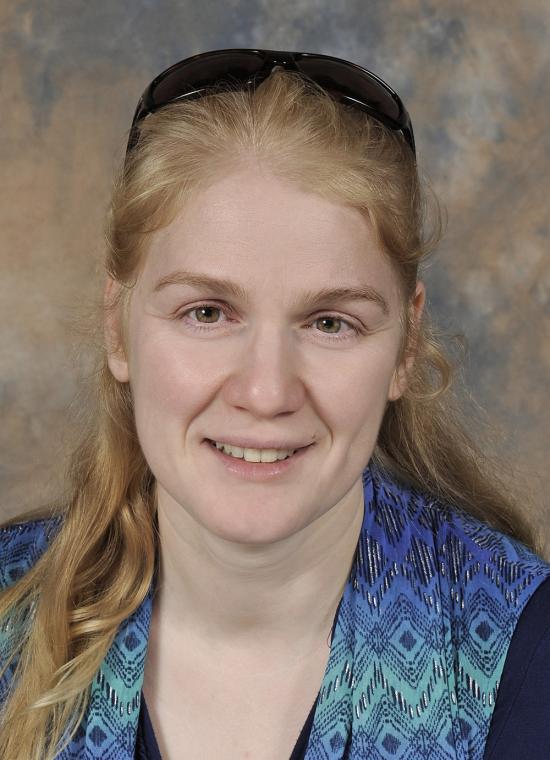
Sean F. Reardon is the Professor of Poverty and Inequality in Education and a Senior Fellow at the Stanford Institute for Economic Policy Research (SIEPR) at Stanford University . He also holds a Professor (by courtesy) of Sociology . His work focuses on social and educational inequality, including residential and school segregation, racial/ethnic and socioeconomic disparities in academic achievement, and causal inference methods. Education: Ed.D., Harvard University, Educational Administration, Planning, and Social Policy (1997) M.Ed., Harvard University, Educational Administration, Planning and Social Policy (1992) M.A., University of Notre Dame, International Peace Studies (1991) B.A., University of Notre Dame, Program of Liberal Studies; Minor in Honors Mathematics (1986) Research Interests center on the causes and patterns of educational and racial inequality, the effects of school integration policies, and income inequality's social consequences. His Stanford Educational Opportunity Research Lab analyzes achievement gaps and segregation trends across U.S. school districts using large-scale datasets. Recent Publications highlight cross-national achievement gap comparisons, pandemic recovery disparities, and methodological advancements in segregation measurement. His work often integrates Data Sciences and Sociology to address policy-relevant questions. Awards Elected Member, American Academy of Arts and Sciences Elected Member, National Academy of Education Advising includes mentoring Doctoral Students like Tyler McDaniel and Postdoctoral Researchers like Farah Mallah. His Stanford Interdisciplinary Doctoral Training Program in Quantitative Education Policy Analysis (2009–2021) trained future scholars in rigorous policy methods.
Gerold Schneider is an Associate Professor at the University of Zurich , affiliated with the Department of Computational Linguistics under the Faculty of Arts and Social Sciences and Faculty of Business, Economics and Informatics . He leads the Text Crunching Center (TCC) , focusing on interdisciplinary research at the intersection of NLP, Digital Humanities, and Health Data Science. Research Interests His work spans Text Analytics , Digital Humanities , Corpus Linguistics , and Health Data Science , with applications in: Biomedical NLP (e.g., Alzheimer’s detection, clinical trials) Digital Humanities projects (e.g., analyzing Charles Dickens, UN archives) Migration discourse framing across languages Adversarial data collection for hate speech detection Interdisciplinary methodologies for digital unstructured data Recent Publications 2025–2024 research highlights include annotated corpora for preclinical and neurological studies, AI-driven analysis of historical linguistic variation, and innovative tools for language learners. His NLP applications address health diagnostics, ethical AI, and cross-lingual political discourse. Labs & Teams As TCC leader, he spearheads collaborative projects within the Digital Society Initiative (DSI) communities (AI & Law, Health, Ethics, etc.), integrating computational methods with humanities and health research.
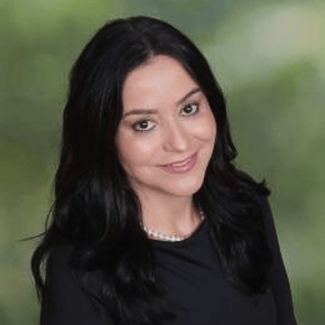
Jennifer Leeman is a Professor at George Mason University , focusing on the sociopolitics of language, with emphasis on multilingualism, Spanish in the US, and heritage language education. Her interdisciplinary work bridges critical applied linguistics, sociolinguistics, education, Latinx studies, and linguistic anthropology. BA in Spanish, University of Pennsylvania MA in Hispanic Civilization, New York University in Madrid MAT in TESOL & Bilingual Education, Georgetown University PhD in Hispanic Linguistics, Georgetown University Her research examines: Language ideologies and racialization processes in censuses Antiracist pedagogical frameworks for Spanish teaching Multilingual policy analysis across education and governance Critical service-learning in heritage language contexts Recent publications analyze census categorization, language and immigration policies, and critical pedagogy implementation. She received a 2024-25 Fulbright Senior Scholar award for research at the University of Murcia, Spain, and a 2023-24 Residential fellowship at Mason's Center for Humanities Research. Key scientific contributions include: Pioneering the online graduate certificate in Spanish Heritage Language Education (2021) Leadership roles in AAAL, MLA, and Instituto Cervantes’ advisory committees Editorial board memberships across journals like Language Policy and Hispania Her 15 most recent articles (2018-2025) reveal trends in: Language-race-national identity intersections Census-driven ethnoracial classifications Antiracist pedagogy in language classrooms Heritage speaker identity dynamics Monolingual policy critiques Transnational demographic analysis Contact: jleeman@gmu.edu | Office: Horizon Hall 5132
Professor Eric Atwell is a Professor of Artificial Intelligence for Language at the University of Leeds' School of Computer Science, part of the Faculty of Engineering and Physical Sciences. He holds additional roles as a LITE Fellow at the Leeds Institute for Teaching Excellence (40% part-time), Turing Fellow at the Alan Turing Institute, and member of the Leeds Institute for Data Analytics (LIDA) and Language at Leeds (LATL). His research focuses on AI applications in corpus linguistics, text analytics, and computational analysis of religious and medical texts, with a strong emphasis on Arabic and Islamic studies. He leads the AI4L research group and has supervised over 60 research students and fellows, many of whom have pursued careers in academia, tech, and AI-driven fields. Education: PhD in Corpus Linguistics and Language Learning (University of Leeds, 2008), BA (First Class) in Computing and Linguistics (Lancaster University, 1981) Grants: Includes EPSRC-funded projects like Natural Language Processing with Arabic and Islamic Studies (£337K, 2013-2015) and EDUBOTS chatbots for education (£94K, 2019-2022) Teaching: Leads modules in Data Mining, Text Analytics, and AI across multiple programs, including online Masters and PhDs. Known for innovative teaching approaches and student support, receiving positive feedback for engagement and course design. Research Interests: AI applied to corpus linguistics, Quranic text analysis, Arabic NLP, chatbots for education, and decolonizing curricula. Notable projects include Quranic semantic search tools, Hadith corpus analysis, and AI-driven fact-checking systems. Publications: Over 277 publications, with recent work focusing on Quranic QA systems, Arabic dialect identification, and generative AI applications in education. His research is widely cited, earning recognition from ResearchGate for high readership. Awards: Recognized for his most-read research items on ResearchGate (June 2021). Gallup StrengthsFinder highlights his top traits as Learner, Achiever, Ideation, Intellection, and Maximizer. Labs/Teams: Leads the AI4L research group and collaborates with international institutions including SUSTECH Sudan, King Saud University, and SWJT University (China). Active in research networks like LIDA and LATL.
Vicki L. Plano Clark is a Professor in the Research Methods area of the School of Education at the University of Cincinnati, where she advises students in the Quantitative and Mixed Methods Research Methodologies (QMRM) concentration of the Educational Studies doctoral program and the Applied Research Methods (ARM) track of the Educational Studies master's program. She joined the University of Cincinnati in 2012 after serving as the director of the Office of Qualitative and Mixed Methods Research at the University of Nebraska-Lincoln. Dr. Plano Clark earned her Ph.D. in Quantitative and Qualitative Methods in Education from the University of Nebraska-Lincoln (2005), M.S. in Physics from Michigan State University (1993), and B.A. in Physics from Kalamazoo College (1990). Her academic journey transitioned from physics education to research methodology, bringing a unique interdisciplinary perspective to her work. As a leading methodologist specializing in mixed methods research, Dr. Plano Clark's scholarship focuses on delineating useful designs for conducting mixed methods research, examining procedural issues associated with these designs, and exploring the contexts for the adoption and use of mixed methods. Her research spans diverse application areas including cancer pain management, STEM graduate student identity development, teacher professional development, and the well-being of rural low-income families. Her work demonstrates how mixed methods approaches can effectively address complex research questions across multiple disciplines. Dr. Plano Clark has made significant contributions to the field through her editorial leadership and publications. She was the founding Managing Editor for the Journal of Mixed Methods Research and currently serves as an Associate Editor. In 2011, she co-led the development of Best Practices for Mixed Methods in the Health Sciences for NIH's Office of Behavioral and Social Sciences Research. In 2012, she became a founding co-editor of the Mixed Methods Research Series with Sage Publications. She has authored numerous influential books including 'Designing and Conducting Mixed Methods Research' (now in its 3rd edition) and 'Mixed Methods Research: A Guide to the Field.' Founding Managing Editor for the Journal of Mixed Methods Research Co-developer of NIH's Best Practices for Mixed Methods in the Health Sciences (2011) Founding co-editor of the Mixed Methods Research Series with Sage Publications (2012) Chair of the Mixed Methods Research Special Interest Group of AERA As an active researcher, Dr. Plano Clark has secured multiple grants including a Department of Education grant evaluating Ohio Network of Education Transformation (ONET) Schools (as Principal Investigator) and a UC University Research Council grant on reducing mass incarceration by improving public defense (as Collaborator). Her recent publications continue to advance methodological understanding in mixed methods research, with a focus on integration techniques, terminology challenges, and applications across health sciences and education. Dr. Plano Clark maintains an active role in the research community through invited presentations and workshops worldwide, helping to train the next generation of researchers in mixed methods approaches and contributing to the ongoing development of methodological standards and practices.
Andrew Lan is an Associate Professor in the College of Information and Computer Sciences at the University of Massachusetts Amherst, where he also serves as the CS Undergraduate Program Director. He was granted tenure by the UMass Board of Trustees in June 2025 and is currently on leave through Spring 2026. His research focuses on developing human-in-the-loop machine learning methods to enable scalable, effective, and personalized learning experiences in education. Dr. Lan received his BS in Physics and Mathematics from the Hong Kong University of Science and Technology, followed by his MS (2014) and PhD (2016) in Electrical and Computer Engineering from Rice University. He completed postdoctoral research at Rice University (2016) and Princeton University's EDGE Lab (2017-2018). His research spans artificial intelligence for education, with particular expertise in educational data mining, knowledge tracing, personalized learning systems, and human-AI collaboration in educational contexts. Dr. Lan's work leverages massive and multimodal learner and content data collected from both traditional classrooms and online learning platforms to develop systems that deliver high-quality, affordable, and personalized learning experiences. He has made significant contributions to areas including computerized adaptive testing, math word problem generation, student affect detection, and automated grading systems. His recent work increasingly focuses on leveraging large language models for educational applications while maintaining rigorous scientific validation of these approaches. Best Student Paper Award at the 2024 AIED Conference (with Alexander Scarlatos) Best Paper Nominee at LAK 2021 Best Student Paper Award at IEEE Big Data 2020 NAEP Math Automated Scoring Challenge Grand Prize Winner Dr. Lan actively mentors graduate students and postdoctoral researchers, with several of his advisees receiving recognition for their work. He has secured substantial funding from the National Science Foundation, including a $90M grant for the SafeInsights project, a secure cyberinfrastructure for educational research. His research group collaborates with institutions including Worcester Polytechnic Institute, University of Pennsylvania, and Rice University. He teaches undergraduate and graduate courses including COMPSCI 240 (Reasoning under Uncertainty) and COMPSCI 590OP (Applied Numerical Optimization), with a focus on the practical application of theoretical concepts in machine learning and artificial intelligence. His educational philosophy emphasizes bridging the gap between theoretical foundations and real-world implementation in educational technology.
Professor Katja Vogt is a distinguished faculty member in the Department of Philosophy at Columbia University's Faculty of Arts and Sciences. She serves as Professor of Philosophy, Director of the M.A. Program in Philosophy, and Chair of the Climate Committee. Additionally, she is an Affiliate of the Data Science Institute and has affiliations with Computing Systems for Data-Driven Science, Data, Media and Society, and Health Analytics. Professor Vogt joined Columbia University in 2002 after teaching at Humboldt University Berlin, both in the Philosophy Department and at the Charité Medical School. Professor Vogt specializes in ancient philosophy, ethics, and normative epistemology, with particular expertise in Plato, Aristotle, Stoicism, and Pyrrhonian skepticism. Her research explores fundamental questions that bridge ancient and contemporary philosophical discussions: What are values? What kind of values are knowledge and truth? What does it mean to want one's life to go well? She has developed significant work on the role of knowledge in ethics, generics and generalizations, and is currently finalizing a monograph entitled The Original Stoics . Her approach combines careful historical scholarship with contemporary philosophical analysis, creating dialogues between ancient texts and modern debates in metaethics, epistemology, and philosophy of action. Professor Vogt's scholarly output reveals consistent engagement with ancient philosophical frameworks while addressing contemporary concerns. Her recent work shows a particular focus on Stoic philosophy, with multiple papers examining Stoic logic, physics, and ethics. She also maintains a strong interest in skepticism, particularly Pyrrhonian approaches, and has made significant contributions to understanding how ancient philosophical concepts can inform current debates about generics, value theory, and the relationship between knowledge and virtue. Her collaborative work with Jens Haas on topics like ignorance, love, and hatred demonstrates her interdisciplinary approach that connects ancient philosophy with contemporary philosophical issues. Columbia Distinguished Faculty Award Class of 1932 Fellow in Classical Philosophy at Princeton University Fellowships from the Templeton Foundation, Maimonides Centre in Hamburg, Center for Advanced Studies in Munich, DFG (German Research Association), and Columbia University-Paris 1 Alliance Program Professor Vogt is actively involved in mentoring students and developing innovative educational approaches. She serves as academic sponsor for "Logic Made Accessible," a project mentored with Columbia College student Jonathan Tanaka that has reached students in over 30 countries. The project makes ancient logic freely accessible to learners of all ages, backgrounds, and interests. She has also served on numerous university committees including the Provost's Faculty Committee on Educational Innovation, Policy and Planning Committee, Committee on Instruction, and as Acting Director of the Center for the Ancient Mediterranean. Her grant work includes support from major foundations that have enabled her to pursue research at the intersection of ancient philosophy and contemporary epistemology. Professor Vogt collaborates with photographer and artist Jens Haas on the "On the Road" project, which combines artistic photography with philosophical reflection. She is also involved in "Movies and Morals," a collaboration with H8URS that provides philosophical commentary on contemporary film and television. These projects demonstrate her commitment to making philosophical inquiry accessible beyond traditional academic settings.
Gizem Karaali is a Professor of Mathematics and Statistics and Chair of the Mathematics Department at Pomona College, part of The Claremont Colleges. She holds a Ph.D. in Mathematics from UC Berkeley (2004) and a B.S. in Electrical Engineering and Mathematics from Boğaziçi University. Her research spans algebraic structures like Lie algebras, representation theory, and humanistic mathematics, with a focus on integrating social justice into mathematics education. She co-founded the Journal of Humanistic Mathematics and created innovative courses such as the first-year seminar Can Zombies Do Math? to explore mathematics’ humanistic dimensions. Research Interests: Representation Theory, Algebraic Combinatorics, Quantitative Literacy, Mathematics Education, and the intersection of math with social justice. She has published widely in journals like Advances in Mathematics , Ramanujan Journal , and Journal of Humanistic Mathematics . Awards: NSA Young Investigator Award (2011-2013), NEH Enduring Questions Grant (2014-2016), AMS Project NExT Fellow. Active in editorial roles for Journal of Humanistic Mathematics and Numeracy . Teaching: Courses include Calculus, Linear Algebra, Abstract Algebra, and interdisciplinary topics like Mathematics, Philosophy, and the Real World. Advised senior theses in diverse areas including ethnomathematics and quantitative literacy.
Tyler Imfeld is an Assistant Professor in the Department of Biology at Regis University, specializing in evolutionary ecology and avian biodiversity. His work focuses on the diversification of songbirds in the Americas. Education: BS in Biology from Xavier University; PhD in Ecology, Evolution, and Behavior from the University of Minnesota. Dr. Imfeld integrates molecular and morphological data from natural history collections to address evolutionary and taxonomic questions, with a strong emphasis on phylogenetics. His research spans biogeography, adaptive radiation, and morphological evolution in passerines. Recent publications analyze macroevolutionary patterns in avian phylogenies, interhemispheric dispersal dynamics, and the role of ecological factors in speciation. Earlier work explored microbial interactions with nutrients and manganese cycling in environmental systems. Dr. Imfeld actively incorporates natural history collections into his teaching and outreach programs, engaging learners of all ages in biodiversity studies.
Professor Paul Rayson is a Professor of Natural Language Processing in the School of Computing & Communications at Lancaster University, UK. He serves as Director of the UCREL (University Centre for Computer Corpus Research on Language) interdisciplinary research centre and is affiliated with multiple research institutes including Security Lancaster, the Lancaster Centre for Digital Humanities, and the Data Science Institute. Education: PhD in Computer Science, Lancaster University (2003) BSc (Hons) Computer Science and Mathematics, Lancaster University (1990) Professor Rayson's research focuses on semantic multilingual Natural Language Processing (NLP) in challenging linguistic environments with noisy language data, including historical texts, learner language, speech, email, and other computer-mediated communication. His work spans applications in dementia detection, mental health analysis, online child protection, cyber security, learner dictionaries, and text mining of biomedical literature, historical corpora, and financial narratives. He has developed semantic tagging tools like USAS (UCREL Semantic Analysis System) and Wmatrix for corpus analysis. Major Awards and Honors: FHEA (Fellow of the Higher Education Academy) MBCS (Member of the British Computer Society) Professor Rayson has supervised numerous PhD students in NLP and corpus linguistics, with eight current students and seven completed doctorates. He has led or co-investigated multiple major research projects including the £3.5m ESRC-funded Centre for Corpus Approaches to Social Science (CASS), the National Corpus of Contemporary Welsh, and projects related to mental health forums, financial narrative analysis, and cyber security. His research has been supported by ESRC, EPSRC, and other funding bodies. As Director of UCREL, he oversees research in corpus linguistics and NLP. He is also active in the Cyber Security Research Centre, Digital Health Group, and multiple Data Science Institute initiatives. His lab has developed several widely-used NLP tools including CLAWS for English POS tagging, USAS semantic analysis system, Wmatrix corpus analysis tool, and the Variant Detector (VARD) for historical texts.
Professor El Mustapha Lahlali is a distinguished academic at the School of Languages, Cultures and Societies, University of Leeds, where he holds the position of Professor of Applied Linguistics and Media. His research and teaching focus on Arabic media discourse, critical discourse analysis, translation, ideology, and pedagogy. Education: BA in Applied Linguistics MA in Applied Linguistics PhD in Critical Discourse Analysis and Classroom Discourse His research interests span Arab media and society, discourse analysis in educational and political contexts, appraisal theory, translation and ideology, and teaching Arabic as a foreign language. He has published extensively on media discourse, political rhetoric, and translation practices in Arabic contexts, contributing significantly to the understanding of linguistic strategies in media and political communication. His recent publications reflect a strong focus on discourse in conflict, media framing, translation challenges, and pedagogical development. These works collectively emphasize critical analysis of Arabic media, political transitions, and intercultural communication, revealing trends in ideological representation and linguistic power dynamics. Scientific Awards: No specific awards listed in the text. Professor Lahlali has supervised 27 PhD students to completion and currently mentors several more on topics including media translation, ideology, discourse analysis, and pedagogy. He has served as internal and external examiner for over 100 PhD theses across the UK and internationally. He has secured and contributed to numerous research grants in Arabic, linguistics, and Middle Eastern studies. His leadership extends to organizing over 45 academic events, including conferences and workshops. He is actively involved in research groups and welcomes PhD applicants in areas related to Arabic media, discourse analysis, and translation. He is a key figure in professional associations such as BATA (Founder and President), BRISMES, UCML, and APETAU.
Dr. Eunice Eunhee Jang is a Professor in the Department of Applied Psychology and Human Development at the Ontario Institute for Studies in Education (OISE), University of Toronto. Her research focuses on synergistic learner modeling, dynamic assessment systems, and the intersection of language testing with educational measurement. PhD with specializations in language testing, educational measurement, and program evaluation Develops interactive digital assessment interfaces for struggling readers Author of "Focus on Assessment" (2014) and co-author of OECD Reviews on Evaluation and Assessment in Education Research Interests Dr. Jang's work explores prismatic assessment analytics to understand learner potential and predict learning pathways. She integrates natural language processing and machine learning to create diagnostic feedback systems that support cognitive, metacognitive, and affective growth in technology-rich classrooms. Scientific Awards Jacqueline Ross TOEFL Dissertation Award Caroline Clapham IELTS Master’s Award Tatsuoka Measurement Award Professional Contributions She has served on major advisory boards including EQAO provincial assessments and TOEFL Committees of Examiners. Currently, she is an elected board member for the International Language Testing Association and contributes to the Broader Measures of Success Advisory Committee for People for Education.
Michelle MacLeod is a Professor of Gaelic and Head of the School of Language, Literature, Music and Visual Culture at the University of Aberdeen, where she has been a faculty member since 2004 and was promoted to Personal Chair in 2019. She is currently Dean for Impact and Engagement and leads research and teaching in Scottish Gaelic language, literature, and identity. Education: M.A. (Hons), PhD (University of Aberdeen) Her research centers on modern Gaelic literature, Gaelic drama, language planning, and the sociolinguistics of minority languages. She is deeply engaged in questions of Gaelic identity, adult language acquisition, and community language policy. Her work bridges academic scholarship and public policy, particularly through her role on Bord na Gaidhlig. The most recent publications show a strong focus on Gaelic cultural expression, language policy critique, and sociolinguistic analysis of new speakers and family language use. Her work increasingly integrates interdisciplinary methods, including digital pedagogy and motivational psychology in language learning. Scientific awards include: Donald Meek Prize for best non-fiction Gaelic book (2021) AHRC Future of Languages Research Fellow (2022) Students' Union & University of Aberdeen Prize for Most Inspirational Lecturer (2024) She supervises PhD students in Gaelic studies and linguistics and collaborates with institutions like Sabhal Mòr Ostaig and Comunn na Gàidhlig. Her leadership extends to national language planning and knowledge exchange, reflecting her commitment to the revitalization of Gaelic as a living community language. Michelle MacLeod is a key figure in the Gaelic academic community, leading both institutional and scholarly efforts to sustain and develop Scotland’s indigenous language through research, teaching, and policy engagement.
Festo Kayima is an Associate Professor in Chemistry Didactics at the Department of Teacher Education, Faculty of Social and Educational Sciences, Norwegian University of Science and Technology (NTNU). His research focuses on science teacher education, classroom knowledge, and pedagogical strategies in chemistry. Doctorate in Chemistry Education (2018, University of Bergen) Master’s in Science Education (2020, NTNU) Kayima’s research projects include developing science teacher trainees’ professional knowledge through reflective practice, enhancing scientific literacy, and integrating sustainability into chemistry education. He leads the Erasmus+ project STEMkey (2020–2023), emphasizing graduate attributes and key skills for educators. His recent publications (2025) with Springer explore pedagogical themes like chemical knowledge, outdoor teaching, and technology integration. These works align with broad keywords such as Science Education, Curriculum Development, and Experiential Learning, with subfields spanning digital tools, sustainability, and misconceptions in chemistry. Co-supervised Kristine Fjelldal Sunde’s thesis on teacher questioning in labs He contributes to research groups Naturfaglig Literacy i Skole og Lærerutdanning and ScienceHumanities , bridging interdisciplinary approaches in education. His teaching includes courses like Science as a School Subject (MGLU4211) and Teacher Education: Teaching Chemistry (PPU4626).
Dr. Aline Ferreira is an Associate Professor and Director of the Bilingualism, Translation, and Cognition Laboratory at the University of California, Santa Barbara. She holds a Ph.D. from the Federal University of Minas Gerais (2013) and served as a post-doctoral research fellow in psychology at Wilfrid Laurier University. Her research focuses on bilingualism, translation processes, cognitive aspects of language, and reading. She has co-edited influential works such as The Handbook of Translation and Cognition and The Development of Translation Competence , and her work has been published in journals like Translation and Interpreting Studies and Reading and Writing . Her research interests include cognitive translation processes, bilingual cognition, and sociolinguistic factors in language learning. Recent studies explore food security disparities, indigenous health in Brazil, and the cognitive effects of immersion learning on L2 acquisition. Ferreira’s work bridges psycholinguistics, cognitive science, and applied linguistics to address interdisciplinary questions in translation and interpreting studies. She has contributed to over 50 peer-reviewed publications and serves as a key figure in advancing methodologies for studying translation processes using eye-tracking and retrospective protocols. Her lab focuses on measuring cognitive aspects of bilingualism and translation, with particular attention to marginalized populations such as Indigenous communities in Brazil. Her publications analyze topics ranging from gender and racial disparities in food insecurity to the neurological underpinnings of interpreting tasks. Ferreira’s research also addresses educational outcomes for multilingual learners and the role of sociocultural factors in language acquisition among immigrant populations.