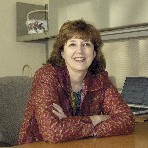
Judy Kay is a Professor at the University of Sydney, Australia , renowned for her contributions to Artificial Intelligence in Education , User Modeling , and Ubiquitous Computing . Her work focuses on creating scrutable open learner models , enhancing collaborative learning analytics , and applying machine learning to education and health. Current research includes AI-driven misinformation detection and human-AI teaming for education. Recent projects involve virtual reality exergames and long-term physical activity tracking . Key publication trends span AI in education , data-driven learning design , and privacy-aware personalized systems . She actively collaborates with researchers in human-computer interaction and health informatics , emphasizing user control and ethical data use .
Anne E. White is the School of Engineering Distinguished Professor of Engineering and associate vice president for research administration at the Massachusetts Institute of Technology (MIT). She serves in the Department of Nuclear Science and Engineering within MIT's School of Engineering and is a key researcher at the Plasma Science and Fusion Center (PSFC). White has held significant leadership roles including NSE department head from 2019 to 2023 and co-chair of the MIT Climate Nucleus from 2021 to 2024. She currently chairs the Fusion Energy Sciences Advisory Committee (FESAC), providing federal advisory input to the U.S. Department of Energy Office of Science. White received her PhD in physics from UCLA, where she conducted research at the Electric Tokamak. Her early career included research positions at the National Spherical Torus Experiment at Princeton Plasma Physics Laboratory and the DIII-D National Fusion Facility at General Atomics before joining MIT as a faculty member. Her educational background laid the foundation for her expertise in plasma physics and fusion energy research. Professor White's research focuses on magnetic fusion energy, specifically on understanding turbulent transport in magnetically confined fusion plasmas. Her work spans diagnostic development, novel experimentation, and validation of nonlinear gyrokinetic codes. She aims to demonstrate nuclear fusion as a practical part of the world's sustainable energy future. Her group develops and uses radiometers, reflectometers, and interferometers to measure fluctuations in plasma density, temperature, and flows in tokamaks. This research is critical for improving predictive capabilities of turbulent transport models, which is essential for developing viable fusion reactors. Analysis of Professor White's recent publications reveals a strong focus on plasma diagnostics and turbulence measurements across multiple tokamak facilities. Her work spans experimental measurements on ASDEX Upgrade, Alcator C-Mod, NSTX, and DIII-D tokamaks, with particular emphasis on electron temperature fluctuations, turbulence characterization, and transport model validation. A significant theme is the development and application of novel diagnostic techniques for simultaneous measurements of multiple plasma parameters. Her research increasingly incorporates computational approaches, including gyrokinetic simulations and machine learning methods, to interpret experimental data and advance predictive capabilities in fusion plasma physics. Professor White has received numerous prestigious awards throughout her career: Fellow, American Physical Society Division of Plasma Physics (2019) Cecil and Ida Green Career Development Professor, MIT (2014) American Physical Society Katherine E. Weimer Award (2014) Fusion Power Associates Excellence in Fusion Engineering Award (2014) Junior Bose Award for Excellence in Teaching, MIT (2014) PAI Outstanding Faculty Award from MIT student chapter of the American Nuclear Society (2013) Norman C. Rosenbluth Career Development Professor, MIT (2012-2014) Department of Energy Early Career Award (2011-2016) Marshall N. Rosenbluth Outstanding Doctoral Thesis Award (2009) As an educator and mentor, Professor White has advised numerous students through MIT's Department of Nuclear Science and Engineering. She has taught courses including Principles of Plasma Diagnostics, Seminar in Fusion & Plasma Physics, and Introduction to Plasma Physics. Her leadership extends to developing educational resources, notably leading a team in 2018 to create a free MITx MOOC focused on nuclear science and engineering for global high school learners. Professor White has secured significant research funding through Department of Energy awards, including the Early Career Award (2011-2016) and various fusion energy fellowships throughout her career. Her research group at MIT's Plasma Science and Fusion Center has contributed to multiple major fusion facilities and has been instrumental in advancing understanding of plasma turbulence and transport. Professor White leads the Fusion and Plasmas Lab at MIT, which focuses on diagnostic development and turbulence measurements in fusion plasmas. Her team has made significant contributions to research on four major tokamaks: Alcator C-Mod, ASDEX Upgrade, DIII-D, and National Spherical Torus Experiment Upgrade. At MIT's Plasma Science and Fusion Center, she previously served as assistant division head for magnetic fusion energy collaborations and ran the Gyrokinetic Simulation Working Group and the Alcator C-Mod Transport Group. Her lab maintains close collaboration between experimental work, theoretical modeling, and computational simulation to advance the understanding of plasma turbulence and transport phenomena critical for fusion energy development.
Dr. Jennifer Katz serves as an Associate Professor in the Department of Educational and Counselling Psychology, and Special Education (ECPS) at the University of British Columbia's Faculty of Education. She joined UBC in July 2016 after previously holding an Associate Professor position in Inclusive Education at the University of Manitoba. Renowned for creating the Three Block Model of Universal Design for Learning (UDL), her framework is now implemented across Canadian school divisions to advance inclusive educational practices. Dr. Katz's research centers on inclusive education K-12 , social and emotional learning (SEL) , and mental health promotion in schools . Her work integrates the Three Block Model of UDL to address diverse student needs while emphasizing indigenous perspectives through extensive collaboration with First Nation elders and communities in Manitoba, Alberta, and Quebec. This intersectional approach reimagines inclusive education through reconciliation frameworks and culturally responsive practices. Analysis of her recent publications reveals consistent focus on mental health literacy programs for students with developmental disabilities, UDL's impact on academic achievement and teacher efficacy, and the integration of Indigenous knowledge systems. Her research bridges theory and practice through classroom-based interventions, cluster-randomized trials, and transformative learning frameworks that prioritize student well-being and social inclusion. Scientific Awards: No scientific awards were documented in the provided sources. Advising and Grants: While specific graduate students and research grants aren't detailed in the text, Dr. Katz's extensive publication record and community partnerships indicate active research leadership. Her work with school divisions across Canada suggests significant program implementation funding, though grant specifics remain unreported. Labs and Teams: Dr. Katz maintains critical partnerships with First Nation communities, embedding Indigenous knowledge into educational frameworks. Her Three Block Model implementation involves multi-school division collaborations nationwide, creating practitioner-researcher networks focused on inclusive classroom transformation.
Professor Eric Atwell is a Professor of Artificial Intelligence for Language at the University of Leeds' School of Computer Science, part of the Faculty of Engineering and Physical Sciences. He holds additional roles as a LITE Fellow at the Leeds Institute for Teaching Excellence (40% part-time), Turing Fellow at the Alan Turing Institute, and member of the Leeds Institute for Data Analytics (LIDA) and Language at Leeds (LATL). His research focuses on AI applications in corpus linguistics, text analytics, and computational analysis of religious and medical texts, with a strong emphasis on Arabic and Islamic studies. He leads the AI4L research group and has supervised over 60 research students and fellows, many of whom have pursued careers in academia, tech, and AI-driven fields. Education: PhD in Corpus Linguistics and Language Learning (University of Leeds, 2008), BA (First Class) in Computing and Linguistics (Lancaster University, 1981) Grants: Includes EPSRC-funded projects like Natural Language Processing with Arabic and Islamic Studies (£337K, 2013-2015) and EDUBOTS chatbots for education (£94K, 2019-2022) Teaching: Leads modules in Data Mining, Text Analytics, and AI across multiple programs, including online Masters and PhDs. Known for innovative teaching approaches and student support, receiving positive feedback for engagement and course design. Research Interests: AI applied to corpus linguistics, Quranic text analysis, Arabic NLP, chatbots for education, and decolonizing curricula. Notable projects include Quranic semantic search tools, Hadith corpus analysis, and AI-driven fact-checking systems. Publications: Over 277 publications, with recent work focusing on Quranic QA systems, Arabic dialect identification, and generative AI applications in education. His research is widely cited, earning recognition from ResearchGate for high readership. Awards: Recognized for his most-read research items on ResearchGate (June 2021). Gallup StrengthsFinder highlights his top traits as Learner, Achiever, Ideation, Intellection, and Maximizer. Labs/Teams: Leads the AI4L research group and collaborates with international institutions including SUSTECH Sudan, King Saud University, and SWJT University (China). Active in research networks like LIDA and LATL.
Dr Maria Bada is a Lecturer in Cyberpsychology at the School of Biological and Behavioural Sciences, Queen Mary University of London. She is an active researcher in the field of cyberpsychology with a specific focus on the human element of cybersecurity. Dr Bada is also a member of the committee of the Artificial Intelligence, Ethics and Society Group at QMUL. Dr Bada's research spans multiple critical areas in cyberpsychology and cybersecurity. Her primary research interests include: The effectiveness of cybersecurity awareness campaigns and factors leading to their success or failure in changing information security behavior Development of prevention activities to enhance the resilience of Small and Medium Enterprises (SMEs) against cybercrime Cybersecurity awareness initiatives for school learners in South Africa and the UK Youth delinquency and interventions to prevent cybercrime, in collaboration with the National Crime Agency and Home Office Social and psychological impacts of cyber-attacks on vulnerable groups Exploration of the cybercrime ecosystem, including cybercriminal profiles, pathways, and risk perceptions Dr Bada's publication record demonstrates a consistent focus on the intersection of psychology and cybersecurity. Her recent work shows increasing specialization in SME cybersecurity challenges, ethical considerations in security behavior change, and the psychological impacts of cybercrime on individuals and organizations. She frequently collaborates with researchers from diverse disciplines including computer science, criminology, and healthcare, reflecting the interdisciplinary nature of her work. Dr Bada has secured significant research funding for her work, including: "Enhancing national cyber resilience via SME cyber security and digital responsibility" (£328,119 from EPSRC, 2023-2026) "REPHRAIN: Supporting organisations in making effective privacy related decisions" (£50,801 from EPSRC, 2022-2023) "Assessing Organisational DSbD Awareness and Readiness" (£15,554 from ESRC, 2022-2024) She works closely with research staff including Dr Matthew Rand and collaborates with various UK government agencies including the National Crime Agency and Home Office on cybercrime prevention initiatives.
Dr. Zara Ersozlu is a Senior Lecturer in Mathematics Education within the School of Education at the University of Newcastle, Australia. With a distinguished international career spanning multiple continents, she has held academic positions at prestigious institutions including North Carolina State University (USA), Gazi and Gaziosmanpasa Universities (Turkey), National Taiwan Normal University (Taiwan), The University of Western Australia, Murdoch University, and Deakin University. Her academic journey includes tenured positions as an Associate Professor and leadership roles as Department Head and Chair in teacher education disciplines. Currently, she teaches undergraduate and postgraduate courses in mathematics education, including Effective Pedagogies in Primary Mathematics, K-6 Mathematics, K-6 Numeracy, and Digitally Supported Learning. Dr. Ersozlu earned her Doctor of Philosophy from Firat University in Turkey and her Master of Art from Sakarya University. Her extensive academic preparation is complemented by five years of practical teaching experience in public schools prior to entering academia. This blend of theoretical knowledge and practical classroom experience informs her approach to teacher education and educational research. At the broadest level, Dr. Ersozlu's research investigates solutions to real-life problems impacting people's well-being, success, and capacity to achieve. Her scholarly work spans primary and secondary mathematics education, the psychology of mathematics (including metacognition, self-regulation, and anxiety), cross-cultural educational studies, teacher education, virtual simulated learning environments, and educational assessment. She has increasingly focused on the transformative potential of AI and machine learning in education, exploring how these technologies alter teaching, learning, and research processes. Her methodological expertise encompasses both quantitative and qualitative approaches, allowing her to effectively analyze both small and large educational datasets. Analysis of Dr. Ersozlu's recent publications reveals a strong emphasis on mathematics anxiety, teacher education, and the integration of technology in learning environments. Her work demonstrates a consistent focus on practical applications of educational research to address real-world challenges in mathematics education. The interdisciplinary nature of her research connects educational psychology, technology integration, and cross-cultural perspectives, with particular attention to how these elements intersect in teacher preparation and student learning outcomes. 2023 ATEA Research Recognition Award from the Australian Teacher Education Association 2021 Fellow of the Higher Education Academy (Advance HE, UK) 2010 Fellowship Program for Postdoctoral Researchers from the Council of Higher Education of Turkey Dr. Ersozlu is deeply committed to mentoring the next generation of scholars, currently supervising four PhD students and having successfully guided ten students to completion. Her grant portfolio includes significant funding for projects such as Best Practice Guidelines for RPL in Initial Teacher Education Programs ($60,000), Exploring the Reciprocal Relationship Between Mathematics Anxiety and Mathematical Resilience ($2,599), and multiple conference travel awards. She serves as an Associate Editor for several prominent journals including the International Electronic Journal of Mathematics Education and as Editor for Interdisciplinary STEM Education. Her editorial work reflects her standing as a respected voice in mathematics education research. Dr. Ersozlu's academic leadership extends to her role in developing innovative teaching approaches that integrate virtual simulation technology and learning analytics. Her work with TeachLivE™, a mixed-reality classroom simulation platform, demonstrates her commitment to creating authentic learning experiences for teacher education students. Through these initiatives, she bridges the gap between educational theory and classroom practice, preparing future educators to effectively implement evidence-based teaching strategies in diverse learning environments.
Mohammad T. Alhawary is Professor of Arabic Linguistics and Second Language Acquisition at the University of Michigan's Middle East Studies department within the College of Literature, Science, and the Arts. He serves as Director of both the MA Program in Arabic for Professional Purposes (APP) and the MA Program in Teaching Arabic as a Foreign Language (TAFL). His educational background includes a Ph.D. from Georgetown University (1999). Prior to joining the University of Michigan, he contributed to developing Arabic and Middle Eastern Studies programs at various US institutions. Professor Alhawary's research spans both theoretical and applied Arabic linguistics, with particular focus on second language acquisition processes. His work examines how factors like age, input quality, output practice, and first language transfer affect Arabic language learning. He has made significant contributions to understanding Arabic language pedagogy, curriculum design, proficiency testing, and the application of technology in language learning. His research also extends to bilingualism, multilingualism, language impairment, and Arabic medieval grammatical traditions. His publications reflect a strong trajectory in Arabic linguistics research, with recent works focusing on practical language teaching applications, reading comprehension mechanisms, code-switching patterns in digital communication, and multilingual acquisition processes. The 2023 publication 'Teaching Arabic as a Foreign Language' represents his latest contribution to language pedagogy methodology. 2019 AATA Book Award for 'Arabic Second Language Learning and Effects of Input, Transfer, and Typology' As an academic leader, Professor Alhawary serves as Executive Director of the American Association of Teachers of Arabic and edits both the Journal of Arabic Linguistics Tradition and Al-'Arabiyya journal. He continues to develop empirical research on Arabic second language acquisition to inform teaching practices both in America and globally.
Professor Judy Kay is a leading academic in Computer Science at the University of Sydney, holding a Chair in Human-Centred Technology Research within the Faculty of Engineering and IT. Her work focuses on designing personalized systems that empower users to control their data, particularly in lifelong learning and health contexts. She leads the Human Centred Technology Research Cluster and is Editor-in-Chief of the International Journal of Artificial Intelligence in Education (IJAIED). Education: Studied at the University of Sydney, inspired to pursue academia due to its multidisciplinary environment and student collaboration opportunities. Research interests include user modeling, scrutable AI systems, and interfaces for personal informatics. Current projects span virtual reality learning environments, health data dashboards, and ethical AI transparency. Her work has led to commercialized technologies like the Personis system. Publications include over 200 peer-reviewed works in top venues like CHI, UbiComp, and AIED conferences. Awards highlight her contributions to computing education and AIED, including the 2023 Lifetime Achievement Award. Advises 4 current PhD/Master’s students focusing on topics like Open Learner Models in VR and health decision-making tools. Collaborates with multidisciplinary teams across computer science, health sciences, and education. Labs/Teams: Leads research groups in the School of Computer Science and collaborates with the Charles Perkins Centre on health-related projects.
Paul Taele is an Instructional Assistant Professor and Deputy Lab Director in the Sketch Recognition Lab at Texas A&M University's Department of Computer Science & Engineering. He holds a Ph.D. (2019), M.S. (2010), and dual B.S. degrees in Computer Science and Mathematics from the University of Texas at Austin (2006). His research focuses on sketch recognition, haptics, and intelligent interfaces for education and accessibility, with notable work in mid-air gesture recognition, educational sketching tools, and assistive technologies for disabilities. He has contributed to projects like Kanji Workbook , Hashigo , and HaptiMoto , and has published over 50 peer-reviewed articles across venues like CHI, IUI, and AAAI. Taele has received awards including the NSF Student Travel Grant (2014) and Ford Foundation Honorable Mention (2015). He teaches courses in capstone design, programming, and sketch recognition, and mentors students across all academic levels through strict eligibility criteria for research collaborations. Education : Ph.D. Computer Science, Texas A&M University (2019) M.S. Computer Science, Texas A&M University (2010) B.S. Computer Science & Mathematics, University of Texas at Austin (2006) Concentration in Mandarin Chinese, National Chengchi University (2007) Research Interests : Taele's work bridges HCI and AI to create accessible educational interfaces. His projects emphasize: Sketch Recognition : Developing algorithms for mid-air gestures, children's developmental assessments, and language learning Accessibility : Haptic systems for visually impaired learners and algebra education Educational Tech : Intelligent tutoring systems for music, math, and East Asian languages Awards & Grants : EAAI-20 Travel Grant (2020) Ford Foundation Dissertation Honorable Mention (2015) NSF East Asia-Pacific Summer Institutes (2013, 2012) Royce E. Wisenbaker Fellowship (2009) Lab & Teams : Director of the Sketch Recognition Lab (SRL) and collaborator with global institutions like Singapore Management University and National Taiwan University. Active in organizing workshops like SketchRec at IUI conferences.
Dr Anandadeep Mandal is an Associate Professor in Finance and the Scotcoin Distinguished Chair of Digital Finance at the University of Birmingham , within the Birmingham Business School and the Department of Finance . He is the founding director of the MSc Financial Technology programme and the Programme Director for the MBA (Distance Learning), demonstrating significant leadership in academic program development. Education: PhD in Probability Distribution Fitting, Cranfield University (2016) MRes in Management Science, Cranfield University (2012) MSc in Finance and Investments, Durham University (2008) Bachelor’s in Electronics Engineering Research Interests: Dr Mandal’s interdisciplinary research lies at the intersection of mathematical modelling, artificial intelligence, finance, and digital innovation . His work focuses on AI-enabled investment strategies , blockchain for financial transparency , ESG performance measurement , and the development of the Sustainable Efficiency Index (SEI) . He also pioneers AI applications in digital education , including a patent-pending platform for automated grading of multi-modal student submissions using ensemble AI methods. Publication Trends: His recent scholarly output spans high-impact journals and conferences, reflecting a strong focus on digital finance , climate and social media analytics , cryptocurrency regulation , and AI in financial forecasting . His work combines advanced data science techniques with real-world policy and financial applications, particularly in sustainability and public health. Scientific Awards: No specific awards are mentioned in the provided text. Advising and Grants: Dr Mandal has secured over £2 million in research funding from sources including UKRI, UoB QR Funding, and industry partners. While specific students are not listed, his role as programme director and research leader suggests active mentorship. His research has direct policy impact through collaborations with the NHS Trusts , NIHR , and the UK Government . Labs, Teams, and Impact: Dr Mandal leads a research agenda that bridges academia and public policy. His work extends beyond the university through public engagement at science festivals, outreach for young learners, and expert contributions to UK Parliamentary consultations on AI, sustainability, and financial innovation. He is a key figure in advancing digital finance education and research at the University of Birmingham.
Una-May O'Reilly is a Principal Research Scientist at MIT's Computer Science and Artificial Intelligence Laboratory (CSAIL), leading the ALFA group. She holds a PhD in Computer Science from Carleton University (1995), with prior roles including a postdoctoral appointment at MIT's Artificial Intelligence Laboratory. Her research focuses on cybersecurity, adversarial AI, software security, and disinformation dynamics, applying evolutionary algorithms and machine learning to address arms races in cyber defense and societal challenges like climate change communication. Education: B.Sc., University of Calgary M.C.S., Carleton University Ph.D., Carleton University (1995) Research Interests: Adversarial machine learning for secure systems Coevolutionary algorithms in cybersecurity and healthcare Program comprehension via neuroscience and AI Climate disinformation mitigation on social media Large language model applications in code synthesis and threat hunting Key Projects: Adversarial Cyber Security : Modeling cyber attack-defense arms races GIGABEATS : AI-driven medical sensor data analysis for critical care MOOC Learner Project : Data science for online education insights Awards: EvoStar Award (2013) for contributions to evolutionary computation Fellow of ACM Sig-EVO Leadership & Service: Co-founder and Vice-Chair of ACM Sig-EVO Former Chair of GECCO (2005), major evolutionary computation conference Editorial roles in Evolutionary Computation and Genetic Programming and Evolvable Machines Labs & Groups: Leads the AnyScale Learning for All (ALFA) group at CSAIL, focusing on scalable AI for cybersecurity, healthcare, and education.
Vicki L. Plano Clark is a Professor in the Research Methods area of the School of Education at the University of Cincinnati, where she advises students in the Quantitative and Mixed Methods Research Methodologies (QMRM) concentration of the Educational Studies doctoral program and the Applied Research Methods (ARM) track of the Educational Studies master's program. She joined the University of Cincinnati in 2012 after serving as the director of the Office of Qualitative and Mixed Methods Research at the University of Nebraska-Lincoln. Dr. Plano Clark earned her Ph.D. in Quantitative and Qualitative Methods in Education from the University of Nebraska-Lincoln (2005), M.S. in Physics from Michigan State University (1993), and B.A. in Physics from Kalamazoo College (1990). Her academic journey transitioned from physics education to research methodology, bringing a unique interdisciplinary perspective to her work. As a leading methodologist specializing in mixed methods research, Dr. Plano Clark's scholarship focuses on delineating useful designs for conducting mixed methods research, examining procedural issues associated with these designs, and exploring the contexts for the adoption and use of mixed methods. Her research spans diverse application areas including cancer pain management, STEM graduate student identity development, teacher professional development, and the well-being of rural low-income families. Her work demonstrates how mixed methods approaches can effectively address complex research questions across multiple disciplines. Dr. Plano Clark has made significant contributions to the field through her editorial leadership and publications. She was the founding Managing Editor for the Journal of Mixed Methods Research and currently serves as an Associate Editor. In 2011, she co-led the development of Best Practices for Mixed Methods in the Health Sciences for NIH's Office of Behavioral and Social Sciences Research. In 2012, she became a founding co-editor of the Mixed Methods Research Series with Sage Publications. She has authored numerous influential books including 'Designing and Conducting Mixed Methods Research' (now in its 3rd edition) and 'Mixed Methods Research: A Guide to the Field.' Founding Managing Editor for the Journal of Mixed Methods Research Co-developer of NIH's Best Practices for Mixed Methods in the Health Sciences (2011) Founding co-editor of the Mixed Methods Research Series with Sage Publications (2012) Chair of the Mixed Methods Research Special Interest Group of AERA As an active researcher, Dr. Plano Clark has secured multiple grants including a Department of Education grant evaluating Ohio Network of Education Transformation (ONET) Schools (as Principal Investigator) and a UC University Research Council grant on reducing mass incarceration by improving public defense (as Collaborator). Her recent publications continue to advance methodological understanding in mixed methods research, with a focus on integration techniques, terminology challenges, and applications across health sciences and education. Dr. Plano Clark maintains an active role in the research community through invited presentations and workshops worldwide, helping to train the next generation of researchers in mixed methods approaches and contributing to the ongoing development of methodological standards and practices.
Sally M. Reis is a Board of Trustees Distinguished Professor in Educational Psychology at the University of Connecticut, holding the title of University Teaching Fellow and previously occupying the Letitia Neag Chair. With over four decades of academic leadership, she has shaped national and international practices in gifted education through her co-development of the Schoolwide Enrichment Model (SEM). Her academic credentials include: Ph.D. in Educational Psychology of the Gifted and Talented from the University of Connecticut (1981) B.A. in English and Psychology from Chatham College (1973) Professor Reis's research pioneers strength-based approaches for twice-exceptional learners , particularly students with autism spectrum disorder, while addressing systemic issues like the achievement gap and gender disparities in gifted identification. Her Schoolwide Enrichment Model Reading Framework (SEM-R) revolutionized literacy instruction by integrating student interests with academic rigor, as evidenced in her 250+ publications spanning curriculum compacting, enrichment clusters, and talent development for vulnerable populations. Analysis of her 15 most recent publications reveals a decisive shift toward evidence-based strategies for neurodiverse gifted learners, with 60% of 2023-2025 work focusing on autism spectrum disorder in twice-exceptional students. Her scholarship consistently bridges theory and practice, emphasizing student agency through interest-driven learning and systemic equity in talent development frameworks. Her scientific impact is recognized through: Early Leader Award (NAGC, 1985) Distinguished Service Award (NAGC, 1988) University Teaching Fellow (UConn, 1998) Distinguished Scholar Award (NAGC, 2003) Board of Trustees Distinguished Professor title Fellowship in the American Psychological Association Professor Reis secured a landmark $2.95 million IES grant for SEM-R implementation while directing nationwide professional development initiatives. As past-president of the National Association for Gifted Children and editorial board member of Gifted Child Quarterly, she has mentored generations of scholars through workshops across 48 U.S. states. Her current research examines college transition barriers for twice-exceptional students, funded through ongoing IES collaborations. Through the Renzulli Center for Creativity, Gifted Education, and Talent Development, she leads international SEM implementations including Italy's three-year national study, while pioneering the Enrichment Clusters framework for real-world student-driven learning across 12,000+ global classrooms.
Shannon Barrios is an Associate Professor in the Department of Linguistics at the University of Utah, where she has served since 2022. She co-directs the Speech Acquisition Lab and specializes in second language acquisition, phonetics/phonology, and psycholinguistics. Her research explores how adult learners develop perceptual and lexical representations of novel phonological contrasts, with a focus on cross-language speech perception, orthographic effects, and social factors in input processing. BA, Spanish (SUNY Geneseo, 2004) MA, Linguistics (Syracuse University, 2007) PhD, Linguistics (University of Maryland, 2013) Her research interests span adult second language acquisition , phonolexical development , and accent bias . She investigates how learners process phonological contrasts, the role of orthography in speech perception, and the influence of social roles (e.g., teachers vs. peers) on language learning. Her work combines behavioral experiments, ERP/MEG neuroimaging, and computational modeling. Barrios’ recent publications (2024–2020) focus on representational fuzziness , talker variability , and lexical contrast mechanisms . Her 2024 Languages paper proposes a factorial typology for evaluating auditory word recognition scenarios, while her 2024 JASA Express study highlights individual listener variation in cross-language speech perception. Earlier works examine allophone acquisition, orthographic input effects, and neural correlates of phonological mapping. She has received two teaching awards from the University of Maryland (2013). Her teaching portfolio includes undergraduate and graduate courses in phonetics , psycholinguistics , and second language acquisition theory . She also leads workshops on research ethics, mentee development, and academic literacies.
Dr. Janine Johnson is a Professor in the Undergraduate Nursing Department at Clarkson College, where she has been since 2012. She teaches in the traditional BSN and RN to BSN programs, as well as the Community Health Program. Her roles include dissertation chair duties in the Healthcare Education and Leadership program. Dr. Johnson holds degrees of Ed.D. (Doctor of Education) and MSN (Master of Science in Nursing), and is a registered nurse (RN). Her research focuses on addressing barriers faced by racially and ethnically diverse nursing students, promoting evidence-based practice, and women's health issues. She has developed educational resources including digital curricula, concept maps, and lesson plans for platforms like ATI EHR Tutor and ATI Engage Fundamentals. Her work emphasizes inclusive education strategies and faculty development. Dr. Johnson has received multiple teaching and scholarship awards, including the Sigma Theta Tau Rising Star recognition and nominations for the Apple Award and Teaching Excellence. She actively contributes to professional development through presentations at national conferences such as Sigma Theta Tau and Elsevier events. Key Roles: Dissertation Committee Member, Course Instructor (NRS 352, NRS 475, CHL 364, etc.) Professional Memberships: Sigma Theta Tau International, National Society of Leadership and Success