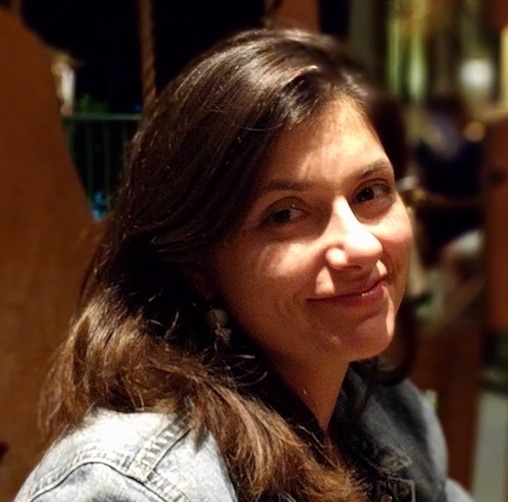
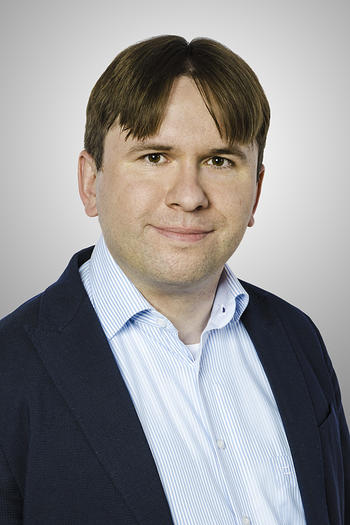
Niko Siltala is a University Instructor at Tampere University's Department of Automation Technology and Mechanical Engineering. He holds a Doctor of Science (Technology) in Mechanical Engineering (2016) and a Master of Science (Technology) in Automation Engineering (2001). His research focuses on production system design, reconfiguration, robotics, and virtual reality applications in safety training. He has contributed to the development of semantic rules for capability matchmaking, which supports rapid system design and reconfiguration. Key research areas include: Manufacturing automation and system adaptability Human-robot collaboration and safety protocols Virtual reality-based training solutions Formal resource descriptions for modular systems His work aligns with UN Sustainable Development Goals, particularly in advancing quality education (SDG 4) through innovative robotics education tools. He has received the Distinguished Committee Service Award (2004) and contributed to grants such as the K.F. ja Maria Dunderbergin testamenttisäätiö (2014). He has collaborated on projects like the D-BEST methodology for pilot lines and the ODIN project for scalable production systems. His activities include organizing conferences, presenting at international forums, and developing web-based tools for manufacturing system planning.
Brett Drake is the Professor of Data Science for the Social Good in Practice at the Brown School, Washington University . He specializes in child welfare research, focusing on early intervention in child neglect cases and socio-environmental factors influencing child maltreatment. His work integrates data science with social work to address systemic inequities and improve preventative services. Areas of Focus: Child Maltreatment Epidemiology, Big Data Applications, Racial Disproportionality Drake teaches master’s-level courses on diversity, human behavior, and practice analysis, alongside doctoral research methodology classes. He collaborates with state agencies on data evaluation and has been recognized as one of the World's Top 2% Scientists and among the Most-Cited Scientists in social work. His research spans decades, including the creation of a widely used Missouri child maltreatment database with his colleague and wife, Melissa Jonson-Reid.
Professor Paul Brereton is Director of Strategic Alliances at the School of Biological Sciences, Queen's University Belfast, and leads the Institute for Global Food Security. He has coordinated major EU projects including €20M TRACE and €12M FOODINTEGRITY, and currently directs QUB's contributions to the UKRI Sus-Health programme and €11M TITAN Horizon Europe project. Active in food safety, authenticity, and sustainability Co-Director of UKRI Integrating Finance and Biodiversity Programme Chairs European Commission PRIMA Foundation evaluation panel His research spans food chemistry, risk assessment, and policy development, with recent focus on financial instruments for ecological restoration and combined nutritional-environmental metrics. Key projects address antimicrobial resistance, dietary sustainability, and blockchain applications in food traceability. Scientific honors include Fellow of the Royal Society of Chemistry and international awards from AOAC and OIV. His work contributes to UN Sustainable Development Goals 2 (Zero Hunger), 3 (Health), and 12 (Responsible Consumption).
Włodzimierz Kasprzak is a Professor at the Institute of Control and Computation Engineering, Faculty of Electronics and Information Technology, Warsaw University of Technology. His research focuses on computer vision, robotics, human-computer interaction, and machine learning. He has contributed to advancements in human action classification, skeleton-based feature analysis, and multimodal interface design. Research Highlights: Development of lightweight classification models for human actions in video using skeleton-based features. Advances in multi-stream fusion techniques for image and video analysis. Design of embodied agent systems for cybersecurity event visualization and control. Awards and Recognition: 2024: Individual First Class Rector's Award for Scientific Achievements (2022-2023) 2021: Medal of the Commission of National Education 2011: Golden Cross of Merit His work integrates theoretical contributions with practical applications in robotics, surveillance systems, and human-centered technologies.
Vanja Bevanda is a Full Professor at the Faculty of Economics and Tourism, University of Primorska in Pula. She holds a PhD from 2002 and has been employed at the institution since 2005, contributing to the Department of Quantitative Methods. Her educational background includes a BSc (1989), MSc (1995), and PhD (2002). Research Interests : Her work focuses on decision analytics, business intelligence, artificial intelligence applications in SMEs, data mining for customer behavior analysis, tourism development strategies, and the integration of technology in education. She explores topics like AI-driven managerial journeys, microchip implant adoption, and post-pandemic technology use trends. Publications : Recent articles highlight her contributions to AI transformation in SMEs, sentiment analysis during the pandemic, and mobile BI adoption in SMEs. Her research spans both theoretical frameworks and practical case studies across Croatia and beyond. Teaching : She teaches courses including Business Decision-Making, IT Project Management, and Database Systems. She emphasizes bridging theoretical knowledge with practical skills in information systems education.
Koushik Sen is a Professor in the Department of Electrical Engineering and Computer Sciences at the University of California, Berkeley. He holds a B.Tech from IIT Kanpur and M.S./Ph.D. from UIUC. His research focuses on Software Engineering, Programming Languages, and Formal Methods, emphasizing tools like DART, CUTE, and Jalangi for improving software reliability. He leads projects such as CORVETTE and Sky Computing Lab, and collaborates with Samsung Research America on JavaScript analysis. Sen has received prestigious awards including the Sloan Fellowship and ACM SIGSOFT Impact Award. Education: B.Tech, Indian Institute of Technology, Kanpur M.S. and Ph.D., University of Illinois at Urbana-Champaign Research Interests: Software Testing, Verification, Symbolic Execution, Security, and Quantum Computing. His work bridges automated testing (e.g., concolic testing) with machine learning for bug detection and program synthesis. Projects include Hindsight Logging for ML reproducibility and quantum circuit optimization (QFAST). Awards: NSF CAREER, IFIP Manfred Paul, ACM SIGSOFT Distinguished Paper (multiple), and Sloan Fellowship. Advising: Supervised over 30 students/postdocs, leading to faculty roles at UBC, CMU, and industry positions at Google, Facebook, and Samsung. Labs/Teams: Berkeley Center for Responsible, Decentralized Intelligence (RDI), EPIC Data Lab, and Sky Computing Lab. Active in quantum computing and hardware fuzzing (RTL-FuzzLab).
Athinagoras Skiadopoulos is a computer systems researcher at Stanford University's School of Engineering, Department of Computer Science, focusing on the intersection of database systems and operating systems. His work centers around the innovative DBOS (Database-oriented Operating System) project and large-scale machine learning infrastructure, collaborating with prominent researchers including Christos Kozyrakis and Michael Stonebraker. His primary research interests include: Database-oriented Operating Systems (DBOS) Distributed systems for large-scale machine learning Resource management and optimization in data-intensive systems Transaction processing and data governance High-performance networking for accelerated computing Fault tolerance in distributed training systems Skiadopoulos's research trajectory shows a clear evolution from foundational DBOS architecture toward applications in large-scale machine learning systems. His early publications established the DBOS framework for operating system design using database principles, while his recent work addresses critical challenges in distributed training of massive neural networks. Systems like ReCycle and SlipStream demonstrate innovative approaches to pipeline adaptation and failure recovery during distributed training. His most recent 2025 work on accelerating Mixture-of-Experts training represents the cutting edge of efficient large model training infrastructure. Through his research, Skiadopoulos has established himself in both the database and systems research communities, with publications in premier venues including SOSP, OSDI, VLDB, and CIDR. His work consistently bridges theoretical database concepts with practical systems implementations, demonstrating how database techniques can solve real-world systems challenges in modern computing environments.
Prof. Dr. Marcus Hasselhorn is Acting Director at DIPF | Leibniz Institute for Educational Research and Information and serves as a professor in the Department of Educational Psychology at Goethe University Frankfurt's Department 05 Psychology & Sports Science . His career spans over 25 years of leadership roles in educational research, including geschäftsführender Direktor (2012-2019) at DIPF and speaker of the Hessian LOEWE Center IDeA (2008-2019). Professor of Psychology (2007-present) at DIPF Former Director roles (2012-2019) and ongoing Scientific Board membership Leadership in Leibniz Research Network Bildungspotenziale (2013-2025) Research focuses on the ontogenesis of learning prerequisites , learning disorders , and educational diagnostics , particularly examining individual development and adaptive education for at-risk children. His recent work includes computerized learning assessment systems ( LONDI , iLearn ), language acquisition interventions ( BiSS-Transfer ), and inclusive education frameworks ( INCLASS ). Scientific engagement includes: President of German Psychological Society (2006-2008) Editorial leadership in Zeitschrift für Erziehungswissenschaft (2017-2024) Scientific Board member at IDeA Center (2008-present) Advisory roles in Mercator Institute (2013-present) and Kassel University Council (2010-present) Active in developing diagnostic tools like the Frostig Developmental Test of Visual Perception-3 and leading the BRISE initiative for early childhood education. Current projects address neurobehavioral development ( ReAL ), mental health in schools ( Mentale Gesundheit ), and language acquisition ( TRIO ).
Thamy Pogrebinschi is a senior researcher at the WZB Berlin Social Science Center and faculty member at the Berlin Graduate School of Social Sciences (BGSS) of Humboldt University Berlin, where she supervises PhD students. Her academic affiliations include the Center for Civil Society Research at WZB and multiple visiting positions at Oxford University (2022-2023), Harvard Kennedy School (2017-2018), LUISS University Rome (2015), and Goethe University Frankfurt (2013-2014). Her research centers on democratic innovations and new forms of citizen participation in Latin America, with growing focus on digital technology's impact on civil society and collective intelligence. She pioneered the LATINNO project (2015-2021), creating the largest database of democratic innovations across 18 Latin American countries, cataloging 3,600 cases involving deliberation, citizen representation, and digital engagement. Current work examines civil society responses to disinformation in polarized contexts and collective intelligence in endangered democracies. Her 2023 monograph Innovating Democracy? The Means and Ends of Citizen Participation in Latin America (Cambridge University Press) presents the first large-N cross-country study of democratic innovations, introducing a comprehensive typology. Research appears in Comparative Politics , European Journal of Political Research , and Critical Policy Studies across four languages. 50+1 Influential Researchers Whose Work Could Help Shape 21st Century Politicians (Apolitical Foundation, 2022) As principal investigator of LATINNO (funded by Open Society Foundations), she led a 30+ member team analyzing democratic innovations. Current projects on disinformation combat receive institutional support through WZB's Center for Civil Society Research. She advises PhD candidates at BGSS while maintaining active collaborations with Latin American civil society organizations. Her laboratory comprises the LATINNO network and current disinformation research consortium, coordinating researchers across Brazil, Colombia, Mexico, and Peru to analyze digital threats to democracy and develop civil society countermeasures through collective intelligence frameworks.
Yiguo Xue is a Professor and PhD Tutor at the Geotechnical and Structural Engineering Center, School of Civil Engineering, Shandong University. He has contributed extensively to tunnel engineering, subsea infrastructure, and slope stability analysis through advanced prediction models and numerical simulations. Research Interests: New tunnel geological condition prediction technologies Subsea tunnel and underground energy storage systems High slope stability evaluation Engineering exploration methods His recent work focuses on tunnel safety, subsea structural mechanics, and AI-driven hazard prediction models. Publications highlight his expertise in rockburst analysis, water inrush risk, and excavation optimization using machine learning and numerical frameworks. Scientific Awards: Recipient of China's Top 100 Most Influential Domestic Academic Paper Award (2008 paper on tunnel geological hazard forecasting) He has secured multiple national invention patents for tunnel monitoring devices (e.g., vibration sensors, collapse prediction systems) and developed specialized software for displacement prediction and rock classification.
Jignesh M. Patel is a Professor at the University of Wisconsin, Madison, WI, USA , with over 25 years of contributions to database systems, data analytics, and hardware-aware query processing. His work bridges theoretical advancements with practical systems engineering. Research Interests span: Database systems optimization (query processing, transaction management) Hardware acceleration for analytics (eBPF, PIM, GPUs) Machine learning integration in databases (feature selection, model optimization) Efficient data structures (hashing, encoding, indexing) Multi-tenant and cloud database management Recent Work focuses on kernel-embedded databases (BPF-DB, 2025), memory-efficient dataframe processing (SplitDF, 2024), and algorithmic-hardware co-design for dense retrieval (DReX, 2025). He has pioneered techniques for adapting to data skew (VIP Hashing, 2022), leveraging static analysis in R optimization (ROSA, 2017), and rethinking benchmarking paradigms. Collaborations include key partnerships with: Systems researchers (Andrew Pavlo, José F. Martínez) Machine learning experts (Arun Kumar, Kevin Skadron) Education-focused colleagues (Adalbert Gerald Soosai Raj, Richard Halverson) Industry leaders (David J. DeWitt, Microsoft Research)
Magdalini Eirinaki is a Professor and Academic Program Coordinator for the MS in Artificial Intelligence at San José State University's Charles W. Davidson College of Engineering. With a career spanning two decades, her work bridges recommender systems , machine learning , and smart city applications . PhD in Computer Science (2006), Athens University of Economics and Business MSc in Advanced Computing (2000), Imperial College London BSc in Computer Science (1998), University of Piraeus Her research focuses on machine learning and recommender systems with extensions to generative AI , privacy-sensitive algorithms , and social network analysis . Recent publications explore federated learning , multi-resolution diffusion models , and autonomous network defense using reinforcement learning. Current projects include NSF-funded CollaborAIte (2024) EU Horizon/Marie Sklodowska-Curie's MUSIT (2024) IBM SkillsBuild Cloud Credits for Sustainability (2024) She has received multiple teaching and mentorship awards including: Newnan Brothers Award (2019) Applied Materials Award (2017) 5-time SJSU Distinguished Faculty Mentor Award Dr. Eirinaki advises students in AI , ML , and smart city projects, with recent graduates presenting at IEEE CAI (2025) and CSU Conference (2025).
David Bermbach is a Full Professor at Technische Universität Berlin , leading the Scalable Software Systems group since 2023. His research focuses on distributed systems, serverless computing, and benchmarking, with significant work on edge and fog computing architectures. He is affiliated with the Einstein Center Digital Future and co-chairs interdisciplinary projects like SimRa for bicycle traffic safety. Full Professor, Scalable Software Systems (2023–present) ECDF-Professor, Mobile Cloud Computing (2017–2023) Postdoctoral Researcher (2014–2017) Education : Diploma in Business Engineering (2010) – Karlsruhe Institute of Technology (KIT) PhD in Computer Science (2014, summa cum laude) – KIT Research Interests span distributed systems with emphasis on cloud, edge, and fog computing, serverless architectures, IoT platforms, and benchmarking frameworks. His work addresses consistency-performance trade-offs, resource placement, and interdisciplinary applications in urban mobility and satellite edge computing. Article Trends show a focus on serverless computing (12/15), edge-cloud integration (9/15), and benchmarking methodologies (7/15). Key themes include optimizing function placement, federated learning architectures, and low-earth orbit computing systems. Scientific Awards Best Paper Award – ShutPub (2024) Best Workshop Paper – A Research Perspective on Fog Computing (2017) Best Paper Runner Up – Benchmarking Eventual Consistency (2014) Summa Cum Laude PhD Thesis (2014) Advising & Grants include mentoring students like Tobias Pfandzelter and Trever Schirmer, leading funded projects through the Einstein Center Digital Future, and contributing to 6G network research. His team works on cloud federation, serverless optimization, and real-world IoT applications.
Christian Mauder is Professor of Islamic Studies at Freie Universität Berlin’s Institute of Islamic Studies, Department of History and Cultural Studies. His research focuses on premodern Islamic religious, intellectual, and social history, particularly the Mamluk Sultanate (1250–1517), Islamic court cultures, historical semantics, Arabophone Christianity, Christian-Muslim relations, and Quranic discourses. He has published extensively on Mamluk military education, legal riddles, Persian and Circassian ethnic identities, and Ottoman-Mamluk transitions, emphasizing transregional interconnectedness. PhD in Arabic and Islamic Studies, University of Göttingen (2017) Postdoctoral research at Yale, Princeton, NYU Abu Dhabi, and University of Bonn Associate Professor at University of Bergen (2018–2023) Mauder’s scholarly work bridges Islamic history and cultural studies, exploring how concepts like mujaddid (renewer) shaped religious authority. His publications include monographs on Mamluk court culture and edited volumes on Quran reception, legal knowledge transmission, and Islamic eschatology. Recent articles analyze Persian identity construction, Hanafi riddles, and Mamluk-Ottoman entanglements. His awards include the 2018 Malcolm H. Kerr Dissertation Award and Christian Gottlob Heyne Award. He supervises doctoral students and participates in international seminars, including the Balzan Seminar on Muslim state formation. His office hours (Tue 4:15–6:00 PM) are open for academic consultation at Fabeckstr. 23/25, Berlin.
Dr. Viet-Huong Nguyen serves as an Associate Professor in Pharmacy Practice at Chapman University's School of Pharmacy, located at the Rinker Health Science Campus. Her expertise spans epilepsy, stroke, genetics, neuropharmacology, and epidemiology, with a focus on clinical and translational research. Her educational background includes: Bachelor of Arts in Biology and Classics with emphasis in Literature and Mythology from University of Southern California (2001) Master of Science in Cell and Neurobiology from University of Southern California (2003) Doctor of Pharmacy from University of California, San Francisco (2007) Master of Public Health in Epidemiology from University of California, Los Angeles (2014) Dr. Nguyen's research primarily focuses on epilepsy and stroke, with particular interest in the pharmacogenetics of drug response and resistance in epilepsy. She is an active member of GENESS, an international consortium dedicated to identifying genes causing genetic epilepsies including Juvenile Myoclonic Epilepsy, Childhood Absence Epilepsy, and Lafora Epilepsy to develop curative therapies. Her work bridges basic neuroscience with clinical applications, investigating molecular signaling pathways of the central nervous system and their implications for pharmacotherapy. She has contributed significantly to stroke outcomes/health services research, examining risk factor management and treatment protocols across multiple healthcare settings. Her extensive publication record demonstrates a consistent focus on neuropharmacology, with particular emphasis on epilepsy management and stroke care. The publications span clinical guidelines, pharmacogenetic research, and innovative approaches to treatment. Her work shows progression from basic pharmacokinetic studies to complex clinical applications and health services research, with increasing focus on genetic factors influencing drug response. The publications reveal a strong collaborative approach, frequently working with international research teams across multiple institutions. Her notable recognition includes: Fellowship grant from the American Foundation of Pharmaceutical Education (AFPE) to study drug transporters and pharmacogenetics in drug resistant epilepsy Dr. Nguyen has mentored and precepted over 80 students and residents from VAGLAHS, USC, UCSF, UOP, and Western University Schools of Pharmacy. She previously served as an Adjunct Assistant Professor of Pharmacy Practice at USC School of Pharmacy for 8 years, contributing to curriculum development for epilepsy and stroke education. Her clinical work has included developing the Anti-Epileptic Drug Response Phenotype Database and establishing pharmacist-managed Epilepsy and Stroke Prevention clinics with expanded scope of practice. She was instrumental in developing the PGY2 specialty pharmacy practice residency in Neurology at VA Greater Los Angeles Healthcare System (VAGLAHS), the first neurology pharmacy residency eligible for ASHP accreditation. Her clinical practice has centered around the VAGLAHS Epilepsy Center of Excellence and Stroke Program, where she implemented innovative pharmacy services that have improved patient outcomes through specialized pharmacotherapy management.