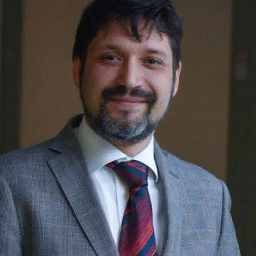
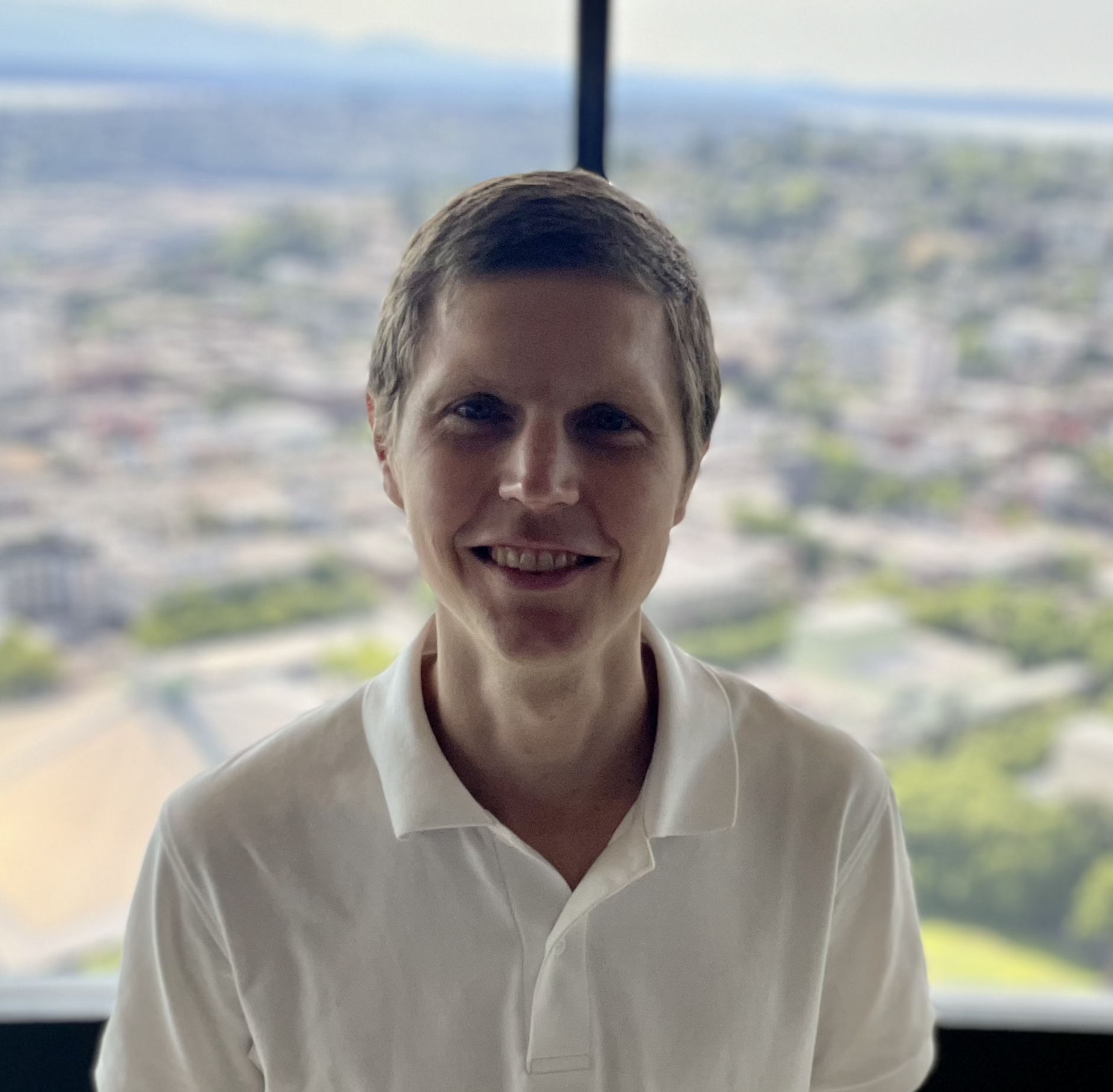
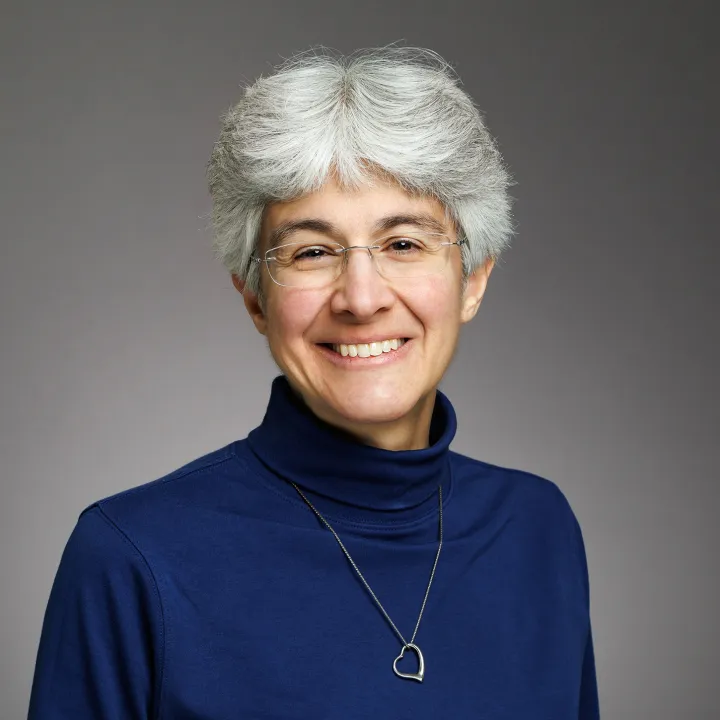
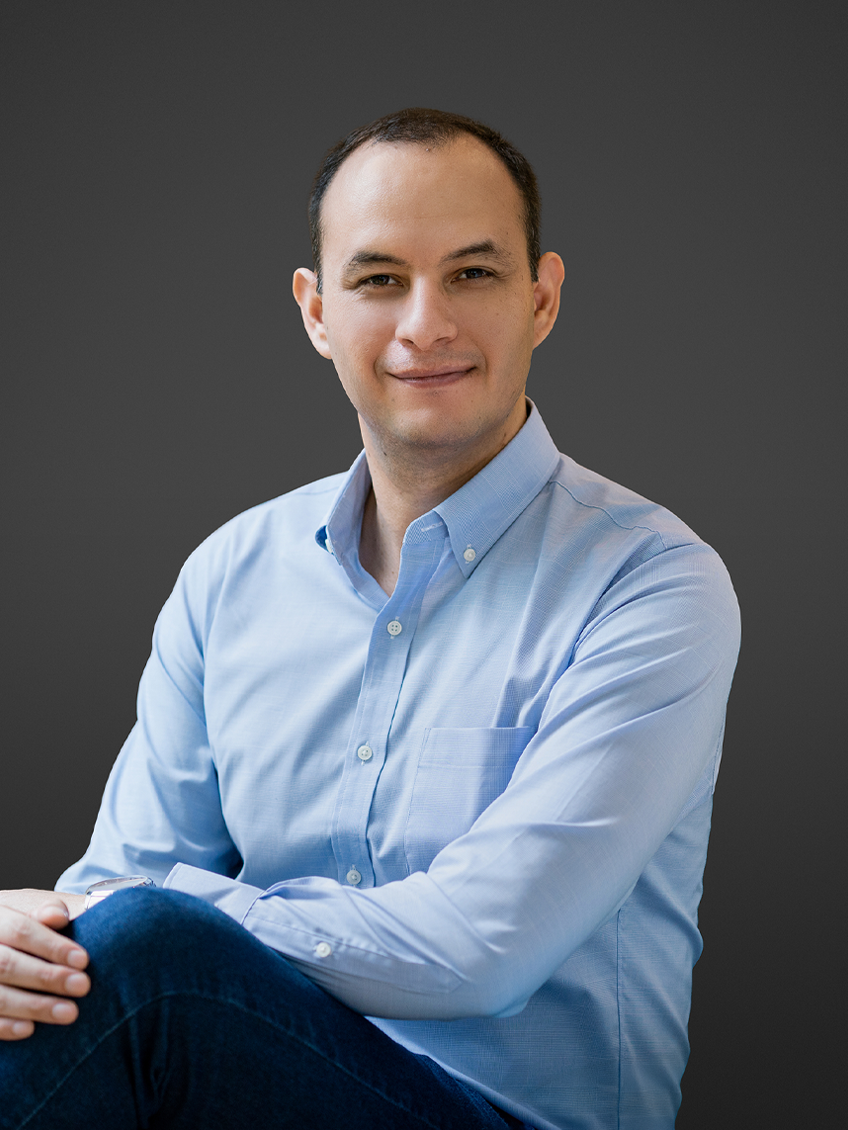
Neelakantan R. Krishnaswami is a Professor of Computer Science at the University of Cambridge's Computer Laboratory , and a Fellow of Trinity College . His research focuses on the intersection of program verification, programming language design, and foundational topics like type theory and semantics. His work spans areas such as refinement types, parser design, separation logic for systems software, and the semantics of reactive programming. Notable contributions include the Datafun language for higher-order Datalog and the λert type theory for explicit refinement types. He has also developed foundational frameworks for verifying imperative programs using advanced type systems and logical relations. Key publications include 'Explicit Refinement Types' (ICFP 2023), 'flap: A Deterministic Parser with Fused Lexing' (PLDI 2023), and 'CN: Verifying Systems C Code' (POPL 2023). His work frequently addresses challenges in efficiency, correctness, and modularity for both functional and imperative systems. His awards include Distinguished Paper Awards at PLDI 2019 and POPL 2020. His research integrates theoretical rigor with practical tooling, exemplified by contributions to languages like Coq, Lean, and Haskell.
Paul-Eric DOSSOU is a Researcher at ICAM’s Grand Paris Sud campus, specializing in Societal and Technological Transitions of Companies. His work focuses on Industry 5.0, decision-aided systems, logistics optimization, and digital twin applications. He leads projects like Plateforme Life, Urban Logistics, and Healthcare 4.0, aiming to enhance SME efficiency through sustainable digital transformation. Expertise includes AI-driven supply chain management, cybersecurity for legacy systems, and robotic solutions for archaeology. He collaborates with industry partners to bridge theoretical research and practical applications, emphasizing human-centric automation and environmental sustainability. Contact: paul-eric.dossou@icam.fr | Mobile: +33 6 17 81 33 43 Research contributions span over 30 peer-reviewed articles since 2003, addressing topics from energy audits in the nautical industry to multi-agent systems in supply chain optimization.
Pardis Pishdad is an Associate Professor and Graduate Program Director in the School of Building Construction at Georgia Institute of Technology’s College of Design. She directs the Smart Built Environment Eco-System (Smart Bees) Laboratory, focusing on integrating cyber-physical systems, digital twins, and innovative project delivery methods (e.g., IPD, Flash Tracking) for sustainable built environments. Her research bridges technology adoption, trust-building in construction contracts, and supply chain optimization. Education: PhD, Environmental Design and Planning (Virginia Tech) Master’s Degrees: Civil Engineering (Virginia Tech), Design Studies in Project Management (Harvard), Architecture (University of Tehran) Bachelor’s in Architectural Engineering (Azad University of Shiraz) Research Interests: Her work emphasizes sustainable construction practices using IoT, BIM, and blockchain. Key areas include lifecycle cost analysis, lean construction, and smart building technologies. She explores trust dynamics and collaboration in construction projects through game theory and process optimization. Recognition: 2018 ENR Top 20 Under 40 Professionals 2016 CII National Outstanding Researcher Award 2020-2022 Georgia Tech Provost Teaching Learning Fellow Advisory Roles: Academic Advisor for CII’s Supply Chain Management Community, Vice Chair of BuildingSMART’s BIM Forum 5D Taskforce. Formerly advised the Construction Management Association of America’s Board (2016–2018). Industry Collaboration: Partnerships with Turner Construction, GDOT, and VDOT. Research on Flash Tracking and blockchain has been integrated into industry practices. Labs & Teams: The Smart Bees Lab pioneers cyber-physical systems for smart buildings, exploring AI-driven solutions and sustainable construction frameworks.
Greg Distelhorst is an Associate Professor at the University of Toronto, holding appointments in the Rotman School of Management and the Centre for Industrial Relations and Human Resources. Previously, he taught at MIT Sloan School of Management and Saïd Business School, Oxford. He holds a BA in Cognitive Science from Yale University and a PhD in Political Science from MIT. His research focuses on global trade and worker rights, as well as politics and policy in contemporary China. Key areas include multinational management, industrial relations, and the intersection of political economy with Chinese governance. His work explores how corporate practices in global supply chains affect labour standards, and how authoritarian regimes manage public discourse and accountability. Distelhorst has published in leading journals including Management Science , Organization Science , and American Journal of Political Science . His research has been recognized with awards such as the 2018 Responsible Research in Management Award and the American Political Science Association Dorothy Day Award. His research on Chinese governance examines mechanisms of public accountability under authoritarian rule, including how social media activism and grassroots participation influence policy outcomes. He has conducted fieldwork in China, including fellowships with the U.S. Fulbright Program and the Yale-China Association. Distelhorst’s work bridges management studies, political science, and labour economics, with a focus on systemic challenges in global supply chains and the socio-political dynamics of emerging markets.
Philip Loldrup Fosbøl is an Associate Professor in the Department of Chemical and Biochemical Engineering at the Technical University of Denmark (DTU), College of Engineering. He is actively affiliated with CERE – Center for Energy Resources Engineering, where he conducts research on CO 2 capture, storage, transport, and utilization. His work integrates thermodynamic modeling, process simulation, and pilot-scale experimentation to address challenges in carbon management and sustainable energy systems. His research interests include: Carbon Dioxide Capture and Storage (CCS) Thermodynamics and Phase Equilibrium of Electrolyte Solutions Process Design, Simulation, and Optimization CO 2 Corrosion in Energy Systems Biogas Upgrading and Cleaning CO 2 Utilization and Conversion Development of Predictive Thermodynamic Models Mobile and Large-Scale Pilot Facilities for CO 2 Capture His recent publications (2025) highlight a strong focus on biogas upgrading, solvent degradation in industrial CO 2 capture, thermophysical property measurements, and novel electrochemical separation methods. These works reflect a consistent trend toward energy-efficient, scalable, and industrially applicable solutions for decarbonization, particularly in flue gas and biogas treatment. Scientific awards received: Top PhD Thesis of the Year (2008) He actively supervises multiple PhD students and leads research projects funded by industrial partners such as Ørsted, Shell, Equinor, and Novozymes, as well as EU initiatives including CASTOR, iCap, and OCTAVIUS. His work contributes to UN Sustainable Development Goals related to climate action and affordable, clean energy. He is involved in laboratory research on thermodynamic equilibrium (VLE, SLE), heat capacity, corrosion mechanisms, and core flooding for CO 2 storage. His team develops experimental methods and operates pilot facilities for CO 2 capture and biogas cleaning, often in collaboration with key researchers like Kaj Thomsen, Nicolas von Solms, and Georgios Kontogeorgis.
Guido Perboli is a Full Professor in the Department of Management and Production Engineering (DIGEP) at the Polytechnic University of Turin, where he also serves as Logistics Coordinator and Project Coordinator for activities supporting relationships with government bodies. He is a member of the Interdepartmental Center CARS@PoliTO (Center for Automotive Research and Sustainable Mobility) and serves as Director of the ICT for City Logistics and Enterprises (ICElab@Polito) research center, which he founded in 2016. His research interests span a broad range of topics including Operations Research, Logistics, Last-mile Delivery, Sustainable Logistics, Combinatorial Optimization, Stochastic Programming, Business Development, and Lean Business methodologies. His work particularly focuses on City Logistics, Green Logistics, and the application of emerging technologies like Blockchain and AI in supply chain management. He has developed GUEST, a Lean Business methodology for innovation processes from early idea definition to implementation. Professor Perboli's recent publications demonstrate a strong focus on urban logistics, last-mile delivery optimization, blockchain applications in supply chains, and the integration of AI techniques in transportation systems. His work shows an increasing trend toward interdisciplinary research that combines optimization methods with emerging technologies to address sustainable urban mobility challenges. Professional Recognition: CASE Best Paper award from IEEE Conference on Automation Science and Engineering (2011) Effective member of INFORMS (2019-present) Effective member of EURO (1995-present) Effective member of AIRO (1995-present) Associate Editor for Journal of Applied Research and Technology (2020-present) Associate Editor for Sustainability (2018-present) Professor Perboli actively advises PhD students and has supervised numerous research projects, including EU-funded initiatives like SINFONICA, HESTER, and 5G-LOGINNOV. He serves as Scientific Director for multiple commercial research projects focused on blockchain, IoT, and AI applications in logistics. Beyond academia, he is Chief Scientific Officer of Arisk S.p.A., a fintech company specializing in business crisis prediction using AI and machine learning. His research group, ICElab@Polito, focuses on two main areas supporting urban growth: logistics and enterprises. The center collaborates with numerous companies including Amazon, DHL, and FCA, addressing real-world challenges in urban logistics and supply chain management through innovative research approaches.
Sean Welleck is an Assistant Professor at Carnegie Mellon University's School of Computer Science, specifically within the Language Technologies Institute (LTI). He leads the L3 Lab and serves as an advisor for the AI for Math Fund. His academic journey includes a PhD from New York University under Kyunghyun Cho and postdoctoral positions at the Allen Institute for Artificial Intelligence and the University of Washington with Yejin Choi. Dr. Welleck's educational background shows a strong foundation in computer science. He earned his PhD in Computer Science from New York University, where he worked under the mentorship of Kyunghyun Cho and Zheng Zhang. Prior to this, he completed his MSE and BSE in Computer Science from the University of Pennsylvania, demonstrating a long-standing commitment to the field. Dr. Welleck's research focuses on bridging informal and formal reasoning with AI, with particular emphasis on developing learning, inference, and evaluation algorithms for large language models. His work spans multiple cutting-edge areas including mathematical reasoning , code generation , inference algorithms , and AI reasoning agents . A significant portion of his recent work involves combining AI with formal methods for mathematics, where he has developed frameworks like Llemma (an open-source language model for mathematical reasoning) and meta-generation (for inference-time algorithms). His research is characterized by a strong theoretical foundation coupled with practical applications that push the boundaries of what AI systems can achieve in formal reasoning domains. Analysis of Dr. Welleck's recent publications reveals a clear research trajectory focused on enhancing language models' capabilities in formal reasoning and mathematical problem-solving. His work demonstrates an evolution from foundational research in neural text generation to increasingly sophisticated approaches that integrate formal methods with deep learning. Key trends include the development of inference-time algorithms that improve model performance without additional training, frameworks for mathematical reasoning that connect informal and formal proofs, and novel evaluation methodologies for language models. His publications consistently appear in top-tier conferences including NeurIPS, ICLR, ICML, and ACL, reflecting the high impact of his contributions to the field. Dr. Welleck's scientific achievements have been recognized with several prestigious awards: NAACL 2025 Best Paper Award ICLR 2025 Oral Presentation (Top 2%) ICLR 2025 Spotlight Presentation (Top 5%) NeurIPS 2021 Outstanding Paper Award (Top 0.1%) for MAUVE NVIDIA AI Labs Pioneering Research Award (2017 and 2018) As an educator and mentor, Dr. Welleck actively guides the next generation of AI researchers. He currently advises multiple PhD students including Pranjal Aggarwal, Weihua Du, Andre He, and Seungone Kim (some co-advised with other faculty), along with MS students Riyaz Ahuja, Jiewen Hu, Qinyue Tan, and Thomas Zhu, and undergraduate Tate Rowney. At CMU, he teaches advanced courses such as Neural Code Generation and Advanced NLP, and has previously taught at New York University and the University of Washington. His commitment to education extends to creating resources like the Thesis Review Podcast and developing tutorials on neural theorem proving that have been presented at major conferences. Dr. Welleck leads the L3 Lab at CMU, which focuses on the intersection of language, learning, and logic. The lab brings together students and researchers to tackle challenging problems in AI reasoning, with particular emphasis on mathematical reasoning and code generation. Recent initiatives include the development of Llemma, an open-source language model specialized for mathematical reasoning, and work on inference-time algorithms that enable language models to improve their performance through additional computation during inference rather than through additional training.
Olli Seppänen serves as Associate Professor in Civil Engineering at Aalto University's School of Engineering, specializing in operations management for construction productivity improvement. He coordinates the Vision 2030 consortium—comprising 13 Finnish construction and design firms—to develop industrialized building methods for 2030, while leading multiple Business Finland-funded research initiatives focused on digital construction workflows and real-time monitoring. His research centers on lean construction principles, location-based management systems, and digital transformation through IoT, AI, and robotic vision. Key focus areas include prefabrication optimization, construction logistics, and shifting work off-site to industrialize processes. He aims to solve industry-wide productivity challenges by creating real-time situational awareness and implementing takt production systems for workflow stability. Recent publications (2024-2025) reveal strong emphasis on digital twin frameworks, semantic modeling for quality assurance, and AI applications in risk management. His work bridges theoretical lean construction concepts with practical implementations, particularly in real-time resource tracking, waste reduction in MEP work, and cross-sector learning from high-performing teams. Seppänen has received significant recognition including: School of Engineering doctoral dissertation award (2024) Best paper at IEEE Wireless Sensors Conference (2019) Nordic Conference best paper award for PhD research (2019) DSc dissertation award (2010) As principal investigator, he manages: Vision 2030 consortium projects (2-3 annually; PI for two current projects) iCONS: Real-time resource flow monitoring via indoor positioning RECAP: Deep learning analysis of progress/quality from images/point clouds DiCtion: Integrated data systems for real-time stakeholder situation pictures He actively contributes to the "Performance in Building Design and Construction" research group and leverages the Vision 2030 consortium as a collaborative platform for industry transformation, driving adoption of digitalized, industrialized construction methods through academic-industry partnerships.
Beth Anne Bennett is a Senior Lecturer in the Department of Mechanical Engineering at Yale University. Her research focuses on computational methods for solving complex fluid dynamics and combustion problems, particularly involving adaptive grid refinement techniques for nonlinear PDEs. She holds a Ph.D. from Yale University, where her doctoral work centered on developing efficient numerical algorithms for multidimensional combustion phenomena. Her research interests include laminar combustion, fluid dynamics, heat transfer, and solidification processes. She has pioneered solution-adaptive gridding techniques like Local Rectangular Refinement (LRR) for both nonreacting and reacting flows, with applications to steady and unsteady multidimensional systems. Bennett has been recognized with the National Science Foundation ADVANCE Fellows Award (2002-2006). Her publications span computational studies of ethanol/dimethyl ether blending effects in flames, oxygen-enhanced methane flames, and axisymmetric coflow flames. She actively contributes to professional societies including The Combustion Institute, ASME, SIAM, ASEE, and SWE. Her work integrates computational innovation with experimental validation, addressing challenges in parallelization, sparse matrix treatments, and algorithm optimization for convection-diffusion problems. Bennett's research bridges fundamental numerical methods and applied combustion engineering, advancing both theoretical frameworks and practical applications in energy systems.
Fabrício Benevenuto is an Associate Professor in the Computer Science Department at Federal University of Minas Gerais (UFMG), where he conducts interdisciplinary research at the intersection of social media analysis, data science, and computational journalism. His work spans complex networks, machine learning, and natural language processing with strong societal impact. His research focuses on social media dynamics, particularly in Brazilian contexts, with major contributions to hate speech detection, fake news analysis, and political discourse monitoring. He leads large-scale projects against misinformation, including development of systems like WhatsApp Monitor, Media Bias Monitor, and Purple Feed. His work combines technical innovation with real-world applications for election transparency and public discourse integrity. Benevenuto's recent publications demonstrate strong trends in multilingual NLP for social media analysis, with emphasis on Brazilian Portuguese contexts. His team produces both theoretical contributions and practical systems addressing hate speech, misinformation, and media bias. Notable methodological approaches include combining network analysis with linguistic features, developing culturally-aware detection systems, and creating large annotated datasets for understudied languages. CAPES award for best Brazilian computer science thesis (2010) Humboldt Foundation scholarship recipient (2017-2018) Member of TikTok Safety Advisory Council WWW'20 Best Paper Nominee & CNIL-INRIA Privacy Protection Prize winner Multiple best paper awards at CEAS, WBC, and ICWSM conferences Test-of-Time Award at ICWSM'20 Benevenuto actively mentors PhD and MSc students, with numerous advisees securing academic positions at Brazilian universities and research roles at institutions like Max Planck Institute. His projects often receive funding supporting interdisciplinary collaborations across computer science and social sciences. Current work includes large-scale analysis of Telegram political groups, real-time election monitoring systems, and developing culturally-aware NLP tools for Portuguese. He leads research teams working on social media analysis systems with societal impact, particularly focused on Brazilian digital ecosystems. Projects involve cross-institutional collaborations with researchers from MPI-SWS, Max Planck Institute, and various Brazilian universities, emphasizing practical applications for public discourse integrity.
Michel Leseure serves as a Senior Lecturer in Mechanical Engineering within the School of Electrical and Mechanical Engineering at the University of Portsmouth, where he is affiliated with the Centre for Operational Research and Logistics and Centre of Operational Research and Decision Analysis. As an active PhD Supervisor accepting new doctoral candidates, he contributes to both academic instruction and research supervision in technology-focused programs. His research centers on evolutionary analysis of technical systems, notably applying cladistics (a biological classification method) to manufacturing systems. Additional expertise spans engineering economy, real options theory, and scenario analysis, with recent expansion into sustainable operations management, microgrid optimization, and renewable energy integration. His work bridges industrial engineering with environmental sustainability through lean methodologies and strategic decision frameworks. Analysis of his 2023-2025 publications reveals dominant themes in collaborative microgrid systems, where he pioneers approaches to mitigate renewable energy volatility using lean-heijunka strategies and precontracted order mechanisms. His research consistently addresses supply chain resilience, policy impacts on manufacturing investment, and sustainability-performance trade-offs across energy and industrial sectors. Leseure actively mentors doctoral researchers through the Centre for Operational Research and Logistics, focusing on operational decision-making in energy systems and sustainable manufacturing. His collaborative projects frequently involve international researchers, particularly with H. Feleafel and J. Radulovic, examining microgrid economics and supply chain adaptability under turbulent conditions.
Stephan Golla is a full-time Professor of Business & Management at the Fulda University of Applied Sciences. His academic focus spans Corporate Management and Entrepreneurship, with an emphasis on venture capital dynamics, entrepreneurial orientation, and lean startup methodologies. He contributes extensively to research in technology commercialization and social identity in entrepreneurship. Ph.D. in Business & Management (2009): Empirical thesis on Corporate Venture Capital M.Sc. in Business & Management (2000): Majors in Banking, Mechanical Engineering, and Innovation Management Golla's research explores intersections between social identity and entrepreneurial performance, startup finance, and innovation ecosystems. His recent publications analyze how founders' identities influence business outcomes and the evolution of entrepreneurial finance frameworks. His awards include the 2018 Sauer Foundation Best Paper Award in Social Entrepreneurship and the 2010 Vice Chancellor’s Award for Excellence at the University of Western Sydney. He has taught courses in Start-up Management, Innovation & Technology Management, and International Management. 2018: Best Paper Award (Social Entrepreneurship) 2010: Vice Chancellor’s Award for Excellence
Francisco Benita is an Adjunct Lecturer at the Engineering Systems and Design (ESD) Pillar of Singapore University of Technology and Design (SUTD). He holds a PhD in Engineering Sciences from Monterrey Tech (2016) and an MSc in Industrial Economics from Universidad Autónoma de Nuevo León (2012). Prior to SUTD, he was a postdoctoral fellow at SUTD’s Architecture and Sustainable Design Pillar and a Senior Advisor at the ITESM-BMGI Lean Six Sigma Program. His research focuses on urban systems, optimization, data science, and their intersections with economics and public policy. Key areas include transportation networks, spatial livability indices, and pandemic impacts on urban environments. Benita’s interdisciplinary work spans fields like sustainable urban design, carbon emissions modeling, and global trade dynamics. Recent publications highlight trends in transportation innovation (e.g., ride-sharing impacts, aircraft routing frameworks), climate-resilient urban planning (e.g., walkway thermal comfort), and pandemic analysis. His projects often integrate quantitative methods with real-world data, emphasizing actionable insights for policymakers and urban planners. Though no scientific awards are explicitly mentioned, his extensive international collaborations—including research visits to TU Berlin, Vrije Universiteit Brussel, and Supélec—reflect his global academic engagement. Students and grants are not listed in the provided texts. Benita’s work is anchored in labs/teams within SUTD’s ESD Pillar, though specific lab affiliations are not detailed. His research bridges theoretical optimization with practical urban challenges, contributing to both academic discourse and applied solutions in smart cities.
Sanmi Koyejo is an Assistant Professor of Computer Science at Stanford University and holds an adjunct position as Associate Professor at the University of Illinois at Urbana-Champaign. He leads the Stanford Trustworthy AI Research (STAIR) group, focusing on fairness, robustness, and healthcare applications in machine learning. His work bridges theoretical foundations with practical systems, emphasizing ethical AI and clinical informatics. Affiliations: SAIL, HAI, CRFM, AIMI, AI Safety, and the Machine Learning Group. Research Interests: His expertise spans trustworthy AI, federated learning, and neuroimaging. He actively addresses challenges in algorithmic fairness, particularly in healthcare, where he collaborates with institutions like OSF Healthcare on projects like federated learning for clinical data. Key Contributions: Co-developed frameworks for unlearning in large language models, evaluated AI systems' societal impacts, and advanced benchmarks for medical applications. His work has been featured in venues like NeurIPS, ICML, and AAAI. Awards: NSF CAREER Award, Alfred P. Sloan Fellowship, and Terman Faculty Fellowship. Grants & Teams: Leads NSF-funded projects on domain adaptation and fairness in breast cancer risk scoring. Collaborates with interdisciplinary teams on NIH's MIDRC and NSF's AIFARMS initiative for agricultural sustainability. Labs/Teams: STAIR lab drives interdisciplinary research in ethical AI, with emphasis on real-world deployment and policy implications.
Assoc. Prof. Paul Leonard is an Associate Professor in Biotherapeutics at Dublin City University (DCU), leading the Biomedical Innovation Group (BIG) within the School of Biotechnology. His research focuses on biomolecular interaction analysis, single-cell technologies, and biologics discovery, addressing challenges in oncology, cardiovascular disease, and infectious disease diagnostics. He has 20+ years of academic and industry experience, co-founding Remedy Biologics Ltd and securing over €15M in funding. His entrepreneurial roles include CSO/CTO, Lean Six Sigma process improvements, and advisory work for life sciences companies. Research interests span high-throughput antibody discovery, immunoassay development, and environmental sensing. He collaborates with academia and industry, including projects like AquaBioSens for aquatic pollutant detection. His lab employs multidisciplinary teams and holds patents in biotechnology. Paul also serves as an external examiner for Technical University Dublin’s Biomedical Diagnostics program. Key achievements include technology spin-outs, patent filings, and leadership in EU-funded projects. His work bridges academic innovation with commercial applications, emphasizing rapid diagnostic tools and therapeutic advancements.