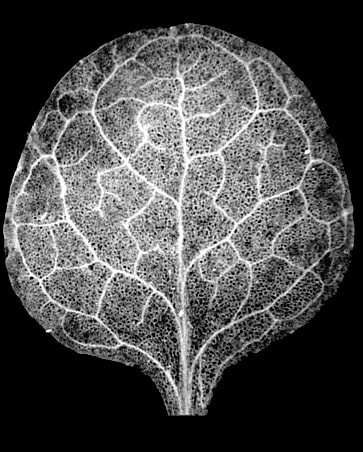
Robert Muscarella is a Senior Lecturer at the Department of Ecology and Genetics, Plant Ecology and Evolution, Uppsala University. His work bridges plant ecology, climate change impacts, and tropical forest dynamics. Research interests include Climate change effects on forest structure Functional trait analysis Species distribution modeling Post-disturbance forest recovery Ecohydrology of tropical systems Remote sensing applications in ecology Recent publications highlight trends in tree mortality , hurricane impacts , drought responses , and functional trait variability across tropical ecosystems. Methodological contributions include open-access species distribution modeling tools.
Pavol Federl is an Assistant Professor (Teaching) in the Department of Computer Science at the University of Calgary, Faculty of Science. His research focuses on computational modeling in biological systems, particularly plant growth, fracture mechanics, and interdisciplinary applications of L-systems. He holds a PhD (2002), MSc (1997), and BSc (1995) in Computer Science from the University of Calgary. Research Interests Biological modeling using L-systems Fracture formation in growing materials Computer graphics and interactive simulation environments Plant growth dynamics and pattern formation His work integrates mathematical modeling with computational techniques to study natural phenomena, such as leaf venation patterns and tree bark fracture. Recent research highlights include: Developmental models of multicellular structures Finite element analysis of fracture dynamics Interactive design tools for bonsai tree modeling Grants and Advising No specific grants or advisees are listed in the provided text. His teaching includes courses such as CPSC 457: Principles of Operating Systems. Professional Contributions He has contributed to software development in virtual laboratories and license plate recognition systems, demonstrating expertise in both theoretical and applied computing.
Leslie Sieburth is Professor of Biological Sciences at the University of Utah, where she also serves in the Molecular Biology Program. Her research group investigates plant developmental genetics using the model system Arabidopsis thaliana. Education B.S., Humboldt State University Ph.D., University of Georgia Research Focus Her laboratory addresses two major themes: (1) post-transcriptional control of gene expression through mRNA decay and P-body dynamics, and (2) long-distance hormonal signaling mediated by a novel carotenoid-derived metabolite. By combining genetics, cell biology, biochemistry, and metabolomics, the group deciphers how RNA turnover and mobile signals orchestrate leaf patterning and shoot development. Publication Trends Across the past 15 years, Sieburth’s publications illuminate a coherent program that bridges RNA biology with hormone signaling. Early work defined key components of the Arabidopsis mRNA decapping machinery and uncovered the unexpected role of P-bodies in miRNA-mediated translational repression. Later studies advanced to the discovery and characterization of the BPS (bypass) signal, a root-derived carotenoid derivative that acts as a new plant hormone, arresting shoot growth by disrupting cytokinin signaling and meristem maintenance. Scientific Recognition While no specific awards are listed in the provided text, her work appears in top-tier journals such as PNAS , Science , Plant Cell , and EMBO Journal , attesting to broad scientific impact. Funding & Team The lab is currently funded through federal grants to explore the biochemical identity of the BPS signal and the mechanistic basis of selective mRNA decay. Graduate students and post-doctoral researchers work on projects ranging from metabolite profiling to high-resolution imaging of P-body dynamics.
Dr. Paula McSteen is a Professor of Biological Sciences at the University of Missouri’s College of Arts and Science. Her research focuses on the genetic and hormonal regulation of plant meristem function, particularly in maize. She holds a PhD from the University of East Anglia (1996). Education: PhD in Biological Sciences, University of East Anglia, 1996 Research Interests: Dr. McSteen’s lab investigates how hormonal signals, such as auxin, govern meristem development and plant architecture. Key projects include analyzing mutants like bif2 and spi1 , which reveal roles for auxin transport and biosynthesis in inflorescence and vegetative growth. Her work bridges genetics, genomics, and cell biology to understand developmental pathways and their evolutionary significance in grasses. Her research emphasizes maize as a model, exploring how auxin regulates axillary meristems, floral branching, and responses to environmental stresses like boron deficiency. Publications Trends: Recent articles highlight advances in auxin signaling, boron homeostasis, and imaging techniques. Her work often integrates genomics, microscopy, and radiotracer methods to dissect hormonal networks and developmental defects. Awards: Provost's Faculty Mentoring Award (2025) College of Arts and Science Professor of the Year (2024) Chancellor’s Award for Research (2023) Fellow, AAAS (2020) Grants & Mentoring: Leads NSF-funded Plant Genome projects on maize meristem genetics. Mentored numerous students/postdocs, recognized with mentoring awards (2025, 2023, 2019). Labs/Teams: Her lab collaborates on genomic approaches and functional studies of plant hormones, with a focus on maize and grass evolution.
Elizabeth Schultz is Professor of Biological Sciences at the University of Lethbridge, Alberta, Canada. Her research group investigates the genetic and molecular bases of leaf-vein pattern formation in the model plant Arabidopsis thaliana , with a particular focus on auxin transport and PIN1 protein localization. Education: BSc (Botany, Honours), University of Guelph PhD (Genetics), University of Saskatchewan Research Interests: Prof. Schultz’s laboratory combines classical and molecular genetics to dissect the pathways that establish venation patterns in leaves. Central themes include the role of the plant hormone auxin, the asymmetric localization of PINFORMED1 (PIN1) auxin-efflux carriers, and the function of novel genes such as UNHINGED , FORKED1 , and FORKED-LIKE in orchestrating these processes. Environmental inputs—heat, drought, and ABA signalling—are also examined for their impact on vein architecture. Recent Research Directions: Mechanisms controlling PIN1 polarity in developing veins Characterisation of the GARP complex via the UNHINGED/VPS51 pathway Stress-induced alterations in leaf vasculature and their genetic basis Novel alleles of MONOPTEROS as tools to study leaf initiation and patterning Laboratory & Resources: The Schultz Lab at the University of Lethbridge maintains state-of-the-art growth facilities for Arabidopsis , advanced microscopy for live-cell imaging of PIN1 trafficking, and routine molecular biology platforms. The lab website and direct contact (schultz@uleth.ca) provide further information on current projects, available positions, and collaborative opportunities.
Dr. Jessica Erickson is a Junior Group Leader at the University of Tübingen’s Center for Integrative Biological Signaling Studies (ZMBP), within the Department of General Genetics. Her research focuses on bacterial pathogens’ manipulation of plant apoplast environments, particularly through secreted proteins like those from Xanthomonas . She leads the Bacterial Apoplast Modulators Lab, studying virulence mechanisms and plant immune responses. Academically, she holds a Ph.D. from Martin Luther University Halle-Wittenberg and postdoctoral experience at the Leibniz Institute of Plant Biochemistry. Her career includes independent project leadership funded by the DFG’s Walter Benjamin Program. Current projects leverage molecular biology, biochemistry, and computational approaches, using Arabidopsis and Nicotiana benthamiana as model systems. Research interests include effector protein function, microtubule dynamics, and stromule formation in plant cells. Her lab collaborates broadly, with publications in PLOS Pathogens , Plant Cell Physiol , and Plant Physiology . Open positions exist for bachelor/master’s theses, emphasizing plant-bacteria interaction studies. Key grants include DFG support for her independent research and infrastructure for multiplex gene editing. The lab’s future work aims to dissect how bacterial proteins reprogram plant apoplast environments to enable disease progression.
Jim Mattsson is a Professor in the Department of Biological Sciences at Simon Fraser University (SFU), specializing in Plant Functional Genomics. His research focuses on mitigating climate change impacts on crops and forest trees, including improving drought tolerance in rice, poplars, and western redcedar. He leads studies on genetic mechanisms underlying vein formation in rice and metabolite production in conifers for defense against herbivores and pathogens. Education: BSc, Uppsala University, Sweden PhD, Uppsala University, Sweden Research Interests: C4 photosynthesis engineering in rice Vein patterning and auxin signaling Climate-resilient forest tree varieties Monoterpenoid and diterpenoid biosynthesis in conifers Heartwood rot resistance mechanisms Publications: Over 25 peer-reviewed articles, including work on auxin response factors in rice, drought-resistant poplar hybrids, and thujone biosynthesis in western redcedar. Recent studies explore biological responses to salmon-derived nutrients in coastal ecosystems and micropropagation techniques for valuable timber species. Advising & Grants: Advises graduate students on plant genetics and molecular biology projects. Active in securing grants for tree improvement and climate resilience research. Labs & Collaborations: Leads a lab focused on plant functional genomics and collaborates with forest geneticists to identify drought-tolerant tree variants. Research extends to reforestation strategies for yellow cedar decline in Alaskan/BC coastal regions.
Dr. Jason Gardiner is an Assistant Professor at Utrecht University's Faculty of Science, specializing in Translational Plant Biology. His research focuses on epigenetic mechanisms in plants, particularly DNA methylation and transcriptional memory. He develops synthetic biology tools to engineer methylation-sensitive gene regulation systems for agricultural applications. Primary affiliation: Utrecht University, Faculty of Science, Environmental Biology Key research themes include: Understanding how DNA methylation maintains gene expression states through cell divisions Designing synthetic promoters responsive to methylation changes Creating targeted epimutagenesis tools for crop improvement Recent publications highlight: CRISPR-based epigenetic engineering (2022) Mechanisms of RNA-directed DNA methylation (2021) Auxin signaling in vascular patterning (multiple publications)
Daniel Pflugfelder is a Researcher at the Plant Sciences (IBG-2) department of the Institute of Bio- and Geosciences at Forschungszentrum Jülich. His work focuses on developing non-invasive imaging tools to study plant root systems, carbon dynamics, and water uptake using Magnetic Resonance Imaging (MRI) and Positron Emission Tomography (PET) . He is based in Jülich, Germany, and his research supports sustainable agriculture and bioeconomy goals. Expertise: Plant research, Magnetic Resonance, 3D Data analysis, Positron Emission Tomography, Root research His research integrates molecular, physiological, and ecological approaches to analyze plant-environment interactions and develop technologies for alternative biomass utilization. He has contributed to plant phenotyping tools like phenoPET and phenoVein , enabling precise studies of root architecture, carbon allocation, and water fluxes in crops such as sugar beet, maize, and wheat. Daniel's publications emphasize multimodal imaging techniques , particularly MRI-PET co-registration , to explore heterogeneous carbon distribution, root hydropatterning, and symbiotic interactions in legumes. His work addresses challenges in quantifying root water uptake, soil-root interactions, and climate adaptation strategies in agriculture. Key applications of his research include improving resource efficiency in crops and understanding plant responses to drought stress and warming scenarios. He has also contributed to computational tools for image processing and radiation therapy optimization in earlier works.
Sovanna Tan is a Post-Doc Researcher at the University of Oxford's Department of Plant Sciences, working in Jane Langdale's Lab as part of the C4 Rice Project. She holds a Master's and PhD in Plant Sciences from Paris-Saclay University (France), where her early work focused on hormonal regulation of symbiotic nodule formation in legumes. Her current research examines the relationship between cell divisions and vein patterning during rice leaf development, emphasizing signaling mechanisms in plant development. Education: PhD in Plant Sciences, Paris-Saclay University Master's in Plant Sciences, Paris-Saclay University Research interests span plant developmental biology, hormonal signaling networks, and the molecular mechanisms governing vascular tissue formation. She applies this expertise to improve cereal crop architectures through the C4 Rice Project. Contact: Email | Twitter