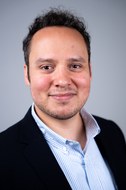
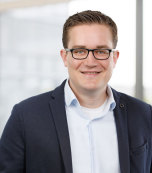
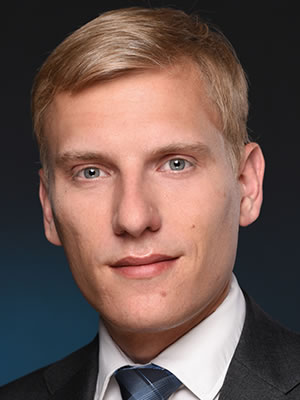
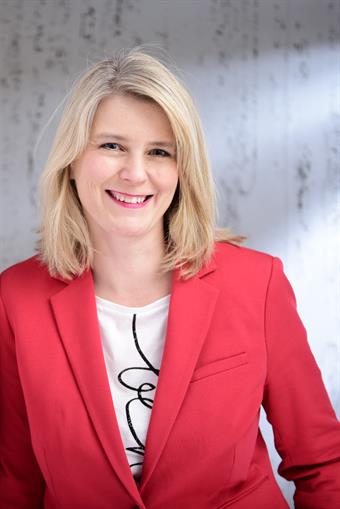
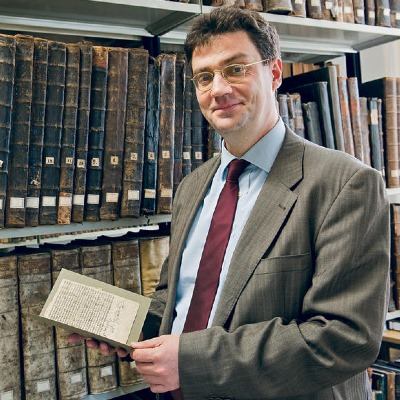
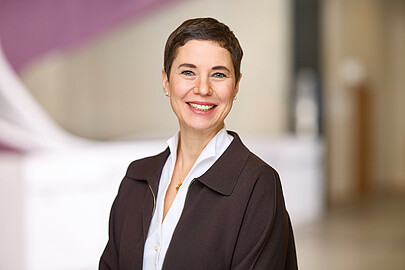
Hans Vorländer serves as a Professor at the Chair of Political Theory and History of Political Thought at TU Dresden, where he leads research through the Mercator Forum Migration and Democracy (MIDEM). His work bridges academic scholarship and policy development, focusing on migration society challenges in German educational systems. His research expertise spans: Migration and integration policy frameworks Curriculum development for diverse classrooms Political theory applications in migration contexts Refugee educational integration strategies Historical analysis of citizenship concepts Sociopolitical dynamics of migration societies Professor Vorländer's editorial leadership in the MIDEM Annual Study 2022 on “Europe and refugee migration from Ukraine” demonstrates his commitment to translating research into actionable educational policies, with forthcoming work addressing school curricula adaptation for migration societies.
Dr. Len Ole Schäfer is a Postdoctoral Researcher at the CATALPA research cluster, FernUniversität in Hagen, leading the project 'Organizational Resilience and Creativity: Exploring the Future of Educational Technology in Higher Education' (ORC) in collaboration with the Alexander von Humboldt Institute for Internet and Society (HIIG). His work investigates the interplay between organizational resilience, creativity frameworks, and educational technology implementation within higher education institutions, emphasizing trust-based leadership and strategic adaptation. Schäfer holds a PhD in Sociology (2018) from the University of Bamberg examining the UK's Research Excellence Framework impact on academic practice, and a Diploma in Sociology (2012) focused on ranking construction in science. His academic trajectory includes research positions at Zeppelin University (2018), University College London's Centre for Global Higher Education (2016), and the University of Bamberg (2012-2018). His research centers on higher education organizational dynamics, particularly how universities navigate digital transformation through resilience-building and creativity cultivation. Key interests include sociological theory applications, organizational sociology frameworks, and the role of digitalization strategies in enabling innovation. His work consistently analyzes resistance to digital change, strategic ambiguities in institutional policies, and trust mechanisms that foster EdTech adoption across diverse academic contexts. Recent publications reveal a cohesive trajectory examining organizational responses to digital disruption, with emphasis on faculty perspectives, leadership approaches, and structural adaptations. His studies—primarily qualitative and mixed-methods—highlight tensions between centralized strategies and decentralized implementation, resistance triggers, and the paradoxical role of ambiguity in enabling innovation during rapid technological change. As an active community contributor, Schäfer serves on the advisory board of FernUniversität's #NewLearning Blog and reviews for 'Higher Education - The International Journal of Higher Education Research'. His project leadership in ORC (2023–present) and OrA (until 2023) demonstrates sustained engagement with German higher education's adaptability challenges, while international collaborations with HIIG and conference presentations at EGOS and Swiss Sociological Association forums extend his scholarly impact.
Prof. Simon Adrian holds the Chair of Theoretical Electrical Engineering at the Institute of General Electrical Engineering, University of Rostock, Germany. His research focuses on computational electromagnetics with critical applications in antenna design, electromagnetic compatibility, and medical technology. He serves as Associate Editor for the IEEE Transactions on Antennas and Propagation and contributes to the IEEE Antennas and Propagation Society Education Committee, demonstrating significant academic leadership in the global electromagnetics community. His primary research addresses low-frequency instability challenges in electromagnetic integral equations through innovative numerical techniques. Key areas include Calderón preconditioners, quasi-Helmholtz projectors, B-spline discretizations, and adaptive cross approximation methods. These approaches enable robust simulations across diverse applications from radar systems and antenna design to biomedical problems like deep brain stimulation and electroencephalography. Recent work emphasizes broadband stability and efficient solvers for multiply-connected geometries. Analysis of Prof. Adrian's publication trends (2023-2025) reveals a concentrated effort on overcoming fundamental limitations in electromagnetic modeling. His work consistently targets low-frequency regimes where traditional methods fail, developing mathematically rigorous stabilization techniques while expanding into biomedical applications. The integration of isogeometric analysis with specialized discretization strategies represents a cutting-edge direction in computational electromagnetics. Professional engagement includes active membership in the Institute of Electrical and Electronics Engineers (IEEE), IEEE Antennas and Propagation Society, and Union Radio-Scientifique Internationale (URSI), reflecting his commitment to advancing the field through collaborative research and scholarly communication.
Alke Martens is Professor and Chair of Practical Computer Science at the Institute of Computer Science, Faculty of Computer Science and Electrical Engineering, University of Rostock. She serves as Dean of Studies for the Faculty, Director of the Institute, Digitalization Officer at the university, and Head of Junior Studies, with additional leadership roles including Chairwoman of the Digital Innovation Center Supervisory Board and Head of the Historical-Technical Collection of Computer Science. Research Interests: Her work centers on computer science didactics, digital transformation in educational and corporate environments, and societal implications of computing. She develops school-level curricula through initiatives like "Computer Science Unplugged" and "Rent-a-Professional," bridging cognitive systems, AI pedagogy, and teacher training to advance computational thinking in K-12 education. Academic Engagement: Martens actively shapes educational policy as Dean of Studies and GI Ambassador, while her cross-faculty memberships in the Interdisciplinary Faculty (Ageing Department), Center for Teacher Education (ZLB), and ICT Network demonstrate commitment to interdisciplinary digital innovation. Her IEEE and German Informatics Society affiliations further highlight expertise in intelligent learning systems and e-education.
Prof. Dr. Jana Hönke serves as Professor and Chair for Sociology in Africa at the University of Bayreuth within the Faculty of Humanities and Social Science, Department of Sociology. She currently directs the ERC INFRAGLOB project Africa's Infrastructure Globalities and the DFG project Crafting the space to govern: Non-state practices of legitimation in Africa . She also co-leads the Postcolonial Hierarchies in Peace and Conflict research network and the Conflicts.Meanings.Transitions network. Her research focuses on governance practices, examining how they are co-produced, contested, and travel across borders. Her current work investigates how political geographies transform through South-South relations, with particular attention to social and security arrangements around multinational corporations and large-scale infrastructure projects in Africa. Her fieldwork spans Sub-Saharan Africa (South Africa, DRC, Zambia, Tanzania, Mozambique, Guinea), Europe, China, and Brazil. Prof. Hönke's recent publications reveal a strong focus on infrastructure development, South-South cooperation, and the political implications of resource extraction. Her work increasingly examines Chinese and Brazilian engagements in Africa, exploring how these relationships reshape governance structures and political geographies. Her research combines postcolonial theory with empirical analysis of infrastructure projects, security arrangements, and corporate governance practices. She is actively engaged in academic leadership as the founder of the UBT Peace and Conflict research network, Deputy Spokesperson of the Bavarian Research Alliance Conflict, Peace and Security, and member of the Institute for Peace Research and Security Policy Hamburg (IFSH). She also serves on editorial boards of prominent journals including International Political Sociology , European Journal of International Relations , and Security Dialogue . Prof. Hönke previously held positions as Associate Professor and Rosalind Franklin Fellow at the University of Groningen, lecturer at the University of Edinburgh, and researcher at Freie Universität Berlin. Her educational background includes a Magister (MA) in African Studies, Political Science and Economics from the University of Leipzig and a PhD in Political Science from Freie Universität Berlin.
Prof. Dr. Katja Fiehler holds the W3 Professorship for Experimental Psychology ("Perception & Action") at Giessen University since March 2020. She previously served as W2 Professor (2016-2020) and Heisenberg-Professor (2011-2016) at the same institution. Her research focuses on sensorimotor integration, tactile perception, and spatial cognition in naturalistic environments, particularly through virtual reality applications. Current roles: Speaker of Cluster Project "The Adaptive Mind" Leadership: Speaker of DFG IRTG-1901 "The Brain in Action" Member of directorate: DFG SFB/TRR-135 "Cardinal mechanisms of perception" Directorate member: Bender Institute for Neuroimaging (BION) Katja's research spans tactile suppression during action, spatial memory coding, and multimodal perception. Her team investigates how sensorimotor predictions modulate sensory processing, how aging affects motor-sensory integration, and the neural basis of allocentric/egocentric spatial representations. Recent publications show strong focus on virtual reality experiments, sensorimotor recalibration, and inter-effector coordination. Key themes include tactile perception modulation by movement demands, spatial cognition in naturalistic environments, and cross-modal metacognition. She leads the "Team Perception and Action" at Giessen University, which includes researchers like Dr. Belkis Ezgi Arikan, Dr. Tom Nissens, and Dr. Meaghan McManus. Her lab develops tools like vexptoolbox for VR-based human behavior studies.
Dr. Tim Chen is a Senior Lecturer at the School of Computer Science, University of Adelaide, with research focused on augmenting human capabilities through human-centered AI systems. He leads interdisciplinary teams in projects like the Augmenting Ability CRC and the IMAGENDO Project , which received the Eureka Prize and NHMRC Idea Grant. Affiliation: University of Adelaide Collaborators: Prof. Patrick Baudisch (HPI), Prof. Takeo Igarashi (U of Tokyo), Prof CT Lin (UTS), Dr. Li-Yi Wei (Adobe Research) Research Interests: Human-AI interaction paradigms ( AI as Assistant, Collaborator, Oracle ), virtual reality training, contrastive learning, and data visualization. His work bridges AI/ML, computer graphics, and human-computer interaction to empower knowledge workers. Recent Achievements: Two CHI 2025 papers on VR learning, SIGGRAPH 2025 jury committee role, and ARC DP analysis website development. Funding includes NHMRC (~$2M) and AEA Ignite grants. Scientific Awards: Eureka Prize-winning leadership NHMRC Idea Project Grant AEA Ignite Grant (~$500k)
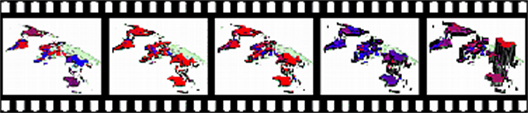
Prof. Dr. Hans-Hubertus Bleuel is a Professor at Hochschule Düsseldorf (University of Applied Sciences Düsseldorf) in the Faculty of Business Studies. He has been a faculty member since 2001, specializing in international management and regional studies. Throughout his career at the institution, he has held various leadership positions including Dean of the Business Department (2010-2014) and currently serves as Chairman of the Faculty Council since 2021. Professor Bleuel's research focuses on the business administration of Multinational Companies, with particular emphasis on international business economics, international risk management, innovation economics, and network economics. His work takes an interdisciplinary approach, combining business administration with economics, sociology, and cultural anthropology to provide comprehensive insights into global business operations. His teaching methodology emphasizes applied learning through case studies and enterprise collaborations to solve real-world management problems. His extensive publication record spanning from 1991 to 2017 demonstrates expertise in foreign exchange risk management (particularly German-Russian contexts), international investment strategies, and post-globalization economic processes. The most recent publications address contemporary issues in international management, currency cooperation, and economic modernization. Professor Bleuel has held significant academic governance roles including member of the faculty council since 2002, financial officer of the faculty (2002-2010), and academic program manager for both International Management Bachelor's (2002-2010) and Master's (2017-2020) programs. He provides valuable resources for students through curated economic information sources and materials on economic growth visualization using Geographic Information Systems.
Prof. Dr. Nicole Richter holds the Professorship for General Business Administration with specialization in Corporate Management, Organization, and Human Resource Management at Hochschule Düsseldorf's Faculty of Business Studies since 2020. She serves as Co-Academic Program Director for the M.A. Communication, Multimedia and Market Management program and acts as the institution's Equality Commissioner. Education: Diplom-Kauffrau (Heinrich-Heine-Universität Düsseldorf), MBA (International Case Competition, Montréal), Postgraduate teaching certifications Research Focus: Combines organizational leadership with contemporary HR challenges through 15+ publications covering: Leadership models in hybrid workplaces Employer branding strategies Talent management systems Organizational change processes Scientific Recognition: Recipient of the prestigious Wiged-Award for best diploma thesis and Team-Spirit Award for international MBA competition. Academic Contributions: Specializes in practical thesis supervision and has developed innovative teaching concepts like the 'Arbeitsgruppe Thesis' for collaborative research development. Regularly collaborates with industry leaders on organizational transformation topics.
Professor Andreas Lehnardt is a distinguished scholar of Jewish Studies at Johannes Gutenberg University Mainz, where he has been a faculty member since his appointment as university professor in 2004. He serves as Chairman of the Commission for the History of the Jews in Hesse and is a member of the Executive Board of the Gutenberg Research College. His academic leadership extends to the European Association for Jewish Studies and various scholarly organizations focused on Jewish history and religious studies. Born in Duisburg in 1965, Lehnardt pursued extensive studies in Judaic Studies and Theology across multiple prestigious institutions including Münster, Munich, Bonn, Cologne, Jerusalem, Tübingen, and Berlin (1984-1994). His academic journey included research positions at the Institutum Judaicum Delitzschianum (1990-1993) and the Institute for Ancient Judaism and Hellenistic Religious History at the University of Tübingen (1995-1998). He earned his doctorate in Jewish Studies from the Free University of Berlin in 1999 and was appointed university professor at Johannes Gutenberg University Mainz on June 28, 2004. Professor Lehnardt's research spans multiple facets of Jewish studies with particular focus on Rabbinic literature (Talmud and Midrash), Samaritan studies, Hebrew and Aramaic manuscripts, Jewish epigraphy, and Genizah research. His work explores the intersection of textual traditions, material culture, and religious practices in Jewish communities from antiquity through the medieval period. He has made significant contributions to understanding Jewish writings from the Hellenistic-Roman period, Jewish prayers, Minhagim (customs), and the cultural history of Ashkenazi communities, particularly in the German context. Lehnardt's extensive publication record reflects his engagement with diverse research areas, showing a consistent focus on manuscript discoveries, textual analysis, and historical context. His recent work demonstrates increasing attention to material culture studies, particularly through the examination of binding fragments, gravestones, and other physical artifacts that reveal insights into Jewish communal life. He has pioneered research on Hebrew and Aramaic binding fragments in German archives and libraries, creating new avenues for understanding medieval Jewish textual transmission. Professor Lehnardt has secured significant research funding from multiple sources including the German Research Foundation (DFG), the Ministry of Science of Rhineland-Palatinate, the Fritz Thyssen Foundation, and various university research funds. His current major project 'The Old Jewish Library at Johannes Gutenberg University – Cataloguing and Restoration' continues his long-standing commitment to preserving and studying Jewish textual heritage. He has supervised numerous research projects focused on German Jewish history, particularly in the Rhineland region. As an active member of multiple scholarly organizations including the Association for Jewish Studies, the European Association for Jewish Studies, the Hebraistenverband, and the Kommission für die Geschichte der Juden in Hessen, Professor Lehnardt contributes significantly to the institutional framework of Jewish studies internationally. His leadership roles in these organizations demonstrate his commitment to advancing the field through collaborative scholarship and academic service. His work bridges historical research with contemporary cultural preservation efforts, particularly concerning the Jewish heritage in Germany.
Christian Heiß is a Professor and Director of the Clinic at the Clinic and Polyclinic for Trauma Surgery, University Hospital Giessen and Marburg GmbH, affiliated with Justus Liebig University Giessen. His clinical expertise spans Trauma Surgery, Orthopaedics, Special Trauma Surgery, Sports Medicine, Emergency Medicine, Physical Therapy, and Balneology. He serves as a Specialist in Surgery and Orthopaedics and Trauma Surgery, with additional specialization in Hand Surgery. Professor Heiß's research interests focus on Trauma Surgery, Orthopaedics, Osteoporosis Research, Bone Substitutes, Fracture Healing, Bone Adhesives, and Experimental Trauma Surgery. His work explores the complex relationship between bone metabolism, rheumatoid conditions, and trauma management. His research has significantly contributed to understanding bone healing processes, particularly in osteoporotic conditions, and the development of novel bone substitute materials. Analysis of his recent publications reveals a strong emphasis on clinical applications of bone biomaterials, management of trauma in patients with rheumatoid conditions, and biomechanical aspects of fracture healing. His work bridges fundamental bone biology with practical clinical applications, particularly in challenging cases involving osteoporosis and rheumatoid arthritis. May 2019: Conference President VSOU in Baden-Baden May 2018: Senior AOTrauma Surgeon March 2018: Honorary Member of SRATS (The Romanian Society of Arthroscopy and Sports Trauma) November 2016: Honorary doctorate from the University of Craiova, Romania March 2013: Osteology Research Group Award of the German Academy of Osteological and Rheumatological Sciences in Weimar Professor Heiß has been involved in numerous research collaborations and has served on multiple advisory boards including AO Trauma, Bone Adhesive (Stryker), Fracture Healing in Osteoporosis (Amgen), and Osteoarthritis (Novartis). His leadership extends to the SFB/TRR 79 research consortium, where he has been a member and board member since 2010. His laboratory work in the Laboratory for Experimental Trauma Surgery focuses on translational research connecting basic science discoveries with clinical applications in trauma surgery.
Prof. Dr. Katharina Müller is a University Professor at the Leibniz University Hannover , affiliated with the Faculty of Philosophy and the Institute of Educational Science . She leads research in school pedagogy with a focus on teaching and learning research. Academic Focus: Teacher professionalization, inclusive education, sociocultural influences on learning, mobile eye-tracking in classrooms Key Projects: BIKO-LAMB (multilingual teacher competencies), WiNaLehramt (teacher motivation), Teaching Labs for core practices Research Themes: Her work examines how internship structures affect teacher competency development, mentorship in inclusive schools, and the impact of heterogeneity on student outcomes. She employs quasi-experimental designs and secondary data from PISA. Recent Publications (2025–2023) address teacher training innovations, refugee language education, and classroom perception studies. Awards include the 2020 Science Prize of Lower Saxony for digital teaching collaboration. Additional Contributions: She co-led the textbook Textbook of Educational Sciences (2025), analyzed PISA data (2013–2017), and developed mentorship frameworks. Her full CV includes leadership roles at Leibniz School of Education and projects like Leibniz Principle (2019–2023).
Wanda Alberts (born 1975) is Professor of Religious Studies at Leibniz University Hannover, where she has served since August 2013. She currently holds the position of managing director of the Institute for Religious Studies and is actively involved in multiple administrative roles including Chair of the Audit Committee, Examination Board for Religion in the Public Sphere, and representation on the Faculty Council of the Faculty of Philosophy. She also represents professors on the Center for Atlantic and Global Studies and serves on the Selection Committee for the Master's Program in Religion in the Public Sphere. Philipps University Marburg: Doctorate in Religious Studies (2006) University of Marburg: State examination for teaching at grammar schools (2002) University of Marburg: Master of Arts (2001) Universities of Mainz, Swansea (Wales) and Marburg: Religious Studies, English and Protestant Theology Professor Alberts' research focuses on critical approaches to religious studies, particularly examining religion in public spaces and secular educational contexts across international settings. Her work consistently challenges conventional paradigms in religious studies, with special emphasis on critiquing the world religions paradigm and developing innovative approaches to religious studies didactics. She has made significant contributions to understanding how religion functions in diverse educational environments, especially in European contexts where secular approaches to religious education must navigate complex cultural landscapes. Her extensive publication record demonstrates consistent scholarly engagement with the intersection of academic religious studies and practical educational applications. Over the past fifteen years, her work has increasingly focused on the challenges of implementing critical, secular approaches to religious studies within educational systems, particularly examining how different European countries handle religious diversity in public schools. A notable trend in her recent scholarship is the critical examination of how religious education can avoid subtle forms of indoctrination ('small-i indoctrination') while maintaining academic rigor and neutrality. Doctoral Prize of the Philipps University of Marburg (Philosophy and Cultural Studies section, 2007) Doctoral Prize 'Religion and Ethics' from the Interdisciplinary Forum for Religion at the University of Erfurt (2007) Postdoctoral scholarship from the German Academic Exchange Service (DAAD) for research at University of Edinburgh (2007) Doctoral scholarship from the German Academic Scholarship Foundation (2002-2005) with research stays in Oxford and Gothenburg European Union 'Socrates' scholarship for study at University of Wales in Swansea (1997-1998) Professor Alberts has held significant leadership roles in academic organizations, including membership on the executive committee of the European Association for the Study of Religions (EASR) since 2008, where she co-founded and leads the EASR Working Group on Religion in Secular Education. She has served on the Joint Implementation Group of the Council of Europe and the European Wergeland Centre, and was organizer of the XXXIII Annual Conference of the German Association for Religious Studies in 2019. Her administrative responsibilities at Leibniz University Hannover include managing the Institute for Religious Studies and serving on multiple examination boards and committees related to religious studies education. As managing director of the Institute for Religious Studies, Professor Alberts oversees research initiatives including the 'Religious studies from a religious studies perspective' project and the 'Handbook Religious Studies in Germany' (co-edited with Horst Junginger, Katharina Neef and Christina Wöstemeyer). She is also involved with the Center for Atlantic and Global Studies, where she participates in interdisciplinary research examining global religious trends, particularly regarding migration and religious diversity. Her work frequently bridges academic religious studies with practical educational applications through collaborations with European educational institutions and policy organizations.
Uwe Hentschel serves as Associate Professor of Modern German and Comparative Literature at the Faculty of Philosophy, Chemnitz University of Technology. Affiliated with TU Chemnitz since 1993 and holding an associate professorship (apl. Prof.) since 2008, he specializes in 18th and 19th-century German literary history with particular expertise in travel literature, Swiss imagery (Philhelvetism), and regional literary studies. He concurrently holds the position of Deputy Chairman of the Berlin Goethe Society. His academic foundation includes: Born 1960 in Zwickau German Studies and Literary Science studies at Leipzig University PhD (1990) on travel literature at the end of the 18th century Habilitation (1999) on 'Mythos Schweiz. Zum deutschen literarischen Philhelvetismus zwischen 1700 und 1850' Senior Assistant position (2000) Hentschel's research centers on cultural and literary history of the Enlightenment and Romantic eras, examining travel writing's role in shaping regional identities, national consciousness, and cross-cultural perceptions. His work explores intersections between geography, literature, and identity formation, with special attention to erotic literature, epistolary culture, and publishing history. He investigates how travel narratives constructed cultural landscapes of regions like Switzerland, the Ore Mountains, Mecklenburg, and Lausitz, revealing evolving German self-perceptions through encounters with foreign spaces. His extensive publication record demonstrates consistent scholarly engagement with travel literature across two centuries. Recent works focus on regional identity construction through historical travel accounts, examining how 18th and 19th-century writers documented cultural landscapes of Mecklenburg, Pomerania, and Lausitz. This research reveals travel writing's function in documenting cultural transitions, regional particularities, and evolving national consciousness within German-speaking territories. Scientific recognition includes: Long-term editorial collaboration on 'Entstehung von Goethes Werken in Dokumenten' project DFG-funded research on Stefan Heym's 'Ahasver Chronotopos' Organizational leadership for academic conferences including 'memento Stalingrad' Hentschel actively supervises graduate research and contributes to academic governance through the Berlin Goethe Society. His editorial work spans numerous publication series including 'Studien zur Imagologie- und Reiseliteraturforschung' (8 volumes). He maintains significant involvement in research teams focused on Goethe studies and German travel literature historiography. His scholarly activities extend to project leadership in document-based literary research and conference organization, maintaining active participation in national and international academic networks centered on 18th and 19th-century German literature.
Prof. Dr. Claudia Bettina Maier serves as Professor of Nursing Science and Health Services Research at the Faculty of Health Sciences, Bielefeld University since August 2023. She holds dual Senior Fellow positions at the University of Pennsylvania, School of Nursing and the European Observatory on Health Systems and Policies. Her research focuses on future-oriented challenges in nursing and healthcare systems, with particular emphasis on: Academicization and new roles in nursing, including advanced practice nursing Organizational development, work environment, and quality in nursing Skill mix and qualification mix in professional healthcare teams Innovations in nursing practice and delivery models As deputy editor of Human Resources for Health journal, she influences global discourse on healthcare workforce issues. Her expertise is regularly sought by the WHO Regional Office for Europe on nursing policy matters. Her career demonstrates significant international engagement: 2015-2023: Research associate at Technical University of Berlin, including junior research group leadership (2021-2023) 2014-2015: Harkness Fellow at University of Pennsylvania with Prof. Linda H. Aiken 2011-2014: Worked at UNAIDS on health system strengthening and HIV/AIDS program integration 2008-2011: European Observatory on Health Systems and Policies in Brussels 2007-2008: Directorate General Sanco (Santé) in Brussels She actively participates in international advisory roles including the Concerted Action Nursing Expert Group, Robert Bosch Foundation's Restart! project, and Columbia University's Center for Healthcare Delivery Research and Innovation advisory board.