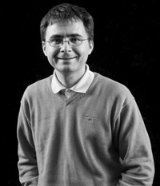
Nimish Shah is a Professor in the Department of Mathematics at The Ohio State University, Columbus, Ohio. His research focuses on Ergodic Theory, Homogeneous Spaces of Lie Groups, and their applications to Number Theory. He holds a PhD from the Tata Institute of Fundamental Research (1994) and has authored over 40 publications. Research Interests: Shah’s work centers on dynamics on homogeneous spaces, including equidistribution problems, limit distributions, and applications to Diophantine approximation. His studies often involve unipotent flows, lattice actions, and geometric aspects of Lie groups. Publications Trends: Recent work (2023–2025) emphasizes expanding translates of geometric objects (curves, manifolds) and their equidistribution properties, with applications to Dirichlet-type approximation theorems. Earlier work (2009–2018) explored limit distributions of geodesics and integral points on hyperbolic manifolds. Awards/Grants: No specific awards or grants listed in the provided texts. Advising: No advisee names listed in the text. Labs/Teams: No lab affiliations explicitly mentioned.
Shailesh Chandrasekharan is a Professor of Physics in the Department of Physics at Duke University's Trinity College of Arts & Sciences, a position he has held since 2018. Prior to this, he served as Associate Professor of Physics (2005-2018) and Assistant Professor of Physics (1998-2004) at Duke. He has also held leadership roles including Director of Graduate Studies in the Department of Physics (2011-2014, 2019). Dr. Chandrasekharan received his education at prestigious institutions: a B.S. from the Indian Institute of Technology, Madras (1989), followed by an M.A. (1992), M.Phil. (1994), and Ph.D. (1996) from Columbia University. His research focuses on understanding quantum field theories non-perturbatively from first principles calculations, with particular emphasis on lattice formulations of these theories. He specializes in strongly correlated fermionic systems relevant to condensed matter, particle, and nuclear physics. A significant portion of his work involves developing novel Monte-Carlo algorithms to study quantum systems, with special attention to solutions for the notoriously difficult "sign problem" that affects quantum simulations. His expertise spans quantum computing applications, statistical physics, field theory, and critical phenomena. Analysis of his recent publications reveals a strong focus on qubit regularization techniques for lattice gauge theories, quantum critical phenomena, and applications to quantum computing. His work bridges theoretical physics with computational methods, particularly in the areas of asymptotic freedom, quantum phase transitions, and non-perturbative approaches to quantum field theory. The research demonstrates consistent innovation in addressing fundamental challenges in quantum simulation. Dr. Chandrasekharan has secured significant research funding, including the current "Lattice Gauge Theories on a Quantum Computer" project (2024-2028) as Principal Investigator, and long-term projects like "Lattice and Effective Field Theory Studies of Quantum Chromodynamics" (2005-2027) as Co-Principal Investigator. He currently advises PhD student Rui Xian Siew and has taught courses ranging from undergraduate General Physics to advanced graduate-level Quantum Mechanics and Electrodynamics. His teaching portfolio demonstrates breadth across physics education, with recent courses including PHYSICS 122DL (General Physics II), PHYSICS 762 (Electrodynamics), and PHYSICS 765 (Advanced Quantum Mechanics), showing his commitment to both foundational and advanced physics education. His research continues to push the boundaries of quantum field theory simulation and quantum computing applications.
Leonhard Summerer is an Associate Professor at the Faculty of Mathematics, Department of Mathematics . His research primarily focuses on Diophantine Approximation , Geometry of Numbers , and Parametric Approximation . His work explores the Approximation Property in parametric settings, Lattice Theory , and Linear Dependence in number theory. Recent publications include studies on Jarník’s identity, simultaneous approximation to multiple reals, and geometric interpretations of number-theoretic problems. He has authored numerous peer-reviewed articles and contributed chapters to educational books such as 77-mal Mathematik für Zwischendurch , emphasizing mathematical outreach and pedagogical innovation . Active in academic discourse, he has delivered talks on topics like Packings and Tilings in Z and Simultane Approximation m reeller Zahlen since 2006.
Timm Oertel is a Professor in the Department of Data Science at Friedrich Alexander University Erlangen-Nuremberg (FAU), holding the Chair of Analytics & Mixed-Integer Optimization. His office is located in Room 03.344 at Cauerstraße 11, Erlangen, and he can be contacted via email at timm.oertel@fau.de or phone at +49 9131 85-67313. His research focuses on mixed-integer optimization, combinatorial optimization, and discrete mathematics, with significant contributions to sparse solutions in lattices and semigroups, integer Carathéodory rank, knapsack polyhedra, and parametric integer optimization. His work bridges theoretical computer science, operations research, and discrete geometry, emphasizing structural properties of integer solutions and algorithmic efficiency. Professor Oertel's publication record (2013-2025) reveals consistent trends in theoretical integer programming, with recent work (2020-2025) concentrating on sparsity patterns, approximation in algebraic structures, and complexity bounds. He frequently collaborates with leading researchers including Iskander Aliev, Robert Weismantel, and Joseph Paat, publishing in top venues like Mathematical Programming and SIAM Journal on Optimization. His research demonstrates deep connections between combinatorial geometry and optimization theory.
Professor David Harvey is a faculty member at the School of Mathematics and Statistics within the University of New South Wales (UNSW), where he has held positions ranging from Courant Instructor to his current professorship. He is also a Fellow of the Australian Mathematical Society . Ph.D. in Mathematics (Harvard University, 2008) B.Sc. in Mathematics with First Class Honours and University Medal (UNSW, 2002) Harvey's research focuses on computational number theory and arithmetic geometry , with emphasis on fast polynomial and integer arithmetic algorithms. His work includes groundbreaking advancements in O(n log n) complexity for integer multiplication, leveraging techniques such as Fast Fourier Transforms , lattice reduction , and p-adic cohomology for zeta function computations. His publications from 2018–2024 demonstrate expertise in algorithm design for problems in number theory , algebraic geometry , and cryptography , with recurring themes of computational efficiency , finite field arithmetic , and polynomial operations . 2022 N.G. de Bruijn Medal (shared) 2019 Australian Mathematical Society Medal 2016 Journal of Complexity Best Paper Award Harvey has led significant research grants including the ARC Future Fellowship (2017–2021) and the ARC Discovery Project , focusing on zeta function algorithms and point-counting on algebraic surfaces . He co-organizes the UNSW Number Theory Seminar.
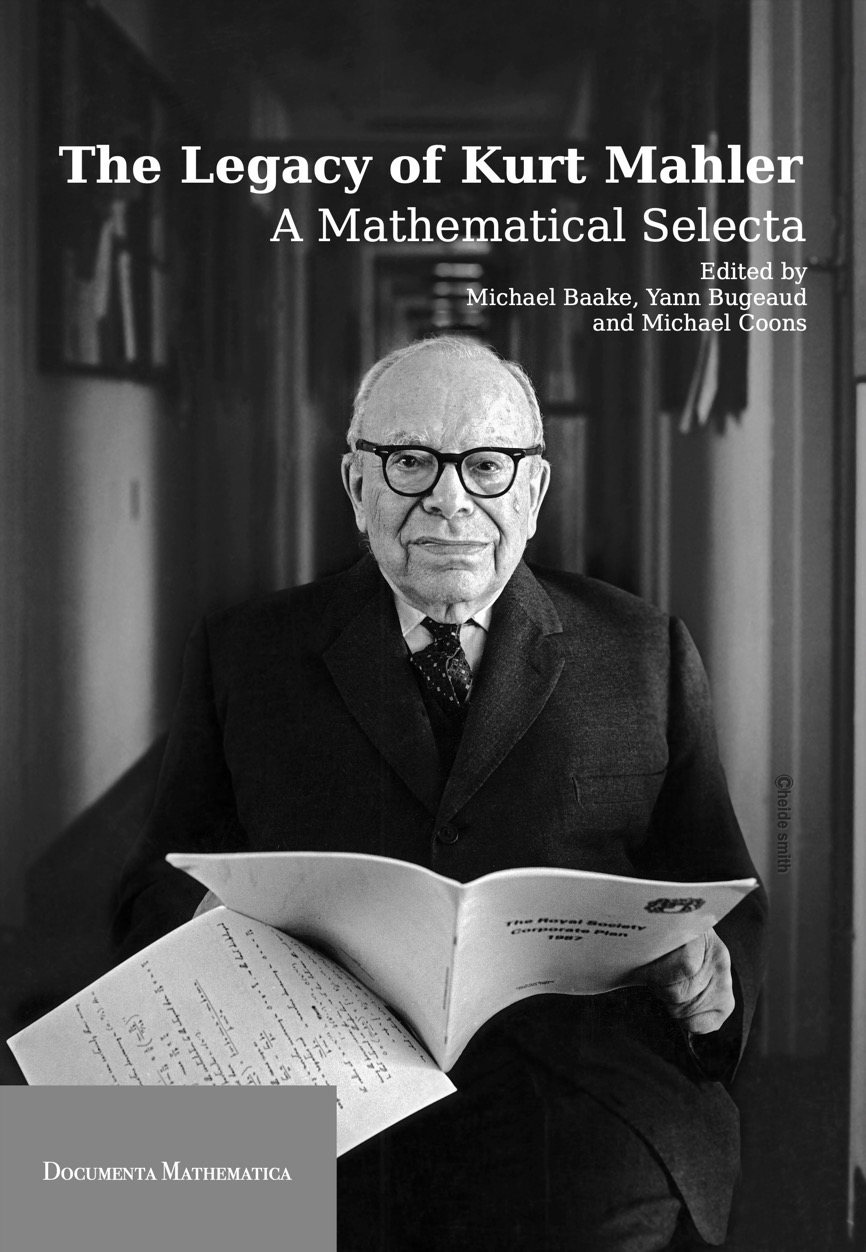
Michael Baake is a Professor of Mathematics at Bielefeld University, affiliated with the Faculty of Mathematics. His research focuses on Aperiodic Order, Dynamical Systems, Combinatorics, and Mathematical Physics. He leads multiple research projects, including the SFB/TR 358 'Integral Structures in Geometry and Representation Theory' and SFB 1283 'Taming Uncertainty'. His work bridges pure mathematics with applications in crystallography and stochastic systems. Affiliations: Representative for the Faculty Library, Co-Director of the Research Focus on Mathematical Modeling. Cooperations: Collaborates with international experts like Uwe Grimm, Daniel Lenz, and Nicolae Strungaru on topics such as aperiodic tilings and spectral theory. Research Groups: Leads a vibrant research group with members including Anna Klick, Daniel Luz, and Timo Spindeler, focusing on quasicrystals, combinatorial structures, and number theory applications. His contributions include co-editing the book 'Aperiodic Order: Crystallography and Almost Periodicity' and organizing workshops on spectral theory and dynamical systems. He actively engages in academic service, including editorial roles and conference organization.
Jean-Jacques Herings is a Full Professor of Quantitative Microeconomics at Tilburg University's Tilburg School of Economics and Management (TiSEM), specifically within the Department of Econometrics and Operations Research. He has held this position since March 2022, having previously been a Professor of Economics at Maastricht University from September 1999 to February 2022. Herings' research focuses on five primary themes: Cooperative game theory, non-cooperative game theory, networks, general equilibrium theory, and equilibrium computation. His work spans theoretical foundations and practical applications, particularly in financial networks, matching markets, and strategic decision-making. He has published over 200 research outputs including articles in top journals such as Econometrica, Journal of Economic Theory, Management Science, and Mathematics of Operations Research. His recent publications reveal a continued focus on game-theoretic applications to economic problems, with particular attention to financial networks, bankruptcy problems, matching theory, and information design. There's a clear trend toward computational methods for finding equilibria and increasingly sophisticated modeling of strategic interactions in networked environments, with over 13 publications in 2024 alone demonstrating his active research program. Johannes Cornelis Ruigrok Prize (1997) Lionel W. McKenzie Prize (2008) VICI grant from NWO Fellow of the Game Theory Society (2017) Secretary-Treasurer of Game Theory Society (2014-2022) Fellow of the Society for the Advancement of Economic Theory (2019) As an advisor, Herings has supervised over 20 PhD students to completion, with research spanning game theory applications in economics, finance, and network theory. His editorial service includes membership on the boards of Games and Economic Behavior, Journal of Mathematical Economics, International Journal of Game Theory, and Mathematics of Operations Research. He also serves on the International Advisory Board of the Center for Mathematical Research in Economics and Finance at the University of Manchester.
Galen Dorpalen-Barry is an Assistant Professor at Texas A&M University. Her research focuses on geometric and algebraic combinatorics, particularly hyperplane arrangements, oriented matroids, polytopes, posets, and related fields. Education: PhD in Mathematics (University of Minnesota, 2021) Masters in Mathematics (University of Minnesota, 2018) Bachelor of Arts in Mathematics (Bard College, 2015) Her recent research explores the topology of hyperplane arrangement complements, cohomology of graphical configuration spaces, and combinatorial interpretations of the ab-index. She collaborates with researchers including Nick Proudfoot, Christian Stump, and Vic Reiner. Galen has organized multiple seminars and conferences, including the Algebra and Combinatorics Seminar at Texas A&M and special sessions at SIAM and AMS meetings. She has presented at numerous international workshops and seminars on topics like positive geometries, Shi arrangements, and the Varchenko-Gel'fand ring. Contact: dorpalen-barry@tamu.edu | Website | GitHub
Professor Konstanze Rietsch is a Professor of Geometry at King's College London's Department of Mathematics, part of the Faculty of Natural, Mathematical & Engineering Sciences. She holds a Master's from the University of Vienna (1993) and a PhD from MIT (1998). Her research focuses on Lie theory, quantum cohomology, mirror symmetry, and total positivity, with significant contributions to flag varieties and geometric representation theory. Key achievements include EPSRC Advanced Fellowship (2006) and Royal Society Dorothy Hodgkin Fellowship (2002). Her work bridges algebraic geometry, combinatorics, and mathematical physics, with recent projects on mirror symmetry for cluster varieties and Landau-Ginzburg models. She has supervised 4 doctoral students and contributed to major conferences like the Lusztig 60th Birthday Conference. Publications span advanced topics like polytope theory, quantum Schubert calculus, and geometric Satake correspondence. Her research group explores algebraic geometry, cohomology, differential geometry, and symplectic geometry.
Jayadev S. Athreya is a Professor of Mathematics and Comparative History of Ideas at the University of Washington. He also serves as co-Director of the Pacific Institute for the Mathematical Sciences (PIMS) and founder of the Washington Experimental Mathematics Lab. His research focuses on ergodic theory, dynamical systems, geometry, and number theory, with a particular emphasis on translation surfaces, billiards dynamics, and moduli spaces. He holds a PhD from the University of Chicago (2006) and has been actively involved in promoting mathematical education and outreach. Axioms emphasizing equitable and joyful mathematics experiences guide his work. Education: PhD in Mathematics, University of Chicago, 2006 Research Interests: Athreya’s interdisciplinary work bridges geometry, dynamics, and number theory. Key areas include the study of billiards in polygons, Teichmüller theory, and the statistical properties of geodesics on hyperbolic surfaces. His contributions to translation surfaces and counting problems in geometry have advanced understanding of moduli spaces and extremal cocycles. Labs/Teams: He leads the Washington Experimental Mathematics Lab, fostering collaborative research through hands-on projects in geometry and combinatorics. The lab emphasizes creativity and inclusivity in mathematical exploration. Grants/Advising: While specific grants are not detailed, his leadership roles and active research output indicate sustained funding and mentorship in experimental mathematics and education initiatives.
Shabnam Akhtari is a Professor of Mathematics at the Department of Mathematics, Pennsylvania State University, affiliated with the Eberly College of Science. Her research focuses on Number Theory, particularly Diophantine Analysis and the Geometry of Numbers, with a strong emphasis on Thue equations, S-unit equations, and the study of number field properties. She co-organizes the Pittsburgh Number Theory Day and actively contributes to collaborative research initiatives like WIN6 (Women in Number Theory 6). Her work involves analyzing solutions to Diophantine equations, exploring properties of algebraic numbers, and investigating local-global principles in arithmetic contexts. Recent research highlights include studies on regulators of number fields, quartic index form equations, and the distribution of solutions to Thue equations. She has published prolifically on topics such as sparse binary forms, monogenizations, and Mahler measure bounds. Dr. Akhtari’s academic contributions extend beyond research to fostering gender equity in mathematics through conferences like WIN6. Her email is sma6998@psu.edu , and she holds office at 339 McAllister Building. No specific awards or grants are listed in the provided texts, but her involvement in organizing academic events underscores her role in advancing mathematical discourse.
Professor Martin Oettel holds a faculty position at the University of Tübingen within the Department of Physics, Faculty of Science, where he leads the Computational Nanoscience research group at the Institute of Applied Physics. His academic address is at Auf der Morgenstelle 10, 72076 Tübingen, Germany. Since 2013, he has co-organized the annual Density Functional Days workshops alongside Joseph Brader (University of Fribourg) and Roland Roth (University of Tübingen), establishing an important forum for researchers in classical density functional theory. Professor Oettel's research focuses on computational soft matter physics , with particular expertise in density functional theory applications to colloidal systems, thin film growth, and phase transitions. His work spans both fundamental theoretical developments and applied materials science problems, especially in organic electronics and nanoscale systems. Key areas include the study of hard sphere systems, monolayers of anisotropic particles on substrates, phase diagrams for complex colloidal mixtures, and the development of dynamic density functional theory approaches. His research often involves sophisticated computational modeling combined with close collaboration with experimental groups, such as Prof. Frank Schreiber's experimental group at Tübingen. His publication record demonstrates consistent contributions to the field since 2006, with recent work (2016-2018) focusing on thin film growth with anisotropic particles, monolayer systems of hard rods, phase transitions in colloidal mixtures, and advanced diffusion phenomena in confined systems. The research shows a clear trajectory from fundamental theoretical developments toward applications in materials science and nanotechnology. Professor Oettel actively supervises doctoral students, as evidenced by the 2023 job posting for a PhD position in modeling thin film growth within a DAAD-CAPES project involving collaboration with Prof. Frank Schreiber (Tübingen) and Prof. Fabio Reis (Federal Fluminense University, Brazil). This position required work on both simulations and dynamic density functional theory, with an extended research stay in Brazil. He maintains the Computational Soft Matter and Nano-Science Chair (Lehrstuhl für Computational Soft Matter and Nano-Science) at the University of Tübingen, where his research group investigates the physics of soft condensed matter systems through computational approaches. The group's work bridges theoretical physics with practical applications in materials science, particularly in organic electronics and nanoscale systems.
Gabriele Sicuro holds a Researcher position, with a focus on theoretical physics and statistical mechanics. He earned a Doctor of Science in Physics from Università di Pisa (2012–2015), a Master of Science from University of Salento (2011), and a Bachelor of Science from the same institution (2009). His research interests include high-dimensional systems, random graphs, and machine learning applications. Notable contributions address superstatistical features, dimer models, and hypergraph matching problems. He collaborates internationally, with work published in journals like Physical Review E and Journal of Statistical Mechanics . His publications explore topics such as regularization in high dimensions, graph alignment algorithms, and asymptotic analysis of Gaussian mixtures. With 220 citations, his work bridges theoretical frameworks and computational methods, contributing to advancements in statistical physics and data science.
Dr Jean Lagacé is a Lecturer in Pure Mathematics at King's College London, affiliated with the Department of Mathematics within the Faculty of Natural, Mathematical & Engineering Sciences. He joined King's in January 2022 after postdoctoral positions at University College London and the University of Bristol. He completed his PhD in Pure Mathematics at Université de Montréal under Iosif Polterovich, focusing on spectral asymptotics and the geometry of numbers. Research Interests : Spectral geometry, geometric shape optimisation, eigenvalue asymptotics, homogenisation theory, elliptic PDEs, and mathematical physics. His work bridges analysis, geometry, and number theory, addressing problems involving multiple asymptotic parameters and their effects on spectral properties. Key Contributions : Contributions include Weyl's Law for Steklov problems on rough surfaces, homogenisation techniques for eigenvalue mimicking, and spectral analysis of Dirichlet-to-Neumann operators. He co-organises the 'Spectral Geometry in the Clouds' seminar, fostering global collaboration in spectral geometry and geometric analysis.
Rainer Dietmann serves as Professor in the Department of Mathematics at Royal Holloway, University of London, specializing in Number Theory and its intersections with algebraic geometry and arithmetic. His institutional affiliation places him within the university's mathematical sciences division where he maintains active research and teaching responsibilities. His research program centers on deep problems in Number Theory, particularly focusing on Arithmetic Geometry, Diophantine Approximation, Galois Theory, and Quadratic Forms. Dietmann investigates structural properties of polynomial equations, discriminants of number fields, and geometric configurations of rational points on algebraic varieties. His work combines analytic, algebraic, and combinatorial approaches to address fundamental questions about polynomial behavior and Diophantine structures. Analysis of his recent publications reveals consistent engagement with high-impact problems in arithmetic geometry, including van der Waerden's conjecture, discriminant distributions, and rational curves on hypersurfaces. His research demonstrates increasing international collaboration, particularly with leading number theorists across Europe and Asia, while maintaining methodological rigor in both theoretical proofs and computational aspects of number theory. Professor Dietmann has supervised 3 research students and secured significant funding through two major projects: an EPSRC grant for "Forms in many variables" (2011-2012) and a Royal Society grant supporting the "Joint meeting of the Korean and American Mathematical Society" (2009-2010). These projects reflect his leadership in advancing collaborative research in number theory and polynomial arithmetic.