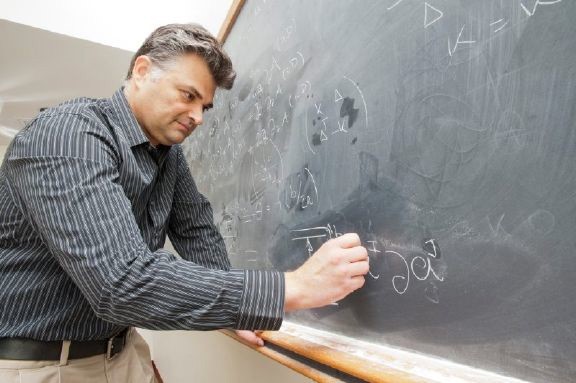
Claudio Chamon is a Professor at Boston University, specializing in condensed matter physics and quantum computing. His research focuses on electron fractionalization in topological systems, quantum spin liquids, and fractonic behavior. He holds a Ph.D. in Theoretical Physics from MIT, along with M.S. and B.S. degrees in Electrical Engineering and Aeronautics/Astronautics, also from MIT. His work bridges theoretical and experimental condensed matter physics, with contributions to topological materials, quantum phase transitions, and quantum information science. Key research areas include topology-driven fractionalization in graphene-like structures, non-Abelian gauge theories, and quantum computing applications such as encrypted operator computing. Chamon has pioneered studies on Majorana zero modes in nanowire networks and braiding non-Abelian anyons in photonic systems. His experimental collaborations aim to realize topological qubits and quantum spin liquids in programmable devices. He has received prestigious awards including the American Physical Society Fellowship, Alfred P. Sloan Fellowship, and NSF CAREER Award. Chamon’s recent work explores quantum circuit complexity, fracton dynamics, and secure computation on encrypted data, leveraging tensor networks and combinatorial symmetries.
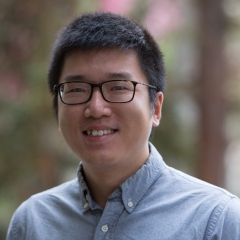
Dr. Chi Wu serves as a Lecturer in Mechanical Engineering at the University of Newcastle's School of Engineering. With a PhD from the University of Sydney (2022) and postdoctoral experience there (2023-2024), he has established himself as a rising researcher in computational mechanics and advanced manufacturing. His work bridges engineering principles with biomedical applications, particularly in the development of machine learning-driven approaches for material and structural optimization. Education: Doctor of Philosophy, University of Sydney Dr. Wu's research spans computational mechanics, topology optimization, machine learning, biomechanics, and advanced manufacturing, with particular emphasis on developing novel machine learning-based approaches for design optimization of advanced materials and structures. His work focuses on creating functionally graded tissue scaffolds, optimizing composite structures, and developing phase field models for fracture analysis. His research experience spans academia, industry, and clinical applications, demonstrating strong interdisciplinary connections. Analysis of Dr. Wu's publication record reveals a strong focus on integrating machine learning with additive manufacturing, particularly for biomedical applications. His work shows increasing sophistication in combining computational mechanics with experimental validation, with recent publications emphasizing time-dependent optimization and multi-scale modeling approaches. The trend indicates growing recognition of his work in both computational mechanics and biomedical engineering communities. Scientific Awards: Acta Journal Award (2023) Inaugural Grant Steven Award for Early Career Researchers (2023) Best Paper Award at the 12th International Conference on Structural Integrity and Failure (2021) Wiley Top Cited Article Award for 2020-2021 Best Paper Award at the 4th Australasian Conference on Computational Mechanics (2019) Dr. Wu actively recruits PhD students for research in mechanical, materials, and manufacturing engineering, with particular interest in candidates with computational mechanics and optimization backgrounds. He co-supervises students with Prof. Qing Li (ARC Future Fellow, Highly Cited Researcher) at the University of Sydney and Dr. Jianguang Fang (ARC Future Fellow) at the University of Technology Sydney. The University of Newcastle offers various scholarships, with additional support available for candidates from mainland China applying for the CSC scholarship. Dr. Wu maintains extensive collaborative networks across multiple institutions including Harvard University, Max Planck Institute, University of Exeter, Tohoku University, and several Australian universities and medical institutions including Chris O'Brien Lifehouse cancer hospital and industry partners like Cochlear Australia and Zimmer Biomet Australia.
Dr. Evgeniy Zorin is an Associate Professor in the Department of Mathematics at the University of York. His research focuses on Number Theory, Diophantine Approximation, Transcendence Theory, and related areas such as Algebraic Geometry, Ergodic Theory, and Dynamical Systems. He leads the Number Theory Research Group and has supervised PhD students including Andrew Scoones and Ying Wai Lee. Dr. Zorin holds a Ph.D. from Université Pierre et Marie Curie (Paris VI). His work includes contributions to Schanuel’s conjecture, Lindemann-Weierstrass theorem, and applications in interference alignment. He has been funded by EPSRC for the project 'Diophantine properties of Mahler’s numbers' (2015–2017). His research explores intersections of Diophantine approximation with transcendental number theory, including studies on Thue–Morse constants, quadratic forms, and metric properties. Key themes include inhomogeneous approximation, shrinking target problems, and applications of measure-theoretic methods in fractal geometry and dynamical systems. Dr. Zorin collaborates internationally and has organized academic events such as the 'Groups, Orbits and Diophantine Approximation' conference (2016). His recent publications address topics like Mass Transference Principles, M0-sets, and ergodic averages in Diophantine settings.
Lawrence Ong is an Associate Professor in the School of Engineering at the University of Newcastle, specializing in Electrical and Computer Engineering. His research addresses information theory challenges in wireless communication systems, focusing on network coding, index coding, and information-theoretic security for next-generation networks. Ong develops fundamental limits for communication systems and efficient coding strategies to handle increasing data demands. His current projects explore integrated sensing and communication paradigms, secure key distribution for IoT networks, and lattice-code multiple-access techniques. He holds an ARC Future Fellowship and DECRA supporting his work on high-speed wireless networks. His publications establish capacity bounds for multi-user communication systems and develop practical coding schemes. Recent articles analyze information-theoretic limits for integrated sensing/communication systems and secure key distribution frameworks. Research consistently appears in IEEE transactions and information theory venues. Ong supervises PhD students investigating wireless communications and secure networking. He collaborates internationally on projects examining federated learning for bushfire prediction and automated freight monitoring systems. As an LSST-DA Data Science Fellow, he contributes to large-scale data analysis methodologies.
Daniel Ranard is a Dubridge Postdoctoral Scholar Research Fellow in Theoretical Physics at the California Institute of Technology (Caltech), affiliated with the Division of Physics, Mathematics, and Astronomy. His research focuses on quantum computing, many-body physics, and quantum information theory, with particular emphasis on quantum algorithms, topological phases of matter, and entanglement entropy. He explores foundational questions in quantum systems, such as quantum-classical correspondence, decoherence dynamics, and the application of quantum optimization techniques like the Quantum Approximate Optimization Algorithm (QAOA). His work integrates theoretical frameworks from condensed matter physics, quantum field theory, and statistical mechanics. Key contributions include studies on topological entanglement entropy, subsystem entropy fluctuations, and the classification of 2D topological phases. He also investigates practical applications, such as heat-based decontamination of N95 masks, demonstrating interdisciplinary impact. Notable research trends include advancing QAOA scalability, analyzing quantum-classical transitions in open systems, and developing error-correcting codes using topological models. His publications span high-impact areas like quantum many-body localization, entanglement dynamics, and algorithmic barriers in quantum optimization. No scientific awards are explicitly listed in the provided information. His academic contributions are primarily through research output and postdoctoral engagement in theoretical physics at Caltech.
Li Gao is a Professor at the School of Mathematics and Statistics, Wuhan University. His research bridges functional analysis and quantum information, with a focus on operator algebras and noncommutative analysis. Previously, he held positions at the University of Houston (tenure-track assistant professor, 2021–2023), Technical University of Munich (postdoc, 2021), and Texas A&M University (postdoc, 2018–2020). He earned his Ph.D. in Mathematics from the University of Illinois at Urbana-Champaign (2018) and a Bachelor's degree from Wuhan University (2012). His research explores quantum entanglement, quantum algorithms, and entropy inequalities in quantum systems. He actively organizes seminars like the Yangtze Analysis Seminar (2025), East Lake Quantum Seminar (2024), and undergraduate Quantum Information Seminars. Recent teaching includes Functional Analysis (Spring 2025) and Linear Algebra A. Key research themes include logarithmic Sobolev inequalities, quantum channel properties, and the interplay between noncommutative geometry and quantum information. His work addresses foundational questions in quantum computing, such as Shor's algorithm and Bell inequality violations, as seen in student-led seminar discussions on topics like quantum entanglement and Heisenberg uncertainty principles. Advising includes mentoring postdocs and Ph.D. students in interdisciplinary projects. He collaborates across departments like the Li Yinan School of Artificial Intelligence and Guanglin School of Mathematics. Current initiatives focus on quantum machine learning and cutting-edge quantum communication protocols.
Yingying Wu is an Assistant Professor in the Department of Mathematics at the University of Houston. She serves as the Head Coach for Harvard University's International Collegiate Programming Contest (ICPC) teams and a trainer for the ICPC North America Championship Programming Camp. Her research focuses on differential geometry, supersymmetry, computational geometry, and machine learning applications in geometric analysis and biomedical problems. She has advised Ph.D. student Haotian Zuo, who specializes in derived categories and moduli spaces of vector bundles. Her academic contributions span theoretical mathematics and applied machine learning, with notable work on Laplace-Beltrami operators, Z/2 harmonic spinors, and protein structure analysis. She has served as a judge for multiple regional programming contests and developed training materials for competitive programming education. Her research bridges geometric analysis with computational techniques, addressing challenges in medical imaging, 3D shape recognition, and phylogenetic modeling. Key areas of expertise include eigenvalue problems in differential geometry, moduli spaces of curves with supersymmetric structures, and AI-driven approaches to geometric feature representation. Her programming contest leadership reflects expertise in algorithm design and competitive problem-solving strategies.
Dr. Bolin Liao is an Associate Professor in the Department of Mechanical Engineering at the University of California, Santa Barbara (UCSB) , affiliated with the College of Engineering. His research focuses on nanoscale energy transport phenomena and their applications in sustainable energy technologies. He leads the Transport for Energy Applications Laboratory (TEALab), which develops advanced experimental and computational tools to study energy conversion at atomic scales. Education: PhD in Mechanical Engineering, Massachusetts Institute of Technology (MIT) BS in Microelectronics, Tsinghua University Research Interests: Nanoscale energy transport in electronic/photonic materials Thermoelectric and photovoltaic device optimization Ultrafast optical/electron microscopy (SUEM, TDTR) Multiscale simulation of carrier interactions Applied clean energy systems design Awards: Young Investigator Awards (ONR, AFOSR) Early Career Awards (DOE, NSF) Hellman Family Faculty Fellowship Advising & Grants: Actively mentoring graduate students and postdocs in mechanical engineering, materials science, and physics. Current funding includes major grants from NSF, DOE, and ONR. Lab opportunities available for undergraduates, graduate students, and visiting scholars. Lab Activities: TEALab operates at the intersection of fundamental physics and applied engineering, with projects spanning computational modeling (first-principles simulations), experimental techniques (ultrafast microscopy), and device prototyping for clean energy applications.
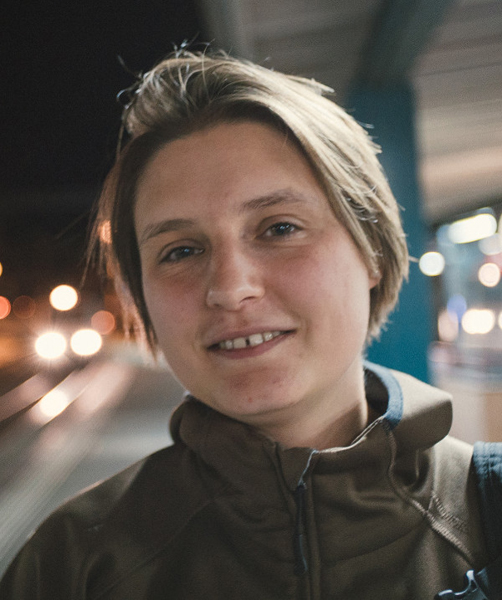
Maryna Viazovska is a Full Professor at École Polytechnique Fédérale de Lausanne (EPFL), renowned for solving the sphere packing problem in dimensions 8 and 24. She holds a PhD from the Max Planck Institute for Mathematics and the University of Bonn (2013), with earlier degrees from Technical University Kaiserslautern (M.Sc., 2007) and Kyiv National Taras Shevchenko University (B.Sc., 2005). Her research focuses on sphere packing, optimal point configurations, Fourier analysis, automorphic forms, and number theory. Notable achievements include proving the E8 lattice's optimality in 8 dimensions and the Leech lattice in 24 dimensions, leveraging modular forms and interpolation techniques. Key awards include the Fields Medal (2022), Fermat Prize (2020), and Salem Prize (2016). She has held positions at Humboldt University of Berlin (BMS Dirichlet Postdoc), Institut des Hautes Études Scientifiques, and Princeton University. Her publications span top journals like Annals of Mathematics and address interdisciplinary topics such as superconductivity and combinatorial geometry. Viazovska’s work bridges pure mathematics with applications in coding theory and physics.
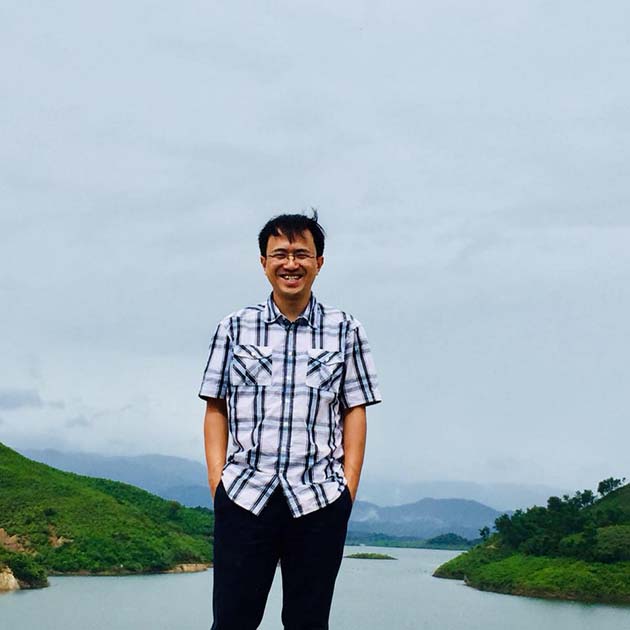
Duong Hieu Phan is a Professor at Télécom Paris (Institut Polytechnique de Paris) since 2020, leading the Cybersecurity and Cryptography (C²) research team within the Laboratoire Traitement et Communication de l'Information (LTCI). Previously, he held academic positions at University of Limoges (2015–2020) and University of Paris 8-13 (2007–2015). He obtained his Ph.D. in Cryptography from École Normale Supérieure under David Pointcheval, followed by postdoctoral research at University College London and a research engineer role at France Telecom R&D. His research focuses on provable security for cryptographic schemes, including public-key encryption, digital signatures, broadcast encryption, traitor tracing, functional encryption, and privacy-preserving systems. Notable contributions include foundational work on anamorphic cryptography, multi-client functional encryption, and zero-knowledge proofs of quantumness. Dr. Phan has served in leadership roles such as General Co-Chair of ASIACRYPT 2016 and membership in the ASIACRYPT Steering Committee since 2013. He actively participates in international conferences as a program committee member and has contributed to initiatives like the CNRS LIA ForMath Vietnam-Singapore. His publications span over 70 works in top-tier venues like CRYPTO, EUROCRYPT, ASIACRYPT, and IACR journals, emphasizing theoretical advancements and practical security solutions. His recent work explores quantum-resistant cryptography, privacy-preserving protocols, and decentralized systems.
Albert Victor is an Adjunct Assistant Professor in the Department of Physics and the Institute for Advanced Computer Studies at the University of Maryland College Park, and a Physicist at the National Institute of Standards and Technology (NIST). He holds a Ph.D. in Physics from Yale University (2017) and was a postdoctoral researcher at Caltech. His research focuses on quantum information science, including quantum error correction, bosonic coding, quantum metrology, and theoretical aspects of open quantum systems. Notably, he has contributed to Lindbladian dynamics with multiple steady states, molecular rotational qubits, and concatenated quantum codes. Education: B.S. in Physics from University of Florida, Ph.D. in Physics from Yale University (2017). Postdoctoral work at Caltech (2017-2019). Research interests emphasize leveraging quantum systems for fault-tolerant computing, exploring non-Hermitian quantum dynamics, and developing novel error-correcting codes for continuous-variable systems. His work bridges abstract theoretical frameworks with experimental realizations in superconducting circuits and molecular physics. Publications span high-impact topics like transversal quantum gates, quantum metrology bounds, and molecular-based quantum encodings. He contributes actively to the Quantum Information Group at NIST and collaborates with institutions globally. Awards: While no named prizes are documented, his impactful contributions reflect recognition in the field through numerous citations and research grants. Labs/Teams: Affiliated with the Joint Quantum Institute (JQI), QuICS (Quantum Information and Computer Science), and NIST's Quantum Computing Division.
Brian Beaudoin is an Associate Research Professor at the University of Maryland, College Park, affiliated with the Institute for Research in Electronics & Applied Physics (IREAP). His research focuses on charged particle interactions, plasma physics, and accelerator technologies. He leads the Centrifugal Mirror Fusion Experiment (CMFX) and the Bright Beams Collective Research Group (BBC), advancing fusion energy and high-brightness beam physics. Beaudoin teaches undergraduate courses including 'Audio Electronics Engineering' (ENEE408J) and 'Introduction to Engineering Design' (ENES100), and co-created the 'Building the 5 MeV Cyclotron' capstone. He mentors students in NSF-funded TRENDS programs and the Gemstone Honors Program's ChargeX team, developing novel technologies for electric vehicle charging. His research interests span fusion concepts, microwave electronics, and particle accelerators. Key projects include developing high-efficiency RF sources for ionospheric heaters and studying beam dynamics in storage rings. Recent work focuses on CMFX's low-cost fusion pathway and high-power microwave systems. Publications highlight advancements in fusion plasma diagnostics, beam manipulation, and material characterization. Collaborations include institutions like UMBC and national labs. Funding includes ARPA-E's BETHE program for CMFX.
Raffaella Demichelis is an Associate Professor at Curtin University, School of Molecular and Life Sciences (MLS). She is affiliated with the Faculty of Science and Engineering and holds the position of Associate Professor in the Office of the Provost. Her research focuses on mineral formation processes, computational chemistry, and geochemistry with particular emphasis on nucleation, crystal growth, and biomineralization. She has received prestigious awards such as the F.G. Houtermans Award (2022) and the Western Australia Young Tall Poppy Award (2020). Dr. Demichelis earned her PhD in Chemical Sciences from the University of Torino (Italy) and has held several fellowships, including an ARC Future Fellowship and an Early Career Curtin Research Fellowship. She has secured funding through multiple grants, including ARC Discovery Projects and international collaborations like the ATN-DAAD program. Her research explores mineral-fluid interfaces, vibrational spectroscopy, and the development of ab initio tools for simulating carbon nanotubes and mineral structures. She has published extensively in journals like Advanced Materials , Journal of Physical Chemistry , and Crystal Growth & Design . Dr. Demichelis has supervised multiple PhD students and postdoctoral researchers, contributing to advancements in computational modeling of biomineral growth and geochemical processes. She actively engages in academic leadership, organizing conferences like Goldschmidt, and promoting STEM through initiatives like the WA Women in Chemistry network and outreach programs targeting school students.
Prof. Dr. Mehmet Ozen is a faculty member at the Faculty of Science, Department of Mathematics, Sakarya University. His research focuses on Information and Coding Theory , Algebra , and Number Theory , with particular emphasis on Quantum Codes , Cyclic Codes , and Finite Rings . Education : Licence from Aegean University (1994), Master's (1998) and Doctorate (2002) from Sakarya University, all in Mathematics. Research Trends : Analysis of modules with S-Noetherian/Artinian properties, construction of perfect codes over finite rings with RT/Mannheim metrics, and quantum code development using Gaussian/Lipschitz integers. Scientific Awards : TÜBİTAK Scientific Publication Incentive Award (2004) TÜBİTAK Award (2006) TÜBİTAK Awards (2011, 2012) Thesis Supervision : Advised doctoral students on topics including quantum codes over Gaussian integers (2011), spotty weight identities (2010), and DNA code algebra (2009).
Ion Errea Lope is an Associate Professor at the University of the Basque Country (UPV/EHU) and a DIPC Associate. His research focuses on developing and applying first-principles quantum mechanical methods to understand and predict materials properties, particularly in hydrogen-based superconductors , charge-density wave (CDW) phase transitions , and phonon polaritons . He leads the ERC Starting Grant project SuperH , aiming to discover high-temperature superconductors. Research lines : New ab initio methods, Hydrogen-based superconductors, Phase transitions in functional materials, Phonon polaritons and polarons Key tools : Stochastic Self-Consistent Harmonic Approximation (SSCHA) code The group's recent publications highlight advances in quantum anharmonicity effects on superconductivity, CDW melting in kagome metals, and topological surface states in superconducting compounds. Collaborations span institutions like Nature Materials , Physical Review B , and international research centers. Scientific awards : ERC Starting Grant (SuperH) Team leadership : Mentors PhD students and postdocs in projects involving computational methods and high-pressure material studies Ion's group is affiliated with the Department of Applied Physics and Materials Physics Center at UPV/EHU, with active research in quantum lattice dynamics and non-perturbative anharmonic effects .