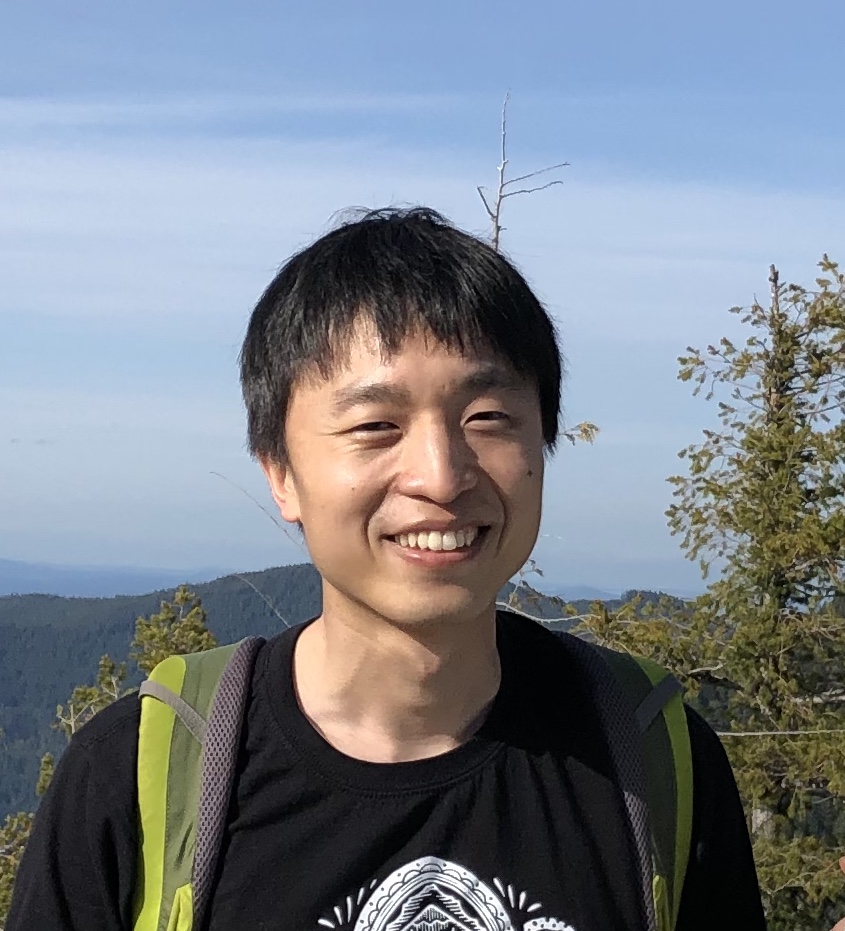
Dr. Yu (Chelsea) Jin is an Assistant Professor in the Department of Industrial Engineering at the University at Buffalo, specializing in quality inspection, predictive modeling, and data analytics for advanced manufacturing systems. She holds a PhD in Industrial Engineering from the University of Arkansas, an ME from the University of Michigan, and dual BS degrees in Network Engineering and Finance from Jinan University. Her research focuses on integrating machine learning and physics-based models to optimize manufacturing processes, such as additive manufacturing, PCB assembly, and pharmaceutical distribution systems. She has developed frameworks like ReflowNet for reflow oven optimization and physics-informed neural networks for thermal profile prediction. Her work emphasizes both theoretical advancements and practical applications in smart manufacturing and healthcare logistics. Dr. Jin's recent publications highlight contributions to generative AI for knowledge retrieval, AGV system optimization, and multi-source transfer learning for pandemic modeling. She actively collaborates with industry partners to bridge academic research and real-world manufacturing challenges.
Associate Professor Christopher Wensrich is a faculty member in the School of Engineering at the University of Newcastle, Australia, specializing in Mechanical Engineering. He has a strong background in applied mechanics from both computational and experimental perspectives, with significant expertise in granular mechanics, neutron diffraction strain measurement, and Bragg-edge transmission strain tomography. Education: PhD, University of Newcastle Bachelor of Mathematics, University of Newcastle Bachelor of Engineering, University of Newcastle Professor Wensrich's research focuses on several interconnected areas within mechanical engineering and materials science. His primary expertise lies in granular mechanics, spanning from micromechanics and homogenization of granular systems to analytical modeling of granular dynamics (particularly the silo quaking problem) and computational modeling using the Discrete Element Method (DEM). He is also a pioneer in applying neutron diffraction strain scanning techniques to granular systems. In the broader field of applied mechanics, he has made significant contributions to neutron diffraction-based strain measurement, including breakthroughs in Bragg-edge Transmission Strain Tomography, where he demonstrated the world's first practical application outside of simple axisymmetric systems. His publication record demonstrates a consistent focus on developing and applying advanced techniques for strain measurement and reconstruction in granular and composite materials. His recent work has centered on tomographic reconstruction methods using neutron diffraction, with particular emphasis on Bragg-edge techniques for 2D and 3D strain field reconstruction. His research bridges theoretical mathematics, computational methods, and experimental validation, creating a robust framework for non-destructive stress measurement in complex materials. Professional Recognition: President of the Australian Neutron Beam User Group (ANBUG) since December 2022 Member of the ACNS Program Advisory Team at ANSTO (Australian Nuclear Science and Technology Organisation) since March 2019 Visiting Fellow at Clare Hall College, Cambridge University (January-June 2023) Visiting Researcher at Isaac Newton Institute for Mathematical Sciences (January-June 2023) Professor Wensrich has secured substantial research funding, with a total of $5,478,793 across 42 grants. His funding portfolio includes projects from the Australian Research Council (ARC), ANSTO, and international partners like Oakridge National Laboratory and Japan Proton Accelerator Research Complex. He has successfully supervised 11 PhD and Masters students to completion, with research topics spanning granular mechanics, conveyor systems, and neutron strain tomography. His current research involves collaborations with institutions worldwide, focusing on advanced strain measurement techniques and their application to complex material systems.
Zihe Gao serves as a tenure-track Assistant Professor in the Department of Electrical and Computer Engineering at Auburn University's College of Engineering since August 2023, following postdoctoral research at the University of Pennsylvania and industry experience at Meta (Facebook Reality Labs). His academic foundation includes: PhD in Electrical and Computer Engineering, University of Illinois Urbana-Champaign (2018) MS in Physics, University of Illinois Urbana-Champaign (2012) BS in Physics, Nanjing University (2011) Dr. Gao's research integrates optics, microelectronics, and physics to develop programmable photonic systems. His work focuses on controlling collective behaviors in multi-element photonic systems for scalable integrated chips, with applications spanning dynamically steerable laser sources and reconfigurable quantum optical platforms . Key methodologies include non-Hermitian physics, topological photonics, and spin-orbit coupling engineering. Analysis of his 2023-2025 publications reveals dominant trends in non-Hermitian photonic switching , high-dimensional quantum state manipulation , and topological semiconductor laser arrays . His team pioneers lithography-free reconfigurable photonics and spin-orbit microlasers for quantum key distribution, demonstrating strong industry-academia translation from prior Meta work on AR/VR structured-light systems. His scholarly trajectory shows continuous progression from VCSEL array fundamentals (PhD under Prof. Kent Choquette) to quantum-topological photonics (postdoc with Prof. Liang Feng), now establishing independent research at Auburn with emphasis on integrated quantum-classical hybrid systems.
Ruben Valbuena is a Professor at Bangor University, affiliated with the School of Natural Sciences and the Department of Forest Sciences. He is also recognized as an Honorary Professor, reflecting his significant contributions to forest science and remote sensing. His research leverages big data, particularly LiDAR and remote sensing, to analyze ecosystem structure, carbon stocks, and habitat suitability at landscape and community levels. His research interests lie at the intersection of ecology, remote sensing, and forest dynamics. He has pioneered the adaptation of Lorenz curves to quantify forest structural complexity, a methodological innovation recognized with the IUFRO 2019 Outstanding Doctoral Research Award. His work spans tropical and boreal forests, focusing on aboveground biomass estimation, forest disturbance detection, and ecosystem service modeling. He actively integrates airborne and satellite data, including NASA's GEDI mission, to develop scalable ecological models. The recent publications (2017–2023) reflect a consistent focus on LiDAR applications, forest structure, biomass modeling, and ecological theory. Key themes include the fusion of remote sensing technologies, the development of structural complexity indices, and the application of machine learning in forest inventory. His research increasingly addresses global challenges such as carbon monitoring, urban greening, and sustainable forest management. His scientific honors include: International Union of Forest Researchers (IUFRO) Outstanding Doctoral Research Award (2019) Early-Stage Researcher Prize “José L. Labrandero” (2017) Valbuena leads multiple research projects, including the European Forest Information Network (EFINET), AMAZECO (focused on Amazon ecosystem structure), and a KESS II PhD project with Forest Research. He has supervised at least one research student and maintains active collaborations across Europe and the Americas. His work is supported by grants from national and international funding bodies, enabling high-impact research in forest ecology and remote sensing. He is associated with key research initiatives and labs focused on remote sensing and forest ecosystem dynamics, contributing to large-scale projects that integrate field data with satellite and airborne observations.
Dr Lloyd Pilgrim is a Senior Lecturer and Head of the Discipline of Civil Engineering, Surveying and Environmental Engineering at The University of Newcastle. He joined in 2017 and serves as Program Convener for Surveying Degree Programs. His career includes academic roles at The University of Sydney (1993–1999), industry leadership at AAM Pty Ltd (2000–2016), and global risk management in spatial information. Education: PhD (The University of Newcastle, 1991) and Bachelor of Surveying (The University of Newcastle, 1987). Research focuses on terrestrial laser scanning, photogrammetry, and cadastral surveying, with recent work on TLS calibration, dam monitoring, and atmospheric refraction modeling. Professional Memberships: Board of Surveying and Spatial Information (Director), Surveying and Mapping Industry Council NSW (Member), Institution of Surveyors NSW (Member) Awards: Finalist, NSW Surveyor of the Year (2021) HMG Surveyor of the Year (2020) John Haydon Cardew Prize (1998) Grants & Supervision: Secured $34k in grants (1994–1997), supervising 3 PhD candidates (2 current: TLS calibration and seismic modeling; 1 completed: dam framework analysis).
Javier Rodriguez Sanchez is a Postdoctoral Associate at the Institute of Plant Breeding, Genetics and Genomics (IPBGG) within the Department of Crop & Soil Sciences at the University of Georgia's College of Agricultural and Environmental Sciences (CAES), based at the Tifton Campus under Dr. Nino Brown's mentorship. His research integrates advanced technologies with plant science to revolutionize agricultural practices, specializing in: Autonomous field phenotyping systems using robotics and terrestrial laser scanning Deep learning applications for 3D/4D crop trait extraction and yield estimation Genetic improvement of cotton and peanut through seedling vigor and morphological trait analysis Spatiotemporal data fusion for real-time crop monitoring and precision agriculture Publications from 2017-2025 reveal a clear trajectory from horticultural robotization toward sophisticated AI-driven phenotyping platforms, with cotton and peanut as primary models. His work consistently bridges computer vision, LiDAR, and machine learning to solve breeding challenges, demonstrating increasing methodological complexity in data acquisition and analysis. No scientific awards were documented in the source materials. As a postdoctoral researcher, Dr. Sanchez operates within Dr. Nino Brown's mentorship structure with no reported advisees or independent grant leadership. His collaborative framework focuses on technology deployment rather than traditional academic advising. He contributes to the IPBGG's mission through the Tifton Campus research facility, which features specialized laboratories and field sites for crop genomics and phenomics. This environment supports his development of mobile robotic platforms for in-field data collection, positioning him at the intersection of agricultural engineering and plant breeding innovation.
Dr. Paweł Tysiąc serves as an Assistant Professor in the Department of Geodesy at the Faculty of Civil and Environmental Engineering, Gdańsk University of Technology, where he conducts research at the intersection of geospatial technologies and environmental engineering. His work focuses on developing innovative measurement methodologies for coastal and structural applications. His primary research interests include coastal engineering, particularly low-energy coast dynamics and beach nourishment; remote sensing using UAV-LiDAR and multispectral systems for environmental monitoring; and applications of 3D printing in civil engineering with fractal-based designs. He specializes in leveraging low-cost LiDAR solutions for deformation analysis, sediment monitoring, and heritage conservation, demonstrating strong interdisciplinary collaboration across environmental science and geodesy. Recent publications reveal a consistent trend toward practical applications of emerging measurement technologies, with significant emphasis on sustainable coastal management and advanced construction techniques. His work bridges theoretical geodesy with real-world environmental challenges, particularly in the Baltic region.
Dr. Harm Bartholomeus is an Assistant Professor of Remote Sensing at the Department of Geo-information Science and Remote Sensing, Wageningen University & Research. He received his MSc in Physical Geography (2000) and a Geography teaching degree (2001) from Utrecht University. His career includes part-time PhD research (2004–2009) on soil property estimation via spectral measurements and vegetation influence. Since 2009, he has focused on remote sensing techniques like imaging spectroscopy, LiDAR, and UAV-based methods applied to forestry, soil science, and climate studies. In 2012, he co-founded the Wageningen UR Unmanned Aerial Remote Sensing Facility (UARSF), advancing UAV research in environmental studies. His expertise spans Ecology, Geographical Information Systems (GIS), Remote Sensing, Soil Science, Spectroscopy, and 3D analysis. He teaches courses such as Advanced Earth Observation, Remote Sensing and GIS Integration, and MSc thesis supervision in Geo-information Science and Remote Sensing. His work integrates cutting-edge technologies for environmental monitoring, including terrestrial laser scanning and drone-based sensing. Research interests include vegetation-soil interactions, UAV applications in agriculture and ecology, and climate resilience. He collaborates on projects like the UARSF and contributes to global initiatives like the IDEAS-QA4EO network. No scientific awards are explicitly mentioned, but his contributions to UAV and LiDAR methodologies are widely recognized. He advises MSc students on thesis and internship projects in remote sensing and geo-information science.
Pingbo Tang is an Associate Professor in the Department of Civil and Environmental Engineering at Carnegie Mellon University, affiliated with the College of Engineering. He leads the Spatiotemporal Workflows and Resilient Management Laboratory (SWARM Lab). Tang holds a Ph.D. from Carnegie Mellon University (2009), a Master’s in Bridge Engineering from Tongji University (2005), and a Bachelor’s in Civil Engineering from Tongji University (2002). His research focuses on civil infrastructure operations, human systems engineering, and AI-driven solutions for predictive management. Key areas include remote sensing, data analytics, and Human-Cyber-Physical-Systems (H-CPS) in construction and infrastructure (e.g., airports, nuclear plants). He has published over 100 peer-reviewed articles and secured funding from NSF, DOE, NASA, and industry partners. Tang is a leader in professional organizations, including ASCE (Computing Division Chair), TRB (Bridge Management Committee), and ASTM International. He has received prestigious awards, including the NSF CAREER Award (2015), ASCE Halpin Award (2020), and multiple best-paper honors. His work integrates AI, digital twins, and safety innovation, with applications in aviation scheduling (e.g., Alaska Airlines collaborations) and nuclear power plant operations. Tang’s research emphasizes sustainable infrastructure, safety, and interdisciplinary solutions for complex systems.
Dr Kwasi Gyau Baffour Awuah is an interdisciplinary academic and practitioner with over 22 years of international experience in real estate, urban development, and sustainability across developing and developed contexts. Currently based at THINKlab, University of Salford, he leads the real estate research and consultancy cluster while teaching urban development modules. His educational qualifications include: PhD in Economic Analysis of Spatial Planning & Management Systems PG Cert. in Academic Practice in Higher Education (PCGAP) MA in Development Studies BSc (Hons) in Land Economics Professional Diploma in Real estate surveying & valuation Certificate in Cradle-to-Cradle (C2C) Professional Certificate in Alternative dispute resolution Dr Awuah's research spans land administration, heritage conservation, urban governance, sustainable development, and property valuation, with particular focus on African urban contexts. His work bridges theoretical frameworks with practical policy implementation, addressing challenges in informal settlements, infrastructure financing, and sustainable resource management. Recent publications (2021-2024) demonstrate a pronounced shift toward digital heritage conservation (HBIM applications in Jordan), stakeholder dynamics in Nigerian water systems, and sustainable housing solutions. His interdisciplinary approach integrates urban planning, digital technologies, and governance frameworks to tackle complex sustainability challenges in rapidly urbanizing regions. No scientific awards were explicitly mentioned in the source material. Dr Awuah has supervised over 50 student dissertations across degree levels and serves as an external examiner for multiple universities. His research attracts substantial funding from: RICS (Property Valuation Practice in Sub-Saharan Africa) DFID (Urbanisation and Infrastructure Research Programme) EU (INTERREG IVB C2C BIZZ project) AHRC (Digital Heritage in India) Royal Academy of Engineering (Jordanian Heritage Conservation) As leader of the real estate research cluster at THINKlab, he directs a multidisciplinary team conducting internationally collaborative projects with academic institutions, government bodies, and industry partners across Africa, Europe, and Asia.
Aimad el Issaoui is a Doctoral Researcher at Aalto University's T213 Built Environment unit, specializing in geoinformatics and laser scanning technologies. His work focuses on integrating advanced sensing systems with deep learning applications for infrastructure and environmental monitoring. His research spans multiple domains: Infrastructure Analysis : Pavement distress detection, road rut measurement using mobile/terrestrial laser scanning Environmental Monitoring : Forest health assessment, UAV-based canopy mapping, tree water stress analysis 3D Mapping : Semantic point cloud segmentation, ALS/MLS integration, indoor scanning methodologies The publications reveal a consistent focus on improving accuracy and efficiency in spatial data processing across civil engineering and ecological contexts. He has contributed to advancements in: Real-time localization systems Deep learning approaches for point cloud analysis Multiscale forest observation techniques 3D indoor/outdoor environment modeling
Dr. Darius Popovas is a researcher at the Institute for Applied Photogrammetry and Geoinformatics (IAPG), Jade University of Applied Sciences, Oldenburg, Germany. He is a member of the Laboratory for Optical 3D Metrology, contributing to advancements in photogrammetry and 3D scanning technologies since 2020. His research focuses on photogrammetry , 3D metrology , and virtual simulation , with specific interests in developing laser scanner simulators for digital twin environments, educational applications, and robotic missions. His work integrates computer vision, geomatics, and educational technology to create innovative simulation tools that bridge theoretical research with practical industrial and academic implementations. Between 2020 and 2024, Popovas co-authored six publications demonstrating a progression from foundational simulator development to applications in dynamic scanning and geodetic network planning for robots. This trajectory highlights increasing complexity in virtual scanning technologies, with recent work emphasizing real-time processing, sensor simulation, and integration into digital twin frameworks for industrial and educational contexts. He is a key contributor to the DAAD-funded project "Virtual laser scanner simulator for digitizing the teaching environment" (2019-2024), which develops software for generating simulated 3D point cloud data to enhance teaching methodologies in photogrammetry and geoinformatics through virtual laboratories and digital training resources. Within the IAPG, Popovas collaborates in the Laboratory for Optical 3D Metrology under Prof. Dr. Thomas Luhmann, working alongside a multidisciplinary team including Dr. Maria Chizhova and Dr. Denys Gorkovchuk. The laboratory actively organizes the Oldenburg 3D Days conference series, serving as a platform for disseminating research in optical metrology and fostering industry-academia partnerships.
Nives Doneus is a researcher at the Vienna Institute for Archaeological Science , University of Vienna, specializing in archaeological prospection and Roman landscape studies . Her work focuses on remote sensing, geoarchaeology, and 3D documentation of Mediterranean and Central European sites. Expert in airborne laser scanning (LiDAR) for submerged/coastal sites Key contributor to LBI ArchPro Research Initiative (2010-2015) Specializes in Roman-era field systems and dry stone wall analysis Her research integrates geophysical prospection with historical GIS to reconstruct Roman urban and rural landscapes. She has pioneered applications of airborne laser bathymetry for documenting submerged archaeological sites in Croatia's archipelagos. Recent publications emphasize interdisciplinary approaches to Mediterranean coastal archaeology, Roman surveying practices, and paleoenvironmental reconstructions. Key methodological themes include non-destructive excavation techniques and digital heritage modeling . Collaborates with teams at the Vienna Institute for Archaeological Science and contributes to the development of systemic archaeological prospection frameworks. Her work spans case studies in Austria, Croatia, and Bulgaria.
Professor Zuheir Barsoum is a faculty member at KTH Royal Institute of Technology, serving as Vice Head (Research) in the Department of Engineering Mechanics. His research focuses on computational weld mechanics, fatigue assessment of materials, and structural integrity of welded joints. Key areas include high-frequency mechanical impact (HFMI) treatments for fatigue improvement, finite element analysis, and lightweight metal joining. Funded by VINNOVA, SSAB, Volvo, and others, his work addresses industrial challenges in structural durability. Current PhD students include Martin Edgren (bridge structural health monitoring), Mehdi Ghanadi (fatigue of high-strength steels), Yu Zhu (laser cladding simulations), and Kaushik Iyer (LCC modeling of welded structures). He teaches courses like Advanced Design of Welded Structures (SD2420) and oversees degree projects in Lightweight and Solid Mechanics. Notable achievements include the 2010 Henry Granjon Prize for fatigue design research. His startup Winteria AB commercializes digital quality assurance solutions for welding production, aligning with Industry 4.0 trends. Recent research emphasizes probabilistic fatigue modeling, machine learning for weld geometry analysis, and material defect characterization. Collaborations include Chalmers University and Swerim. His work bridges advanced manufacturing, computational mechanics, and industrial applications to enhance structural reliability and lifecycle cost optimization.
Kelly Nash is a Professor in the Department of Physics and Astronomy at the University of Texas at San Antonio (UTSA), within the College of Sciences. She also serves as the Vice Provost for Faculty Success, a leadership role reflecting her commitment to academic excellence and faculty development. Previously, she was Associate Dean for Faculty Success (2019–2023) and Director of the Kleberg Advanced Microscopy Center (2018–2020). Education: Ph.D. in Physics, University of Texas at San Antonio M.S. in Applied Physics, University of Michigan B.S. in Physics, Dillard University Prof. Nash's research lies at the intersection of physics, materials science, and biology. Her work focuses on functional nanomaterials , particularly their synthesis, optical properties, and interactions with biological systems. Key areas include biophotonics , nanoparticle synthesis via laser ablation , photoacoustic sensing , and nanotransducers for biomedical applications . Her lab develops nanoparticles for photodynamic therapy, on-demand drug release, antimicrobial treatments, and environmental sensing. Her recent publications reveal a strong trend in leveraging light-matter interactions for biomedical diagnostics and therapy. She pioneers all-optical photoacoustic techniques that eliminate bulky transducers, enabling high-resolution, high-frequency detection. Her work spans fundamental biophysics to translational applications, with materials including gold, selenium, and dichalcogenide nanoparticles. Scientific Awards and Recognition: Air Force Office of Scientific Research Young Investigator Program Award APS Women Physicist of the Month (July 2016) Dillard University Alumni 40–Under-40 San Antonio Business Journal 40-Under-40 UTSA President’s Distinguished Diversity Award UTSA COS Excellence in Community Service Award Prof. Nash is a dedicated mentor and advocate for diversity in STEM. She has served as UTSA-APS Bridge Program Coordinator and chair of the APS Conferences for Undergraduate Women in Physics National Organizing Committee. Her lab, the Functional Nanomaterials Laboratory , receives funding from AFOSR, NIH, NSF, DOE, and NNSA. She is actively involved in grants focused on biophysics, antimicrobial nanomaterials, and STEM education. She welcomes graduate and undergraduate students interested in nano-bio interfaces and translational research. The lab collaborates extensively with institutions such as the University of Texas Health Science Center, Southwest Research Institute, AFRL, and international partners, forming a robust interdisciplinary research network.