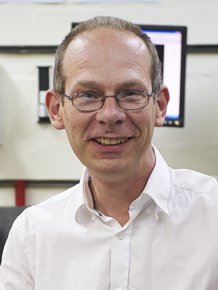
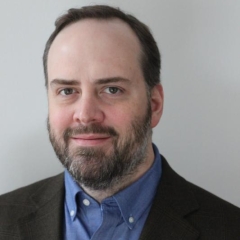
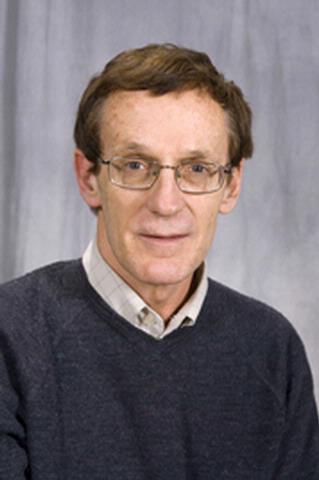
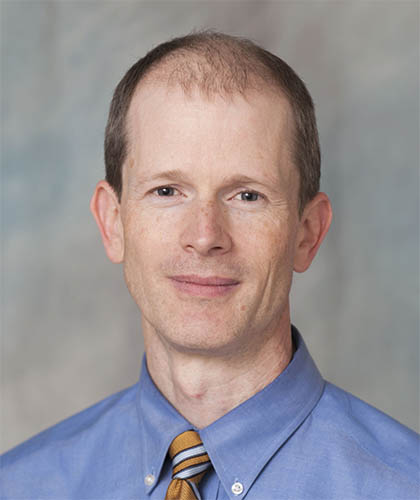
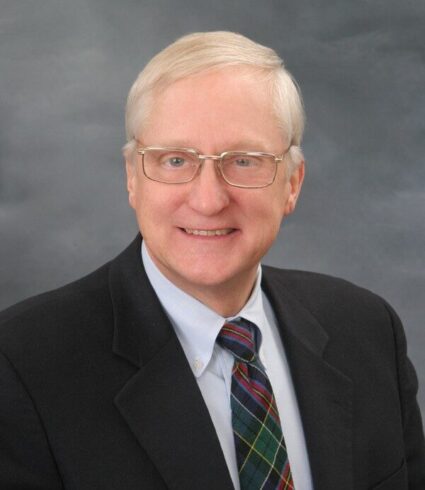
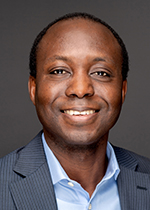
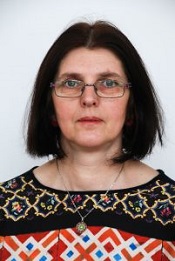
Nigel Woolsey is Professor at University of York's School of Physics, Engineering and Technology, specializing in laser-plasma physics and inertial confinement fusion. His research includes laboratory astrophysics, particle transport, and ultra-intense laser interactions. He leads projects on fast ignition fusion pathways and magnetized plasma experiments. Current PhD students investigate ultra-intense laser-solid interactions, ICF physics, and spectroscopy under his supervision. Awarded Daiwa Adrian Prize (2007) for UK-Japan scientific collaboration.
Clint Schow is a Professor and Vice Chair in the Electrical and Computer Engineering Department at the University of California, Santa Barbara. He leads an active research group focused on advancing optical interconnect technologies for data centers and high-performance computing systems. His work bridges electronics and photonics to develop energy-efficient, high-speed optical communication solutions. Dr. Schow's research interests center on optoelectronic/electronic integration and co-design , photonic switching , equalization techniques for high-speed optical links , optoelectronic devices , and integrated transceiver packaging . His group pursues several key research thrusts including low-power coherent links for datacenters, cryogenic optical links for quantum applications, low-power VCSEL-based optical links, and photonic switching technologies. These research areas address fundamental challenges in scaling data center networks while reducing energy consumption. His recent publications reveal a strong focus on O-band coherent optical communication, heterogeneous integration of photonic components, energy-efficient transceiver design, and novel architectures for data center interconnects. Schow's work demonstrates how coherent detection techniques can be applied to short-reach data center links to achieve higher bandwidth density and lower power consumption compared to traditional approaches. Fellow of Institute of Electrical and Electronics Engineers (IEEE) Fellow of Optical Society (OSA) Senior Member IEEE Professor Schow advises numerous PhD students working on cutting-edge optical interconnect technologies. His group receives funding from various sources to develop next-generation photonic solutions for data centers and high-performance computing environments. The Schow Group maintains strong industry connections and collaborates on projects addressing real-world challenges in optical communications infrastructure. The research group operates state-of-the-art laboratories for photonic device characterization, optical link testing, and system-level validation of novel optical interconnect architectures. Current projects include developing cryogenic silicon photonics for quantum applications and creating all-optical switching solutions for dynamically reconfigurable data center networks.
Dr. Markus Lindemann is a Senior Researcher at Ruhr-University Bochum's Faculty for Electrical Engineering and Information Technology, working within the Photonics and Terahertz Technology department. His research focuses on advanced semiconductor laser technologies with particular emphasis on VCSELs (Vertical-Cavity Surface-Emitting Lasers) and their applications in high-speed optical communications and terahertz generation. Dr. Lindemann's research interests span photonics, terahertz technology, spintronics, and semiconductor laser physics. His work primarily investigates polarization dynamics in spin-VCSELs, birefringence engineering, and the development of coupled-cavity laser systems capable of ultra-high-frequency modulation. His research has significant implications for next-generation optical data transmission systems that require bandwidths beyond 100 GHz. Analysis of Dr. Lindemann's recent publications reveals a strong focus on advancing VCSEL technology through innovative cavity designs. His work on coupled-cavity VCSEL arrays demonstrates promising approaches for coherent terahertz generation and ultra-broadband optical communications. The research shows a clear trajectory toward overcoming bandwidth limitations in optical data transmission through sophisticated manipulation of laser polarization states and photon-photon resonance phenomena. Dr. Lindemann has published extensively in high-impact journals including Nature, IEEE Photonics Journal, and Applied Physics Letters, with numerous conference presentations at major international venues such as SPIE Photonics West and the IEEE Photonics Conference. His collaborative research approach is evident through his extensive co-authorship network across multiple institutions. Within the Photonics and Terahertz Technology team at Ruhr-University Bochum, Dr. Lindemann contributes to advancing laser technology research, particularly in developing novel VCSEL configurations for high-speed optical communications and terahertz applications. His work bridges fundamental semiconductor physics with practical applications in next-generation optical transmission systems.
Professor Jianming Tang is a leading academic at Bangor University's School of Computer Science and Engineering, holding the position of Professor in Optical Communications since 2011. He received his PhD in Optoelectronics from Bangor University in 1999 and has since developed an internationally recognized research program in optical networking technologies. His research focuses on: High-speed optical transmission systems Optical access networks and fiber-wireless convergence Digital signal processing for telecommunications Ultrafast dynamics of optical devices Secure communication systems Analysis of his recent publications (2024-2025) reveals strong emphasis on next-generation access networks, including fiber-wireless convergence, physical layer security using chaotic encryption, flexible transceivers for PON systems, neural network applications in optical communications, and advanced modulation techniques. His work consistently bridges theoretical innovation with experimental validation. Scientific Awards: The Royal Society Brian Mercer Feasibility Award (2008) Fellow of The ERA Foundation (2008) Visiting Professor, University of Electronic Science and Technology of China (2006) Professor Tang leads a highly productive research team that has secured £3.8M in research funding across 13 grants. His group focuses on optical transmission, dynamic networking, and ultrafast optical switching for future networks. He maintains active industry collaborations through projects like the EPSRC TRANSNET Programme and industrial partnerships with companies including Huawei and Oclaro.
William H. Merigan, Ph.D., is a Professor at the University of Rochester with joint appointments in the Department of Ophthalmology (SMD), Department of Brain/Cognitive Sciences, and the Center for Visual Science. His research focuses on retinal ganglion cells' role in visual perception in primates, leveraging advanced imaging techniques like adaptive optics. He leads the Merigan Lab, part of the Advanced Retinal Imaging Alliance (ARIA), collaborating across disciplines to study retinal structure and function. Education: PhD in Psychology (1975, University of Maryland), MS (1972), and BA (1967, Boston College). His work integrates neurobiology, optics, and clinical science to investigate primate vision mechanisms, including optogenetic therapy, retinal degeneration, and photoreceptor transplantation. Research Interests: Retinal ganglion cell physiology, primate visual perception, adaptive optics imaging, retinal regeneration, and therapeutic interventions for vision loss. His lab pioneers techniques like in vivo calcium imaging and single-cell resolution imaging to study retinal activity and neural circuitry. Publications Highlight Trends: Recent work emphasizes optogenetic therapy, foveal ganglion cell tuning, and cellular-resolution imaging of transplanted photoreceptors. Studies span from basic retinal physiology to translational applications in vision restoration. Labs/Teams: Director of the Merigan Lab and a Principal Investigator in ARIA, fostering collaborations across the Flaum Eye Institute, Center for Visual Science, and Institute of Optics at the University of Rochester.
Thomas E. Murphy is a Professor and Keystone Professor in the Department of Electrical and Computer Engineering at the University of Maryland, College of Engineering. He serves as the Director of the Institute for Research in Electronics and Applied Physics (IREAP) and Associate Chair for Research and Faculty Affairs. His research focuses on nonlinear and ultrafast optics, terahertz photonics, plasmonics, and optoelectronic materials. Notable honors include Fellow of the Optical Society of America and multiple teaching/research awards from the Clark School of Engineering. Education: Ph.D. (MIT, 2001), M.S. (MIT, 1997), B.A./B.S.E.E. (Rice University, 1994). His work spans experimental and theoretical studies in photonics, including graphene-based devices, THz technology, and nonlinear optical phenomena. Active in interdisciplinary projects, he leads the Photonics Research Laboratory and collaborates with institutions like MIT Lincoln Laboratory. Research Highlights: Innovations in terahertz detectors, plasmonic structures, and ultrafast optical systems. Recent articles emphasize nonlinear optics in 2D materials, THz sensing, and microwave photonics applications. Awards: 2020-21 Distinguished Scholar-Teacher OSA Fellow (2016) NSF CAREER Award (2006) Grants & Labs: Leads IREAP and directs the Photonics Research Lab. His funding includes DARPA, NSF, and industry partnerships. Research activities involve laser-matter interactions, optoelectronic device fabrication, and advanced sensing technologies.
Dr. David Belton is a Senior Lecturer in the School of Earth and Planetary Sciences at Curtin University, within the Faculty of Science and Engineering. He also holds a portfolio role in the Office of the Provost. His expertise lies in laser scanning (both terrestrial and mobile) and photogrammetry, with a focus on automated processing, feature extraction, and applications in mining, heritage conservation, and structural monitoring. Dr. Belton holds a BCSc, BSc (First Class Honours), and a PhD from Curtin University. His teaching responsibilities include coordinating and lecturing in Cartographical Statistics and Integrated Surveying, alongside previous roles in Mine Surveying and Mine Survey Project courses. He actively supervises PhD, MPhil, and Honours students, fostering research excellence in spatial sciences. His research emphasizes practical applications of geospatial technologies, including underwater photogrammetry, pipeline monitoring, and coral reef analysis. Key areas include robust statistical methods for point cloud processing, sensor calibration, and open-source device development for marine surveys. His work bridges theoretical advancements with real-world challenges in environmental monitoring, infrastructure assessment, and cultural heritage preservation. Publications span high-impact journals like Corall Reefs , ISPRS Journal of Photogrammetry , and IEEE Transactions , reflecting contributions to geomatics, remote sensing, and computer vision. His research often addresses interdisciplinary challenges, such as UAV-based ecological monitoring and automated 3D model reconstruction from laser scanning data. Dr. Belton collaborates widely, contributing to projects like the Sydney-Kormoran wreck analysis and heritage documentation of Pilbara rock art. His work underscores innovative solutions for spatial data challenges across environmental, engineering, and archaeological domains.
Professor Heike Ebendorff-Heidepriem is a Professor in the School of Physics, Chemistry and Earth Sciences at the University of Adelaide. She serves as Deputy Director of the Institute for Photonics and Advanced Sensing (IPAS) and Director of the Optofab Adelaide Hub within the Australian National Fabrication Facility (ANFF). Her research focuses on advanced optical fiber fabrication, materials science, and photonics applications, including high-precision glass extrusion, exposed-core fibers, and quantum sensing. She leads a multidisciplinary team of over 20 researchers and has secured >$20M in funding, collaborating with global industry and academic partners. Her work spans fiber lasers, mid-infrared photonics, and sensor technologies, with significant contributions to nanomaterial integration and plasmonic processes. She has supervised 12 PhD and 5 HDR students over 15 years, emphasizing mentorship in photonics and materials innovation. Research Interests: Professor Ebendorff-Heidepriem specializes in developing novel optical fibers and glasses for applications such as high-power laser delivery, nonlinear optics, and evanescent field sensing. Her team pioneers fabrication techniques like billet extrusion and ultrasonic milling, enabling structures like suspended nanowire-core fibers and diamond-doped sensors. Key areas include mid-infrared materials (tellurite, fluoride glasses), plasmonic nanoparticle embedded glasses, and portable sensing solutions for mining and biomedical fields. Labs/Teams: IPAS and Optofab Adelaide Hub provide advanced facilities for fiber fabrication, laser development, and materials characterization. Her collaborations include 82 university groups and 30 industry/defense partners, driving commercialization of technologies like gold nanoparticle-based colored glass and diamond-doped fiber sensors.
Günther Mayr is a Professor at the University of Applied Sciences Wels, leading the Thermography and Non Destructive Testing Research Center. His research focuses on advanced thermal imaging techniques such as pulsed thermography and virtual wave concepts, applied to composite materials and automotive/mobility components. He has pioneered methods for defect detection in carbon fiber-reinforced plastics and fluid injection systems, emphasizing industrial quality assurance. Key projects include the EXCITE initiative for thermo-tomographic sensor technologies and the FLARE project integrating AI into non-destructive evaluation. He has collaborated internationally on topics like photothermal interface analysis and hybrid fiber metal laminate inspection. His work has earned the E. Grinzato Award (2018) for contributions to thermal NDE. Recent research highlights include 3D defect reconstruction in composites and efficient defect localization using virtual wave algorithms. He actively participates in conferences presenting innovations in thermal wave modeling and combined laser ultrasonics-thermography techniques.
Thomas Spyrou is an Assistant Professor in the Department of Product and Systems Design Engineering at the University of the Aegean. He holds a Physics degree from the National and Kapodistrian University of Athens and a PhD in Decision Support Systems - Artificial Intelligence from the University of the Aegean. His research focuses on Information Systems, Design Methodologies, and Sustainability, with an emphasis on Decision Support Systems, Simulation, and Cybernetics. Key affiliations include the Department of Product and Systems Design Engineering at the University of the Aegean, where he has contributed to curricula development and interdisciplinary projects. His work spans design theory, digital tools for art and sustainability, and systems thinking applied to creative processes. Research interests include Design Support Systems, Biomimetic Service Design, and the integration of tacit knowledge into design frameworks. His recent projects involve tools like DDArtS for street art creation and Spyractable for tangible user interfaces. Over 50 publications highlight his contributions to design, technology, and cybersecurity.
Gregory B. Olson is a Professor at the Massachusetts Institute of Technology (MIT) in the Department of Materials Science and Engineering, holding the Thermo-Calc Professor of the Practice title since 2020. He specializes in computational materials design, particularly in Integrated Computational Materials Engineering (ICME), which revolutionized industrial materials design. His research focuses on fracture resistance, high-performance alloys, and computational modeling of materials like steels, ceramics, and composites. Education: Bachelor of Science (1970) from MIT Doctor of Philosophy (1974) from MIT, advised by Morris Cohen Research Interests: Olson’s work bridges computational modeling and material innovation. He develops design methodologies for alloys, including transformation-toughened titanium alloys and ICME-driven steel designs. His contributions to materials genomics and additive manufacturing have advanced aerospace and defense applications. He pioneered Questek Innovations, applying ICME to industrial challenges like computational steel design. Awards & Honors: 2013: Foreign Member, Royal Swedish Academy of Engineering Science 2012: Member, American Academy of Arts and Sciences 2010: Member, National Academy of Engineering 2010: Gold Medal, ASM International 2001: Fellow, The Minerals, Metals & Materials Society Lab & Collaborations: He leads the Olson Research Group at MIT, focusing on computational materials design. His work integrates atom probe tomography, finite element modeling, and multiscale simulations to predict material behavior under extreme conditions.
Professor Jasper J. van Thor is a Professor of Molecular Biophysics at Imperial College London's Department of Life Sciences under the Faculty of Natural Sciences. His research focuses on ultrafast spectroscopy and structural dynamics of proteins, leveraging X-ray free electron lasers (XFELs) and advanced optical techniques. Key affiliations include the Centre for Structural Biology, Electron Microscopy Centre, and Energy Futures Lab. Education: MSc Chemistry (1993) and PhD in Chemistry (1999) from the University of Amsterdam, specializing in oxygenic photosynthesis. He held Royal Society and HFSP fellowships at the University of Oxford before joining Imperial College in 2007, where he established the Ultrafast Spectroscopy Laboratory and Molecular Biophysics Group. Research Interests: Ultrafast phenomena in biological systems, structural dynamics of photoreceptors, and development of theoretical tools for analyzing multi-pulse spectroscopy. Notable contributions include the Hula-Twist mechanism in fluorescent proteins and femtosecond X-ray crystallography of Photosystem II. Publications highlight advancements in ultrafast structural biology, with a focus on XFEL applications and computational modeling (e.g., PyLDM software for lifetime density analysis). Awards include the Royal Society University Research Fellowship and EMBO Long-Term Fellowship. Lab Activities: Director of the Imperial College network for Ultrafast Measurement Frontiers and PI of the LUXD (Ultrafast X-ray Diffraction) facility. Collaborates globally on XFEL projects (LCLS, SACLA, European XFEL).
Hyunseok Kim is an Assistant Professor in the Department of Electrical and Computer Engineering at the University of Illinois at Urbana-Champaign. He leads the Hyunseok Kim Research Group, focusing on heterogeneous integration technologies for future electronics. Prior to this role, he served as a Postdoctoral Associate and Research Scientist at MIT (2019-2023). His research emphasizes low-dimensional materials, 3D integration, and semiconductor devices for microelectronics and photonics. Education: Ph.D., Electrical and Computer Engineering, UCLA (2018) B.S., Electrical Engineering and Computer Science, Seoul National University (2011) Research Interests: 2D materials-based layer transfer processes Epitaxial membrane manufacturing Vertical micro-LEDs and optoelectronics Wafer-scale semiconductor integration His work bridges advanced materials science with scalable manufacturing, targeting next-generation electronics and photonics. Grants: Secured a Samsung grant to advance semiconductor integration research. Labs/Teams: Directs the Hyunseok Kim Research Group, collaborating with industry partners to develop practical applications of novel materials and integration techniques.
Boubacar Kanté is the inaugural Chenming Hu Endowed Chaired Professor at the University of California, Berkeley , affiliated with the College of Engineering and Department of Electrical Engineering and Computer Sciences . He leads research at the intersection of Nanophotonics , Plasmonics , Metamaterials , and Quantum Optics , with a focus on wave-matter interaction across microwave to optical frequencies. Education: Ph.D. in Engineering/Physics (Universite Paris Saclay, 2010), M.Eng. in Electrical Engineering and Computer Sciences (Ecole Polytechnique Universitaire de Lille, 2006), M.S. in Electrical Engineering/Telecommunications (Universite de Lille 1, 2006) His research explores topological photonics and bound state in continuum (BIC) lasers , addressing challenges in energy, defense, and health through novel optical devices. Notable inventions include the BerkSEL (Berkeley Surface Emitting Laser) and the first non-magnetic metamaterial invisibility cloak . Recent work focuses on quantum emitter synthesis in silicon , exceptional point-based sensors , and topological lasers . His publications span Nature , Science Advances , and Physical Review journals, emphasizing scalable quantum technologies and nonperiodic photonic systems. Scientific Awards: 2024 Bakar Prize 2021 Bakar Fellows Spark Award 2020 Moore Inventor Fellow 2017 ONR Young Investigator Award 2016 NSF Career Award 2010 Richelieu Prize 2007 URSI Young Scientist Award Kanté has advised Ph.D. students including Yertay Zhiyenbayev , Zhetao Jia , and Rushin Contractor . His group holds world records in plasmonic nanosensing and achromatic metalens bandwidth/efficiency . Current projects involve quantum internet technologies and silicon-based quantum light sources .
Toșa Nicoleta Ioana is a senior researcher at the National Institute for Research and Development of Isotopic and Molecular Technologies (INCDTIM) in Cluj-Napoca, Romania, where she is affiliated with the Department of Isotopic and Molecular Technologies and the Laser Induced Processes research team. She obtained her PhD in Chemistry from Babeș-Bolyai University in 2009 and has been actively contributing to advanced materials and laser-based technologies research since 2006. Education: MSc in Heterocyclic Chemistry, Babeș-Bolyai University, Cluj-Napoca (1995) PhD in Chemistry, Babeș-Bolyai University, Cluj-Napoca (2009) Her research focuses on laser nanofabrication, plasmonics, spectroscopy, and functional materials , with applications spanning biosensing, environmental monitoring, and biomedical technologies. She specializes in photochemical synthesis of noble metal nanoparticles, direct laser writing, surface-enhanced Raman spectroscopy (SERS), and structural characterization in solid and solution phases. Her work bridges chemistry, physics, and engineering to develop innovative sensing platforms and nanomaterials. The recent articles highlight a strong trend in advanced optical sensing and nanofabrication , particularly in dual-mode biosensors (SERS/electrochemical), ultrafast photonics, high-density data storage, and supramolecular systems. Her projects often integrate simulation, nanofabrication, and spectroscopic validation to address challenges in healthcare and environmental science. Scientific Awards: No specific awards listed in the provided text. Dr. Toșa has played a key role in numerous national and international research projects, serving as a key expert in areas such as plasmonic biosensing, EUV photonics, and environmental pollutant detection, and as a partner team leader in projects on optical nanofabrication and petabyte-scale optical storage. She has secured significant research funding and collaborated with institutions across Romania and Europe. Her laboratory and research team focus on laser-induced processes and nanostructured materials , utilizing advanced facilities for optical characterization and nanofabrication within INCDTIM.