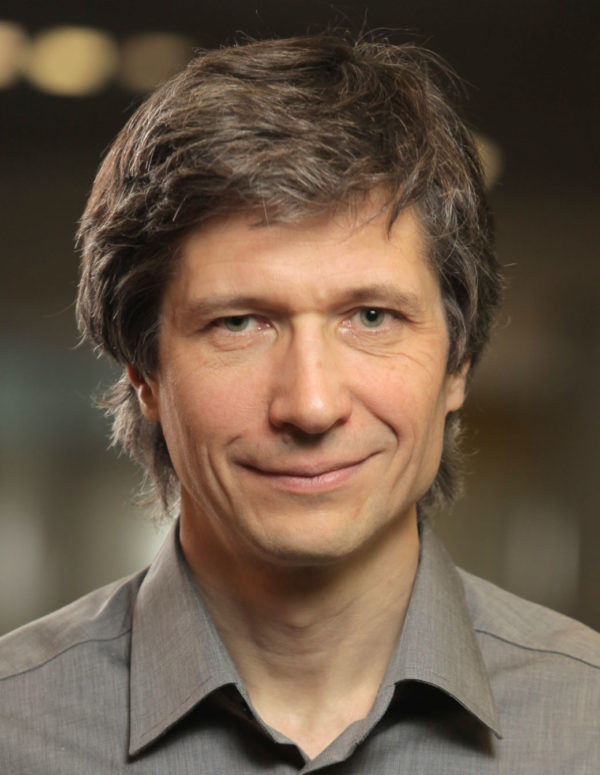
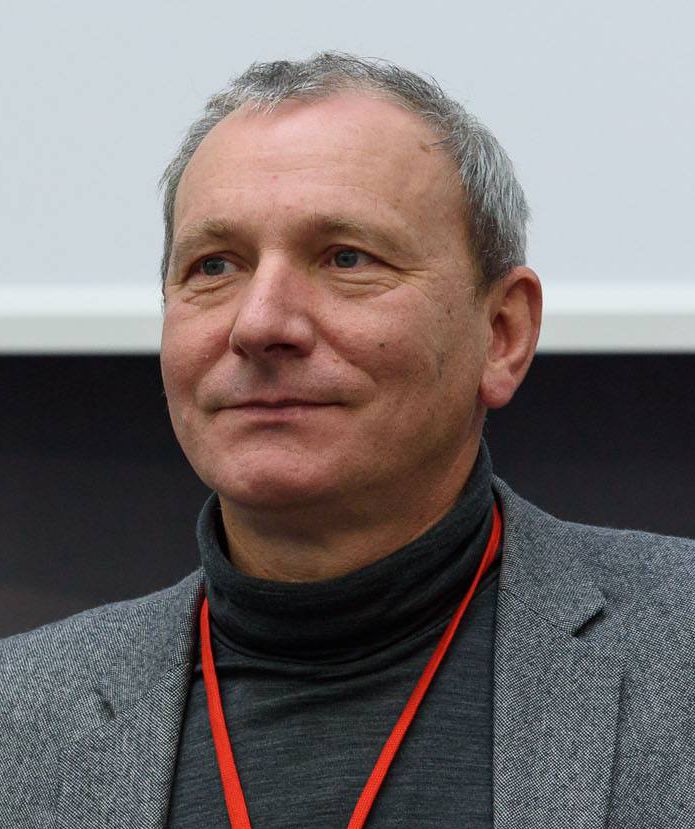
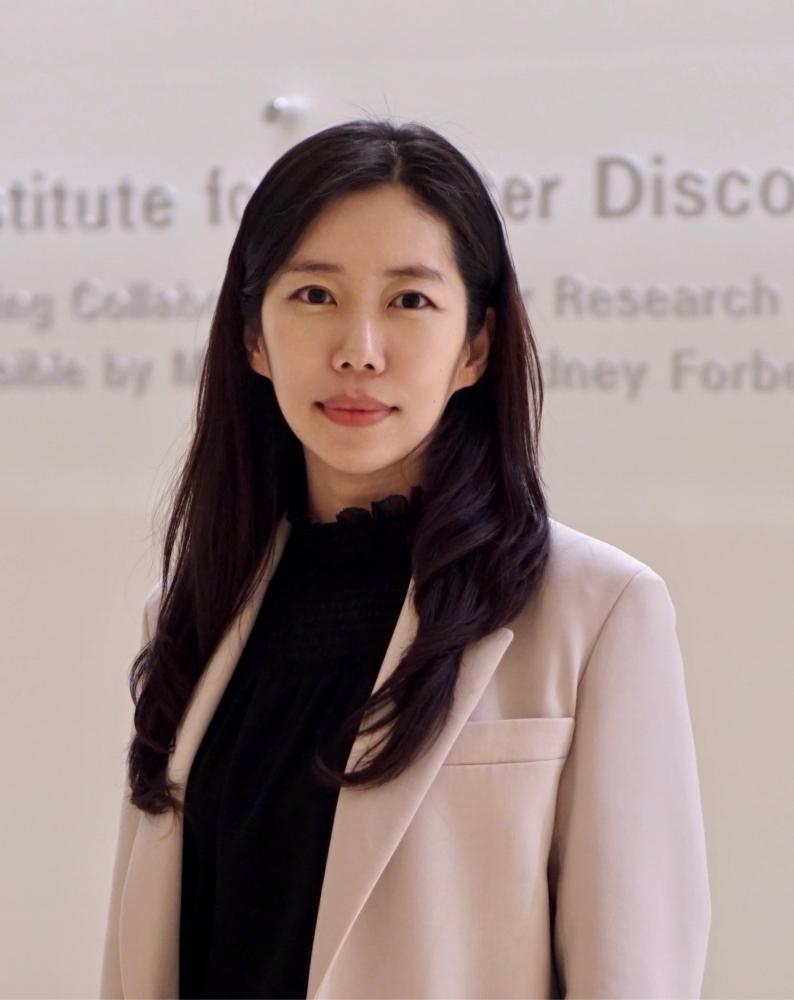
Aleksei Zheltikov is a University Distinguished Professor at Texas A&M University's Department of Physics and Astronomy. He holds dual affiliations with the International Laser Center and Physics Department of M.V. Lomonosov Moscow State University, and the Russian Quantum Center. His research focuses on ultrafast nonlinear optics and biophotonics, addressing applications in imaging, laser filamentation, and strong-field physics. Zheltikov earned his PhD (1990) and Doctor of Science (1999) degrees from Moscow State University, becoming a full professor there in 2000 before joining Texas A&M in 2010. He leads a research team including Xinghua Liu and Ajithamithra Dharmasiri. Recipient of prestigious awards including the Russian Federation State Prize (1997), Lamb Award (2010), and Kurchatov Prize (2014), his work bridges fundamental optics research with medical diagnostics and quantum technologies. Key contributions include developing laser filament-based imaging techniques and advancing Raman scattering-based frequency conversion methods in hollow-core fibers.
Judith Driscoll is Professor of Materials Science at the University of Cambridge in the Department of Materials Science & Metallurgy. She holds the prestigious Royal Academy of Engineering Chair in Emerging Technologies and serves as a Visiting Staff Member at Los Alamos National Laboratory. As the founding Editor-in-Chief of APL Materials, she has significantly contributed to the materials science community. Dr. Driscoll's research focuses on Energy Efficient Oxide Materials for Information and Communications Technologies and energy devices. Her work spans the development of non-volatile memory, resistive switching devices, and ferroelectric materials for neuromorphic computing applications. She investigates oxide thin films for applications ranging from data storage to energy generation and conversion, with particular emphasis on creating more energy-efficient device technologies to handle the exponential growth of data-centric applications. Her recent publications demonstrate strong trends in developing novel oxide-based memory devices with improved energy efficiency, particularly for AI applications. The work shows significant progress in hafnium-zirconium oxide ferroelectrics, resistive switching mechanisms, and vertically aligned nanocomposite structures for enhanced device performance. These innovations address critical challenges in reducing the unsustainable energy demands of modern computing, particularly for artificial intelligence systems. Fellow of the Royal Academy of Engineering Fellow of the Materials Research Society Fellow of the American Physical Society Fellow of IOM3, IOP, and Women Engineers Society Fellow of the American Academy of Arts and Sciences Recipient of ERC Advanced Grant Editor-in-Chief of APL Materials Dr. Driscoll leads a vibrant research group that has secured significant funding including her Royal Academy of Engineering Research Chair, an ERC Advanced Grant, and an ECCS-EPSRC grant in collaboration with researchers from the USA. She has founded the Cambridge Centre for Neuromorphic Computing (Neucam) in 2023. Her group operates world-leading growth equipment including pulsed laser deposition with RHEED control, high temperature oxide sputtering, and spatial ALD systems. She collaborates extensively across the University of Cambridge and with international partners to solve complex materials challenges, with her group's role often being to identify optimal materials for functional goals, predict fabrication methods, and then create and characterize these materials.
Jozef Vleugels is a full Professor at KU Leuven's Faculty of Engineering Sciences, where he serves as Department Head of Functional Materials (SIEM) within the Department of Materials Science. He is also Chairman of the Leuven Centre for Materials and serves as contact person for the Functional Materials research unit located at Castle Park Arenberg 44 in Leuven. His research focuses on advanced materials processing, particularly in ceramics, powder metallurgy, and additive manufacturing. Vleugels has extensive expertise in zirconia-based dental biomaterials, nuclear materials, and refractory ceramics. His work integrates traditional ceramic processing techniques with cutting-edge additive manufacturing technologies, including direct ink writing (DIW) and binder jetting for complex geometries. His recent publications demonstrate a strong emphasis on dental applications of zirconia ceramics, laser surface modification techniques, microwave processing, and high-entropy carbide systems. His research group is actively involved in numerous EU and national projects related to additive manufacturing of multi-material components, nuclear applications, and dental biomaterials. Prof. Vleugels teaches several courses including Ceramics and Powder Metallurgy, Advanced Ceramic Materials, and project-based courses in materials science. He supervises numerous doctoral candidates and collaborates extensively with industry partners on applied research projects. He is an active member of multiple research networks including the Materials Science Division, KIEM – KU Leuven Institute for Energy and Society, and Leuven.AM – KU Leuven Institute for Additive Manufacturing. He also serves on various faculty and departmental councils including the Faculty Council of Engineering Sciences and the Departmental Council of Materials Science.
Dr Dongbin Wei is an Associate Professor at the School of Mechanical and Mechatronic Engineering , University of Technology Sydney (UTS), with a career spanning academia and industry. He holds a PhD in Materials Processing Engineering from the University of Science and Technology Beijing (2001) and academic appointments from 2005–2012 at the University of Wollongong (Research Fellow to Lecturer) and 2013–2017 at UTS (Senior Lecturer) before his promotion to Associate Professor in 2018. His research lies at the intersection of Mechanical Engineering , Manufacturing Engineering , and Materials Processing , focusing on: Ultrasonic Additive Manufacturing (UAM) Micro Metal Forming and Size Effects Tribology and Lubrication Numerical Simulations of Material Processing Composite Material Fabrication Key contributions include: Development of the Springback Path–Displacement Adjustment (SP-DA) method for stamping accuracy Advancements in femtosecond laser texturing for silicon wettability control Studies on nanolubrication in hot rolling Optimization of micro-deep drawing parameters He has secured competitive grants from the Australian Research Council (ARC) and industry partners like Weir Minerals Australia Ltd , including projects on: Revolutionizing mineral separation via additive manufacturing Super high-speed grinding technologies Mechanics of micro composite drill fabrication As a lead supervisor, he guided the 2022 thesis 'Creation and Validation of 3D Printable Mineral Separation Spiral' . His work bridges theoretical analysis, computational modeling (FEM/FEA), and practical validation in advanced manufacturing systems.
Mette Gaarde is the Les and Dot Broussard Alumni Professor of Physics at Louisiana State University (LSU), Department of Physics & Astronomy. She holds a Ph.D. from the University of Copenhagen (1997). Her research focuses on ultrafast atomic, molecular, and optical physics theory, particularly probing laser-matter interactions using attosecond and femtosecond pulses. She leads the LSU ultrafast AMO theory group, addressing dynamics in transparent solids, attosecond transient absorption, charge migration, and mid-infrared filamentation. Education: Ph.D., University of Copenhagen, Denmark (1997) Research Interests: Dr. Gaarde’s work bridges ultrafast AMO science and nonlinear optics. Key areas include high-harmonic generation (HHG) in solids, attosecond transient absorption spectroscopy (ATA), and charge migration in organic molecules. Her group employs time-dependent Schrödinger equation, density functional theory, and semiconductor Bloch equations to model quantum-classical interactions. Recent studies explore HHG in monolayer MoS₂, particle-like charge migration, and resonant XUV propagation. Selected Research Trends: Publications highlight advancements in HHG theory, charge migration control via strong-field ionization, and filamentation of mid-infrared laser pulses. Collaborations with experimental groups at SLAC, Ohio State University, and European institutions have advanced applications in solid-state spectroscopy and molecular dynamics. Awards: Les and Dot Broussard Alumni Professor of Physics (LSU) Advising & Collaborations: Her research involves postdocs and graduate students in interdisciplinary projects. Ongoing collaborations focus on high-harmonic spectroscopy, attosecond solitons, and nonlinear fiber optics. Labs/Teams: Leads the LSU ultrafast AMO theory group, affiliated with the Hearne Institute for Theoretical Physics.
Dr. Yusuf AYAN is a Lecturer in the Department of Mechatronics Engineering at Karabük University's Faculty of Technology, Turkey, since 2022. He holds a PhD (2022) and Master's degree (2017) in Manufacturing Engineering from Karabük University, alongside a BSc (2012) in Mechanical Engineering from Kocaeli University. Education: PhD, Manufacturing Engineering, Karabük University (2022) MSc, Manufacturing Engineering, Karabük University (2017) BSc, Mechanical Engineering, Kocaeli University (2012) His research focuses on Welding Technologies , Metallic Materials , and Additive Manufacturing , with over 103 citations and an h-index of 5. Notable projects include TÜBA/TÜBİTAK-funded research on wire arc additive manufacturing (2023-2025) and functionally graded material development (2020-2024). His publications span journals like Materials Chemistry and Physics , Journal of Materials Engineering and Performance , and Materials Today Communications , emphasizing WAAM process optimization, fatigue properties, and multi-material fabrication. Collaborators include Nizamettin Kahraman (24 joint works, 2018-2024) and researchers such as Kenan Kaan Yetil and Ercan Çağlar.
Karl Krushelnick is a Professor in the Department of Nuclear Engineering and Radiological Sciences at the University of Michigan, serving as Director of the Center for Ultrafast Optical Science (CUOS) and Associate Director for High Field Science. His research focuses on high-intensity laser-plasma interactions, relativistic electron beams, and applications in radiation generation, magnetic reconnection, and biomedical sensing. Research Interests: Basic relativistic plasma studies Table-top particle accelerators Ultra-strong magnetic fields Ultrafast laser technology Quantum electrodynamics (QED) in extreme light regimes Key Trends in Publications: Krushelnick’s recent work investigates zettawatt-equivalent laser experiments, orbital angular momentum effects on laser absorption, magnetic reconnection dynamics, and neutron generation mechanisms. His team explores laser wakefield acceleration, betatron X-ray diagnostics, and filamentation control for advanced applications in physics and engineering.
Dr. Jing Fu is an Associate Professor in the Department of Mechanical & Aerospace Engineering at Monash University. He holds a PhD in nano/microfabrication processes for biomedical applications from Pennsylvania State University (2008). His research focuses on nanoengineering tools, particularly Focused Ion Beam (FIB) technology for imaging and manipulating single cells. He is a principle scientist in collaborative projects with CSIRO MCN and Australian Synchrotron, exploring nanomaterial dynamics in immune cells. His expertise spans FIB/SEM/TEM, cryogenic environments, and multidisciplinary biomedical engineering. Education: M.Eng/Ph.D., Pennsylvania State University, USA (2008). Postdoctoral Fellowship at NIH (2008–2010). Joined Monash Faculty of Engineering in 2010. Research Interests: 3D visualization of HIV viral entry, compositional mapping of mammalian cells, and FIB-driven correlative imaging. Projects include '3D Cryo-FIBSEM Imaging Facility' (2015–2017) and 'Targeting NDM-producing superbugs' (2013–2015). Current collaborations involve tooth enamel evolution studies (2025–2028). Key Contributions: Over 90 publications, including work on graphene encapsulation for APT, ion beam fabrication of nanostructures, and polymyxin antibiotic efficacy. His research aligns with UN SDGs for health and innovation. Grants & Awards: ARC and NHMRC funding for projects on superbug targeting and imaging facilities. Active in multidisciplinary teams addressing biomedical challenges.
Audrius Dubietis serves as Professor and Lead research scientist at Vilnius University's Laser Research Center (LRC), Faculty of Physics. He currently directs the Excellence Center of Advanced Light Technologies, a major national initiative funded by the Ministry of Education, Science and Sports of Lithuania with a 5.5 million Euro budget (2023-2027), and leads the FEMTOLAMA project on high repetition rate femtosecond laser-matter interactions. Dubietis specializes in ultrafast nonlinear optics, with research spanning laser-matter interaction, femtosecond filamentation, and supercontinuum generation in solid-state media. His pioneering work on table-top optical parametric chirped pulse amplifiers has advanced the field over three decades. His theoretical framework for understanding light bullets in Kerr media (Physical Review Letters 112, 193901, 2014) represents a significant contribution to nonlinear optics. Current research focuses on high repetition rate supercontinuum generation using burst-mode femtosecond lasers, with particular emphasis on comparative studies across crystalline materials to optimize performance for specific applications. Analysis of his recent publication record reveals a strategic shift toward practical applications of supercontinuum sources, with increasing attention to thermal management in high repetition rate systems and development of robust, turnkey solutions for industrial and scientific use. His work bridges fundamental nonlinear optics with practical engineering considerations. National Science Prize (2004, 2019) Vilnius University Rectors prize for the best publication in physical sciences (2014) Vilnius University Rectors prize for scientific achievements (2009, 2018) Dubietis has supervised eight doctoral students through completion, with research spanning spatiotemporal light bullets, parametric interactions for ultrashort pulse generation, and supercontinuum generation in novel materials. His research program maintains strong international collaboration, particularly with Ecole Polytechnique (France), and includes significant funding from the Lithuanian Science Council. He serves on the editorial board of the Lithuanian Journal of Physics and was Lead guest editor for the Journal of the Optical Society of America B feature issue on Supercontinuum generation (2019). As a member of the Lithuanian Academy of Sciences since 2019, Dubietis plays a pivotal role in advancing laser science in Lithuania. He teaches core courses in Laser Physics (undergraduate), Nonlinear Optics (graduate), and Modern Optics and Spectroscopy (PhD program), while maintaining active engagement with the public through popular science lectures and his Lithuanian-language book 'Nuostabusis švytėjimas: padangių fizika be formulių' (2014).
Ji Young Kim is an Assistant Professor in the Department of Chemical and Biological Engineering at Rensselaer Polytechnic Institute, with affiliations at the Center for Biotechnology and Interdisciplinary Studies and the Center for Materials, Devices, and Integrated Systems (CMDIS). Her research focuses on chiral nanomaterials, optical activity, and self-assembly processes. Ph.D. in Materials Science & Engineering (University of Michigan, 2018) Postdoctoral Research Fellow at University of Michigan (2019-2022) Research Investigator at University of Michigan (2022-2023) Her work spans chiral nanomaterials , optical metasurfaces , and biomedical applications , with recent publications exploring cancer diagnostics via chiral nanoparticle biosensors, 3D-printed plasmonic structures, and chiral phonons in biomolecular crystals. She employs graph-theoretical methods to quantify chirality and investigates light-matter interactions in semiconductor nanoassemblies. Research trends from her publications include advancements in chiroptical detection , self-assembly driven by circularly polarized light , and design of biomimetic interfaces for energy storage and biological applications. Develops nanophotonic biosensors for cancer mutation analysis Specializes in chiral semiconductor nanostructures Explores electrostatic asymmetry in nanocrystals Investigates chirality transfer across molecular to micrometer scales
Michele Boniotto is a researcher at the University of Verona's Department of Molecular and Translational Medicine, focusing on immunology, genetics, and dermatology. His work spans molecular mechanisms in skin diseases and evolutionary aspects of host defense peptides. Research Focus Dr. Boniotto's research examines: Genetic factors in hidradenitis suppurativa Beta-defensin evolution and function Aquaporin-3 role in skin homeostasis Photobiomodulation therapies HLA-DR expression in septic shock His publications show interdisciplinary approaches combining molecular biology, clinical dermatology, and bioinformatics to understand complex disease mechanisms. Scientific Contributions 2025: Keratin filament-melanin interactions 2025: Polygenic risk scoring for HS 2024: Aquaporin-3 dysregulation in HS 2023: NCSTN mutations in familial HS 2022: Holistic HS health records 2020: Photobiomodulation for HS
Cathy Wong is an Associate Professor in the Department of Chemistry and Biochemistry at the University of Oregon's College of Arts and Sciences, affiliated with the Materials Science Institute and the Oregon Materials Institute (OMI). She leads a research group focused on photovoltaic and optoelectronic materials, particularly those assembled from nanoscale building blocks like quantum dots, organic molecules, and perovskite nanocrystals. B.Sc., McMaster University (2004) in Biological Chemistry Ph.D., University of Toronto (2011) in Physical Chemistry Postdoctoral work at UC Berkeley (2015) under Naomi Ginsberg Her research investigates how physical arrangements during materials self-assembly alter exciton and carrier behavior. Key areas include photovoltaic materials , optoelectronic properties , nanostructure formation , and in situ spectroscopy during processes like crystallization and chemical bond formation. She pioneered single-shot transient absorption spectrometers for real-time measurement of non-equilibrium systems. The 15 most recent publications highlight her expertise in perovskite nanocrystal growth , halide segregation dynamics , and organic film self-assembly . These works span physical chemistry , materials science , and ultrafast spectroscopy , with subfields including exciton dynamics , ligand engineering , and photovoltaic stability . Her lab trains students in advanced techniques while developing instrumentation for time-resolved microscopy and shot-to-shot correction of photoluminescence. She mentors undergraduates and graduate researchers, including award-winning advisees like Zach, Weston, and Logan.
Dustin Froula serves as Assistant Professor in the Department of Physics and Astronomy at the University of Rochester and leads the Plasma and Ultrafast Physics group at the Laboratory for Laser Energetics (LLE). His research focuses on experimental plasma physics for inertial confinement fusion and high-energy-density science using major facilities including OMEGA, OMEGA EP, and the National Ignition Facility. His academic credentials include: MS in Physics, University of California, Davis (2000) PhD in Physics, University of California, Davis (2002) Froula's research centers on laser-plasma interactions , Thomson scattering diagnostics , and laser-plasma acceleration in inertial confinement fusion contexts. He investigates phenomena like stimulated Brillouin/Raman scattering, cross-beam energy transfer, and turbulent dynamos, with applications spanning fusion energy development and laboratory astrophysics. His work combines advanced experimental techniques with computational modeling to address fundamental plasma transport questions. Analysis of his 2023-2025 publications reveals dominant trends in flying-focus laser techniques for particle acceleration, laboratory dynamos for astrophysical modeling, and instability mitigation for fusion ignition. Key thematic clusters include high-resolution plasma diagnostics, advanced laser pulse shaping, and magnetized turbulence studies using multi-facility experimental platforms. His scientific recognition includes: Department of Energy's Outstanding Mentor Award (2007) APS Fellowship (2017) John Dawson Award (2019) Ernest Orlando Lawrence Award (2020) Thomas H. Stix Award (2023) Froula has mentored numerous students earning the DOE Mentor Award, with research funded by Department of Energy and National Science Foundation grants supporting his work on OMEGA, NIF, and OPAL facilities. His group develops novel diagnostic techniques like continuous angular-resolution Thomson scattering and flying-focus pulse systems for electron acceleration. He directs the Plasma and Ultrafast Physics group at LLE, operating the OMEGA 60-beam laser, OMEGA EP petawatt system, and MTW short-pulse facility while collaborating with Lawrence Livermore's Jupiter Laser Facility and National Ignition Facility. Current projects include dephasingless wakefield acceleration platforms and turbulent dynamo experiments for astrophysical analog studies.
Zahabul Islam is an Assistant Professor and Program Coordinator in Mechanical and Manufacturing Engineering at Bowling Green State University, School of Engineering. His research focuses on additive manufacturing (3D printing) and material characterization, particularly for energy and biomedical applications. Ph.D., M.S., and B.S. in Mechanical Engineering from Penn State University His expertise spans Laser Powder Bed Fusion (LPBF), Selective Laser Melting (SLM), Direct Energy Deposition (DED), and Stereolithography. Current research includes process map optimization for polymer/metal additive manufacturing, radiation damage studies, and multiscale modeling of fused filament fabricated composites. Recent publications highlight work on tungsten lattice structures, MoSiB alloys, and Haynes 282 superalloys. He actively collaborates on projects involving supercritical CO2 heat-to-power systems and ultrahigh-temperature refractory metal alloys for aerospace applications.
Roland Sauerbrey is a Professor of Quantum Optics at the Technical University of Dresden and Scientific Director at Helmholtz-Zentrum Dresden-Rossendorf since 2006. He previously held faculty positions at Friedrich Schiller University Jena (1994-2006), Rice University (1985-1994), and served as President of the German Physical Society (2002-2004). Education: Ph.D. in Physics (1981), University of Würzburg; Postdoc at Rice University (1981-1982). His research spans quantum optics, laser physics, and strong-field laser-matter interactions, focusing on high-intensity lasers and their applications in atmospheric sensing and plasma acceleration. His work includes pioneering studies on laser-induced filamentation, proton acceleration, and supercontinuum generation. The most recent articles reflect his expertise in laser-matter coupling, atmospheric propagation, and advanced laser applications. Key themes include nonlinear optical phenomena, precision sensing, and high-energy physics experiments. Scientific Awards: Member of Leopoldina (2013), Dr. h.c. from University of Rostock (2010) and Russian Academy of Science (2004), Le Prix La Recherche (2005), Thueringer Forschungspreis (2004), Fellow of OSA and IOP (2002), Rodolf Kangslake Medal (1993). Roland Sauerbrey leads the Helmholtz-Zentrum Dresden-Rossendorf, a multidisciplinary research institution, and has contributed to major advancements in laser technology and its applications across physics and engineering.