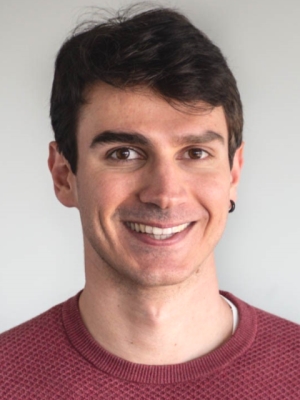
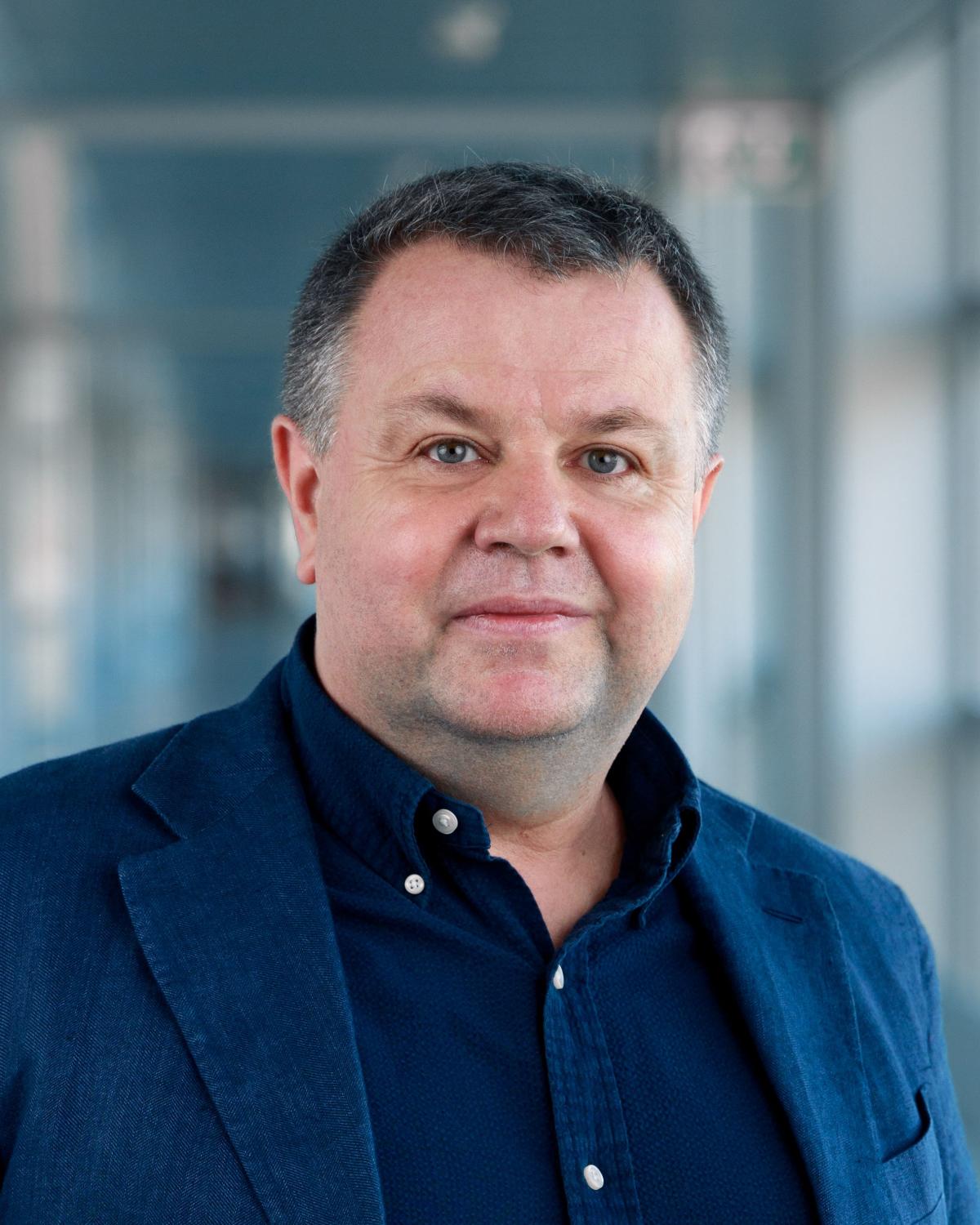
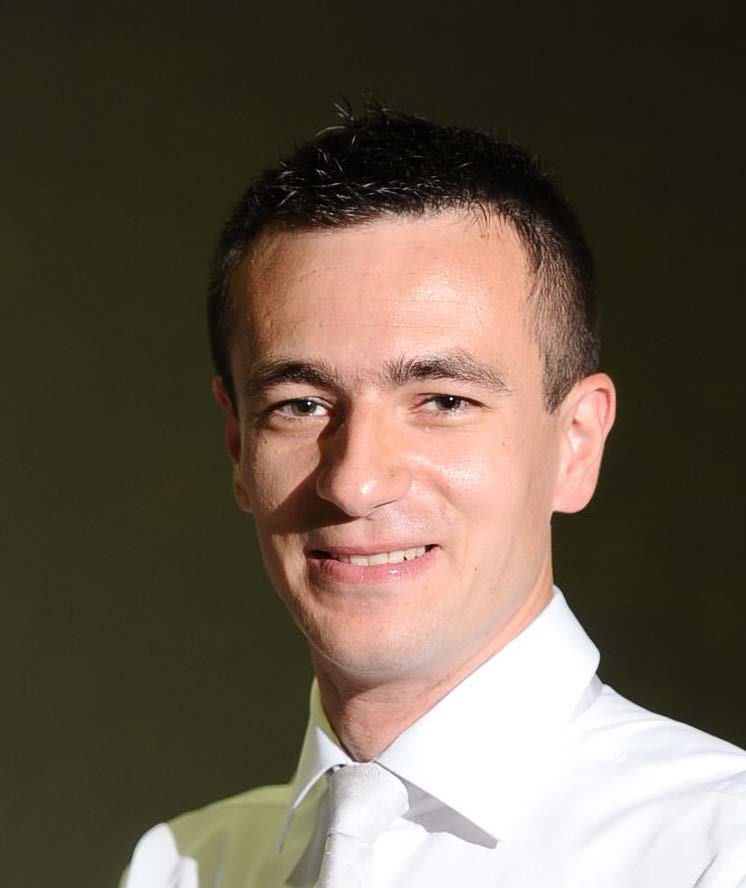
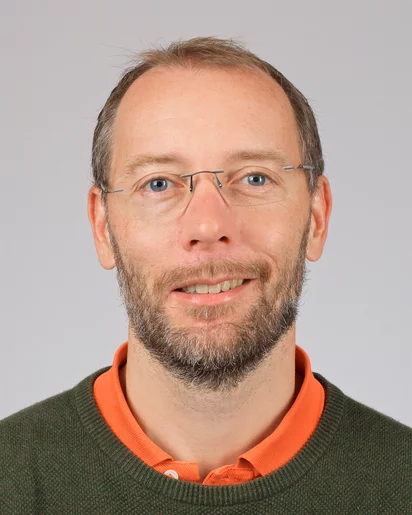
Dr. Iason Sideris is affiliated with ETH Zürich's Department of Neue Fertigungstechnologien (New Manufacturing Technologies), holding a Researcher position within the Professorship for Advanced Manufacturing. His work focuses on advancing additive manufacturing techniques, particularly in path planning optimization, temperature control, and material processing. He contributes to fields like Direct Energy Deposition, Wire-Arc Additive Manufacturing (WAAM), and data-driven finite volume methods. Key Research Areas: Additive Manufacturing, Thermal Modeling, Process Optimization, Materials Science Recent research emphasizes scalable path planning for temperature uniformity in AM processes, with publications addressing challenges in WAAM thermal management and real-time simulation methods. His work combines computational modeling with experimental validation to enhance manufacturing efficiency and material properties.
Jörg F. Löffler is a Full Professor of Metal Physics and Technology at the Department of Materials, ETH Zürich , where he has been since 2003. He previously served as Chairman of the Department (2010–2013) and holds Adjunct Professor positions at Tohoku University (Japan) and a Visiting Faculty role at Caltech. His research focuses on bulk metallic glasses , metallic biomaterials , and magnetic materials , combining synthesis, characterization, and applications in biomedical and structural contexts. Educations : Studied Physics and Materials Science at Saarland University (Germany), earned his doctorate at ETH Zurich and Paul Scherrer Institute on magnetism and neutron scattering (1997). Research Trends : Recent work explores additive manufacturing (e.g., laser powder bed fusion), biodegradable magnesium alloys for implants, and magneto-structural coupling in metallic glasses. Collaborative efforts integrate in situ analysis with computational modeling. Scientific Awards : International Magnesium Science and Technology Award (2023) MRS Fellow (2021) DGM 'Breakthrough' Prize (2016) Masing Memorial Prize (2005) ETH Zurich Medal (1998) Alexander von Humboldt Fellowship (1998-2001) Löffler advises the Department of Materials Science and Engineering at UC Davis and serves on editorial boards. His group at ETH Zürich investigates advanced metallic materials using synchrotron radiation and neutron scattering facilities.
Swiss Federal Institute of Technology in LausanneSwitzerland
Farhad Rachidi-Haeri is a Titular Professor and Head of the Electromagnetic Compatibility (EMC) Group at EPFL. His expertise spans EMC research, lightning electromagnetics, time reversal techniques, and fault location in power systems. He has led the EMC Group since the 1980s, with funding from the Swiss National Science Foundation, European Union, and private sector collaborations. His work involves international partnerships with institutions like the University of Toronto and KTH. Education: PhD in Electrical Engineering from EPFL (1991), M.S. from EPFL (1986). Roles: President of Swiss National Committee of URSI (2012–2020), Editor-in-Chief of IEEE Transactions on EMC (2013–2015), and member of the Academy of Sciences of Bologna Institute (2019). Research Focus: Lightning interaction with infrastructure, electromagnetic field modeling, time reversal applications for fault detection, and high-frequency transient analysis. His work bridges theoretical physics and engineering, addressing challenges in power systems, lightning protection, and aerospace. Awards: IEEE EMC Technical Achievement Award (2005), Berger Award (2016), and Distinguished Honorary Professor at Tsinghua University (2024). Over 400 peer-reviewed papers and 500 conference contributions reflect his prolific research output. Labs/Teams: Leads the EMC Laboratory at EPFL, focusing on experimental and numerical studies of electromagnetic phenomena. Collaborates with global networks on projects like Laser Lightning Control and structural lightning protection for wind turbines.
Swiss Federal Institute of Technology in LausanneSwitzerland
Jan Skaloud serves as an Adjunct Professor at École Polytechnique Fédérale de Lausanne (EPFL), affiliated with the School of Architecture, Civil and Environmental Engineering (ENAC). He holds positions across multiple departments including SSIE (Institute of Earth Surface Dynamics), EDCE (Doctoral Program in Environmental Sciences and Engineering), and leads the Earth Sensing and Observation (ESO) Lab. His office is located at GC C2 397 in the EPFL campus in Lausanne, Switzerland. Dr. Skaloud's research expertise spans satellite positioning, inertial and integrated navigation systems, sensor orientation and calibration, attitude determination, mobile mapping, airborne laser scanning, and Kalman filtering techniques. His work bridges theoretical development with practical applications in UAV navigation, photogrammetry, and remote sensing. He teaches across three EPFL sections and two faculties, demonstrating his interdisciplinary approach to education. His publication record shows consistent contributions to the field, with recent work (2023-2025) focusing on vehicle dynamic model-based navigation for various UAV platforms, including delta-wing and fixed-wing drones. His research demonstrates a clear trajectory toward increasingly sophisticated navigation systems that integrate aerodynamic modeling with traditional sensor fusion approaches. This trend reflects the growing importance of model-based navigation in achieving higher precision and autonomy in UAV operations. 2021: Samuel Gamble Award for career contribution in photogrammetry & sensing (ISPRS) 2020: U.V. Helava Award for best paper in ISPRS Journal (2016-2019) 2017: Best Demo Award at IEEE International Workshop on Metrology & Aerospace 2014: Hansa Luftbild Award for best paper in PFG journal 2012: Karl Kraus Medal for best textbook in Photogrammetry 2009: GNSS Leader to Watch Innovation Award (GPS World) Dr. Skaloud has supervised numerous PhD students whose work focuses on advanced navigation systems, sensor calibration, and UAV applications. His research has received funding for projects involving direct georeferencing, mobile mapping systems, and UAV-based search and rescue operations. The ESO lab he directs serves as a hub for cutting-edge research in Earth observation technologies. The Earth Sensing and Observation Lab under Dr. Skaloud's direction brings together researchers working on navigation systems, sensor integration, and data processing techniques for geospatial applications. The lab maintains strong connections with industry partners and international research organizations, facilitating technology transfer and collaborative research projects.
Swiss Federal Institute of Technology in LausanneSwitzerland
Kirsten Emilie Moselund is a Full Professor of Electrical and Microengineering at École Polytechnique Fédérale de Lausanne (EPFL) and Head of the Laboratory of Nano and Quantum Technologies (LNQ) at Paul Scherrer Institut (PSI) since 2022. She bridges quantum and classical technologies through interdisciplinary research collaborations across the ETH domain. Her leadership spans multiple groups in quantum computing and nanotechnology, including the ETHZ-PSI Quantum Computing Hub. Education: M.Sc. in Engineering (2003) and Ph.D. in Microelectronics (2008), both from EPFL and Technical University of Denmark (DTU) Her research focuses on semiconductor device innovation, including low-power electronics , cryogenic electronics , and integrated photonics , with an emphasis on III-V on silicon monolithic integration for hybrid quantum-classical systems. Key subfields include topological devices , nanophotonics , and neuromorphic computing . Recent publications highlight advancements in III-V photonic integration , nanoscale lasers , and optoelectronic device physics , reflecting her expertise in bridging materials science with quantum engineering. Notably, her work on hybrid photonic-plasmonic nanolasers earned an ERC Starting Grant . As an academic leader, Moselund has directed multiple Ph.D. theses and contributed to over 100 publications with 25 patents filed. She serves on technical committees for major conferences like IEDM and participates in European and Swiss research initiatives. Labs & Teams: Lead the LNQ laboratory at PSI with six research groups Professional Memberships: Wissenschaftliche Beirat of IHP Microelectronics, Kuratorium IMS Chips
Christoph Bostedt holds dual appointments as a Professor of Physical Chemistry at the Ecole Polytechnique Fédérale de Lausanne (EPFL) and as Head of the Laboratory for Synchrotron Radiation and Femtochemistry (LSF) at the Paul Scherrer Institut (PSI). He leads strategic operations for the LSF, managing five research groups and overseeing four beamlines at the Swiss Light Source and the Alvra Endstation at SwissFEL. His research focuses on ultrafast x-ray science, including single-shot imaging, non-linear x-ray spectroscopy, and femtosecond pump-probe techniques. He collaborates globally on initiatives like the Athos project, aiming to advance ultrafast x-ray technologies. Bostedt has over 150 publications and is a Fellow of the American Physical Society, recipient of the Röntgen Prize. Education: Ph.D. from the University of Hamburg with research at Lawrence Livermore and Berkeley National Laboratories. Prior roles include leadership at Argonne National Laboratory and SLAC National Accelerator Laboratory. Research Interests: Single-particle imaging and coherent diffraction X-ray free-electron laser applications Ultrafast dynamics in nanoparticles and molecular systems Non-linear x-ray spectroscopy Time-resolved x-ray pump-probe methods Awards: Fellow of the American Physical Society Röntgen Prize (University of Giessen) Labs & Projects: Spearheads the Athos beamline project at SwissFEL, developing the Maloja endstation for ultrafast x-ray studies. Oversees the Laboratory for Femtochemistry and collaborates on advanced imaging techniques for nanoscale science.
Matej Varga is a Scientific Assistant and Postdoctoral Researcher at ETH Zurich's Department of Civil, Environmental and Geomatic Engineering, working in the Geosensors and Engineering Geodesy group under Prof. Andreas Wieser since 2021. His research spans geometrical geodesy, physical geodesy, and satellite geodesy, with applications in both theoretical and practical domains. Dr. Varga's research interests focus on spatial, temporal and spectral analysis of geodetic data, with particular expertise in geodetic reference systems and frames, gravity and geomagnetic field modeling at all temporal and spatial scales, and multi-GNSS multi-frequency positioning and monitoring. His work integrates geometrical and physical aspects of geodesy to address complex Earth observation challenges, particularly in infrastructure monitoring and geophysical applications. His recent publications demonstrate a strong trend toward high-precision geodetic applications for major scientific infrastructure, most notably the Future Circular Collider project, alongside important contributions to earthquake impact analysis, geomagnetic network development, and gravity field modeling. His research bridges traditional geodetic methods with modern computational approaches, including machine learning applications for point cloud registration. Dr. Varga is actively involved in the GSEG research group at ETH Zurich, contributing to the development of geodetic infrastructure and reference systems. His work has practical applications in infrastructure monitoring, earthquake analysis, and scientific projects requiring extreme geodetic precision.
Swiss Federal Institute of Technology in LausanneSwitzerland
Hatice Altug is a Full Professor at EPFL's Institute of Bioengineering within the School of Engineering, where she leads the Bionanophotonic Systems Laboratory. Her research integrates nanophotonics, plasmonics, and microfluidics to develop advanced biosensors for real-time molecular diagnostics. She holds dual roles in EPFL's doctoral programs and academic committees. Education: PhD in Applied Physics, Stanford University (2000-2007) B.S. in Physics, Bilkent University (1996-2000) Her research centers on creating label-free, high-sensitivity optical biosensors using nanophotonic technologies. Key innovations include dielectric metasurfaces for mid-infrared spectroscopy, AI-enhanced detection platforms, and portable nanoplasmonic imagers for point-of-care diagnostics. Her work bridges fundamental light-matter interactions with clinical applications like sepsis monitoring and cancer biomarker detection. Her publications emphasize nanophotonic biosensor design, metasurface applications, and single-cell analysis. Recent trends show increased focus on AI integration, vibrational spectroscopy, and wafer-scale manufacturing for clinical translation. Awards & Honors: Optical Society Fellow (2020) Presidential Early Career Award (PECASE, 2011) ERC Consolidator Grant (2016) IEEE Photonics Society Young Investigator Award (2011) She mentors numerous PhD students and leads interdisciplinary teams developing optofluidic platforms. Her laboratory pioneers nanoplasmonic microarrays and collaborates globally on projects like neurodegenerative disease biomarker detection. She co-directs EPFL's doctoral program in photonics and champions women in STEM through executive roles in diversity initiatives.
Aldo Mozzanica is a Researcher at the Paul Scherrer Institute (PSI) in Switzerland, affiliated with the Laboratory for X-ray Nanoscience and Technologies. He holds a degree in Physics from Insubria University and a Ph.D. from the University of Milan, where his doctoral work focused on scintillating fiber vertex detectors for CERN's Antiproton Decelerator facility. At PSI, he leads detector development projects for synchrotron and free-electron laser applications. His research centers on advancing X-ray detector technology, including: Developing next-generation integrating pixel/strip detectors (JUNGFRAU, GOTTHARD) Improving frame rates, noise performance, and radiation hardness Exploring novel detector concepts for XFEL/synchrotron applications Enabling new experimental capabilities in structural biology and materials science Mozzanica's 135+ publications focus on X-ray detector innovation, with recent work emphasizing: Hybrid pixel detector optimization for 4th-generation light sources On-chip digitization and charge transport modeling High-speed data acquisition systems Applications in crystallography, spectroscopy, and phase-contrast imaging As principal developer of the JUNGFRAU detector, he oversees: ASIC design, testing, and characterization Readout electronics and firmware development Module production and supply chain management Commissioning at SwissFEL endstations
Ueli Grossniklaus is an Ordinary Professor at the University of Zurich within the Faculty of Mathematical and Natural Sciences , affiliated with the Department of Plant and Microbiology . His work focuses on plant developmental biology, particularly epigenetic and genetic mechanisms governing reproduction and adaptation. Key Courses: Epigenetics, Plant Biology Workshop, Group Seminars on Current Research Laboratory Techniques: Advanced methods in plant cell mechanics, transcriptomics, and genome editing Research Interests span plant epigenetics, reproductive biology, and the interplay between environmental stress and genetic regulation. He investigates: Mechanistic control of gametogenesis and fertilization Epigenetic contributions to plant adaptation Evolutionary implications of asexual reproduction Biophysical forces in plant cell growth Publication Trends (2025–2018) reveal expertise in: Arabidopsis and fern model systems Epigenetic regulation (DNA methylation, histone dynamics) Apomixis and hybrid seed failure mechanisms Biomechanics of pollen tubes and carnivorous plants Genome editing tools (CRISPR) and long-read sequencing Scientific Collaborations include interdisciplinary projects on: Microfluidic devices for plant cell analysis Gene drive ecology and ethics 3D imaging of plant reproductive structures Advising and Grants focus on mentoring through research internships in developmental biology, genetics, and systems biology. His lab engages in: Epigenetic response to environmental stress Cell wall mechanics in reproduction Computational modeling of plant growth Laboratory Teams integrate plant biologists, bioengineers, and computational scientists to study: Mechanistic gene regulation Evolutionary developmental biology Microrobotics for cellular force measurement
Zurich University of Applied Sciences (ZHAW)Switzerland
Dr. Christian Jaeger is a Researcher at the Zurich University of Applied Sciences (ZHAW) School of Engineering, focusing on Machine Learning in Optimal Control for Industry. His work bridges engineering and computer science with applications in industrial automation and building systems. His research interests span Machine Learning , Optimal Control , Reinforcement Learning , Energy Management Systems , and Industrial Automation . Jaeger has led multiple research projects including a preliminary study on automated IBN heat pumps and a feasibility study on Reinforcement Learning Control for heating systems. His work demonstrates a clear trajectory from traditional manufacturing technology toward contemporary AI-driven control systems. Jaeger's publication record shows consistent output from 2005 to 2024, with recent focus on energy optimization in building control using reinforcement learning, 3D printing techniques, and model predictive control. His research demonstrates strong interdisciplinary connections between computer science, engineering, and practical industrial applications. His scientific contributions include publications in journals such as Applied Sciences and the Journal of the British Interplanetary Society, along with numerous conference proceedings from international events including EuroSun and the International Symposium on Nonlinear Theory and its Applications. At ZHAW, Jaeger has served as project leader for multiple completed research initiatives including adaptive energy management systems for buildings and automated heat pump systems. His work demonstrates strong industry connections with applications in building automation and industrial manufacturing processes.
Dr. Fabian Schmid is a Researcher affiliated with the Institute for Quantum Electronics at ETH Zürich, working within the Professorship for Experimental Quantum Information . His research focuses on quantum control, precision spectroscopy, and optical frequency comb technologies. Key applications include molecular ion manipulation, laser cooling techniques, and advanced spectroscopic methods for atomic and molecular systems. His work bridges quantum physics and optics, with contributions to ultra-stable laser systems, low-repetition-rate frequency combs, and high-resolution spectroscopic measurements. Recent efforts target applications in trapped ion systems and new boson constraints via calcium isotope studies. Schmid's experimental setups often involve precision engineering of optical components and cavity-stabilized laser systems. Notable experimental achievements include demonstrating quantum control over single molecular ions (H₂⁺) and developing number-resolved detection methods for Coulomb crystals. His research also explores synergies between dual-species laser cooling and cavity-based technologies. While currently holding no listed academic awards, Schmid's contributions are evident through his prolific publishing record in top-tier physics journals. His lab work integrates cutting-edge quantum optics with atomic physics to advance fundamental understanding and precision measurement capabilities.
Konrad Viebahn is a Researcher at ETH Zurich's Department of Physics, working within the Professorship for Quantum Optics. Based at HPF D 23, Otto-Stern-Weg 1, Zurich, he contributes to experimental quantum simulation research with contact via viebahnk@ethz.ch and +41 44 633 23 45. His research centers on quantum many-body systems in optical lattices, specializing in topological phenomena and Floquet engineering. Key interests include Thouless pumping in driven systems, quantum control of ultracold atoms, and mitigating heating in Floquet-Hubbard lattices. His work bridges theoretical concepts like topological phase transitions with experimental implementations using laser-cooled atomic gases. Analysis of his 2021-2025 publications reveals a consistent focus on engineering topological quantum behavior through periodic driving techniques. His group pioneers two-tone driving methods to manipulate band structures, enabling protected quantum gates and precise charge pumping. This research directly addresses challenges in quantum simulation scalability and error mitigation for future quantum technologies. As part of ETH Zurich's Quantum Optics group, Dr. Viebahn utilizes advanced optical lattice platforms to study strongly correlated quantum matter. The team's experimental setup involves precision laser systems for creating dynamical potentials, with recent work emphasizing the interplay between interactions and topology in non-equilibrium systems.
Kirsten Moselund is a Professor at the Swiss Federal Institute of Technology in Lausanne (EPFL) and Head of the Laboratory for Nano and Quantum Technologies (LNQ) at the Paul Scherrer Institute (PSI) since 2022. She leads LNQ’s six research groups focused on nanotechnology and advanced nanomanufacturing quantum computing technologies with co-location of the ETHZ-PSI Quantum Computing Hub and affiliation to EPFL's Quantum Science and Engineering Center (QSE) . Her research spans semiconductor device physics and technology development, including III-V electronics nanophotonics topological devices cryogenic electronics with applications in quantum computing, optical communication, and integrated photonics. She received an ERC Starting Grant for hybrid photonic-plasmonic nanolasers. Recent publications focus on III-V photodetectors on silicon hybrid laser integration thermal management in nanocavities topological mode emission across Nature Communications , ACS Photonics , and Nature Electronics . Scientific awards include ERC Starting Grant and institutional roles such as Member of IHP Microelectronics Scientific Advisory Board Executive Board of Swiss Photonics Technical Program Committee member for IEDM conference At PSI, she oversees construction of the Park InnovAare cleanroom opening in 2024 and collaborates with international groups on theoretical foundations and simulations.
Prof. David J. Norris is a Full Professor at ETH Zurich's Department of Mechanical and Process Engineering and Director of the Optical Materials Engineering Laboratory. He holds a B.S. in Chemistry from the University of Chicago (1990) and a Ph.D. in Physical Chemistry from MIT (1995). His research focuses on engineering materials to achieve novel optical properties, particularly semiconductor nanocrystals (quantum dots) and plasmonic films. Notable awards include the Max Rössler Prize (2015) and ERC Advanced Grant (2014-2019). Research interests span nanoscale optical phenomena, including exciton dynamics in colloidal systems and plasmonic nanofocusing. He has pioneered studies on magic-sized semiconductor nanocrystals and developed methods for high-throughput characterization of atomically thin semiconductors. His work bridges nanotechnology and photonics, addressing applications in lasers, sensors, and energy systems. Awards also include the Credit Suisse Award for Best Teaching (2015) and fellowships from the American Physical Society and AAAS. He serves on editorial boards for ACS Photonics and Nano Letters , reflecting his leadership in nanophotonics and materials science. Grants include an ERC Advanced Grant supporting his exploration of optical materials. His lab’s innovations include template-stripping techniques for plasmonic devices and plasmon-enhanced catalysis. Past roles include Director of Graduate Studies at the University of Minnesota and an Alexander von Humboldt Fellowship at TU Munich (2006-2007).