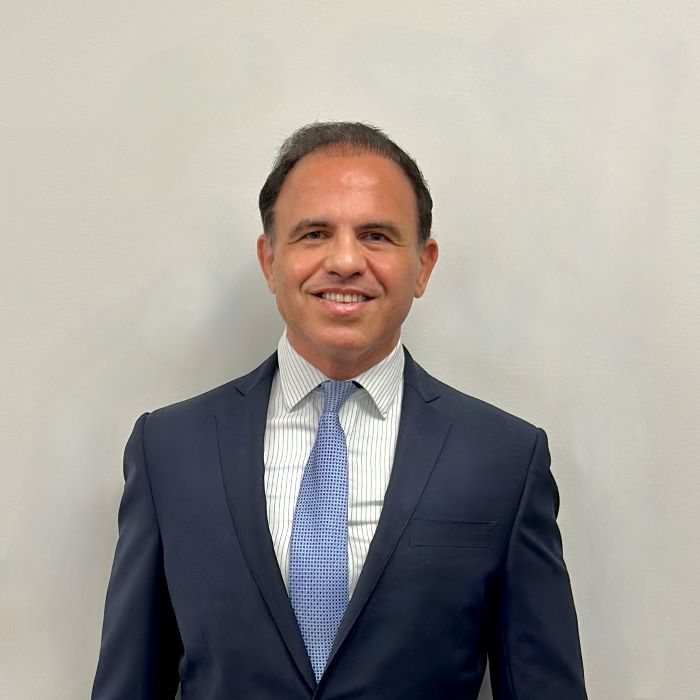
Ali Mohammadiمشاهده پروفایل
مدرس ارشد
- Microelectromechanical Systems (MEMS)
- Nanoelectromechanical Systems (NEMS)
- Electronic Interface Circuits
- +۶ مورد دیگر
Dr. Ali Mohammadi is a Senior Lecturer in the Department of Electronic & Electrical Engineering within the Faculty of Engineering & Design at the University of Bath. He leads innovative research in Micro-electromechanical Systems (MEMS) and serves as an Associate Editor for IEEE Sensors. His work is supported by multiple EPSRC-funded research projects with strong industry collaboration, totaling over £1.5 million across five projects. Dr. Mohammadi is embedded within several key research units: Electronics Materials, Circuits & Systems Research Unit (EMaCS), The Foundry: Centre for Digital, Manufacturing & Design, Centre for Bioengineering & Biomedical Technologies (CBio), and the Bath Institute for the Augmented Human. Dr. Mohammadi's academic background includes postdoctoral research at the Department of Engineering Science, University of Oxford (2016-2017) and the Department of Electrical and Computer Systems Engineering, Monash University, Australia (2014-2016). This foundation has enabled his interdisciplinary approach to micro/nano-electromechanical systems and electronic circuit design. His research program addresses fundamental challenges in micro/nano-electromechanical transducers and electronic interface circuits, with specific innovations in on-chip atomic force microscopy, implantable energy harvesters, and high precision coupled resonator sensors. These contributions span multiple UN Sustainable Development Goals, particularly advancing clean energy technologies and healthcare solutions. Dr. Mohammadi's work uniquely bridges electrical engineering, mechanical systems, and materials science to develop next-generation sensing and energy harvesting technologies with real-world applications. Analysis of his 48 research outputs reveals a clear trajectory from fundamental MEMS device development toward integrated sensor systems with practical applications. His most recent publications (2023-2025) demonstrate increasing integration of machine learning with precision sensing technologies, particularly for manufacturing condition monitoring and biomedical applications. The research shows progression from individual components to complete systems, with growing emphasis on real-time data processing at the sensor edge and human-machine interfaces. Dr. Mohammadi's professional standing includes: Member of the Institute of Electrical and Electronics Engineers (IEEE) Associate Editor of IEEE Sensors Journal As a doctoral supervisor, Dr. Mohammadi actively mentors students in Microelectromechanical Systems and Electronic Integrated Circuits. His research portfolio includes two active EPSRC projects: 'Transforming the use of Ansys simulation software within engineering curricula' and 'SENSYCUT- Sensor Enabled Systems for Precision Cutting,' demonstrating strong industry-academic collaboration. These projects focus on practical engineering solutions for manufacturing optimization, condition monitoring, and human-computer interaction, with direct applications in industrial settings. Dr. Mohammadi's research ecosystem spans multiple interdisciplinary centers at Bath. Within EMaCS, he advances fundamental electronic materials and circuit design. Through The Foundry, he contributes to digital manufacturing innovation. His CBio affiliation enables medical applications of his sensor technologies, while the Bath Institute for the Augmented Human provides context for human-centered applications of his tactile display research. This multi-faceted institutional integration allows his work to progress from laboratory prototypes to real-world implementations across healthcare, manufacturing, and human augmentation domains.