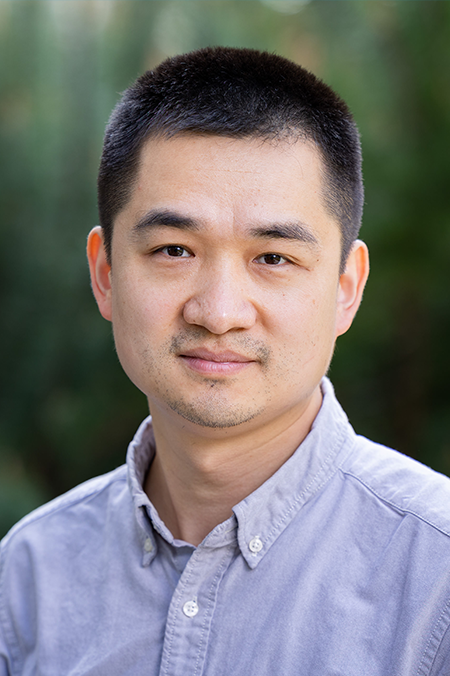
Xiaoliang Jinمشاهده پروفایل
دانشیار
Xiaoliang Jin is an Associate Professor and Canada Research Chair in Advanced Manufacturing within the Department of Mechanical Engineering at the University of British Columbia's Faculty of Applied Science. His research focuses on advanced manufacturing processes for next-generation materials and systems. His academic background includes: B.Sc. and M.Sc. from Beihang University Ph.D. from the University of British Columbia Dr. Jin's research spans cutting-edge manufacturing domains with emphasis on machining of composite materials (particularly carbon fiber reinforced polymers), hybrid additive-subtractive manufacturing , and advanced machining mechanics . His work integrates analytical modeling , experimental validation , and computational techniques to solve complex challenges in material processing, surface integrity, and process dynamics. Current investigations include vibration-assisted machining, micro-scale manufacturing, and real-time process monitoring systems. Analysis of his recent publications (2022-2025) reveals strong methodological trends: increasing application of machine learning for predictive modeling (especially in tool wear prediction), sophisticated residual stress characterization in additive manufacturing, and novel analytical frameworks for chip formation mechanics . His work bridges fundamental mechanics with industrial applications across aerospace and advanced materials sectors. His scientific recognition includes: Canada Research Chair in Advanced Manufacturing As a Canada Research Chair holder, Dr. Jin directs a significant research program securing substantial funding for advanced manufacturing innovation. He mentors graduate students in experimental and computational manufacturing research, with projects often involving industry partnerships to address real-world production challenges. His group develops specialized instrumentation for process monitoring and control. He leads the Advanced Manufacturing Processes (AMP) Laboratory (amp.mech.ubc.ca), which features capabilities for precision machining of composites and metals, vibration-assisted systems, hybrid additive-subtractive platforms, and dynamic process analysis. The lab supports fundamental research while maintaining strong connections to industrial manufacturing applications.