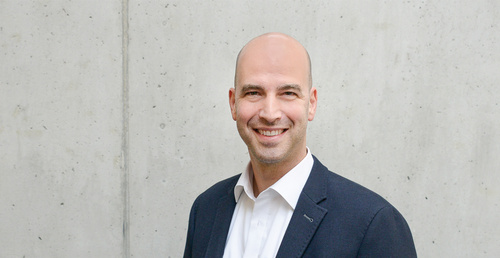
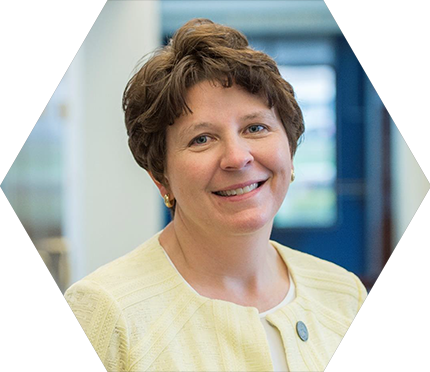
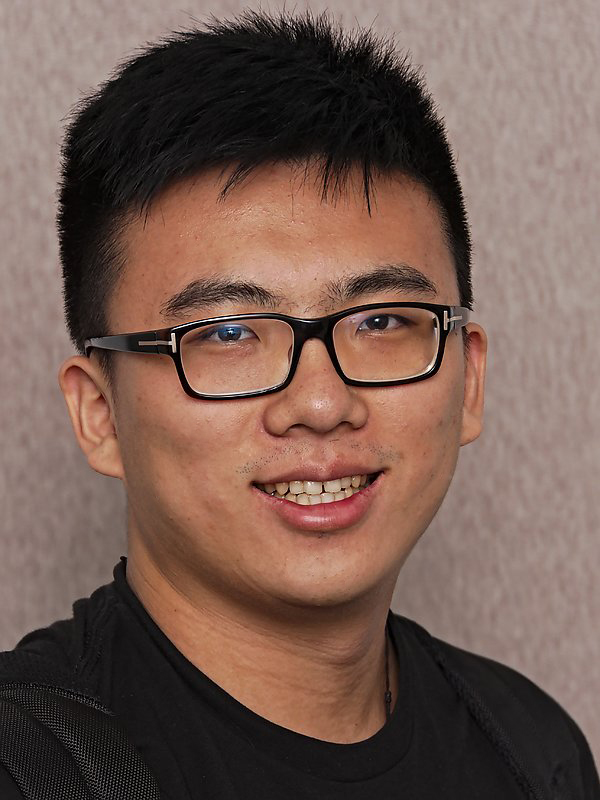
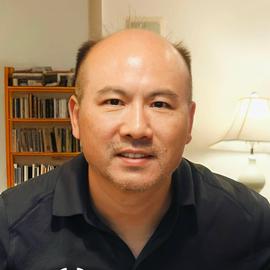
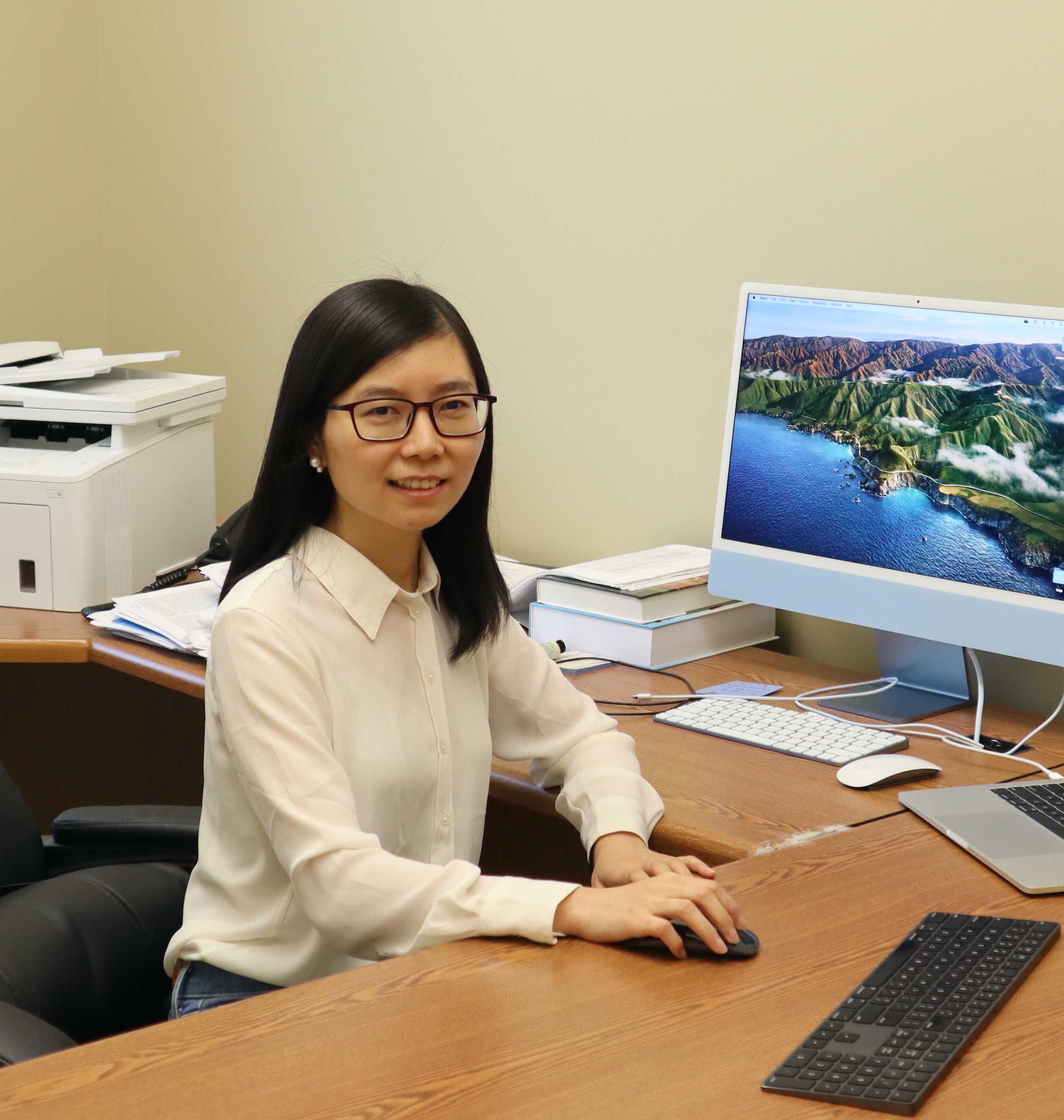
Assoc Prof Ng Teng Yong is an Associate Professor at the School of Mechanical & Aerospace Engineering (NTU), specializing in numerical modeling and simulation. With a background as Research Manager at A*STAR Institute of High Performance Computing, his work spans materials science, nanotechnology, and aerospace engineering. Current focus on graphene-based desalination membranes Expertise in molecular dynamics simulations Investigates nanoscale fluid mechanics and structural dynamics Recent publications highlight advancements in energy-efficient electrodialysis, smart robotics, and nonlinear vibration analysis. His interdisciplinary approach integrates computational methods with experimental validation in additive manufacturing and soft material mechanics.
Manuel Kaufmann is a Lecturer in the Department of Computer Science at ETH Zürich. His work focuses on advanced 3D human motion capture, sensor-based systems, and computer vision applications. He is affiliated with the Institute of Informatics (inf.ethz.ch) and contributes to research in real-time motion tracking, dataset development, and machine learning integration for human-robot interaction. Research interests include holistic human-scene reconstruction from monocular videos, gaze estimation using EEG signals, and expressive avatar creation. His projects emphasize practical applications in robotics, sports analytics, and biomedical engineering, often leveraging electromagnetic and inertial sensors for high-precision data acquisition. His publications reflect a trend toward multi-modal data fusion, real-world dataset creation (e.g., WorldPose, ARCTIC), and addressing challenges in loose garment modeling (Reloo). These efforts aim to improve markerless motion capture, crowd analysis, and human-robot collaboration. No scientific awards or grants are explicitly listed. He has no documented advisees, though his research may involve collaborations with students or teams. His office is located at OAT X 23, Andreasstrasse 5, Zürich, Switzerland, and contact details include a phone number and professional email.
Dr. Carolyn Conner Seepersad is a Woodruff Professor in the George W. Woodruff School of Mechanical Engineering at Georgia Institute of Technology. She leads the Digital Design and Manufacturing research group and previously founded the Center for Additive Manufacturing and Design Innovation at The University of Texas at Austin. Her research focuses on additive manufacturing, materials design, and process innovation. She holds editorial roles, including Editor-in-Chief of the ASME Journal of Mechanical Design, and has received numerous awards for research and teaching. Education: PhD, Mechanical Engineering, Georgia Tech, 2004 MS, Mechanical Engineering, Georgia Tech, 2001 BA, Philosophy, Politics, and Economics, Oxford University, 1998 BS, Mechanical Engineering, West Virginia University, 1996 Her research interests span design for additive manufacturing, simulation-based materials and structures, and metamaterials. She emphasizes manufacturing-aware design and sustainability. Key contributions include lattice structure optimization, negative stiffness composites, and process-aware manufacturing techniques. Her publications reflect advancements in additive manufacturing processes, materials characterization, and design methodologies. Awards include the ASME Design Automation Award and recognition as a University of Texas System Academy of Distinguished Teachers. Seepersad has advised on grants such as the LEAP-HI GOALI project and contributed to initiatives like the Solid Freeform Fabrication Symposium. Her work bridges academia and industry, emphasizing practical applications and innovation. Labs/Teams: Leads the Digital Design and Manufacturing group at Georgia Tech, previously directed the UT Austin Additive Manufacturing Center.
Tiancheng Zhao is a principal researcher at the Binjiang Institute of Zhejiang University and founder of the Om Artificial Intelligence Laboratory (Om AI Lab), dedicated to frontier open multimodal AGI research for building next-generation agents that transform work and life through advanced human-machine interaction. His academic credentials include: Ph.D. in Computer Science from Carnegie Mellon University (2016-2019) under Prof. Maxine Eskenazi, Prof. Louis-Philippe Morency, Prof. William W. Cohen, and Dr. Dilek Hakkani-Tur, with pioneering dissertation “Learning to Converse With Latent Actions” in end-to-end generative conversational models M.S. in Computer Science from Carnegie Mellon University (2014-2016) B.S. in Electrical Engineering from UCLA (2010-2014) with Summa Cum Laude, focusing on speech signal processing under Prof. Abeer Alwan Dr. Zhao’s research centers on multimodal foundation models and agents, tackling three core challenges: Multimodal Models for cross-modal representation learning in high-dimensional data, Learning to Learn for effective skill acquisition from diverse signals (supervised labels, rewards, meta-learning), and AI Agents for open-world understanding and complex decision-making. His work bridges computer vision, natural language processing, and real-world applications including healthcare analytics and remote sensing. Analysis of his 50+ publications reveals accelerating innovation in multimodal large language models (2024-2025), with emphasis on stable vision-language architectures (VLM-R1), agent orchestration frameworks, and domain-specific applications in geospatial analysis and healthcare. Key trends include solving long-tail distribution challenges in satellite imagery, developing human-like zooming capabilities for multimodal LLMs, and creating unified benchmarks for autonomous GUI testing. His scientific recognition includes: National Breakthrough Technology Award by Ministry of Science and Technology (2021) Microsoft Research Best & Brightest PhD (2018) BEST PAPER AWARD at SIGDIAL 2018 Best Paper Nomination at SIGDIAL 2016 Top 1 Outstanding Bachelor of Science Award at UCLA (2014) As Om AI Lab founder, Dr. Zhao leads research teams developing computational building blocks for human-AI collaboration. While specific student mentorship details aren’t public, his extensive publication record with junior co-authors indicates active research supervision. Current projects focus on practical system implementations for real-world multimodal agent deployment across diverse domains.
Fabio Miranda is an Assistant Professor at the Department of Computer Science, University of Illinois at Chicago (UIC) . His research bridges visualization , machine learning , data management , and computer graphics to enable interactive visual analysis of large-scale urban datasets . He has developed systems like UrbanRama (for VR navigation) and The Urban Toolkit (a grammar-based framework), which have been deployed in academia, industry, and government agencies. Education: Ph.D., Computer Science , New York University (2018) M.S., Computer Science , Pontifical Catholic University of Rio de Janeiro (2011) B.S., Computer Science , Federal University of Minas Gerais (2009) Research Interests center on urban visual analytics , 3D analytics , and machine learning for accessibility . His work addresses challenges like sunlight access , sidewalk quality assessment , and commuting flow modeling , often collaborating with urban planners, climate scientists, and occupational therapists. Scientific Recognition includes awards at IEEE VIS , SIBGRAPI , and SIGMOD . His research is funded by NSF , NIH , DOT , and DPI , with media coverage in The New York Times , The Economist , and Architectural Digest . Teaching includes courses like CS 524: Big Data Visualization and Analytics and CS 424: Visualization and Visual Analytics . He emphasizes web-based systems, dataflow frameworks, and interdisciplinary collaboration, with open positions for PhD , MSc , and undergraduate researchers .
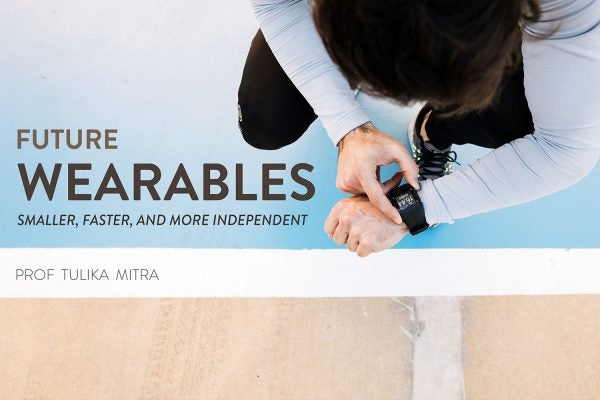
Professor Tulika Mitra is the Dean of the School of Computing and Vice Provost (Special Projects) at the National University of Singapore (NUS). She holds the Provost’s Chair Professor in the Department of Computer Science and has been instrumental in shaping academic policies and strategic initiatives at NUS since joining in 2001. PhD in Computer Science, Stony Brook University (2000) M.E. in Computer Science, Indian Institute of Science (1997) B.E. in Computer Science, Jadavpur University (1995) Her research focuses on hardware-software co-design for energy-efficient computing systems, particularly in real-time embedded systems, heterogeneous architectures, and AI accelerators. She leads major research programs such as the NRF Competitive Research Programme on Low-Power Edge Accelerators and the MOE Tier-3 Programme on Green AI , collaborating with industry leaders like ARM, AMD, and Meta. Her recent publications highlight innovations in CGRA optimization , sparse attention mechanisms , photonic-digital hybrid architectures , and low-power ML inference . These works often integrate compiler techniques, architectural design, and real-time constraints for edge computing applications. Scientific Awards : ESWEEK Test-of-Time Award (2022), ACM SIGDA Distinguished Service Award, IEEE CEDA Outstanding Service Recognition Award, Teaching Excellence Award (2006), and multiple best paper recognitions. Education Leadership : Spearheaded the Computer Engineering (CEG) Programme at NUS, a joint initiative between Engineering and Computing. As a mentor , she has supervised over 25 PhD students , many now in prominent academic or industrial roles. Her research group eCO Lab focuses on embedded computing challenges, while her grant collaborations include projects on 5G base stations, reconfigurable architectures, and IoT-optimized SoCs.
Tamara Munzner is a Professor of Computer Science at the University of British Columbia, with a confirmed email at tamara@cs.ubc.ca . Her research focuses on information visualization , visual analytics , and graph drawing , emphasizing practical design frameworks and theoretical foundations. Recent work explores visitor engagement with science museum exhibits large-scale data visualization challenges health informatics applications for chronic pain management advanced graph neural network visualization His publications in IEEE Transactions on Visualization and Computer Graphics and Eurographics conferences demonstrate her expertise in visual analytics. Scientific awards include the Best Panel Award at Euro Vis 2009 for her work on visualization education. Her research spans visualization design principles, dimensionality reduction techniques, and applications in genomic epidemiology and environmental sustainability.
Dr. Baijian "Justin" Yang serves as the Associate Dean for Research at Purdue Polytechnic Institute and is a Professor in the Department of Computer and Information Technology at Purdue University. He earned his Ph.D. in Computer Science from Michigan State University, with Master's and Bachelor's degrees in Automation (EECS) from Tsinghua University. Dr. Yang has established himself as a leader in multiple interdisciplinary research domains. Dr. Yang's educational background includes: PhD in Computer Science, Michigan State University (2002) MS in Automation (EECS), Tsinghua University (1998) BS in Automation (EECS), Tsinghua University (1995) His research interests span multiple cutting-edge domains with practical applications: Cybersecurity : Developing novel approaches for threat intelligence, security education, and network defense Big Data : Creating innovative algorithms for dimension reduction, regression with categorical variables, and tensor decomposition Applied Machine Learning : Implementing AI solutions in healthcare, manufacturing, and forestry applications Digital Forestry : Using UAV imagery and remote sensing for forest management and tree species classification Dr. Yang's publication record demonstrates significant impact across multiple disciplines, with recent work focusing on spatial transcriptomics analysis (SiGra), delirium detection using limited-lead EEG, and visual localization technologies. His research bridges theoretical advances with practical applications in healthcare, manufacturing quality control, and environmental monitoring. The interdisciplinary nature of his work is evident in collaborations spanning computer science, healthcare, forestry, and manufacturing domains. His scientific achievements have been recognized with numerous awards: 2023 HRSA Building Bridges to Better Health Competition Winner (Phase 1) and 2nd place ($100,000 prize) in Phase 3 2023 Outstanding Faculty Award in Engagement, Department of Computer and Information Technology, Purdue University 2021 Leadership in Manufacturing Award, Manufacturing Times Digital (MxD) 2021 Good to Great Award, Purdue Polytechnic 2020 Outstanding Faculty Award in Discovery, Department of Computer and Information Technology 2019 University Faculty Scholars, Purdue University As an educator and mentor, Dr. Yang has advised numerous graduate students through their PhD and Master's research. His leadership extends to significant service roles including serving as Faculty Champion for the Holistic Safety and Security research impact area at Purdue Polytechnic from 2018 to 2021, board membership with ATMAE (2014-2016), and participation in the IEEE Cybersecurity Initiative Steering Committee (2015-2017). He holds valuable industry certifications including CISSP, MCSE, and Six Sigma Black Belt, demonstrating his commitment to bridging academic research with industry practice. Dr. Yang leads multiple research projects including "Digital Forestry" for developing tools to quantify forest function, "CHEESE" (Cyber Human Ecosystem of Engaged Security Education), and "CICI" (Supporting Controlled Unclassified Information with a Campus Awareness and Risk Management Framework). His work on "Applied Machine Learning" focuses on solving real-world problems, while his "Dimension Reduction and Memory Amnestic Big Data Regression" project innovates computational algorithms for large-scale data analysis.
Dr. Li Chen is an Alfred and Helen Lamson/BORSF Endowed Associate Professor in the School of Computing and Informatics at the University of Louisiana at Lafayette. She leads the CELESTIAL research lab, focusing on distributed systems and networking for machine learning and AI. Her research interests include federated learning, cloud computing, and resource optimization. Dr. Chen holds a Ph.D. from the University of Toronto and has received awards such as the NSF EPSCoR RII Track-4 grant and the BoRSF Endowed Professorship. Education: Ph.D. (2018), M.A.Sc. (2015) in Electrical and Computer Engineering from University of Toronto; B.Eng. (2012) in Computer Science from Huazhong University of Science and Technology. She also visited Hong Kong Polytechnic University (2013-2014). Research spans federated learning frameworks (e.g., SEAFL, FedClust), cloud resource scheduling (e.g., Hadar, HarmonyBatch), and applications in weather forecasting (e.g., MMST-ViT). Her work is supported by NSF, Louisiana BoRSF, and industry partners like XRMedix. Awards include the Alfred and Helen Lamson/BORSF Endowed Professorship (2024-2027), NSF EPSCoR grant (2024-2026), and best paper recognitions at IEEE conferences. She advises a diverse group of graduate students and has supervised alumni now in academia and industry. Teaching includes courses on computer networks, operating systems, and distributed systems. She organizes workshops and tutorials (e.g., 2023 Summer Tutorial on ML & Meteorology) and serves on conference committees such as INFOCOM and IWQoS.
Andras Kis is a Full Professor at the École Polytechnique Fédérale de Lausanne (EPFL), affiliated with the School of Engineering (STI) across multiple institutes including the Institute of Electrical Engineering (IEL), Institute of Materials Science (IMX), and teaching programs in Electrical Engineering (SEL-ENS). He leads the Laboratory of Nanoscale Electronics and Structures (LANES) and serves on the PhD program committee for Microsystems and Microelectronics. PhD, EPFL (2003) MS, Physics, University of Zagreb (1999) Baccalaureate, MIOC High School Research Focus: Pioneering work on 2D materials for electronic and optoelectronic devices, particularly transition metal dichalcogenides like MoS2 and PtSe2. His research spans: Transistor design with atomically thin semiconductors Excitonic devices and valleytronics Nanofluidics and ionic logic Optical properties of 2D heterostructures Scalable fabrication of 2D materials Defect engineering and doping techniques Scientific Impact: Based on analysis of 15 most recent publications, his work focuses on advancing 2D materials for next-generation electronics through innovations in: Van der Waals heterostructures Thermoelectric and optoelectronic applications Nanofabrication techniques Spintronic and quantum transport phenomena Memristive and neuromorphic devices Characterization of electronic and optical properties Awards & Recognition: Fellow of the Institute of Electrical and Electronics Engineers (IEEE) Lotfi A. Zadeh Award for Emerging Technologies (2024) Highly Cited Researcher (Clarivate Analytics) Teaching & Academic Leadership: Currently teaching courses including Lab in Nanoelectronics , Physical Models for Micro and Nanosystems , and Semiconductor Devices II . He has supervised over 20 PhD students in his research group at EPFL. Laboratory & Collaborations: Directs the Laboratory of Nanoscale Electronics and Structures (LANES) which focuses on fundamental and applied research in 2D materials and nanoelectronic devices. His work bridges materials science, condensed matter physics, and microelectronics engineering.
Lin Ma is currently an Assistant Professor at the University of Michigan, Ann Arbor in the Department of Electrical Engineering and Computer Science (College of Engineering). Previously, they served as a Post Doctoral Fellow at Carnegie Mellon University (2021-2022) and as a Software Engineer at Databricks, Inc. (2022-2023). Research Interests focus on the intersection of database systems and machine learning, particularly in developing self-driving database management systems . Key areas include workload forecasting , automated index optimization , query execution acceleration , and machine learning integration for database automation. Their work explores GPU-accelerated analytics, memory optimization, and transactional consistency models. Academic Contributions span 15+ publications in top venues like VKDB , SIGMOD , and CIDR , including recent 2025 papers on Vortex (GPU memory optimization) and Scompression (workload compression). Earlier work introduced QueryBot 5000 , a workload forecasting framework, and explored anti-caching for storage optimization in OLTP systems. Teaching includes courses like EECS 584: Advanced Database Management Systems and EECS 484: Database Management Systems at the University of Michigan (2023-2025), and 15-445/645 Database Systems at Carnegie Mellon University. Service involves program committee roles for SIGMOD (2023-2025), VLDB (2022-2025), and CIDR (2024-2025). They also served on admissions and search committees at both institutions. Advising includes supervising PhD and MS students: Siyuan (Doug) Dong , Zhongwei Xu , and Haotian (Jack) Gong (co-advised with Barzan Mozafari), among others.
Zach Shahn is an Assistant Professor in the Department of Epidemiology and Biostatistics at the CUNY School of Public Health. He holds a PhD in Statistics from Columbia University and a BA in Mathematics from Stanford University. His research focuses on causal inference methods applied to healthcare data, particularly time-varying treatment effects and critical care applications. He has conducted postdoctoral work at Harvard School of Public Health and previously worked at IBM Research in Healthcare and Life Sciences. Education: PhD in Statistics and Probability, Columbia University BA in Mathematics, Stanford University Research interests include developing causal inference frameworks for evaluating treatment efficacy in dynamic healthcare settings, with a focus on critical care outcomes and methodological innovations. Recent work explores applications of causal diagrams, instrumental variables, and machine learning in healthcare decision-making. His studies often involve large-scale healthcare datasets to assess interventions' real-world impacts. Key trends in his articles include advancements in causal effect estimation under complex treatment regimes, bias analysis in observational studies, and methodological contributions to difference-in-differences and N-of-1 trial designs. His work bridges statistical theory with practical healthcare challenges, emphasizing reproducibility and policy relevance. No scientific awards are listed, though his contributions to causal inference methodologies are notable in academic circles. He has advised on healthcare data projects and published extensively without explicitly listed grants. His professional network includes collaborations with institutions like Harvard and IBM. He is affiliated with CUNY's public health programs and actively engages in academic discourse via Twitter and LinkedIn. His lab or team details are not explicitly mentioned in available materials.
Roles and Affiliations: Tien Foo Sing is the Provost's Chair Professor in the Department of Real Estate at the NUS Business School, National University of Singapore. He serves on the Management Board of the Institute of Real Estate and Urban Studies (IREUS) and was its former Director (2017–2022). He has held leadership roles including Head of the Department of Real Estate (2020–2022) and past President of the Asian Real Estate Society (AsRES). He is a CLC Fellow (2024–2026), Fellow of AsRES, and a Fellow of the Weimer School of Advanced Studies. He edits the International Real Estate Review and serves on editorial boards of journals like Real Estate Economics and Journal of Real Estate Finance and Economics. Education: PhD (Land Economy) and MPhil (Land Economy) from the University of Cambridge, UK; BSc (Estate Management) from NUS. Research Interests: Focuses on urban planning, real estate economics, housing markets, climate finance, transport economics, and environmental policy. His work bridges theory and policy, addressing issues like urban resilience, intergenerational mobility, and environmental externalities. Recent studies include impacts of sea level rise on housing prices, ESG-REIT linkages, and PropTech adoption. Awards: Recognized with the Outstanding Referee Award (2017) for Real Estate Economics, Fellowships from AsRES and the Weimer School, and book awards for his 'Kiasunomics' series. Professional Activities: Serves on government boards (e.g., Valuation Review Board, Singapore Chapter of APREA) and advises organizations like the PropTech Association of Singapore. His work influences policy on housing, transportation, and sustainable development. Labs/Teams: Leads research initiatives through IREUS and collaborates with institutions like the Sustainable & Green Finance Institute (SGFIN). His projects often involve large-scale data analysis (e.g., smart card transit data, housing transactions).
Qimin Liu is an Assistant Professor at Boston University, serving as Lab Director of the Quantitative Psychopathology Laboratory. He holds a PhD in Psychological Sciences from Vanderbilt University with specializations in Clinical Science and Quantitative Methods. His research focuses on emotional disturbances across development, statistical methodology development, and health equity with an emphasis on intersectional marginalization. He has expertise in analyzing intensive longitudinal data and has published extensively on topics like irritability, suicidality, and mental health disparities among sexual and gender minority populations. Dr. Liu’s work frequently integrates advanced statistical techniques such as latent variable modeling, network analysis, and machine learning. His recent studies explore the temporal dynamics of affect, the impact of stigma on mental health, and the role of childhood adversity in psychiatric outcomes. Notable contributions include developing methods for analyzing zero-inflated longitudinal data and creating algorithms for digital phenotyping of mood disorders through mobile device usage patterns. His scholarship emphasizes bridging clinical phenomena with rigorous quantitative approaches, addressing gaps in understanding how social determinants and individual differences shape mental health trajectories. He has collaborated on large-scale datasets like the Collaborative Psychiatric Epidemiological Surveys and contributed to interdisciplinary research on public health outcomes among aging sexual minority men. Dr. Liu’s methodological innovations include the DACF framework for ceiling/floor effect data and the lamme package for log-analytic multiplicative effects modeling. He actively publishes in high-impact journals such as Psychological Methods and Journal of Abnormal Psychology , focusing on both empirical findings and statistical best practices.
Stefania Dumbrava is an Associate Professor of Computer Science at ENSIIE (École Nationale Supérieure d'Informatique pour l'Industrie et l'Entreprise) and a permanent member of the ACMES team in the SAMOVAR laboratory at Télécom SudParis, Institut Polytechnique de Paris. She is also actively involved in the Property Graph Schema Working Group and the European Research Network on Formal Proofs (EuroProofNet). Education PhD in Computer Science, Université Paris-Sud (2016) MSc in Computer Science, Jacobs University Bremen (2012) BSc in Mathematics, Jacobs University Bremen (2010) Research Interests Dumbrava's research lies at the intersection of formal methods and data management . She designs and verifies algorithms and systems for graph databases , with emphasis on property graphs , schema discovery , query optimization , and distributed graph processing . Recently, her work focuses on certifying large-scale distributed graph systems under the ANR JCJC VERDI project (2025–2029). Awards & Honors SIGMOD Best Paper Award 2023 – “PG-Schema: Schemas for Property Graphs” SIGMOD Research Highlight Award 2023 – “Threshold Queries” VLDB 2022 Best Regular Research Paper Runner-Up – “Threshold Queries in Theory and in the Wild” SIGMOD 2025 Distinguished Reviewer Award ICDE 2025 Best Program Committee Member Award EASST Best Software Science Paper Award, ICGT 2025 Students & Grants Dumbrava has supervised numerous research interns and is actively recruiting PhD students for her ANR VERDI project on verified foundations of large-scale distributed graph systems. She has also served on six PhD thesis committees as examiner since 2021. Labs & Teams She leads the ACMES research group within the SAMOVAR laboratory (Télécom SudParis, Institut Polytechnique de Paris), where her team develops formally verified graph-database engines and tools such as GRASP, VerDILog, and DatalogCert.