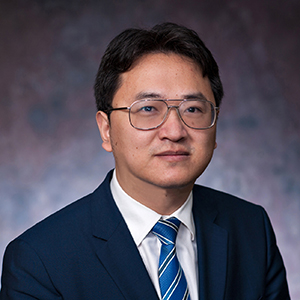
Cassandra Lochhaasمشاهده پروفایل
پژوهشگر ارشد
- galaxy evolution
- circumgalactic medium
- gas physics
- +۶ مورد دیگر
Cassandra Lochhaas is currently an NHFP Hubble Fellow and Institute of Theory and Computation Fellow at the Center for Astrophysics | Harvard & Smithsonian (2023-present), following her postdoctoral research position at the Space Telescope Science Institute (2019-2023). She earned her PhD in Astronomy from The Ohio State University in 2019, with prior graduate work completed in 2015, after obtaining her BS in Physics from the California Institute of Technology in 2013. Dr. Lochhaas specializes in understanding the physics connecting galaxies and their circumgalactic medium (CGM). Her research integrates high-resolution cosmological simulations, analytical modeling, and observational data to develop comprehensive insights into galaxy evolution processes. She is particularly renowned for developing the galactic wind bubble model during her PhD work with Professor Todd Thompson, which explains the presence of cold gas at large distances from galaxies observed in the COS-Halos survey. Her research program spans four primary areas: galactic accretion through the CGM, stellar feedback in galaxy simulations, non-equilibrium properties of the CGM, and galactic winds. Analysis of her publications reveals a consistent focus on how gas dynamics, particularly turbulence and non-thermal motions, fundamentally shape the structure and evolution of the CGM, challenging traditional equilibrium assumptions in galaxy formation theory. Scientific Recognition NHFP Hubble Fellowship (2023-present) Institute of Theory and Computation Fellowship (2023-present) Kavli Summer Program in Astrophysics Fellowship (2018) Dr. Lochhaas has made significant contributions to the FOGGIE (Figuring Out Gas & Galaxies In Enzo) simulation project, where she has demonstrated that the CGM is not in hydrostatic equilibrium but supported by a complex balance of thermal pressure, turbulent pressure, and rotational support. Her work bridges theoretical modeling, numerical simulations, and observational astronomy to advance our understanding of galaxy evolution, with particular attention to how galactic winds shape the CGM and influence galaxy growth.