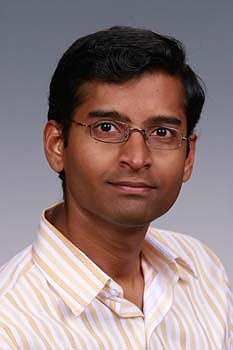
John Psarras is a Professor at the National Technical University of Athens (NTUA) in the School of Electrical and Computer Engineering, specifically within the Division of Industrial Electric Devices and Decision Systems. He serves as the Director of the Decision Support Systems Laboratory (DSSlab) and the University Research Institute of Communication and Computer Systems. He holds a Diploma in Mechanical Engineering (1982) and a Ph.D. in Electrical and Computer Engineering (1989), both from NTUA. His research specializes in decision support systems with applications in energy management, environmental analysis, and information systems. Key areas include: Multi-criteria analysis for energy policy and renewable integration AI-driven optimization of smart grids and building efficiency Sustainable finance mechanisms for green projects Blockchain applications in education and data security His recent publications (2023–2025) demonstrate a strong focus on AI-enhanced decision tools for energy transitions, smart infrastructure, healthcare diagnostics, and cross-border renewable cooperation, reflecting interdisciplinary innovation. He has supervised 22 PhD theses and coordinates EU-funded projects in energy policy, clean technology, and capacity building. No scientific awards are listed in available sources. He leads the Decision Support Systems Laboratory (DSSlab), advancing research in energy analytics, and directs the University Research Institute of Communication and Computer Systems, facilitating large-scale interdisciplinary collaborations.
Leong Hou U, Ryan is an Associate Professor at the Faculty of Science and Technology, University of Macau, where he also serves as Head of the Centre for Data Science under the Institute of Collaborative Innovation. His work focuses on advancing data science methodologies and applications in large-scale and complex data environments. Education: Ph.D. in Computer Science, The University of Hong Kong, Hong Kong (2010) M.Sc. in E-Commerce Technology, University of Macau, Macau (2005) B.Sc. in Computer Science and Information Engineering, National Chi Nan University, Taiwan (2003) Dr. Leong's research interests center on large-scale data processing , spatial and spatio-temporal data analysis , graph data and graph neural networks , data visualization , crowdsourcing , reinforcement learning , and information retrieval . His work bridges theoretical advances with practical systems for handling modern data challenges across domains. The absence of listed publications prevents detailed analysis of article trends, but his research domains suggest strong engagement with artificial intelligence, data engineering, and human-in-the-loop systems. No scientific awards were listed in the provided text. Dr. Leong advises students and likely oversees research projects through his leadership at the Centre for Data Science, though no specific advisees or grants are mentioned. He plays a key role in shaping data science research direction at the University of Macau. He leads the Centre for Data Science at the Institute of Collaborative Innovation, which likely involves interdisciplinary teams working on data-driven innovation, possibly involving collaborations across faculties and industry partners.
Athanasios Liavas is a Professor at the Technical University of Crete in the School of Electrical and Computer Engineering , specializing in Signal Processing for Telecommunications and Information Theory . He has held administrative roles as Department Chair (2009-2011), Vice Chair (2011-2013), and Dean of the ECE School (2017-2021). Education: Diploma (1989) and PhD (1993) in Computer Engineering and Informatics from the University of Patras. Professional Background: Postdoctoral Marie Curie Fellow at INT, Evry (1996-1998); Lecturer at University of Ioannina (1999-2001); Assistant/Associate Professor at University of the Aegean (2001-2004) and Technical University of Crete (2004-present). His research focuses on Signal Processing for Telecommunications , Information Theory , and Tensor Decomposition . Recent work involves nonnegative tensor factorization , parallel algorithms , and fMRI data analysis , with applications in wireless communications and medical imaging . Articles show trends in optimization algorithms , LDPC code design , and MIMO system robustness . Scientific Awards include: Marie Curie Fellowship (1996-1998) Associate Editor, IEEE Transactions on Signal Processing (2005-2009) Elected Member, IEEE Signal Processing for Communications and Networking Technical Committee (2006-2011) He has taught courses like Telecommunications Systems II , Wireless Communications , and Information Theory , and supervised students such as Despoina Tsipouridou (PhD) and Alex Balatsoukas-Stimming (Graduate). He leads projects like Partensor (Parallel Tensor Toolbox) and COOPCOM (Cooperative Communications), and contributes to labs including the Telecommunications Laboratory .
Alvin Cheung is an Associate Professor in the Computer Science Division at UC Berkeley's EECS department. He is affiliated with the Data Systems and Foundations group, Programming Systems group, Sky Lab, and SLICE Lab, and serves as a faculty affiliate at the Berkeley Institute for Data Science. He advises the Data Science Discovery Program and provides technical guidance to industry partners. His research spans data management, programming languages, and scalable software systems, with emphasis on helping users process large datasets efficiently. Key innovations include verified lifting (applying formal methods and ML to infer program properties) and systems for optimizing database-backed applications and geospatial analytics. Recent work explores LLM-driven code optimization and transpilation techniques. His publications (2023-2025) show strong trends in ML-enhanced systems, verified compilation, and data management tools. Articles frequently integrate formal methods, program synthesis, and hardware-aware optimizations across domains like databases, distributed computing, and HCI. Scientific Awards: ACSIC Rock Star Award (2025) Dahl-Nygaard Junior Prize (2024) VLDB Early Career Research Contribution Award (2023) IEEE TCDE Rising Star Award (2020) Sloan Fellowship (2019) NSF CAREER Award (2017) 20+ additional honors Advising & Grants: He mentors PhD/MS students (e.g., Lily Liu at OpenAI, Chenglong Wang at Microsoft Research). Research is funded by: NSF DOE ONR ARO Intel Notable grants include ONR Young Investigator Award and ARO Early Career Program Award. Labs & Teams: Leads projects in Berkeley's Data Systems/Programming Systems groups and collaborates with Sky Lab/SLICE Lab. Manages labs focused on verified compilation (e.g., Tenspiler) and data infrastructure (e.g., Spatialyze).
Christos Ouzounis is a Professor of Bioinformatics at the Department of Informatics, Aristotle University of Thessaloniki , with a career spanning institutions including the European Bioinformatics Institute , King's College London , and University of Toronto . His work bridges Computational Biology , Digital Biology , and Metagenomics , focusing on large-scale data analysis, machine learning applications, and functional annotation of proteins. Education : BSc in Biological Sciences (1986), MSc in Biological Computation (1987), and DPhil in Computational Chemistry (1993) Key Roles : Director of the Bioinformatics Centre at King's College London (2007-2010), Research Director at IDEP-EKETA (2014-2020) His research interests include low-complexity protein sequences , Covid-19 seasonality patterns linked to UV radiation, and metagenomic analysis of urban microbiomes in cultural heritage sites. Current projects involve machine learning models for microbial coexistence networks, ontological classification of biomedical literature, and bioinformatics tool development . Publications highlight trends in archaeal genomics , functional dark matter in metagenomics, and epidemiological modelling . Notable collaborations include work on BioTextQuest v2.0 for concept discovery and MjCyc for metabolic pathway analysis.
Emmanouil Zachariadis serves as an Associate Professor at the Department of Management Science and Technology (DMST) within the School of Business at Athens University of Economics and Business (AUEB). He specializes in operational research and computational optimization, focusing on transportation logistics, supply chain systems, and environmental impact minimization. Education : BSc in Chemical Engineering from National Technical University of Athens (NTUA) MSc in Computing Science from Imperial College London PhD in Chemical Engineering from NTUA His research integrates mathematical programming with optimization algorithms for operational challenges in transportation and production systems. He has published 26 articles in top-tier journals, accumulating over 1200 Scopus citations by June 2024. Recent scholarly trends emphasize vehicle routing problems with complex constraints (cross-docking, loading, time windows) and optimization methods for logistics sustainability. His work spans production-routing integration, emergency evacuation planning (EVITA project), and hybrid metaheuristics. Scientific Awards : Teaching excellence award for undergraduate course 'Optimization Methods in Management Science', Dept. of Management Science & Technology AUEB (2021-22) Teaching excellence awards for postgraduate course 'Large Scale Optimization', MSc in Business Analytics AUEB (2020-21, 2021-22, 2022-23) He has participated in European and National research projects, applying his expertise in supply chain optimization and sustainability. His teaching portfolio covers quantitative methods, operational research, and supply chain optimization at both undergraduate and postgraduate levels.
Nikolaos Papaspyrou is a Professor at the School of Electrical and Computer Engineering of the National Technical University of Athens (NTUA) and a member of the Software Engineering Laboratory . His research focuses on the theory and implementation of programming languages, including semantics, type systems, compilers, static analysis, and formal verification. Since October 2021, he has been on leave from NTUA, working as a Software Engineer for Google in the memory management team for the V8 JavaScript and WebAssembly engine. He previously served as Director of the Division of Computer Science (2017-2019) and was on sabbatical with Google's compiler group in Munich (2015-2016). His work includes the RELEASE project (EU FP7 STREP) for reliable large-scale server software and uncertainty handling in distributed databases (European Social Fund). Ph.D. and Diploma in Electrical and Computer Engineering from NTUA M.Sc. in Computer Science from Cornell University His research interests span programming languages , software engineering , and formal verification , with recent publications on coinductive proofs in Liquid Haskell, concurrency semantics, and quantum compilation. He has supervised over 50 diploma projects and mentored numerous students now at institutions like MIT, Princeton, and UC Berkeley. Awards include conference organizing and program committee roles, though no formal scientific prizes are listed.
Nikolaos Samaras is a Full Professor at the Department of Applied Informatics, School of Information Sciences, University of Macedonia in Thessaloniki, Greece. He has been serving as director of the Computational Methodologies & Operations Research (CMOR) Laboratory since April 2016. His academic career includes positions as Assistant Professor (2007-2012) and Lecturer (2003-2007) at the same institution, and earlier as an adjacent Lecturer at the Technological Institute of Western Macedonia (1998-2000). Dr. Samaras earned his Diploma in Applied Informatics from the University of Macedonia in 1996 and his Ph.D. in Applied Informatics from the same university in 2001. His educational background forms the foundation for his extensive research in computational optimization and operations research. Professor Samaras's research focuses on the interface between computer science and operations research, with particular expertise in linear and nonlinear optimization, network optimization, integer optimization, and scientific computing including HPC and GPU programming. His work has resulted in the development of new algorithmic families for optimization problems, efficient GPU implementations of the revised simplex algorithm, and novel algorithms and software for operations research. His research spans theoretical algorithm development, practical implementation, and real-world applications across various engineering and scientific domains. His extensive publication record includes over 35 journal papers in prestigious venues such as Computers and Operations Research, European Journal of Operational Research, and Journal of Artificial Intelligence Research, more than 85 conference papers, and four textbooks (two in English and two in Greek). His work has been recognized through citations and the Thomson ISI/ASIS&T Citation Analysis Research Grant in 2005. ACM Senior Member (2016) Thomson ISI/ASIS&T Citation Analysis Research Grant (2005) Editorial board member of Operations Research: An International Journal Reviewer for numerous top journals including Mathematical Programming Computation and European Journal of Operational Research Professor Samaras has supervised four current Ph.D. students working on hybrid simplex algorithms, large-scale optimization using Apache Hadoop, algorithmic procedures in matrix theory, and smoothed complexity analysis. He has successfully guided five Ph.D. students to completion, including Nikolaos Ploskas who won the 2014 HELORS Doctoral Dissertation Award. Additionally, he has supervised 45 master's theses and 84 bachelor's theses. His research group has secured funding from diverse sources including the European Union, Greek Secretariat of Research and Technology, and industry partners like Veltio Greece LTD. The Computational Methodologies & Operations Research (CMOR) Laboratory, which he directs, focuses on developing and implementing optimization algorithms with applications in transportation, energy systems, and business process design. The lab has produced notable software tools including Euclides and Visual LinProg, which have educational applications in linear programming.
Christos Tryfonopoulos is an Associate Professor and Head of the Department of Informatics & Telecommunications at the University of the Peloponnese, where he leads the Software and Database Systems (SoDa) Lab. His academic career spans prestigious institutions including the Max-Planck Institute for Informatics in Germany, where he led the P2P and Information Management research area from 2006-2009, and the Technical University of Crete, where he completed his PhD and MSc degrees. His research interests focus on information management, distributed systems, digital libraries, and data/user anonymity. His work bridges theoretical foundations with practical applications across diverse domains including environmental monitoring, cybersecurity, cultural heritage, and medical informatics. He has developed innovative frameworks for pollution prediction, cyber-threat intelligence, and academic expertise mapping that demonstrate the interdisciplinary nature of his research. Professor Tryfonopoulos has published over 80 papers in top-tier journals and conferences including TOIS, TKDE, SIGIR, and SIGMOD. His recent work shows a strong trend toward applying machine learning techniques to information management problems, with publications spanning environmental science, cybersecurity, and bibliometrics. His research group has developed several significant tools including VeTo+ for expert set expansion, inTIME for cyber-threat intelligence, and Hydria for cultural heritage analytics. Candidate for best research paper in ESWC 2016 conference Honorable mention for best poster (3rd place) in ESWC 2012 conference Award as Distinguished Scientist Excelling in Research Abroad (2008) Best student paper award in ECDL 2005 conference Heraclitus PhD fellowship from Greek Ministry of Education (2002-2005) National Scholarship Foundation of Greece (IKY) scholarship (1998) Professor Tryfonopoulos has supervised 5 PhD students (3 in progress), 19 MSc students, and 31 BSc students. He has led or participated in 13 competitive EU and national research projects including ENIRISST+ for shipping and transport infrastructure, WeCare for student support structures, and FORESIGHT for cybersecurity simulation. His current research focuses on intelligent infrastructure for transportation logistics, cyber-threat intelligence systems, and educational technologies for data science.
Andreas Boudouvis is a Professor at the National Technical University of Athens (NTUA), School of Chemical Engineering, in the Department of Analysis, Design and Development of Processes and Systems. He served as Rector of NTUA from October 2019 until November 2023 and previously as Dean of the Chemical Engineering School from March 2013. His research focuses on computational transport phenomena and fluid mechanics with applications in chemical vapor deposition, multiscale modeling, and reduced-order modeling techniques. His research aims at investigating causes and illuminating mechanisms of engineering systems based on first principles. His work emphasizes computational analysis of transport phenomena, particularly examining viscous, gravitational, interfacial, and electromagnetic forces in flow and transport systems. Boudouvis employs advanced computational methods including Galerkin/finite element methods and numerical linear algebra techniques for large-scale scientific computing. His recent publications demonstrate a strong focus on hybrid equation-based and data-driven computational workflows for industrial deposition processes, population balance modeling for pharmaceutical applications, and multiscale analysis of chemical vapor deposition systems. His research group has produced numerous PhD and graduate theses spanning computational mechanics, fluid dynamics, and materials processing. Scientific Awards: 2024 Award for Excellence in Academic Teaching from the Foundation for Research and Technology-Hellas Professor honoris causa of the University of West Attica (2023) Boudouvis has supervised over 40 doctoral and graduate students whose work has received numerous awards including the Léopold Escande Prize for best PhD theses. His research group maintains strong international collaborations with institutions including Johns Hopkins University, University of Luxembourg, and Institut National Polytechnique de Toulouse. His work bridges fundamental computational methods with practical industrial applications, particularly in materials processing and chemical engineering systems.
Isambo Karali is an Assistant Professor in the Department of Informatics and Telecommunications at the National and Kapodistrian University of Athens, a position she has held since November 2007. Prior to this, she served as a Lecturer at the same department from September 1999 to November 2007. Her academic career spans over three decades with significant contributions to knowledge representation, uncertainty reasoning, and semantic web technologies. Dr. Karali's educational background includes: PhD in Informatics (1995) from the University of Athens MSc in Computer Science (1988) from University College, University of London Bachelor of Mathematics (1986) from the Department of Mathematics, University of Athens Dr. Karali's research focuses on Knowledge Representation and Reasoning with Uncertainty, Artificial Intelligence, Logic Programming, and Object-Oriented Programming. She has made significant contributions to applying Dempster-Shafer theory for handling uncertainty in Semantic Web applications. Her work bridges theoretical foundations of logic programming with practical applications in knowledge representation, particularly in distributed and heterogeneous environments. She has supervised numerous PhD and master's theses in these areas. Her recent publications demonstrate a strong trend toward integrating uncertainty reasoning with Semantic Web technologies, particularly using Dempster-Shafer theory and fuzzy logic. Her work addresses challenges in managing imprecise and uncertain information in large-scale knowledge systems, with applications in recommendation systems, news analysis, and semantic search. The interdisciplinary nature of her research connects artificial intelligence, knowledge representation, and web technologies to solve complex information management problems. Dr. Karali has been actively involved in research funding and collaboration: Principal Investigator for "Handling uncertainty in data intensive applications on a distributed computing environment (cloud computing)" under the "Thalis" Program Scientific Responsible for "Artificial Intelligence and Logic Programming Techniques for Knowledge on the World Wide Web" at the National and Kapodistrian University of Athens Scientific Responsible for "Semantic Web and Logic Programming - Application to Guided Search" at the National and Kapodistrian University of Athens Participant in multiple EU research projects including MISSION, COSMOS, ADDSIA, PARACHUTE, APPLAUSE, and EDS As an educator, Dr. Karali has taught core undergraduate courses including Object-Oriented Programming and Logic Programming, as well as graduate courses on Knowledge Technologies and Artificial Intelligence. She has supervised numerous PhD and master's students, with a focus on uncertainty reasoning, semantic web technologies, and logic programming applications. Her mentorship extends to student competitions, including guiding the Department's team in the Microsoft ImagineCup 2009. Dr. Karali has also contributed to the academic community through service activities, including membership on program committees for conferences like IEEE ICTAI, reviewer for prestigious journals, and organizational roles in academic events. From 2000 to 2012, she was responsible for the Department's website, contributing to its architecture design and system development.
Georgios Kargas serves as a Professor in the Department of Water Resources Management within the School of Environment and Agricultural Engineering at the Agricultural University of Athens (AUA). His academic profile centers on advanced irrigation engineering, soil physics, and hydrodynamics of porous media, with particular expertise in drainage system design, soil salinity assessment, and sensor-based soil moisture monitoring. His research interests focus on hydrodynamic characteristics of porous media , precision irrigation systems , and soil-water-electrical conductivity relationships . Current work emphasizes developing novel infiltration equations for furrow irrigation, validating low-cost sensor platforms for soil monitoring, and creating EU-wide soil salinity mapping frameworks using machine learning. His experimental approach bridges laboratory measurements with field applications, particularly in Mediterranean agricultural contexts. Analysis of his 15 most recent publications (2023-2025) reveals dominant trends in sensor technology validation (TEROS/WET sensors), advanced infiltration modeling consistent with Philip theory, and large-scale soil salinity mapping using EU databases. Key subfields include subsurface drainage equation development, LoRa-based monitoring systems, and electrical conductivity compensation methods for dielectric sensors. Professional contributions include editorial review work for Sensors (2021), Water (2016), and Sustainability (2017) journals, though no specific scientific awards are documented in available sources. Teaching responsibilities encompass core undergraduate and postgraduate courses including Hydrodynamic Characteristics of Porous Media , Special Topics in Soil Physics , and Irrigation-Drainage Systems Design , with consistent focus on Water Resources Management specialization. His instructional approach integrates theoretical principles with practical system design applications across 8th-9th semester curricula.
Professor Efstratios Gallopoulos is a faculty member at the Department of Computer Engineering & Informatics , University of Patras, where he holds the Division of Computer Software . He currently serves as Deputy Department Chair and Director of the High Performance Information Systems Laboratory (HPCLab) . His academic career spans multiple institutions including the University of Illinois at Urbana-Champaign, University of California Santa Barbara, and collaborations with INRIA Rennes and NASA Goddard Space Flight Center. Education : B.Sc. in Mathematics (First Class Honours) from Imperial College London (1979) Ph.D. in Computer Science from University of Illinois at Urbana-Champaign (1985) Research Focus : His work centers on Large-scale Scientific Computing with emphasis on Computational Linear Algebra , Parallel/Distributed Processing , and Data Mining . Recent publications highlight innovations in Randomized Numerical Linear Algebra , Heterogeneous Cluster Scheduling , and GPU-Accelerated Inversion Techniques . Article Trends : His research bridges High-Performance Computing with Data Science , focusing on scalable algorithms for Matrix Computations , Recommender Systems , and Biomarker Analysis . The work spans theoretical advancements (e.g., Givens Rotations ) and practical implementations (e.g., pylspack library). Scientific Awards : NASA Group Achievement Award for Massively Parallel Processor (MPP) development ACM SIGWEB Hypertext Ted Nelson Newcomer Award (2012) Advising and Grants : He has advised numerous research projects funded by European Research Council , Hellenic Foundation for Research and Innovation (HFRI) , and international bodies like the US National Science Foundation. Notably, he co-organized the 2015 Gene Golub SIAM Summer School and served as Chair of the SIAM Gene Golub Summer School Committee (2020-24). Labs and Teams : He leads the High Performance Information Systems Laboratory (HPCLab) and co-directs the interdisciplinary graduate program Data Driven Computing and Decision Making . His teams have contributed to the Cedar vector multiprocessor project at UIUC and Text-to-Matrix Generator (TMG) tools for data mining.
Sotirios Xydis is an Assistant Professor in the Division of Computer Science at the School of Electrical and Computer Engineering, National Technical University of Athens (NTUA), with prior faculty appointment at Harokopion University of Athens (2020-2023). He maintains ongoing collaboration with the Institute of Communication and Computer Systems (ICCS) since 2014 and previously served as an engineer at HEDNO (2015-2018) and postdoctoral researcher at Politecnico di Milano (2011-2013). His academic credentials include: BSc in Electrical and Computer Engineering, NTUA (2005) MSc in Techno-Economic Systems, NTUA (2011) PhD in Electrical and Computer Engineering, NTUA (2011) Dr. Xydis specializes in hardware/software co-design , energy-efficient hardware acceleration , and memory management for embedded and cloud-edge systems. His research bridges low-power circuit design , heterogeneous architecture optimization , and resource management frameworks , with particular emphasis on AI workloads and serverless infrastructures. Current projects target Edge AI accelerators (CONVOLVE), disaggregated memory systems, and LLM inference optimization through hardware-aware algorithms. Analysis of his 2023-2025 publications reveals three dominant trends: (1) Energy-efficient hardware accelerators for Edge AI using approximate computing techniques, (2) Memory/resource management innovations for disaggregated serverless environments, and (3) GPU/FPGA optimization for LLM inference through dynamic frequency scaling and predictive throttling. These works consistently address the power-performance tradeoffs in heterogeneous computing systems. His scientific recognition includes: Best Paper Award, IEEE/NASA/ESA AHS (2007) Best Paper Award, ACM PARMA (2013) Best Paper Award, ACM Computing Frontiers (2020) Hipeac Award at DAC (2019, 2020) Dr. Xydis has secured over 15 European/national research grants as Principal Investigator and Technical Coordinator, focusing on hardware acceleration frameworks and energy-efficient computing. His advising encompasses graduate research in hardware design and optimization, though specific student names aren't publicly listed. Current projects include CONVOLVE for Edge AI and CollectiveHLS for collaborative hardware synthesis. He is a core member of NTUA's Microelectronics Laboratory (Microlab) and collaborates with ICCS on hardware acceleration projects. His team develops frameworks like CollectiveHLS and throttLL'eM, with active participation in DATE, DAC, and ISCA conference communities.
Sriram Krishnamoorthy is a Research Professor at Washington State University's School of Electrical Engineering & Computer Science and a research scientist at Pacific Northwest National Laboratory (PNNL), where he serves as the System Software and Applications Team Leader in PNNL's High Performance Computing group. Dr. Krishnamoorthy earned his B.E. from the College of Engineering, Guindy in Chennai, India, and his M.S. and Ph.D. degrees from The Ohio State University. He is a senior member of the Institute of Electrical and Electronics Engineers. His research focuses on parallel programming models, fault tolerance, and compile-time/runtime optimizations for high-performance computing. He has made significant contributions in areas including: Fault tolerance techniques that minimize rollback during failures Dynamic load balancing for irregular parallel applications Compiler and runtime optimizations for HPC applications GPU programming and heterogeneous computing Quantum chemistry simulations and quantum computing Dr. Krishnamoorthy's publications span computational science, high-performance computing, and quantum chemistry. His recent work shows strong trends toward quantum computing applications, fault tolerance in large-scale systems, and optimization of computational chemistry methods. He has developed techniques for density matrix quantum circuit simulation, floating-point error analysis, and scalable execution of coupled-cluster models. His scientific achievements have been recognized with several prestigious awards: Best Paper Award at International Conference on High Performance Computing (HiPC'03) Best Paper Award at International Parallel and Distributed Processing Symposium (IPDPS'04) U.S. Department of Energy Early Career award (2013) PNNL's Ronald L. Brodzinski Award for Early Career Exceptional Achievement (2013) The Ohio State University's Outstanding Researcher award (2008) Dr. Krishnamoorthy has advised numerous graduate students and collaborated extensively with researchers across computational science domains. His work on the NWChem project demonstrates significant grant funding and large-scale collaborative research efforts in computational chemistry. He leads research efforts in PNNL's High Performance Computing group, focusing on system software and applications development for next-generation supercomputing platforms.