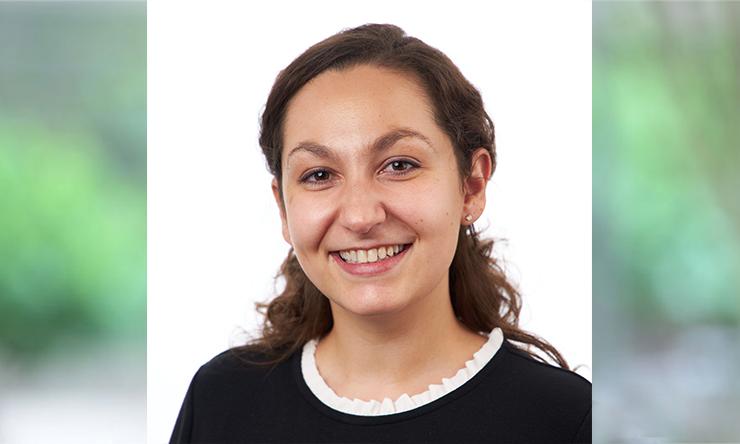
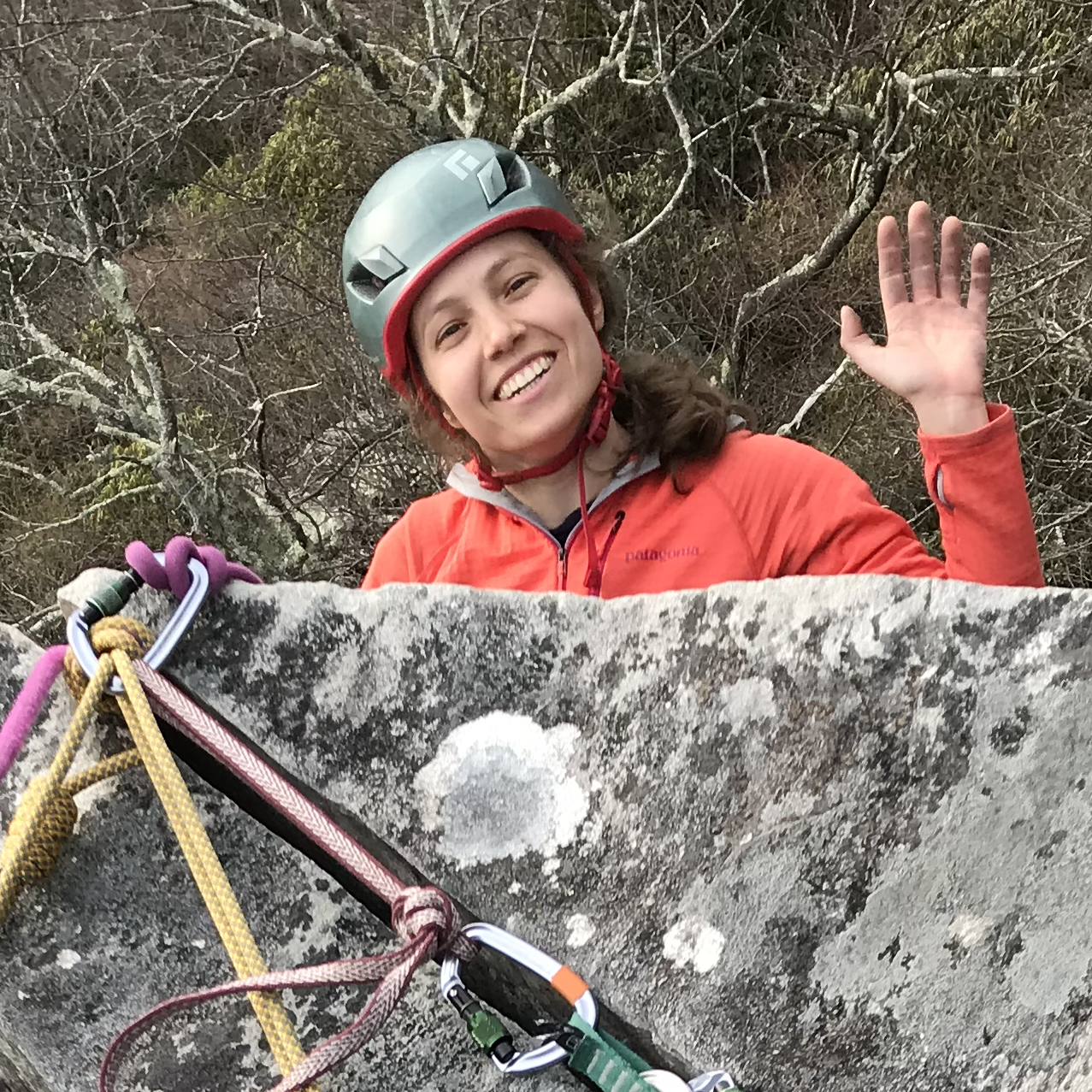
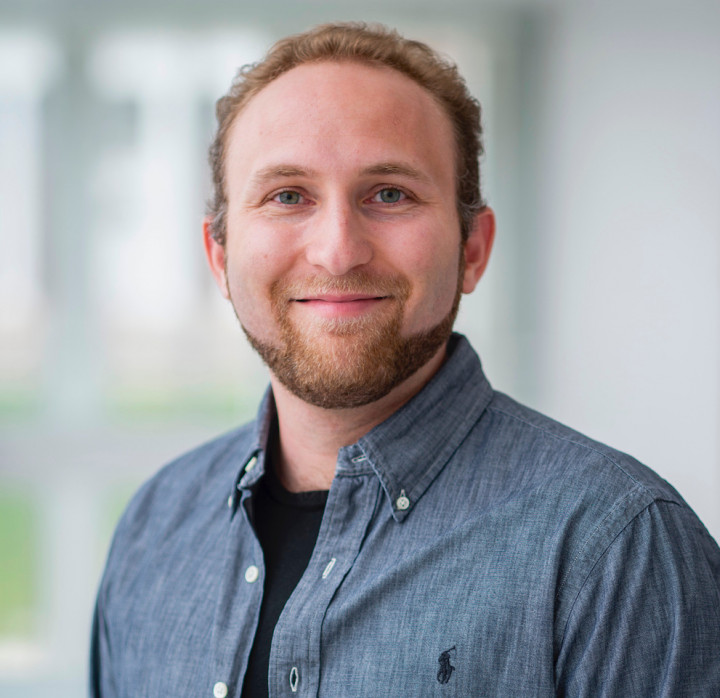
Christopher Zach is a Research Professor at Chalmers University of Technology, affiliated with the Signal Processing and Medical Technology department within the Digital Image Systems and Image Analysis research group . His work focuses on 3D reconstruction , real-time computer vision , and numerical optimization for machine learning. Develops 3D image understanding techniques Specializes in robust optimization for vision systems Leads research in medical image analysis Recent publications demonstrate expertise in low-light text enhancement , out-of-distribution detection , and domain adaptation for industrial applications. Active in Chalmers' Wallenberg AI and ÅForsk funded projects. Collaborates with researchers from Volvo Group , Volvo Cars , and SAFER Vehicle Safety initiatives.
Elizabeth Atkinson is an Assistant Professor in the Department of Molecular and Human Genetics at Baylor College of Medicine, where she leads the Atkinson Lab. Her research focuses on developing statistical and computational tools to improve the study of the genetic basis of neuropsychiatric traits in admixed populations. She is affiliated with the Computational and Integrative Biomedical Research Center and the Jan and Dan Duncan Neurological Research Institute at Baylor. Dr. Atkinson's research spans three primary areas: (1) applied and analytic work in statistical genetics; (2) investigations into human population structure and evolutionary history; and (3) the development of scalable computational methods and tools for population-aware genetic analysis. Her work emphasizes neuropsychiatric traits with a particular focus on admixed American populations, though many of the tools she develops are broadly applicable across phenotypes and populations. She plays a leadership role in multiple international consortia, including the Psychiatric Genomics Consortium (PTSD working group), Neuropsychiatric Genetics in African Populations (NeuroGAP), and the Latin American Genomics Consortium (LAGC). These collaborations support the development of globally representative resources for gene discovery and offer trainees valuable experience working with large-scale, richly phenotyped cohorts. Her recent publications reveal a strong focus on improving genomic analysis in diverse populations, with particular emphasis on local ancestry inference, cross-ancestry genetic studies, and addressing disparities in genomics research across ancestries. She has developed methods like Tractor that use local ancestry to enable the inclusion of admixed individuals in GWAS. International meta-analysis of PTSD genome-wide association studies Genetic structure correlates with ethnolinguistic diversity in eastern and southern Africa Tractor uses local ancestry to enable the inclusion of admixed individuals in GWAS Low-coverage sequencing cost-effectively detects variation in underrepresented populations Dr. Atkinson mentors several trainees including postdoctoral associates, graduate students, and bioinformatics analysts. Her lab members work on diverse projects spanning statistical method development, population genetic analyses, and psychiatric genetics research. She is actively recruiting for postdoctoral positions to lead research projects in statistical and population genomics across diverse human populations.
MYONG Sunha is a full-time Assistant Professor at the School of Economics, Singapore Management University (SMU). She holds a Ph.D. in Economics from Washington University in St. Louis and is actively engaged in research within applied microeconomics and related policy domains. Educational Background: Ph.D., Economics, Washington University in St. Louis, 2016 M.A., Economics, Seoul National University, 2009 B.A., Economics and B.S., Architectural Engineering, Seoul National University, 2007 Her primary research interests include the Economics of Education , Labor Economics , Applied Econometrics , and Development Economics , with a strong emphasis on empirical analysis and public policy evaluation. Her work lies at the intersection of microeconomic theory and real-world data, contributing to both academic and policy debates. While no recent publications are listed in the provided text, her research areas suggest a focus on causal inference in education and labor markets, likely using large-scale datasets and quasi-experimental methods. Scientific Awards: MYONG Sunha advises students within the School of Economics and may be involved in research grants related to development and labor policy, though specific projects are not detailed in the current information. She contributes to the academic mission of SMU through teaching and research in core economic disciplines. She is affiliated with the School of Economics research community, participating in seminars, workshops, and collaborative initiatives focused on public economics and development.
Andee Kaplan is an Associate Professor in the Department of Statistics at Colorado State University. She completed her Ph.D. in Statistics at Iowa State University under advisors Dan Nordman and Steve Vardeman, a postdoc at Duke University with Beka Steorts, and holds advanced degrees in Statistics (M.S.) and Mathematics (M.A.) from Iowa State and The University of Texas at Austin respectively. Ph.D. in Statistics, Iowa State University (2017) Postdoctoral Researcher, Duke University M.S. in Statistics, Iowa State University M.A. in Mathematics, The University of Texas at Austin B.S. in Mathematics with Computing Certificate, The University of Texas at Austin Her research bridges Statistics and Computing, focusing on Bayesian Statistics, Computational Statistics, Record Linkage/Entity Resolution, Markov chain Monte Carlo methods, Spatial Resampling, Statistical Machine Learning, Interactive Statistical Graphics, and Reproducible Research. Her methodological work emphasizes scalable algorithms for complex data structures in ecology, sports science, and public health. Her recent publications highlight trends in Bayesian entity resolution for streaming data, spatial modeling of riverscapes, time-varying epidemic models, and computational methods for LiDAR data analysis. Over 2014-2025, her work spans theoretical advancements in deep learning degeneracy, practical software design for statistics, and interactive tools for network detection.
Dr. Fabiola Iannarilli is a wildlife biologist and quantitative ecologist specializing in animal behavior, conservation ecology, and biodiversity monitoring. As a Marie Skłodowska-Curie Postdoctoral Fellow at the Max Planck Institute of Animal Behavior's Department of Migration , she leads cross-institutional research initiatives focused on understanding human-driven ecological changes and advancing camera trap data methodologies. Education: PhD in Conservation Sciences (University of Minnesota, 2020), MA in Ecobiology (Sapienza - University of Rome, 2012), BA in Biology (Sapienza - University of Rome, 2010) Her research examines how wildlife responds to habitat loss, domestic species interactions, and human presence across spatio-temporal scales. She promotes standardized monitoring programs and open data sharing through projects like WildEuro and Snapshot Europe , leveraging camera traps and AI tools to improve ecological inference. Recent projects include: WildEuro: Quantifying the 'landscape of fear' in Europe via camera trap networks. Snapshot Europe: Systematic continent-wide mammal surveys. Big_Picture: Overcoming data-sharing barriers with Biodiversa+ funding. She has developed tools like MLWIC2 for machine learning-based animal identification and published extensively on topics including observer bias, activity pattern modeling, and biodiversity tracking. Scientific Awards: Marie Skłodowska-Curie Postdoctoral Fellowship Collaborations: Active in Yale Center for Biodiversity and Global Change (2020-2023), Norwegian Institute for Nature Research (2014-2015), and Fondazione Ethoikos (2013-2014). Her work emphasizes legal and institutional barriers in data sharing, statistical best practices, and global conservation strategies.
Professor David Batty is a leading epidemiologist at University College London (UCL), holding the title of Professor of Epidemiology in the Department of Epidemiology & Public Health. He also serves as a Visiting/Honorary Professor at the Universities of Glasgow, Edinburgh, and Oregon State. His research focuses on understanding how psychological, biological, and behavioral factors across the life course influence mortality risks, with an emphasis on prevention strategies. He employs diverse methodologies including cohort studies, Mendelian randomization, and big data analysis, and is a key investigator on major studies such as the English Longitudinal Study of Ageing (ELSA) and the National Child Development Study (NCDS/1958 birth cohort). Education includes a Doctor of Science from the University of Edinburgh (2014), a PhD from the University of Bristol (1999), and prior degrees from London School of Hygiene & Tropical Medicine and Bristol. His work spans cardiovascular disease, dementia, obesity, homelessness mortality, and adverse childhood experiences. He collaborates globally, having worked in Brazil, Denmark, and Australia. Research interests include the interplay of social determinants and health outcomes, cognitive epidemiology, and the use of large-scale datasets to address public health challenges. His recent studies highlight risks associated with contact sports participation, climate change impacts on mortality, and the long-term effects of childhood adversity. Key Research Areas: Cardiovascular epidemiology, cognitive aging, health inequalities, Mendelian randomization Current Roles: Principal Investigator on ELSA, Program Lead for Cognitive Epidemiology (Edinburgh) Grants & Funding: Wellcome Trust Career Development Fellowships, MRC collaborations He advises doctoral students and actively contributes to policy-relevant research addressing global health challenges such as obesity, mental health, and climate change impacts.
Rosemary Willatt is a Lecturer in Experimental Ice and Rock Physics for the Environment at the University College London (UCL) Department of Earth Sciences. Her research focuses on sea ice dynamics in polar regions, combining laboratory experiments with fieldwork and remote sensing techniques. She leads projects involving satellite radar altimetry for monitoring snow and ice thickness, with a particular emphasis on advancing Earth Observation missions through the Polarimetric Synthetic Aperture Radar Altimeter (PoSARA) concept. She has been awarded the inaugural Konrad Steffen Award by ESA for her innovative work on snow depth estimation techniques. Willatt’s work integrates field campaigns (e.g., in the Arctic and Antarctic) with analysis of airborne, satellite, and ground-based radar data. She collaborates with space agencies to optimize satellite mission design and has pioneered novel methods for quantifying snow properties and their impacts on cryosphere processes. Her contributions include advancements in understanding brine migration in snow, L-band microwave scattering, and wind-driven snow redistribution effects on radar signatures. As Principal Investigator for the ESA-funded PoSARA project and Sea Ice Earth Observation at the Centre for Polar Observation and Modelling (CPOM), she bridges experimental physics with large-scale climate monitoring. Her research also emphasizes education, diversity, and sustainability initiatives within the scientific community.
Archisman Ghosh is an Associate Professor at the Faculty of Sciences , Ghent University , specializing in gravitational waves , cosmology , and general relativity . His research spans experimental particle physics, astrophysics, and gravitational wave cosmology. His key research areas include: Gravitational Wave Detection Binary Black Hole Mergers Dark Standard Siren Cosmology Quantum Noise in Detectors Fast Radio Burst Correlation Recent publications focus on constraining the Hubble constant, analyzing eccentric binary coalescences, improving detector sensitivity with squeezed vacuum states, and developing Python packages like ICAROGW for population inference. His collaborations with the LIGO-Virgo-KAGRA Consortium highlight his role in multi-messenger astronomy. Notable projects include dark siren cosmology using galaxy catalogs and gravitational wave transient analysis.
Annika Lindskog is a Lecturer at the Department of Economics with Statistics at the University of Gothenburg. Her research focuses on development economics with emphasis on health, gender, and educational disparities. She investigates topics such as the long-term impacts of cultural interventions on gender norms, son preference in education systems, and HIV/AIDS epidemiology linked to socioeconomic factors. Current projects include analyzing cash transfer programs in India and the persistence of female genital cutting in Africa, funded by the Ragnar Söderberg Foundation. Lindskog has co-authored over 30 peer-reviewed articles in journals like the Journal of Development Economics and Health Economics . Her work combines microeconomic theory with econometric analysis to address questions of human capital accumulation, risk behavior, and policy effectiveness. Teaching areas include development economics and health economics. Notable publications explore gender-based educational inequalities in India, condom negotiation among sex workers in South Africa, and the relationship between education reforms and HIV transmission in Botswana. Lindskog collaborates frequently with researchers like Heather Congdon Fors and Dick Durevall. Her research spans multiple continents, with fieldwork in Ethiopia, Malawi, and sub-Saharan Africa more broadly. Lindskog’s methodological approaches integrate qualitative case studies with large-scale demographic datasets. Her recent work on historical disease exposure’s influence on government pandemic responses highlights interdisciplinary connections between development economics and public policy. Despite no listed awards, her extensive publication record and grant-funded research demonstrate academic impact.
Leonidas Lampropoulos is an Assistant Professor of Computer Science at the University of Maryland, with an appointment in the University of Maryland Institute for Advanced Computer Studies (UMIACS). He leads research in Programming Languages and Software Engineering, focusing on formal verification, proof assistants, and scalable software development methodologies. His work addresses challenges in formalizing security properties, optimizing proof workflows, and advancing verified software for critical systems like distributed systems and autonomous vehicles. He received the NSF CAREER Award in 2022 and co-led a $540K NSF-funded project (2021) to improve proof engineering tools and protocols. His academic contributions span programming language design, type systems, and testing frameworks, with notable collaborations through the Maryland Cybersecurity Center (MC²). Advised PhD students: Segev Elazar Mittelman, Alperen Keles, Oliwia Kempinski, Jacob Prinz, Finn Voichick. Key honors: NSF CAREER Award (2022), NSF Award for Proof Engineering (2021). Research partnerships: Collaborates with institutions like the University of Texas at Austin on proof assistant scalability. His grants emphasize bridging software engineering practices with formal verification to enhance reliability in large-scale projects. Current efforts include improving proof assistant usability and integrating formal methods into mainstream software development.
Roles and Affiliations: Jieying Chen is an Assistant Professor at the Faculty of Science, Department of Artificial Intelligence at Vrije Universiteit Amsterdam (Netherlands). She is also affiliated with the Network Institute. Previously, she held roles as Senior Research Associate at the University of Oxford, Postdoctoral Researcher at the University of Oslo, and Research Associate at the University of Manchester. She has industrial experience as an IT consultant at Boston Consulting Group (Nordics). Education: PhD from Université Paris-Saclay (France), Master's in Computational Logic (TU Dresden, Germany via Erasmus Mundus scholarship). Research Interests: Focus on Knowledge Representation and Reasoning (Description Logics, Ontology Modularity), Semantic Web (Ontology Modeling), AI for Social Goods (Bias Detection with LLMs), and applications in Cyber Physical Systems. Combines KR with NLP/ML techniques for ontology alignment and knowledge extraction. Recent Trends in Work: Recent publications emphasize ontology text alignment, bias detection in governmental documents using LLMs, and knowledge-based fault diagnosis in industrial systems. Her work bridges symbolic AI with machine learning, particularly in sustainability and industrial applications. Grants and Projects: Lead WP2 in the Zorro project (NWO-funded), Co-PI on VU-UT Alliance grant for fairness in HRM via LLM bias mitigation. Collaborates on ConCur (EPSRC-funded) and SIRIUS (Norwegian R&D center). Labs/Teams: Active in the Zorro project consortium involving ASML, Philips, and TNO-ESI. Leads ontology engineering initiatives in collaboration with industry partners like Bosch and Aibel AS.
Kun Liang is an Associate Professor in the Department of Statistics and Actuarial Science at the University of Waterloo, part of the Faculty of Mathematics. His research focuses on large-scale inference, statistical genetics, high-dimensional statistics, and machine learning with applications in bioinformatics and genomics. Education: Ph.D. in Statistics, Iowa State University M.S. in Statistics, Iowa State University M.S. in Automation, Tsinghua University B.E. in Automation, Tsinghua University Research Interests: His work emphasizes statistical methodologies for genomic data analysis, including false discovery rate control, ChIP-seq analysis, and integration of auxiliary information in RNA sequencing. He develops computational tools for gene ontology analysis and biomarker discovery in autoimmune diseases like psoriatic arthritis. Publications: Recent work includes advancements in directional hypothesis testing, grouped false discovery rate control, and proteomic profiling of inflammatory arthritis. His research bridges statistical theory and biomedical applications, with contributions to malaria studies and epigenetic regulation analysis. Awards: No awards explicitly listed in the provided texts. Advising & Grants: Advising details not specified here; his grants likely focus on statistical genomics and bioinformatics, though explicit mentions are absent. Labs/Teams: Engaged in interdisciplinary collaborations at the University of Waterloo, particularly in bioinformatics and statistical genetics.
Professor Sibylle Schwab is a leading academic in molecular psychiatry and psychiatric genetics, holding dual roles as Professor in the School of Medical, Indigenous and Health Sciences and Associate Dean (International) at the University of Wollongong (since 2014 and 2022 respectively). She has over 25 years of academic experience across institutions in Australia and Germany, including prior roles as Professor Molecular Psychiatry at Universität Erlangen-Nürnberg (2010–2014) and Principal Research Fellow at the University of Western Australia (2003–2010). Her research focuses on genetic and epigenetic mechanisms underlying psychiatric disorders, with particular emphasis on schizophrenia, stress-related mental illnesses, and opioid addiction. She has pioneered studies on astrocyte dysfunction in psychiatric disorders and contributed to large-scale genomic consortia analyzing schizophrenia risk variants across global populations. Her work integrates clinical, genetic, and ecological perspectives, including studies on endangered species' microbiomes post-wildfires and invasive species population genetics. Professor Schwab has secured research funding for projects such as a multi-generational study on mental illness resilience in traumatized populations (2019). She supervises PhD candidates investigating topics ranging from greater glider health recovery post-fires to neurobiological mechanisms of psychiatric disorders. Her teaching expertise spans pharmacology, psychiatric genetics, and bioinformatics for genetic data analysis. Her publication record includes over 200 peer-reviewed articles, with recent contributions on Mendelian randomization applications, genetic stratification of psychiatric patient subgroups, and astrocytic glutamate regulation mechanisms. She actively collaborates with international research networks, emphasizing translational research to bridge genetic discoveries with clinical practice.
Anders Blomberg is a Professor and Senior Consultant in Internal and Respiratory Medicine at Umeå University, where he leads the Department of Public Health and Clinical Medicine. His clinical and academic work is based at Norrlands University Hospital in Umeå, focusing on pulmonary medicine and large-scale population health studies. He directs research within the Swedish CArdioPulmonary bioImage Study (SCAPIS) consortium. Blomberg's research examines the intersection of respiratory diseases, cardiovascular health, and environmental exposures. Key interests include: Pathophysiological mechanisms in COPD, asthma, and sleep apnea Cardiopulmonary interactions and comorbidity patterns Impact of environmental toxins (tobacco, diesel exhaust) on lung function Population-level epidemiology using the SCAPIS cohort Biomarker discovery for early disease detection His recent publications (2024-2025) predominantly explore respiratory-cardiovascular comorbidities, environmental toxicology, and post-COVID lung sequelae. Methodological approaches include randomized trials, cohort studies, and molecular investigations of extracellular vesicles and proteomic biomarkers. Blomberg leads multiple projects including: Countering stigma in COPD self-management (2022-2028) eHealth interventions for type 2 diabetes remission (2021-2024) SCAPIS-based analyses of physical activity in pulmonary disease He coordinates the SCAPIS Umeå research group and collaborates nationally on studies of respiratory physiology, sleep disorders, and environmental health.
Keren Li is an Assistant Professor in the Department of Mathematics at the University of Alabama at Birmingham (UAB), affiliated with the College of Arts and Sciences. She holds a PhD in Statistics from the University of Illinois at Chicago (2018), an MS in Mathematics from Louisiana State University (2004), and a BA in Mathematics from Nankai University (2001). Before joining UAB in 2022, she served as an Associate Scientist at UAB's Informatics Institute (2023–2024) and a Postdoctoral Fellow at Northwestern University’s NSF-Simons Center for Quantitative Biology and Department of Statistics and Data Science (2018–2022). Her research focuses on distributed learning, federated learning, deep learning, bioinformatics, and financial mathematics. Key projects include developing tools like DNAcycP (predicting DNA cyclizability) and RiboDiPA (analyzing ribosome profiling data). She also explores statistical methods for optimal design and generalized linear models. Her work bridges computational methods and real-world applications, with contributions to genomics, energy networks, and financial modeling. Her lab ( klilab ) emphasizes interdisciplinary collaboration and innovative algorithm development.