Carlo Curino is a researcher at Microsoft Research , focusing on database systems, cloud computing, and machine learning integration. He has collaborated extensively with institutions including MIT, Microsoft, and the University of Wisconsin-Madison. His research spans Geo-distributed data analytics Automated configuration tuning Tensor-based database systems Data lake optimization Spark performance engineering Recent publications highlight his work on AI-driven systems like MotherNet and Rockhopper , alongside contributions to query processing over compressed data and log-structured tables. Collaborators include prominent figures such as Raghu Ramakrishnan and Jesús Camacho-Rodríguez . Key projects involve LST-Bench (cloud storage benchmarking), AutoComp (data compaction), and PyFroid (commodity workstation analytics). His work bridges database optimization with modern machine learning demands in enterprise environments.
Evgeniy Yakovlevich Glushkin serves as an Associate Professor in the Department of Electric Power Engineering, Mechanical Engineering and Automobile Transport at the Khakass Technical Institute (branch of Siberian Federal University) in Abakan, Russia. With 46 years of total work experience and 45 years in his specialty, he teaches core electrical engineering subjects including electric machines, power electronics, and theoretical foundations of electrical engineering. His educational credentials include a degree in Electrical Engineering from Krasnoyarsk Polytechnic Institute (1976) and a Candidate of Technical Sciences (PhD equivalent) earned in 1999 for his dissertation on "Optimization of control of electrical systems with synchronous generators". Glushkin's research centers on control systems for electrical networks and industrial machinery, with a focus on optimizing power systems, electric drives, and power electronics applications. His work addresses critical challenges in power distribution reliability and the modernization of heavy machinery such as excavators and milling equipment. Analysis of his publications from 2015-2022 reveals a sustained emphasis on practical engineering solutions, particularly in enhancing electrical network capacity and developing optimal control systems for industrial drives. His interdisciplinary approach bridges electrical engineering, mechanical systems, and industrial automation. His contributions have been recognized through multiple awards: Letter of thanks from the Supreme Council of the Republic of Khakassia (2021) Certificate of honor from Khakass Technical Institute (2016) Badge of honor "For development of students' research work" (Russian Ministry of Education, 2006) Honorary Diploma from Russian Ministry of Education (2001) Glushkin has secured and led significant research funding, including SFU Grant Center projects (2008-2009) on predictive control of stochastic electrical systems and Russian Foundation for Basic Research grants targeting non-stationary electrical systems with synchronous generators. His leadership in these projects demonstrates sustained research productivity. While not explicitly affiliated with specific laboratories in the provided text, his work appears integrated within the Department of Electric Power Engineering, collaborating on initiatives related to industrial machinery modernization and power systems optimization, likely engaging with the Young Engineer Training Center for practical student projects.
Amin Totounferoush serves as a Researcher within the Analytic Computing group at the University of Stuttgart, Germany. His institutional affiliation places him at Universitätsstraße 32, room 2.201, 70569 Stuttgart, with office hours available by appointment. Contact is facilitated through direct phone lines +49 711 685 88409 and +49 711 685 78409. His research portfolio centers on advanced computational methodologies, with primary expertise in data-intensive systems and scalable computing architectures. Key focus areas include: Algorithm optimization for distributed environments Parallel processing frameworks Large-scale data analytics pipelines High-performance scientific simulations As a core member of the Analytic Computing research unit, Dr. Totounferoush contributes to developing next-generation computational tools for complex scientific problems. His work integrates theoretical computer science with practical engineering solutions for data-intensive challenges across academic and industrial applications.
Prof. Dr. Marcus Pietsch is a DFG Heisenberg Professor for Educational Science, with a focus on Educational Management and Quality Development, at the Institute of Educational Science at Leuphana University Lüneburg. He currently serves as Dean of Research at the Faculty of Education. His academic career spans over two decades with significant contributions to educational research, particularly in school effectiveness, leadership, and quality development. Dr. Pietsch's research interests center on educational systems, with particular emphasis on: School effectiveness and development Educational leadership and management Quality development in educational institutions Innovation in teaching and learning Data-driven educational improvement Digital transformation in education His extensive publication record demonstrates a strong focus on school leadership practices, teacher creativity, and educational innovation across international contexts. Recent work shows increasing attention to psychological factors affecting educational leadership, cross-cultural comparisons of educational systems, and the integration of digital technologies in educational settings. His research consistently bridges theoretical frameworks with practical applications for school improvement. Dr. Pietsch has received several prestigious awards for his contributions to educational research: Emerald Literati Award 'Outstanding Paper' (2024) DFG Heisenberg Professorship (2021) Ernst Meumann Prize for outstanding research in empirical education (2019) As a leading scholar in educational management, Dr. Pietsch serves on multiple advisory boards including the Institute for Quality Development in the State of Bremen (IQHB) and editorial boards for the International Journal of Educational Management and Leadership and Policy in Schools. His expertise is frequently sought by major funding organizations including the German Research Foundation (DFG), Swiss National Science Foundation, and the Austrian Academy of Sciences for peer review of research proposals and publications. Dr. Pietsch directs the Schulleitungsmonitor (School Leadership Monitor) projects in Germany and Switzerland, large-scale longitudinal research initiatives examining school leadership practices, challenges, and effectiveness across various educational contexts. These projects involve collaborations with researchers across German-speaking countries and produce influential reports that inform educational policy and practice at regional and national levels.
Prof. Volker Birke is a Full Professor of Chemistry/Technical Chemistry at the Wismar University of Applied Sciences, Germany, since 2016. He has over 30 years of experience in environmental chemistry and remediation technologies, with a focus on groundwater and soil contamination. He teaches courses in general, physical, technical, and environmental chemistry for process and environmental engineers. Professor, Wismar University of Applied Sciences (2016–present) Extraordinary Professor, Ostfalia University of Applied Sciences (2009–2016) Research Interests: Specializing in permeable reactive barriers (PRBs) for groundwater pollution, mechanochemical dehalogenation of persistent organic pollutants (POPs), and emerging contaminants like PFAS and pharmaceuticals. His work spans ex situ and in situ remediation technologies for chlorinated ethenes, PCBs, and chromite ore processing residues. International Collaborations: Long-term research partnerships with University of Newcastle and CRC CARE Institute in Australia (since 2004), including student exchanges and joint FuE projects. Also collaborates with Indian Institute of Technology Delhi on groundwater remediation projects. Grants & Projects: Coordinated Germany's large-scale R&D cluster RUBIN for PRB technologies (2006–2012). Currently supervises a DAAD-funded internship in Australia (2024) and a BMWi-funded FuE project (2023–2025) with German companies on wastewater treatment. Labs & Teams: Leads the Chemistry and Environmental Analytics Laboratory in Malchow, Germany, focusing on innovative remediation methods. Has managed over 50 national and international remediation projects in USA, India, and Australia.
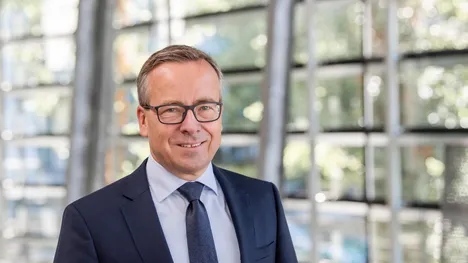
Gunther Friedl is Full Professor of Management Accounting and Chair of Controlling at the Technical University of Munich (TUM) , where he also serves as Dean of the TUM School of Management . Born in 1971, he is currently on research leave ( beurlaubt ) while continuing to supervise doctoral researchers and strategic projects. Education : Diploma in Physics, Technical University of Munich Doctorate (Dr. rer. pol.) in Business Administration, Ludwig-Maximilians-Universität München, 2000 Habilitation in Business Administration, Ludwig-Maximilians-Universität München, 2004 Visiting scholar appointments at Stanford University and Warsaw School of Economics Research Interests Professor Friedl’s work bridges controlling , corporate governance and energy economics . His early research focused on cost accounting and value-based management, leading to the widely adopted textbook Cost Accounting: A Decision-Oriented Introduction . More recently, his agenda has expanded to executive compensation, performance measurement, and the valuation of innovative technologies—especially in energy and mobility. Across more than 60 peer-reviewed articles, his publications reveal three dominant strands: Cost & Management Accounting – development of decision-oriented cost systems, hospital controlling and managerial performance metrics; Corporate Governance & Executive Pay – empirical studies on board compensation, transparency of compensation reports and stakeholder influence; Energy & Mobility Economics – application of real-options and levelized-cost methodologies to battery manufacturing, electric-vehicle adoption and grid-integration strategies. Scientific Awards Best Teaching Award, TUM School of Management (2017) Excellence in Teaching Award, Technical University of Munich (2013) Professor of the Year 2012 – UNICUM & KPMG Best Teaching Award, Executive MBA Class 2012 Best Textbook Award, German Academic Association for Business Research (VHB) 2011 Fellow of the Hanns Seidel Foundation (1993–1998) Doctoral Advising & Research Grants Professor Friedl currently leads a vibrant research group of 4 post-docs, 8 doctoral researchers and 3 research assistants funded by the German Federal Ministry of Education and Research (BMBF), the Bavarian State Ministry and industry partners such as BMW, Siemens and Allianz. Recent grants include: €1.1 million BMBF project “Controlling the Energy Transition” (2022-2026) €0.5 million Bavarian High-Tech Agenda project on “Data-Driven Controlling for Sustainable Mobility” (2021-2025) Deutsche Forschungsgemeinschaft (DFG) individual research grant on “Executive Compensation and Corporate Governance” (2019-2023) Labs & Teams He heads the Chair of Controlling at Arcisstraße 21, 80333 Munich, where the TUM Center for Energy Markets and the TUM School of Management provide interdisciplinary infrastructure. The chair’s Energy & Innovation Controlling Lab offers access to proprietary micro-data on energy consumption, mobility patterns and corporate governance structures, enabling large-scale empirical studies in collaboration with MIT, Stanford and the European Energy Exchange.
Prof. Achim Streit is a Professor for distributed and parallel high-performance systems at the Karlsruhe Institute of Technology (KIT) and has served as one of the directors of the Steinbuch Centre for Computing (SCC) since 2010. He actively leads national and international initiatives including the Helmholtz program "Engineering Digital Futures", the National Research Data Infrastructure (NFDI), and the European Open Science Cloud (EOSC), with SCC operating GridKa—the German data hub for particle physics and a Tier 1 center of the Worldwide LHC Computing Grid. His research centers on secure, distributed management of large-scale scientific data, emphasizing metadata standards, AI-driven knowledge extraction, and quantum machine learning. He develops scalable solutions for data-intensive fields like climate research, materials science, and particle physics while prioritizing energy efficiency on heterogeneous computing systems. Streit champions open science, ensuring freely accessible software and datasets through rigorous research software engineering practices. The SCC under his direction implements federated IT services across Helmholtz platforms (HMC, Helmholtz.AI, HIFIS) and NFDI consortia (NFDI4Ing, NFDI-MatWerk, PUNCH4NFDI). His team collaborates extensively with disciplines ranging from energy research to humanities, focusing on distributed authentication infrastructures, data archiving, and resource optimization for global scientific communities.
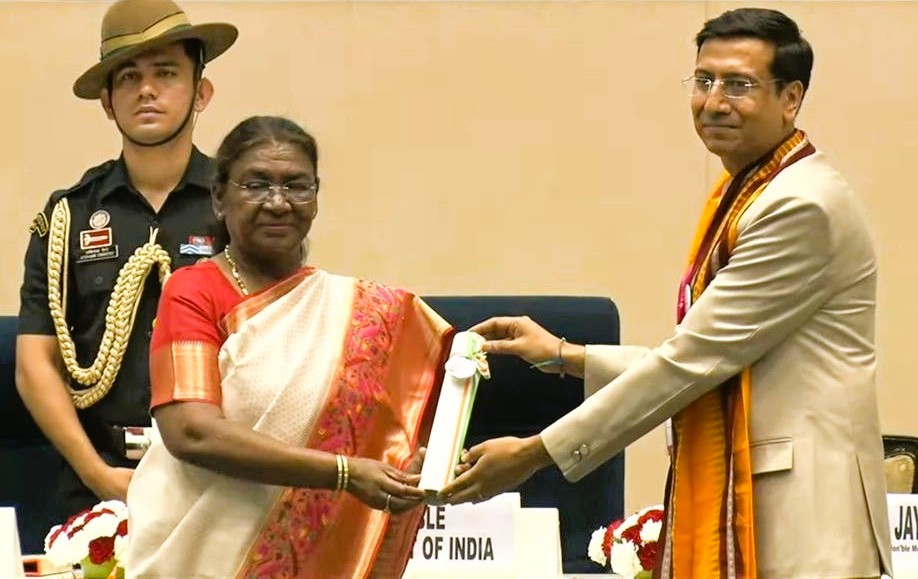
Prof. Kapil Ahuja is a Full Professor in the Department of Computer Science & Engineering at the Indian Institute of Technology Indore (IIT Indore), where he heads the Mathematics of Data Science and Simulation (MODSS) research lab. After completing dual Master's degrees and a Ph.D. from Virginia Tech (USA) followed by postdoctoral work at the Max Planck Institute in Germany, he has held visiting positions at UT Austin, IMT Atlantique, Sandia National Labs, TU Dresden, and TU Braunschweig. His administrative roles include founding Dean of International Affairs and former Head of Computer Science & Engineering at IIT Indore. Education: Ph.D. in Mathematics, Virginia Tech (2011) M.S. in Mathematics, Virginia Tech (2009) M.S. in Computer Science, Virginia Tech (2007) B.Tech. in Mechanical Engineering, IIT (BHU) Varanasi (2001) Research Focus: Prof. Ahuja's work bridges theoretical advances with real-world applications, emphasizing machine learning algorithms for plant/cancer studies, game-theoretic poverty reduction models, exascale climate modeling solvers, and drone trajectory optimization. His interdisciplinary approach integrates numerical linear algebra with network science to solve complex systems problems across healthcare, agriculture, and climate science, supported by 4.85 Crores INR in external funding. Publication Trends: Recent work demonstrates growing emphasis on AI-driven optimization for physical systems (drones, climate models) and biomedical applications (cancer classification). His publications increasingly feature cross-disciplinary collaborations between computer science, biology, and economics, with notable contributions in explainable AI for healthcare and resource allocation algorithms for social networks. Scientific Recognition: National Teacher's Award (2024) from the President of India Five-time recipient of IIT Indore's Best Teacher Award (2013-2023) Best Poster Award at International Workshop on Game Theory & Networks (2019) Steeneck Graduate Research Fellowship (Virginia Tech, 2011) Multiple SIAM travel awards for international conferences Mentorship & Service: Prof. Ahuja has graduated 5 Ph.D. and 4 M.S. (Research) students while mentoring 75 B.Tech. projects. He serves as Associate Editor for Applied Intelligence Journal (Springer Nature) and Knowledge and Information Systems, organizes international conferences, and reviews for 35+ academic sources. His administrative leadership significantly expanded IIT Indore's global partnerships through the Research Park initiative. Research Infrastructure: The MODSS lab maintains active collaborations with Oak Ridge National Lab, Sandia National Labs, and European institutions. Current projects include AI-optimized drone swarms for agricultural monitoring and game-theoretic models for poverty intervention, utilizing high-performance computing resources for large-scale simulations.
Quirin Thomas Simon Vogel is a Senior Lecturer at the University of Klagenfurt , located within the Department of Statistics . Before joining Klagenfurt, he held post-doctoral positions at the Technical University of Munich and New York University Shanghai , and served as Interim Professor at Ludwig-Maximilians University of Munich . His research lies at the intersection of probability theory and statistical mechanics . Specifically, he investigates random walks , random algorithms , and loop-based models arising from physical systems. Key themes include: Loop percolation and interacting Bose gases Large deviations and critical phenomena Randomised algorithms for communication networks Mathematical models of cancer dynamics and immune response Across his 2020-2025 publications, Vogel consistently applies probabilistic techniques to high-dimensional statistical-physics models, neural-network theory, and wireless-protocol design, evidencing a broad yet cohesive research portfolio. Contact details: Email: quirin.vogel@aau.at Office: N.0.01, Main Building, North Wing West, Level 0 Phone: +43 463 2700 3156
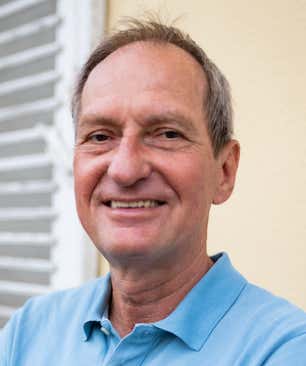
Wolfgang Stuetz is a Researcher in the Department of Food Biofunctionality at the Institute of Nutritional Sciences, University of Hohenheim , Germany. His career spans two European universities: from 2011 to 2015, he worked at Friedrich Schiller University Jena's Department of Nutritional Toxicology, and since 2015, he has been affiliated with the University of Hohenheim. He holds a Ph.D. in Nutritional Sciences (2010) and a Diploma in Nutritional Sciences (2000) , both from the University of Hohenheim. His research focuses on micronutrient status , dietary assessment methodologies , and oxidative stress biomarkers , particularly in vulnerable populations like refugee communities and small-scale farmers. His recent publications highlight collaborations across Europe, analyzing large cohorts such as the MARK-AGE Project to study aging, redox biology, and nutritional factors. He has also conducted fieldwork in Tanzania and Mozambique, examining dietary impacts on maternal and child health. Key trends in his publications include: (1) carotenoid and tocopherol analysis in African crops; (2) fat-soluble vitamin associations with health outcomes in aging populations; and (3) micronutrient interventions for refugee and rural communities. His work frequently employs cross-sectional studies and biomarker analysis to assess nutritional status and health risks.
Dirk Müller is a Professor of Software Technology/Operating Systems at the Faculty of Computer Science/Mathematics, Dresden University of Applied Sciences (HTW Dresden). He has been in this position since 2016 and is an active member of the Faculty Council since June 2021. He was awarded IEEE Senior Member status in April 2023. His academic journey includes a doctorate in Engineering from the University of Kassel in 2006, habilitation at Chemnitz University of Technology in 2014, and prior research positions at Philipps University of Marburg and Florida State University. 1995-2002: Studies in Medical Informatics at University of Leipzig 2003-2006: Research Assistant/Doctoral Student at University of Kassel 2006-2008: Research Associate at Philipps University of Marburg 2008-2014: Academic Councillor at Chemnitz University of Technology 2014-2016: Private Lecturer at TU Chemnitz 2016-present: Professor at HTW Dresden Professor Müller's research focuses on real-time systems and scheduling, model-driven software development, digitalization in companies and administration, and the concept of information. His work particularly emphasizes Rust language applications in software engineering. He has published extensively on real-time scheduling algorithms, mixed-criticality systems, and embedded systems. His teaching responsibilities include Operating Systems I, Software Engineering I & II, Model-Driven Software Development, and Programming in Rust. His publication record shows a consistent focus on real-time systems, with a clear progression from theoretical scheduling algorithms to practical implementations. His recent work has expanded into public administration digitization and biometric conference systems, while maintaining his core expertise in scheduling theory. The publications demonstrate strong international collaboration, particularly with researchers like Matthias Werner, Alejandro Masrur, and Robert Baumgartl. IEEE Senior Member (2023) Erdős number: max. 4 Strict Erdős number: max. 5 Professor Müller actively supervises student theses, with over a dozen bachelor's and diploma theses completed between 2023-2025. His students work on diverse topics including Rust programming, workflow automation, user experience optimization, and real-time event processing. He serves as a reviewer for multiple prestigious journals including IEEE Transactions on Parallel and Distributed Systems, Real-Time Systems, and The Computer Journal. He also acts as Senior Editor for Computer Science Books at Versita. His laboratory work focuses on practical implementations of real-time systems, often using Raspberry Pi as a platform for traffic analysis and other embedded applications. His research group maintains strong connections with industry, as evidenced by the applied nature of student projects at companies like IntraConnect GmbH.
Professor Dirk J. Lehmann is a Professor of Data Science in IoT at Ostfalia University of Applied Sciences, Faculty of Computer Science, where he has been employed since May 2022. He holds significant leadership roles including Deputy Head of the Institute for Information Engineering (since 2024), Research Officer of the Faculty of Computer Science (since 2023), and membership in multiple committees including the Admissions Committee for Digital Technologies and the Digital Technologies Examination Board. Professor Lehmann's extensive academic journey includes: Part-time professorship in Data Science in IoT at Ostfalia University (2020-2022) Senior Specialist for Digitalization, AI, and Visual Analysis at IAV GmbH (2018-2023) Assistant Professor of Visual Data Analysis at Nazarbayev University, Kazakhstan (2017) Visiting professorships at TU Graz, Austria and Universidad Rey Juan Carlos, Spain (2016-2017) Researcher at Otto-von-Guericke University Magdeburg (2009-2017) His research expertise centers on Visual Analytics and Data Science, with particular emphasis on high-dimensional data visualization, categorical data analysis, and IoT applications. Professor Lehmann leads the Data Science in IoT working group, conducting research across three main areas: visual data analysis, distributed data analysis using AI methods, and applied data analysis in geology, climate data, medicine, and industrial processes. His methodological contributions include innovative visualization techniques for complex datasets across multiple domains. Analysis of Professor Lehmann's 15 most recent publications (2017-2025) reveals a consistent focus on advancing visualization techniques for complex data analysis. His work spans categorical data visualization (CatNetVis), biological data analysis (D. Melanogaster research), optimization of star coordinate systems, and interactive exploration methods for large datasets. These publications appear in top venues including IEEE Transactions on Visualization and Computer Graphics and EuroVis, demonstrating both theoretical rigor and practical application across diverse domains from healthcare to environmental science. As an educator, Professor Lehmann teaches a comprehensive range of courses from foundational mathematics to advanced machine learning and visualization techniques. He actively supervises student projects and theses, emphasizing clear project definitions with measurable acceptance criteria. His international collaborations span institutions in Israel, Saudi Arabia, China, Austria, and Spain, reflecting a global research perspective that bridges academic theory with industry applications, particularly through his previous role at IAV GmbH, a Volkswagen subsidiary.
Professor Andreas Kronenburg serves as Institute Director and Dean of Studies at the Institute for Reactive Currents (WASTE) at the University of Stuttgart. With a background in mechanical engineering from RWTH Aachen and a PhD in Combustion Engineering from the University of Sydney, he has established himself as a leading researcher in combustion science. His career includes significant positions at Imperial College London where he served as Governor's Lecturer in Thermofluids (2000-2007) and Reader in Combustion (2007-2008) before joining the University of Stuttgart in 2009. Professor Kronenburg's educational background includes: RWTH Aachen, Mechanical Engineering (1989-1994) Universidad Politécnica de Madrid, Study Abroad (1992-1993) University of California at Davis, Study Abroad (1992-1993) University of Sydney, PhD in Combustion Engineering (1995-1998) His research focuses on advanced combustion modeling, particularly turbulent reactive flows, spray combustion, and nanoparticle dynamics. Kronenburg has made significant contributions to Large Eddy Simulation (LES) techniques, Conditional Moment Closure (CMC) methods, and particle-based modeling approaches. His work spans fundamental combustion science and practical applications in energy systems, with recent emphasis on sustainable fuels including hydrogen, ammonia, and biomass conversion. His research group develops sophisticated computational models that address challenges in predicting complex combustion phenomena with high accuracy. Analysis of his recent publications (2023-2026) reveals a strong focus on emerging energy technologies, particularly hydrogen and ammonia combustion for decarbonization, advanced particle dynamics in combustion systems, and computational methods for efficient simulation of complex reacting flows. His work demonstrates consistent innovation in modeling techniques while addressing practical engineering challenges in sustainable energy systems. Professor Kronenburg's scientific achievements have been recognized with numerous prestigious awards: Fellow of the Combustion Institute (2019) Distinguished Paper Award of the Combustion Institute (2013) Hinshelwood Prize for meritorious work of a young researcher (2006) Two Sudgen Awards for significant contributions to combustion science (2005, 2006) Best paper award at the Australian Symposium on Combustion (1997) Springorum Commemorative Medal for academic excellence (1994) With over 3,300 citations across 164 publications and an h-index of 33, Professor Kronenburg maintains an active research program with significant impact. His work has received support from organizations like the German Research Foundation (DFG), and he collaborates extensively with international institutions including Imperial College London and the University of Sydney. The computational resources available to his research group through bwGrid and HLRS enable large-scale simulations that advance the understanding of complex combustion phenomena. The Institute for Reactive Currents under Professor Kronenburg's leadership focuses on cutting-edge research in combustion science and engineering. The institute develops advanced computational models for predicting combustion behavior in various applications, from traditional energy systems to emerging sustainable technologies. With expertise in both fundamental combustion processes and practical engineering applications, the institute contributes significantly to addressing current challenges in energy conversion and environmental protection.
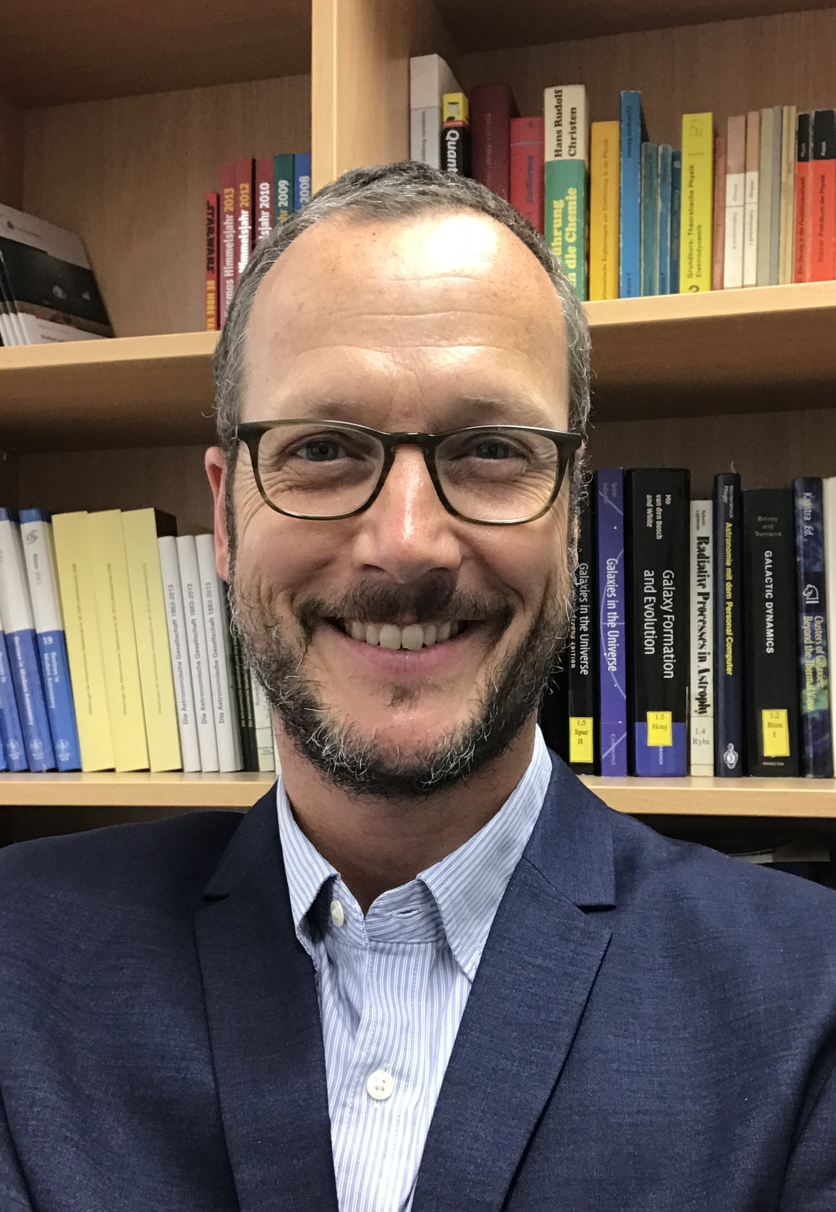
Prof. Dr. Philipp Richter is a Full Professor and Chair for Astrophysics at the Institute of Physics and Astronomy, University of Potsdam, Germany. He leads the Astrophysics research group at the University of Potsdam, focusing on interstellar and intergalactic gas, galaxy evolution, and observational cosmology. His work involves using absorption spectroscopy in UV and optical regimes to study the circumgalactic medium and intergalactic medium at various redshifts. Dr. Richter's educational background includes: PhD in Astronomy, University of Bonn, Germany (1999) Diploma in Physics, University of Bonn, Germany (1997) Studies of Physics and Astronomy at Universities of Marburg and Bonn, Germany (1994-1999) Abitur, Gymnasium Philippinum, Marburg, Germany (1991) Dr. Richter's research focuses on the properties of the circumgalactic medium (CGM) around galaxies and the intergalactic medium (IGM) that fills the Cosmic Web. His work employs absorption spectroscopy in the UV and optical regimes to study hydrogen and metal ions in the CGM and IGM at all redshifts. These absorption-line measurements are complemented with emission observations in radio, X-ray, and optical wavelengths. He also utilizes state-of-the-art numerical hydrodynamical simulations to compare with observational results. His research spans galaxy evolution, interstellar medium physics, and observational cosmology. Analysis of Dr. Richter's recent publications reveals a strong focus on the circumgalactic and intergalactic medium, with particular attention to the Magellanic Stream, galaxy halos, and high-redshift absorption systems. His work combines observational data from instruments like HST/COS with theoretical modeling to understand gas flows in galaxy evolution. Key themes include metallicity patterns, ionization states of gas, and the connection between observed absorption features and large-scale cosmic structure. Dr. Richter has received several prestigious awards: Teaching-Excellence Award, Faculty of Science, University of Potsdam (2022) Erskine Fellowship, University of Canterbury, NZ (2018) Ludwig-Biermann Award for early excellence in astrophysical research, Astronomische Gesellschaft, Germany (2005) Emmy-Noether fellowship/award for early research excellence, DFG (German science foundation) (2003) As an educator and mentor, Dr. Richter supervises PhD students including Sietske Bouma, Mitali Damle, and Kirill Makan. He teaches a variety of courses in Astrophysics such as fundamental astrophysics, cosmology, galaxy evolution, and interstellar medium as part of the physics/astrophysics bachelor/master programs. He also supervises astrophysics lab courses and seminars, and teaches experimental physics for geo-science students. Dr. Richter has played a significant role in university management, having served as director/deputy director of his department for many years, led committees for appointing professors in astrophysics, and developed the international master program in astrophysics at the University of Potsdam. Dr. Richter leads the Astrophysics research group at the University of Potsdam, which includes senior scientists, postdocs, and PhD students. The group is involved in various observational projects using telescopes and space-based instruments. They maintain close collaborations with other research institutions and participate in international research initiatives focused on galaxy evolution and the intergalactic medium.
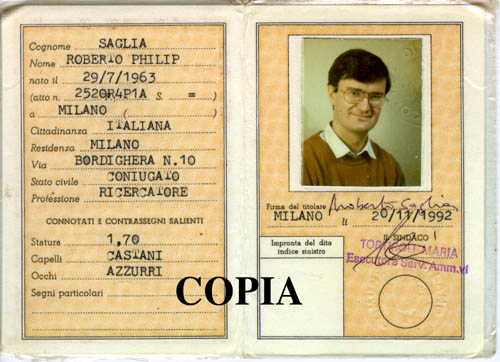
Roberto Philip Saglia is a prominent astrophysicist and researcher at the Max Planck Institute for Extraterrestrial Physics (MPE) in Garching, Germany, where he works in the Optical and Interpretative Astronomy (OPINAS) department. With a career spanning several decades, Dr. Saglia has established himself as a leading expert in galaxy formation and evolution, cosmology, and extragalactic astronomy. Dr. Saglia's research primarily focuses on understanding the structure and evolution of galaxies, with particular emphasis on stellar populations, dark matter distribution, and black hole physics. He is a key contributor to the Euclid space mission, a European Space Agency project designed to investigate the nature of dark energy and dark matter through precise measurements of galaxy shapes and redshifts. His recent work (2023-2025) has centered on analyzing Early Release Observations from the Euclid mission, examining various aspects of galaxy clusters, dwarf galaxies, globular clusters, and large-scale cosmic structures. Dr. Saglia has published extensively in leading astronomy journals, with over 170 publications to his name, demonstrating his significant contributions to the field. As evidenced by his numerous collaborative papers, Dr. Saglia works with an extensive international network of astronomers and cosmologists across Europe and beyond. His research combines observational data with sophisticated theoretical modeling to address fundamental questions about the universe's structure and evolution. Dr. Saglia has received support from prestigious research programs including the Priority Program 1177 Witnesses of Cosmic History, the Transregional Collaborative Research Center TRR 33 - The Dark Universe, and the Cluster of Excellence for Fundamental Physics - Origin and Structure of the Universe.