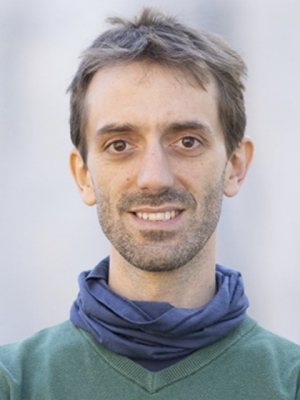
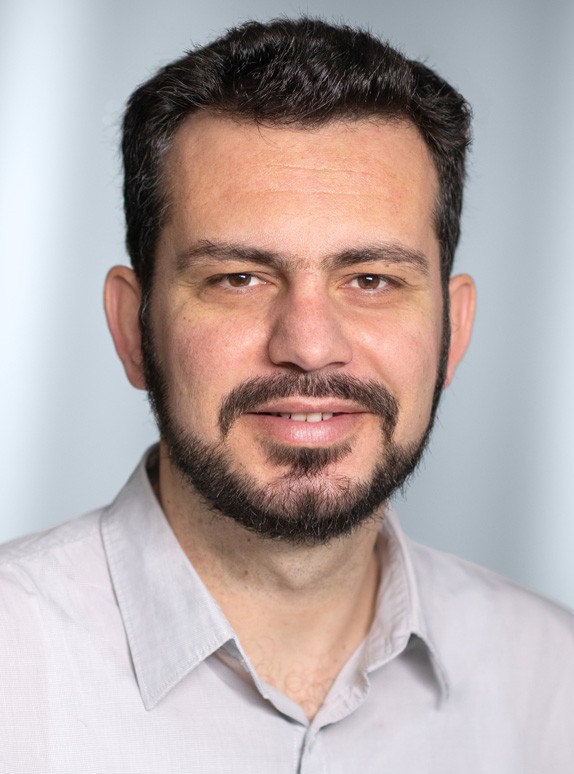
Damien Challet serves as a Lecturer at the Swiss Federal Institute of Technology Lausanne (EPFL) with an Invited guest appointment, teaching within the institutional structure EPFL > CDM > CDM-IF > IF-ENS. His primary teaching responsibilities include Financial Engineering and Financial Big Data courses. His research focuses on Financial Engineering and Financial Big Data, emphasizing quantitative analysis of financial markets through large-scale data processing and algorithmic modeling. Key subfields include risk management, algorithmic trading systems, high-frequency data analytics, computational finance, market microstructure analysis, and machine learning applications in asset pricing.
Prof. Dr. Michael Felux is full Professor and team leader of the Aviation Infrastructure group at the ZHAW School of Engineering , Zurich University of Applied Sciences. He also co-founded and co-owns the Estonian consultancy Navaid OÜ , providing GNSS/CNS expertise while ensuring non-conflict with his academic role. Education Dr.-Ing. in Mechanical Engineering, TU München (2012 – 2018) Dipl.-Tech. Math. in Mathematics, TU München (2003 – 2009) CAS Hochschuldidaktik (Higher-Education Didactics), PHZH (2021) Research Focus Michael Felux’s research centres on safe, secure and efficient aviation communication, navigation and surveillance (CNS) . He investigates GNSS-based augmentation systems (GBAS, SBAS) for precision approach and landing, develops real-time interference detection & localization techniques to counteract jamming and spoofing, and explores high-integrity navigation solutions for unmanned aerial vehicles (UAVs). Additional interests include environmental optimisation of flight procedures and multi-constellation, multi-frequency signal processing . Across more than 50 peer-reviewed publications since 2015, his work consistently targets the intersection of technical robustness and operational feasibility . Recent papers map GNSS disruption events across European airspace, quantify fuel-burn reductions enabled by GBAS-guided continuous-descent approaches, and introduce cost-efficient machine-learning frameworks for real-time localisation of malicious radio-frequency interference. Scientific Awards & Recognition (no specific awards listed in supplied material) Research Funding & Projects Spoofer Localization – Swiss project leader, ongoing EGNSS DFMC for GBAS based operations – EU project leader, ongoing Making I-CNS A Reality – integrated CNS technology, project leader, ongoing High Integrity Satellite Navigation for UAV using Galileo HAS – project leader, ongoing LINA – Shared large-scale infrastructure for safe testing of autonomous systems, team member, ongoing Collision avoidance system for manned & unmanned aircraft via SDR – completed Emission Reduction using Satellite Navigation for Approach Guidance – completed Laboratory & Team As head of the Aviation Infrastructure team at ZHAW, Prof. Felux directs a multidisciplinary group developing next-generation CNS technologies. The team operates dedicated GNSS/GBAS testbeds, flight-trial aircraft, and spectrum-monitoring networks to validate concepts from simulation through to real-world deployment.
Daniele Silvestro is a researcher at ETH Zürich's Department of Biosystems Science and Engineering, working within the Computational Evolution group based in Basel, Switzerland. His research spans evolutionary biology, computational methods, and biodiversity science, with a focus on developing and applying novel analytical approaches to understand macroevolutionary patterns. Dr. Silvestro's research interests center on evolutionary biology and computational approaches to understanding biodiversity patterns through time. His work bridges micro- and macroevolutionary scales, with particular emphasis on phylogenetic methods, speciation processes, and the integration of fossil data with molecular phylogenies. He applies machine learning and artificial intelligence techniques to analyze large-scale biodiversity datasets, addressing questions about species diversification, extinction dynamics, and ecological interactions across deep time. His recent publications demonstrate a strong trend toward computational innovation in evolutionary biology, with increasing integration of artificial intelligence methods to tackle complex questions in biodiversity science. His work spans multiple biological systems, from plant-soil interactions to mammalian evolution, reflecting an interdisciplinary approach that combines theoretical modeling with empirical data analysis. Dr. Silvestro collaborates extensively with researchers across institutions and disciplines, contributing to major initiatives such as the 2030 Declaration on Scientific Plant and Fungal Collecting. His research has significant implications for biodiversity conservation, particularly in understanding how species and ecosystems respond to environmental change. His work on computational methods, including software development like DeepDiveR, demonstrates a commitment to creating practical tools for the broader scientific community. His research group at ETH Zürich appears to focus on developing and applying cutting-edge computational approaches to evolutionary questions, emphasizing the importance of integrating multiple data sources and analytical frameworks.
Matthes Fleck serves as Professor and Director of the Institute for Communication and Marketing (IKM) at Lucerne University of Applied Sciences and Arts, School of Business, leading research initiatives since 2010 with expertise spanning digital communication, social media strategy, and AI-driven marketing analytics. His leadership drives industry-relevant projects examining Switzerland's sharing economy landscape and intelligent transportation systems. Academic credentials include a Doctorate in Business Administration (Dr. oec.) from University of St. Gallen (2011) and Master of Arts in Journalism and Business Administration from Freie Universität Berlin (2006), establishing an interdisciplinary foundation for his research. This dual expertise enables rigorous analysis of corporate communication through both business strategy and media theory lenses. Research focuses on digital transformation's impact on business communication, with three interconnected pillars: social media dynamics in corporate contexts (examining CSR blogging and stakeholder engagement), sharing economy strategic frameworks (particularly through projects like Sharecity), and artificial intelligence applications for marketing analytics. Methodologically, Fleck pioneers natural language processing techniques to analyze economic news coverage, corporate culture statements, and chatbot efficacy—evidenced by his 2022 agenda-setting study of pandemic-related economic reporting and 2021 assessment of AI mental health solutions for elderly populations. Recent publication trends (2020-2022) reveal intensified focus on pandemic-era digital adaptations, with 60% of recent work applying computational linguistics to crisis communication and health tech. Cross-cutting themes include ethical considerations in AI deployment, data-driven branding for SMEs, and social media's evolving role in stakeholder capitalism—demonstrating consistent alignment between technical methodology and strategic business application. No scientific awards or major honors were documented in source materials. Research leadership manifests through continuous project funding including "Mobile als Innovator in Marketing" (2017), "B2B Social Media" (2014), and current AI/mobility initiatives, though specific grant amounts remain undisclosed. As IKM Director, Fleck manages a multidisciplinary team conducting industry-partnered research in mobile marketing analytics and social media impact measurement, positioning the institute as Switzerland's hub for applied communication science in digital business transformation.
Dr. Anastasios Kouvelas is a Lecturer at ETH Zurich, where he serves as head of the Road Traffic Engineering research group at the Institute of Transport Planning and Systems (IVT), Department of Civil, Environmental and Geomatic Engineering. He has held this position since August 2018, succeeding Dr. Monica Menendez who moved to New York University in Abu Dhabi. Prior to joining ETH Zurich, he was a research associate at the Urban Transport Systems Laboratory (LUTS) at EPFL (2014-2018) and a postdoctoral fellow at Partners for Advanced Transportation Technology (PATH) at the University of California, Berkeley (2012-2014). Dr. Kouvelas' research focuses on modeling, simulation, optimization and traffic flow control. His work aims to develop real-time solutions based on control theory and operations research methods. The Road Traffic Engineering group develops algorithmic solutions that are components of intelligent transportation systems used in traffic control centers. Recent technological advances in autonomous vehicles have expanded their research topics as the industry seeks efficient operational solutions for autonomous mobility. They are particularly interested in extending their work to the design of advanced management strategies for urban networks that utilize connected vehicles to improve traffic operations and develop network-wide control strategies that minimize environmental impacts. His recent publications (2023-2025) demonstrate strong focus on traffic prediction using deep learning techniques, bike lane allocation impacts on urban networks, transit network resilience against disruptions, vehicle trajectory extraction from aerial recordings, and traffic control for mixed traffic systems with connected and autonomous vehicles. His work bridges theoretical developments in control theory with practical traffic engineering challenges. Scientific Awards No specific scientific awards were mentioned in the provided information. Advising and Grants Dr. Kouvelas supervises PhD and Master's students in traffic engineering and intelligent transportation systems. His research is supported by various grants including a grant from the Hong Kong Research Grant Council (Grant No. GRF 11216323) for research on traffic speed prediction. Laboratories and Teams Dr. Kouvelas leads the multidisciplinary Road Traffic Engineering research group at IVT, which consists of researchers with backgrounds in civil engineering, electrical engineering, mechanical engineering, computer science, control, and operations research. The group's work spans multiple areas including traffic flow theory, traffic operations, connected and automated vehicles, and intelligent transportation systems.