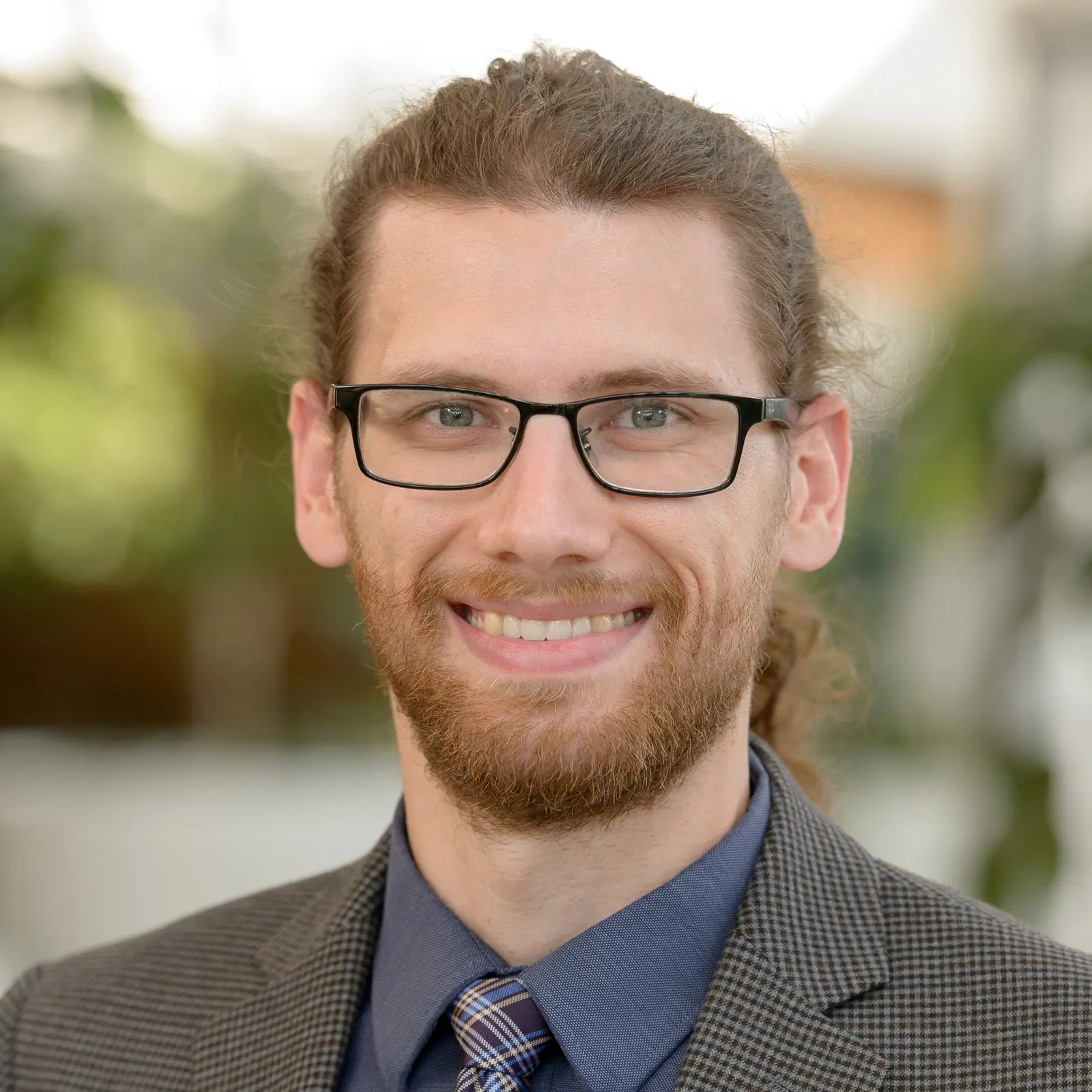
Robert-Zoltán Szász is a Researcher in the Department of Energy Sciences at Lund University, Faculty of Engineering, and a member of the LTH Profile Area: The Energy Transition. His work centers on numerical modeling of fluid flows. His research interests encompass: Numerical modeling of swirling reacting and non-reacting flows Computational aeroacoustics Wind turbine aerodynamics Ice accretion phenomena He employs Large Eddy Simulations and Computational Fluid Dynamics to address energy system challenges, with recent focus on hydrogen-enriched combustion dynamics and ice accretion modeling for renewable infrastructure. Szász has supervised 6 students and contributed to key projects: Numerical and experimental investigation of a gas turbine model combustor : Dissertation project examining swirling flows in combustion systems Computations of ice throw/fall : 2018-2019 research on ice formation/detachment modeling
Franziska Glassmeier is an Associate Professor at the Faculty of Civil Engineering and Geosciences at Delft University of Technology (TU Delft) , where she has been since April 2020. Previously, she held positions at Wageningen University and the National Oceanic and Atmospheric Administration (NOAA) in Boulder, USA. Her research focuses on cloud dynamics, aerosol-cloud interactions, and climate modeling, leveraging complex systems theory and data science. PhD in Atmospheric Physics, ETH Zürich (2016) Diploma in Physics, University of Göttingen and Max Planck Institute for Dynamics and Self-Organization (2010) Her work aims to improve climate projections by studying cloud complexity through emergent behavior on system-wide scales, with methodological integration of process-based and data-driven approaches. She leads the Multiscale Cloud Physics Group at the Max Planck Institute for Meteorology, supported by prestigious grants including the ERC Starting Grant and Branco Weiss Fellowship . Her research trends span cloud self-organization , mesoscale dynamics , and aerosol impacts on climate , as evidenced by her recent publications. These studies employ large-eddy simulations , network theory , and non-equilibrium thermodynamics to address cloud-radiative feedbacks and geoengineering implications. Scientific Awards ERC Starting Grant Branco Weiss Fellowship Veni Grant Research Associateship award of the National Academies of Sciences (USA) PhD Award of the Swiss Academy of Sciences Glassmeier advises 6 PhD candidates and collaborates with international institutions like the Kavli Institute for Theoretical Physics. Her group's work intersects with cloud albedo effects, precipitation susceptibility, and nonlinear atmospheric charge generation. Her lab, the Multiscale Cloud Physics Group at the Max Planck Institute for Meteorology, emphasizes cross-disciplinary approaches to cloud-climate sensitivity and climate projection accuracy.
Liu Yan is an Assistant Professor and Doctoral Supervisor at the School of Environmental Science and Engineering, Southern University of Science and Technology (SUSTech). He joined SUSTech in September 2022 after completing postdoctoral research at University College London (2020-2022) and Texas Tech University (2018-2020), and was selected as a High-Level Talent of Shenzhen. His educational background includes: Ph.D. in Hydraulic Engineering (Modeling Sediment Transport) from Tsinghua University (2017) Joint Ph.D. in Civil and Environmental Engineering from Cardiff University (2014-2015) B.S. in Hydraulic Engineering from Tsinghua University (2012) Liu Yan's research focuses on eco-fluvial dynamics, with particular emphasis on the interactions among turbulence structures, sediment transport, and benthic organisms in natural water bodies. His work spans environmental fluid mechanics, hyporheic exchange processes, and ecological river dynamics, employing advanced numerical simulations and experimental approaches to investigate complex phenomena at the interface of physical and biological processes. His recent publications demonstrate a strong interdisciplinary focus that bridges engineering, environmental science, and ecology. His research investigates how turbulence structures affect sediment transport and benthic organisms, how hyporheic exchange influences water quality, and how ecological processes impact river morphology. This work has significant implications for understanding and managing aquatic ecosystems, particularly in the context of environmental change and human impacts on river systems. His scientific achievements have been recognized with several awards: Shenzhen High-Level Talents (Level C) Excellent Graduate of Tsinghua University Excellent Graduate of Universities in Beijing IAHR-SHCS Best Report Award Liu Yan serves as a Doctoral Supervisor and Principal Investigator for multiple research projects. He has secured significant funding including a National Natural Science Foundation of China General Program (CNY 530,000), a Guangdong Provincial Offshore Wind Power Joint Fund project (CNY 300,000), and a Shenzhen Municipal General Project (CNY 300,000). He also participates as a sub-project leader in the Ministry of Science and Technology's Key R&D Program (CNY 14.6 million). He actively recruits postdoctoral researchers, PhD, and Master's students for his research group focused on environmental fluid mechanics and eco-fluvial dynamics. He serves on professional committees including the Sediment Professional Committee of the Chinese Hydraulic Engineering Society and the Marine Geo-disaster and Geo-environment Committee of the International Consortium on Geo-disaster Reduction, and is a Young Editorial Board Member for the International Journal of Sediment Research.
Prof. Dr. Björn Maronga is a Professor of Boundary Layer Meteorology at the Institute of Meteorology and Climatology within the Faculty of Mathematics and Physics at Leibniz Universität Hannover. His office is located at Herrenhäuser Straße 2, 30419 Hannover (Building 4105, Room F126). He holds multiple administrative roles including chair of the Meteorology Examination Board, BAföG representative, and practical training coordinator for Meteorology, as well as representing professors on the selection commission and faculty council. Prof. Maronga's research focuses on boundary layer meteorology and urban climate modeling, with particular expertise in Large-Eddy Simulations (LES) using the PALM model system. His work spans from fundamental atmospheric physics to practical urban climate applications. He investigates urban heat islands, radiation fog dynamics, land-atmosphere interactions, and the development of high-resolution urban climate models. His research group is deeply involved in the [UC]² national research program focused on developing building-resolving atmospheric models for entire city regions. Analysis of his recent publications reveals a strong trend toward increasingly sophisticated urban climate modeling techniques. His work with the PALM model system has evolved from basic boundary layer studies to comprehensive urban climate simulations incorporating chemistry, detailed radiative transfer, and land-surface interactions. Recent research emphasizes practical applications for urban planning, climate adaptation, and thermal comfort assessment. His collaborative network spans numerous international institutions, with particular focus on European research partnerships. Prof. Maronga is actively involved in several significant research projects including the MOSAIK initiative for model-based city planning under climate change and the ISOBAR project studying Arctic boundary layer processes. His work has contributed substantially to the development and validation of the PALM model system, which has become a leading tool for high-resolution urban climate simulations worldwide. He has supervised numerous PhD students and postdoctoral researchers who have contributed to the extensive publication record associated with the PALM modeling framework.
Dr. Johannes Schwenkel is a Researcher at the Institute of Meteorology and Climatology within the Faculty of Mathematics and Physics at Leibniz University Hannover. As a core member of the Boundary Layer Meteorology Research Group, he conducts advanced numerical studies of atmospheric boundary layer processes with particular expertise in radiation fog dynamics and microphysics. His research program centers on developing and applying large-eddy simulation (LES) techniques to investigate complex fog phenomena. Key contributions include novel splitting algorithms for collisional growth in Lagrangian cloud models, improved representations of fog microphysics through embedded modeling approaches, and analysis of fog's impact on diurnal boundary layer evolution. His work bridges observational studies from projects like ISOBAR with high-resolution modeling to advance fundamental understanding of boundary layer processes. Analysis of Dr. Schwenkel's publication record (2018-2022) reveals consistent methodological innovation in atmospheric modeling, particularly regarding fog and cloud microphysics. His research shows increasing collaboration through major international projects, with significant contributions to the PALM model system development and Arctic boundary layer observations. The work demonstrates strong integration of numerical techniques with physical process understanding, focusing on improving model representations of critical but challenging atmospheric phenomena. Dr. Schwenkel actively participates in collaborative research networks including the ISOBAR project for Arctic boundary layer studies and the Demistify international model intercomparison initiative. His work within the Boundary Layer Meteorology Research Group provides access to advanced computational resources for large-eddy simulations and connections to observational field campaigns, creating a robust environment for investigating complex atmospheric processes through both modeling and data analysis approaches.
Rodrigo Caballero Augi is Professor of Dynamic Meteorology at Stockholm University's Department of Meteorology (MISU), where he leads research on atmospheric dynamics and climate systems. His work spans from planetary-scale waves to cloud droplet motion, examining how these processes shape past, present, and future climates. He maintains strong affiliations with the Bolin Center for Climate Research and the Swedish e-Science Research Centre. Caballero received his Laurea in Physics (1994) and PhD in Physics (1998) from La Sapienza University in Rome, Italy, under the guidance of Alfonso Sutera. His academic journey continued with postdoctoral positions at the University of Copenhagen and University of Chicago, followed by faculty roles at University College Dublin before joining Stockholm University in 2011. His research focuses on understanding atmospheric dynamics in the context of climate change, with particular emphasis on Arctic climate where warming occurs at more than twice the global average rate. His group investigates circulation systems that co-evolve with ice sheets, mountain ranges, and carbon redistributions between climate system compartments. Using a combination of simple models, general circulation models, observational data analysis, and statistical modeling, his team explores how atmospheric dynamics influences energy and material exchanges across the climate system. Recent publications reveal a strong focus on Arctic climate processes, particularly moist intrusions, cloud feedbacks, and polar amplification mechanisms. His work spans multiple disciplines including atmospheric physics, climate dynamics, and polar meteorology, with significant contributions to understanding storm tracks, cloud albedo asymmetries, and energy transport mechanisms in changing climates. Caballero has mentored numerous PhD students and postdocs who have gone on to successful careers at institutions worldwide, including University of Arizona, Uppsala University, Chalmers University of Technology, and UQAM in Montreal. His research group continues to investigate critical climate questions through projects like Arctic Climate Across Scales, North Atlantic Deep-Water formation, and storm track-cloud feedback relationships.
Prof. Dr. Ir. B.J.H. van de Wiel is a faculty member at Delft University of Technology (TU Delft) within the Civil Engineering & Geosciences school, specializing in Atmospheric Remote Sensing and Boundary Layer Meteorology . Their research focuses on soil-atmosphere interactions, plant-atmosphere heat exchange, and frost protection mechanisms using wind machines. They have contributed to advancements in distributed temperature sensing (DTS) for environmental monitoring and explored dynamics of root growth under varying soil moisture conditions. Their recent articles emphasize temperature profiling over short vegetation , large-eddy simulation for orchard warming , and quantitative 3D investigations of wind machine performance . These works highlight interdisciplinary applications of atmospheric physics in agricultural and civil engineering contexts. Notable activities include organizing the 3rd Decennial Workshop on Turbulence in Stably Stratified Boundary Layers (2017) and contributing to public media discussions on frost research and climate impacts. Their datasets and open-access publications underscore commitment to transparent scientific collaboration.
Nicholas Morse is a Postdoctoral Researcher in the Engineering Mechanics Department at KTH Royal Institute of Technology in Stockholm, Sweden. He joined KTH in May 2025 and is supervised by Professors Philipp Schlatter (FAU Erlangen, KTH), Ramis Örlü (OsloMet, KTH), and Mihai Mihaescu (KTH). Dr. Morse earned his PhD in Aerospace Engineering & Mechanics from the University of Minnesota in 2023 under Professor Krishnan Mahesh. Prior to KTH, he served as a Senior Scientist at the Research Center Pharmaceutical Engineering in Graz, Austria (2023-2025), where he led simulation strategy for an EU Horizon 2020 project and developed computational methods for droplet breakup analysis. Nicholas Morse's research centers on: Curvature and rotational effects on turbulent flows Turbulent boundary layers on curved surfaces and spinning cones Eccentric Taylor-Couette-Poiseuille flow transition High-fidelity simulation of complex turbulent flows using DNS and LES His technical expertise spans: High-performance computing infrastructure Direct numerical and large-eddy simulation methodologies Adaptive mesh refinement algorithms Heterogeneous (GPU) computing implementations Multiphase flow modeling Academic recognition includes: John A. & Jane Dunning Copper Fellowship for Aerospace Engineering & Mechanics (2019) Donald & Shirley Gorence Scholarship (2018) Robert H. & Marjorie F. Jewitt Fund Scholarship (2017) Dr. Morse has extensive experience in computational fluid dynamics, having conducted large-scale simulations (>10,000 processors) at the University of Minnesota and developed the Multi-Element Wing Generator MATLAB application for Formula SAE aerodynamics design. His work bridges theoretical fluid mechanics with practical engineering applications across aerospace and pharmaceutical domains.
Michele Iovieno is an Associate Professor in the Department of Mechanical and Aerospace Engineering (DIMEAS) at the Polytechnic University of Turin. He is a member of the College of Mechanical, Aerospace and Automotive Engineering and teaches courses in Aerospace Engineering at both undergraduate and graduate levels. His academic career spans multiple doctoral cycles (28th through 40th) in Aerospace Engineering and Fluid Dynamics programs. Dr. Iovieno's research focuses on fluid dynamics, particularly turbulence and particle-laden flows. His work explores fundamental aspects of turbulent heat transfer, direct numerical simulation (DNS) of turbulent flows, and Large Eddy Simulation (LES) techniques. His research lines include particle-laden streams, mixed convection phenomena, and non-isothermal turbulent flows with suspended particles. His work aligns with broader societal goals including climate action, quality education, and industry innovation. Analysis of his recent publications (2023-2025) reveals a strong focus on heat transfer mechanisms in particle-laden turbulent flows, with particular attention to thermal feedback effects, particle clustering phenomena, and mixed convection regimes. His research demonstrates sophisticated numerical approaches to studying complex multiphase flow phenomena, often employing direct numerical simulation techniques to examine fundamental fluid-particle interactions at high resolution. Dr. Iovieno actively supervises PhD students in the Aerospace Engineering program, with current advisees working on topics including particle-laden channel flows, heat transfer in non-isothermal turbulent flows, and mixed convection phenomena. His teaching portfolio includes courses on Fluid Dynamics for the Environment and Energy, Aerodynamics, and Thermofluid Dynamics across multiple academic years. He is affiliated with research groups focused on Fluid Dynamics and Boundary Layer Flow within DIMEAS, contributing to the department's expertise in computational fluid dynamics and turbulence research. His work connects theoretical fluid mechanics with practical applications relevant to aerospace engineering and environmental fluid dynamics.
Noah Van Dam is an Associate Professor in the Mechanical and Industrial Engineering Department at the Francis College of Engineering, University of Massachusetts Lowell. He joined UMass Lowell in Fall 2018 after completing his Ph.D. at the University of Wisconsin-Madison in 2015 and working as a postdoc at Argonne National Laboratory. His educational background includes: Ph.D. in Mechanical Engineering from University of Wisconsin-Madison (2015) B.S. in Mechanical Engineering from Iowa State University of Science and Technology Professor Van Dam's research focuses on high-fidelity modeling of multiphase and reacting flows, with particular emphasis on verification, validation and uncertainty quantification techniques for computational fluid dynamics models. His work spans multiple applications including internal combustion engines, gas turbines, aerospace propulsion systems, and energy generation processes. Key research areas include: Multi-phase/reacting flows Combustion modeling Computational Fluid Dynamics (CFD) Lagrangian-Eulerian methods Verification, validation, uncertainty quantification (VVUQ) Machine learning applications in combustion His recent publications demonstrate a strong focus on alternative fuels, particularly ammonia-hydrogen blends, and their application in internal combustion engines. His work also addresses critical challenges in marine propulsion systems, thermal energy storage, and advanced numerical methods for multiphase flows. Professor Van Dam's research has significant implications for developing cleaner, more efficient energy conversion technologies. Among his notable achievements are: Outstanding Teaching Assistant Award (2015) Robert G. Sachs Award for Outstanding Poster Presentation (Third Place) (2015) DAAD RISE Professional Scholarship (2010) University Fellowship & Vilas Welcome Award (2010) Professor Van Dam has advised numerous graduate and undergraduate students on research projects related to computational fluid dynamics, combustion, and alternative fuels. His students have gone on to positions at national laboratories, research institutions, and industry. He has also secured funding from organizations including the Office of Naval Research for his work on marine burners and ammonia combustion. His research group, the Multi-phase and Reacting Flows group, actively investigates high-fidelity computational fluid dynamics modeling of complex flows with applications to energy systems. Current research directions include ammonia-hydrogen combustion, low-pressure marine burners, advanced fuel spray modeling, machine learning applications in chemical kinetics, and thermal energy storage using CO2 clathrate hydrates.
Kürsat Yurt, M.Sc., serves as a Research Associate at the Institute for Rotorcraft and Vertical Flight, Technical University of Munich (TUM), based at Boltzmannstr. 15, 85748 Garching, Germany. His role encompasses advanced computational research in vertical flight systems, thesis supervision, and participation in multiple national and international projects targeting next-generation rotorcraft technologies and urban air mobility solutions. Yurt's research spans High Performance Computing, Performance Portable Programming, Rotor and Wake Aerodynamics, and Aeroelasticity. He develops GPU-accelerated meshless methods for large eddy simulations, creates real-time guidance algorithms for urban obstacle avoidance, and investigates morphing airfoil dynamics through fluid-structure interaction frameworks. His work bridges computational mechanics with practical rotorcraft design challenges, emphasizing energy efficiency and flight safety in complex environments. His 2022-2025 publications reveal a cohesive trajectory in computational rotorcraft aerodynamics, featuring innovations in meshless GPU simulations, partitioned coupling techniques, and urban air mobility guidance systems. These works integrate computational fluid dynamics, high-performance computing, and aerospace engineering to address vertical flight challenges including wake modeling, morphing rotor blades, and rotor-airframe interactions. Yurt actively supervises Master's and Bachelor's theses on vortex particle methods, rotorcraft simulation frameworks, and morphing rotor technologies. His research is funded through key projects: ENGEL - Energy Efficient Flight Guidance VARI-SPEED II ARCTIS LaBouR complemented by completed initiatives like InteReSt II and TEMA-UAV. The Institute provides critical infrastructure for his work through specialized facilities: Whirl Tower for rotor dynamics testing Flight Simulator Facilities for pilot-in-loop studies Unmanned Rotorcraft Testbed (AREA) High-performance GPU/CPU clusters for computational workloads These resources enable experimental validation of his computational models and support the institute's mission in vertical flight innovation.
Dr. Esteban Ferrer Vaccarezza serves as a full Professor (Catedrático) in Applied Mathematics at the School of Aeronautics (ETSIAE-UPM) of the Polytechnic University of Madrid, where he leads the FerrerCFD research group within the Department of Mathematics Applied to Aerospace Engineering and the Center for Research in Computational Simulation (CCS). Education and Professional Background: Doctorate in Engineering from the University of Oxford, specializing in high-order numerical methods development Pre-PhD industry experience: Six years as research scientist/consultant at CENER (Spain's National Renewable Energy Centre) in the UK and Spain Research Focus: Dr. Ferrer pioneers high-order (order ≥ 3) Computational Fluid Dynamics solvers using Spectral and Discontinuous Galerkin methods. His work minimizes numerical dispersion/diffusion errors through mesh refinement (h-refinement) and polynomial enrichment (p-refinement), achieving exponential convergence for smooth solutions. Key application domains include aerodynamics, aeroacoustics, turbulence modeling, and machine learning integration for wind/tidal turbine optimization. Current Research Impact: The FerrerCFD group develops industry-relevant computational tools for complex aeronautical flows (e.g., airfoil simulations at high angles of attack) and renewable energy systems (horizontal-axis/Darrieus turbines). Their unique sliding mesh capability enables high-fidelity rotating body simulations, validated through Direct Numerical Simulation (DNS) and Large Eddy Simulation (LES) for bluff body flows and turbine wake interactions. Research Infrastructure: The group maintains active industry partnerships to translate mathematical innovations into practical engineering solutions, with demonstrated capabilities in 3D unstructured parallel solvers, Fourier-series-extended flow modeling, and multi-phase fluid dynamics simulations for cross-flow turbines.
Dr. Gonzalo Rubio Calzado is a Associate Professor at the Department of Applied Mathematics to Aerospace Engineering , part of the Universidad Politécnica de Madrid (UPM) . He is affiliated with the Research Group: Numerical Methods and Applications to Aerospace Technology and the Center for Research in Computational Simulation (CCS) at UPM. Bachelor's in Aeronautic Engineering (UPM, 2009) Master's in Aerospace Engineering (UPM, 2011) PhD in Aerospace Engineering (UPM, 2015) His research spans fluid dynamics, high-order numerical methods, and machine learning applications in CFD, with over 50 publications and an h-index of 15 (last 5 years). He focuses on: Discontinuous Galerkin (DG) methods Error estimation and hp-adaptation Turbulence modeling and LES Machine learning for flow simulations Multiphase flow analysis Industrial applications (aeronautics, energy systems) Recent publications emphasize machine learning integration with high-order DG solvers, turbulence modeling, and optimization techniques. His work includes collaborations with companies like REPSOL and AIRBUS, as well as national and European projects (SIMOPAIR, DeepCFD, HERFUSE, ROSAS). Scientific awards include the Extraordinary PhD Award (2015). He is the lead developer of the open-source HORSES3D high-order CFD project and contributes to energy measurement patents for building efficiency.
Cedrick Ansorge is a Lecturer at the Institute of Meteorology within the Department of Earth Sciences at Freie Universität Berlin . His research focuses on turbulence modeling , atmospheric boundary layer dynamics , and computational fluid dynamics , with expertise in large eddy simulation (LES) and direct numerical simulation (DNS) of turbulent flows. Teaching: Theoretical Meteorology I/II (Master's level) Email: c.ansorge@fu-berlin.de His work addresses scale separation , roughness effects , and stability analysis in Ekman and planetary boundary layers, with applications to urban canopy turbulence and Arctic stratocumulus clouds . Recent publications emphasize hairpin vortices , turbulence intermittency , and subgrid closures . He collaborates on projects involving MOSAiC and sea ice dynamics , and manages datasets on turbulent wall-bounded flows . Notable contributions include advancements in Monin-Obukhov similarity theory , LES validation , and pressure-strain redistribution in stratified flows. His team includes researchers Sally Issa and Shreyas Deshpande . Office hours: Wednesday 10:30-11:30 am, Room 139, Carl-Heinrich-Becker-Weg 6-10, 12165 Berlin.
Jean-François LARGEAU is a Teacher-researcher at IMT Atlantique Nantes, affiliated with the GREEN team and the Department of Energy Systems and Environment (Département Systèmes Énergétiques et Environnement) at Institut Mines-Télécom. He has been an associate researcher at GEPEA since 2014 and maintains strong connections with Icam where he began his academic career in 2011. His educational background includes a Master's degree in Fluid Mechanics and Turbulence from the University of Poitiers, followed by a doctorate in Acoustics and Dynamics of Unsteady Flows in 2004. Prior to entering academia, Dr. LARGEAU gained valuable industry experience working for R&D support companies serving major industrial groups and later with the Trelleborg/Tristone group in the automotive plastics industry. Dr. LARGEAU's research focuses on the energy recovery of waste through thermochemical processes, particularly pyrolysis and gasification to produce alternative fuels. His work aims to optimize the pyro-gasification process through both experimental studies on prototypes and comprehensive modeling approaches. His recent publications demonstrate a strong emphasis on converting various biomass wastes and challenging materials like used tires and petroleum sludge into valuable energy products. His research output shows a clear progression toward more sustainable waste-to-energy solutions, with particular attention to orange peels, agro-food wastes, and other abundant biomass resources. The work often combines experimental characterization with advanced modeling techniques to understand the fundamental processes and optimize conversion efficiency. 31 publications with 10,386 reads and 464 citations Active research in biomass energy, biofuels, biogasification, and biogas production Focus on practical applications of waste-to-energy technologies Dr. LARGEAU's advisory work appears to focus on graduate students involved in energy systems research, particularly those working on waste conversion technologies. His collaborations span multiple institutions, with strong ties to Mohand Tazerout's research group. His laboratory work centers on experimental studies of pyrolysis and gasification processes, with facilities for prototype testing and material characterization. The research group appears to have active projects on various waste streams including biomass wastes, used tires, and petroleum sludge.