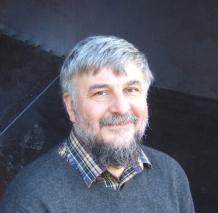
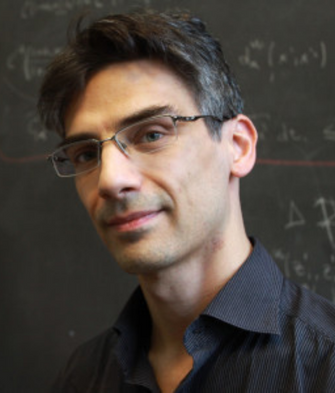
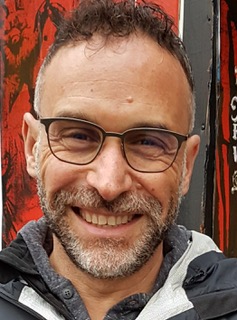
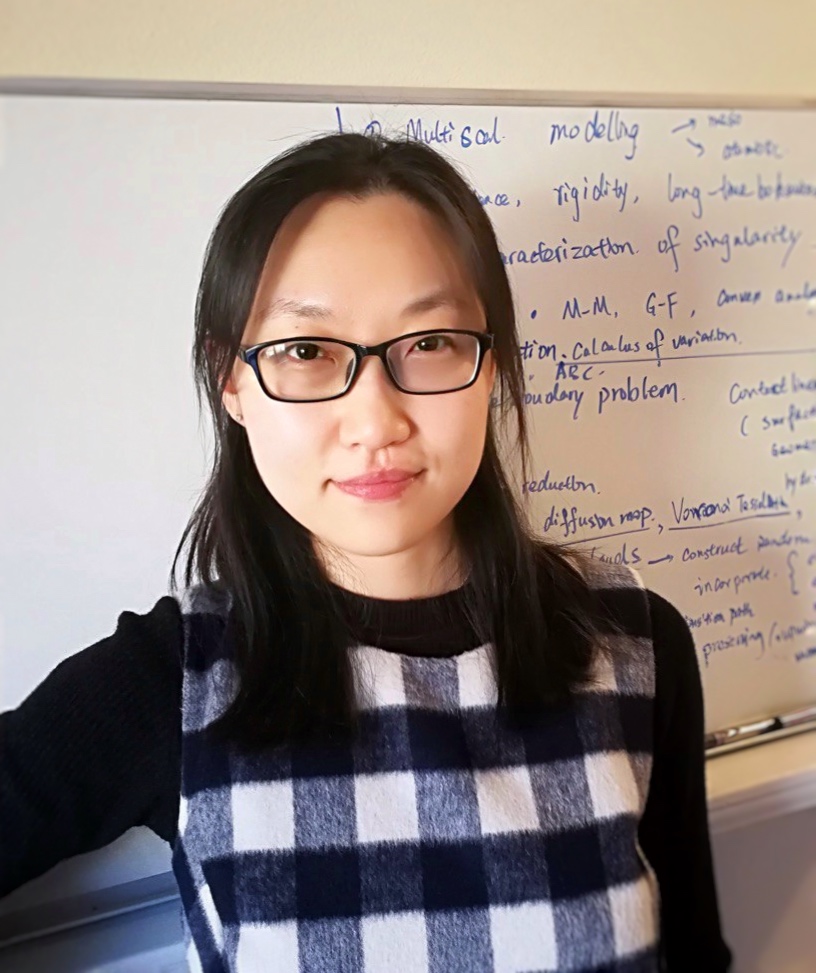
Guangqu Zheng is an Assistant Professor in the Department of Mathematics and Statistics at Boston University. He holds a BA from Wuhan University, a Master's from Université Paris-Saclay, and a Ph.D. from the University of Luxembourg. Prior to Boston University, he was a Lecturer at the University of Liverpool and conducted postdoctoral research at the University of Melbourne and the University of Kansas. Education: Ph.D. in Mathematics, University of Luxembourg (2018) Master in Probability, Université Paris-Orsay (2014) BA in Economics and Management, Wuhan University (2011) Research Interests: His work focuses on probability theory, stochastic analysis, and SPDEs. Key areas include Malliavin calculus, Stein’s method, limit theorems, and applications to stochastic partial differential equations. Recent projects involve hyperbolic Anderson models, Lévy noise-driven systems, and spatial ergodicity. Publications: His recent articles explore central limit theorems for SPDEs, hyperbolic models, and applications of Stein’s method. These contributions highlight advancements in stochastic processes and their interdisciplinary applications. Teaching & Advising: At BU, he teaches advanced courses in stochastic analysis and advises students in probability and statistics. Expectations for students include proficiency in real analysis and probability theory.
Professor Zdzislaw Brzezniak is a Professor in the Department of Mathematics at the University of York, where he has been since 2005. He holds a PhD in PDEs from Jagellonian University, Krakow (1988). His research focuses on stochastic partial differential equations (SPDEs), turbulence, geometric analysis, and harmonic analysis, with notable contributions to Navier-Stokes and Euler equations. He has organized major international workshops, including events on stochastic PDEs at ICMS (Edinburgh) and the Isaac Newton Institute. Education: PhD in PDEs (Jagellonian University, 1988). Research Interests: SPDEs, stochastic geometric problems (e.g., Landau-Lifshitz equations), fluid dynamics, and applications in physics. His work bridges pure and applied mathematics, influencing theoretical frameworks in micromagnetism and quantum field theory. Key Awards: 2013 Best Paper Award, 1st Prize, Institute of Information Theory and Automation. Supervision: Advised over 10 PhD students, including Nimit Rana (2019) and Fabian Hornung (2018). Current students include Asma Alalyani and Hessa Alharbi. Active in mentoring across stochastic analysis and geometric PDEs. Labs/Groups: Member of Mathematical Finance and Stochastic Analysis Research Group, and Geometry and Analysis Research Group at the University of York.
Evgeni Dimitrov is an Assistant Professor of Mathematics in the Department of Mathematics at the University of Southern California, housed within the USC Dana and David Dornsife College of Letters, Arts and Sciences. Before joining USC, he served as a Ritt Assistant Professor in the Mathematics Department at Columbia University. Education: PhD in Mathematics, Massachusetts Institute of Technology (MIT), advised by Alexei Borodin Undergraduate degree, Princeton University Research Interests: Dimitrov’s research sits at the intersection of probability, representation theory, and combinatorics, with a central focus on the asymptotic analysis of stochastic integrable systems . He develops hybrid techniques that blend algebraic methods from representation theory with analytic and combinatorial tools to study universal scaling limits—particularly those falling within the Kardar–Parisi–Zhang (KPZ) universality class . Key objects of study include Gibbsian line ensembles , random matrix models , log-gamma polymers , and exactly-solved stochastic particle systems such as ASEP and the six-vertex model. Publication Profile: Across 2021–2025, Dimitrov has produced a concentrated body of work addressing edge fluctuations , multi-level loop equations , and global large-deviation principles for discrete β-ensembles and related integrable systems. His papers repeatedly explore the convergence of discrete stochastic models to Airy-like universal processes, tightness questions for line ensembles, and the rigorous derivation of KPZ scaling laws, underscoring a cohesive research trajectory toward understanding universal random geometry. Scientific Awards: No awards are explicitly mentioned in the supplied material. Advising & Grants: No specific PhD students, grants, or funding details are provided in the text. Labs & Teams: No laboratory or research-group information is available from the supplied content.
Jacopo De Simoi is a Professor in the Department of Mathematics at the University of Toronto, holding appointments at both the St. George and Mississauga campuses. His research focuses on dynamical systems, particularly hyperbolic dynamics, billiards, and rigidity phenomena. He has held roles at institutions like Université Paris Diderot and the University of Maryland, College Park, and currently teaches courses such as Game Theory and Real Analysis. His work explores the interplay between deterministic systems and stochastic processes, with contributions to topics like Fermi acceleration and KAM theory. Education: Ph.D. in Mathematics from the University of Maryland (2009), Diploma di Licenza in Physics from Scuola Normale Superiore (2005), and M.Sc./B.Sc. in Physics from Università di Pisa. Research interests include stochastic properties of dynamical systems, conservative dynamics, and the ergodic theory of billiards. He has published extensively on spectral rigidity, entropy rigidity, and applications of renormalization group techniques. His recent work addresses inverse problems in billiard geometry and the statistical behavior of fast-slow systems. Teaching includes undergraduate and graduate courses in analysis, calculus, and dynamical systems. Collaborations span institutions globally, and he serves on editorial boards for journals like Communications in Mathematical Physics.
Edmund Hollis is an Assistant Professor of Neuroscience at the Brain and Mind Research Institute within Weill Cornell Medical College . He has been affiliated with the institution since 2016 and leads a research lab focused on neural circuit remodeling and recovery after spinal cord injury. Education: Ph.D. in Neurosciences, University of California, San Diego, School of Medicine (2008) B.S., University of Southern California (2002) Research Interests: Hollis's lab investigates the neural mechanisms underlying movement and recovery from spinal cord injury. Using genetic, molecular, and behavioral tools, along with optogenetics and optical imaging, the lab explores how neural circuits respond to injury and how they can be therapeutically enhanced. Key areas include cortical plasticity, axon regeneration, astrocyte responses, and neuromodulation of motor circuits. Scientific Contributions: His recent publications demonstrate a strong focus on corticospinal tract function, spinal interneuron modulation, and the use of advanced behavioral assays like the Kinematic Deviation Index (KDI) to assess motor recovery in rodent models. His work spans from molecular signaling pathways (e.g., RANKL, Wnt, IGF-I) to large-scale circuit remodeling and rehabilitation strategies. Collaborations & External Roles: Hollis has professional affiliations with Texas A&M University and the National Institutes of Health, and has served as a speaker and consultant for various academic and governmental organizations.
Vincent Vargas is a French mathematician and Associate Professor at the University of Geneva, where he joined in 2021 after holding a research position at CNRS. He completed his PhD in mathematics at Paris-Diderot University under the supervision of Francis Comets. His primary research interests include: Probability Mathematical Physics Statistical Mechanics Quantum Field Theory Gaussian Multiplicative Chaos Liouville Quantum Gravity Vargas has made significant contributions to the rigorous probabilistic construction of Liouville field theory and the proof of the DOZZ formula, work that was featured in Quanta Magazine. His research bridges mathematics and theoretical physics through probabilistic methods applied to quantum gravity. Analysis of his recent publications reveals a strong focus on mathematical structures underlying conformal field theory, with particular attention to Liouville quantum gravity across various geometries and the connections between probability and quantum physics. His notable scientific achievements have been recognized with prestigious awards: Marc Yor Prize (2019) George Pólya Prize (2022) Vincent Vargas has mentored several PhD students including Romain Allez, Yichao Huang, Guillaume Rémy, and Tunan Zhu. He has been actively involved in the academic community through organizing conferences and workshops, including a trimester at the Institut Henri Poincaré in 2015 and a conference on 'Probability and quantum field theory' in 2019. His professional activities extend to industry applications through his previous consultancy with Capital Fund Management (2007-2013) and his current role on the board of their research foundation.
Jeremy Quastel is a University Professor in the Department of Mathematics at the University of Toronto, within the Faculty of Arts and Science. He has been a prominent figure in the department since returning to Canada in 1998, serving as Chair of the Department of Mathematics from 2017 to 2021. Under his leadership, the mathematics department has become a world center for research in random interface growth and the KPZ universality class. His educational background includes: Undergraduate studies at McGill University PhD from the Courant Institute (NYU) in 1990 under S.R.S. Varadhan Professor Quastel is a specialist in probability theory, stochastic processes, and partial differential equations . His research focuses on the large scale behavior of interacting particle systems and stochastic partial differential equations, with particular emphasis on the Kardar-Parisi-Zhang (KPZ) universality class. He made groundbreaking contributions by discovering the first exact distributional solutions of the KPZ equation in 2010 and the KPZ fixed point in 2017 - the scaling invariant, integrable Markov process at the center of the KPZ universality class. His work bridges probability theory, mathematical physics, and statistical mechanics, with applications to interface growth models and directed polymers. Analysis of his recent publications reveals a consistent focus on KPZ-related phenomena, with increasing sophistication in understanding the KPZ fixed point and its properties. His work has evolved from discovering exact solutions to establishing convergence results and exploring connections to other integrable systems like the Toda lattice. The research spans theoretical developments in stochastic PDEs, connections to random matrix theory, and applications to physical growth models. His scientific achievements have been recognized with numerous prestigious awards: Sloan Fellow (1996-98) Invited session speaker at the International Congress of Mathematicians (2010) Current Developments in Mathematics lectures (2011) St. Flour lectures (2012) Plenary speaker at the International Congress of Mathematical Physics (2012) Fellow of the Royal Society of Canada (2016) Fellow of the Royal Society (2021) CRM-Fields-PIMS prize (2018) Jeffery-Williams Prize of the Canadian Mathematical Society (2019) Professor Quastel has supervised numerous PhD students who have gone on to successful careers in academia and industry, including Xuicai Ding at UC Davis, Hanna Jankowski at York University, and Konstantin Matetski at Columbia University. His research group has attracted many postdoctoral fellows who have become leading researchers in probability theory. While specific grant information isn't detailed in the provided text, his sustained research output and leadership position suggest significant grant funding supporting his work in probability theory and stochastic processes. Though not explicitly mentioned in the provided text, Professor Quastel's work has established the University of Toronto as a global hub for research on the KPZ universality class. His collaborations span institutions worldwide, and his research group likely includes graduate students, postdocs, and visiting scholars working on various aspects of stochastic processes, interface growth models, and integrable probability. His recent work on the KPZ fixed point represents the culmination of decades of research in this field.
Edward T Crane is a Heilbronn Associate Professor at the School of Mathematics, University of Bristol, specializing in Probability, Analysis and Dynamics within the Pure Mathematics department. His research is affiliated with the Heilbronn Institute for Mathematical Research. Dr. Crane's research interests span multiple areas of mathematics, with particular focus on: Probability theory and stochastic processes Asymptotic analysis Circle mathematics and unit disk problems Riemann surfaces and connected components Polynomial mathematics and edge theory His recent research has focused on stochastic models, branching processes, and large deviation principles. Crane has published in top probability journals including Stochastic Processes and their Applications, Annals of Probability, and Annals of Applied Probability. His work often bridges theoretical mathematics with applications in areas like queueing theory and biological modeling, demonstrating both theoretical depth and practical relevance across multiple domains of mathematical research. Dr. Crane maintains an active research profile with 17 academic publications to date, with his most recent work in 2024 examining the limit point in Jante's law process and establishing its absolutely continuous distribution properties. His professional affiliations include: Heilbronn Institute for Mathematical Research Dr. Crane holds academic qualifications including a B.A. from Cambridge, A.M. from Harvard, and Ph.D. from Cambridge. He can be contacted at Edward.Crane@bristol.ac.uk and maintains an ORCID profile at https://orcid.org/0000-0002-4215-2884.
Yuan Gao is an Assistant Professor of Mathematics at Purdue University's Department of Mathematics (College of Science). His research focuses on analysis and computations of PDEs in materials science, biology, and microfluidics, with recent emphasis on optimal control, Hamilton-Jacobi equations, and non-equilibrium chemical reactions. His work is supported by NSF awards DMS-2204288 and DMS-2440651. Previously, he held the William W. Elliott Assistant Research Professor position at Duke University (2019-2021). Research interests include PDE analysis in materials science (crystal growth, dislocation dynamics), numerical methods for interface dynamics, applied stochastic analysis (Langevin dynamics, transition path theory), and mean-field games for fluid systems. He organizes the PSU-Purdue-UMD Joint Seminar on Mathematical Data Science. Key publications span topics like dislocation evolution, Wasserstein gradient flows, and stochastic algorithms for rare events. Awards include NSF CAREER funding recognizing his contributions to mathematical analysis of non-equilibrium systems.
Max Fathi is a Professor of Mathematics at Université Paris Cité, affiliated with the Laboratoire Jacques-Louis Lions (LJLL) and Laboratoire de Probabilités, Statistique et Modélisation (LPSM). He concurrently holds a part-time teaching position at the Department of Mathematics and Applications (DMA) at École Normale Supérieure (ENS). Since 2023, he has been a member of the Institut Universitaire de France (IUF), a prestigious national research fellowship in France. He completed his PhD in 2013 at Université Pierre et Marie Curie under Cédric Villani, followed by a postdoctoral position at the University of California, Berkeley with Lawrence C. Evans and Fraydoun Rezakhanlou. Previously, he was a CNRS researcher at the Institut de Mathématiques de Toulouse before joining Université Paris Cité. His habilitation thesis (2019) focuses on optimal transport applications in analysis and probability. Fathi's research centers on optimal transport theory, particularly its applications to analysis, probability, and statistical physics. Key topics include interacting particle systems, functional inequalities (e.g., Poincaré, log-Sobolev), high-dimensional phenomena, Ricci curvature in discrete/continuous spaces, Stein's method, concentration of measure, and numerical methods for stochastic dynamics. His work is supported by the ANR project 'Conviviality.' He has delivered courses on functional analysis at ENS and participated in summer schools, including an MSRI course on functional inequalities and localization techniques. His teaching materials include lecture notes on optimal transport and stochastic processes. His contributions have been recognized through awards such as the IUF membership. Notable research collaborations include work with Thomas Courtade, Matthias Erbar, and Gabriel Stoltz on topics ranging from stability estimates of inequalities to hypocoercivity and numerical analysis of stochastic systems.
Asaf Cohen is an Associate Professor in the Department of Mathematics at the University of Michigan, Ann Arbor, affiliated with the College of Literature, Science, and the Arts. He holds a B.Sc., M.Sc., and Ph.D. from Tel-Aviv University (2005–2013). His research focuses on applied probability, stochastic processes, and control theory, with emphasis on mean-field games, mathematical finance, actuarial science, diffusion and large deviation analysis, machine learning, and risk-sensitive control. His work also addresses applications in stochastic networks, energy markets, epidemiology, and economics. Key research areas include diffusion approximations, large deviations, queueing theory, and partial differential equations. Dr. Cohen has contributed to the analysis of multiclass queueing systems, optimal dividend strategies, and strategic server behavior in heavy traffic regimes. His methods often involve advanced stochastic control techniques and game-theoretic models. He has published extensively on topics such as mean-field games, SIR models for epidemics, and Bayesian sequential testing. His academic contributions span theoretical advancements and practical applications in finance, insurance, and operations research.
Gérard Ben Arous is a Silver Professor of Mathematics at New York University's Courant Institute of Mathematical Sciences, where he has served as Director and Vice Provost for Science and Engineering Development since 2011. He holds a PhD in Mathematics from the University of Paris VII (1981) and has previously taught at the University of Paris-Sud, École Normale Supérieure, and the Swiss Federal Institute of Technology in Lausanne. His research focuses on probability theory, stochastic analysis, and their applications to physics and industrial problems, particularly exploring complex systems' long-time behavior and aging phenomena in disordered media. Education: PhD in Mathematics, University Paris 7, France (1981) M.Sc. in Statistics, University Paris-Sud Orsay, France (1979) B.S. in Mathematics, École Normale Supérieure (Paris), France (1978) His research interests bridge probability with partial differential equations, dynamical systems, and statistical mechanics. Key contributions include studies on random media, random matrices, and the interplay between complexity, disorder, and aging in physical systems. He has held leadership roles in academic institutions, including directing the mathematics departments at Orsay and École Normale Supérieure, and founded Lausanne's Bernoulli Center. Notable awards include Fellow of the Institute of Mathematical Statistics and the Montyon Prize from the French Academy of Sciences. His work is published in top journals like Annals of Probability and Communications in Pure and Applied Mathematics , and he co-edits Probability Theory and Related Fields . Ben Arous has advised numerous researchers and contributed to interdisciplinary projects, including studies on machine learning landscapes and financial mathematics. His lab focuses on stochastic modeling and its applications across disciplines.
Remco M. Dijkman serves as Full Professor in Information Systems at Eindhoven University of Technology (TU/e), chairing the Information Systems group within the Industrial Engineering and Innovation Sciences school. He additionally holds a Full Professor position at EAISI High Tech Systems and acts as research director for high-tech supply chains at the European Supply Chain Forum—a network of over 50 multinational companies. His research centers on Business Process Management with emphasis on data-driven optimization of business processes. His academic background includes both PhD and Master's degrees in Computer Science from the University of Twente. Publications span Information Systems, Computers in Industry, and Transactions on Software Engineering and Methodology, with over 100 papers and service on the editorial board of Information Systems. He has held visiting positions at New York University, Hasso Plattner Institute, IBM Zurich Research Lab, Humboldt-University Berlin, and Queensland University of Technology. Dijkman's research interests focus on detecting, diagnosing, and predicting optimal execution scenarios in business processes, developing mathematical models for quantitative process analysis , and resource assignment optimization . These are primarily applied in transportation logistics and high-tech supply chains, where he investigates data-driven predictions for transport order assignment and supply chain planning. His work bridges artificial intelligence with practical business applications. Recent publications (2024-2025) reveal concentrated efforts in deep reinforcement learning for resource allocation, process pattern discovery, and software library development (GymPN, SimPN). Key trends include predictive process monitoring for healthcare applications, event data enrichment frameworks, and uncertainty handling in logistics planning—demonstrating strong interdisciplinary integration. Scientific recognition includes: Best Demo Award (2019) Best Reviewer Award (2016) Test of Time Award (2019) He has supervised 150 students, including Lotte Vugs who received the Dow Chemical Best OML Master Thesis Award in 2020. Grant leadership spans eight projects: NXTGEN Smart Industry (2023-2030), CollChain (2023-2029), CERTIF-AI (2020-2025), FENIX (2019-2023), and DynaPlex (2021-2024), focusing on digital twins, federated networks, and AI-driven supply chain solutions. Dijkman directs the Information Systems group at TU/e and leads the European Supply Chain Forum's high-tech supply chain research. His work integrates with semiconductor manufacturing and transportation logistics through collaborations with industry partners, while his 2023 invited talks at Technical University of Munich and Humboldt University Berlin highlight his international engagement.
Riddhipratim Basu is an Associate Professor at the International Centre for Theoretical Sciences (ICTS-TIFR) in Bengaluru, India, since September 2017. Previously, he was a Szegö Assistant Professor of Mathematics at Stanford University (2015–2017) and a Ph.D. graduate in Statistics from UC Berkeley (2015), supervised by Allan Sly. Research focuses on Probability Theory, with emphasis on First/Last Passage Percolation, Interacting Particle Systems, Large Deviations, and Random Matrix Theory. Key collaborators include Allan Sly, Shirshendu Ganguly, Mahan Mj, and Manan Bhatia. Publications span journals like Communications on Pure and Applied Mathematics , Annals of Probability , and Comm. Math. Phys. His work explores geodesic structures in percolation models, scaling exponents in KPZ universality, and geometric properties of stochastic processes. Recent studies include Liouville Quantum Gravity and Airy process fluctuations.
Samuel Herrmann is a Professor of Applied Mathematics at the University of Burgundy, France. He is a member of the Statistics, Probability, Optimization and Control team and an external member of the TOSCA project team at INRIA. His research focuses on stochastic processes, particularly asymptotic analysis of non-linear stochastic processes, large deviations, and stochastic resonance phenomena, with applications in climatology, biology, and financial modeling. Education: PhD in Mathematics (2001) - University of Burgundy Habilitation (2009) - Asymptotic analysis related to stochastic processes Research Interests: Stochastic differential equations and their numerical simulation Large deviation phenomena in stochastic processes Self-stabilizing diffusions and stochastic resonance First-passage and exit time problems for diffusions Applications in climatology, biology, and finance Scientific Contributions: Professor Herrmann has published extensively on stochastic processes, with over 50 peer-reviewed articles and a monograph on stochastic resonance. His work includes exact simulation methods for diffusion processes, studies on self-stabilizing systems, and theoretical contributions to large deviations theory. He has collaborated with leading researchers such as Peter Imkeller and David Peithmann. Awards and Recognition: Contributed to the encyclopedia of mathematical physics Co-authored the book "Stochastic Resonance: A Mathematical Approach in the Small Noise Limit" (2014) Teaching and Supervision: He teaches courses on stochastic processes and their simulation at both undergraduate and master's levels, including the Master in Turin program. He has supervised numerous PhD and master's students in stochastic processes and related fields.