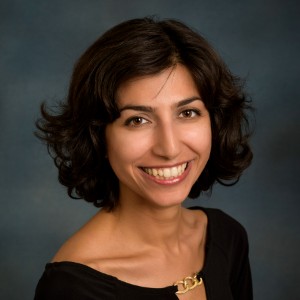
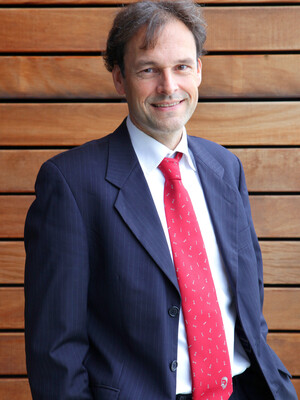
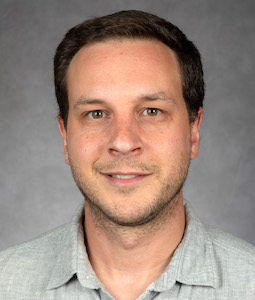
Prof. Dr. Cora Uhlemann is a faculty member at the University of Bielefeld within the Faculty of Physics . She is also affiliated with the Bielefeld Graduate School in Theoretical Sciences as a Deputy Director and part of the Astroparticles and Cosmology Group . Her research focuses on advanced cosmological modeling, including weak lensing statistics, dark matter dynamics, and modified gravity theories. She contributes significantly to the CosmoVerse White Paper and Euclid mission initiatives, developing innovative mathematical frameworks for analyzing cosmic structures and gravitational probes. Key trends in her publications highlight applications of probability distribution functions (PDFs), large deviation theory, and quantum-inspired methods to cosmology. She leads efforts to improve cosmological parameter estimation through higher-order statistics and systematics mitigation in surveys. Uhlemann is actively involved in interdisciplinary research through Bielefeld’s CRIStal portal and collaborates with institutions like the Center for Cognitive Interaction Technology (CITEC) and Bielefeld Center for Data Science (BiCDaS) .
Dr. Panayotis Mertikopoulos is a CNRS researcher (chargé de recherche) at the Laboratoire d'Informatique de Grenoble, part of Université Grenoble Alpes. He is affiliated with the Inria/LIG joint team POLARIS and has held visiting positions at UC Berkeley, EPFL, LUISS University of Rome, and NKUA. His academic journey includes completing his PhD at the University of Athens in 2010 on "Stochastic perturbations in game theory and applications to networks" and his Habilitation à Diriger des Recherches (HDR) in 2019 on "Online optimization and learning in games: Theory and Applications". Dr. Mertikopoulos' research spans several interconnected fields at the intersection of mathematics, computer science, and economics. His primary research interests include: Game theory and its applications to network design and resource allocation Online learning algorithms and their convergence properties Optimization methods for non-convex and stochastic problems Applications to machine learning, signal processing, and wireless networks Quantum game theory and quantum computing applications His extensive publication record shows a clear evolution from foundational work in game dynamics and learning theory toward increasingly sophisticated applications in machine learning and network optimization. Recent work demonstrates growing interest in quantum game theory, non-convex optimization, and the mathematical foundations of deep learning. His research consistently bridges theoretical insights with practical applications, particularly in communication networks and distributed systems. Among his notable achievements is receiving the INFORMS best paper award in the network analytics section in 2022 for his work on "Robust power management via learning and game design". His publications have appeared in top venues including NeurIPS, ICML, COLT, IEEE Transactions, and leading economics and operations research journals. Dr. Mertikopoulos has supervised numerous PhD students and postdoctoral researchers, though specific names are not listed in the available information. He has secured research funding for projects at the intersection of game theory, optimization, and machine learning, with applications to network design and resource allocation. His collaborative work spans multiple institutions across Europe and North America. As a member of the POLARIS research team at Inria/LIG, he contributes to a vibrant research environment focused on parallel and distributed systems. His work often intersects with colleagues researching optimization algorithms, machine learning theory, and network science, creating opportunities for cross-disciplinary collaboration on complex computational problems.
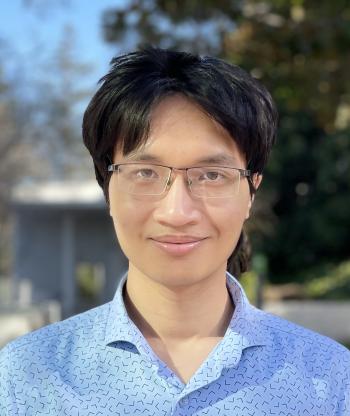
Huy Tuan Pham is a Clay Research Fellow at the Institute for Advanced Study, beginning July 2023. He received his PhD in 2023 from Stanford University, where he was advised by Jacob Fox. His research spans combinatorics, probability, number theory, and theoretical computer science. Key contributions include: With Fox and Zhao: demonstrating that Green’s popular difference theorem requires tower-type bounds, marking the first known application of Szemerédi’s regularity method that truly requires such bounds. With Park: proving the Kahn-Kalai conjecture on phase transitions and Talagrand’s conjecture on selector processes. With Conlon and Fox: solving long-standing conjectures of Erdős in additive combinatorics regarding subset sums and Ramsey complete sequences. With Cook and Dembo: developing a quantitative nonlinear large deviations theory for random hypergraphs. He has been awarded the Clay Research Fellowship, a five-year fellowship beginning July 2023, which is a significant recognition in the mathematical community. No details on academic advising, research grants, laboratories, or research teams are provided in the available text.
Wojciech Samotij is an Associate Professor at the School of Mathematical Sciences, Tel Aviv University. His research focuses on extremal and probabilistic combinatorics, Ramsey theory, large deviation theory, and additive number theory. He has held positions including Junior Research Fellow at Trinity College, University of Cambridge (2010–2014), and Post-doctoral researcher at Tel Aviv University (2010–2011, 2012–2013). PhD in Mathematics (2010), University of Illinois at Urbana-Champaign, supervised by Jozsi Balogh M.Sc. in Mathematics and Computer Science (2007), University of Wrocław His recent work explores large deviation principles in random graphs, hypergraph containers, and extremal problems in probabilistic settings. Publications span journals like Annals of Probability , Duke Mathematical Journal , and Transactions of the American Mathematical Society , with key contributions to Ramsey-type theorems and entropy-based combinatorial analysis. He has supervised graduate students in topics ranging from additive combinatorics to random graph theory, and taught courses including Probabilistic Methods in Combinatorics, Graph Theory, and Discrete Mathematics. His email contact is samotij@tauex.tau.ac.il and samotij@post.tau.ac.il .
Panagiota Birmpa is an Assistant Professor in the Department of Actuarial Mathematics & Statistics at Heriot-Watt University's School of Mathematical and Computer Sciences, Edinburgh. Her research bridges advanced mathematical theory with cutting-edge machine learning applications, focusing on uncertainty-aware methodologies for complex data systems. She actively supervises PhD students and maintains strong collaborative ties with international research groups in applied mathematics and computational science. Her academic credentials include: BSc+MSc (integrated master) in Applied Mathematics and Physical Sciences (majors in Analysis and Statistics) from National Technical University of Athens (NTUA), 2011 MSc in Pure Mathematics from National and Kapodistrian University of Athens (NKUA), 2014 PhD in Mathematics from University of Sussex, UK, 2018 (Thesis: Quantification of Mesoscopic and Macroscopic Fluctuations in Interacting Particle Systems) Dr. Birmpa's research program integrates theoretical mathematics with modern computational challenges through seven core domains: Generative modeling, Scientific Machine learning, Uncertainty Quantification, Probabilistic Graphical models, Interacting Particle Systems, Optimal transport Theory, and Partial Differential Equations. Her interdisciplinary approach enables innovative solutions for complex data analysis problems across scientific domains, particularly where traditional statistical methods face limitations in high-dimensional spaces. Analysis of her publication trajectory reveals a progression from foundational statistical physics (2017-2018 interface dynamics research) toward contemporary machine learning applications (2021-2024). Her recent work demonstrates increasing sophistication in merging deep learning architectures with uncertainty quantification frameworks, especially for scarce high-dimensional data scenarios where conventional approaches fail. This evolution reflects broader trends in mathematical data science toward robust, interpretable AI systems. No scientific awards or fellowships are currently listed in her professional profile. Dr. Birmpa accepts PhD candidates for projects exploring deep learning-graphical model interfaces with uncertainty quantification, building on her prior AFOSR-funded postdoctoral research at UMass Amherst (2021-2022). Her grant history includes significant support from the Air Force Office of Scientific Research for developing particle-based generative algorithms. She maintains active supervision of graduate researchers while pursuing methodological innovations in probabilistic modeling. Her collaborative research network spans multiple institutions including University of Massachusetts Amherst, with interdisciplinary teams developing novel mathematical frameworks for scientific machine learning. Current projects focus on Lipschitz-regularized gradient flows and generative particle algorithms for high-dimensional data, extending her earlier work on non-equilibrium fluctuations in particle systems.
Dr. Mahya Ghandehari is an Associate Professor in the Department of Mathematical Sciences at the University of Delaware . Her work bridges Noncommutative Harmonic Analysis , Graph Limit Theory , and Data Science , with a focus on mathematical frameworks for network analysis and signal processing on graphs. PhD in Mathematics, University of Waterloo Her research addresses challenges in seriation and graph signal processing (GSP) , particularly through graphon-based models. Recent work explores spectral methods, Fourier bases for stochastic block model graphs, and wavelet characterizations of network structures. Dr. Ghandehari’s research is supported by active NSF grants (DMS-2408008, CCF-2427965) and Simons Travel Support . She supervises PhD student Caroline McCrorey and has mentored several PhD graduates now holding academic positions at institutions like Tufts University and SUNY Oswego. Scientific honors include the Fields Postdoctoral Fellowship . She organizes seminars such as the Analysis Seminar at Delaware and the Northeastern Analysis Meeting (NEAM 2025) .
Dr. Alexander Erlei is a Research Associate at the Chair of Economic Policy and SME Research , Faculty of Economics and Business, Georg-August University of Göttingen. His work bridges experimental economics, behavioral economics, and artificial intelligence, focusing on human-AI collaboration, algorithmic decision-making, and consumer behavior. Education : BA in Economics (University of Göttingen), MA in International Economics with focus on Institutional Economics (University of Göttingen & IÉSEG School of Management, Lille). Research interests include economic decision-making in algorithmic systems, experimental industrial organization, and behavioral environmental economics. His recent publications analyze choice independence in human-AI co-writing, error types in collaborative AI, and moral behavior deviations in AI bargaining scenarios. He received the Best Student Paper Award at AAAI HCOMP 2020. His work involves experimental methodologies and crowdsourcing platforms to study human-AI interactions. He supervises theses topics in mutual agreement with students and maintains affiliations with interdisciplinary research teams exploring digital transformation in crafts and SMEs.
Quirin Thomas Simon Vogel is a Senior Lecturer at the University of Klagenfurt , located within the Department of Statistics . Before joining Klagenfurt, he held post-doctoral positions at the Technical University of Munich and New York University Shanghai , and served as Interim Professor at Ludwig-Maximilians University of Munich . His research lies at the intersection of probability theory and statistical mechanics . Specifically, he investigates random walks , random algorithms , and loop-based models arising from physical systems. Key themes include: Loop percolation and interacting Bose gases Large deviations and critical phenomena Randomised algorithms for communication networks Mathematical models of cancer dynamics and immune response Across his 2020-2025 publications, Vogel consistently applies probabilistic techniques to high-dimensional statistical-physics models, neural-network theory, and wireless-protocol design, evidencing a broad yet cohesive research portfolio. Contact details: Email: quirin.vogel@aau.at Office: N.0.01, Main Building, North Wing West, Level 0 Phone: +43 463 2700 3156
Professor Tamara Grava is affiliated with the School of Mathematics at the University of Bristol . Her research focuses on mathematical physics, particularly integrable systems and nonlinear partial differential equations. PhD (SISSA, Italy), MSci (Trieste) Active in dispersive equations and random matrices Recipient of the Wolfson Visiting Fellowship Research Interests: Tamara studies exactly solvable systems, emphasizing statistical descriptions of soliton behavior in nonlinear Schrödinger equations and eigenvalue distributions in non-Hermitian random matrices. Her work bridges asymptotic analysis, probability, and integrable systems. Scientific Awards: Wolfson Visiting Fellowship Projects: Wolfson Visiting Fellowship (2024–2026): Orthogonality, Riemann surfaces, and asymptotics Sogano (2025): Soliton gas and nonlinear dispersive equations Asymptotic analysis in integrable nonlinear waves (2021–2023)
Ayalvadi Ganesh is a Lecturer in the Department of Mathematics at the University of Bristol's School of Mathematics, where he teaches advanced courses including Complex Networks, Stochastic Optimisation, and Queueing Networks. His academic work bridges theoretical mathematics with practical network applications. His research spans communication networks , decentralized algorithms , and stochastic modeling , with core expertise in large deviations theory , random graphs , queueing systems , and information theory . Recent work demonstrates strong focus on multi-agent bandit problems, epidemic modeling on networks, and latency optimization in distributed systems, reflecting interdisciplinary applications from cybersecurity to biological networks. Analysis of his 15 most recent publications reveals dominant trends in decentralized decision-making (38% of works), network epidemics/rumor spreading (27%), and stochastic optimization (20%), with increasing crossover into machine learning and biological applications since 2020. Best Paper award at ACM SIGMETRICS 2010 for 'Load balancing via random local search in closed and open systems' His teaching portfolio includes graduate-level courses on Complex Networks, Stochastic Optimisation, and Queueing Theory, with documented emphasis on connecting theoretical foundations to real-world network challenges. While specific grant details aren't provided in source materials, his publication pattern suggests sustained research funding in network science and stochastic systems.
Matthias Löwe is a Professor at the Institute of Stochastics within the Faculty of Mathematics and Computer Science at the University of Münster. His academic career spans several decades with continuous contributions to probability theory and statistical physics. His research focuses on deep theoretical investigations of complex stochastic systems, particularly in the context of disordered systems and random structures. Löwe's research interests center on Probability Theory , Statistical Physics , and Random Matrix Theory . His work examines phase transitions in spin systems, fluctuation phenomena in random graphs, and the mathematical foundations of neural network models. His research program consistently bridges theoretical probability with applications in statistical physics, particularly in understanding the behavior of complex interacting particle systems at critical points. His publication record shows consistent output in top probability journals including Annals of Probability , Electronic Journal of Probability , and Annales de l'Institut Henri Poincaré . His most recent work (2020-2023) focuses on propagation of chaos in mean-field models, fluctuations in Ising models on random graphs, and exact recovery problems in block spin systems. Löwe frequently collaborates with researchers including Zakhar Kabluchko, Kristina Schubert, and Jonas Jalowy. Löwe has supervised multiple doctoral students including Raphael Meiners, Mirko Ebbers, Jens Ameskamp, and Sarah Behrens. His research group has included postdoctoral researchers and doctoral candidates working on various aspects of probability theory and its applications.
Michel Mandjes is a Full Professor in Applied Probability at the University of Amsterdam , affiliated with the Korteweg-de Vries Institute for Mathematics , CWI , and Eurandom . He has held positions at Bell Labs, the University of Twente, and served as department head at CWI. Education: M.Sc. in Mathematics and Econometrics (Free University Amsterdam, 1993), Ph.D. in Operations Research (Free University Amsterdam, 1996) His research focuses on stochastic processes , queueing theory , and efficient simulation techniques with applications in communication networks and finance. He authored a book on Gaussian queues (Wiley) and co-authored one on Lévy fluctuation theory (Springer). Michel has served as program chair for conferences like INFORMS Applied Probability and Stochastic Networks, and sits on the editorial boards of five journals. He occasionally supervises Ph.D. students and has published approximately 225 papers in journals and conferences.
Khanh Duy Trinh is a Professor (non-tenure-track) at Waseda University's Global Center for Science and Engineering, specializing in probability theory and its applications to random matrix theory and stochastic topology. He holds a PhD from Osaka University (2012) and has held academic positions at Tohoku University and Kyushu University. Current affiliation: Waseda University (2025-present) Past roles: Associate Professor at Waseda (2019-2025), Tohoku University, Kyushu University Research areas: Beta ensembles, Random topology, Spectral measures, Stochastic geometry His work demonstrates universal behavior in random matrix models through spectral analysis and topological persistence. Key contributions include central limit theorems for eigenvalue statistics, Poisson approximations in high-temperature regimes, and geometric interpretations of persistence diagrams. His recent papers focus on generalized beta processes and higher-dimensional complex structures. Current projects include: JSPS Grant 2024-2029: Universal approaches in random matrix theory Past JSPS Grant 2019-2023: Multi-aspects of beta ensembles Teaching activities at Waseda include: Introduction to Probability and Statistics Advanced Probability and Statistics Master's Thesis advising in Pure and Applied Mathematics
Renaud Raquépas is a Phillip Griffiths Assistant Research Professor in the Department of Mathematics at Duke University, where he has been working since 2025 under the mentorship of Professor Jonathan C. Mattingly. Prior to his position at Duke, he was a Courant Instructor in the Mathematics Department of the Courant Institute at New York University (2022-2025), hosted by Professor Lai-Sang Young, and a postdoctoral researcher at CY Cergy Paris Université (2021-2022), working with Professor Armen Shirikyan. His educational background includes a PhD in Mathematics from McGill University and Université Grenoble Alpes (2017-2020), where he was jointly supervised by Professors Vojkan Jakšić and Alain Joye. His doctoral thesis focused on "Tools and results in the study of entropy production." He also earned an MSc in Mathematics and Statistics from McGill University (2016-2017) under the supervision of Professor Vojkan Jakšić, with a thesis on "Heat full statistics and regularity of perturbations in quantum statistical mechanics." His undergraduate studies were completed at McGill University, where he also earned his Master's degree over a period of approximately five years. Raquépas's research primarily focuses on mathematical physics, with particular emphasis on time-dependent aspects of statistical mechanics and entropy production in both quantum and classical systems. His work bridges several mathematical disciplines including probability theory (particularly large deviations and stochastic differential equations), dynamical systems and ergodic theory (covering recurrence, mixing, theory of C*-algebras, and random dynamical systems), and operator theory (focusing on spectra, resolvents, perturbation theory, and one-parameter semigroups). His research addresses fundamental questions about nonequilibrium statistical mechanics, quantum information, and the mathematical foundations of thermodynamics. The most recent publications by Raquépas demonstrate a consistent focus on entropy production, large deviation principles, and the mathematical structure of statistical mechanical systems. His work spans both classical and quantum domains, with particular attention to the connections between information theory, probability, and physics. A significant portion of his research examines return times, waiting times, and their relationship to entropy estimators, while other papers explore quantum measurement processes, fermionic systems, and diffusions with various types of noise. His publications appear in prestigious journals including Communications in Mathematical Physics, Annales Henri Poincaré, and Journal of Mathematical Physics. Raquépas has presented his research at numerous international conferences and seminars, including the IEEE International Symposium on Information Theory, the International Congress of Mathematical Physics, and various departmental seminars at institutions worldwide. His work has been featured at specialized workshops on entropy, dynamical systems, and mathematical physics. As an educator, Raquépas has taught a variety of undergraduate mathematics courses at multiple institutions. At Duke University, he is scheduled to teach Probability in the Fall 2025 semester. Previously at NYU, he taught courses including Ordinary Differential Equations, Introduction to Mathematical Modeling, Linear Algebra, and Applied Complex Variables. He has also taught mathematics courses in French at CY Cergy Paris Université and Université Grenoble Alpes, demonstrating his bilingual capabilities (French is his first language, with fluency in English). Raquépas was born in the 1990s in the Province of Québec and has been involved in mathematical outreach activities, including service on the committee of the Seminars in Undergraduate Mathematics in Montréal and work on the website of the French-language mathematics magazine Accromath.
Karl Liechty serves as Professor and Associate Chair in the Department of Mathematical Sciences at DePaul University's College of Science and Health. He joined DePaul in 2014 after completing his PhD at Purdue University (2010), a postdoc at the Mathematical Sciences Research Institute, and three years at the University of Michigan. Promoted to Associate Professor with tenure in 2018 and full Professor in 2025, he maintains an active research program in mathematical sciences. His educational background includes: PhD in Mathematical Sciences, Purdue University (2010) Liechty's research centers on random matrix theory with deep connections to probability, statistical physics, and integrable systems. He specializes in asymptotic analysis of orthogonal polynomials and determinantal processes, particularly examining non-intersecting paths, six-vertex models, and Painlevé equations. His work bridges theoretical mathematics with physical applications, focusing on universal behavior in critical systems and phase transitions. Methodologically, he employs Riemann-Hilbert techniques and Fredholm determinant analysis to derive asymptotic expansions for complex systems. His 15 most recent publications (2013-2025) demonstrate consistent focus on asymptotic methods in integrable probability, with increasing emphasis on multi-component systems like the k-tacnode process and boundary statistics in lattice models. Key themes include universality class transitions, singular behavior propagation, and connections between random matrices and statistical mechanical models. Scientific recognition includes: Gabor Szego Prize (SIAM, 2015) for contributions to orthogonal polynomials and special functions Simons Collaboration Grant (2015) supporting collaborative research in mathematics Liechty actively mentors through the Chicago Math Teacher's Circle and Math Circles of Chicago, developing K-12 enrichment programs. His research collaborations span institutions including the University of Michigan, Purdue, and international partners in Belgium and Russia. Current work focuses on boundary effects in integrable systems and finite-temperature fermion models, supported by ongoing Simons Foundation collaboration. He maintains leadership through his Associate Chair role, overseeing curriculum development and faculty coordination in the Mathematical Sciences department while sustaining high-impact publications in top probability and mathematical physics journals.