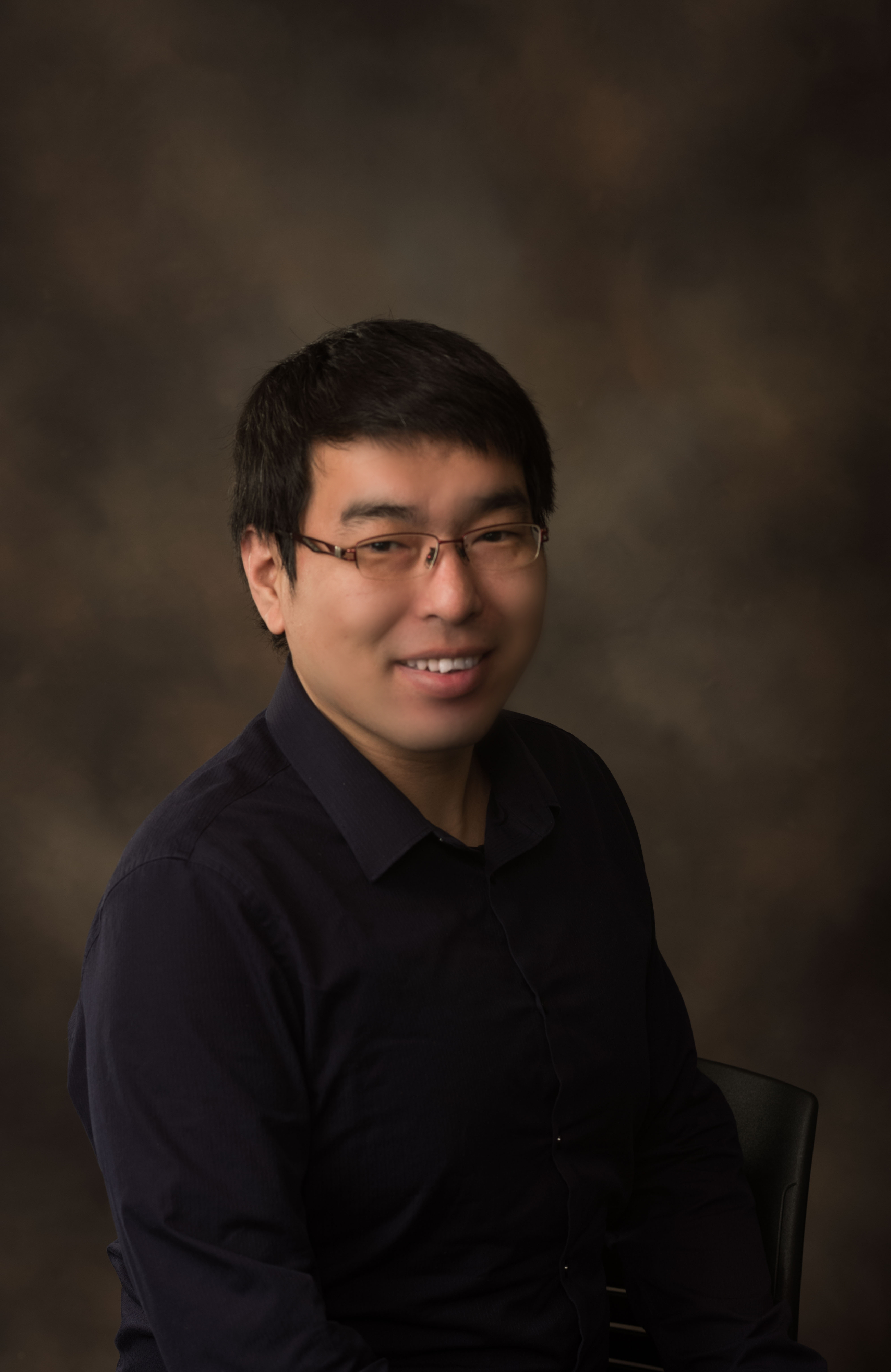
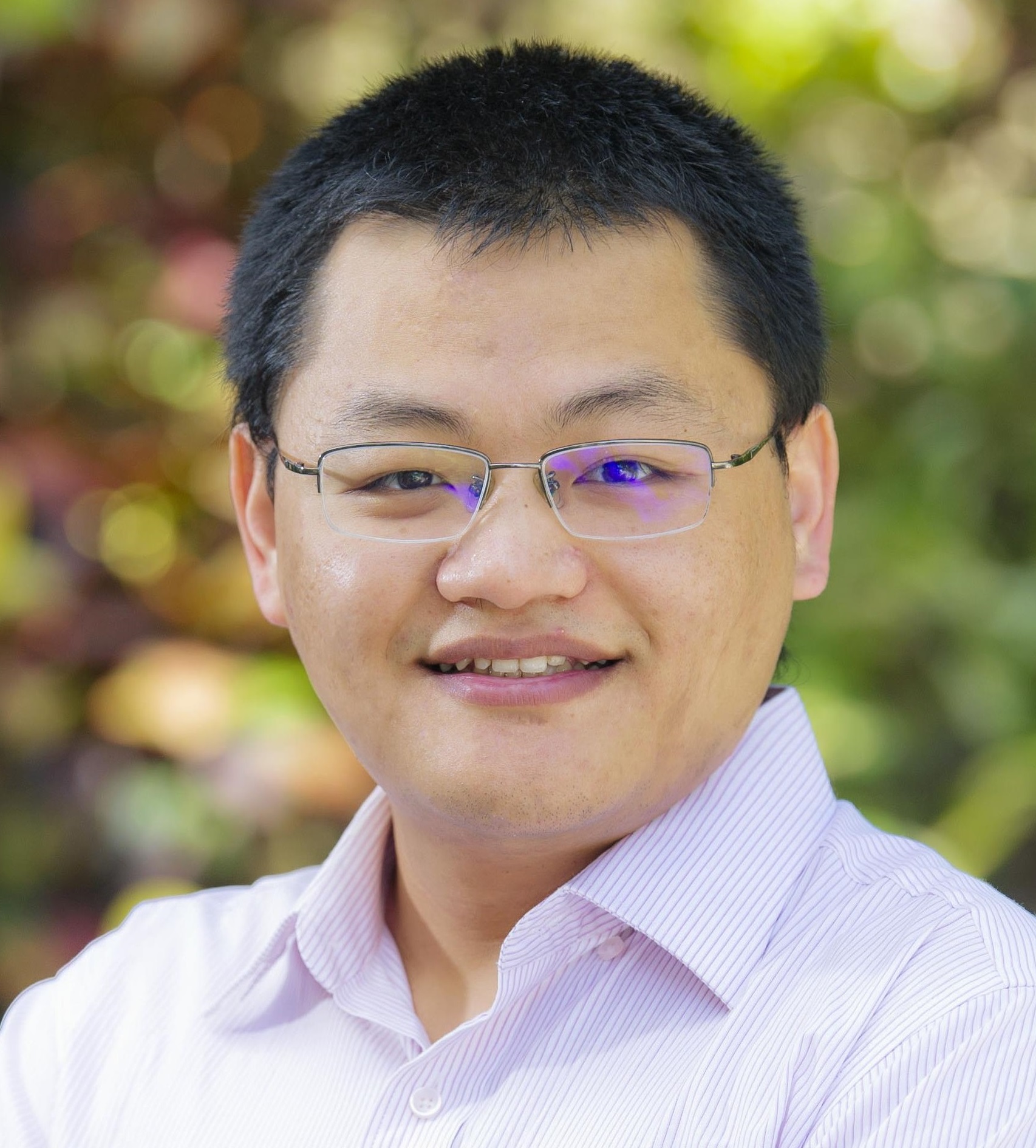
Bing Qin is a Researcher specializing in computational linguistics, artificial intelligence, and multimodal learning. Their work focuses on enhancing large language models' capabilities in temporal knowledge graph forecasting, cross-lingual alignment, and safety mechanisms. Core Research Areas: Knowledge graphs, multimodal systems, reasoning frameworks Technical Innovations: Analogical replay, gain signal estimation, cross-modal attention intervention Recent Trends: 2025 publications emphasize training-free methods and preference alignment in LLMs
Haohan Wang is an Assistant Professor at the University of Illinois Urbana-Champaign's School of Information Sciences, with affiliations to the Carl R. Woese Institute for Genomic Biology and the National Center for Supercomputing Applications. His research focuses on developing trustworthy machine learning methods for computational biology and healthcare applications , emphasizing robustness , causality , and interpretability in vision-based models. Recent research trends in his work include: Large Language Model interactions with biomedical challenges (GenoAgent, GenoTex) Adversarial security in language and vision models (Guard, Jailbreakzoo) Genomic data analysis through robust machine learning frameworks (Precision Lasso, Kernel Mixed Models) Interactive toolkits like Robustar for data annotation and model training Scientific awards include recognition as Baidu's Top 50 AI+X Rising Young Scholars (2022), Best Paper Honorable Mention at WSDM 2023, and Broad Institute's Next Generation status (2019). Current projects explore AI-made scientists for biomedical discovery and Robustar development for GUI-based robust vision learning.
Shiqi Wang is an Associate Professor in the Department of Computer Science at City University of Hong Kong. He holds a Ph.D. from Peking University (2014) and a B.Sc. from Harbin Institute of Technology (2008). His career includes postdoctoral and research roles at the University of Waterloo, Nanyang Technological University, and Microsoft Research Asia. He specializes in semantic/visual communication, AI content management, and image/video quality assessment. Education: Ph.D. in Computer Application Technology (2014), Peking University B.Sc. in Computer Science and Technology (2008), Harbin Institute of Technology Research focuses on Large Visual-Language Models (LVLMs) , Generative Face Video Coding , and Information Forensics . Recent work includes video coding innovations, AI-driven quality assessment, and bias mitigation in facial analysis. Awards include the IEEE Multimedia Rising Star Award (2021) , NSFC Excellent Young Scientist Fund (2020) , and multiple best paper awards at IEEE conferences. He serves as Associate Editor for IEEE Transactions on Image Processing and leads MPEG standardization efforts for generative video coding. Professional activities include TPC roles at ICML, CVPR, and ACM Multimedia. His lab actively collaborates on standards for generative AI and multimedia systems, with a focus on ethical AI and cross-domain applications.
Xiaocheng Feng is a prominent researcher in computational linguistics and large language models (LLMs), with extensive contributions to multilingual systems, vision-language integration, and knowledge alignment. His work spans from 2016 to 2025, focusing on advanced topics like Mitigating hallucinations in multimodal models Efficient knowledge editing across multiple models Length-controlled text generation for black-box LLMs Improving contextual faithfulness via retrieval heads Cross-lingual connection mechanisms for fine-tuning His recent publications address critical challenges in LLMs, including knowledge misalignment, entity-level unlearning, and Pareto optimization in multilingual translation. He has explored probability density estimation for text control, adaptive context modeling in visual storytelling, and cross-lingual annotation projection for low-resource languages. Collaborations with researchers like Bing Qin, Lei Huang, and Weitao Ma highlight his central role in advancing NLP methodologies.