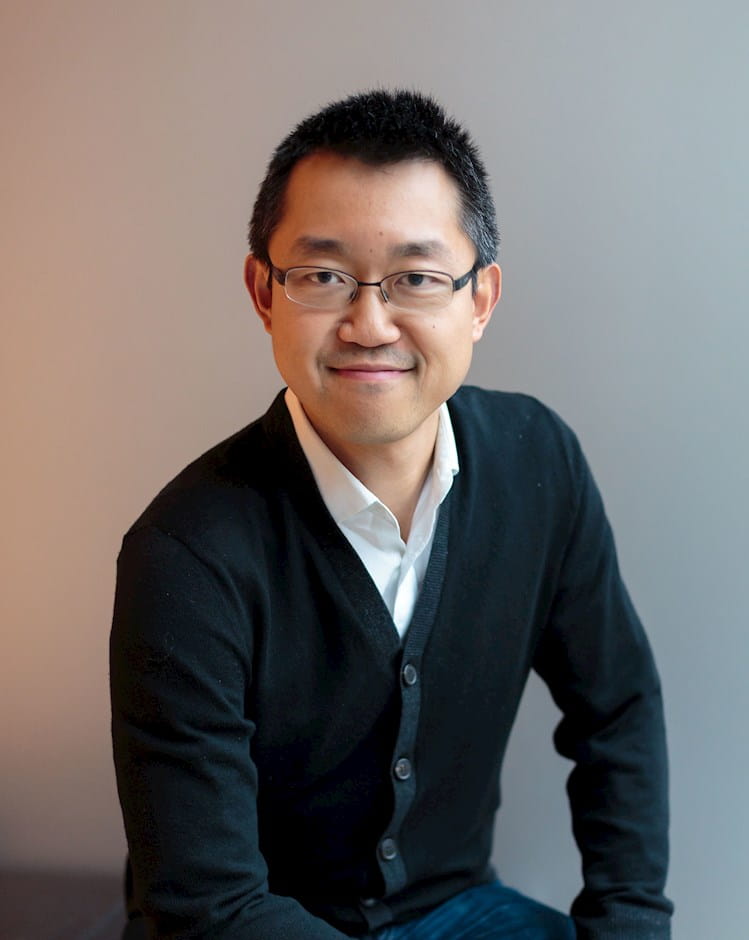
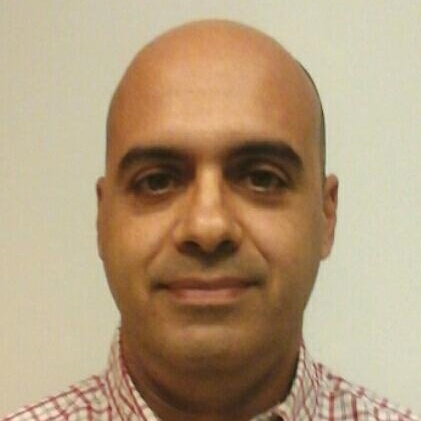
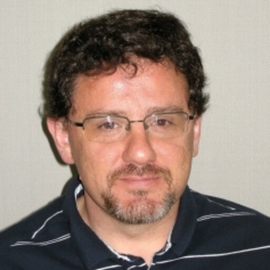
Michalis Vazirgiannis is a Professor at LIX, École Polytechnique (France) leading the Data Science and Mining (DaSciM) group. With academic backgrounds in Physics (Athens University), AI (Heriot-Watt University), and Informatics (Athens University), he has conducted research at Fraunhofer, Max Planck MPI, and INRIA/FUTURS while teaching at institutions across Greece, France, China, and Spain. His research spans Machine/Deep Learning for Graphs (GNNs, graph kernels, embeddings) Text Mining & NLP (Graph-of-Words, biomedical text analysis) Combinatorial Optimization for pandemic forecasting and energy systems Event/Anomaly Detection in time series and sensory data Industrial collaborations with Airbus, Google, Tencent, and BNP . He has supervised 29 completed PhD theses, published over 250 papers, and received prestigious awards including Marie Curie and Tencent Rhino-Bird Fellowships. His team leads the ANR-HELAS Chair (2020-2025) focusing on heterogeneous data deep learning.
Yuan Zhong is an Associate Professor of Operations Management at the University of Chicago Booth School of Business . He previously held positions as an Assistant Professor at Columbia University’s Department of Industrial Engineering and Operations Research and was a Postdoctoral Scholar at UC Berkeley’s Computer Science Department. Education: PhD in Operations Research, MIT (2012) MA in Mathematics, Caltech (2008) BA in Mathematics, University of Cambridge (2006) His research focuses on applied probability and stochastic system design , with applications in cloud computing , supply chain management , and e-commerce logistics . Recent work explores multi-period production systems and dynamic resource allocation in data centers and healthcare operations . Recent publications analyze cloud value chains , sparse graph design for delivery networks, and process flexibility in manufacturing. He has contributed to journals like Operations Research , Annals of Applied Probability , and Stochastic Systems . Scientific Awards: 2012 Kenneth C. Sevcik Outstanding Student Paper Award Best Student Paper Award at ACM Sigmetrics (2012) He teaches courses in business process fundamentals and queueing theory , with a future schedule including Operations Management: Business Process Fundamentals (2025–2026). No explicit student advising list was provided.
Alejandro Sánchez Gracia is an Associate Professor at the Universitat de Barcelona's Faculty of Biology, affiliated with the Department of Genetics, Microbiology and Statistics. He leads the Molecular Evolutionary Genetics research group and directs the advanced course in 'Phylogenomics and Population Genomics: Inference and Applications.' Education: Llicenciat in Biology (Universitat de Barcelona, 1998), PhD in Biology (Universitat de Barcelona, 2006) Research Focus: Molecular mechanisms of chemosensory gene evolution in arthropods, development of bioinformatics tools for evolutionary and population genomics, and population genomics of adaptation in Drosophila. His work bridges computational methods with evolutionary biology, emphasizing genomic approaches to study adaptation. Key projects include analysis of chemoreceptor gene families across Panarthropoda, genomic studies of Canary Island endemic species, and development of tools like BITACORA for gene family annotation. He has contributed to major genomic resources such as DnaSP 6 and participated in initiatives like the Earth BioGenome Project. Active in collaborative networks like the European Drosophila Population Genomics Consortium and AdaptNET (Adaptive Genomics Network). Grants and Projects: 2021-2024: PID2020-113168GB-I00 (Ministry of Science, Spain) - Poligenic adaptation in Drosophila 2020-2021: Catalan blind scorpion genome project (Institut d'Estudis Catalans) Labs/Teams: Heads the Molecular Evolutionary Genetics group, collaborating on projects involving spider genomics, chemosensory evolution, and population-level adaptation studies.
Devin G. Pope is the Steven G. Rothmeier Professor of Behavioral Science and Economics at the University of Chicago's Booth School of Business. His research examines psychological biases in economic decision-making using observational data across diverse markets including healthcare, voting, transportation, and consumer behavior. Pope has published extensively in top economics journals (American Economic Review, Quarterly Journal of Economics), general science publications (Science, Nature), and interdisciplinary outlets (Management Science, Psychological Science). His research interests bridge behavioral economics and psychology, focusing on vaccination incentives , racial bias measurement , consumer decision heuristics , and observational data analysis . Recent work leverages smartphone data to study religious attendance patterns, voting wait times, and geographic mobility. Pope's research methodology emphasizes real-world field experiments and large-scale observational datasets to identify psychological biases affecting economic outcomes. Notable scientific contributions include: Co-editing the American Economic Review Amazon Scholar appointment (2019-2021) Robert King Steel Faculty Fellowship Steven G. Rothmeier Professorship Pope advises PhD students and teaches graduate courses including Behavioral Economics and Workshop in Behavioral Science. His research has received significant external funding for pandemic response studies and behavioral interventions. Pope maintains active research collaborations across economics, psychology, and public health disciplines through the Booth School's research centers and workshops.
Olga Mena is a Research Professor at the Spanish National Research Council (CSIC), affiliated with the Institute of Particle Physics (IFIC) in Valencia, Spain. She leads research in cosmology and astroparticle physics, focusing on neutrinos' role in shaping the universe. Mena holds prestigious awards, including the Excellence PhD Prize, and has accumulated 4 Sexenios and 5 Quinquenios for research excellence. Education : PhD in Theoretical Physics (2002), Universidad Autónoma de Madrid Research Interests : Her work spans cosmology, astroparticle physics, and neutrino physics. She investigates neutrino mass hierarchy, CP violation, and large-scale structure formation. Mena collaborates on major experiments like SKA, DUNE, and BOSS, contributing to dark matter and cosmic microwave background studies. Awards & Honors : Excellence PhD Prize 4 Sexenios de Investigación 5 Quinquenios de Investigación Advising & Grants : Supervised 3 PhD and 2 Master’s theses (current) and 12+ past students Co-Principal Investigator (co-IP) of projects: GRAMOLA (ASFAE/2022/020), SOM (PID2020-113644GB-I00), and others PI of CSIC’s participation in InvisiblesPlus Labs & Collaborations : Member of SKA (world’s largest radio telescope), DUNE (neutrino experiments), and BOSS (SDSS III galaxy survey). Leads IFIC’s research team in InvisiblesPlus.
Cristobal Pagan Canovas is a Permanent Professor (tenure-track) at the Department of English Philology, University of Murcia, where he co-directs the Daedalus Lab and the Murcia Center for Cognition, Communication, and Creativity. He is also a member of the international consortium Red Hen Lab, focusing on multimodal communication research. Education includes: PhD in Ancient and Modern Greek Literature from University of Murcia BA+MA in Classics and BA+MA in English from University of Murcia MA in Classics from University College London His research explores human cognition and communication through interdisciplinary approaches combining humanities and sciences. Primary interests include: Conceptual integration networks in emotional expression Multimodal communication patterns across language, gesture, and prosody Temporal representation in creative artifacts Cognitive foundations of poetic metaphor and verbal art Cultural evolution of integrative patterns in social interactions Recent publications demonstrate consistent focus on temporal cognition, multimodal communication, and creativity across domains including poetry, music, and gesture. Research employs corpus analysis, big data approaches, and cognitive modeling to examine how humans integrate perceptions into meaningful wholes. Scientific awards and fellowships: Ramón y Cajal Grant (elite national scheme) Alexander von Humboldt Fellowship in Quantitative Linguistics EURIAS Fellowship at Netherlands Institute for Advanced Studies FBBVA Leonardo Fellowship Marie Curie Fellowship ENSAYA'10 Award for scientific essay He leads multiple research grants including ERASMUS PLUS KA220-HED (MULTIDATA) and national grants MULTIFLOW and CREATIME. Supervised trainees include postdoctoral researchers (Marie Curie, Juan de la Cierva), MA students, undergraduates, and data scientists. The Daedalus Lab develops interdisciplinary methods to study cognition and communication, while Red Hen Lab enables large-scale multimodal dataset analysis through international collaboration.
Dr. Marc Ph. Stoecklin is a Principal Research Staff Member and head of the Security Research Department at IBM Research Europe in Zurich, Switzerland. He co-leads IBM's global research strategy on Quantum Safe Cryptography and Migration, focusing on cryptographic artifact identification and migration implementation. Previously, he directed Threat Management research, applying AI and automation to threat detection, investigation, and response. Education: PhD in Computer, Communication and Information Sciences, École Polytechnique Fédérale de Lausanne (EPFL), Switzerland His research spans quantum safe cryptography, threat management, AI security, threat detection, identity management, cyber deception, big data analytics, and security visualization. He pioneered AI-powered security operations, contributing to Watson for Cyber Security and QRadar Advisor with Watson, and analyzes AI/quantum computing misuse in cyber attacks. His 2016-2020 publications emphasize advanced threat detection, malware analysis, and AI security, featuring evasive malware deactivation, threat intelligence computing, and neural network watermarking. These works bridge research and product development, directly influencing IBM security offerings. Dr. Stoecklin led IBM's Cognitive Cyber Security Intelligence group (2014-2019) and the Security Research Department since 2019. As tech lead for IBM's COVID-19 task force (2020-2022), he developed IBM Digital Health Pass, deployed in New York's Excelsior Pass with over 1 million passes issued in two months. He heads the Security Research Department at IBM Research Europe in Zurich and has been integral to the Global Security Analysis Lab (GSAL) and Cognitive Cyber Security Intelligence (CCSI) group at IBM T.J. Watson Research Center.
Antoni Verger i Planells is Professor of Sociology at the Autonomous University of Barcelona and ICREA Acadèmia researcher specializing in educational policy and comparative education. He serves as editor-in-chief of the Journal of Education Policy and World Yearbook of Education, and coordinates the European Master GLOBED (Education Policies for Global Development) and GLANCE research group within GEPS-UAB. His research centers on the political economy of global education governance, with primary focus on privatization, marketization, and accountability systems. He examines how international organizations drive policy convergence through instruments like large-scale assessments and public-private partnerships, while analyzing equity implications across diverse national contexts including Spain, Latin America, and OECD countries. His work critically engages with theories of policy transfer, network governance, and the emerging global education industry. Verger's recent publications (2024-2025) reveal intensifying research on privatization dynamics, showing how corporate strategies shape education reform through policy entrepreneurship and regulatory innovation. His analysis of accountability regimes demonstrates how hybrid systems create contradictory pressures on schools, while his work on teacher governance exposes tensions between performance metrics and professional autonomy across regulatory contexts. Scientific recognition: ICREA Acadèmia award for research excellence He has directed major funded projects including ILSAINC (2019-2023) mapping the global assessment industry, REFORMED (2016-2022) analyzing autonomy/accountability policies, and EDUPARTNER (2013-2016) studying public-private partnerships. His grant portfolio demonstrates sustained funding for critical analysis of global education governance structures and their implementation. Through GLANCE research group and GLOBED master program, Verger fosters international collaboration on comparative education studies, connecting scholars from Global South and North to examine power dynamics in transnational education policy processes.
Pedro Galeano is an Associate Professor in the Department of Statistics at Universidad Carlos III de Madrid (UC3M) since 2009. He holds a PhD in Statistics (2004) under Prof. Daniel Peña, focusing on multiple time series. Previously, he served as Visiting Assistant Professor of Statistics and Econometrics at the University of Chicago’s Graduate School of Business and as a Postdoctoral Fellow at the Department of Statistics and Operations Research at Universidade de Santiago de Compostela. His research focuses on time series analysis, outlier detection, Bayesian inference in financial models, and functional data analysis with applications to missing data. He is an Associate Editor of the Journal of Time Series Analysis and advises the Heliyon journal. Key contributions include developing methodologies for detecting structural breaks, modeling systemic risk via copula approaches, and advancing robust statistical techniques for high-dimensional data. Active in academic leadership, Galeano co-organized the NICDA Workshop 2025 and has published extensively on topics like dynamic factor models, sequential parameter change detection, and functional data applications in energy markets. His work bridges theoretical statistics with practical applications in finance, economics, and environmental science.
Annachiara Longoni serves as Associate Professor in the Department of Operations, Innovation and Data Sciences at Esade Business School, Ramon Llull University. She directs the Master of Research in Management Sciences program and leads BUNED (Business Networks Dynamics), focusing on sustainability-driven innovation in operations and supply chains. Education: PhD in Management, Economics and Industrial Engineering, Politecnico di Milano Master of Science in Management Engineering, Politecnico di Milano Bachelor degree in Management Engineering, Politecnico di Milano Her research centers on sustainable operations management, examining how sustainability practices transform product/process innovation within global supply chains. She investigates organizational mechanisms for optimizing triple bottom line performance through sustainable operations strategies, with particular emphasis on social sustainability dimensions including labor conditions and migrant integration in supply networks. Her work bridges theoretical frameworks with practical applications in manufacturing and logistics contexts. Analysis of her 15 most recent publications reveals dominant themes in sustainable supply chain management, social enterprise integration, and systemic change toward post-growth paradigms. Key trends include empirical investigations of working conditions in platform economies, the role of national culture in sustainability performance, and technological impacts on sustainable manufacturing. Her research consistently employs large-scale empirical methods and international collaboration networks. Scientific Awards: None documented in source materials. Dr. Longoni actively mentors through her directorship of the Master of Research program and BUNED research group. She collaborates extensively with the International Manufacturing Strategies Survey (IMSS) across 20+ countries and the USC-led sustainability network involving European and American institutions. Her research is supported through multinational university-industry partnerships focused on sustainable operations. As Director of BUNED, she leads research on business network dynamics and sustainable supply chain transformation. Her involvement in the EurOMA Forum organizing committee and international research networks demonstrates leadership in advancing sustainable operations scholarship through collaborative platforms spanning academic and industry stakeholders.
Kurt Desender serves as Associate Professor in the Department of Business Administration at Charles III University of Madrid, specializing in corporate governance, strategic management, CSR, and financial accounting. His academic background combines Spanish and Belgian institutions with significant international research collaborations. Education: PhD in Business Economics, Universidad Autónoma de Barcelona Master in Business Administration, Universidad Autónoma de Barcelona Undergraduate Degree, Catholic University of Leuven Desender's research examines how ownership structures and institutional environments shape corporate governance practices across national boundaries, with particular emphasis on the strategic implications of CSR adoption. His work bridges theoretical frameworks from institutional theory and stakeholder management to analyze board behaviors and financial outcomes in multinational contexts. Analysis of his 12 publications (2010-2021) reveals consistent focus on ownership-governance dynamics, particularly institutional investors' influence and cross-national variations in CSR implementation. Key methodological approaches include large-scale comparative analyses of governance systems, with recurring themes of board monitoring effectiveness and CSR's financial materiality across diverse regulatory environments.
Alejandro F. Villaverde is a Ramón y Cajal research fellow at the Department of Systems & Control Engineering, Universidade de Vigo. His research focuses on structural properties of nonlinear systems, particularly structural identifiability and observability analysis. His primary research interests include: Structural identifiability of dynamic models Observability analysis of nonlinear systems Control theory and systems engineering Development of computational tools for model analysis Applications in systems biology and pharmacokinetics Villaverde's work centers on developing mathematical methods and software tools to analyze structural properties of nonlinear models. His most notable contributions include the STRIKE-GOLDD MATLAB toolbox and its Python counterpart StrikePy, which implement the FISPO algorithm for simultaneous assessment of state observability and parameter identifiability. His research has practical applications in systems biology, biochemical network analysis, and pharmacokinetic modeling where model validation and parameter estimation are critical. Among his scientific recognitions, he holds the prestigious Ramón y Cajal research fellowship, a competitive program in Spain supporting experienced researchers. Villaverde actively supervises students, with David Rey Rostro having developed the StrikePy toolbox under his supervision. His work demonstrates strong connections between theoretical control engineering and practical computational implementations, making structural analysis methods more accessible to researchers across various disciplines.
María Eugenia Rabanal Jiménez is Associate Professor at Universidad Carlos III de Madrid and Deputy Director of the Álvaro Alonso Barba Institute of Chemistry and Materials Technology. Her research focuses on advanced materials synthesis and characterization, particularly nanostructured metal oxides for photocatalytic and biomedical applications. Primary research domains include: Design of ZnO-based nanostructures with controlled morphology Rare-earth doped materials for sensing and catalysis Electrospun nanocomposites for medical applications Metallurgical development of oxide dispersion strengthened steels Recent publications demonstrate strong emphasis on photocatalytic materials, with 12 of 15 articles (2020-2025) addressing ZnO modifications, degradation mechanisms, and catalytic efficiency enhancement through doping and defect engineering. She leads the Powder Technology research group and participates in multiple national projects on nanomaterials processing and sustainable material solutions for industrial applications.
Dieuwke Hupkes is a Researcher at Meta AI Research and an ELLIS Scholar, focusing on understanding neural networks' ability to process hierarchical structure and generalize compositional patterns. Her work bridges computational linguistics, cognitive science, and artificial intelligence, emphasizing interpretability of language models. She holds a PhD from the University of Amsterdam (ILLC) and has supervised numerous student theses on neural network analysis and language processing. Notable contributions include the Llama 3 models, GenBench generalization taxonomy, and studies on compositional learning in recurrent networks. Education: PhD in Logic (University of Amsterdam, 2020), MSc in Artificial Intelligence, and earlier studies in Physics. Awards include ELLIS Scholar (2024), CoNLL 2019 Honourable Mention, and MLRC 2022 Best Paper Award. She has taught courses on natural language processing and co-organized workshops on neural network interpretability. Research interests span generalization in NLP, emergent language structures, and alignment of large language models. Her work frequently employs diagnostic classifiers and benchmarking to probe model behavior, with applications to both theoretical understanding and practical model evaluation.
Jose Ignacio Rojas Gregorio is an Associate Professor at the Department of Physics, School of Telecommunications and Aerospace Engineering (EETAC) at the Polytechnic University of Catalonia (UPC). With over 160 documented research activities, he specializes in mechanical properties, viscoelasticity, wind energy systems, and computational fluid dynamics. His work bridges fundamental materials science with practical applications in renewable energy, particularly wind power optimization and thermally-driven wind phenomena. His research interests span mechanical properties and viscoelastic behavior of materials, wind energy systems, computational fluid dynamics for wind resource assessment, non-destructive testing methods, and earthquake precursors. Dr. Rojas Gregorio's work has significant practical applications in renewable energy, particularly in optimizing wind turbine performance through advanced flow control techniques and understanding sea-breeze phenomena for energy generation. His research demonstrates a strong interdisciplinary approach connecting materials science with renewable energy engineering. His recent publications show a concentrated focus on wind energy optimization, particularly through advanced flow control techniques for wind turbines. He has been actively researching sea-breeze phenomena and their potential for wind energy generation in the Llobregat river delta region of Spain, as well as the mechanical properties of advanced materials including glasses and composites for aerospace applications. His work combines experimental, numerical, and analytical approaches to address complex engineering challenges. 4th MedGU Annual Meeting-Best Paper Award - Track 1. Atmospheric Sciences, Meteorology, Climatology, Oceanography (2024) Dr. Rojas Gregorio has advised doctoral students including Athota, Rathan on "Numerical Analysis of Thermally-Driven Winds in Mountain-Valley Regions." His research is supported by multiple competitive R&D projects including WOW-CONTROL and Optimum Active Flow Control implementation in large-scale wind turbines. He collaborates extensively with researchers across multiple institutions on projects related to wind energy, materials science, and computational modeling. He is affiliated with several research groups at UPC including GCM (Materials Characterization Group), CTE-CRAE (Space Science and Technology Research Group), and PTP-GlaDyM (Phase transitions, polymorphism, glasses and dynamics of the metastability). These groups provide collaborative environments for interdisciplinary research spanning materials science, aerospace engineering, and renewable energy technologies.