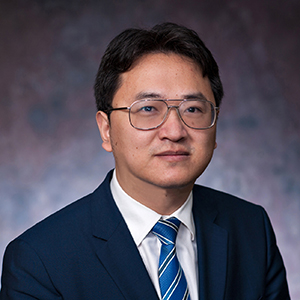
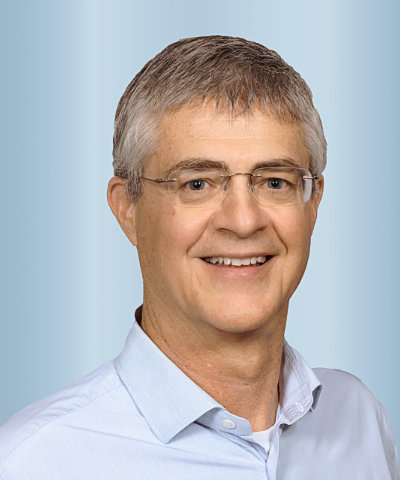
Professor Carlton Baugh is a distinguished academic at Durham University, serving as Professor in the Department of Physics and Director of the Institute for Computational Cosmology. His extensive research career focuses on galaxy formation and evolution, and the large-scale structure of the Universe, with leadership roles including Director of Research in the Department of Physics. Professor Baugh's research interests center on understanding how galaxies form and evolve within the cosmic web through semi-analytical modeling within hierarchical cosmologies. His work spans galaxy clustering, Lyman-alpha emitters, submillimeter galaxies, and the connection between dark matter halos and observable galaxy properties. He has made significant contributions to modeling the evolution of galaxy mass, the properties of spiral galaxies, and the interplay between galaxy formation and the intergalactic medium. His recent publications (2023-2025) demonstrate active research across multiple frontiers of cosmology, including computational simulations (P-Millennium), space missions (Euclid), and ground-based surveys (PAU). These studies explore galaxy clustering, photometric redshift estimation, star formation histories, and innovative tests of gravity through galaxy properties. His work bridges theoretical modeling with observational data from major surveys like DESI, BOSS, and eBOSS. As Director of the Institute for Computational Cosmology, Professor Baugh leads one of the world's premier centers for theoretical cosmology research, focusing on large-scale structure formation, galaxy evolution, and advanced simulation techniques. His leadership extends to major international collaborations including the Euclid mission, where he contributes to galaxy cluster detection algorithms. His academic activities include teaching as Demonstrator on Level 3 computing courses and organizing joint astrophysics seminars. His extensive publication record across top journals including Monthly Notices of the Royal Astronomical Society and Astronomy & Astrophysics reflects significant research impact and consistent funding support throughout his career.