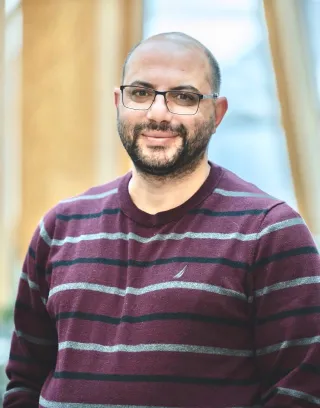
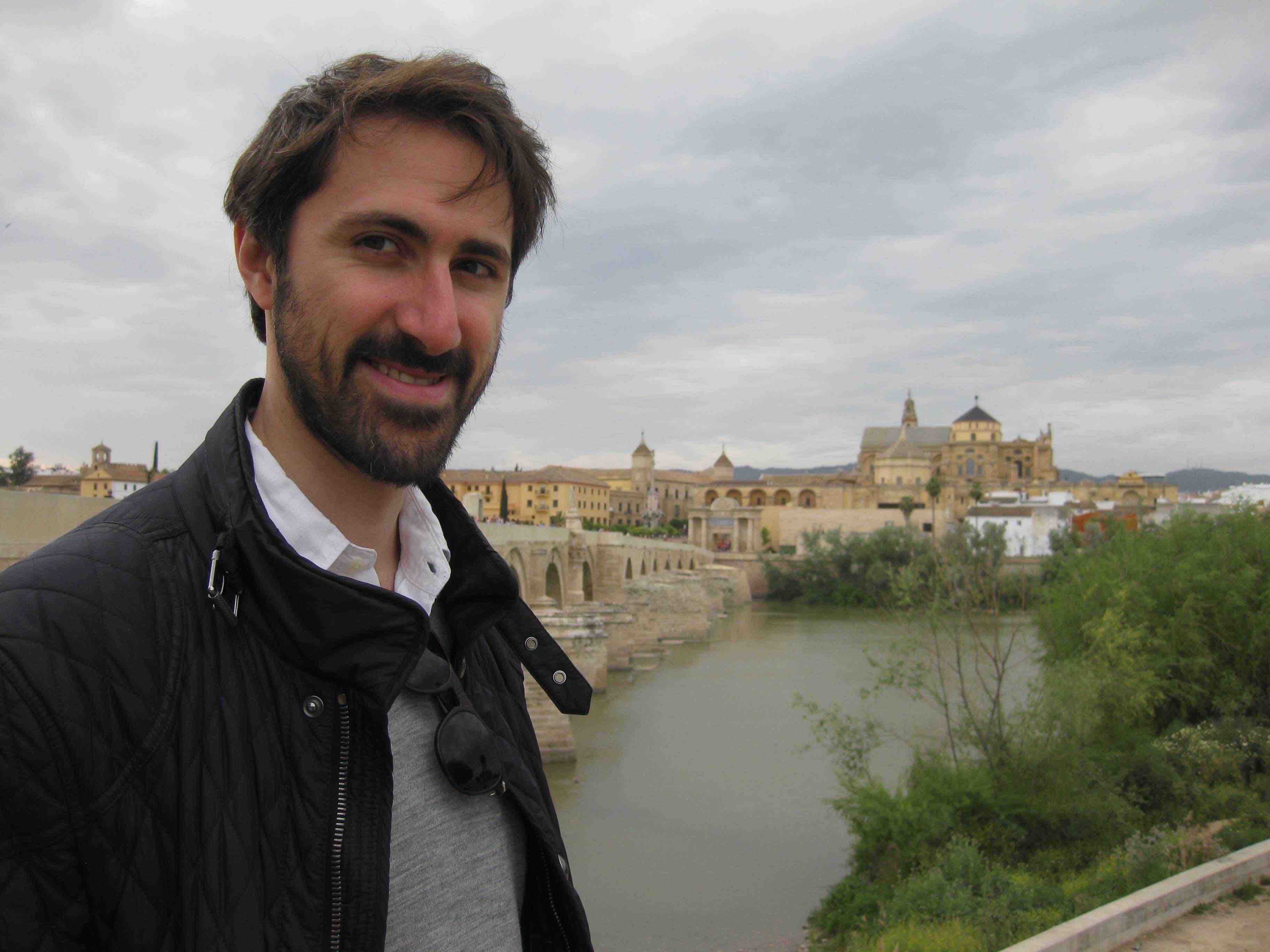
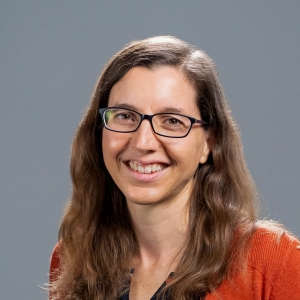
Pedro Vilanova-Guerra is a Teaching Assistant Professor in the Department of Mathematical Sciences at the Charles V. Schaefer, Jr. School of Engineering and Science, Stevens Institute of Technology. Located in North Building 222, he can be reached at (201) 216-3771 or pguerra@stevens.edu. His research focuses on mathematical modeling of complex systems including neural networks and biochemical oscillators, employing techniques from stochastic processes and kinetic theory. His recent publications investigate population dynamics in neural networks and synchronization phenomena in stochastic biochemical systems. Professional affiliations include membership in the AMS Mathematical Reviews. His teaching portfolio spans probability, statistics, optimization, and numerical methods courses.
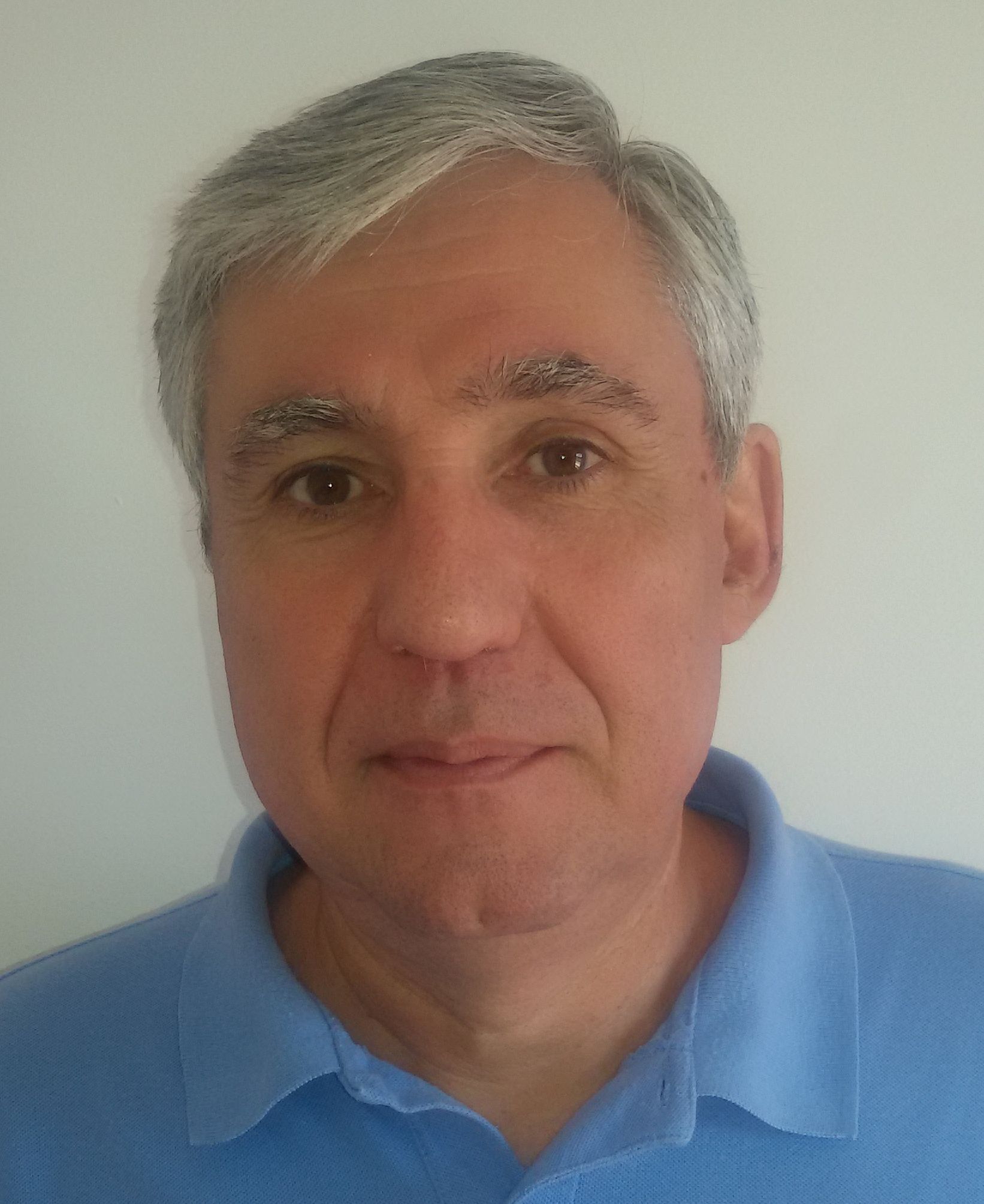
Mahmoud Daneshmand is an Industry Professor at the School of Business and holds a joint appointment in the Department of Computer Science at Stevens Institute of Technology. He has over 40 years of experience in academia and industry, serving as a Distinguished Member of Technical Staff at Bell Labs and AT&T Shannon Labs. His research focuses on Big Data Analytics, Machine Learning, IoT, and Data Mining, with over 300 publications and three books to his name. He co-founded the Business Intelligence & Analytics MS program at Stevens and leads initiatives in IEEE, including steering committees for IoT and Big Data journals. Education: PhD (1976) in Statistics from UC Berkeley; MA (1973) in Statistics from UC Berkeley. Research Interests: Big Data, AI, IoT, Data Mining, Risk Management, and Network Reliability. Dr. Daneshmand has received numerous awards, including IEEE Distinguished Lecturer, AT&T Recognition Awards, and IEEE Standards Committee honors. He chairs international conferences, edits journal special issues, and advises on industry standards. His work spans academia-industry collaboration, innovation in data-driven technologies, and leadership in IEEE initiatives. Grants & Patents: Holds two patents (2009-2010) and led over 60 large-scale Bell Labs projects. PI of the American Bureau of Shipping Grant. Service: Editorial roles in IEEE journals, NJBDA board member, and academic coordinator for Stevens' programs.
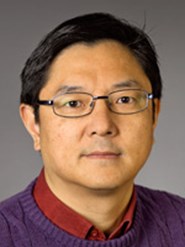
Dr. Mohammad El Smaily is an Associate Professor in the Department of Mathematics and Statistics at the University of Northern British Columbia (UNBC), part of the Faculty of Science and Engineering. He holds a PhD in Mathematics from Aix-Marseille Université (2008). Before joining UNBC, he held postdoctoral positions at the University of British Columbia (PIMS postdoc), Carnegie Mellon University, and the University of Toronto (NSERC postdoc). His research focuses on Partial Differential Equations (PDEs) , dynamical systems , and their applications in population dynamics , mathematical biology , and ecology . Key areas include reaction-diffusion models, integro-difference equations, and the analysis of traveling waves in heterogeneous environments. Recent work explores mixed local/nonlocal operators , nonlinear advection-diffusion systems , and free boundary problems in ecological contexts. His publications span topics like front propagation in shear flows, Wolbachia infection models, and spectral analysis of nonlocal operators. Dr. El Smaily currently advises students in MSc and PhD Mathematics programs at UNBC. His research has been supported by collaborations with institutions globally, including the University of New Brunswick and INRAE (France). Publications (selected): Over 20 peer-reviewed articles, including work on KPP equations, integro-difference systems, and predator-prey dynamics with free boundaries. Full list available on Google Scholar .
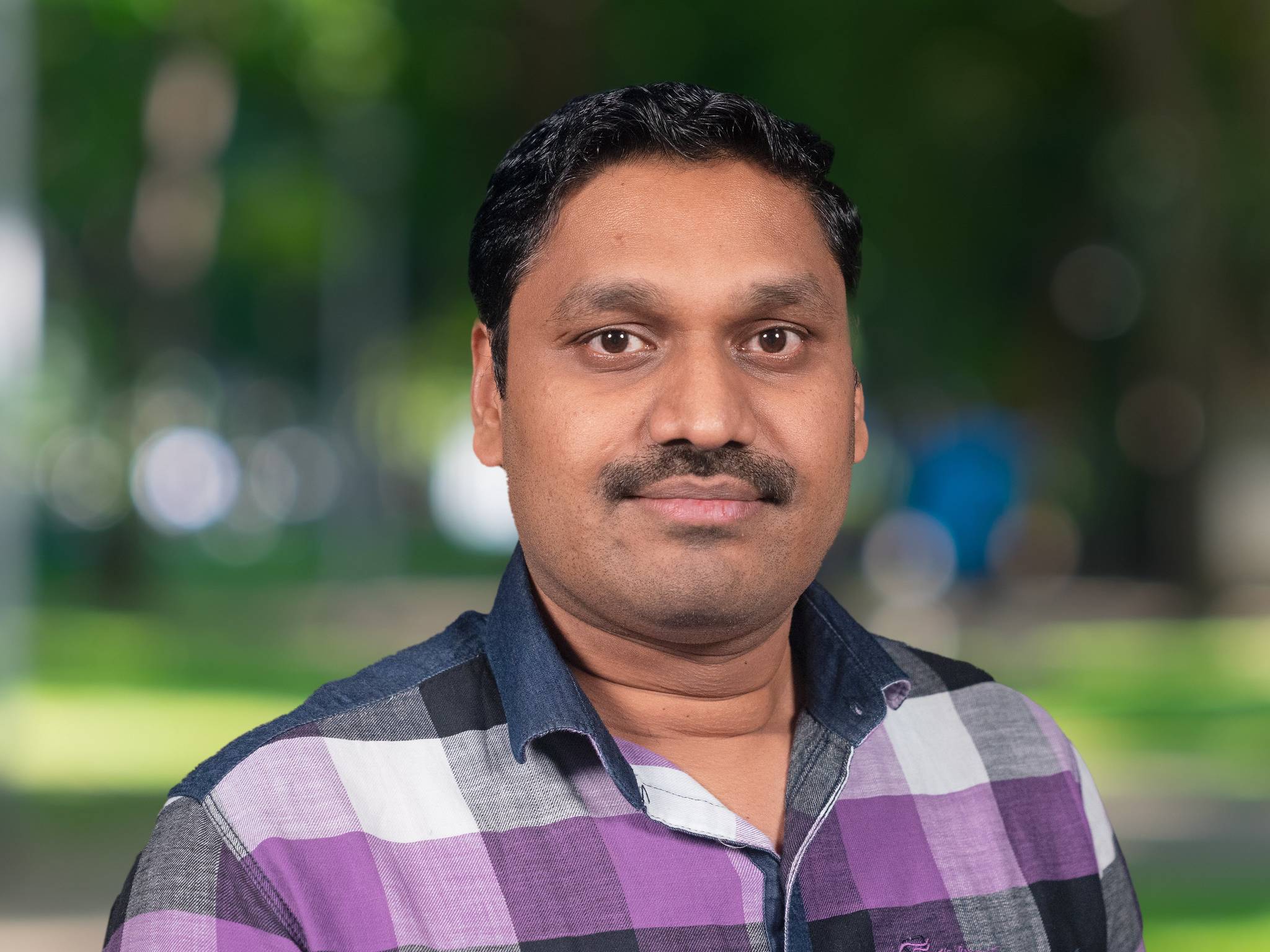
Panagiotis Stamatopoulos is an Assistant Professor at the Department of Informatics and Telecommunications, National and Kapodistrian University of Athens, where he has been employed since 1993. He holds a PhD in Computer Science (1988) and a Diploma in Physics (1982) from the University of Athens. His research spans artificial intelligence, constraint programming, natural language processing, machine learning, and optimization. Specific interests include: Hybrid approaches combining constraint programming with operations research Natural language understanding for database access Parallel processing and distributed constraint solving Multi-agent systems and web intelligence applications His publications show consistent focus on constraint satisfaction algorithms, text summarization techniques, educational timetabling systems, and AI applications in diverse domains like sports analytics and robotics. Recent works demonstrate increased attention to NLP evaluation metrics and multimodal learning. He has supervised numerous diploma theses and led projects funded by the European Union (EDS, APPLAUSE, PARACHUTE, PARROT), University of Athens, and Olympic Airways. Stamatopoulos teaches undergraduate courses in Introduction to Programming and Logic Programming, plus postgraduate courses in Advanced Artificial Intelligence. He previously taught Artificial Intelligence, System Programming, and Expert Systems.
Prof. Dr. Ivo Blohm is an Associate Professor of Information Management with a focus on Business Analytics at the Hasso Plattner Institute of Management and Digitization (HPI-St. Gallen), University of St. Gallen. His work bridges academic research and practical applications in digital transformation, with expertise spanning AI-driven decision support systems, crowdsourcing governance, and agile work practices. He holds a leadership role in advancing data science methodologies and their integration into organizational frameworks. His research interests emphasize leveraging AI and data analytics to enhance business processes, particularly through generative AI architectures, decision-making interfaces, and platform-driven innovation. Notable contributions include frameworks for conversational AI implementation, governance mechanisms for crowdfunding platforms, and strategies for internal crowd work empowerment. He has collaborated with organizations like Lufthansa to design leadership development programs for data-driven transformation. Blohm's publications (2014-2025) explore topics such as AI accountability in workplaces, hybrid human-AI creativity systems, and the socio-technical dynamics of digital work. His work often addresses ethical dimensions of emerging technologies and their implications for organizational structures. Despite his prolific output, no scientific awards are explicitly listed in the provided materials. His advising and grant activities are not detailed here, though his research collaborations indicate engagement with industry partners. He is actively involved in designing frameworks for data products (e.g., data mesh) and refining agile practices in large-scale organizations. No specific lab affiliations are mentioned, though his work often involves cross-disciplinary teams focusing on digital innovation challenges.
Shimpei Futatani is a researcher at the Universitat Politècnica de Catalunya (UPC) within the Advanced Nuclear Technologies Research Group (ANT). He holds a doctoral degree and specializes in plasma physics, magnetohydrodynamics (MHD), and nuclear fusion research, with a focus on edge-localized modes (ELMs), turbulence suppression, and plasma confinement in tokamaks. His work integrates nonlinear MHD simulations, experimental validation, and code development (e.g., JOREK) to advance fusion energy technologies. Research interests include plasma edge dynamics, ELM control mechanisms, and ITER-relevant scenarios. He collaborates on projects like the JT-60SA tokamak and contributes to experiments on JET and ASDEX Upgrade. His studies address MHD stability, particle transport, and the role of energetic ions in fusion plasmas. Key projects include the development of hybrid kinetic-MHD models and pellet-triggered ELM simulations. He actively participates in the EUROfusion program, focusing on plasma control and turbulence mitigation strategies for future fusion reactors.
Samy Wu Fung is an Assistant Professor in the Department of Applied Mathematics and Statistics and affiliated with the Department of Computer Science at Colorado School of Mines. He is part of the Mines Optimization and Deep Learning (MODL) group. Prior to this, he was an Assistant Adjunct Professor at UCLA's Department of Mathematics. He holds a PhD in Applied Mathematics from Emory University (2019) and a BSc in Applied Mathematics from Brown University (2014). His research focuses on the intersection of applied mathematics and data science, particularly in inverse problems, optimization, deep learning, optimal control, and mean field games. His work spans theoretical developments and practical applications, including numerical solutions for Hamilton-Jacobi PDEs and algorithms for swarm control. Recent publications highlight advancements in mean-field games, optimization methods for SAT solving, and generalization bounds for implicit networks. He has received notable awards, including the 2024 Laney Early Career Alumni Award and the 2022 MGB-SIAM Early Career Fellowship. Advising includes PhD students like Soraya Terrab and Alex Vidal. He has secured grants such as the NSF-DMS award (2023) supporting learning-to-optimize research. Teaching roles include courses like Numerical Optimization and Scientific Computing at Colorado School of Mines. His lab, MODL, emphasizes interdisciplinary projects in optimization and deep learning, with collaborations spanning academia and industry. Ongoing work explores explainable AI, hybrid SAT solving, and high-dimensional mean-field control.
Jun Yu is a Full Professor in Mathematical Statistics at the Department of Mathematics and Mathematical Statistics, Umeå University, Sweden, where he also serves as Director of Doctoral Studies. His research focuses on Statistical Learning and Inference for Spatiotemporal Data, with applications in artificial intelligence and various scientific domains. Professor Yu leads a research group dedicated to tackling theoretical data science problems and developing statistical learning methods for solving real-world challenges across multiple disciplines. Professor Yu's primary research interests include statistical learning with sparsity, compressive sensing, mathematics of data science, hierarchical spatiotemporal modeling, nonparametric density/intensity estimation, statistical inference for hidden Markov models, and wavelet theory applied to signal and image analysis. His work spans numerous application areas including atmospheric icing, automobile industry, biomedical engineering, climate research, epidemiology, forestry, geochemistry, hydrology, radiation oncology, spatial ecology, sports science, and transportation. Professor Yu's recent publications demonstrate a strong trend toward interdisciplinary research at the intersection of statistical methodology and environmental science, medical imaging, and transportation systems. His work on tree-ring isotope analysis for climate reconstruction, compressive sensing for medical imaging, and statistical models for train delay prediction shows his ability to develop sophisticated statistical methods that address complex real-world problems across diverse domains. As Director of Doctoral Studies, Professor Yu oversees doctoral education in Mathematical Statistics and has supervised numerous PhD students. His teaching spans mathematical statistics at all levels, from basic education to postgraduate courses, for students in mathematics, statistics, biology, engineering, and forestry, delivered in English, Swedish, or Chinese. Professor Yu leads the research group on statistical learning and inference for spatiotemporal data at Umeå University. This group develops innovative approaches for analyzing complex spatiotemporal datasets using tools such as intelligent data sampling, large-scale environmental data modeling, multimodal image processing, and tree growth models, with applications across multiple scientific fields.
Hiroki Sone is an Associate Professor in Civil and Environmental Engineering and Geological Engineering at the University of Wisconsin-Madison. His work focuses on rock mechanics and geomechanics, integrating laboratory experiments with field data to address subsurface engineering challenges. Key areas include fault zone dynamics, shale reservoir characterization, and geothermal energy systems. Research emphasizes experimental deformation studies using high-pressure apparatuses, coupled with numerical modeling. Notable projects include the WHOLESCALE geothermal field initiative at San Emidio, Nevada, and investigations into stress relaxation in fault damage zones. Sone’s contributions span tectonophysics, resource recovery optimization, and hazard mitigation strategies. Education: Details not explicitly provided in text. Labs/Teams: Rock Mechanics Laboratory at UW-Madison, EGS Collab, and WHOLESCALE collaborative projects. Teaching: GEOSCI 474: Rock Mechanics Structural Geology (Spring 2022). Grants/Awards: CAREER grant (2021), EGS Collab SIGMA-V Project leadership. Recent publications analyze fault zone creep, thermal pressurization effects, and mechanical properties of organic-rich shales. His work bridges micro-scale material behavior with large-scale geomechanical systems, informing energy resource development and seismic safety practices.
Dr. Srinivasan Nagarajan serves as a Research Scientist II at the Arbegast Materials Processing and Joining Laboratory (AMP Lab) at the South Dakota School of Mines and Technology, leading critical projects in additive manufacturing while advising undergraduate and graduate researchers. His expertise bridges advanced materials processing techniques with mechanical behavior analysis across multiple scales. His academic foundation includes: Ph.D. in Materials Science and Engineering from Homi Bhabha National Institute / Indira Gandhi Centre for Atomic Research Campus (2015) M.Sc. in Materials Science from Anna University/College of Engineering Guindy Campus (2009) B.Sc. in Physics from University of Madras/D.G. Vaishnav College (2007), graduating first rank with multiple awards Nagarajan's research centers on processing-structure-performance relationships in additively manufactured materials, with pioneering work in solid-state and hybrid methods. He specializes in cold spray deposition, friction stir processing, and wire direct energy deposition for structural steels, employing nondestructive characterization techniques like digital image correlation and full-field imaging. His investigations span microstructural evolution during deformation across length and time scales, revealing fundamental mechanisms in alloys including aluminum-magnesium systems and dual-phase steels. Analysis of his publication trajectory shows consistent innovation in hybrid additive manufacturing processes, particularly for stainless steels, with increasing emphasis on in-situ characterization techniques. His work demonstrates a clear progression from fundamental deformation studies toward applied manufacturing solutions, integrating thermomechanical analysis with advanced imaging to solve industrial challenges in automotive and aerospace sectors. His accolades include: INSPIRE Faculty Award (Department of Science & Technology, 2017) National Postdoctoral Fellowship (Science & Engineering Research Board, 2017) McMaster/General Motors Postdoctoral Fellowship (2015) Multiple Department of Atomic Energy research fellowships Throughout his career, Nagarajan has secured government and industry funding as principal investigator, established specialized laboratories across institutions in India, Canada, and the United States, and mentored numerous students. His collaborative approach spans national laboratories and academic centers, with current focus on optimizing cold spray-friction stir hybrid manufacturing at SD Mines' AMP Lab. He maintains active peer review roles for leading journals including Additive Manufacturing and Journal of Materials Science, driving methodological rigor in the field.
Carl D. Laird is the John E. Swearingen Professor and Department Head of Chemical Engineering at Carnegie Mellon University. He leads an internationally recognized research program in process systems engineering, known for high-performance computing techniques in large-scale nonlinear optimization, parallel scientific computing, and open-source software development. Education: Ph.D. in Chemical Engineering, Carnegie Mellon University (2006) B.S. in Chemical Engineering, University of Alberta (2000) Research Focus: His work solves problems in non-traditional domains including public health, homeland security, critical infrastructure, and energy systems through advanced optimization methodologies. Current research integrates machine learning with optimization for improved decision-making in complex systems. Publication Trends: Recent work focuses on mathematical optimization frameworks, decomposition methods for large-scale problems, integration of machine learning surrogates, and applications in energy systems and chemical manufacturing. Research demonstrates consistent innovation in computational methods for engineering challenges. Awards and Honors: Steven J. Fenves Award for Systems Research INFORMS Computing Society Prize CAST Division Outstanding Young Researcher Award NSF CAREER Award Montague Center Teaching Excellence Award Wilkinson Prize for Numerical Software (for IPOPT development) Leadership and Funding: As director of the Center for Advanced Process Decision-Making, he oversees collaborative research with industry partners. His research has been supported by NSF, DOE, and industrial consortia.
Dr. Eric Keaveny is a Reader in Applied Mathematics at the Department of Mathematics, Imperial College London. He is affiliated with multiple research groups including Applied Mathematics and Mathematical Physics, Biomathematics Group, Fluid Dynamics, and Mathematics in Medicine. His work focuses on computational modeling of fluid-structure interactions, particularly in biological systems such as microorganism locomotion and cilia-driven transport. He holds an EPSRC Standard Grant and an Imperial European Partners Fund Grant, and has received the Faculty of Natural Sciences Excellence in Teaching Award (2017). His research explores topics like coordinated motion of active filaments, stochastic suspensions, and hydrodynamic interactions in complex fluids. Education: Ph.D. in Applied Mathematics (Brown University, 2008), ScM Applied Mathematics (Brown University, 2006), B.S. Applied Physics (Columbia University, 2001). Research interests include microorganism locomotion, suspensions of interacting particles, low Reynolds number hydrodynamics, and numerical methods for fluid dynamics. His recent work involves simulating ciliary transport in lungs and developing algorithms for large-scale particle simulations. Grants/Awards: EPSRC Standard Grant (2017-2021), Imperial European Partners Fund Grant (2017-2019), Fulbright Fellowship (2012). He has supervised multiple interdisciplinary collaborations, including a joint Imperial-TUM doctoral program. Teaching: Currently lectures on Computational Dynamical Systems (MATH60023/70023). Previous courses include M3/4/5N9 (Autumn 2016).
Giordano Scarciotti is a Senior Lecturer in the Department of Electrical and Electronic Engineering at Imperial College London, within the Faculty of Engineering. His research focuses on control systems, model reduction, and nonlinear dynamics, with applications in energy systems such as wave energy converters. He leads the Control and Power Research Group and has affiliations with organizations like EPSRC and MINES ParisTech. Scarciotti has received notable awards, including the IEEE Transactions on Control Systems Technology Outstanding Paper Award and the President's Award for Excellence in Teaching Innovation. His work emphasizes data-driven methods and stochastic control, addressing challenges in large-scale systems like wind farms and differential-algebraic systems. Research Interests: Nonlinear and stochastic control theory Model reduction techniques (moment matching, data-driven approaches) Energy systems optimization (wave energy, wind farms) Control of complex systems with constraints Awards: IEEE Transactions on Control Systems Technology Outstanding Paper Award IET Control & Automation PhD Award President's Award for Excellence in Teaching Innovation Grants & Collaborations: EPSRC-funded research on model reduction Affiliations with MINES ParisTech and the Italian Embassy in London Scarciotti's recent publications emphasize innovative methods for system modeling and control, including energy-maximizing strategies for wave energy systems and hybrid observer-based approaches for output regulation.
Fotini Katopodes Chow is the Fred and Claire Sauer Chancellor's Chair in Environmental Engineering at the University of California, Berkeley. She serves as a Professor in the Department of Civil and Environmental Engineering, focusing on numerical modeling of the atmospheric boundary layer to advance wind energy, air pollution dispersion, and cloud dynamics. Ph.D., Civil and Environmental Engineering, Stanford University, 2004 M.S., Civil and Environmental Engineering, Stanford University, 1999 B.S., Engineering Sciences, Harvard University, 1998 Her research spans Large-Eddy Simulation , Wind Energy , Urban Dispersion , Wildfire Smoke Transport , and Climate Change Mitigation . She develops computational methods to improve regional climate models, atmospheric physics representations, and environmental monitoring technologies. Her group's work on gray zone simulations addresses numerical stability in high-resolution models, while DRM turbulence closures enable efficient cloud modeling. Projects include IBM implementation for urban flows , landfill methane emissions , and wildfire smoke transport , published in journals like Chen et al. 2024 and Efstathiou et al. 2024 . UC Berkeley Extraordinary Teaching Award (2021) Henry G. Houghton Award (2016) Presidential PECASE (2011) NSF CAREER Award (2007) Hellman Family Faculty Fund (2007) Chow's research has secured EPA grants for landfill methane mitigation (2023) and supports operational wind energy forecasting. Her group collaborates with institutions like LLNL, University of Delaware, and UC Davis on urban air quality, drone monitoring, and complex terrain flow dynamics.
Maged Elkashlan is a Professor in the Department of Electronic Engineering at Queen Mary University of London, UK. He specializes in wireless communications, with a focus on 5G/6G systems, massive MIMO, reconfigurable intelligent surfaces (RIS), and ultra-reliable low-latency communication (URLLC). His research spans physical layer security, energy-efficient networks, and non-orthogonal multiple access (NOMA). He has authored over 200 papers in top-tier journals and conferences and holds editorial roles in IEEE Transactions on Communications, IEEE Transactions on Vehicular Technology, and others. He has supervised numerous PhD students, including current scholars working on RIS and cell-free MIMO. His teaching includes courses on digital signal processing, communication theory, and wireless communications at Queen Mary, the University of Sydney, and the University of New South Wales. He has organized major symposiums at IEEE ICC and VTC, and his work has been recognized through best paper awards and industry collaborations. Editorships: IEEE Transactions on Communications, IEEE Transactions on Vehicular Technology, IEEE Transactions on Molecular, Biological and Multi-Scale Communications Key Research Areas: Cell-Free Massive MIMO, RIS-aided systems, NOMA, URLLC, physical layer security Recent Activities: Symposium co-chair for IEEE VTC 2018 and ICC 2018, guest editor of IEEE Communications Magazine special issues on millimeter-wave and green media Grants & Funding: China Scholarship Council (CSC) for PhD students, various research grants supporting RIS and URLLC projects