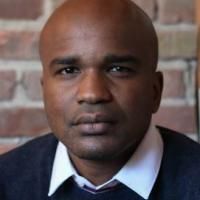
Bocar A Ba is an Assistant Professor of Economics at Duke University's Trinity College of Arts & Sciences since 2021, with a visiting research scholar appointment at Princeton University School of Public and International Affairs (2025-2026). Holding a PhD from The University of Chicago (2018), his work bridges economics with political science and criminal justice studies. Education: Ph.D. in Economics, The University of Chicago (2018) Research Focus : Analyzes policing practices, media narratives around police violence, temperature-aggression dynamics, and institutional racism. His work employs advanced econometric methods and large-scale data analysis. Article Trends : Recent publications examine media syntactic patterns obscuring police accountability political ideology distribution in police forces climate impacts on police-civilian violence racial disparities in police recognition systems peer effects on police force use Scientific Recognition : Selected for Princeton's Visiting Research Scholar program in public policy analysis. Grants Received : National Science Foundation (2023-2026): Social Movements and Corporate Opportunities Arnold Ventures (2024-2025): Alternatives to Policing research United States Naval Academy (2022-2023): Policing and Criminal Justice impacts Teaching : Instructs courses on criminal justice economics and advanced topics in economics.
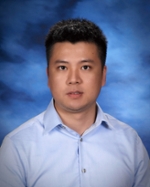
Guimu Guo is an Assistant Professor in the Department of Computer Science at Rowan University's College of Science & Mathematics. His research focuses on parallel and distributed computing techniques for large-scale graph mining problems, with applications in bioinformatics and transportation engineering. Ph.D. in Computer Science from University of Alabama at Birmingham M.Sc. in Computer Science from Tongji University Dr. Guo has published extensively in top-tier venues like VLDB, ICDE, and IEEE BigData. His work spans graph mining algorithms, parallel computing, and interdisciplinary applications in transportation and genomics. He actively mentors PhD and Master's students, offering fully funded positions. Key research trends include: Advancing GPU-accelerated graph decomposition techniques Developing distributed frameworks for subgraph querying and task concurrency Exploring parallel algorithms for frequent pattern mining and clique-like subgraphs Scientific Recognition: NSF CRII Award UAB Outstanding PhD Student Award Alabama GRSP Awards (Rounds 15 & 16) Teaching spans from foundational object-oriented programming to advanced graduate courses in parallel programming. His lab group has produced significant contributions to subgraph mining, transportation simulation, and genome assembly systems.
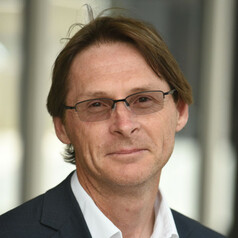
Amir Aryani is an Associate Professor at the School of Business, Law and Entrepreneurship , Swinburne University of Technology . He leads the Social Data Analytics (SoDA) Lab within the Social Innovation Research Institute , focusing on data-driven solutions for health and social challenges. His work involves large-scale cross-institutional projects with international collaborators including the British Library , ORCID , and NIH . Research Focus: Data modeling, real-time analytics, and information retrieval for social-good initiatives Collaborations: CERN, Data Archiving and Networked Services (DANS), and Global Information Systems (GESIS) His research explores data science applications in mental health, community resilience, and sustainable development. Key trends in his publications include: Mapping research to United Nations Sustainable Development Goals Developing hybrid expert-finding models using NLP and graph algorithms Creating interoperable research graphs for cross-platform discovery Assessing social impact of data projects in non-profit sectors Amir is actively involved in PhD supervision and has secured funding from Australian Research Council , National Health and Medical Research Council , and philanthropic foundations . He also contributes to community data projects through the SoDA Lab , which builds tools for social connection analysis and humanitarian response optimization.
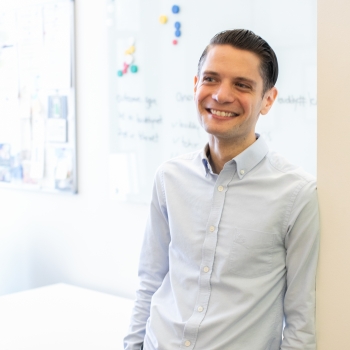
Xuesong Zhou is a Professor of Transportation Systems at the School of Sustainable Engineering and the Built Environment , Arizona State University (ASU). He leads the ASU Transportation+AI Lab and develops open-source tools like DTALite, NEXTA, and OSM2GMNS with over 100,000 downloads. His research focuses on multimodal transportation planning , dynamic traffic assignment , and rail scheduling with methodological contributions to traffic flow theory and operations research . Dr. Zhou's research bridges transportation system operations , computer applications for ITS , and logistics optimization . His work on differentiable programming reformulations and state-space-time network modeling has advanced real-time traffic prediction and multi-echelon facility scheduling . Scientific awards include: 2022 Elsevier Multimodal Transportation Best Article Award 2018 Transportation Research Part C Best Associate Editor Award 2012 INFORMS Railway Applications Section Best Paper Award He has advised 9 PhD students and 6 postdoctoral researchers to completion, with mentees now at institutions like Georgia Institute of Technology and Michigan State University. Current projects include NSF CONNECT and DOE Argonne collaborations on multi-scale traffic simulation and smart campus cyberinfrastructure .
Shane Dawson is the Executive Dean of UniSA Education Futures and Professor of Learning Analytics at the University of South Australia. His work bridges social network analysis and learner interaction data to enhance teaching quality and educational outcomes. Affiliation : University of South Australia Research Focus : Learning Analytics, Curriculum Mapping, K-12 Decision-Making Systems, and AI in Education Recent Research Trends : Shane’s 2025 publications emphasize generative AI for curriculum analytics, ethical considerations in K-12 dashboards, and longitudinal graduate attribute monitoring. His articles often integrate psychometric models, social network tools, and open-source software like OVAL and SNAPP . Advising and Collaboration : As a co-developer of key learning analytics tools and a supervisor for research students, he collaborates globally with institutions such as Johns Hopkins University and Shahid Beheshti University of Medical Sciences. Labs and Teams : Shane leads UniSA’s Teaching Innovation Unit and is a founding member of the Society for Learning Analytics Research , driving institutional and international initiatives in educational technology.
Fabrizio Falchi is a researcher at the Artificial Intelligence for Media and Humanities (AIMH) Lab of the Institute of Information Science and Technologies (ISTI) within Italy's National Research Council (CNR). He also maintains an associate position at the Biorobotics Institute of Scuola Superiore Sant'Anna. His work focuses on developing advanced multimedia retrieval systems, with the VISIONE platform being his most notable contribution, which has won international competitions including the Video Browser Showdown in 2024 and placed second in 2023. Falchi's educational background includes: Ph.D. in Information Engineering from University of Pisa (Italy) Ph.D. in Informatics from Faculty of Informatics of Masaryk University of Brno (Czech Republic) M.B.A. from Scuola Superiore Sant'Anna in Pisa His research spans deep learning, convolutional neural networks, deep features extraction, similarity search algorithms, distributed indexing systems, multimedia information retrieval, computer vision applications, and peer-to-peer systems. Falchi has made significant contributions to fine-grained visual understanding, cross-modal retrieval (particularly image-text matching), and robustness of deep learning systems against adversarial attacks. His work demonstrates a strong focus on practical applications of these technologies, particularly in video retrieval systems and safety monitoring solutions. Analysis of Falchi's recent publications reveals a strong focus on video and image retrieval systems, with the VISIONE platform being central to his work. His research shows increasing emphasis on fine-grained understanding in computer vision, cross-modal retrieval, and addressing practical challenges like cross-resolution face recognition. Recent work demonstrates innovation in making these systems more efficient through techniques like knowledge distillation (ALADIN) and leveraging virtual worlds for training data. His publications consistently bridge theoretical advances with practical applications in surveillance, safety monitoring, and multimedia search. Falchi's work has received significant recognition: Best paper award at CBMI 2024 for 'Is ClLIP the main roadblock for fine-grained open-world perception?' VISIONE 2024 won the Video Browser Showdown competition in Amsterdam VISIONE obtained second place at Video Browser Showdown 2023 in Bergen Best Paper Award for 'Learning Safety Equipment Detection using Virtual Worlds' at CBMI 2019 Falchi collaborates extensively with researchers at ISTI-CNR, particularly within the AIMH Lab. His work on VISIONE involves collaboration with Giuseppe Amato, Paolo Bolettieri, Fabio Carrara, Claudio Gennaro, Nicola Messina, Lucia Vadicamo, and Claudio Vairo. As co-chair of Ital-IA 2023, the 3rd National Conference on Artificial Intelligence, he plays an active role in the academic community. He is a member of ACM (since 2012), the Computer Vision Foundation, the Italian Association for Computer Vision Pattern Recognition and Machine Learning (CVPL), and the CINI Lab on Artificial Intelligence and Intelligent Systems. Falchi is a key member of the Artificial Intelligence for Media and Humanities (AIMH) Lab at ISTI-CNR, where he leads research on video retrieval systems. The lab has developed the award-winning VISIONE platform, which combines multiple scientific results in content-based video retrieval. His team focuses on developing systems that enable users to search for target videos using textual prompts, drawing objects and colors, or images as query examples. The lab's work demonstrates strong interdisciplinary collaboration, bridging computer science with practical applications in media, safety monitoring, and urban environments.
Alejandro J. Ganimian is an Associate Professor of Applied Psychology and Economics (with tenure) at New York University's Steinhardt School of Culture, Education, and Human Development, and a Visiting Associate Professor of Education at the Harvard Graduate School of Education. His interdisciplinary research bridges economics, psychology, and education policy to address critical challenges in educational systems, particularly in low- and middle-income countries, with a focus on transitioning from providing schooling to ensuring learning for all. Education: Doctorate in Quantitative Policy Analysis in Education (with concentration in economics) from Harvard University, where he was a fellow in the Multidisciplinary Program in Inequality and Social Policy Master's in Educational Research from the University of Cambridge, where he was a Gates Scholar Bachelor's in International Politics from Georgetown University Postdoctoral fellow at the Abdul Latif Jameel Poverty Action Lab (J-PAL) Ganimian's research centers on addressing educational challenges for "first-generation learners" in low- and middle-income countries. His methodology combines cutting-edge experimental designs from economics with innovative measures from education and psychology to evaluate causal effects of policies at scale. He specifically investigates how to prepare children for educational transitions, support teachers in large heterogeneous classrooms, and encourage principals to allocate resources to students who need them most. His work spans educational assessment, technology in education, teacher policies, and school management, with fieldwork conducted primarily in Latin America and South Asia. His research has been published in top journals including Nature , American Economic Review , Journal of Political Economy , and Review of Educational Research . Scientific Awards and Affiliations: Jacobs Foundation Research Fellow National Academy of Education/Spencer Foundation Post-Doctoral Fellow Gates Scholar Advisory-Board member at the Organization of Ibero-American States for Education, Science, and Culture (OEI) Non-Resident Fellow at the Center for Universal Education at the Brookings Institution Invited Researcher at the Abdul Latif Jameel Poverty Action Lab (J-PAL) at MIT Member of the CESifo Network on Economics of Education Ganimian actively mentors doctoral students at NYU, with primary advisee Verónica Mesalles and secondary or co-advisees including Sorana Acris, Berta Bartoli, Arja Dayal, Trenel Francis-Porter, and Jessica Siegel. His former advisees have secured prestigious positions at institutions including Oxford University, UC Irvine, Duke University, and Stanford University. He has consulted for major international organizations including the Bill & Melinda Gates Foundation, World Bank, and Inter-American Development Bank, and co-founded educational initiatives "Enseñá por Argentina" and "Educar y Crecer" in Argentina.
Dr. Marcell K. Peters is a Senior Academic Councillor at the Chair of Animal Ecology and Tropical Biology (Zoology III) at the University of Bremen. His research focuses on biodiversity patterns, ecosystem functioning, and climate-land use interactions in tropical and montane environments, with extensive fieldwork in East Africa and the Amazon. He leads projects under DFG and EU funding, including the UPSCALE initiative. Habilitation in Zoology (University of Würzburg, 2018) PhD in Biology (University of Bonn, 2008) Diploma in Biology (RWTH Aachen & University of Bonn, 2003) Research spans multi-taxa community ecology, army ants and ant-following birds, DNA barcoding applications, and climate change impacts on pollination networks. Google Scholar highlights recent work on climate-agriculture interactions in sub-Saharan Africa, trait-based community assembly, and network resilience in biodiversity hotspots. His publications emphasize elevational gradients, disturbance ecology, and functional diversity across Mount Kilimanjaro studies. Current affiliations include the DFG Research Unit Kilimanjaro and EU-funded UPSCALE project. He employs advanced methods like airborne LiDAR for biodiversity prediction and investigates nutrient use by ant communities across continents.
Teemu Turunen-Saaresti is a Tenured Professor at the School of Energy Systems , LUT University , Lappeenranta, Finland. His research focuses on energy technology, particularly supercritical CO2 cycles, Organic Rankine Cycles (ORC), turbomachinery, and heat pump design. PhD in Energy and Environmental Technology (2004), Lappeenranta University of Technology MSc in Energy and Environmental Technology (2001), Lappeenranta University of Technology His work spans Supercritical CO2 Power Cycles , Organic Rankine Cycle Systems , Turbomachinery Design , and Non-Equilibrium Condensation Modeling . Recent studies include printed circuit heat exchangers for transcritical cycles, high-temperature ORC thermal inertia, and centrifugal compressor design for large-scale CO2 heat pumps. Publications highlight trends in sCO2 Turbines , Tip Clearance Effects , and Multiphase Flow Simulation . Funding from the Academy of Finland and Business Finland supports his research on computational/experimental condensing flows, small-scale compressors, and green shipping energy solutions. He collaborates with international teams on projects like the International Wet Steam Modeling Project , contributing to guidelines for high-temperature heat pumps (IEA HPT Annex 58) and advancements in hydrogen compression strategies.
Fedor Dokshin is an Assistant Professor in the Department of Sociology at the University of Toronto, Downtown Toronto (St. George) campus. His research bridges computational social science with environmental and political sociology, focusing on energy transitions, partisan dynamics, and social network structures. Key research areas include racial and income disparities in solar photovoltaic adoption, policy feedback mechanisms in renewable energy programs, and partisan influences on environmental decision-making. Fields of Study: Computational and Quantitative Methods, Environmental Sociology, Political Sociology, Social Networks Areas of Interest: Computational social science, Energy and the environment, Political polarization Research Trends: Dokshin's publications reveal a focus on energy justice, behavioral diffusion models, and political polarization. His work combines computational methods with environmental policy analysis, examining how socioeconomic factors and partisan identities shape renewable energy adoption. Articles demonstrate geographic heterogeneity in opposition to extraction projects, digital discourse analysis techniques, and institutional dynamics affecting scholarly knowledge production. Methodological Emphasis: Utilizes large-scale data analysis, spatial modeling, and automated textual analysis to explore energy-environment-society intersections. Research highlights the tension between technical solutions and social equity in energy transitions, with recurring themes of policy design, public engagement, and networked political behavior.
Tobias Neckel is an Associate Professor at the Institute for Informatics at the Technical University of Munich (TUM), where he leads research projects and coordinates academic programs. He has been the project team leader of the IGGSE Project ExaNIML since 2018, main coordinator of the Ferienakademie since 2014, and Program Coordinator of the Bavarian Graduate School of Computational Engineering (BGCE) since 2009. Diploma in Technomathematik from TU München (2005) Dr. rer. nat. in Informatics from TU München (2009) Neckel's research focuses on Uncertainty Quantification, Random Differential Equations, and High Performance Computing. His work develops efficient numerical algorithms using hierarchic and adaptive methods such as octrees/spacetrees and sparse grids, with applications in fluid-structure interactions and incompressible fluid flow simulation. His research bridges theoretical mathematics with practical computational science, emphasizing robust and efficient implementations. His recent publications demonstrate a strong trajectory in multi-fidelity modeling, uncertainty quantification, and high-performance computing. Neckel has made significant contributions to scalable hierarchical approximation methods, dynamic resource management in HPC, and the application of machine learning techniques to computational science problems. His work spans diverse application domains including plasma physics, hydrology, and computational engineering. Lehrfonds prize of the TUM (2014) Ernst Otto Fischer prize of the TUM (2011) Promotionspreis des Bunds der Freunde der TU München (2009) Neckel has supervised numerous graduate students and has been actively involved in curriculum development and teaching innovation. His book "Bits and Bugs: A Scientific and Historical Review of Software Failures in Computational Science" (2019) represents a significant contribution to understanding software reliability in scientific computing. He has organized minisymposia at major conferences including SIAM CSE and SIAM UQ, and serves on program committees for various computational science conferences. As coordinator of the Ferienakademie and the BGCE, Neckel plays a central role in advanced computational engineering education in Bavaria. His research group develops software for exascale computing and contributes to the Transregional Collaborative Research Centre 89 on Invasive Computing. Neckel also maintains international collaborations, with research stays at institutions including the Australian National University and Tokyo Institute of Technology.
Tracy Hall is Professor in Software Engineering at Lancaster University's School of Computing and Communications, where she holds a Chair in Software Engineering Research and serves as Director of Post Graduate Teaching. Previously, she was Professor and Head of Computer Science at Brunel University London, and has held visiting positions at University College London and adjunct roles at the University of Oslo. With over 20 years of empirical software engineering research experience, she maintains extensive industrial collaborations. Her research focuses on: Software defect prediction and automatic repair Code analysis methodologies Software testing frameworks Human factors in software development Empirical studies of developer behavior Tool development for software engineers She leads research in automated defect repair techniques and vulnerability prediction, with recent work exploring AI-driven approaches to software quality improvement. Her publication portfolio (100+ papers) shows consistent focus on software quality enhancement, with recent emphasis on explainable AI for vulnerability prediction (2025), developer-centric testing tools (2024), and human factors in bug resolution (2022). Research frequently involves large-scale empirical studies and industry partnerships. Awards include multiple best paper awards for her contributions to software engineering research. As Principal Investigator, she secured significant funding including: EPSRC Fixie project: £400,000 for defect prediction/repair (2018-2020) EPSRC Fault Analysis grant: £128,578 (2016-2019) Current PhD supervisees include Gaz Bennett, Jesse Phillips, and Miles Walker working on software engineering challenges. She contributes to the Cyber Security Research Centre , Security Lancaster , and DSI-Foundations research groups. Teaches courses on IT Architecture and Software Studio.
Lars Davidson is a Professor in the Department of Fluid Dynamics at Chalmers University of Technology. His research focuses on numerical simulations of fluid flow and heat transfer, with an emphasis on turbulence modeling for Large Eddy Simulation (LES) and hybrid LES/RANS methods. He has developed computational codes CALC-BFC and CALC-LES based on finite-volume techniques, and recently integrated machine learning to enhance wall functions and turbulence models. Key projects include Hybrid LES/RANS for wall-bounded flows Machine learning applications in fluid dynamics Aeroacoustic noise reduction in automotive and aerospace systems Wind turbine load analysis in forested regions . His publications span 302 articles in journals and conferences, with recent work on Neural networks for turbulence closure Plasma actuators for drag reduction Lattice Boltzmann wall-modeled LES . Collaborations include teams at Volvo, Siemens, and international research groups.
Malin Göteman is an Associate Professor at the Department of Electrical Engineering, Uppsala University. Her research focuses on offshore renewable energy systems, particularly modeling and optimizing large-scale wave power farms and analyzing their resilience to extreme weather conditions. Deputy Director, Center for Natural Disaster Studies (CNDS), Sweden Specialized in wave energy converter dynamics and hybrid offshore energy systems Collaborates on SPH-based numerical wave-current tanks and CFD validation Research Interests: She investigates wave energy farm interactions, hydrodynamic performance of floating platforms, extreme wave load modeling, and survivability strategies using machine learning. Her work spans renewable energy integration, coastal protection, and power system stability under extreme conditions. Recent Publications: Her 2025 articles address resilience of offshore energy systems to metocean extremes and reduced-order modeling via Bayesian design. Earlier works (2023-2024) cover SPH validations for floating wind-wave systems, neural network survivability approaches, and hybrid energy-water supply solutions. Collaborations: She works with international teams on projects like Lysekil wave energy test sites and DeepCwind floating platforms. Key areas include grid-connected wave parks, multi-fidelity surrogate modeling, and comparative studies on offshore wind dependencies.
Dr. Yu Zhang is a Lecturer of Data Science at the School of Business, UNSW Canberra. His academic career focuses on text mining, knowledge and information management, social computing, and bibliometric analysis, with interdisciplinary applications in areas such as sustainable logistics, supply chain management, and net-zero energy solutions. Fields of Interest: Text Mining, Information Management, Social Computing, Bibliometric Analysis, Machine Learning for Information Systems, Heterogeneous Network Analysis, Data Mining for Asset Management, Sustainable Logistics, Supply Chain Management, Net-zero Energy in Green Buildings, and Transportation. Grants: Served as CI in projects like "Online health monitoring in Li-ion batteries via trustworthy AI" (ACT Government, $1.22M) and "Delivering net-zero energy buildings" (TRaCE Lab to Market, $1.05M). Awards: Best Paper Award (Runner-up) at ADMA 2024 and Excellent Paper Award at ICEBE 2024. Teaching: Coordinated courses in Data Analytics, Workforce Planning Research, Business Capstone, and Logistics Intelligence with Big Data Analysis. Supervision: Guided research on topics like federated learning for healthcare fraud detection, blockchain-based carbon offset management, and tier-based supply chain visibility. His publications span materials science and photovoltaic technologies, with a focus on thin-film solar cells and defect passivation methods. For collaboration or supervision inquiries, contact him at m.yuzhang@unsw.edu.au .