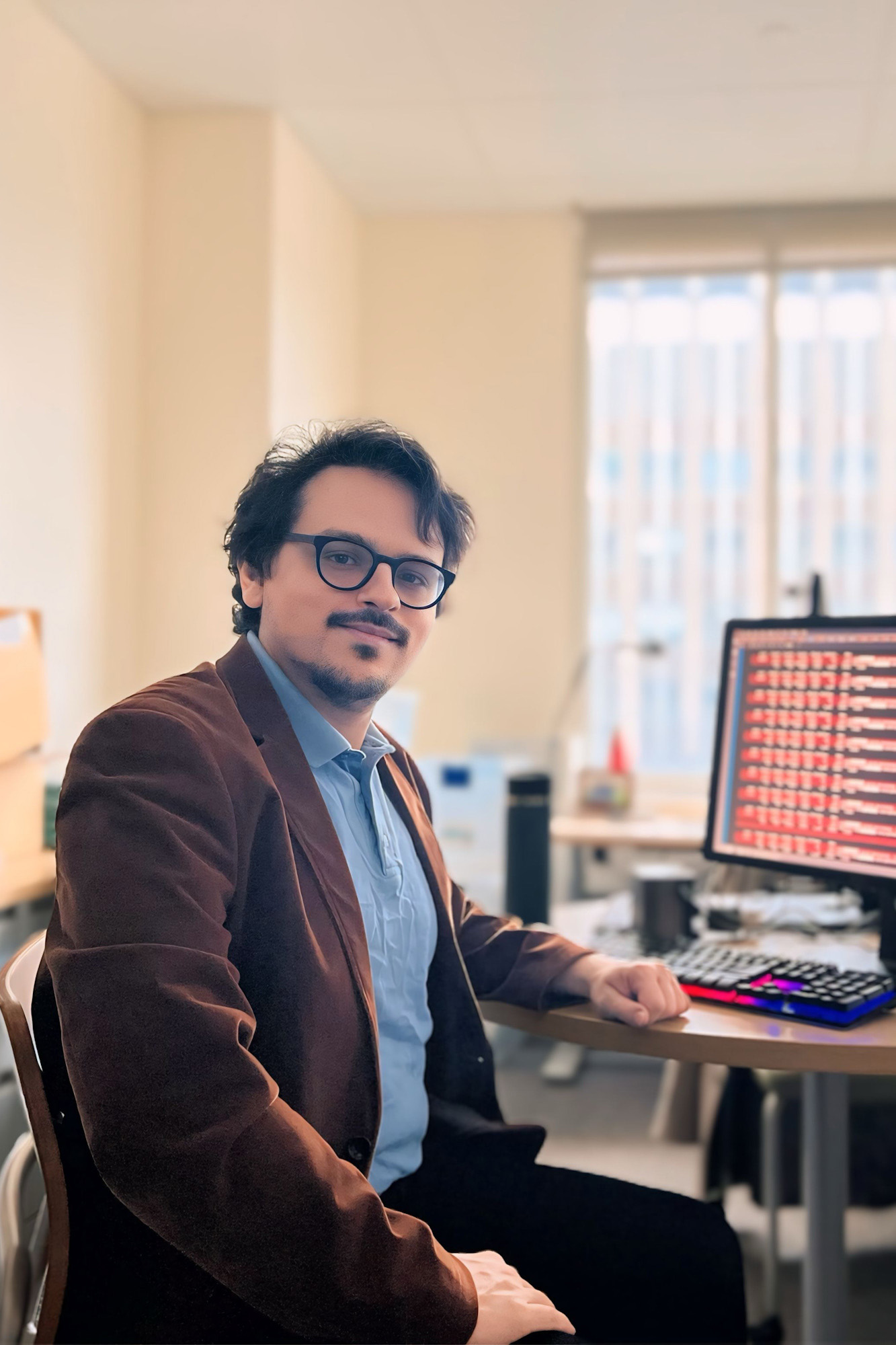
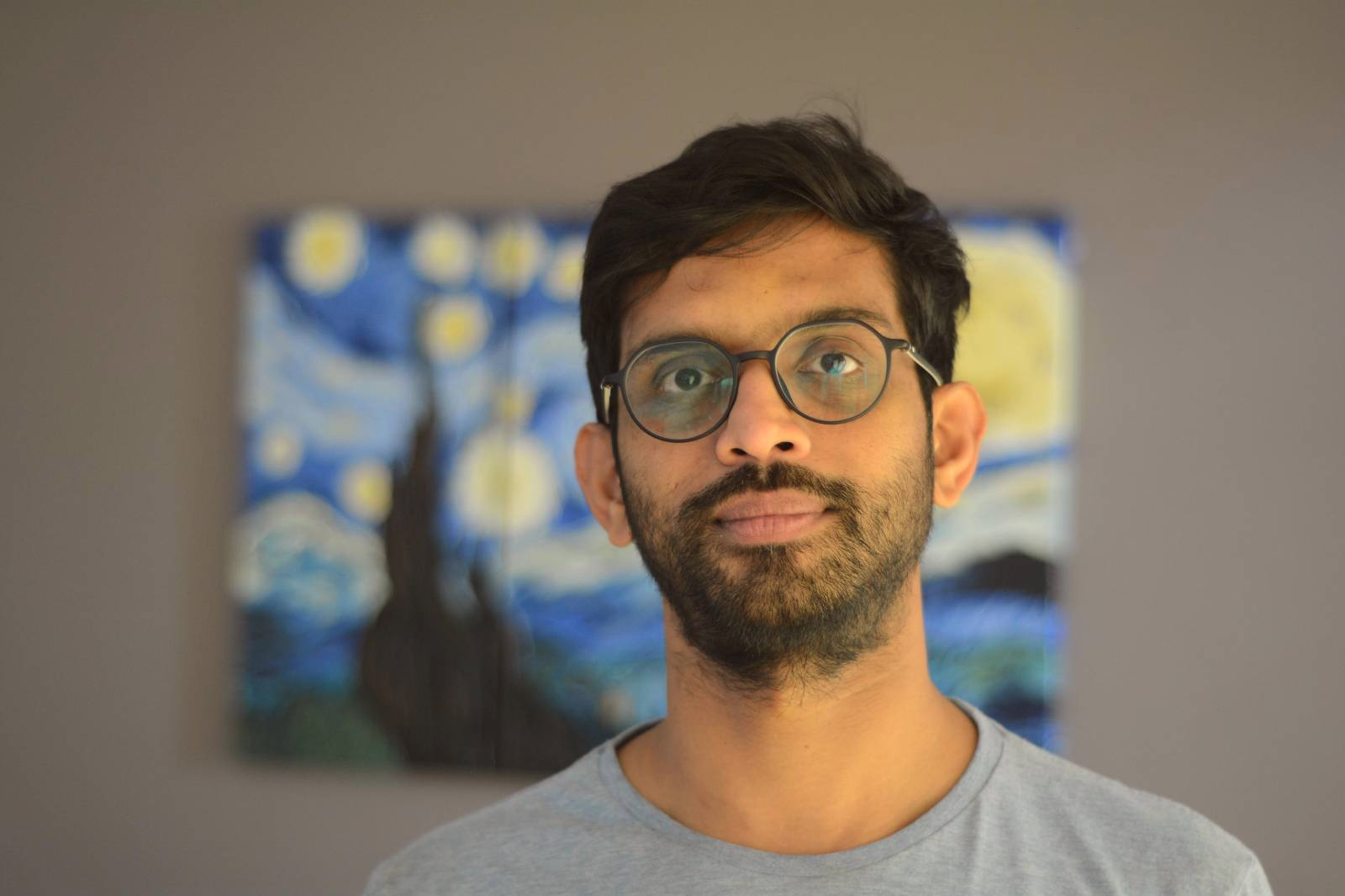
Mehmet Kerem Turkcan is an Associate Research Scientist at Columbia University, affiliated with the Center for Smart Streetscapes (CS3) and the Department of Civil Engineering & Engineering Mechanics. He specializes in computer vision, deep learning, and their applications to urban streetscapes and robotic surgeries. Current Position: Associate Research Scientist at Columbia University (since Jul 2024) Previous Role: Postdoctoral Research Scientist in Electrical Engineering at Columbia Research Interests span real-world deployment of object detection/tracking systems, retrieval-augmented generation via large language models, and GPU-driven simulations of neural circuits. His work bridges computational neuroscience with urban informatics through platforms like FlyBrainLab and Fruit Fly Brain Observatory . Publication Trends show interdisciplinary focus: (1) Robotic surgery tracking (2025), (2) Cloud-edge vision-language processing (2025), (3) Urban navigation for accessibility (2024), and (4) Neurogenetic circuit modeling (2024). Earlier work includes Drosophila brain simulations and biomarker discovery for coronary disease.
Carlo Curino is a researcher at Microsoft Research , focusing on database systems, cloud computing, and machine learning integration. He has collaborated extensively with institutions including MIT, Microsoft, and the University of Wisconsin-Madison. His research spans Geo-distributed data analytics Automated configuration tuning Tensor-based database systems Data lake optimization Spark performance engineering Recent publications highlight his work on AI-driven systems like MotherNet and Rockhopper , alongside contributions to query processing over compressed data and log-structured tables. Collaborators include prominent figures such as Raghu Ramakrishnan and Jesús Camacho-Rodríguez . Key projects involve LST-Bench (cloud storage benchmarking), AutoComp (data compaction), and PyFroid (commodity workstation analytics). His work bridges database optimization with modern machine learning demands in enterprise environments.
Tanya Braun is a Junior Professor in the Institute of Computer Science at the University of Münster, Department of Mathematics and Computer Science. She leads the Data Science research group, focusing on statistical-relational AI, human-aware AI, and text understanding. Her work bridges formal AI methods with real-world applications in healthcare, digital humanities, and public sector systems. Education: Bachelor's and Master's in Computational Informatics, Hamburg University of Technology Doctorate in Computer Science, University of Lübeck (2020), thesis: 'Rescued from a Sea of Queries - Exact Inference in Probabilistic Relational Models' Her research centers on probabilistic inference in relational domains , with a focus on lifted inference techniques that exploit symmetries to scale reasoning. She investigates human-aware AI , particularly how AI systems can reconcile learned models with human expectations to improve explainability and trust. Her work on text understanding addresses challenges in data-scarce settings such as digital humanities, where traditional large language models fail. She has developed methods for identifying and enriching subjective content descriptions, topic modeling in specialized domains, and feedback-driven model improvement. The 15 most recent publications highlight a strong trajectory in lifted inference, model compression, privacy-preserving AI, and explainability . Her work integrates formal AI foundations with practical concerns in high-stakes domains like healthcare. She frequently publishes in top venues such as AAAI, IJCAI, ECAI, and Artificial Intelligence, often in collaboration with Ralf Möller, Marcel Gehrke, and Jan Speller. Scientific Awards: No specific awards listed in the provided text. Tanya Braun actively advises students and leads the HAPPI project, which focuses on human-AI model reconciliation using lifted probabilistic inference. She has supervised multiple theses and mentored researchers including Jan Speller (PostDoc), Nazlı Nur Karabulut, and Sagad Hamid. She has secured funding from the Ministry of Culture and Science of North Rhine-Westphalia for her research. She is deeply involved in academic service: serving as program co-chair for KI 2025, guest-editing special issues in journals like Künstliche Intelligenz and Annals of Mathematics and Artificial Intelligence , and organizing major conferences including ICCS and KR. Labs and Teams: She leads the Data Science Group at the University of Münster, which conducts research in AI, probabilistic modeling, and data science. The group is actively involved in teaching and mentoring students in advanced AI topics.
Chethan Kamath is an Assistant Professor in the Department of Computer Science and Engineering at IIT Bombay, where he is a member of the Theory Group and Trust Lab. His primary research focus is on cryptography, particularly its foundations, with broader interests extending to theoretical computer science. His educational journey includes: PhD from IST Austria (2014-2020) under Krzysztof Pietrzak, with thesis titled "On the Average-Case Hardness of Total Search Problems" Master's in CS from IISc Bangalore (2010-2013) under Sanjit Chatterjee, with thesis titled "Constructing Provably Secure Identity-Based Signature Schemes" Bachelor's in CS from University of Kerala (2005-2009) at TKM College of Engineering, Kollam Dr. Kamath's research interests span the theoretical foundations of cryptography, with particular focus on secure computation, complexity theory, and cryptographic hardness assumptions. His work often bridges theoretical computer science with practical cryptographic applications, exploring the boundaries of what can be efficiently computed while maintaining security guarantees. His research frequently addresses fundamental questions about the relationship between cryptographic primitives and complexity classes, especially the PPAD and TFNP complexity classes. His recent publications demonstrate a consistent focus on foundational aspects of cryptography, with particular emphasis on secure computation (garbled circuits, Yao's protocol), proofs systems (proofs of work, proofs of exponentiation), and complexity-theoretic aspects of cryptographic primitives. A notable trend is his exploration of the connections between complexity classes like PPAD and cryptographic assumptions, as well as his work on verifiable delay functions and their underlying number-theoretic assumptions. His research often employs tools from algorithmic graph theory (treewidth, separators) to analyze cryptographic protocols. His notable scientific achievement includes: Azrieli Fellowship during his post-doc at Tel Aviv University Dr. Kamath actively mentors students and researchers, currently advising several PhD and MS students at IIT Bombay, often in collaboration with Sruthi Sekar. His service to the academic community includes extensive program committee memberships for major conferences including Crypto, Eurocrypt, and TCC, demonstrating his standing in the cryptographic research community. He has co-organized educational events like the "Introduction to Cryptography" school as part of the ACM India Summer School 2025 and the "Theoretical Foundations of Cryptography" school as part of the ACM India Summer School 2024. He leads research activities within the Trust Lab at IIT Bombay, which focuses on theoretical and applied aspects of cryptography and security. The lab actively recruits MS/PhD students and post-docs, with ongoing research in foundational cryptography and its applications to secure computation, verifiable delay functions, and complexity-theoretic aspects of cryptographic security.
Slavko Žitnik is an Associate Professor and Vice-dean at the Faculty of Computer and Information Science, University of Ljubljana, where he is a member of the Laboratory for Data Technologies. His academic career spans multiple research projects and international collaborations focusing on data technologies and natural language processing. His primary research interests include information retrieval, information extraction, natural language processing, entity extraction, relationship extraction, coreference resolution, data merging, redundancy elimination, and ontologies. Dr. Žitnik's work often bridges theoretical computer science with practical applications in various domains including education, healthcare, and smart city ecosystems. Dr. Žitnik has led and participated in numerous significant research projects including P2-0359 on Ubiquitous Computing (2023-2027), PoVeJMo on Adaptive Natural Language Processing with Large Language Models (2023-2026), and the GOBLIN COST Action for building global networks of large-scale knowledge graphs. His recent work demonstrates a strong focus on adapting natural language processing techniques with large language models and creating practical applications of these technologies. His scientific contributions span multiple domains including: Natural Language Processing and Information Extraction techniques Knowledge graph construction and integration Applications in education, healthcare, and smart city ecosystems Development of practical tools and systems for data processing Dr. Žitnik has established international collaborations with institutions including Harvard University's Department of Biomedical Informatics (where he conducted a research visit from July to October 2022), the University of South Florida, and various European partners through COST Actions and other collaborative frameworks.
Michael David König is a Lecturer at the Department of Management, Technology, and Economics at ETH Zürich, specializing in Innovation Economics within the KOF Swiss Economic Institute. His research focuses on the intersection of network theory and economics, particularly examining R&D networks, technology spillovers, and innovation dynamics. König maintains an active research profile with publications spanning economics, network science, and computer science. König's research spans multiple domains including economic network analysis, innovation economics, and technology diffusion. He has made significant contributions to understanding how firms form R&D collaborations and how knowledge flows through these networks. His work combines theoretical modeling with empirical analysis of large-scale network data, revealing patterns such as oscillatory dynamics in R&D collaboration intensity. Recent research has also addressed practical economic issues, including firm responses to the COVID-19 pandemic and factors influencing R&D investment decisions in Switzerland. His interdisciplinary approach bridges economics with computational methods, reflecting his background in both theoretical and applied network analysis. König's publication record demonstrates a strong interdisciplinary trajectory, beginning with contributions to wireless network protocols and distributed systems before focusing more intensively on economic applications of network theory. A consistent theme across his career has been the study of how networks evolve and how these structures influence outcomes in various domains, from technology diffusion to economic fluctuations. His research often employs sophisticated modeling techniques to analyze the coevolution of networks and economic behavior, with particular attention to the dynamics of knowledge creation and diffusion. König teaches Introduction to Microeconomics at ETH Zürich, as evidenced by his listing in the Autumn Semester 2025 course catalog. His office is located at LEE G 224, Leonhardstrasse 21, 8092 Zürich, Switzerland. He is affiliated with the KOF Innovation Economics research group, which focuses on innovation, technological change, and their economic implications.
Ovidiu Șerban is a Research Fellow at the Data Science Institute, Imperial College London, leading the Data Observatory group. His work focuses on real-time Natural Language Processing, Data Curation, and Large Scale Visualization Systems. PhD in Computer Science (2013) - Joint from INSA de Rouen Normandy and Babeș-Bolyai University MSc in Artificial Intelligence (2009) - Babeș-Bolyai University BSc in Computer Science (2008) - Babeș-Bolyai University Research interests span Artifical Intelligence, Natural Language Processing, Interactive Systems, Affective Computing, and Deep Learning. Recent publications emphasize knowledge graph completion, temporal graph analysis, and multimodal data processing frameworks. Contributed to development of OVE (Open Visualization Environment) for scalable data rendering Created TKGQA dataset for temporal knowledge graph validation Advanced conflict-aware multilingual knowledge graph techniques Projects include SENTINEL for real-time event detection, Watchme for workplace analytics, Intuitel for e-learning enhancement, and Agentslang for distributed interactive systems. Affiliations include Imperial College London, University of Cambridge, and University of Reading.
Horia Popa is a Lecturer at the Faculty of Computer Science , West University of Timișoara. He has taught courses such as Artificial Intelligence , Network Administration , and Functional and Logic Programming since the 2022-2023 academic year, with additional historical courses dating back to 2011-2012. His teaching emphasizes hands-on lab work, software tools (Jess, CLIPS, WEKA), and project-based learning. Education: Not explicitly mentioned in the text. Research: Focuses on multi-agent systems, distributed constraints, asynchronous search algorithms, and system administration. Research Interests: Horia Popa specializes in Artificial Intelligence and Multi-agent Systems , particularly in asynchronous search techniques and constraint satisfaction problems. His work explores scale-free networks, nogood processors, and distributed execution environments. He also investigates Network Administration (DHCP, firewall configuration, kernel recompilation) and Knowledge Discovery through agent-based modeling. Article Trends: His publications (2001-2015) span Computer Science , Artificial Intelligence , and Multi-agent Systems . Key subfields include Asynchronous Algorithms , Constraint Networks , Protein Folding Simulation , and Kernel-Level System Management . He frequently uses NetLogo for large-scale simulations and integrates Samba/ldap for networked environments. Teaching and Projects: Students in his courses work on projects involving Jess , Prolog , and JADE . Assignments include implementing search algorithms (A*, Hill Climbing, RBFS), configuring NIS and Samba servers, and analyzing system monitoring tools like sar and top . He emphasizes practical implementation and cross-language diversity (e.g., Racket, Prolog).
Guido Cantelmo is an Assistant Professor at the Technical University of Denmark (DTU) within the Department of Technology, Management and Economics, specifically in the Division of Transport's Section for Transport Systems Modelling. His research leverages big data analytics and machine learning to address complex transportation challenges, with expertise spanning traffic flow modeling, demand estimation, shared mobility systems, and urban network optimization. He maintains active collaboration with international cities including Copenhagen, Munich, and Tel Aviv-Yafo for empirical validation of his models. His research integrates computational techniques such as Graph Neural Networks, meta-learning, and physics-informed AI with transportation theory. Primary domains include: Dynamic traffic assignment using real-time data sources Machine learning for imbalanced mobility datasets Emission impact modeling of urban fleets Behavioral analysis of shared mobility adoption Large-scale simulation calibration frameworks Publication analysis (2022-2025) reveals dominant themes: data-driven demand estimation (37% of recent works), machine learning metamodeling (27%), shared mobility optimization (20%), and urban policy impact studies (16%). Methodological innovations include transfer learning for sparse data and multi-city validation approaches. No scientific awards or student mentoring relationships are documented in available sources. Similarly, no information exists regarding research grants, laboratory affiliations, or educational background.
Christel VRAIN is a full-time University Professor affiliated with the University of Orleans, specializing in Machine Learning and Constraint Programming. Her research focuses on constrained clustering, knowledge integration, and hybrid AI systems, with applications in image classification, time series analysis, and geospatial data. She collaborates extensively with researchers like Thi-Bich-Hanh DIEP-DAO and Samir LOUDNI. University Professor at University of Orleans Affiliated with Laboratoire d'Informatique Fondamentale d'Orléans (LIFO) Her work bridges declarative programming with machine learning, emphasizing explainability and optimization. Recent publications explore continual learning, graph models, and constraint-based clustering frameworks. She contributes to interdisciplinary research through the Kay R. Amel group, investigating synergies between reasoning, knowledge representation, and data mining. Her methodological innovations include memory-efficient algorithms for large-scale datasets and shapelet transforms for time series.
Milos Jovanovik is an Associate Professor at the Faculty of Computer Science and Engineering, Ss. Cyril and Methodius University in Skopje. Concurrently, he serves as a Knowledge Graphs Researcher at TU Wien (Vienna) and Senior R&D Knowledge Graphs Engineer at OpenLink Software (London). His academic trajectory includes a B.Sc. in Informatics and Computer Engineering (2008), M.Sc. in Computer Networks and E-Technologies (2010), and Ph.D. in Computer Science and Engineering (2016), all from Ss. Cyril and Methodius University. His research focuses on Knowledge Graphs , Linked Data , and Data Science , with applications in Open Data ecosystems and Semantic Web technologies. Recent work explores AI-driven solutions for large-scale biomedical data, including nephrology analytics and synthetic health record generation. He has authored ≈60 scientific papers and co-authored three books. Jovanovik leads projects involving international collaborations (e.g., TARGET EU Project on health virtual twins and SPARQL-ML for query optimization). He has participated in 9 international and 26 domestic research projects. His educational contributions include courses in operating systems, e-commerce, DevOps, and web-based systems. He directs research teams at TU Wien and FCSE Skopje, focusing on knowledge graph innovation and scalable data solutions. No awards are explicitly documented in the provided sources.
Hoda Eldardiry is an Associate Professor in the Department of Computer Science at Virginia Tech, where she directs the Machine Learning Laboratory. Her research focuses on artificial intelligence and machine learning, particularly in building human-machine collaborative AI systems that can learn context-aware and explainable models from multisource and interconnected data. Prior to joining Virginia Tech, she led research at Palo Alto Research Center (Xerox PARC) in the machine learning research group. Dr. Eldardiry received her educational qualifications from: BE in Computer and Systems Engineering from Alexandria University, Egypt MS and PhD in Computer Science from Purdue University Her research interests span multiple domains of AI and machine learning. She specializes in robust machine learning for information extraction, forecasting, and control. Her work integrates graph neural networks, time-series analysis, and relation extraction to develop explainable and context-aware AI systems. She also investigates the intersection of AI with ethics, policy, and governance, exploring how to build responsible AI systems that align with human values and societal needs. Dr. Eldardiry's recent publications demonstrate a strong focus on advancing graph-based time-series modeling, zero-shot learning techniques, and optimal control systems. Her work bridges theoretical advancements with practical applications in healthcare, transportation, and e-commerce. She has made significant contributions to knowledge graph construction, explainable AI, and federated learning frameworks that operate efficiently in resource-constrained environments. Her scientific achievements have been recognized with several prestigious awards: Purdue University College of Science Early Career Scientist Award for the Department of Computer Science (2021) Honorable Mention Best Paper Award for Exploring Approaches to Artificial Intelligence Governance: From Ethics to Policy (IEEE Ethics 2023) Most Cited Paper Award for COVID-19 Pandemic Impacts on Traffic System Delay, Fuel Consumption and Emissions (2023) Purdue CS Women's History Month Celebration Recognition (2022) VT CS Women's History Month Celebration Recognition (2023) Early Career Distinguished Scientist Award from Purdue University College of Science (2021) Purdue University College of Science Distinguished Alumni (2021) Dr. Eldardiry has successfully secured substantial research funding, with total grant funding of $27,424,460 ($13,808,328 share) from diverse sources including VT, IARPA, DOE, NSF, DARPA, NIH-iTHRIV, CCI, EBAY, SIEMENS, ADOBE, P&G and XEROX. Her current projects include NSF-funded research on Advancing Health Equity using Interactive Condition Assessment and Monitoring and Exploring How AI Engineers Perceive and Develop Translational Ethical Competency, as well as industry collaborations with EBAY on Heterogeneous Hypergraph Modeling for Zero-Shot Product Aspect Identification. As director of the Machine Learning Laboratory at Virginia Tech, Dr. Eldardiry leads a research team that bridges theoretical AI advancements with real-world applications. Her lab collaborates extensively with industry partners and government agencies to develop practical AI solutions while maintaining a strong commitment to ethical considerations and societal impact.
Ina Heise is a researcher at the Chair of Computing in Civil and Building Engineering , Technical University of Munich (TUM) . Her work focuses on leveraging Building Information Modeling (BIM) and digital twin technologies to enhance road infrastructure management through semantic modeling, knowledge graphs, and spatial data analysis. Research Interests: Her research spans BIM-based digital twins , ontology development for spatial relationships, and graph-based methods for infrastructure data. She integrates semantic modeling and knowledge graphs to enable comprehensive querying and management of road and civil structure data. Publications: Her recent publications (2023-2025) emphasize the development of digital twins for road infrastructure, focusing on spatial-temporal correlation , knowledge graph integration , and ontology-driven data representation . Supervised Theses: She has supervised several student theses, including topics like data transformation from ASB-ING to IFC4x3, graph-based analysis of BIM spatial relationships, and model-based compliance checks for bridge designs. Contact: ina.heise@tum.de | Room: 0501.03.161, Arcisstr. 21, 80333 München.
Professor Dirk J. Lehmann is a Professor of Data Science in IoT at Ostfalia University of Applied Sciences, Faculty of Computer Science, where he has been employed since May 2022. He holds significant leadership roles including Deputy Head of the Institute for Information Engineering (since 2024), Research Officer of the Faculty of Computer Science (since 2023), and membership in multiple committees including the Admissions Committee for Digital Technologies and the Digital Technologies Examination Board. Professor Lehmann's extensive academic journey includes: Part-time professorship in Data Science in IoT at Ostfalia University (2020-2022) Senior Specialist for Digitalization, AI, and Visual Analysis at IAV GmbH (2018-2023) Assistant Professor of Visual Data Analysis at Nazarbayev University, Kazakhstan (2017) Visiting professorships at TU Graz, Austria and Universidad Rey Juan Carlos, Spain (2016-2017) Researcher at Otto-von-Guericke University Magdeburg (2009-2017) His research expertise centers on Visual Analytics and Data Science, with particular emphasis on high-dimensional data visualization, categorical data analysis, and IoT applications. Professor Lehmann leads the Data Science in IoT working group, conducting research across three main areas: visual data analysis, distributed data analysis using AI methods, and applied data analysis in geology, climate data, medicine, and industrial processes. His methodological contributions include innovative visualization techniques for complex datasets across multiple domains. Analysis of Professor Lehmann's 15 most recent publications (2017-2025) reveals a consistent focus on advancing visualization techniques for complex data analysis. His work spans categorical data visualization (CatNetVis), biological data analysis (D. Melanogaster research), optimization of star coordinate systems, and interactive exploration methods for large datasets. These publications appear in top venues including IEEE Transactions on Visualization and Computer Graphics and EuroVis, demonstrating both theoretical rigor and practical application across diverse domains from healthcare to environmental science. As an educator, Professor Lehmann teaches a comprehensive range of courses from foundational mathematics to advanced machine learning and visualization techniques. He actively supervises student projects and theses, emphasizing clear project definitions with measurable acceptance criteria. His international collaborations span institutions in Israel, Saudi Arabia, China, Austria, and Spain, reflecting a global research perspective that bridges academic theory with industry applications, particularly through his previous role at IAV GmbH, a Volkswagen subsidiary.
Chao Peng is a Principal Research Scientist at ByteDance where he leads the Trae Research team (ByteDance Software Engineering Lab), conducting cutting-edge research on AI agents for software engineering. He also serves as a Part-time Postgraduate Student Mentor at Fudan University's School of Computer Science, bridging industry research with academic mentorship. PhD in Informatics (2021), University of Edinburgh, UK MSc in High Performance Computing and Data Science (2017), University of Edinburgh, UK BEng in Computer Science and Technology (2016), Xuzhou University of Technology, China Dr. Peng's research focuses on the intersection of software testing, program analysis, and large language models. His work explores how AI agents can revolutionize software engineering practices, with particular emphasis on automated bug detection, code generation, and testing frameworks. He has pioneered approaches for evaluating LLM performance in software engineering contexts and developing agent-based systems that enhance developer productivity while maintaining code quality and security. His recent publications demonstrate a clear trend toward integrating large language models with traditional software engineering practices. The research spans code generation evaluation, security vulnerability detection, automated bug reproduction, and issue localization. These works collectively advance the field of AI-assisted software development by addressing practical challenges in reliability, security, and efficiency of AI-generated code. Distinguished Reviewer for FSE'25 School of Informatics Scholarship (fully-funded PhD scholarship) Outstanding Graduate Scholarship at Xuzhou University of Technology Multiple China National Scholarships Honours Spot Bonus at ByteDance Certificate of Achievement for HPCAC Student Cluster Competition Dr. Peng actively mentors students through his role at Fudan University and previously at the University of Edinburgh, where he served as sub-supervisor for MSc projects and teaching assistant for software testing courses. His research has attracted significant industry attention, leading to multiple collaborations between ByteDance and academic institutions. He frequently serves on program committees for major software engineering conferences including ASE, FSE, and ICSE, demonstrating his leadership in the field. As leader of the Trae Research team at ByteDance Software Engineering Lab, Dr. Peng oversees research on AI agents for software engineering, including the application and evaluation of AI agents and training LLMs for agent-based systems. The lab's work focuses on practical systems that predict, detect, diagnose, and fix bugs across various software systems, with particular emphasis on real-world applications and measurable impact on developer productivity.