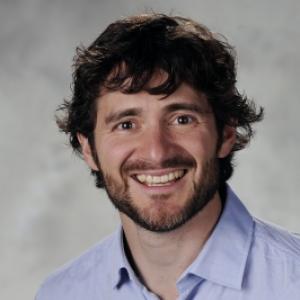
Professor Christian Bizer is a leading figure in web-based systems and data integration at the University of Mannheim , where he chairs Information Systems V: Web-based Systems . His research focuses on integrating data from multiple sources using large language models and LLM-based agents, with applications in product data extraction and DBpedia knowledge graph construction. He co-founded the DBpedia project and initiated the WebDataCommons initiative. Current research areas: Entity matching, schema matching, table annotation, information extraction, data discovery Key projects: WebMall benchmark, WInte.r integration framework, Schema.org analysis His work applies to e-commerce data integration and knowledge graph construction, with empirical studies on schema.org adoption. He supervises PhD students including Alexander Brinkmann and Ralph Peeters. Scientific Awards: Best Paper at iiWAS 2024 SWSA Ten-Year Award at ISWC 2019 Yahoo FREP Award 2015 Semantic Web Challenge winners Teaching includes courses on web data integration, web mining, large language models, and data mining for master's programs. He leads the DWS PhD colloquium and team projects on LLM agents for data integration.
Fabian Suchanek is a full professor at Institut Polytechnique de Paris, specifically affiliated with Télécom Paris. He leads research in the Data, Intelligence, and Graphs (DIG) team within the Computer Science department. His academic career focuses on bridging artificial intelligence with structured knowledge representations. Suchanek's research interests span artificial intelligence, knowledge bases, and natural language processing, with particular emphasis on knowledge graph construction , rule mining , knowledge-based language models , and explainable AI . His work demonstrates how structured knowledge can enhance machine learning systems, particularly large language models, by providing factual grounding and interpretability. The research group he leads develops practical systems that address real-world knowledge management challenges. His recent publications showcase a strong trajectory in knowledge-intensive AI, with notable contributions to knowledge graph completion, rule mining techniques, and neural approaches to knowledge base validation. The research demonstrates increasing integration between symbolic and neural approaches to AI. Best Student Paper Award at KR 2024 for work on contextual reasoning Best Demo Award of IJCAI 2024 for rule mining in knowledge graphs French Open Research Award for the YAGO project Best Paper Award of ESWC 2021 for Neural Knowledge Base Repairs Suchanek has secured significant research funding, evidenced by his active recruitment of PhD students for knowledge-based language model research. He has held visiting positions, including at Nanyang Technological University (June-September 2023), and is recognized internationally through keynote invitations such as the Singapore ACM SIGKDD Symposium 2023. He has deliberately stepped back from administrative duties at Institut Polytechnique de Paris to focus on research. His laboratory maintains strong industry connections through open-source software projects including the YAGO knowledge base, AMIE for rule mining, STACI for explainable AI, and several other tools that have become standard in knowledge representation research.
Yang Zhou is an Associate Professor in the Department of Computer Science and Software Engineering at Auburn University, part of the Samuel Ginn College of Engineering. His research focuses on big data algorithms, machine learning, data mining, and distributed computing. He has contributed to advancements in federated learning frameworks, graph mining tools, and spatial machine learning for environmental applications like flood mapping. Education includes a Ph.D. in Computer Science from Georgia Tech (2021), M.E. in Computer Application Technology from Chongqing University (2016), and B.E. in Engineering from Jiangnan University (2014). His work emphasizes scalable algorithms for large-scale systems, with tools like DirDense for dense subgraph mining and FedASMU for federated learning optimization. Recent publications explore adversarial robustness, blockchain strategies in IoT, and curriculum-based learning for large language models. He advises on interdisciplinary projects at the intersection of AI and environmental science.
Katja Hose is a Full Professor of Data Management at TU Wien's DBAI research unit, heading the Data Management and Knowledge-Driven AI Lab. She previously held a Poul Due Jensen Foundation Professorship at Aalborg University. Her research focuses on data and knowledge engineering, including graph databases, knowledge graphs, querying, analytics, and machine learning, with interdisciplinary applications in bioscience, healthcare, and environmental assessment. Education: PhD in Computer Science (Ilmenau University of Technology, 2009), Postdoc at Max Planck Institute for Informatics (2009–2012). Academic roles include Program Co-Chair for ISWC 2024 and EDBT 2023, and editorial board membership at VLDBJ and TGDK. She leads projects like TARGET (health virtual twins) and ARMADA (data management). Research Interests: Knowledge Graphs, Semantic Web, Big Data, Machine Learning, Data Integration, and Provenance Systems. Key contributions include SHACL shape extraction, conversational data analytics, and environmental knowledge graphs. Awards include the 2025 Distinguished Meta-Reviewer Award and 2024 Manfred Paul Award. Advising and Grants: Supervised students including E. Pürmayr (Diploma Thesis 2025). Active in EU projects (TARGET, ARMADA) and grant coordination. Labs/Teams: DMKI Lab at TU Wien, collaborating with interdisciplinary teams in healthcare and environmental science.
Danai Koutra is an Associate Professor in Computer Science and Engineering at the University of Michigan, Ann Arbor, and an Amazon Scholar. Her research focuses on large-scale graph mining, graph neural networks, and interpretable machine learning methods for understanding complex networks. Key roles include leading the GEMS Lab and contributing to projects like DeltaCon (graph similarity) and VoG (graph summarization). She holds a PhD from Carnegie Mellon University and has authored over 80 publications in top venues like KDD, SDM, and NeurIPS. Educations: PhD in Computer Science, Carnegie Mellon University (2015) MS in Computer Science, Carnegie Mellon University (2015) Diploma in Electrical & Computer Engineering, National Technical University of Athens (2010) Research Interests: Her work spans graph mining, anomaly detection, knowledge graph completion, and applications in neuroscience, healthcare, and social networks. Recent projects include MAGNET (multi-agent graph networks) and GT2VEC (multimodal graph-text encoders). Grants & Awards: Recipient of the 2025 PECASE award, NSF CAREER Award (2019), and the 2016 ACM SIGKDD Dissertation Award. Active in organizing conferences like KDD and ECML/PKDD. Labs & Teams: Directs the GEMS Lab, collaborating on projects like FIDDLE (clinical data preprocessing) and SpecGreedy (dense subgraph detection). Engages in interdisciplinary efforts, including M-DICE (urban mobility analysis with Detroit).
Brendan O'Connor is an Associate Professor in the Manning College of Information and Computer Sciences (CICS) at the University of Massachusetts Amherst. His research focuses on computational social science and natural language processing (NLP), particularly exploring how social factors influence language technologies and using text analysis to understand societal trends. His work includes studies on racial bias in NLP, political event analysis, and social media linguistics. He holds a PhD in Machine Learning from Carnegie Mellon University (2014) and dual MS/BS in Symbolic Systems from Stanford University (2006). Education: PhD in Machine Learning, Carnegie Mellon University (2014) MS in Symbolic Systems, Stanford University (2006) BS in Symbolic Systems, Stanford University (2006) Research interests span AI ethics, social media analysis, and computational methods for studying language and society. Notably, he investigates racial disparities in NLP systems, linguistic variation in African American English, and event detection in news and social media. His work has been recognized with NSF CAREER and Google Faculty awards, and his research has been cited thousands of times. His lab, the Statistical Social Language Analysis Lab, develops tools for analyzing large-scale text data. He is affiliated with the Center for Data Science, Center for Intelligent Information Retrieval, and Computational Social Science Institute. Recent projects include analyzing global news coverage of critical events and developing frameworks for zero-shot argument explication. Awards and Honors: NSF CAREER Award Google Faculty Research Award Best Paper Award Advising and Grants: O'Connor has advised projects on social media polling representativeness and demographic analysis. His grants include collaborative research on sociopolitical event extraction and bias mitigation in AI systems. He has also contributed to platforms like Rookie for news archive exploration and ezCoref for coreference resolution. Labs/Teams: Leads the Statistical Social Language Analysis Lab and collaborates with the UMass NLP Group and Harvard Institute for Quantitative Social Science. His work bridges NLP with social science methodologies, emphasizing transparency in algorithms and causal inference using text data.
Dr. George Stamou is a Professor at the School of Electrical and Computer Engineering of the National Technical University of Athens (NTUA), serving as Director of the Artificial Intelligence and Learning Systems Laboratory (AILS). His expertise spans knowledge representation, machine learning, neural networks, and semantic technologies. He leads interdisciplinary initiatives such as the postgraduate program 'Data Science and Machine Learning' (2018–2022). Research Interests: Focuses on knowledge graphs, interpretable AI, semantic web applications, and multimodal learning. His work integrates formal logic systems (e.g., description logics) with modern deep learning techniques, addressing challenges in explainability, bias detection, and ethical AI applications. Publications: Over 150 articles in AI journals/conferences with an h-index of 34 (Google Scholar). Notable contributions include datasets like CHORDONOMICON (music analysis), GOSt-MT (gender bias in MT), and methodologies for counterfactual explanations in machine learning. Awards & Committees: Active in W3C and RuleML standardization bodies. Co-organized major AI conferences. Recognized for contributions to semantic interoperability and knowledge-based systems. Labs & Teams: Directs AILS-NTUA lab and collaborates with CISRI (Computer & Information Systems Research Institute). Engages in EU projects like CultureLabs (cultural heritage digitalization) andsmarty4covid (health data analysis).
William Yang Wang serves as the Mellichamp Professor of Artificial Intelligence at the University of California, Santa Barbara (2019-present). He directs the UCSB Center for Responsible Machine Learning, the Mind and Machine Intelligence Initiative, and the UCSB NLP Group. His research focuses on theoretical foundations and practical algorithms for AI, particularly in NLP, LLMs, and neuro-symbolic reasoning. PhD in Computer Science from Carnegie Mellon University Active in AI theory and applications (2016-present) Research interests span multiple AI domains, with special emphasis on NLP and responsible machine learning. He has pioneered datasets like HybridQA, TabFact, and VaTeX, enabling advancements in multi-hop QA, fact verification, and video-language tasks. His work combines statistical relational learning with modern deep learning paradigms. Recent publications center around multimodal reasoning, knowledge graph integration, and responsible AI development. He has received numerous accolades including the IEEE SPS Pierre-Simon Laplace Award (2024) and NSF CAREER Award (2021). Karen Sparck Jones Award (2022) DARPA Young Faculty Award (2018) IBM Faculty Award Mentoring 15+ PhD and postdoc researchers who now hold positions at Microsoft Research, Amazon, Meta GenAI, and academic institutions like Arizona and Rutgers. His lab maintains active collaborations with industry partners through initiatives like ChipAgents.ai, which he founded as CEO.
Madelon Hulsebos is a Researcher at CWI in Amsterdam, where she leads the Table Representation Learning (TRL) Lab and contributes to the Database Architectures group. She is also a faculty member of the European Laboratory for Learning and Intelligent Systems (ELLIS) Amsterdam unit. Her career bridges academia and industry, including a postdoctoral fellowship at UC Berkeley and prior industry experience in automating data analysis pipelines with ML. Education : PhD in Computer Science (University of Amsterdam, 2023), with research at Sigma Computing and MIT; Postdoctoral Fellow (UC Berkeley, 2024). Her research focuses on establishing tabular data as a key AI modality through Table Representation Learning , generative models for relational data, and robust systems for data analysis. Key interests include: Relational Table Embeddings LLMs for QA/text2SQL and data wrangling Retrieval over Data Lakes and Databases Agentic Systems for Data Science Democratizing insights from structured data Recent work highlights trends in benchmarking table retrieval (TARGET), semantic column detection (AdaTyper, Sherlock), and large-scale tabular data curation (GitTables, SchemaPile). These projects address challenges in metadata utilization, data lake search, and end-to-end systems for structured data. She has secured significant funding, including the NWO AiNed Fellowship Grant ($1M) for her 5-year DataLibra project. Madelon organizes workshops at NeurIPS , SIGMOD , and ACL , and reviews for top venues like VLDB and NeurIPS. Scientific Awards : NWO AiNed Fellowship Grant ($1M) She actively mentors students and collaborates on European AI initiatives, including monthly TRL seminars and workshops. Her lab's tools (GitTables, TARGET) are widely adopted for training foundation models on tabular data.
Arman Cohan is an Assistant Professor of Computer Science at Yale University, affiliated with the School of Engineering & Applied Science. His research focuses on the intersection of Machine Learning and Natural Language Processing (NLP), particularly in language modeling, representation learning, retrieval systems, and applications in specialized domains such as scientific text processing. He earned his Ph.D. in Computer Science from Georgetown University and has received notable awards, including the Dr. Harold N. Glassman Distinguished Doctoral Dissertation Award (2019) and the EMNLP 2017 Best Long Paper Award. His work emphasizes ethical AI, robustness of LLMs, and interdisciplinary applications in healthcare, science, and education. Cohan's research group, the Yale NLP Lab, develops advanced techniques for multi-document summarization, adversarial fact-checking, and LLM-driven tools for scientific discovery. Recent projects include frameworks like SciBERT, Longformer, and ChemAgent, which enhance domain-specific reasoning and safety in AI systems. His publications address challenges in table reasoning, uncertainty expression, and multimodal reasoning, with applications in medical decision-making and educational problem-solving. He collaborates on initiatives like the Roberts Innovation Fund to advance AI in healthcare and environmental technology.
Dr. Jiaqi Gong serves as Associate Professor in Computer Science and Adjunct Associate Professor in Mechanical Engineering at The University of Alabama's College of Engineering, while directing the Alabama Center for the Advancement of Artificial Intelligence. His academic foundation includes: B.S. in Engineering, China University of Geoscience (2004) Ph.D. in Engineering, Huazhong University of Science and Technology (2010) Dr. Gong's research pioneers human-AI convergence through cyber-physical systems and smart health technologies, developing mobile/wearable platforms to enhance human perceptual, cognitive, and physical capabilities. His work spans artificial intelligence, machine learning, computer vision, and IoT with applications in healthcare, environmental monitoring, and education. The Sensor-Accelerated Intelligent Learning (SAIL) laboratory he founded drives innovation in behavior change interventions, human movement modeling, and educational data mining. Recent publications reveal strong interdisciplinary trends: healthcare AI dominates with medication adherence prediction and surgical classification systems, while environmental applications feature flood-risk communication and drought analysis. His work increasingly integrates generative AI and LLMs across domains, demonstrating methodological innovation in federated learning, knowledge graphs, and explainable storytelling frameworks. Notable recognitions include: Best Student Paper Award, IEEE/ACM Connected Health Conference (2022) Best Student Paper Award, Body Sensor Networks Conference (2019) Data Challenge Win, IEEE Biomedical Health Informatics (2018) Best Paper Award, Body Area Networks Conference (2014) Best Demonstration Award, IEEE Wireless Health Conference (2014) Dr. Gong leads significant funded projects including a $2M CDC/NIOSH grant for first responder safety and $3M NSF funding for hydrologic research. As SAIL laboratory director, he mentors students in developing clinically deployed technologies for multiple sclerosis, dementia, and mental health. Future work focuses on scaling AI applications in chronic disease management and climate resilience through the Alabama AI Center. The SAIL laboratory (founded 2017) operates as a multidisciplinary hub developing wearable/mobile systems for health applications, with active collaborations across medical clinics and engineering departments for real-world deployment of behavior change interventions and movement analysis tools.
Ellen Riloff serves as Department Head and Professor in the Department of Computer Science at the University of Arizona, where she leads research at the intersection of natural language processing (NLP) and artificial intelligence. Her work bridges theoretical advancements with real-world applications in social computing, planetary science, and crisis response systems. Education: Ph.D. in Computer Science, University of Massachusetts at Amherst (1994) Research Focus: Dr. Riloff specializes in affective computing and information extraction , developing techniques to recognize emotion, social cues, and embodied expressions in text. Her methodologies frequently employ bootstrapping, stacked learning, and semantic lexicon induction. Recent projects address crisis informatics (e.g., social cue recognition in emergencies) and interdisciplinary applications like the Mars Target Encyclopedia for planetary science data extraction. Publication Trends: Analysis of her 15 most recent publications (2021–2025) reveals three dominant trajectories: (1) affective event modeling in social contexts with applications to crisis response; (2) domain-specific NLP for planetary science and food systems; and (3) advanced language model techniques including retrieval-augmented generation and multi-view prompting. Her work increasingly integrates deep learning with traditional linguistic features. Grants and Leadership: Dr. Riloff has directed multiple NSF-funded projects, including RI: Small: Recognizing Implicit Personal States in Natural Language (2016) and RI: Small: Acquiring Domain Knowledge from Text through Cooperative Bootstrapping (2010). These initiatives pioneered bootstrapping frameworks for affective event recognition and information extraction. She also co-organized the Workshop on Pattern-based Approaches to NLP (2023), highlighting her leadership in advancing hybrid NLP methodologies. Collaborative Infrastructure: She co-developed the Mars Target Encyclopedia—a large-scale information extraction system that processes planetary science literature to create structured databases of Mars surface targets. This project demonstrates her commitment to building reusable scientific infrastructure through NLP.
Patricio Vela is a Professor at the School of Electrical and Computer Engineering , Georgia Institute of Technology , specializing in geometric perspectives for control theory and computer vision. His research focuses on computer vision integration for semi-autonomous systems, nonlinear control of robotic systems, and biologically inspired mechanics. Education: B.S. (1998) and Ph.D. (2003) from Caltech Research Areas: Autonomy, Robotics, Computer Vision, Control Theory Key Contributions: Geometry-based control systems, visual navigation frameworks, SLAM benchmarking Recent publications highlight advances in vision-based motion planning , 6D pose tracking , and safe navigation policies for autonomous robots. His work bridges geometric mechanics with deep learning for robust perception and control in dynamic environments. Awards: HENAAC Most Promising Engineer (2005) Contact: pvela@gatech.edu | Office: TSRB 441 | Phone: 404.894.8749
Stefania Dumbrava is an Associate Professor of Computer Science at ENSIIE (École Nationale Supérieure d'Informatique pour l'Industrie et l'Entreprise) and a permanent member of the ACMES team in the SAMOVAR laboratory at Télécom SudParis, Institut Polytechnique de Paris. She is also actively involved in the Property Graph Schema Working Group and the European Research Network on Formal Proofs (EuroProofNet). Education PhD in Computer Science, Université Paris-Sud (2016) MSc in Computer Science, Jacobs University Bremen (2012) BSc in Mathematics, Jacobs University Bremen (2010) Research Interests Dumbrava's research lies at the intersection of formal methods and data management . She designs and verifies algorithms and systems for graph databases , with emphasis on property graphs , schema discovery , query optimization , and distributed graph processing . Recently, her work focuses on certifying large-scale distributed graph systems under the ANR JCJC VERDI project (2025–2029). Awards & Honors SIGMOD Best Paper Award 2023 – “PG-Schema: Schemas for Property Graphs” SIGMOD Research Highlight Award 2023 – “Threshold Queries” VLDB 2022 Best Regular Research Paper Runner-Up – “Threshold Queries in Theory and in the Wild” SIGMOD 2025 Distinguished Reviewer Award ICDE 2025 Best Program Committee Member Award EASST Best Software Science Paper Award, ICGT 2025 Students & Grants Dumbrava has supervised numerous research interns and is actively recruiting PhD students for her ANR VERDI project on verified foundations of large-scale distributed graph systems. She has also served on six PhD thesis committees as examiner since 2021. Labs & Teams She leads the ACMES research group within the SAMOVAR laboratory (Télécom SudParis, Institut Polytechnique de Paris), where her team develops formally verified graph-database engines and tools such as GRASP, VerDILog, and DatalogCert.
Rex Ying is an Assistant Professor in the Department of Computer Science at Yale University's School of Engineering & Applied Science. He leads research in graph neural networks, geometric representation learning, and explainable AI, with applications spanning physical simulations, biology, knowledge graphs, and recommender systems. His lab actively recruits PhD students interested in geometric deep learning, graph neural networks, and trustworthy AI. Dr. Ying received his PhD in Computer Science from Stanford University under Jure Leskovec, with a thesis titled "Towards Expressive and Scalable Deep Representation Learning for Graphs." Prior to that, he graduated from Duke University in 2016 with highest distinction, majoring in Computer Science and Mathematics. His research focuses on three interconnected areas: advancing graph neural network architectures for improved expressiveness, scalability, and interpretability; innovating in geometric representation learning for data with diverse characteristics; and developing real-world applications across scientific domains. He has pioneered influential algorithms including GraphSAGE, PinSAGE, and GNNExplainer, and developed the first billion-scale graph embedding services at Pinterest as well as graph-based anomaly detection algorithms at Amazon. His recent publication trends show a strong focus on hyperbolic geometry for foundation models, non-Euclidean representation learning, and multimodal applications in computational biology. The research demonstrates increasing integration of geometric deep learning with large language models and foundation model architectures. KDD 2022 Dissertation Award 2019 Baidu Scholarship in Artificial Intelligence Dr. Ying actively serves the research community as a committee member for major conferences including AAAI, ICML, NeurIPS, ICLR, KDD, and WebConf for over seven years, and as area chair for LoG 2022. He co-leads the open-source PyTorch Geometric project and has organized numerous workshops on graph learning. His industry collaborations include Pinterest, Amazon, Facebook AI Research, DeepMind, Siemens, SLAC National Accelerator Laboratory, and Saudi Aramco. He teaches "Deep Learning for Graph-Structured Data" at Yale and mentors students in developing cutting-edge graph learning algorithms. His research lab collaborates with both academic institutions and industry partners to advance the state-of-the-art in graph representation learning, with particular emphasis on geometric deep learning and its applications to scientific discovery and real-world systems.