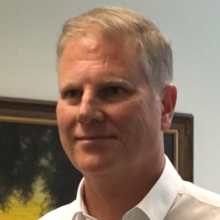
Professor Benoit Boulet is a Full Professor in the Department of Electrical & Computer Engineering at McGill University and serves as Director of the McGill Engine Centre for Technological Innovation and Entrepreneurship. His research focuses on systems and control, with applications in robotics, automation, smart grids, and electric vehicles. He is affiliated with the Systems and Control Unit and the CIM Research Group. His work spans reinforcement learning, time series forecasting, anomaly detection, and traffic signal control. Notable contributions include advancements in electric vehicle transmission systems, autonomous driving trajectory prediction, and energy management systems for smart grids. His research emphasizes practical applications in transportation, renewable energy, and industrial automation. Key technical areas include: Reinforcement learning frameworks for control systems Multi-agent systems and meta-learning Electric vehicle powertrain design Graph-based trajectory prediction Energy-efficient building systems His recent publications (2023-2025) highlight innovations in causal discovery algorithms, fault detection methodologies, and adaptive control strategies. Current initiatives focus on bridging AI advancements with real-world control engineering challenges.
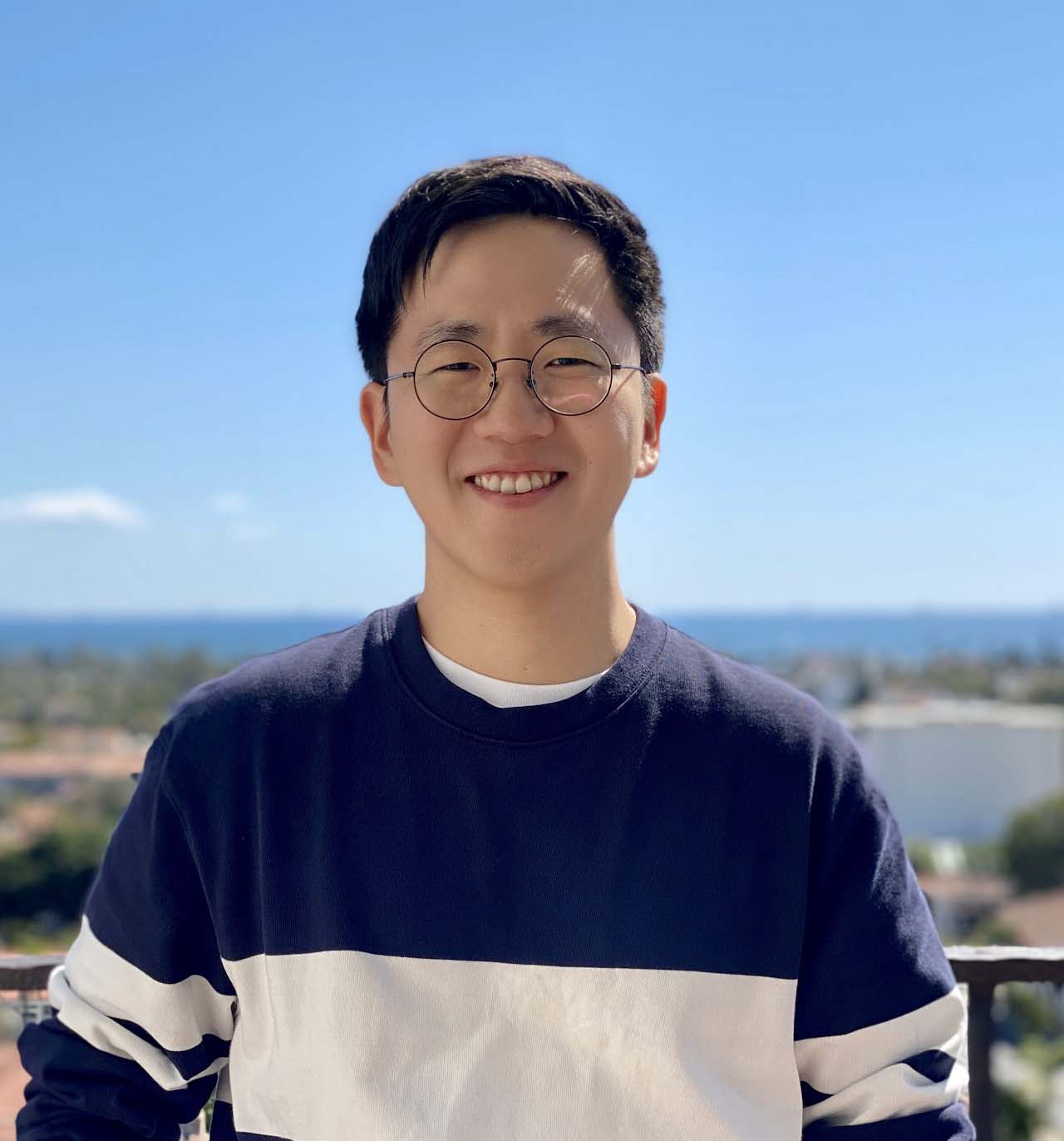
Sungho Shin is an Assistant Professor in the Department of Chemical Engineering at the Massachusetts Institute of Technology (MIT) . He leads the Shin Group, focusing on mathematical optimization, control theory, machine learning, and high-performance computing for applications in process systems engineering and energy systems. Education : PhD in Chemical Engineering (University of Wisconsin-Madison), B.S. in Mathematics and Chemical Engineering (Seoul National University) Postdoc : Argonne National Laboratory (Mathematics and Computer Science Division) His research addresses scalable algorithms for decision-making in complex systems, GPU computing for nonlinear optimization, data-driven control methods, and decarbonization of energy systems through modeling, optimization, and software development. His group has produced award-winning publications, including the 2022 Outstanding Paper Award from Mathematical Programming Computation. Key software contributions include MadNLP.jl (GPU-accelerated nonlinear programming solver) and ExaModels.jl (graph-structured optimization modeling). His team maintains local computing resources for GPU development, including NVIDIA GV100 and AMD Radeon VII systems. Scientific Awards : W. David Smith, Jr. Graduate Publication Award AIChE CAST Directors’ Student Presentation Award IFAC ADCHEM Young Author Award IFAC NMPC Young Author Award Korea Presidential Science Fellowship Kwanjeong Fellowship Grainger Wisconsin Distinguished Graduate Fellowship
Johan Ugander is an Associate Professor of Management Science & Engineering (MS&E) at Stanford University, affiliated with the School of Engineering. He is also a member of the Social Algorithms Lab (SOAL), the Institute for Computational & Mathematical Engineering (ICME), and the Center for Computational Social Science. Prior to Stanford, he held a postdoctoral position at Microsoft Research and was affiliated with Facebook's Data Science team. He received his Ph.D. in Applied Mathematics from Cornell University (2014), with additional degrees from the University of Cambridge, Lund University, and Deep Springs College. His research focuses on algorithmic and statistical frameworks for analyzing social networks, causal inference, and large-scale data. Key areas include graph theory, machine learning, and network experimentation. He has developed methodologies for seed set expansion, causal inference under network interference, and scalable computational tools for social systems analysis. Ugander teaches courses such as Networks (MS&E 135), Social Algorithms (MS&E 231), and Data Privacy & Ethics (MS&E 234). He has advised numerous Ph.D. students and postdocs in areas spanning computational social science, network science, and machine learning. His work has been supported by NSF, ARO, Cisco, and the Hellman Foundation. Notable contributions include foundational studies on social contagion, graph partitioning, and the analysis of Facebook's social graph structure. He is on sabbatical at Yale University for 2024–25.
Antoine Limasset is a Researcher (Chargé de recherche) at CNRS, affiliated with the CRIStAL research center and the BONSAI team at Université de Lille, France. His work focuses on computational methods and data structures in sequence bioinformatics, particularly addressing challenges in genome assembly, metagenomics, and third-generation sequencing data analysis. He holds a Ph.D. in Computer Science from Université de Rennes 1 (2014-2017), supervised by Pierre Peterlongo and Dominique Lavenier, followed by a postdoctoral position at Université Libre de Bruxelles (2017-2018). Key research areas include de Bruijn graph algorithms, k-mer indexing, and scalable genomic data processing. Limasset has developed tools like BLight for efficient k-mer management, STRONG for metagenomic strain resolution, and ELECTOR for evaluating long-read correction methods. He actively contributes to conference committees, including SPIRE, RECOMB, and ACM-BCB, and leads the ANR JCJC grant on graph structures for third-generation sequencing exploration. He advises two Ph.D. students: Coralie Rohmer (on multiple alignment algorithms for third-gen sequencing) and Léa Vandamme (on indexing third-gen sequencing datasets). His publications span high-impact venues like ISMB, WABI, and Genome Biology, with a focus on optimizing algorithms for genomic data scalability and accuracy.
Pascal Maillard is a Professor at the Department of Mathematics at Université Toulouse III - Paul Sabatier, affiliated with the Institut de Mathématiques de Toulouse (CNRS UMR5219). He has been a Junior member of the Institut Universitaire de France since October 2021. His research focuses on probability theory, particularly branching random walks, multiplicative cascades, and random energy models, with applications in statistical mechanics and mathematical physics. Maillard has coordinated the ANR-DFG funded project REMECO (2021-2024), investigating extreme value distributions, partition functions at complex temperatures, and optimization algorithms in random energy models. He has also co-organized the annual 'Les probabilités de demain' conference (2016–2019) to support early-career researchers in probability. His teaching spans advanced modules in stochastic modeling, probability theory, and mathematical statistics at both undergraduate and graduate levels. He is currently developing lecture notes on branching random walks and multiplicative cascades based on his Master's course at Université Paris-Sud. Research Interests: Extremal processes in branching systems, random energy landscapes, stochastic optimization, and applications to statistical physics. Awards: Junior member of Institut Universitaire de France (2021–present). Advising: Supervised three PhD students and multiple research projects in probability theory, including studies on SLE, Markov chain mixing times, and Erdős-Rényi graphs. Labs/Teams: Co-lead of REMECO project with Lisa Hartung, involving institutions in Toulouse and Mainz.
Laura I. Toma is a Professor of Computer Science at Bowdoin College. Her research focuses on cache-efficient algorithms for large geospatial data, particularly applications in GIS such as terrain analysis, visibility, flooding, and least-cost-path surfaces. She emphasizes resource-efficient approaches backed by theoretical guarantees and practical implementation, with a goal of contributing to open-source GIS software. Education: PhD (2003), MS (2001) from Duke University; BS & MS (1997) from University Politehnica of Bucharest, Romania. Affiliations: Department of Computer Science, Bowdoin College; previously supported by NSF Award 0728780 (2007–2013). Teaching: Courses include Algorithms, GIS Algorithms, Data Structures, and High-Performance Computing. Research Interests: Computational geometry, I/O-efficient algorithms, parallel computing, geospatial data processing, and algorithm optimization. Her work bridges theory and practice, addressing challenges in massive terrain datasets. Key Contributions: Developed algorithms for viewshed computation (SIGSPATIAL 2018), Terracost for least-cost paths (ACM GIS 2006), and I/O-efficient flow modeling (GeoInformatica 2003). Awards: NSF funding (2007–2013), Best Paper Award at ACM SIGSPATIAL GIS 2009 (collaborative work). Students: Advised over 20 graduate and undergraduate researchers, including honors theses on viewsheds, grid simplification, and algorithmic self-efficacy studies. Labs/Teams: Collaborates on Bowdoin's High-Performance Computing (HPC) initiatives and contributes to open-source GIS projects like GRASS.
Alexander Terenin is an Assistant Research Professor at Cornell University , specializing in machine learning and artificial intelligence. His work focuses on decision-making under uncertainty, Bayesian optimization, and Gaussian processes, particularly in non-Euclidean spaces. He has contributed to geometric learning, scalable Gaussian process methods, and applications in robotics, plasma science, and legal AI. His research integrates theoretical foundations with practical algorithms, emphasizing principles like the Gittins Index for optimal decision-making. Notable projects include the GeometricKernels software package for manifold learning and the Cambridge Law Corpus for legal AI. His work bridges statistics, geometry, and computer science to address challenges in autonomous systems, energy optimization, and data-driven decision-making. Recent Talks and Contributions: An Adversarial Analysis of Thompson Sampling (INFORMS Applied Probability Society 2025) Cost-aware Bayesian Optimization (NeurIPS 2024) Stochastic Poisson Surface Reconstruction (ICML 2025) Key Research Themes: Bayesian Optimization for multi-objective problems (e.g., plasma-driven energy systems) Geometric Gaussian Processes for robotics and 3D modeling Statistical guarantees for Gaussian processes on manifolds Grants and Collaborations: His work involves interdisciplinary projects with institutions like Carnegie Mellon University, ETH Zürich, and the University of Cambridge, reflecting a global network in AI and statistical learning.
Sharon Di: Academic Overview Sharon Di is an Associate Professor in the Department of Civil Engineering and Engineering Mechanics at Columbia University. She holds affiliations with the Data Science Institute (DSI), serving as Co-Chair of the Smart Cities initiative. Her research bridges theoretical frameworks with practical applications in transportation systems, leveraging emerging technologies like AI, data analytics, and cyber-physical systems to enhance infrastructure resilience and urban mobility efficiency. Research Focus: Di's work emphasizes travel behavior analysis during disruptions (e.g., natural disasters), optimization of traffic networks, and the integration of autonomous vehicles and ride-sharing services. Her methodologies include game theory, reinforcement learning, and physics-informed deep learning applied to large-scale sensor data. Recent projects explore digital twins for urban planning and causal inference in transportation decision-making. Key Contributions: Di has pioneered frameworks for adaptive traffic signal control, resilient infrastructure design, and multimodal mobility modeling. Her lab, DitectLab ( website ), develops AI-driven solutions for smart cities, with applications in real-time traffic management and safety optimization. She also serves on the Center for Smart Cities committee within Columbia's Data Science Institute.
Dr. Nan Niu is an Associate Professor in the Department of Electrical Engineering and Computer Science (EECS) at the University of Cincinnati. He specializes in requirements engineering, software traceability, and model-driven approaches. His work focuses on machine learning applications, continuous deployment, and testing scientific software. Dr. Niu holds a Ph.D. in Computer Science from the University of Toronto (2010, supervised by Steve Easterbrook), an M.Sc. from University of Alberta (2006), and a B.Eng. from Beijing Institute of Technology (2004). Research interests include software engineering challenges in AI/ML systems, automated refactoring, and environment-driven requirements engineering. His research is funded by agencies like NSF, NSA, and industry partners like P&G. Recent publications address topics like POS tagging in code, GUI reuse via vision-language models, and privacy concerns in mobile apps. Teaching: Software Engineering (EECE3093C), Requirements Engineering (CS5127/6027), and Large-Scale Software Engineering (CS5128/6028) Labs/Teams: Active in requirements traceability and scientific software testing Awarded over 15 honors including NSF CAREER Award (2014-2019), Best Paper Awards at RE (2016,2018,2021), and teaching excellence recognition.
Pasi Fränti is a Professor of Computer Science at the University of Eastern Finland (UEF) since 2000, affiliated with the School of Computing within the Faculty of Science, Forestry and Technology. He holds MSc and PhD degrees from the University of Turku (1991 and 1994). His research focuses on machine learning, data mining, pattern recognition, and location-based systems, with notable contributions to clustering algorithms, image compression, and speech technology. Fränti leads the Machine Learning research group at UEF and has supervised 25 PhD students, covering topics like clustering, image/audio compression, and location-aware systems. His work bridges theoretical advances with practical applications in healthcare optimization, mobile services, and intelligent systems. He has published extensively, with over 79 journal articles and 167 conference papers, including 14 IEEE Transactions papers. Recent research highlights include optimizing health station locations via clustering algorithms, outlier detection improvements, and gamified location-based services (e.g., Mopsi). His interdisciplinary projects address challenges in urban planning, energy systems, and biomedical signal processing. Fränti actively critiques academic publishing practices, advocating for open science and peer review reforms. Key projects include the IMPRO initiative (2018–2023) supporting health/social services reform, and contributions to journals like Applied Computing and Intelligence . His lab develops tools for real-time data clustering and spatial analysis, with applications in mobile user behavior prediction and smart city infrastructure planning.
Angela-Maria Chira is a postdoctoral researcher at the Max Planck Institute for Evolutionary Anthropology, specializing in the Department of Linguistic and Cultural Evolution . She is a core member of the Comparative Oceanic Linguistics (CoOL) team , focusing on cross-cultural and linguistic evolution across Oceania. Her interdisciplinary work bridges macroevolutionary biology and cultural evolution , using computational methods to model large-scale patterns. Education: PhD in Evolutionary Biology, University of Sheffield (2018) MBiolSci in Zoology, University of Sheffield (2014) Her research leverages graph algorithms to quantify travel costs in prehistoric societies and applies evolutionary principles to understand cultural and linguistic diversification. She has developed models to test Jared Diamond’s geographic hypotheses and investigate the role of alcohol in societal complexity. Angela-Maria’s publications span journals like Science Advances , Scientific Reports , and Nature , reflecting her expertise in both biological and cultural evolution. Her work on avian trait competition and linguistic disparity highlights her methodological diversity in phylogenetic analysis and ecological modeling . She collaborates with interdisciplinary teams and has presented at conferences including the Cultural Evolution Society and International Conference on Historical Linguistics . Her hobbies include birdwatching and attending cultural events, aligning with her academic interests in nature and human practices.
Fabrizio Montecchiani is an Associate Professor at the University of Perugia's Department of Engineering. He holds a Ph.D. in Computer Engineering from the same university (2014). His research focuses on graph drawing, algorithms, computational geometry, and information visualization with applications to Big Data. He coordinates the Large-scale Data Analysis & Visualization Lab (LDAV LAB), part of the national CINI Big Data Laboratory since 2019. Education: Ph.D. in Computer Engineering, University of Perugia, 2014 Research Interests: Graph Drawing and Algorithms Computational Geometry Visual Analytics and Information Visualization Algorithm Engineering for Big Data His work bridges theoretical foundations with practical applications in network visualization, data science, and algorithm design. Grants & Awards: Principal Investigator for MIUR, PRIN 2022 grant (NextGRAAL) Recipient of the 2022 National Scientific Habilitation for full professorship 2021 Best Young Italian Researcher Award in Theoretical Computer Science 2021 Best Paper Award at GD Teaching & Leadership: Lectures on Computational Models, Software Engineering, and Big Data Co-founder of CONTATTI Srl (2017), a spin-off for tourism-focused ICT solutions Editorial roles at Journal of Graph Algorithms and Applications and Computational Geometry His contributions extend to academic leadership, including organizing major conferences like GD and EuroCG. Technology Transfer: Co-founder of Vis4 Srl (2009), working on visualization solutions for financial and marketing domains Collaborations with institutions like the Financial Intelligence Agency (San Marino) and Fabrica (Benetton Group)
Wotao Yin is a Professor of Mathematics at the University of California, Los Angeles, with a distinguished research career spanning over two decades in optimization theory and its applications. His work bridges theoretical mathematics with practical applications in machine learning, image processing, and signal analysis. As a leading researcher in optimization algorithms, he has made significant contributions to the development of methods like ADMM (Alternating Direction Method of Multipliers), proximal algorithms, and decentralized optimization techniques. Department: Department of Mathematics School: College of Letters and Science University: University of California, Los Angeles Yin's research focuses on developing efficient algorithms for large-scale optimization problems, with particular expertise in convex and nonconvex optimization, distributed and decentralized optimization, and mathematical foundations of machine learning. His work has profound implications for image reconstruction, signal processing, and modern machine learning systems. He has pioneered methods for handling sparse data, non-smooth objectives, and constrained optimization problems that arise in real-world applications. An analysis of his recent publications reveals a strong trend toward addressing optimization challenges in machine learning, particularly in federated learning, attention mechanisms, and nonconvex problem structures. His work demonstrates a consistent pattern of bridging theoretical optimization with practical machine learning applications, developing algorithms that balance computational efficiency with theoretical guarantees. Recent papers show increasing focus on heterogeneous data settings, large language model optimization, and fundamental limitations of optimization methods in complex learning scenarios. Throughout his career, Professor Yin has mentored numerous PhD students and postdoctoral researchers who have gone on to successful careers in academia and industry. His collaborative network spans multiple institutions worldwide, with particularly strong connections to researchers in China and across the United States. His work has been supported by various funding agencies recognizing the fundamental importance of optimization theory for advancing computational science. Professor Yin leads a vibrant research group focused on mathematical optimization and its applications, where students and collaborators work on cutting-edge problems at the intersection of mathematics, computer science, and engineering. The group maintains strong connections with both theoretical and applied research communities, participating in major conferences across optimization, machine learning, and computational mathematics.
James Bagrow is an Associate Professor of Mathematics & Statistics at the University of Vermont, affiliated with the Vermont Complex Systems Center. His research focuses on complex systems, network science, and data science, combining mathematical models with large-scale data analysis to understand physical and social systems. He has pioneered methods in network data analysis, including the development of the textbook Working with Network Data (Cambridge University Press, 2024). Bagrow's work spans diverse applications, from human mobility patterns to open-source software dynamics and emergency response modeling. He teaches courses in applied mathematics and data science, including Data Science I/II and Advanced Engineering Mathematics . His interdisciplinary contributions have led to collaborations across computer science, physics, and social sciences, with over 70 peer-reviewed publications. Notable achievements include the FOSS Impact paper award (2021) and a Nature Human Behaviour cover article (2022) on sleep patterns during travel. Bagrow's research emphasizes predictive capabilities in social systems, information flow dynamics, and network visualization. His lab explores computational tools for analyzing complex networks, with applications to urban dynamics, crowd behavior, and disaster response. His recent work bridges symbolic regression and neural networks, aiming to enhance model interpretability and accuracy. Awards: FOSS Impact paper award (2021), Nature Human Behaviour cover article (2022) Grants & Funding: Active in securing NSF and interdisciplinary grants for complex systems research Lab/Team: Vermont Complex Systems Center, fostering collaborations in data-driven science and network analysis
Dr. Zebang Shen serves as a Lecturer in the Department of Computer Science at ETH Zurich, affiliated with the Institute for Machine Learning (Institut für Maschinelles Lernen). His research activities are centered at Andreasstrasse 5, 8092 Zürich, Switzerland, with teaching responsibilities confirmed for the Autumn Semester 2025. His primary research domains include Optimization, Machine Learning, and Data Science, with specialized focus on Federated Learning, Stochastic Optimization, and Reinforcement Learning. Shen develops algorithmic solutions for projection-free optimization, minimax problems, and diffusion model applications, emphasizing theoretical guarantees alongside practical implementations in distributed learning environments. Analysis of his 2021-2025 publications reveals consistent innovation in optimization frameworks for machine learning, particularly in federated settings where privacy-utility tradeoffs and straggler resilience are addressed. His work bridges mathematical rigor (e.g., Poincaré inequalities, McKean-Vlasov equations) with scalable algorithms for real-world data science challenges. No scientific awards were documented in the available sources. While the sources confirm his faculty role and publication record, specific details regarding student advising, grant funding, or laboratory leadership were not provided. His current teaching activities indicate ongoing academic engagement at ETH Zurich. Shen operates within ETH Zurich's Institute for Machine Learning, contributing to the Department of Computer Science's research ecosystem focused on advancing machine learning theory and applications.