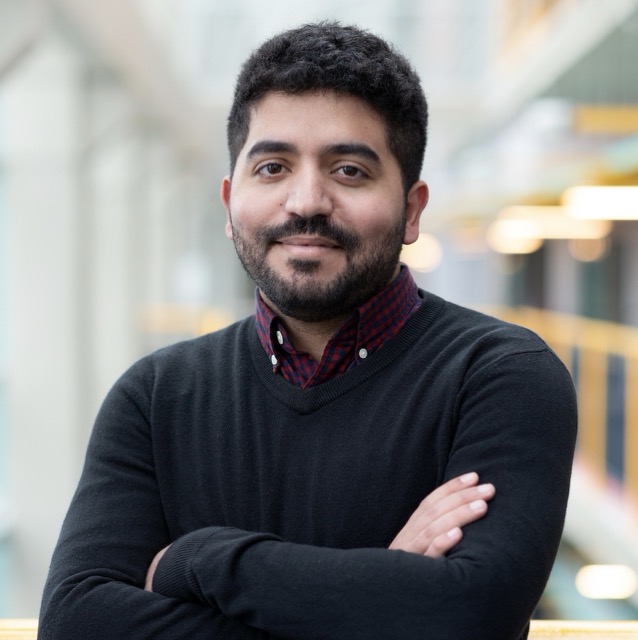
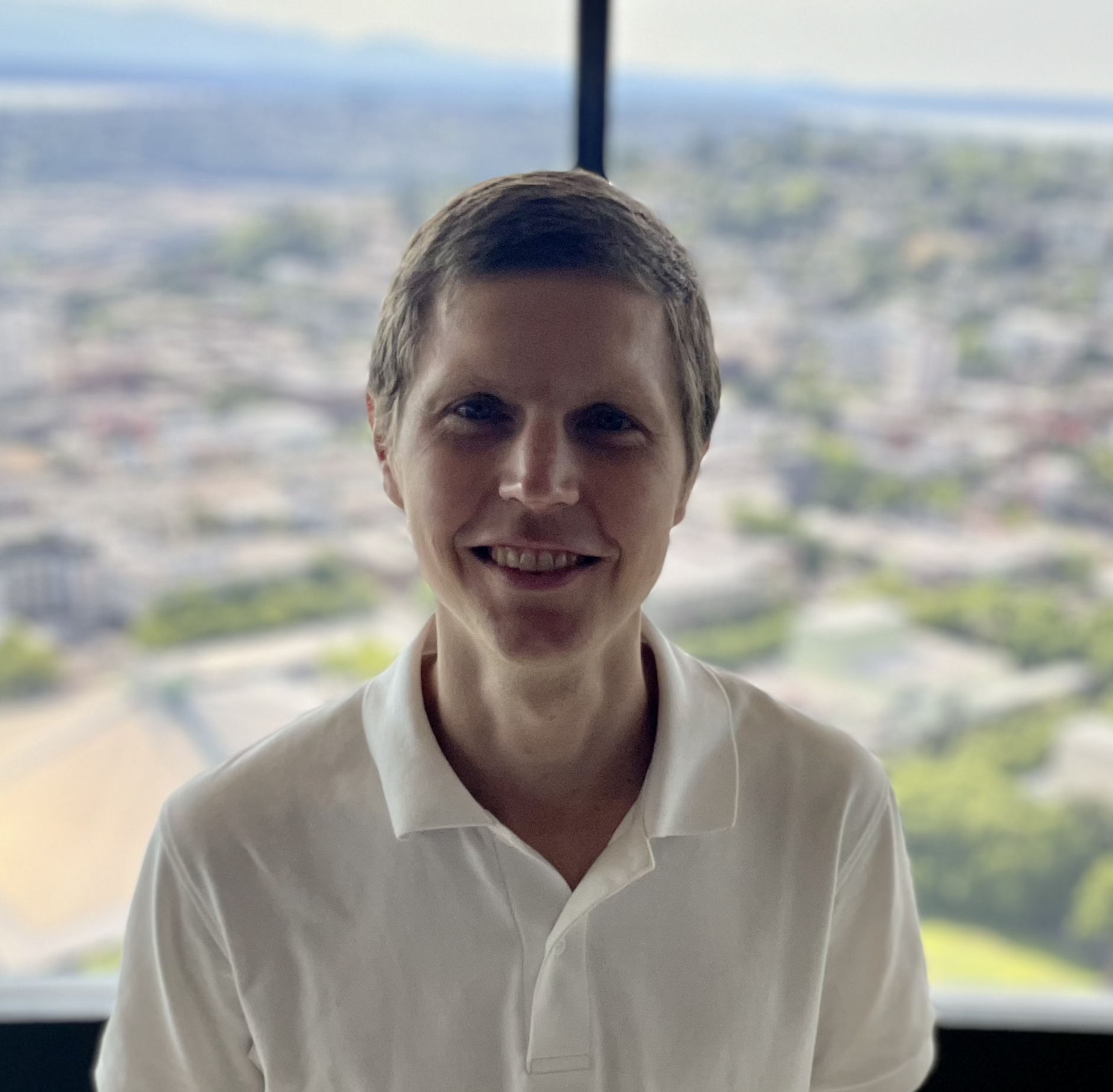
Amine Mhedhbi is an Assistant Professor at Polytechnique Montréal , where he leads the Data & AI Systems Lab . He earned his PhD in 2023 from the University of Waterloo. His work bridges data management , graph databases , and AI systems , with a focus on performance, debuggability, and user interface design for data applications. Education : PhD (University of Waterloo, 2023) Research Interests center on modern analytical data systems , including multimodal data management , language model integration , and graph query optimization . His projects like FLockMTL and GraphflowDB aim to combine semantic analysis, AI, and traditional database operations. Scientific Awards include the NSERC Discovery Grant , the Cheriton School Distinguished Dissertation Award , the VLDB Best Paper Award , and fellowships from Microsoft and Meta . Key Collaborations : Semih Salihoğlu, Jimmy Lin, Elena L. Glassman Labs & Teams : Affiliated with DAIS Lab , IVADO , and co-founded the applied research team at Distyl AI in 2023.
Chen Liu is an Assistant Professor in the Department of Computer Science at City University of Hong Kong and the Principal Investigator (PI) of the Machine Learning and Optimization (MLO) group. His research focuses on building reliable machine learning models, particularly studying robustness and privacy properties of deep neural networks from an optimization perspective. University: City University of Hong Kong Academic Rank: Assistant Professor Students: Supervises multiple PhD, MPhil, and postdoctoral researchers. Education: Holds a Ph.D. (2022) and MSc (2017) in Computer Science from École Polytechnique Fédérale de Lausanne (EPFL), and a BSc (2015) in Computer Science from Tsinghua University. Research Interests: Adversarial robustness, privacy-preserving machine learning, optimization algorithms, dataset distillation, generative models, and theoretical analysis of loss landscapes. His work addresses challenges like catastrophic overfitting, architecture overfitting in distilled data, and stable adversarial training methods. Article Trends: Recent publications explore adversarial robustness under l0/l1 norms, gradient inversion for data reconstruction, evolutionary factor searching in finance, and meta-tuning for out-of-domain few-shot learning. These works emphasize optimization techniques to enhance model reliability and generalization. Scientific Awards: Microsoft Research Ph.D. Scholarship Programme (2017–2019) Advising and Grants: Supervises a diverse team of current and former students, with collaborations across institutions like George Mason University and Zhejiang University. Research supported by academic and industry grants. Labs and Teams: Leads the MLO group, which investigates fundamental ML theory and algorithms to improve system reliability. The group's work spans adversarial training, dataset distillation, and generative model optimization.
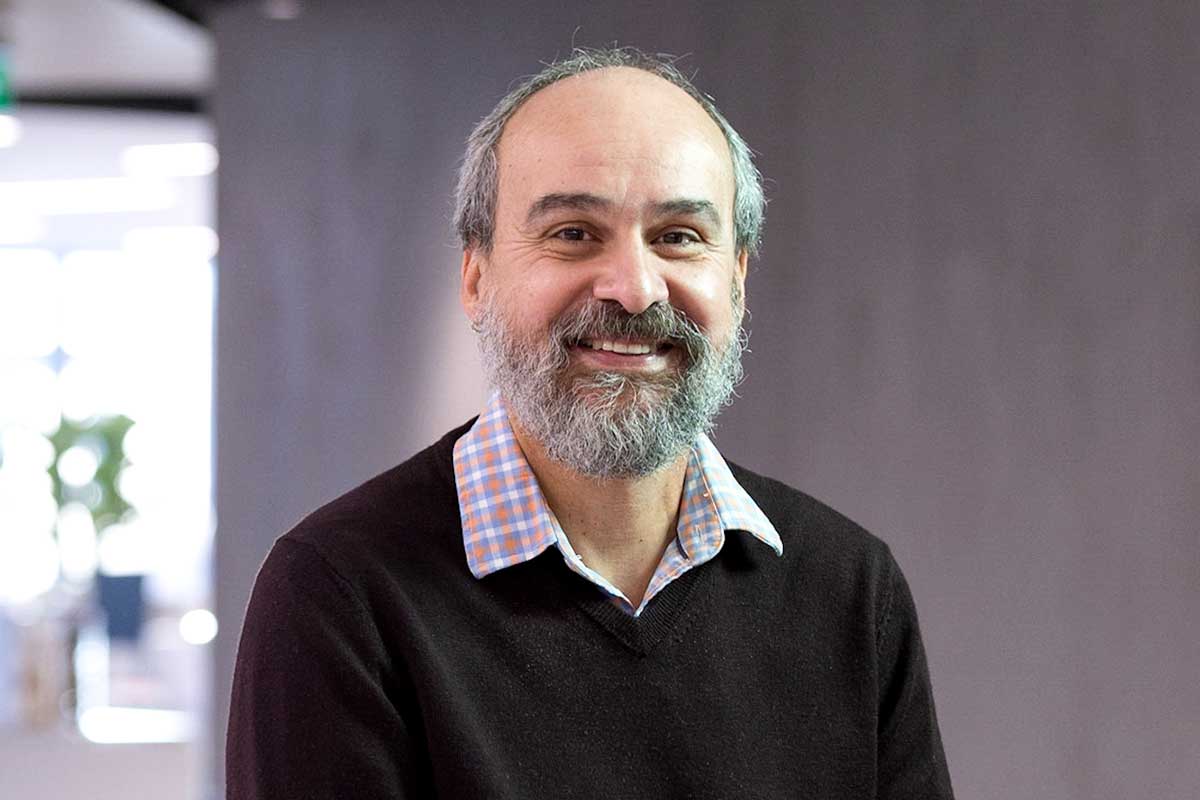
Mario Nascimento is Professor of the Practice and inaugural Director of Pacific Northwest Research at Northeastern University’s Khoury College of Computer Sciences , based at the Vancouver campus in Canada. Previously he served as Professor (and six-year Department Chair) in the Department of Computing Science at the University of Alberta, held research roles with the Brazilian Agency for Agricultural Research, and was adjunct faculty at the Institute of Computing of the University of Campinas. He has also been a visiting professor at the National University of Singapore, Aalborg University (Denmark), LMU (Germany), and the Federal University of Ceará (Brazil). Research Interests: Mario’s core expertise lies in spatiotemporal data management , a field that intersects database systems, geographic information science, and data science. His work addresses challenges in indexing, querying, and mining large-scale spatiotemporal datasets, with applications ranging from urban mobility to environmental monitoring. Over the years his research has contributed to advancing both theoretical foundations and practical systems for handling dynamic spatial data. Editorial & Service Leadership: General Co-Chair, ACM SIGSPATIAL 2024 Program Committee Co-Chair, ACM SIGSPATIAL 2022–2023 Editor-in-Chief, ACM SIGMOD Record (2005–2007) Information Director, ACM SIGMOD (2002–2005) Editorial Board Member, VLDB Journal (2011–2017) Current Editorial Board Member, GeoInformatica Chair, SSTD Endowment Board of Directors
Daniel Pettersson is a Professor at University of Gävle specializing in educational science with a particular focus on international knowledge measurements, comparative education, and curriculum studies. His work critically examines the hegemony of comparisons in education, particularly through large-scale assessments like PISA, and explores how these influence educational policy and practice. Professor Pettersson's research spans several interconnected domains within educational science. He investigates how international comparisons shape educational discourse and policy, examining the historical development of assessment practices and their impact on national education systems. His work frequently analyzes the production of educational knowledge through data visualization and quantification, revealing how numbers become authoritative in educational decision-making. A significant portion of his research focuses on Swedish education within international contexts, exploring how global educational trends are adopted, adapted, and contested in national settings. His extensive publication record reveals several key trends in his scholarly work. Over the past two decades, Pettersson has traced the evolution of international large-scale assessments from marginal research tools to central policy instruments. His recent work increasingly examines data visualization techniques in educational research and the historical construction of educational knowledge through quantification. He also explores the intersection of teacher education with international assessment frameworks, revealing tensions between global educational discourses and local teaching practices. Professor Pettersson has made significant contributions to understanding how educational policy is shaped by international comparisons. His research demonstrates how assessment data becomes transformed into policy narratives that influence educational reform. He has documented the historical trajectory of international assessment research, showing how it evolved from marginal academic interest to central policy instrument. His collaborative work with scholars like Sverker Lindblad, Thomas Popkewitz, and Tatiana Mikhaylova has been particularly influential in critically examining the political dimensions of educational measurement. His research activities include extensive work with international research teams, participation in major conferences including the Nordic Education Research Association (NERA) and the International Standing Conference for the History of Education (ISCHE), and contributions to systematic reviews of international comparative research. Professor Pettersson's work bridges historical analysis, policy studies, and critical examination of educational measurement practices, providing valuable insights into how global educational knowledge is produced and circulated.
Christian Lundahl is Professor of Education at Örebro University, specializing in the history of assessments, evaluation, and Swedish educational research. His work focuses on internationalization of educational data, marketization of schools, and the role of PISA in policy debates. He leads the transnational research project The Global Laboratory – Torsten Husén and the Internationalization of Educational Research (funded by the Swedish Research Council) and co-edited books like Beyond PISA . Lundahl also developed Sweden’s first MOOC for teacher education and serves as scientific leader for the Open Parliament Laboratory (OPaL) . Research Interests : History of educational assessments and evaluations Transnational educational policy flows Marketization and computational analysis in education PISA data utilization and mis/trust Curriculum theory and policy Equity in grading and national tests Recent Trends in Publications include computational analytics in policy data, historical analysis of educational laboratories, and critiques of PISA’s political role. His 2025 articles examine sampling bias in parliamentary data and school marketization. Projects and Leadership : Principal investigator for The Global Laboratory (2020-2024) Co-developer of Sweden’s first MOOC for teacher training (2013) Scientific leader of OPaL – The Open Parliament Laboratory Visiting Professor at Humboldt University (2020)
Carlos Brody is the Wilbur H. Gantz III '59 Professor of Neuroscience at Princeton University, where he leads a research group at the Princeton Neuroscience Institute. His laboratory employs a unique combination of computational, behavioral, and electrophysiological techniques to investigate the neural mechanisms underlying cognitive abilities. Dr. Brody's research focuses on understanding how the brain processes information during cognitive tasks, particularly examining short-term memory, decision-making, and time perception. His lab trains rats to perform complex cognitive tasks while recording neural activity, and develops computational models to explain the experimental findings. They have pioneered the study of 'internal signals' in neural activity that constitute 'the internal conversation of the mind,' with their key discovery being 'nTc' (Neurally-inferred Time of Commitment), a biomarker that indicates decision commitment before overt behavioral responses. Dr. Brody's laboratory has been continuously supported by HHMI (Howard Hughes Medical Institute) with renewal until 2032. They are currently conducting groundbreaking research using multiple Neuropixels probes for large-scale recordings across the brain while rats perform cognitive behaviors, representing what Dr. Brody considers the future of cognitive systems neuroscience that combines advanced recording technology, AI-based analysis, and well-controlled behavioral paradigms. Scientific Awards HHMI Investigator (renewed until 2032) Advising and Research Support Dr. Brody has mentored numerous successful researchers who have secured faculty positions and leadership roles: Marino Pagan (Nature publication, SFARI Bridge to Independence Award) Edward Nieh (faculty position at University of Virginia) Manuel Schottdorf (Nature publication) Sue Ann Koay (publications in Neuron and eLife, Group Leader at Janelia) Brian DePasquale (faculty position at Boston University) Emily Dennis (Group Leader at HHMI's Janelia) Ahmed El Hady (Group Leader at Max Planck Institute) Abby Russo (joined CTRL-Labs startup) Diksha Gupta (Best Paper Award at RLDM conference) His lab is currently supported by HHMI funding and is planning to implement next-generation Neuropixels probes in Spring 2025 to record from 6,000-12,000 neurons simultaneously across multiple brain regions. Research Team and Facilities The Brody Lab features a diverse team ranging from purely computational to purely experimental researchers. The lab emphasizes minimizing barriers between computational and experimental approaches, encouraging researchers to move freely along this spectrum based on their interests. They maintain state-of-the-art facilities for behavioral training, electrophysiological recordings, and computational analysis, with plans to implement next-generation Neuropixels recording technology in Spring 2025.
Brett Hemenway Falk is a Researcher in the Department of Computer and Information Science at the University of Pennsylvania. He serves as director of the Crypto and Society Lab, focusing on privacy and security in digital environments and facilitating transparency and trust. His work combines rigorous mathematical approaches with practical implementations in cryptography and blockchain technology. Education: Sc.B. in Mathematics from Brown University Ph.D. in Mathematics from UCLA Research Interests include: Cryptography and secure multi-party computation protocols Blockchain technology (cross-chain interoperability, financial network stability, on-chain governance) Privacy-preserving algorithms and data security Coding theory applications in secure systems Scientific Contributions include: Developing practical secure computation protocols Advancing ORAM (Oblivious RAM) architectures Analyzing decentralized governance mechanisms Exploring DeFi network stability and token economics His teaching activities feature the popular MCIT 582 Blockchain course at Penn. Research funding comes from NSF, DARPA, IARPA, ONR, ARL, NIH , and the Laura and John Arnold Foundation.
Mikael Johansson is a Professor at Kungliga Tekniska Högskolan (KTH), specializing in Control Technology . He teaches and coordinates courses such as Distributed Optimization (FEL3311) and various advanced-level degree projects in computer science, electrical engineering, and systems engineering. His research spans Control Systems , Machine Learning , and Optimization , with a focus on asynchronous algorithms, federated learning, and applications in energy systems and construction. His work includes 15 recent publications on topics like neural networks, distributed optimization, and battery technology. Notable areas of contribution are in asynchronous learning, federated learning with privacy constraints, and quasi-Newton methods for optimization. His research bridges theoretical advancements with practical applications in urban design, healthcare, and autonomous systems.
Sean Welleck is an Assistant Professor at Carnegie Mellon University's School of Computer Science, specifically within the Language Technologies Institute (LTI). He leads the L3 Lab and serves as an advisor for the AI for Math Fund. His academic journey includes a PhD from New York University under Kyunghyun Cho and postdoctoral positions at the Allen Institute for Artificial Intelligence and the University of Washington with Yejin Choi. Dr. Welleck's educational background shows a strong foundation in computer science. He earned his PhD in Computer Science from New York University, where he worked under the mentorship of Kyunghyun Cho and Zheng Zhang. Prior to this, he completed his MSE and BSE in Computer Science from the University of Pennsylvania, demonstrating a long-standing commitment to the field. Dr. Welleck's research focuses on bridging informal and formal reasoning with AI, with particular emphasis on developing learning, inference, and evaluation algorithms for large language models. His work spans multiple cutting-edge areas including mathematical reasoning , code generation , inference algorithms , and AI reasoning agents . A significant portion of his recent work involves combining AI with formal methods for mathematics, where he has developed frameworks like Llemma (an open-source language model for mathematical reasoning) and meta-generation (for inference-time algorithms). His research is characterized by a strong theoretical foundation coupled with practical applications that push the boundaries of what AI systems can achieve in formal reasoning domains. Analysis of Dr. Welleck's recent publications reveals a clear research trajectory focused on enhancing language models' capabilities in formal reasoning and mathematical problem-solving. His work demonstrates an evolution from foundational research in neural text generation to increasingly sophisticated approaches that integrate formal methods with deep learning. Key trends include the development of inference-time algorithms that improve model performance without additional training, frameworks for mathematical reasoning that connect informal and formal proofs, and novel evaluation methodologies for language models. His publications consistently appear in top-tier conferences including NeurIPS, ICLR, ICML, and ACL, reflecting the high impact of his contributions to the field. Dr. Welleck's scientific achievements have been recognized with several prestigious awards: NAACL 2025 Best Paper Award ICLR 2025 Oral Presentation (Top 2%) ICLR 2025 Spotlight Presentation (Top 5%) NeurIPS 2021 Outstanding Paper Award (Top 0.1%) for MAUVE NVIDIA AI Labs Pioneering Research Award (2017 and 2018) As an educator and mentor, Dr. Welleck actively guides the next generation of AI researchers. He currently advises multiple PhD students including Pranjal Aggarwal, Weihua Du, Andre He, and Seungone Kim (some co-advised with other faculty), along with MS students Riyaz Ahuja, Jiewen Hu, Qinyue Tan, and Thomas Zhu, and undergraduate Tate Rowney. At CMU, he teaches advanced courses such as Neural Code Generation and Advanced NLP, and has previously taught at New York University and the University of Washington. His commitment to education extends to creating resources like the Thesis Review Podcast and developing tutorials on neural theorem proving that have been presented at major conferences. Dr. Welleck leads the L3 Lab at CMU, which focuses on the intersection of language, learning, and logic. The lab brings together students and researchers to tackle challenging problems in AI reasoning, with particular emphasis on mathematical reasoning and code generation. Recent initiatives include the development of Llemma, an open-source language model specialized for mathematical reasoning, and work on inference-time algorithms that enable language models to improve their performance through additional computation during inference rather than through additional training.
Ziming Zhang is an Assistant Professor in the Department of Electrical and Computer Engineering at Worcester Polytechnic Institute (WPI) , with additional affiliations in Data Science and Robotics Engineering. He previously held research roles at Mitsubishi Electric Research Laboratories (MERL) and Boston University. PhD in Computing (2013) from Oxford Brookes University , UK MS in Computing Science (2010) from Simon Fraser University , CA BS in Computer Science and Technology (2005) from Northeastern University , China Research interests span computer vision , machine learning , and their applications in point cloud processing , medical imaging , autonomous driving , and IoT . He leads the Vision, Intelligence, and System Laboratory (VISLab) at WPI. Recent publications focus on 3D reconstruction , hyperbolic learning , and robust classifiers . Awards include the R&D100 Award 2018 and NSF funding for data-efficient deep learning. PhD Students: Yecheng Lyu (co-supervised), Guojun Wu (co-supervised), Hangrui Zhang, Xuechu Yu Master's Students: Yun Yue, Yuping Shao Visiting Scholars: Fangzhou Lin His lab partners with industry and academic institutions, focusing on autonomous systems , robotics , and scientific imaging projects.
Tao Zou is an Associate Professor at the Research School of Finance, Actuarial Studies and Statistics, Australian National University. His research spans covariance regression modeling, network data analysis, and applications in financial and environmental statistics. He earned a Ph.D. in Statistics in 2016. Ph.D. in Statistics, 2016 Dr. Zou’s work pioneers covariance regression, where covariances are modeled as functions of covariiates. Key contributions include robust estimation techniques, spatio-temporal modeling, missing data imputation via semi-supervised learning, and distributed data aggregation. His methods address challenges in high-dimensional and non-Euclidean data analysis. Recent publications (2025–2023) explore quasi-score matching for spatial autoregressive models, regularization in network regression, functional principal component analysis for complex data, and environmental applications like PM2.5 pollution studies. These works emphasize robustness, scalability, and interdisciplinary relevance in economics, finance, and environmental science. Dr. Zou collaborates on projects like the 2023 Data Analysis App to Empower Assessment of Immunogenicity of Biologics (Co-Investigator). While his student supervision list isn’t explicitly provided, his methodological advancements influence big data and spatial statistics. He contributes to open-access software and continues expanding covariance regression for non-normal and functional data.
Ulrik Brandes serves as Full Professor and Head of the Department of Humanities, Social and Political Sciences at ETH Zurich, holding the Professorship for Social Networks. He actively teaches courses including Network Analysis and Applied Network Science: Sports Networks for Fall semester 2025, with office location at WEP J 14, Weinbergstr. 109, Zurich. His research spans Social Network Analysis, Graph Theory, and Network Science, with significant applications in sociology, sports analytics (particularly soccer and Australian Football League), and archaeological networks. As a longstanding member of the International Network for Social Network Analysis (since 2001) and the Academy of Sociology (since 2017), he bridges theoretical graph algorithms with practical interdisciplinary applications, recently expanding into sports analytics through the Football Scouting Association (2023). Analysis of his recent publications reveals strong thematic continuity in network centrality, temporal dynamics, and robustness, with increasing application diversity across sports analytics, archaeological trade networks, and decentralized social media platforms. His work consistently emphasizes efficient computational methods for real-world network problems. Honors: Simmel Award (2024) Prof. Brandes maintains active research leadership through departmental oversight and course development, though specific grant details and student advisement records are not publicly documented in available sources. His departmental role indicates substantial administrative responsibilities alongside research and teaching commitments.
Keunhyun (Keun) Park is an Assistant Professor of Urban Forestry at the University of British Columbia (UBC), affiliated with the Department of Forest Resources Management . He also holds an Adjunct Professor position at Utah State University in the Department of Landscape Architecture and Environmental Planning. Education: BSc and MSc in Landscape Architecture from Seoul National University; PhD in Urban Planning and Design from the University of Utah Research Lab: Faculty lead of the Urban Nature Design Research Lab ( under_lab ) His research focuses on designing healthy, just, and resilient cities through urban nature , with particular emphasis on: Environmental justice and equitable access to urban green spaces Human behavior in public spaces using drone/sensor/VR technology Smart growth urban design impacts on public health and ecological systems Recent publications demonstrate expertise in GIS applications , pedestrian behavior analysis , and urban planning across 20+ studies from 2013-2025. Collaborations include the Vancouver Park Board , Metro Vancouver , and Wasatch Front Regional Council .
Professor Lyudmila Mihaylova is a distinguished academic at the University of Sheffield's School of Electrical and Electronic Engineering, where she holds the position of Professor of Signal Processing and Control. She has established herself as a leading researcher in the fields of signal processing, Bayesian methods, and autonomous systems, with significant contributions to particle filtering techniques for intelligent transportation systems. Her work bridges theoretical developments with practical applications across multiple domains including transportation, healthcare, and industrial automation. Prof. Mihaylova's research interests center on nonlinear filtering, sequential Monte Carlo methods, statistical signal processing, and sensor data fusion. Her work spans both theoretical advancements and practical implementations, with particular focus on high-dimensional problems including vehicular traffic flow estimation, image processing, and localization in sensor networks. She has extensive experience with various image modalities such as optical, thermal, LIDAR, SAR, and hyperspectral imaging. Her group actively develops novel methods for autonomous intelligent systems focusing on sensing, tracking, decision making, and machine learning applications. Analysis of Prof. Mihaylova's recent publications reveals a strong trend toward uncertainty quantification in machine learning models, particularly for safety-critical applications. Her work increasingly integrates traditional signal processing techniques with modern deep learning approaches, with applications spanning sewer inspection robotics, medical diagnostics (particularly sleep apnea detection), UAV swarm tracking, industrial manufacturing, and autonomous vehicle systems. A significant portion of her recent research focuses on developing robust methods that can handle incomplete or outlier-corrupted data while providing reliable uncertainty estimates. Among her notable professional achievements: President of the International Society of Information Fusion (ISIF) Senior member of the IEEE Signal Processing Society Associate Editor for IEEE Transactions on Aerospace and Electronic Systems Associate Editor for Elsevier Signal Processing Journal Prof. Mihaylova has successfully mentored numerous PhD students and postdoctoral researchers, many of whom have gone on to prominent academic and industry positions. Her research has been supported by major funding bodies including EPSRC, EU, MOD/DSTL, and industry partners, with recent projects including 'Protecting Environments with UAV Swarms' (InnovateUK, 2022-2024), 'ShiRAS: Towards Safe and Reliable Autonomy in Sensor Driven Systems' (NSF-EPSRC, 2019-2023), and 'Confident safety integration for Cobots' (Lloyd's Register Foundation, 2019-2020). Her research group follows a collaborative approach with the philosophy 'We share knowledge, we grow.' Prof. Mihaylova maintains active research collaborations with institutions worldwide and has held previous academic positions at Lancaster University (2006-2013) and University of Bristol (2004-2006), along with research visiting positions at the University of Ghent, Katholic University of Leuven, and the Bulgarian Academy of Sciences.
Omar Rifki is an Associate Professor (Maître de Conférences) specializing in combinatorial optimization and artificial intelligence applications. His research bridges theoretical computer science with practical logistics challenges, focusing on routing problems, process mining, and machine learning integration for complex decision systems. His core research interests include phase transitions in NP-hard problems, vehicle routing optimization under time constraints, and healthcare process modeling. Rifki's work demonstrates a consistent pattern of integrating reinforcement learning with traditional optimization techniques to solve large-scale real-world problems in transportation and logistics, with particular emphasis on spatio-temporal data effects and collaborative systems. Analysis of his 15 publications (2019-2025) reveals three dominant research thrusts: (1) Fundamental studies of combinatorial problem hardness using phase transition frameworks, (2) Practical applications of deep reinforcement learning in vehicle routing and taxi assignment, and (3) Healthcare process optimization through advanced process mining techniques. His work consistently addresses scalability challenges in real-world implementations while maintaining theoretical rigor. No scientific awards were documented in the provided materials. His collaborative work with researchers like Christine Solnon and Thierry Garaix indicates active participation in European operations research communities, though specific grant details remain unreported. Rifki's research shows increasing integration of graph theory and machine learning in transportation applications, particularly evident in his Lyon City case studies on autonomous ride-sharing systems.