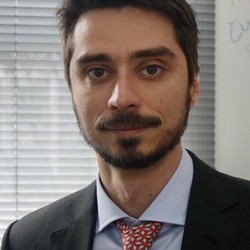
Amin Kargarian is ISC Constructors Associate Professor at LSU, leading the RAISE Lab focused on cyber-physical infrastructure resilience. His research integrates quantum computing, machine learning, and optimization for power systems applications. Current projects include NSF-funded work on quantum-enhanced grid optimization and flood resilience planning for Entergy. Kargarian develops computational frameworks addressing climate hazards in energy infrastructure, with emphasis on equitable community outcomes. His lab pioneers quantum-classical hybrid algorithms for large-scale power system optimization challenges. Research areas span resilient grid design, stochastic optimization under uncertainty, quantum algorithm development, and community-aware energy planning. Kargarian mentors graduate students in power systems engineering and quantum computing applications.
Ali Jannesari is an Associate Professor and Director of the Laboratory for Software Analytics and Pervasive Parallelism (SwAPP Lab) at the Department of Computer Science, Iowa State University. His research focuses on the intersection of High-Performance Computing (HPC) and AI, aiming to advance reliable and efficient software for modern parallel computing platforms. He has held academic and research roles including Senior Research Fellow at UC Berkeley and leadership positions in Germany's Technical University of Darmstadt and RWTH Aachen University. He holds a Habilitation in Computer Science (2016, TU Darmstadt), PhD (2010, KIT), and M.S. (2005, University of Stuttgart). Education: Habilitation in Computer Science, Technical University of Darmstadt, Germany (2016) Ph.D. in Computer Science, Karlsruhe Institute of Technology (2010) M.S. in Computer Science, University of Stuttgart (2005) Research Interests: High-Performance Computing (HPC), Machine Learning, Parallel Computing, Software Analytics, AI-driven compiler optimization, federated learning, and cross-language code analysis. His work bridges HPC and AI to enhance computational efficiency and scalability in data-driven applications. Recent Contributions: Leading research in GNN-based code parallelization (AutoParLLM), federated multimodal learning, and HPC performance optimization via graph-based methods. His lab's work has been published in top venues like NAACL, ICS, and NeurIPS. Lab & Team: The SwAPP Lab develops tools for software analytics and pervasive parallelism, with a focus on HPC-AI integration. Current projects include optimizing distributed training systems and improving code migration with LLMs.
Warut Khern-am-nuai serves as Associate Professor of Information Systems at McGill University's Desautels Faculty of Management, where he directs the Analytics, AI and Advanced Digital Technologies Initiative and Business & Management Research Centre while co-directing the Retail Innovation Lab. His cross-disciplinary work bridges information systems, artificial intelligence, and business operations with significant industry impact. His educational credentials include a Ph.D. in Management (MIS) with Computer Science minor from Purdue University, M.S. in Economics from Purdue, MBA (Honors) from Thailand's National Institute of Development Administration, and B.Eng. in Computer Engineering (First-Class Honors) from King Mongkut Institute of Technology Ladkrabang. Dr. Khern-am-nuai's research centers on online marketplace dynamics , predictive analytics for business , and AI-driven platform design , with special focus on user behavior, security implications, and economic outcomes. His work employs rigorous experimental and data-driven methodologies to address real-world challenges in retail, e-commerce, and digital platforms. Analysis of his recent publications reveals a strong trajectory toward fairness in machine learning systems , behavioral impacts of platform design , and AI applications in post-pandemic retail . These studies consistently leverage large-scale user data and experimental approaches to generate actionable business insights across diverse contexts. His scientific recognition includes: AIS Early Career Award (2023) ISS Sandy Slaughter Early Career Award (2022) Invitational Fellowship from Japan Society for Promotion of Science (2023) Multiple teaching honors including Poets&Quants Top 50 Professor (2022) Dr. Khern-am-nuai has secured over $1.1 million in competitive research funding, including SSHRC Insight Grants for "AI Generated Content and the Future of Online Platforms" ($143,510) and NSERC Discovery Grants for "Helping Retail Industry Navigate the Post-Pandemic World with AI" ($155,000). His grant portfolio demonstrates exceptional success in translating theoretical research into practical business solutions through industry partnerships. As leader of the Retail Innovation Lab and Analytics Initiative, he drives collaborative research connecting academic rigor with industry challenges, particularly in applying AI to retail analytics, supply chain optimization, and consumer behavior prediction through interdisciplinary team structures.
Frédéric BERTRAND is a Full Professor at the Université de Technologie de Troyes (UTT), part of the Computer Laboratory and Digital Society (LIST3N). He previously held positions at the Université de Strasbourg and Institut de Recherche Mathématique Avancée (IRMA). His academic qualifications include a habilitation to direct research (HDR) from the Université de Strasbourg, a Ph.D. from Université Louis Pasteur, and membership in the École Normale Supérieure de Lyon. He specializes in statistical modeling, machine learning, and artificial intelligence, with applications in bioinformatics, biostatistics, and medical data analysis. Roles and Affiliations: Full Professor at UTT Director of the Mastère Spécialisé in Big Data Analytical and Decisional Aspects Responsible for the OSS ED361 SPI specialty Responsible for the PEA Impact program Member of the LIST3N laboratory Research Interests: His work focuses on statistical and machine learning methods applied to complex systems, including bioinformatics, medical data analysis, and process mining. Key areas include Bayesian networks, partial least squares regression (PLS), variable selection algorithms, and handling missing data in large-scale datasets. He has developed multiple R packages, such as selectBoost , bootPLS , and Patterns , which are widely used in statistical modeling and data analysis. Publications and Contributions: He has authored/co-authored over 38 scientific articles, 14 books, and 14 R packages. His research emphasizes methodological advancements in statistics and their practical applications in biology, healthcare, and industry. Notable contributions include developing algorithms for high-dimensional data analysis and collaborative projects on cancer genomics and proteomics. Teaching: He teaches advanced courses in statistics, mathematics, and data analysis at the graduate and postgraduate levels, including modules on uncertainty analysis and complex systems at UTT and the Université de Strasbourg.
Tijl De Bie is a Senior Full Professor at the University of Ghent, specializing in machine learning, data science, and their applications in bioinformatics, computational social sciences, and HR analytics. He leads the AI and Data Analytics (AIDA) research group within IDLab-ELIS. PhD in Machine Learning (KU Leuven, 2005) Worked at U.C. Berkeley, U.C. Davis, University of Southampton, and University of Bristol His research focuses on foundational aspects of data science, including fairness in AI, network embeddings, and human-centric methodologies. Recent work explores temporal network simulation, bias mitigation, and large-scale career trajectory datasets. Notable awards include an FWO Odysseus Group I grant and three ERC grants (Consolidator, Proof of Concept, Advanced). Current projects involve ethical AI frameworks and dynamic network analysis. Scientific Awards : FWO Odysseus Group I, ERC Consolidator, ERC Proof of Concept, ERC Advanced Grant He collaborates extensively in interdisciplinary research, applying machine learning to social media analysis and financial domains. His team develops open-source tools like EvalNE and Fondue for network embedding evaluation.
Sarah Frances Homewood is an Assistant Professor (Tenure Track) in the Department of Computer Science at the University of Copenhagen, affiliated with the Human-Centred Computing research section. Her research focuses on the intersection of human-computer interaction and artificial intelligence, with applications in healthcare, natural language processing, and interpretable machine learning. Her diverse research interests span Human-Computer Interaction, Machine Learning, Natural Language Processing, and Artificial Intelligence. Recent investigations include interpretability of large language models, clinical NLP applications, fairness in recommender systems, and quantum natural language processing. Analysis of her recent publications reveals strong emphasis on NLP interpretability techniques, healthcare applications of AI, and theoretical foundations of machine learning. Her work frequently bridges fundamental computer science with practical applications in medicine and human-centered systems. Emerging research directions include quantum NLP and protein sequence modeling. Dr. Homewood's research contributes to the Machine Learning Section's focus on both theoretical foundations and applied domains including medical data analysis and information retrieval.
Josep Casanovas is a Full Professor at the Statistics and Operations Research Department of the Technical University of Catalonia (UPC), affiliated with the Barcelona School of Informatics. He previously served as head of inLab FIB (2012-2020) and as dean (1998-2004) and vice-rector (2006-2011) of UPC, leading strategic initiatives in university governance and ICT policies. His research focuses on Modelling and Simulation , Internet and Information Systems , and Urban Mobility . He has led projects for the European Union, including C-ROADS Spain, REMEDiAL, and ECHORD++, addressing intelligent transport, software automation, and robotic innovation. Recent publications highlight his work on agent-based simulation for urban health, deep learning applications in traffic and energy savings, and wildfire management tools . He co-directs LogiSim and coordinates the Severo Ochoa Research Excellence Program at the Barcelona Supercomputing Center (BSC-CNS).
Dr. Mohammad Abdullah Zafar is an Associate Research Scientist and Research Director at the Aortic Institute at Yale-New Haven Hospital, part of Yale School of Medicine's Department of Surgery. His role bridges academic, clinical, and research efforts to advance care for thoracic aortic disease. He holds an MBBS from the University of Health Sciences and is completing a Master of Health Science in Clinical Investigation at Yale. Dr. Zafar leads a multidisciplinary team managing clinical databases, genetic testing programs, and research initiatives, contributing to over 120 peer-reviewed publications and international guidelines. His research focuses on the genetic, molecular, and clinical aspects of thoracic aortic aneurysms and dissections. Key areas include risk prediction, genetic overlap with other vascular diseases, and optimizing therapeutic strategies. He frequently presents at conferences and serves as an editor for the journal AORTA . Dr. Zafar’s work has established the Aortic Institute as a global leader in aortic disease research, with contributions to clinical practice guidelines and large-scale genetic studies.
Prof. Selin Damla Ahipasaoglu is a Professor in Operational Research at the University of Southampton's School of Mathematical Sciences . She serves on the management team of the UKRI CDT SustAI (Artificial Intelligence for Sustainability) as Senior Tutor and Co-Lead for the Transportation and Logistics Theme . Her work bridges mathematical optimization with practical applications in sustainability, finance, and transportation systems. Research Interests : Convex Optimization Robust Optimization Discrete Choice Theory Experimental Design Machine Learning Current Research : Focused on robust optimization and its applications in discrete choice modeling, portfolio optimization, and transportation systems. She explores theoretical frameworks alongside real-world implementations, particularly through interdisciplinary projects like the UKRI CDT SustAI. Teaching : In the 2025/2026 academic year, she teaches MATH3017: Mathematical Programming and MATH2013: Operational Research II . She supervises PhD students in Mathematical Sciences, including Kexin Lai, Samuel Jericho Ward, and others.
Sean Qian is a Professor at Carnegie Mellon University (CMU), jointly appointed in the Department of Civil and Environmental Engineering, Heinz College of Information Systems and Public Policy, and the Department of Electrical and Computer Engineering. He directs the Mobility Data Analytics Center (MAC) and co-founded TraffiQure Technologies to commercialize AI-driven infrastructure solutions. His research focuses on dynamic network modeling, intelligent transportation systems, climate resilience, and infrastructure interdependency. Supported by NSF, U.S. DOT, and industry partners, his work integrates AI, big data, and policy analysis to address urban mobility challenges. Education: PhD in Civil Engineering (UC Davis, 2011), MS in Statistics (Stanford, 2012), and dual MS/BS in Civil Engineering (Tsinghua University, 2006/2004). Research emphasizes smart cities, EV integration, cybersecurity for infrastructure, and equity in mobility policies. He serves on editorial boards for Transportation Research journals and TRB committees. Awards include the NSF CAREER Award (2018) and Greenshields Prize (2017). Grants and collaborations include projects with Fujitsu, IBM, and state agencies, addressing curbside management, climate adaptation, and rural mobility. His lab develops tools like the Rural Access Mobility Platform and social digital twin technologies for infrastructure resilience.
Prof. Theo Araujo is a Full Professor of Media, Organisations and Society at the University of Amsterdam's Department of Communication Science, and Scientific Director of the Amsterdam School of Communication Research (ASCoR). He leads the Digital Data Donation Infrastructure (D3I) consortium, co-directs the Trust in the Digital Society research priority area, and is a senior researcher in the Public Values in the Algorithmic Society (AlgoSoc) program. His research focuses on AI's societal impacts, computational social science methodologies, and data donation frameworks. Key roles include coordinating multi-university initiatives and advising on digital ethics. Research interests emphasize automated decision-making, conversational agents, and digital inequality. He has pioneered tools like the Conversational Agent Research Toolkit and OSD2F framework. His work bridges communication science with computational methods, addressing challenges in data collection, algorithmic transparency, and human-AI interaction. Recent studies explore chatbot persuasion mechanisms, public trust in AI systems, and cross-cultural consumer behavior. He has published extensively on brand engagement, media analytics, and the ethical implications of automated systems. Current projects include smart speaker data donation studies and hybrid methods for health communication research. Grants and collaborations involve EU-funded initiatives and partnerships with Dutch universities. His lab work focuses on developing ethical AI applications and improving digital trace data methodologies. Future directions include advancing participatory data donation practices and mitigating algorithmic biases in automated decision-making systems.
Geraint Rees is Vice-Provost (Research, Innovation and Global Engagement) at University College London (UCL), where he previously served as Dean of the Faculty of Life Sciences. His academic appointments include Professor of Cognitive Neurology and Director of the UCL Institute of Cognitive Neuroscience. His research focuses on understanding human cognition through advanced neuroimaging and machine learning techniques. Education: Doctor of Philosophy, University College London (1999) Master of Arts, University of Cambridge (1999) Bachelor of Medicine/Bachelor of Surgery, University of Oxford (1991) Bachelor of Arts, University of Cambridge (1988) Dr. Rees leads interdisciplinary research in cognitive neuroscience, investigating neural mechanisms of perception and decision-making using functional MRI and computational approaches. His work bridges clinical neurology with artificial intelligence to understand brain disorders. Research emphases include neuroplasticity, neurodegeneration biomarkers, and machine learning applications in healthcare. Recent publications (2023-2025) demonstrate strong research trends in computational neuroscience with applications to neurodegenerative diseases, particularly Huntington's and Alzheimer's. Key patterns include advanced neuroimaging techniques (7T MRI, fMRI), transformer-based deep learning models, and investigations into neuroplasticity and sensory system adaptations. Dr. Rees has extensive leadership experience in large-scale research initiatives, serving on the Executive Management Team of the Francis Crick Institute and as Non-Executive Director for UCL Business. He maintains active research collaborations with Google DeepMind and develops doctoral training programs.
Patrick Kinney is the Beverly Brown Professor of Urban Health and Environmental Health at Boston University’s School of Public Health, and affiliated faculty with the Institute for Global Sustainability (IGS). His work focuses on the intersection of global environmental change and human health, particularly climate change and air pollution. He has conducted groundbreaking studies on air pollution’s effects on lung health and mortality, led international research in Africa and China, and pioneered climate and health programs in academia. Education: ScD, Environmental Health Science, Harvard University MS, Environmental Health Science (Air Pollution Control), Harvard University BA, Art History, University of Colorado Research Interests: Climate change impacts on health Air pollution mitigation strategies Urban sustainability and equity Environmental justice in policy He has conducted a large-scale randomized trial in Ghana evaluating clean cooking technologies and led the first U.S. climate and health program at Columbia University. Advising & Grants: While specific students are not listed, his research involves multidisciplinary teams addressing global health challenges. His work has been supported by initiatives aligning with urban sustainability goals and environmental justice priorities. Labs/Teams: Active in the Lancet Countdown on health and climate change, contributing to global health reports. Collaborates with environmental justice organizations to model health impacts of policy interventions.
Dieter Schmalstieg is the Alexander von Humboldt Professor of Visual Computing at the University of Stuttgart and an adjunct professor at Graz University of Technology. He leads research in augmented reality (AR), virtual reality (VR), and visualization, with contributions to tracking, rendering, and medical applications. His work spans academia and industry, with over 400 publications and numerous awards, including the IEEE ISMAR Career Impact Award and Fellow of the IEEE. Education: PhD (1997), Habilitation (2001) from Vienna University of Technology. Research: Focuses on AR/VR systems, medical visualization, and real-time graphics. Key projects include the Christian Doppler Laboratory for Handheld AR and collaborations with Qualcomm and VRVis. Awards: START Prize (2002), IEEE Technical Achievement Award (2012), Humboldt Professorship (2023). His teaching includes courses on computer graphics, VR, and real-time rendering. He has advised over 30 PhD students, many of whom hold academic or industry leadership roles. Current research explores situated analytics, mixed reality telepresence (MRUnion), and AR applications in mining and medicine (MiReBooks).
Jamie Moore is a Research Fellow at the University of Essex, focusing on linked and missing data. They previously worked at the Administrative Data Research Centre for England (University of Southampton) and the UK Office for National Statistics. Moore holds a BSc in Biology (University of Southampton) and a PhD in Evolutionary Ecology (University of Leeds). Research Interests: Quantifying non-response bias in surveys, adjusting for missing data in longitudinal studies, pandemic-related data collection challenges, and record linkage methodologies. Key Collaborations: Regularly works with Gabriele Durrant, Peter W.F. Smith, and other interdisciplinary teams. Recent publications highlight their work on survey design during global crises, bias adjustment techniques, and health disparity analysis using large-scale datasets like the UK Household Longitudinal Study. Moore’s methodological contributions span both academic journals and policy-oriented working papers, emphasizing practical applications in public health and social sciences.