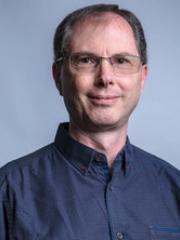
Aleksandar Dimov Dimov is an Associate Professor at the Department of Software Technologies, Faculty of Mathematics and Informatics (FMI), University of Sofia. He specializes in software reliability engineering, neuro-fuzzy systems, and cloud computing architectures. His research focuses on optimizing software systems through adaptive methodologies and addressing challenges in distributed computing environments. His work spans over two decades, with contributions to neuro-fuzzy optimization for manufacturing, machine learning applications in healthcare, and architectural patterns for scalable systems. Key areas include improving software reliability models, cloud storage performance, and privacy-preserving software design. He has published extensively on topics like microservices, service-oriented architectures, and educational technology. Dr. Dimov's publications reflect a strong emphasis on practical solutions for real-world challenges in software engineering and data systems. His research bridges theoretical models with applied implementations, particularly in domains requiring high precision and adaptability.
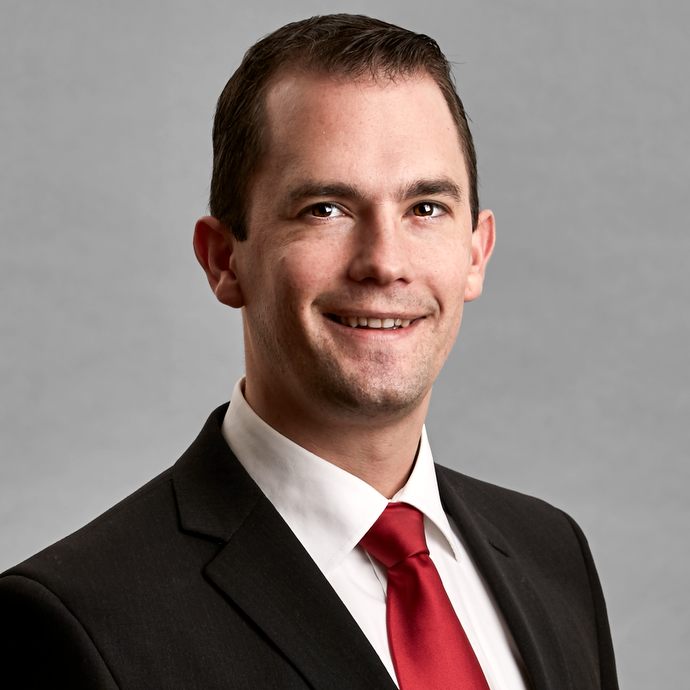
Prof. Martin Kropp is a Lecturer for Software Engineering and Programme Manager for the CAS Agile Organisation at FHNW University of Applied Sciences and Arts Northwestern Switzerland, within the School of Computer Science and FHNW Institute of Mobile and Distributed Systems. His research focuses on Agile Methodologies, Tool-supported Agile Collaboration, and Automated Software Construction/Testing. He actively contributes to the Swiss Agile Research Network (SARN) and Swiss Agile Study initiatives. Teaching responsibilities include courses on Software Construction, Testing & Quality Management, and .Net Framework/C# for the Bachelor of Computer Science, as well as the Master of Science in Engineering (MSE) in Software Engineering and Architecture. He has published extensively on Agile practices, DevOps metrics, and collaborative tools like aWall, emphasizing empirical studies and practical applications. Key research themes include Agile team dynamics, leadership in software development, and the integration of AI in testing and DevOps. His work bridges academic research and industrial practice, with notable contributions to conferences like ICSE, XP, and CHASE.
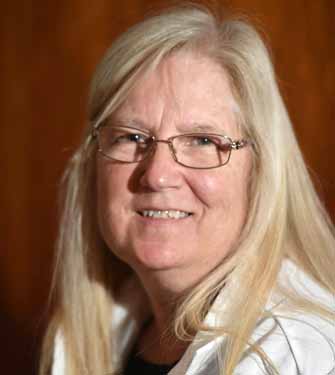
Dr. Muhammad Ovais Ahmad is an Associate Professor at Karlstad University, Sweden, and an Adjunct Professor at the University of Oulu, Finland. His expertise spans software engineering methodologies, evidence-based practices, process improvement, and digital transformation. He has held roles including Professor at Gdansk University of Technology and Programme Coordinator for the European Masters Programme in Software Engineering. Education: PhD and MSc in Information Processing Science from the University of Oulu, Finland. Research Interests: His work focuses on large-scale agile software development, technical/non-technical debt management, cybersecurity in telecom solutions, and sustainable adoption of digital services. Recent studies explore organizational debt as a barrier to agility and the interplay between psychological safety and debt reduction. Collaborations: Partnered with Nokia, Ericsson, F-Secure, and Skandia. Active in projects like NODLA (2022-2024). Labs/Teams: Leads research teams investigating socio-technical systems and digital transformation strategies in industries like healthcare and automotive.
Dr. Alim Ul Gias is a Lecturer in Programming at Queen Mary University of London, with a PhD in Computing from Imperial College London. He has over a decade of academic experience across institutions in the UK and Bangladesh, including roles at City, University of London and the University of Dhaka. His research focuses on software engineering, distributed systems, and performance optimization in cloud/edge computing, employing reinforcement learning and predictive analytics. He also investigates AI-assisted education tools to bridge theory-practice gaps in computing education. Education: PhD (Imperial College London), M.Sc. (Software Engineering, University of Dhaka), B.Sc. (Information Technology, University of Dhaka). Completed an internship at Grameenphone during his undergraduate studies. Research Interests: Intelligent performance management, cloud-native applications (microservices), DevOps challenges, and AI-driven educational resources. His work emphasizes open-source tools for net-zero computing and smart manufacturing. Recent publications explore trace sampling (SampleHST-X), cold-start capacity planning (COCOA), and model-driven autoscaling (ATOM). Teaching: Courses include Software Engineering Tools, Algorithms and Data Structures, and Quality Assurance in Software Industry. Labs/Teams: Active contributor to the RADON framework for microservices performance engineering. Collaborates on open-source projects addressing distributed system reliability and scalability.
Ludvig Lindlöf is a Senior Lecturer at Halmstad University, affiliated with the School of Business, Innovation and Sustainability. He specializes in research and teaching on organizational management, particularly focusing on R&D Management, agile development, and self-organization. His work includes leading projects on agile practices in product development and innovation ecosystems. His research explores topics such as tactical capabilities in agile new product development (NPD), data accessibility challenges in innovation, and inter-organizational agility tensions. Lindlöf has contributed to understanding how visual management and lean principles enhance communication and coordination in complex projects. Publications highlight his engagement with interdisciplinary challenges, such as the interplay between manager-team dynamics in large-scale agile initiatives and the documentation paradox in knowledge reuse. He has also explored digitalization’s impact on work environments and pedagogical approaches in higher education. Lindlöf’s research emphasizes practical applications, leveraging case studies like autonomous car projects and multi-stakeholder data platforms. His work bridges theoretical frameworks with real-world organizational practices, particularly in scaling agile methodologies beyond software contexts.
Fabiano Dalpiaz is a researcher actively contributing to Requirements Engineering (RE), Software Engineering (SE), and Agile Development. His work explores the intersection of Natural Language Processing (NLP), crowdsourcing, and empirical validation in managing requirements for software systems. Key research themes include requirements tracing, user story analysis, and conceptual modeling. Collaborates with scholars like Sjaak Brinkkemper, Ashley T. van Can, and Xavier Franch. Research Trends : Dalpiaz's publications focus on the application of Large Language Models (LLMs) in RE, hybrid software teams, and automated trace link recovery. His work emphasizes improving requirements quality, alignment between requirements and architecture in agile environments, and terminological clarity in SE. Article Trends : Recent studies analyze ad-hoc requirements in enterprise systems, linguistic structures in user stories, and the role of NLP in RE. He also investigates gamification and visualization techniques for requirements validation.
Dr. David Ramsey is a professor at the Faculty of Information and Communication Technology, Wrocław University of Science and Technology, specializing in decision theory, game theory, and stochastic optimization. His work bridges mathematics, computer science, and behavioral economics. University: Wrocław University of Science and Technology School: Faculty of Information and Communication Technology Department: Department of Computer Science and Systems Engineering Email: david.ramsey@pwr.edu.pl Research Interests: Ramsey’s research integrates decision theory and game theory with stochastic optimization to model complex systems in behavioural economics and biological systems . Recent work explores multi-criteria decision making and urban sustainability . Publication Trends: His 2024–2020 articles span game theory applications in partnership formation, urban development analysis, and computational decision support tools. Collaborative works include interdisciplinary studies on genetic epidemiology and moral cognition in schizophrenia. Teaching & Contact: He holds regular office hours on Tuesdays and Thursdays. No scientific awards are listed in the provided data.
Steve Cayzer is a Professor in the Department of Mechanical Engineering at the University of Bath, with affiliations to the Centre for Climate Adaptation & Environment Research (CAER), Centre for Regenerative Design & Engineering for a Net Positive World (RENEW), Centre for Sustainable Energy Systems (SES), and the Institute of Sustainability and Climate Change. His work focuses on integrating sustainability principles with technological and educational innovation, particularly in mechanical engineering education and climate change mitigation. PhD in Computational Neurobiology, University of Cambridge BSc in Physiology, University of Bristol Research interests include: Sustainability and Circular Economy metrics Learning Analytics (especially Social Network Analysis of MOOCs) Sustainable Innovation in business models and strategy Artificial Intelligence applications in Artificial Immune Systems Agile project management and cross-domain learning His recent articles explore sustainability education, circular economy transitions, energy policy modeling, and agile teaching methods in engineering. He received the 2024 Sustainability and Climate Action Awards and leads projects on simulation software integration and hybrid tutorial pedagogy for large student cohorts. Collaborations span renewable energy, climate adaptability, and AI-driven sustainability frameworks. 2024: Sustainability and Climate Action Awards Steve Cayzer actively supervises doctoral students and participates in academic conferences like ESLTIS24. He contributes to labs and teams focused on: Climate adaptation strategies Regenerative design engineering Sustainable energy systems AI for environmental monitoring
Dr. Carlos Eduardo da Silva is a Senior Lecturer in Software Engineering at the School of Computing and Digital Technologies, Sheffield Hallam University (UK), and leads the Applied Software Engineering Research Group (ASERG). His research focuses on Software Engineering's intersection with Information Security, emphasizing self-adaptive systems, AI planning, service-orientation, and secure-by-design methodologies. He has led projects in smart cities, IoT applications, and cloud computing, including consultancy for SMEs in the Sheffield City Region through the Digital Innovation for Growth (DIfG) programme. Education: PhD in Computer Science (University of Kent, 2011), MSc in Systems & Computing (Federal University of Rio Grande do Norte, 2007), BSc in Computer Science (Federal University of Rio Grande do Norte, 2005). Research Interests: Self-adaptive systems, business process engineering, digital identity management, insider threat detection, and secure software development. Current work includes AI-driven drug discovery, IoT-based fraud detection systems, and process mining for business process visualization. Teaching: Teaches modules like Secure Software Engineering, Software Architecture, and Professional Software Projects across undergraduate and postgraduate programs in Computer Science and Software Engineering. Supervises final-year projects and apprenticeship programs. Professional Activities: Member of RNP's Identity Management Technical Committee and Brazilian Computer Society's Security SIG. Former General Chair of SBSeg 2018 and reviewer for journals like Systems and Software and conferences like WBCI. Key Projects: Led ASERG's Knowledge Transfer Partnership (KTP) with Cafeology for coffee roasting process systems. Developed a data space infrastructure for the Landscape Laboratory initiative, supporting interdisciplinary environmental research.
Andrew R. Post, MD, PhD, is a Clinical Associate Professor in the Department of Biomedical Informatics at the University of Utah School of Medicine and Director of Research Informatics at Huntsman Cancer Institute (HCI). He specializes in healthcare data management, software engineering, and data warehousing for translational research. His work focuses on simplifying access to electronic health record (EHR) data for cancer and disease studies, and he leads HCI's Research Informatics Shared Resource, which supports data management systems across genetic testing to population-level data. Previously, he held leadership roles at Emory University, including informatics director for the Georgia CTSA and All of Us Research Program. Education: MD - University of Pennsylvania School of Medicine PhD - University of Pittsburgh MS - University of Pittsburgh Bachelor of Arts - University of Pennsylvania His research emphasizes self-service EHR data access for population studies and systems architectures for clinical research. Over 15 years, he has developed software solutions to streamline data use in oncology and other disciplines. Publications highlight innovations in data warehousing, EHR integration, and temporal abstraction methods. His work bridges technical informatics with clinical practice, addressing challenges in data interoperability and scalability. Projects include optimizing data loading processes for i2b2 platforms and designing privacy-preserving data release systems.
Richard Thomas is a Senior Lecturer and Director of International at the School of Electrical Engineering and Computer Science, part of the Faculty of Engineering, Architecture and Information Technology at The University of Queensland. His academic career spans over three decades, focusing on software engineering education and innovative teaching methodologies. He has held roles including Director of International and has contributed to curriculum design, assessment frameworks, and interdisciplinary collaboration in computing education. His research interests bridge software engineering and pedagogy, emphasizing practical industry integration, student engagement, and global education models. Notable contributions include frameworks for software development education, fault prediction systems, and the use of agile methodologies in teaching. He has published extensively in journals like IEEE Transactions and conferences such as ACM Transactions on Computing Education. Thomas has authored textbooks on software architecture, with editions published in 2022 and 2023, reflecting his commitment to modernizing educational resources. His work on 'Haery' (a Hadoop-based big data system) and energy efficiency optimization highlights his technical contributions to software systems research. He has presented globally, including a 2024 talk on AI-driven entrepreneurship education for sustainability. His research consistently integrates technology advancements with educational innovation, aiming to enhance both student outcomes and industry relevance.
Prof. Dr. Paul Drews serves as Dean of the School of Management and Technology and holds the Professorship for Information Systems, specializing in Digital Transformation and Information Management at Leuphana University Lüneburg. He founded and leads the interdisciplinary Research Center for Digital Transformation and previously served as the university's Presidential Delegate for Cooperation and Entrepreneurship (2020-2022). His research focuses on organizational digitalization, IT innovation ecosystems, and data-driven business models. Research interests emphasize socio-technical perspectives: Digital transformation strategies and governance Architecture frameworks for business ecosystems Scaled agile methodologies in enterprise contexts IT function evolution in digital organizations Data ethics and governance implementation Low-code/no-code adoption challenges Recent publications (2025) demonstrate strong focus on AI ethics education, legacy system modernization, and competency transformation in IT professions, with methodological emphasis on case studies and process models. Awards highlight consistent research excellence: Multiple Best Paper awards (XP 2025, HICSS 2024) Teaching innovation recognition (AACSB 2024) Doctoral supervision excellence (IEEE CBI 2021, WI 2021) Early-career distinction (Young Scientist Award 2017) Major grants include: TrICo (Transformation through Innovation, €9.6M): PI USIN5G (5G Innovation Networks, €3.7M): Project lead DigiTal-SZENARIO (Responsible Innovation, €4.6M): Co-lead He currently supervises 10 PhD projects on digital leadership and platform architectures. Leads the Research Center for Digital Transformation (16 professors across 6 disciplines) and directs the MBA Digital Transformation Management program.
Yves Wautelet is a Researcher at the ORCID -verified Faculty of Computer Science at the University of Namur (Namur Digital Institute). His work focuses on software engineering and smart cities , with particular emphasis on agile scaling , citizen participation , and policy-making frameworks for urban mobility systems. Active in smart city research since 2019 Contributed to UN Sustainable Development Goals (SDGs) related to sustainable cities Collaborated internationally (Belgium, Sweden) His research combines systematic literature reviews with comparative policy analysis , focusing on topics like: Scaling agile practices in large software projects Formalizing policy-making lifecycles for smart mobility Designing citizen participation frameworks Context factor analysis in digital governance
Susan Land, PhD , is a full-time Associate Professor in Research at Wayne State University , where she also serves as Director of the Applied Genomics Technology Center (AGTC) . Spanning roles in research, teaching, and core-facility leadership, she supports investigators across the Department of Biology, the C. S. Mott Center for Human Growth and Development, and the Karmanos Cancer Institute. Education & Training: While specific degrees are not detailed in the provided text, Dr Land’s extensive instruction of graduate courses in genomics, cancer biology, and biomedical engineering indicates advanced graduate training in molecular biology or a closely related field. Research Interests: Dr Land’s work centers on genomic technologies , next-generation sequencing , single-cell genomics , and precision medicine . Her Applied Genomics Technology Center delivers DNA/RNA isolation, genotyping, expression profiling (qPCR, Illumina BeadArrays, Affymetrix GeneChips, digital gene expression), and whole-exome sequencing, supporting projects from cancer epidemiology to placental biology. Publication Trends: Across more than 60 peer-reviewed articles since 2002, her research demonstrates a clear trajectory from methodological tool development (e.g., SnpEff) to large-scale genetic epidemiology studies—particularly in lung and prostate cancer among African-American populations—and integrative systems-biology investigations of complex diseases such as preeclampsia and asthma pharmacogenomics. Scientific Awards & Honors: No specific awards are listed in the supplied text. Student Advising & Mentoring: Ahmed Ibrahim Ahmed, MD – PhD thesis on “Transcriptomic Analysis of Cell-Free RNA in the Amniotic Fluid of Patients with Preterm Labor using Next Generation Sequencing” Ongoing mentorship of MD/PhD students, Reproductive Endocrinology fellows, and junior faculty recruits via AGTC facility tours and collaborative projects. Laboratory & Core Facility: Dr Land directs the Applied Genomics Technology Center (AGTC) , a state-of-the-art Wayne State core facility equipped with low- and high-throughput genomic instrumentation. Services include DNA/RNA extraction, qPCR, Illumina BeadArrays, Affymetrix GeneChips, Illumina Genome Analyzer IIx, and comprehensive bioinformatics support.
Florian Matthes is a Professor of Software Engineering for Business Information Systems at the Technical University of Munich (TUM), specifically within the TUM School of Computation, Information and Technology. Born in 1963, he has established himself as a leading researcher in software engineering, business information systems, and their applications across various domains. Prof. Matthes' research focuses on business information systems and software engineering, with particular emphasis on natural language processing applications in medical, legal, and enterprise contexts, privacy-enhancing technologies for digital platforms, and blockchain-based systems engineering. His work bridges theoretical computer science with practical industry applications, as evidenced by his co-founding of several successful IT startups including CoreMedia AG (1996), infoAsset AG (1999), Tr8cy UK Ltd (2018), and silver AI GmbH (2024). His publication record demonstrates consistent research productivity with over 400 research outputs spanning from 1990 to the present, with significant activity in recent years (2023-2025). His work spans multiple subfields including privacy-enhancing technologies, natural language processing, blockchain systems, and agile software development methodologies. The research shows a clear trend toward addressing contemporary challenges in AI ethics, data privacy, and the integration of emerging technologies into business information systems. Ernst Denert Award for Software Engineering 2022 Prof. Matthes has held significant leadership roles including Head of the Software Architecture working group of Gesellschaft für Informatik, membership on the advisory board of the Ernst Denert foundation for software engineering, and organization of several international conferences. He previously served as Dean of Studies at the Faculty of Computer Science at TUM until 2010 and has been a venture ambassador of the TUM Venture Labs since 2020. His academic journey began at J.W. Goethe University in Frankfurt (graduated 1988), followed by a doctorate at the University of Hamburg in 1992, and research at Digital Equipment Systems' research center in Palo Alto (1992-93). He was a professor at TU Hamburg-Harburg from 1997 to 2002 before joining TUM. His work demonstrates strong industry-academia collaboration through his startup activities and advisory roles, reflecting his commitment to translating research into practical applications while maintaining academic rigor.