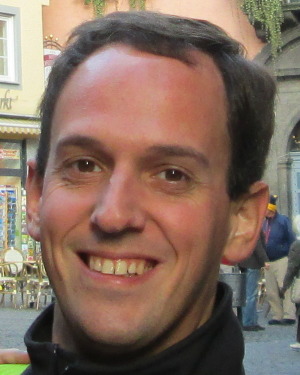
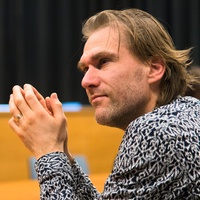
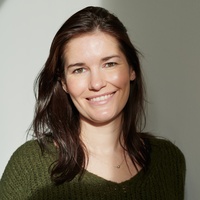
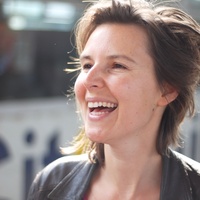
David Martens is a Professor of Data Science at the University of Antwerp , where he directs the Applied Data Mining Research Group within the Faculty of Business and Economics . He also serves as Chair of the Department of Engineering Management and Director of the Antwerp Center on Responsible AI . His academic work spans data mining , interpretable machine learning , and the societal impact of AI . PhD in Applied Economic Sciences (KU Leuven, 2008) Director, Antwerp Center on Responsible AI Chair, Department of Engineering Management Martens' research focuses on responsible AI and data ethics , with applications in finance, public policy, and behavioral analysis. His recent publications emphasize counterfactual explanations , LLM interpretability , and privacy implications in AI systems. His articles reveal trends in Explainable AI (XAI) , including narrative-driven explanations , graph neural networks , and ethical challenges like monetization risks and algorithmic bias. Keywords span Computer Science , Artificial Intelligence , and Behavioral Data . Martens is a leading voice in data science ethics , authoring the book Data Science Ethics: Concepts, Techniques, and Cautionary Tales (Oxford University Press, 2022). He combines academic rigor with industry experience, having consulted for banks, telecom firms, and startups in fraud detection and digital advertising .
Tim Van de Cruys is a Senior Lecturer at the Faculty of Arts, KU Leuven, serving as Head of the Centre for Computational Linguistics (CCL). He maintains significant affiliations with LECTIO (KU Leuven Institute for the Study of the Transmission of Texts, Ideas and Images), Leuven.AI (KU Leuven Institute for Artificial Intelligence), and LILI (KU Leuven Interdisciplinary Language Institute). His work bridges computational linguistics, artificial intelligence, and humanities research with practical applications across multiple disciplines. Dr. Van de Cruys specializes in computational semantics and creative language generation, with particular expertise in applying NLP techniques to historical and classical texts. His research spans multiple domains including: Natural Language Processing for ancient languages (Latin, Ancient Greek) Computational approaches to lexical and compositional semantics Large language models and their applications in humanities research Creative language generation and human-AI collaboration Named entity recognition and disambiguation in historical contexts Non-autoregressive modeling for sequential generation tasks His recent publications demonstrate a strong focus on applying cutting-edge NLP techniques to humanities challenges, particularly in processing ancient languages. He frequently employs transformer models to address named entity recognition, word sense discrimination, and semantic analysis in low-resource language contexts. His work consistently bridges formal linguistic theory with practical computational applications, creating valuable tools for digital humanities scholars. As promotor and co-promotor on numerous research projects extending through 2029, Dr. Van de Cruys supervises PhD students working at the AI-humanities intersection. His current major projects include "Living Corpora" (exploring human-AI collaboration in digital humanities), "Stochastic processes and non-autoregressive models for sequential generation," and "NIKAW" (exploring knowledge networks from classical antiquity). These projects demonstrate his commitment to advancing both theoretical understanding and practical applications of computational linguistics. He teaches various courses including Computational Linguistics, Scripting Languages, Programming for Humanities, Computational Creativity, and AI for Humanities, training students to work at this critical interdisciplinary crossroads. His leadership of the Centre for Computational Linguistics positions him at the forefront of computational linguistics research in Belgium, where he continues to expand the boundaries of what's possible at the intersection of language, computation, and humanistic inquiry.
Peter Karsmakers serves as Associate Professor at KU Leuven's Department of Computer Science within the Faculty of Engineering Technology, based at the Geel Campus. He coordinates the Declarative Languages and Artificial Intelligence (DTAI) research group and holds leadership roles including coordinator of Research and Education for Computer Science across Geel and Diepenbeek Campuses. Karsmakers earned his PhD in Engineering Science in May 2010, focusing on kernel-based learning algorithms for sparse modeling and efficient predictions from large datasets. His doctoral work established foundations for his current research trajectory in resource-constrained machine learning systems. His research integrates machine learning with signal processing for real-time sensor data interpretation, specializing in anomaly detection from acoustic, radar, and accelerometer signals on embedded devices. Current projects address industrial condition monitoring, elderly care systems, and livestock facility monitoring through three main tracks: acoustic monitoring (e.g., SINS, WATCHDOG), radar-based systems (e.g., FARADAY, NextPerception), and smart electronics for power converters. Recent publications demonstrate strong trends in constraint-guided deep learning architectures for industrial applications, cross-environment robustness in sensor systems, and domain-knowledge integration to reduce data requirements. His work consistently bridges theoretical machine learning with practical implementations in resource-constrained environments. No scientific awards or fellowships were mentioned in the provided materials. Karsmakers supervises over 10 master's theses annually and coordinates a research team of 10 PhD students and a post-doc within DTAI-ADVISE. He has secured approximately 2.3 million euros in funding through VLAIO, EU-ECSEL, and bilateral industry contracts, including 10 active projects such as AutoEdgeML (2024-2028) and Fault Tolerant Neural Networks for Space Applications (2024-2027). He leads the DTAI-ADVISE research group focused on developing software that attaches semantics to sensor data on resource-constrained devices. The team operates across multiple campuses with specialized labs for acoustic monitoring (Geel), radar-based systems (in collaboration with ESAT-TELEMIC), and smart electronics (with Electrical Engineering department), maintaining strong industry partnerships with companies in healthcare, manufacturing, and agriculture sectors.
Wout Joseph is a Professor in the domain of Experimental Characterization of wireless communication systems at Ghent University (Belgium), where he has been working since October 2009. He is also an IMEC Principal Investigator since 2017. His research is conducted within the wireless, acoustics, environment & expert systems (WAVES) research unit at the Department of Information Technology (INTEC). Dr. Joseph was born in Ostend, Belgium on October 21, 1977. He received his M.Sc. degree in electrical engineering from Ghent University in July 2000. From September 2000 to March 2005 he was a research assistant at the Department of Information Technology (INTEC), where his scientific work focused on electromagnetic exposure assessment around base stations for mobile communications related to health effects. This work led to his Ph.D. degree in March 2005. Professor Joseph's research expertise spans multiple domains within wireless communications and bioelectromagnetics. His primary research interests include electromagnetic field exposure assessment, in-body electromagnetic field modeling, electromagnetic medical applications, propagation for wireless communication systems, IoT, antennas and calibration. He also specializes in wireless performance analysis, industry 4.0 applications, wireless localization, and Quality of Experience metrics. His work is particularly notable for its focus on dosimetric studies in the radiofrequency range, where his research is ranked first in number of peer-reviewed studies. His research has practical applications in wireless network planning, occupational safety, and public health policy related to electromagnetic fields. His extensive publication record (over 886 publications with an h-index of 45 in ISI Web of Science and 66 in Google Scholar) demonstrates a clear trajectory from fundamental electromagnetic field measurements to applied research in industrial wireless networks and bioelectromagnetic applications. Recent work shows a strong emphasis on 5G exposure assessment across multiple European countries, millimeter-wave channel modeling, and the application of machine learning techniques to exposure assessment and wireless localization. EBEA council board member (2015-2018) EBEA board member at large (2019) Bioelectromagnetics Society board member (2022) Bioelectromagnetics Society board member (2024) 24 research awards Professor Joseph leads significant research efforts in electromagnetic field exposure assessment, with particular emphasis on developing measurement methodologies and computational models for real-world exposure scenarios. His work bridges theoretical electromagnetic modeling with practical applications in wireless communications and bioelectromagnetics. His research group within the WAVES unit is highly active in both theoretical and experimental aspects of wireless communications and bioelectromagnetics, with current projects focusing on 5G exposure assessment across Europe, millimeter-wave channel modeling for data centers and industrial environments, and the development of novel exposure assessment methodologies using advanced signal processing and machine learning techniques.
Piet Desmet is a full professor at KU Leuven's Faculty of Arts, serving as vice rector of KU Leuven, Kulak Kortrijk Campus, and academic director of the Office of the Academic Director, Bruges Campus. He leads multiple research divisions including itec and its Language and Technology subdivision, and is a member of Leuven.AI - KU Leuven Institute for Artificial Intelligence. As general coordinator of itec and academic director of the imec smart education research program, he oversees significant research initiatives spanning multiple campuses. Desmet's research focuses on the intersection of language learning and technology, with particular expertise in Second Language Acquisition and Technology, Computer-assisted Language Learning (including AI-based chatbots), Learning Analytics, and Language Technology and Corpus Linguistics. His work explores intelligent feedback systems, linguistic complexity prediction, adaptive testing, and natural language processing applications for educational contexts. His research spans theoretical linguistic frameworks to practical educational implementations, with a strong emphasis on empirical validation of technological interventions in language learning. Analysis of Desmet's recent publications reveals a strong trajectory toward integrating artificial intelligence with language education, particularly through conversational AI and learning analytics. His work increasingly focuses on chatbot-assisted language learning, adaptive assessment systems powered by large language models, and the application of computational linguistics to educational problems. The publications demonstrate a consistent methodological approach combining theoretical linguistics with empirical educational research, often employing eye-tracking, ERP studies, and learning analytics to evaluate effectiveness. Desmet actively supervises numerous PhD students and leads multiple major research projects including Smart Education at Schools (2025-2026), Enhancing EFL Learners' Speaking Ability through Chatbot-Assisted Dynamic Assessment Powered by LLMs (2024-2028), and the Flanders Ed Tech Hub (2022-2025). His research portfolio demonstrates significant funding success across multiple national and international initiatives focused on educational technology and language learning. As head of itec (an imec research team at KU Leuven), Desmet leads a substantial research ecosystem focused on smart education technologies. The itec team collaborates extensively with Leuven.AI and the KU Leuven Educational Research Institute (LIVO), creating a multidisciplinary environment that bridges computational linguistics, educational psychology, and artificial intelligence. Recent initiatives include the 'AI in Education' online training course and the network for Edtech and Learntech in Flanders.
Gilles-Maurice de Schryver is a Research Professor of African Linguistics at Ghent University (since 2015) and an extraordinary professor at the University of Pretoria (since 2014). He holds an MSc in Microelectronic Engineering (1995), an MA (1999), and a PhD (2005) in African Languages and Cultures. His research focuses on Bantu corpus linguistics Lexicography (specializing in Swahili, Northern Sotho, Zulu, Xhosa) Artificial intelligence applications in dictionary-making Digital language technology for African languages His recent work examines the intersection of large language models (LLMs) and lexicography, including studies on Swahili corpus evolution (1999-2024) Epistemic modality in Swahili AI-driven translation equivalents Dictionary user behavior analysis Scientific contributions include Award-winning dictionaries for Northern Sotho, Zulu, and Xhosa (Oxford University Press) Leadership as past President of Afrilex (2009-2013) and EURALEX (2018-2021) Founding member of the African Language Technology group Co-facilitator of Americalex-S and Chair of Globalex
Orphée De Clercq is an Assistant Professor at Ghent University, specializing in language technology for educational applications. Her research focuses on leveraging Natural Language Processing (NLP) and Machine Learning (ML) to enhance computer-assisted language learning , readability prediction , and automated writing evaluation . She also explores sentiment analysis , emotion detection , and event coreference resolution in Dutch and multilingual contexts. Education : PhD in 2015 with groundbreaking work in readability prediction and fine-grained sentiment analysis for Dutch. Research Trends in her recent publications emphasize: Readability across domains and languages Emotion Detection using transformers and affect lexica Event Coreference in cross-document news Automated Writing Evaluation through NLP Implicit Sentiment Analysis in user-generated content Cross-Lingual Transfer with multilingual datasets She co-supervises four PhD students and contributes to interdisciplinary projects like Steunpunt Toetsen , SentEMO , and NewsDNA . Her teaching includes courses on digital communication and Computer-Assisted Language Learning .
Els Lefever is an Associate Professor at Ghent University, where she works with the LT3 (Language and Translation Technology) research team. Her position focuses on computational linguistics and natural language processing research, with strong ties to both theoretical and applied aspects of language technology. Dr. Lefever earned her PhD in Computer Science from Ghent University in 2012 with her dissertation titled "ParaSense: Parallel Corpora for Word Sense Disambiguation." Her academic journey began as a computational linguist at the R&D department of Lernout & Hauspie Speech Products before transitioning to academia. Els Lefever's research spans multiple areas within computational linguistics with particular expertise in multilingual natural language processing. Her work focuses on computational semantics, cross-lingual word sense disambiguation, and multilingual terminology extraction. Recent research directions include automatic detection of irony in online text, argumentation mining in social media, sentiment analysis of financial news, language modeling for low-resourced languages, and computational approaches to Byzantine Greek epigrams. Her research demonstrates a consistent pattern of bridging theoretical computational linguistics with practical applications across diverse language domains and historical periods. Professor Lefever actively supervises PhD research on several cutting-edge topics including terminology extraction from comparable corpora, event extraction and sentiment mining of financial news, language modeling for low-resourced languages, argumentation mining in social media, and the automatic detection of links between Byzantine Greek epigrams. Her supervision portfolio demonstrates her commitment to advancing multiple frontiers of computational linguistics simultaneously. As an educator, Professor Lefever teaches courses in Terminology and Translation Technology, Language Technology, Localisation, Digital Text Analysis, and Digital Humanities. Her teaching reflects her research interests, providing students with both theoretical foundations and practical skills in language technology applications. The LT3 research group, where Professor Lefever is a key member, maintains strong connections with both academic and industry partners. The group has participated in numerous international conferences and shared tasks including SemEval competitions across multiple years, demonstrating consistent contributions to benchmark datasets and evaluation methodologies in natural language processing.
Prof. Damien Ernst is a faculty member at the Montefiore Institute, Department of Electrical Engineering and Computer Science, University of Liège (Belgium). His research focuses on energy systems, remote renewable energy hubs, reinforcement learning, and optimization algorithms. He actively contributes to decarbonization strategies for hard-to-abate sectors like shipping and aviation. Academic Rank: Professor University: University of Liège School: Montefiore Institute Department: Electrical Engineering and Computer Science Research interests include: Design and techno-economic analysis of remote renewable energy systems Reinforcement learning applications in energy and optimization Energy transition policy and sustainability modeling Machine learning techniques for energy system transparency Integration of nuclear, hydrogen, and battery technologies His recent publications demonstrate expertise in: Remote Renewable Energy Hub (RREH) design Small Modular Reactor (SMR) integration Asymmetric Actor-Critic algorithms Energy system optimization and modeling Grid stability and hosting capacity analysis Explainable AI for closed-domain question answering Prof. Ernst leads PhD projects at the intersection of Operations Research and Energy Systems, focusing on energy systems models' transparency and optimization techniques.
Dr. Vincent Ginis is a prominent academic at Vrije Universiteit Brussel (VUB), associated with the Applied Physics Department and the Data Analytics Lab. His roles include doctoral scholarship supervision and research leadership in interdisciplinary projects. He holds a strong background in applied physics, metamaterials, and AI-driven solutions for societal challenges. Current affiliations include: Principal Investigator in 19 funded projects (2010–2029), focusing on AI ethics, sustainable transitions, and historical data analysis Supervisor of 60+ student theses across master's and doctoral levels Recipient of 15+ prestigious awards including the Agathon De Potter Award and FWO/Barco Prize Research interests span: Applied Physics: Metamaterials, optics, and photonics AI Applications: Ethics, bias mitigation, and historical data digitization Social Sciences: Wealth inequality, intergenerational mobility, and policy impact analysis Recent work highlights include groundbreaking studies on: Large Language Models' performance in OCR tasks Bias patterns in AI citation practices Ethical frameworks for human-centered AI systems Notable collaborations span institutions in Europe and beyond, with 1295 citations across 120+ publications. His work is amplified through platforms like Strava data for urban planning and historical datasets from 19th-century archives.
Prof. Estefanía Serral Asensio is an Associate Professor at the Faculty of Economics and Business (FEB) at KU Leuven , with a primary affiliation to the Information Systems Engineering Research Group (LIRIS) in Brussels. She holds a highly international and interdisciplinary academic profile, having previously served as an Assistant Professor at Eindhoven University of Technology (2018), led the Semantic Knowledge Representation and Integration research group at the Technical University of Vienna (2012–2014), and contributed to the ProS Research Center at the Technical University of Valencia (until 2012). PhD in Computer Science (2011) Master in Software Engineering, Formal Methods, and Information Systems (2008) 5-year Bachelor in Computer Science (2006) Her research focuses on Internet of Things (IoT) , Business Process Management , and context-adaptive systems , with methodological expertise in Model-Driven Development , Conceptual Modeling , and ubiquitous systems . Key projects include Novel Process Mining Techniques for Discovering IoT-enhanced Business Processes (2022–2025), Novel Sustainability-Driven IoT Prescriptive Analytics for Improving Irrigation Practices in Fruit Trees (2021–2024), and foundational work on Runtime Evolution of IoT Processes (2018–2020). Her publications span top-tier venues like CAiSE , ER , SOSYM , and Internet of Things Journal . She teaches courses in ICT Strategy and Architecture , ICT Management , and Research Methodologies in Business Information Systems Engineering , contributing to academic programs at KU Leuven.
Dimitri Van Landuyt serves as an Associate Professor in the Department of Computer Science at KU Leuven , affiliated with the Information Systems Engineering Research Group (LIRIS) . He leads and co-promotes multiple high-impact research projects focused on security and privacy engineering, including initiatives on model-driven security risk analysis , privacy by design , and IoT security . His work spans GDPR compliance, synthetic data management, and threat modeling innovations. Academic Leadership : Member of the Council of FEB and Campus Council Leuven/Kortrijk Research Pillars : Privacy threat modeling, security automation, IoT systems, GDPR technical implementation His publications demonstrate expertise in privacy-enhancing technologies, with recent work analyzing LLM applications in threat modeling, developing tree-based privacy analysis frameworks, and creating adaptive trust management architectures. He explores serious games for security training, synthetic data quantification standards, and runtime threat assessment mechanisms. Dimitri contributes to educational programs through courses in ICT Service Management , Security & Privacy by Design , and Research Methodologies . He supervises student research while collaborating with industry and academia on data protection challenges.
Tijl De Bie is a Senior Full Professor at the University of Ghent, specializing in machine learning, data science, and their applications in bioinformatics, computational social sciences, and HR analytics. He leads the AI and Data Analytics (AIDA) research group within IDLab-ELIS. PhD in Machine Learning (KU Leuven, 2005) Worked at U.C. Berkeley, U.C. Davis, University of Southampton, and University of Bristol His research focuses on foundational aspects of data science, including fairness in AI, network embeddings, and human-centric methodologies. Recent work explores temporal network simulation, bias mitigation, and large-scale career trajectory datasets. Notable awards include an FWO Odysseus Group I grant and three ERC grants (Consolidator, Proof of Concept, Advanced). Current projects involve ethical AI frameworks and dynamic network analysis. Scientific Awards : FWO Odysseus Group I, ERC Consolidator, ERC Proof of Concept, ERC Advanced Grant He collaborates extensively in interdisciplinary research, applying machine learning to social media analysis and financial domains. His team develops open-source tools like EvalNE and Fondue for network embedding evaluation.
Prof. Dieter De Witte serves as a Professor at Ghent University, dedicating 50% of his time to the Internet Technology and Data Science Lab (IDLab) while simultaneously contributing 50% to the Royal Museums of Fine Arts Belgium (RMFAB) in Brussels through a FED-tWIN mandate from Belspo. At RMFAB, he spearheads the strategic overhaul of digital infrastructure toward FAIR-compliant and data-driven systems, while at Ghent University he collaborates with Prof. Steven Verstockt on applied AI projects across heritage, mental healthcare, and education domains. His academic foundation includes a Master's in Engineering Physics from Ghent University (2008) followed by doctoral research on Big Data technologies and FAIR data for life sciences. Prior to returning to academia in 2021, he gained industry experience as an AI consultant and team lead at Telenet and Ordina. De Witte's research centers on AI-driven transformation of cultural heritage through FAIR data publication , collection enrichment , and intuitive querying interfaces . His technical expertise spans multimodal algorithms, image segmentation, pose estimation, large language models (LLMs), and semantic technologies including SPARQL and IIIF. Current projects focus on human-in-the-loop AI systems that combine diverse AI building blocks for practical heritage applications. Analysis of his 15 most recent publications reveals a clear trajectory from early bioinformatics work (2007-2018) on genomic motif discovery and life sciences data infrastructure toward contemporary cultural heritage applications (2023-2024). Recent outputs demonstrate innovative fusion of pose estimation, linked data frameworks, and multimodal AI for museum contexts, highlighting increasing specialization in AI enrichment of digital collections while maintaining core expertise in FAIR data principles. His FED-tWIN grant enables critical knowledge transfer between academic research and cultural heritage institutions, supporting development of next-generation digital infrastructure at RMFAB. Current projects involve creating AI tools for intuitive collection exploration and systematic enrichment of heritage assets through advanced computational methods. De Witte operates within Ghent University's Internet Technology and Data Science Lab (IDLab), participating in interdisciplinary teams developing applied AI solutions. His work bridges technical innovation with practical implementation in cultural institutions, focusing on sustainable, interoperable systems that enhance public access to digital heritage collections through cutting-edge AI interaction paradigms.
Lieve Macken is Associate Professor at Ghent University's Department of Translation, Interpreting and Communication within the Faculty of Arts and Philosophy. With 28 years of experience in language technology, she leads research in machine translation, natural language processing, and translation technology applications. Her work bridges academic research and practical implementation through the Language and Translation Technology Team (LT3). Dr. Macken's research focuses on machine translation evaluation, human-machine interaction in translation workflows, literary translation with MT, and educational applications of translation technology. Her work spans multiple dimensions including quality assessment metrics, eye-tracking studies of translation processes, syntactic difficulty prediction, and specialized applications for asylum seekers and language learners. She has pioneered research on translationese in machine translation output and developed methodologies for assessing translation quality through both process and product metrics. Her recent publications reveal a strong trend toward examining the intersection of large language models with traditional machine translation systems, particularly in literary contexts. She investigates how different translation workflows impact textual characteristics, reading effort, and translator productivity. A significant portion of her recent work addresses social applications of translation technology, particularly through the MaTIAS project serving asylum seekers, and educational applications through projects like WiLMa and IVESS. Guest editor of Special Issue 'Advances in Computer-Aided Translation Technology' in Informatics journal (2019) Extensive experience as reviewer/referee for journals, conferences, and research projects External examiner for seven PhD candidates Dr. Macken has supervised numerous PhD projects including Joke Daems' work on translation robots, Arda Tezcan's research on MT quality estimation, and Bram Vanroy's study of syntactic difficulties in translation. She currently supervises the Horizon Europe Marie Sklodovska Curie Fellowship of Paola Ruffo and multiple PhD projects including Margot Fonteyne's WiLMa project and Jasper Degraeuwe's IVESS project. Her research is funded through diverse channels including Horizon Europe, BOF UGent, FWO, and AMIF grants. She coordinates the postgraduate program Computer-Assisted Language Mediation and co-coordinates the European Master's in Technology for Translation and Interpreting (EM-TTI), teaching courses in Computer-Assisted Translation, Machine Translation, and Dissertation. As coordinator of the Language and Translation Technology Team (LT3), Dr. Macken leads a vibrant research group that regularly presents at major conferences including MT Summit, EAMT, and ICTIC. The team's work spans theoretical research in translation technology and practical implementations addressing real-world challenges in scholarly communication, language education, and social integration.