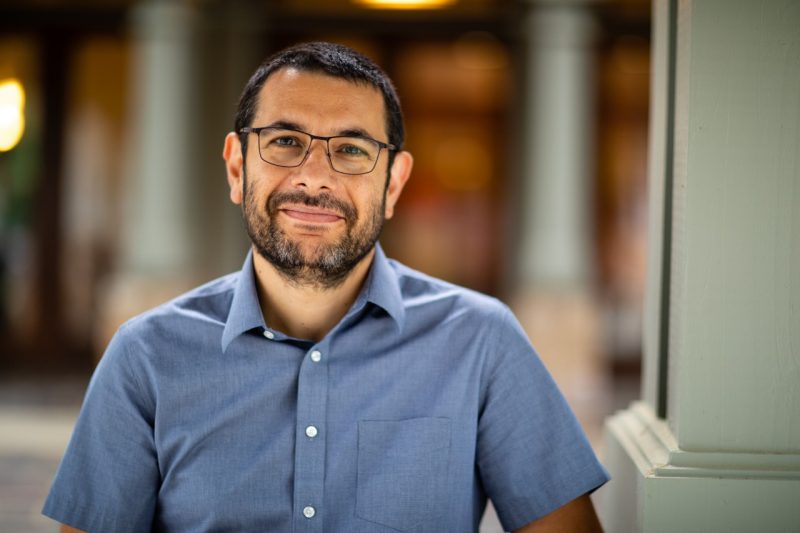
A.E. Zaidman is a Professor in the Software Technology department at Delft University of Technology's Faculty of Electrical Engineering, Mathematics and Computer Science. His research focuses on software testing, code quality, and developer tooling, with recent emphasis on socio-technical factors, environmental impacts of testing, and GitHub Actions workflows. Key Research Areas Test amplification (developer interactions with automated testing) Code smell detection and its impact on software quality Empirical studies in open-source software testing AI/ML applications in test generation and analysis Scientific Awards Best Artifact Award (2022) Best Emerging Results Paper Award (2018) Best ERA paper award (2015) Best tool demo paper award (2017) ICPC 2009 Best Paper Award Recent Publications 2025: Systematic mapping of qualitative software testing methods 2025: Industrial language engineering case studies using Spoofax 2024: Environmental impact analysis of Java testing 2024: GitHub Actions workflow smell investigations
Kangwei Xu is a researcher at the Chair of Design Automation (Lehrstuhl für Entwurfsautomatisierung) under Prof. Ulf Schlichtmann at the Technical University of Munich (TUM), actively advancing Electronic Design Automation through AI-driven methodologies. His core research interests include: Electronic Design Automation (EDA) High-Level Synthesis Machine Learning for EDA Neural Network Accelerators Timing Analysis Hardware Reliability Analysis of his 2024-2025 publications reveals a decisive trend in leveraging Large Language Models to revolutionize hardware design flows. Key innovations span automated C/C++ code refactoring (HLSRewriter), behavioral discrepancy testing (HLSTester), and neural network logic optimization, demonstrating how AI integration significantly enhances efficiency and accuracy in EDA toolchains while addressing longstanding challenges in synthesis and verification. Scientific Awards: No awards documented in available sources. Advising and Grants: Public records indicate no formal student advisement roles or individually attributed research grants; his work operates within the broader funded projects of TUM's Design Automation chair. Labs and Teams: Xu contributes to TUM's interdisciplinary Design Automation research group, which spans Analog EDA, Electronic System Level design, Emerging Technologies, Microfluidics, Optical NoC, Novel Microfabrication, Timing Analysis, Neural Networks and Accelerators, and Reliability, maintaining strong industry collaborations and cutting-edge experimental facilities.
Edward F. Gehringer is a Professor in the College of Engineering at North Carolina State University, holding appointments in both the Department of Computer Science and the Department of Electrical and Computer Engineering. His academic journey includes a Ph.D. in Computer Science from Purdue University (1979), an M.S. in Computer Science from Purdue (1974), and dual undergraduate degrees in Mathematics from the University of Detroit (Mercy) and Wayne State University (1972). Ph.D. in Computer Science, Purdue University (1979) M.S. in Computer Science, Purdue University (1974) B.S. in Mathematics, University of Detroit (Mercy) (1972) B.A. in Math/Computer Science, Wayne State University (1972) Gehringer's research spans Advanced Learning Technologies , Computer Architecture , Operating Systems , High-Performance Computing , and Software Engineering . He is a pioneer in AI-enhanced peer assessment systems and collaborative learning in computing education, with a focus on leveraging large language models (LLMs) for feedback automation, rubric generation, and test-skeleton creation. His work addresses challenges in student team formation, GitHub contribution analysis, and ethical computing. His publications highlight trends in AI-driven educational tools , peer-review systems , and software engineering pedagogy . Recent studies explore LLM applications for code refactoring, chatbot-assisted teaching, and GitHub analytics for predicting student performance. Earlier work includes foundational contributions to distributed pair programming (Sangam/FaceTop) and hardware-assisted memory management. Scientific Awards: Google Research Award (2014) Sloan Consortium Effective Practice Award (2008) NC State Gertrude L. Cox Award Honorable Mention (2007) Gehringer has led multiple NSF-funded projects, including Collaborative Research: Research in Student Peer Review ($1.07M, 2014–2019) and Production and Assessment of Student-authored Wiki Textbooks ($110K, 2010–2012). His Expertiza platform enables peer-reviewed learning objects and active learning in large classes. He has mentored numerous students, with research groups focusing on educational data mining, collaborative coding, and ethical computing.
Farshad Firouzi serves as an Adjunct Assistant Professor in the Department of Electrical and Computer Engineering at Duke University, where he teaches EGR 393: Research Projects in Engineering. His academic work bridges hardware and software domains with a strong emphasis on practical applications in critical systems. His research spans Edge Computing, Internet of Things (IoT), Artificial Intelligence, Machine Learning, Healthcare Systems, Chip Design, and Reliability Engineering. This interdisciplinary focus manifests in projects ranging from Parkinson's disease monitoring using edge devices to LLM-enhanced chip design and security-hardened neural networks. His work consistently addresses real-world challenges in system dependability, particularly in healthcare and biomedical contexts where failure is not an option. Analysis of his 2024-2025 publications reveals three dominant research thrusts: (1) LLM applications in hardware design (ChipMnd, Spiced), (2) Edge-based healthcare monitoring systems (freezing of gait recognition, blood glucose prediction), and (3) Security and reliability in AI/ML systems (gradient inversion defense, silent data corruption mitigation). His work demonstrates a clear trajectory toward integrating cutting-edge AI techniques with hardware-aware solutions for mission-critical applications. No scientific awards were mentioned in the source materials. The absence of student listings or grant information suggests his current role may be primarily research-focused without formal advising responsibilities. Similarly, no dedicated labs or research teams were referenced in the available documentation.
Wendy MacCaull is an Adjunct Professor in the Department of Computing and Software at McMaster University's Faculty of Engineering. Her scholarly activity focuses on formal methods for healthcare workflow verification, ontology reasoning, and temporal logic applications in process mining. Role: Adjunct Professor Institution: McMaster University Department: Computing and Software Research Interests: Workflow Verification, Ontology Reasoning, Healthcare Process Mining Her work bridges formal logic and healthcare IT , with publications on compensable workflows, timed BDI CTL logic verification, and ontology merging for clinical systems. She has contributed to Journal of Symbolic Logic , Lecture Notes in Computer Science , and IEEE Transactions on Knowledge and Data Engineering . Recent trends include contextual process mining (2024) and multi-context reasoning architectures (2023). Earlier works (2008-2012) explored non-classical logics, residuated logic models, and Kripke semantics.
Professor Klaus Berberich is a faculty member at htw saar (Saarland University of Applied Sciences), where he serves as Professor in the Databases & Information Systems department within the Faculty of Engineering. He is the Laboratory manager of the software laboratory (SWL) and Chairman of the examination boards for Practical Computer Science, Communication Informatics and Production Informatics. His research focuses on Information Retrieval, Machine Learning, Data Mining, and Web Archives, with significant contributions to knowledge graphs, temporal information retrieval, and neural information retrieval models. Professor Berberich has developed innovative approaches for quantity extraction from web tables, structuring text into tables, and knowledge graph querying. His publication record shows a consistent trend toward increasingly sophisticated neural approaches to information retrieval, evolving from traditional temporal search techniques to modern deep learning models. Recent work demonstrates strong integration of knowledge graphs with neural information retrieval systems, particularly in handling quantities and temporal aspects of information. Professor Berberich has received numerous prestigious awards throughout his career: 2020: Test of Time Award, ECIR 2020 2018: Honorable Mention for Best Poster Award, WWW 2018 2017: Prominent Paper Award, Artificial Intelligence Journal 2014: Highly Commended Poster Presentation Award, IIiX 2014 2013: Honorable Mention for Best Paper Award, CIKM 2013 2011: Best Demo Award, WWW 2011 2009: Best Late-Breaking Result Award, WSDM 2009 As an active researcher and educator, Professor Berberich serves on numerous program committees for major conferences including WSDM, CIKM, SIGIR, and ICTIR. He has been a consistent reviewer for prestigious journals in the field and is a member of the executive committee of the Information Retrieval specialist group of the German Informatics Society. His teaching portfolio includes courses in Databases, Information Retrieval, Data Science, Machine Learning, and Deep Learning. Professor Berberich leads the software laboratory (SWL) at htw saar and has been instrumental in developing research infrastructure for knowledge-centric tasks, including the GYANI indexing infrastructure. His research group has made significant contributions to temporal information retrieval, particularly in the context of web archives and news archives.
Alan J. Michaels is a Professor and Director of the NSI Spectrum Dominance Division at Virginia Tech, leading research in digital communications, electronic warfare, and quantum algorithms. He holds affiliations with the Bradley Department of Electrical and Computer Engineering and the Department of Mathematics. Previously, he served at Harris Corporation in engineering leadership roles. Education includes multiple degrees from Georgia Institute of Technology (B.S., M.S., Ph.D. in ECE; B.S., M.S. in Applied Mathematics; M.S. in Operations Research) and an MBA from Carnegie Mellon University. Research focuses on RF spectrum dominance, applied mathematics, and cybersecurity. Notable contributions include 44 U.S. patents, over 80 peer-reviewed publications, and leadership in $171M+ research projects. He pioneered initiatives like the Vertically Integrated Projects (VIP) model for undergrad research and the Southwest VA node of the Commonwealth Cyber Initiative (CCI). Awarded Fellow of the National Academy of Inventors for his inventive impact. His work bridges academia and industry, emphasizing practical applications in restricted research domains.
Dimitrios Nikolopoulos is the John W. Hancock Professor of Engineering at Virginia Tech's College of Engineering, within the Department of Computer Science. His research focuses on high-performance computing, systems runtime systems, memory management, and edge computing. He holds a Chartered Engineer (CEng) certification. Education: M.Eng., University of Patras, Greece (1996) M.Sc., University of Patras, Greece (1997) Ph.D., University of Patras, Greece (2000) Research Interests: His work spans transprecision computing, parallel programming paradigms, efficient inference frameworks for large language models (LLMs), and energy-efficient server ecosystems. Recent efforts emphasize optimizing edge computing systems, GPU resource sharing, and adaptive memory management in cloud-edge environments. Recent Trends in Publications: Recent studies highlight advancements in edge-serving frameworks (e.g., SLED), multi-agent systems for HPC code optimization (MARCO), and novel approaches to GPU and memory resource utilization in constrained settings. Themes include reducing latency, improving scalability, and integrating AI-driven techniques into HPC workflows. Grants & Advising: Details on current grants and advisees are not explicitly listed in the provided materials. Labs/Teams: His research is conducted through collaborative groups within Virginia Tech's Department of Computer Science, focusing on systems, parallel computing, and AI/ML infrastructure.
Jennifer Xu is a Professor of Computer Information Systems at Bentley University, holding a PhD from the University of Arizona. Her research focuses on Business Intelligence, Big Data, FinTech, and Health Informatics, with over 100 publications across Information Systems, Healthcare, and Blockchain domains. Senior Editor: Journal of the Association for Information Systems (JAIS) Associate Editor: Decision Support Systems (DSS), Communications of the AIS (CAIS) Key Contributions: Social network analysis, data mining, and AI ethics applications Her scholarly work spans NLP in healthcare , blockchain auditing , social good data science , and AI education . Recent publications highlight ensemble language models for financial analysis, collaborative healthcare error prevention, and blockchain's impact on accounting. Professor Xu's editorial roles and over two decades of research in systems analysis and social network dynamics reflect her leadership in Information Systems. She has consulted on FinTech and machine learning applications, with a focus on bridging business and technology through AI.
Dr. Yu Bi is an Assistant Professor in the Department of Electrical, Computer and Biomedical Engineering at the University of Rhode Island. His research focuses on hardware security, supply-chain security, and deep learning hardware acceleration. He holds a Ph.D. from the University of Central Florida (2016), an M.S. from New York University (2012), and a B.S. from Xidian University (2010). His work emphasizes fault-tolerant neural network architectures, adversarial attack mitigation, and secure hardware design. Notable contributions include frameworks like SHIELDeNN and Fiji-FIN, addressing vulnerabilities in quantized neural networks and inference accelerators. His research bridges emerging transistor technologies with cybersecurity solutions. Publications highlight trends in hardware-assisted cybersecurity, adversarial machine learning defense mechanisms, and the application of entropy modeling to analyze attack impacts. Ongoing studies explore post-Moore’s Law hardware innovations and backdoor attack countermeasures in large language models.
Dr. Andriy Miranskyy is an Associate Professor in the Department of Computer Science at Toronto Metropolitan University. His research focuses on applied machine learning, quantum computing, cloud computing, and software engineering, with notable contributions to anomaly detection in cloud systems and quantum software engineering. He leads the AMiR Lab, exploring risk mitigation and software development challenges in emerging technologies. Education: Ph.D. in Computer Science from The University of Western Ontario (2011). Research Interests: He investigates quantum software engineering methodologies, cloud-native systems governance, and big data applications. His work bridges theoretical advancements with industrial-scale implementations, such as IBM Db2 quantum safety case studies and cloud monitoring tools like CloudHeatMap. He emphasizes practical solutions for flakiness detection in quantum programs and sustainable software development practices. Awards: Recognitions include the Rogers Cybersecure Catalyst Fellowship (2023-2024), IBM CAS Best Project (2021), and a Guinness World Record for pioneering a 3Pb data warehouse (IBM DB2 team). Teaching: Teaches courses like CPS 840 (Quantum Computing), CPS 847 (Software Tools for Startups), and CPS 731 (Software Engineering). Labs/Teams: Directs the AMiR Lab, focusing on risk-aware software engineering in quantum and cloud domains.
Dr. Sahil Sharma is a Research Fellow at the School of Computing, Engineering and Intelligent Systems, Ulster University, Derry~Londonderry campus. His interdisciplinary research bridges artificial intelligence, biomedical engineering, and agricultural science, with significant contributions to medical diagnostics and sustainable agricultural practices through advanced computational techniques. Sharma's primary research domains include artificial intelligence (particularly deep learning and large language models), biomedical engineering (focusing on cardiac biomarker detection and medical data analysis), and agricultural science (specializing in plant biostimulants and sustainable farming). His work demonstrates consistent innovation in applying machine learning to solve real-world problems across healthcare and agriculture, with recent emphasis on explainable AI for medical visualization and anime recommendation systems. Analysis of Sharma's 15 most recent publications (2023-2025) reveals a dominant trend toward AI-driven healthcare solutions, including cardiac troponin I detection assays, XAI-based medical data visualization, and synthetic data generation for diagnostics. Parallel work explores agricultural applications through deep learning-based crop monitoring systems. His research outputs show strong translational impact, with significant citations (h-index 86) and practical implementations referenced in patents, particularly in the biomedical domain where his 2012 agricultural paper accumulated 85 Scopus citations.
Laure Thompson is an Adjunct Assistant Professor at the University of Massachusetts Amherst's College of Computer and Information Sciences and a Research Software Engineer at Princeton University's Center for Digital Humanities. Her work bridges machine learning, natural language processing, and cultural heritage analysis. She holds a PhD in Computer Science from Cornell University and dual BS degrees in Computer Science and Electrical Engineering from the University of Washington. Research focuses on computational methods for humanities scholarship, including tools for large-scale analysis of texts and images. Notable projects include evaluating morphological tagging in historical texts and developing methods to control what machine learning models learn. She has contributed to ACL, NAACL, and EMNLP conferences with impactful work recognized through awards like the Best NLP Engineering Experiment (COLING 2018). Teaching experience includes courses on social and cultural analytics at UMass Amherst and NLP applications. Her work spans diverse cultural datasets from medieval manuscripts to avant-garde journals, emphasizing ethical computational practices in humanities research.
Sergio Gago-Masague is a Teaching Professor at the University of California, Irvine (UCI), where he serves in the Department of Computer Science within the School of Information and Computer Sciences. He directs the Engaging Technology and Application Design Lab, focusing on cross-disciplinary research in assistive and educational technologies. Previously, he worked as a Research Scientist at UCI’s California Institute for Telecommunications and Information Technology and lectured in informatics before transitioning to his current role in 2018. His research spans health informatics, human-computer interaction, software engineering, and computer science education. Key projects include developing the Pain Buddy mHealth tool for pediatric cancer pain management, the Maestro platform for teaching AI robustness, and predictive models for improving CS student retention. He has pioneered the use of gamification in education and embedded systems for health monitoring. Education: Ph.D. in Product Engineering, Universitat Politècnica de Catalunya Recent work emphasizes ethical AI in music industry applications, bias mitigation in student admissions algorithms, and leveraging large language models (LLMs) in post-pandemic education. His articles reflect trends in wearable health tech (e.g., transdermal alcohol prediction via hyperdimensional computing) and CS education innovations like customized student-project matching in capstone courses. Recipient of the 2024 UCI Celebration of Teaching Award and a 2023 ICS Awards honoree, Gago-Masague has also contributed to institutional initiatives like the HSI Project for early academic interventions. His lab fosters collaborations across disciplines to design socially impactful technologies.
Gita Reese Sukthankar is a Professor at the University of Central Florida, specializing in artificial intelligence, multi-agent systems, and social network analysis. Her work integrates machine learning, human-robot interaction, and collaborative systems to address challenges in decentralized task allocation, online community dynamics, and human-machine teaming. She has contributed to projects involving agent-based modeling, reinforcement learning, and ethical AI applications in open-source software and policy discourse moderation. Affiliations: University of Central Florida Key Research Areas: Multi-Agent Systems, Social Network Analysis, Reinforcement Learning, Human-Computer Interaction Her research explores topics such as conflict prediction in team dialogues, bot impact on GitHub workflows, and chess mastery analysis using language models. She has co-authored over 185 publications in top venues like AAAI, AAMAS, and IROS, often collaborating with researchers like Rahul Sukthankar, Katia Sycara, and Kiran Lakkaraju. Her work bridges theoretical AI advancements with practical applications in robotics, software development, and policy analysis, emphasizing ethical considerations and scalable solutions.