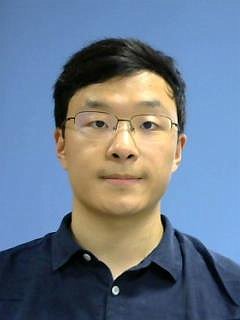
Yintong Huoمشاهده پروفایل
استادیار
Yintong Huo is an Assistant Professor at the School of Computing & Information Systems, Singapore Management University (SMU), where he leads research in intelligent software engineering. He received his PhD from The Chinese University of Hong Kong (CUHK) in 2024 under Prof. Michael R. Lyu and holds a Bachelor's degree from the University of Electronic Science and Technology of China. His research focuses on empowering AI models (particularly LLMs) for software development, testing, and operations, with two flagship projects: LogPAI (open-source AI platform for automated log analysis) and WebPAI (multimodal intelligence for automatic webpage development). His work spans log analysis, code intelligence, UI generation from prototypes, and configuration diagnostics. Huo's publication record shows strong trends in leveraging multimodal LLMs for practical software engineering challenges, with recent work on interactive webpage generation (Interaction2Code), configuration logging (ConfLogger), and log parsing (LILAC). His research bridges theoretical AI advancements with real-world system reliability needs. ICSE Distinguished Reviewer Award (2025) ISSRE Distinguished Reviewer Award (2024) IEEE Open Software Services Award (2022) ACM SIGSOFT CAPS Travel Grants National Scholarship (2019) Huo actively supervises PhD students (including Shi Ying Chang and Dan Huang) and research engineers. His lab has secured funding for multiple projects including WebPAI and LogPAI. He serves on program committees for major conferences (ASE, ICSE, FSE) and reviews for top journals. Current projects include dynamic webpage generation and configuration diagnostics, with ongoing work on small language models for logging systems. Huo leads the LogPAI and WebPAI research groups, developing open-source tools for automated log analysis and multimodal UI code generation. The LogPAI project has garnered over 3,000 GitHub stars and 70,000 downloads. His team collaborates with industry partners on AIOps challenges and is expanding into configuration diagnostics through the ConfLogger project.