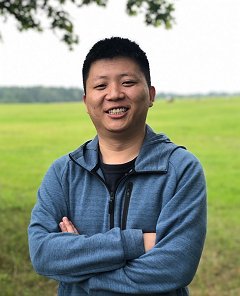
Wenguang Chen is a researcher affiliated with Tsinghua University and Pengcheng Laboratory , specializing in computer science and high-performance computing . His work bridges theoretical advancements with practical applications in domain-specific languages , parallel programming , and machine learning . Research Interests include: Development of modular DSLs for numerical methods (e.g., Mat2Stencil) Performance optimization in distributed and parallel systems Compiler frameworks for privacy-preserving AI (e.g., FHE-based neural network inference) Graph algorithms scaling to trillion-edge datasets Applications of Rust in memory-safe pointer analysis Recent Publications span 2014–2025, focusing on: Parallelization strategies for supercomputing Compiler automation tools Extreme-scale data processing Performance variance diagnosis in production environments
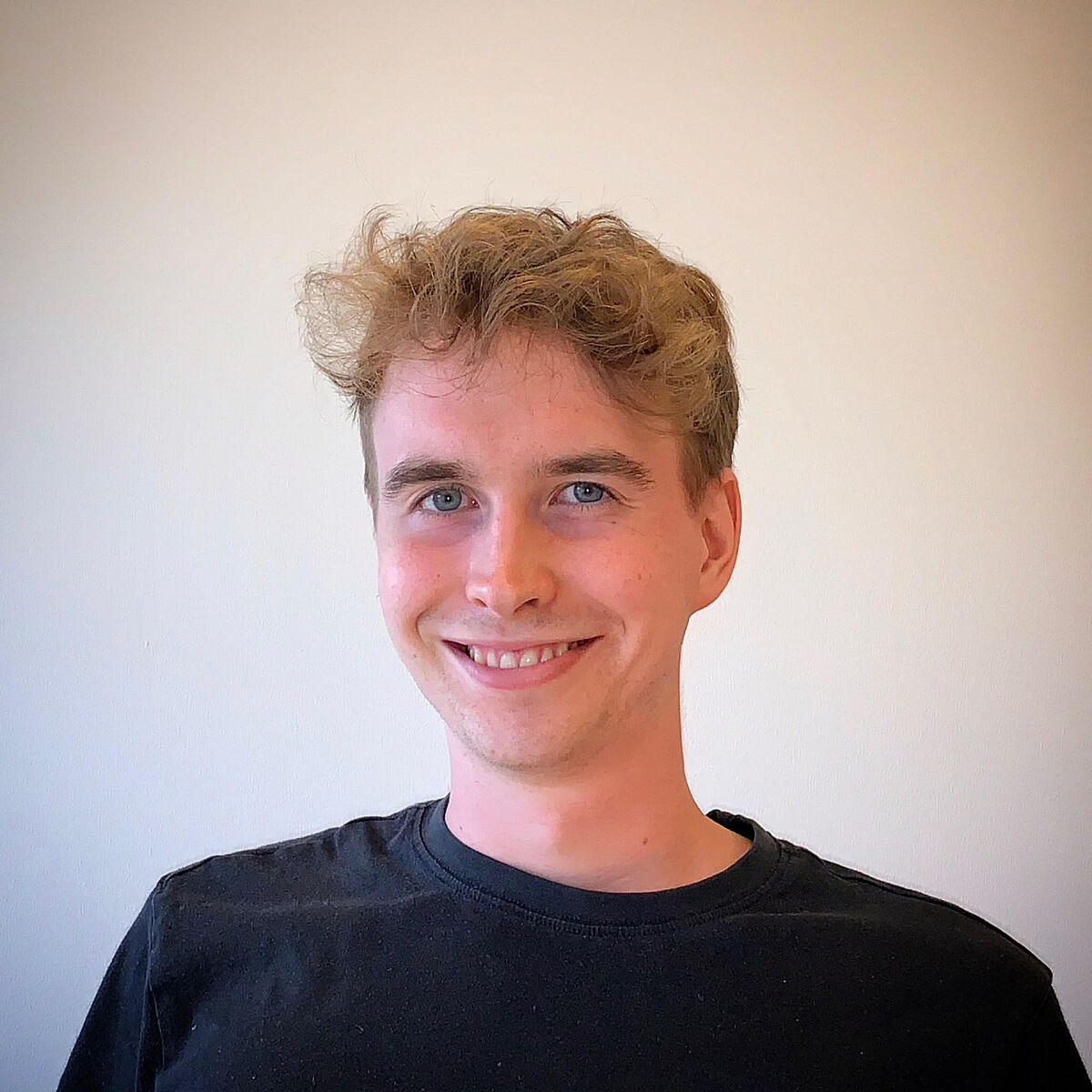
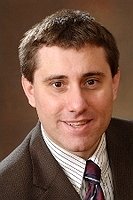
Julian Oertel, a Ph.D. candidate at the University of Rostock's Institute of Computer Science, specializes in software engineering, code summarization, and human factors in software development. His work explores AI techniques like large-language models for accelerating software development. His research spans: Software comprehension and code summarization Human-computer interaction in AI-assisted programming Model-driven engineering (MDE) and modeling experience (MX) Time-sensitive networking (TSN) and network calculus His recent publications focus on GitHub Copilot's impact on coding workflows and empirical studies of model-driven engineering. Oertel's work bridges theoretical analysis with practical tool evaluation in modern software development contexts.
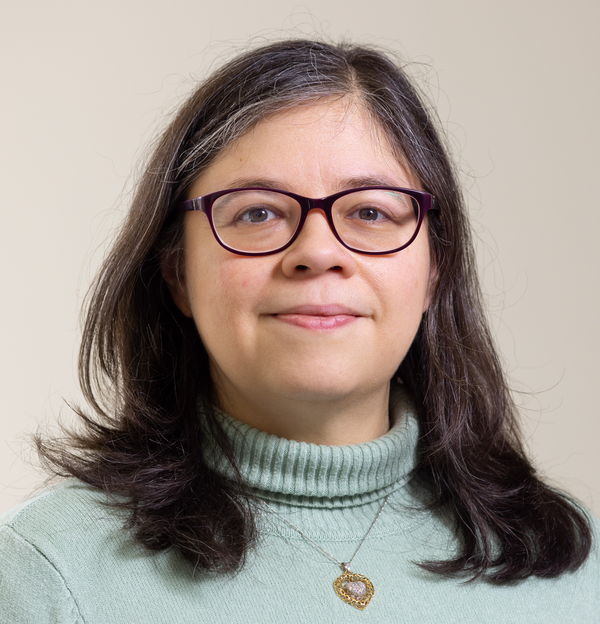
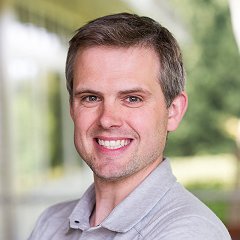
Dr. Sandra Diaz Pier is a Scientific Lead at the Jülich Supercomputing Centre (JSC) within the Jülich Research Centre , Germany. Specializing in computational neuroscience , high performance computing (HPC) , and machine learning , she bridges neuroscience and advanced computational methods through her research. Education: B.Sc. in Electronic Systems Engineering, Mexico M.Sc. in Computer Science (focus: machine learning, quantum computing), Mexico Second M.Sc. in Electrical Engineering, Ontario, Canada Ph.D. in Computer Science, Germany (2021) Her research focuses on modeling and simulating brain dynamics and plasticity at multiple scales, leveraging HPC to accelerate large-scale neural network simulations. She actively contributes to EU projects like the Human Brain Project (HBP) , Virtual Brain Cloud , and EBRAINS 2.0 , emphasizing infrastructure development and educational training. Her work includes open-source tools such as the NEST simulator , The Virtual Brain , and L2L , enabling efficient parameter exploration and multiscale co-simulation frameworks. The 15 most recent publications highlight her interdisciplinary approach, spanning topics from quantum computing in biomolecular simulations to neural plasticity algorithms and cloud-based brain modeling . These articles reflect her expertise in integrating machine learning , multi-scale simulation , and HPC infrastructure for neuroscience challenges, including seizure propagation, Parkinson’s disease progression, and swarm intelligence in spiking networks. She leads technical coordination in projects like EBRAINS and serves as a task leader in the HBP infrastructure work package , while also organizing workshops and hackathons for open-source tools. Her role involves supporting domain scientists through methodological research and workflow optimization for brain simulations.
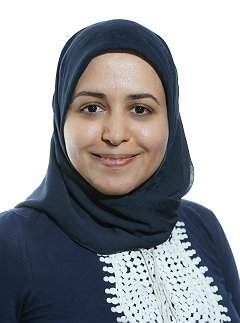
Simon Ostermann serves as a Senior Lecturer at Saarland University and Senior Researcher & Deputy Director at the Multilinguality and Language Technology (MLT) lab of the German Research Center for Artificial Intelligence (DFKI). He leads the Efficient and Explainable NLP (E&E) research group and contributes to major projects including lorAI (Low Resource AI), TRAILS (Trustworthy Machines), PERKS (Procedural Knowledge), DAM-S (Semantic Search), and DisAI (Disinformation Combat). His research centers on democratizing language technology through transparent, robust models—specializing in mechanistic interpretability to reverse-engineer LLM internals and enhance efficiency for low-resource languages. Key focus areas include reducing model size for constrained environments, improving cross-lingual transfer via adapters, and developing structured input techniques. His work bridges theoretical interpretability with practical applications in resource-limited settings. 2025 publications reveal concentrated efforts in low-resource adaptation (language adapters, graph-enhanced embeddings), explainable AI (counterfactual generation, conversational XAI datasets), and multilingual fact-checking systems. Notable trends include systematic neuron manipulation frameworks, rigorous evaluation of synthetic data strategies, and cross-lingual claim verification benchmarks. Ostermann advises six PhD candidates (Anikina, Oguz, Bäumel, al Ghussin, Gurgurov, Vykopal) and multiple MSc students on topics spanning RAG hallucinations, multilabel classification, and adapter interpretability. His research receives funding through DFKI-led consortia with European and international partners focusing on trustworthy, efficient AI deployment. The E&E group under his leadership drives innovation in efficient NLP through biweekly seminars, collaborative coding sessions, and partnerships with institutions like KInIT. Current initiatives prioritize green computing for language models and real-world deployment in industrial procedural knowledge systems.
Prof. Dr. Peter Sanders is a full professor in Theoretical Computer Science at the Karlsruhe Institute of Technology (KIT), leading the Algorithm Engineering group. His academic career includes a doctoral degree from Karlsruhe University and research stints at institutions like the Max Planck Institute for Informatics. He specializes in algorithm theory and engineering, focusing on parallel computing, large-scale data processing, and graph partitioning. His research bridges theoretical foundations with practical implementations, emphasizing real-world applications in optimization, route planning, and distributed systems. Education: Ph.D. in Computer Science, Karlsruhe University (1996) Bachelor/Master studies at Karlsruhe University (1988-1996) Research Interests: Algorithm design and analysis Parallel and distributed algorithms Graph algorithms and partitioning Algorithm engineering for big data High-performance computing Publications: Over 250 papers, emphasizing parallel algorithms, distributed systems, and graph theory. Recent work includes scalable SAT solving, hypergraph partitioning, and distributed string sorting. His contributions have advanced practical applications in route planning, load balancing, and large dataset processing. Awards: Recipient of the prestigious Leibniz Prize (DFG) and Baden-Württemberg State Research Prize. He coordinated the DFG Priority Program on Algorithm Engineering and is an active reviewer for major funding bodies. Consulting: Engages with companies like SAP and Google, focusing on optimization, route planning, and database algorithms. Leads projects on algorithm scalability and real-world problem-solving. Labs/Teams: Heads the Algorithm Engineering group at KIT, fostering collaborations in distributed computing and algorithmic research.
Sumon Biswas is a tenure-track Assistant Professor in the Department of Computer and Data Sciences at Case School of Engineering, Case Western Reserve University. Previously, he was a Postdoctoral Researcher at the Institute for Software Research (ISR) at Carnegie Mellon University, working with Dr. Eunsuk Kang. He received his Ph.D. in Computer Science from Iowa State University under the supervision of Dr. Hridesh Rajan. His research focuses on the intersection of Software Engineering and Artificial Intelligence with particular emphasis on responsible AI engineering. His work spans several key areas: Formal verification and reasoning of fairness in AI systems Designing fair and safe AI systems AI engineering and analysis of machine learning software Long-term risks in machine learning systems Analysis of technical debt in AI/ML systems Dr. Biswas has made significant contributions to understanding and addressing fairness in machine learning pipelines, verification of neural networks, causal reasoning in ML pipelines, and safety assurance of predictive systems. His recent work increasingly focuses on foundation models and large language models (LLMs), with an emphasis on safety and responsible deployment of AI agents. His lab operates the state-of-the-art AISC2 cluster with five HGX H200 servers featuring 40 NVIDIA H200 GPUs. His publications show a consistent trend toward addressing both theoretical and practical challenges in responsible AI, with increasing focus on long-term system behavior, LLMs, and practical deployment challenges. The research spans formal methods, empirical studies, and practical tool development. Dr. Biswas has received several awards including the Research Excellence Award from Iowa State University and has been invited to serve on the Board of Distinguished Reviewers for ACM Transactions on Software Engineering and Methodology (TOSEM). He serves on the program committees of major software engineering conferences including ICSE, ASE, and ESEC/FSE, and has reviewed for prestigious journals such as IEEE Transactions on Software Engineering. As an educator, he teaches courses on Responsible AI Engineering and Software Engineering, focusing on building high-quality software systems that meet responsible AI principles including fairness, robustness, explainability, and safety.
Dr. Ying Wang is an Associate Professor and doctoral supervisor at the Software College of Northeastern University (China), where she has been working since February 2019. She serves as Assistant Dean at the School of Software and is an active member of several CCF committees including the System Software Committee, Software Engineering Committee, Open Source Development Committee, and Women's Committee. Dr. Wang received her Ph.D. in Software Engineering from Northeastern University in January 2019 under the supervision of Professor Zhiliang Zhu. She completed postdoctoral research at the Hong Kong University of Science and Technology (HKUST) from 2022 to 2023 under Professor Shing-Chi Cheung and was a visiting scholar at Microsoft Research Asia through the StarTrack Program in 2021. Her research focuses on intelligent software development technologies, large AI models, open source software big data analysis, and software supply chain security. She has made significant contributions to the governance of open source software ecosystems across multiple programming languages including Java, C#, Python, Go, JavaScript, Android, and Rust. Her work has led to the development of practical tools like 'League of Legends' for monitoring dependency defects in open source ecosystems, with several technologies commercialized by Huawei and Microsoft. Dr. Wang's recent publications demonstrate her expertise in cross-language dependencies, software component analysis, software refactoring, and the application of large language models in software engineering. Her work spans both theoretical foundations and practical applications, with a strong emphasis on real-world impact through industry collaboration. Among her notable achievements are the ACM SIGSOFT Distinguished Paper Awards at ICSE 2021 and ESEC/FSE 2023, making her the first researcher from Northeastern University to receive this honor. She has also received multiple awards for her doctoral dissertation and prototype implementations. Dr. Wang actively contributes to the academic community as an Associate Editor for IEEE Transactions on Software Engineering and serves on program committees for top conferences including ASE, ICSE, and ESEC/FSE. She mentors a large group of doctoral and master's students, with many alumni securing positions at major technology companies including Huawei, Microsoft, Alibaba, and Tencent.
Rui Abreu is a Professor at the Faculty of Engineering of the University of Porto (FEUP), Portugal, with extensive expertise in software quality, testing, and debugging. Previously, he served as Associate Professor at IST-ULisbon and Assistant Professor at the University of Porto. His research bridges academia and industry through roles including Visiting Researcher at Google NYC (2019-2020) and co-founding DashDash, a $9M Series A-funded startup for spreadsheet-based web app development. His educational background includes a Ph.D. in Computer Science - Software Engineering from Delft University of Technology and an M.Sc. in Computer and Systems Engineering from the University of Minho. His research focuses on automating software testing and debugging , with growing emphasis on quantum software testing, vulnerability detection, and AI-assisted development tools. Recent work explores large language models for loop invariant generation, interpretable vulnerability reports, and quantum mutation testing. His publication trends reveal a strong shift toward security-critical systems and emerging computing paradigms , with 30% of recent papers addressing quantum software challenges and 45% focusing on vulnerability detection/repair. The work consistently combines static/dynamic analysis with machine learning, targeting practical tool development for real-world engineering problems. 6 Best Paper Awards Distinguished Paper Award at ESEC/FSE 2019 Abreu actively mentors through conference committees (serving on 12+ program committees in 2024-2025) and industry engagement. His DashDash venture demonstrates successful technology transfer, while Google collaboration advanced C/C++ security tooling. Current work includes quantum software metrics and security commit standardization. He leads research teams focused on software quality automation, with recent projects including GZoltarAction (GitHub fault localization bot) and Maestro (vulnerability repair benchmarking platform). Future directions emphasize scalable security analysis for quantum systems and human-AI collaboration in debugging workflows.
David Lo is the OUB Chair Professor of Computer Science and the founding Director of the Center for Research in Intelligent Software Engineering (RISE) at Singapore Management University. He has held significant leadership roles including General Chair of MSR'22 and ASE'16, and Program Committee Co-Chair for ASE'20, FSE'24, and ICSE'25. Lo has championed the field of AI for Software Engineering (AI4SE) since the mid-2000s, demonstrating how data mining, machine learning, information retrieval, natural language processing, and search-based algorithms can transform software engineering data into actionable insights and automation. His research spans Mining Software Repositories (MSR), large language models for code, software testing, smart contract analysis, and developer tooling. His recent publications reveal a strong focus on the intersection of large language models and software engineering, with particular attention to code generation, evaluation, documentation, and the practical implications of AI tools for developers. His work increasingly addresses economic efficiency, privacy concerns, and human factors in AI-assisted development. Two Test-of-Time awards Eleven ACM SIGSOFT/IEEE TCSE Distinguished Paper awards ACM Fellow IEEE Fellow ASE Fellow National Research Foundation Investigator (Senior Fellow) Lo has supervised numerous students and collaborated extensively across the software engineering community. His work on Mining Software Repositories has led to practical tools and insights that have shaped the field. He regularly contributes to major conferences and has served in leadership roles across ASE, ICSE, and FSE communities. As founding Director of the Center for Research in Intelligent Software Engineering (RISE) at SMU, Lo leads a research group focused on advancing AI techniques for software engineering problems, with emphasis on practical applications that address real developer pain points.
Xiaofei Xie is an Assistant Professor in the School of Computing and Information Systems at Singapore Management University (SMU), where he has been employed since 2022. Prior to this position, he was a postdoctoral researcher at Nanyang Technological University in Singapore from 2018 to 2021. His research primarily focuses on program analysis, software testing, vulnerability detection, and quality assurance of AI systems. SMU is ranked No. 9 (No. 5 in Asia) in the Software Engineering category according to CSRankings. Dr. Xie's research interests span multiple critical areas in software engineering and AI systems. His work on program analysis includes detecting non-termination bugs and developing practical methods like EndWatch for real-world software. In software testing, he has made significant contributions to deep learning systems testing, autonomous driving systems testing, and smart contract security. His research on vulnerability detection encompasses various aspects of AI security, including backdoor attacks, adversarial examples, and security testing for web-based deep learning frameworks. His quality assurance work for AI systems includes developing metrics for robustness evaluation and creating testing methodologies for diverse AI applications. Dr. Xie's publication record shows a strong trend toward integrating large language models with traditional software engineering techniques. His recent work demonstrates increasing focus on testing autonomous systems, securing AI models, and applying advanced machine learning techniques to traditional software engineering problems. The research spans multiple domains including deep learning frameworks, smart contracts, autonomous driving systems, and federated learning environments. Among his notable achievements are multiple ACM SIGSOFT Distinguished Paper Awards (ASE 2019, ASE 2023, ISSTA 2022), the ACM Tianjin Doctoral Dissertation Award 2019, and the Best Paper Award at APSEC 2020. His work has been accepted to top-tier conferences including ICSE, FSE, ASE, ISSTA, and security venues like USENIX Security. Dr. Xie actively serves the academic community as a PC co-chair for ICECCS 2025 and as a program committee member for numerous prestigious conferences including ICSE, FSE, ASE, ISSTA, and AAAI. He has also organized workshops such as the Workshop on AI and Software Testing/Analysis (AISTA) and served as Guest Editor for special issues on AI security. His service demonstrates leadership in bridging software engineering with AI and security research communities.
Yi Li is an Associate Professor at the College of Computing and Data Science, Nanyang Technological University (NTU), Singapore. He leads the Software Reliability and Security Lab (SRSLab@NTU) which focuses on program analysis and automated reasoning techniques for software engineering and security applications. Dr. Li received his BComp degree in Computer Science from the National University of Singapore in 2011, followed by MSc (2013) and PhD (2018) degrees in Computer Science from the University of Toronto. His educational background has positioned him at the forefront of software reliability research. His research interests span software engineering, program analysis, automated reasoning, and formal methods, with particular focus on software reliability, security, and smart contract analysis. Dr. Li's work develops practical solutions for constructing high-quality software systems that are both reliable and sustainable. His research has identified critical issues in API documentation, smart contract security, program termination, and library compatibility across multiple programming ecosystems. Dr. Li's publications demonstrate consistent contributions to software engineering research over the past five years, with recent work focusing on smart contract analysis, API documentation verification, and program termination detection. His research methodology often combines static and dynamic analysis techniques with machine learning approaches to address challenging problems in software reliability and security. Five ACM Distinguished Paper Awards at top conferences Two Best Artifact Awards recognizing research reproducibility Publications at premier venues including ASE, ISSTA, FSE, and ICSE Dr. Li actively contributes to the software engineering community through service on program committees of flagship conferences (ICSE, FSE, ASE, ISSTA) and co-chairing program committees for ICFEM'23, ICECCS'20, SEAIS'22, and ICFEM'19 Doctoral Symposium. His lab, SRSLab@NTU, has developed multiple influential tools including InvCon, DocCon, and EndWatch, while fostering research in software reliability and security for emerging technologies.
Darko Marinov is a Professor in the Siebel School of Computing and Data Science at the University of Illinois Urbana-Champaign, where he conducts research focused on improving software quality through advanced testing techniques. His work addresses fundamental challenges in software testing including flaky tests, regression test prioritization, and configuration testing. Dr. Marinov's research interests span multiple areas of Software Engineering , with particular emphasis on: Software Testing and Quality Assurance Regression Test Prioritization and Selection Flaky and Non-Deterministic Tests Configuration and Variability Testing Test Suite Optimization Software Reliability and Defect Detection His extensive publication record demonstrates consistent contributions to the field, with research trends showing evolution from foundational testing techniques to addressing modern challenges in software testing, particularly focusing on reliability issues in continuous integration environments and the growing complexity of test suites in large software systems. Dr. Marinov has received numerous prestigious awards recognizing the impact of his work: Two ACM SIGSOFT Impact Paper awards (2012, 2019) ASE Most Influential Paper Award (2015) FSE Test-of-Time Honorable Mention (2024) Seven ACM SIGSOFT Distinguished Paper awards CHI Best Paper Award (2017) Elected Fellow of Automated Software Engineering (2023) His research has been generously supported by major technology companies and government agencies including NSF, Boeing, Facebook, Google, Huawei, IBM, Intel, Microsoft, Qualcomm, Samsung, and SRC. Dr. Marinov actively contributes to the academic community through conference organization, serving as Area Chair for ASE 2025 and Program Committee member for multiple conferences including FSE 2026. His mentoring excellence has been recognized through various awards, highlighting his commitment to guiding the next generation of software engineering researchers.
Zhi Jin is a Professor in the Department of Computer Science and Technology at Peking University, where he has been employed since 2009. Previously, he served as a professor at the Academy of Mathematics and System Sciences, Chinese Academy of Sciences from 1994-2009. He received his BS from Zhejiang University in 1984 and MS/PhD from National University of Defense Technology in 1984 and 1992 respectively. He progressed from assistant professor (1992) to associate professor (1995) to full professor (2001). His research focuses on knowledge engineering and software engineering, with special interests in knowledge graphs, self-adaptive systems, and deep learning applications. Current research directions include Self-Adaptive Software in Human-Cyber-Physical Systems, Crowd-based Requirements Engineering, and Learning from both Natural Language and Programming Language. His work bridges theoretical knowledge engineering with practical software development challenges. His recent publications demonstrate a strong trend toward applying large language models and AI techniques to traditional software engineering problems, particularly in requirements engineering, code generation, and vulnerability detection. The articles span multiple high-impact venues including ASE, ICSE, and RE, with significant focus on aerospace applications and multi-agent collaboration approaches. Scientific honors include: Winner of National Science Fund for Distinguished Young Scholars (2006) Project 973 project lead scientist (2014) Member of Discipline Appraisal Group of the Academic Degree Commission (2015) Multiple ACM Distinguished Paper Awards He serves in numerous editorial roles including Associate Editor for IEEE Transactions on Software Engineering (2018-present) and IEEE Transactions on Reliability (2019-present). He is also an Editorial Board Member for Empirical Software Engineering and Requirements Engineering Journal, and holds leadership positions in the China Computer Federation. His extensive conference service includes PC membership for ICSE, FSE, RE, and other major software engineering venues.
Reid Holmes is a Professor in the Software Practices Lab at the University of British Columbia's Department of Computer Science, Faculty of Science. With over 15 years of academic experience, he has progressed from Assistant Professor at the University of Waterloo (2010-2015) to Associate Professor (2015-2022) and now full Professor (2022-present) at UBC. His research spans multiple dimensions of software engineering with a strong emphasis on the human aspects of development. Dr. Holmes' research interests focus on understanding the problems software engineers encounter when creating and evolving software systems. His work examines software testing and validation, source code reuse, code search, context-sensitive example location, API understanding, speculative analysis, code review, and team awareness. He believes that by better understanding how people create, explore, evolve, and reason about software systems, we can enhance developers' effectiveness and improve software quality. His research is characterized by its practical application to real-world software development challenges. His recent publications demonstrate a consistent focus on improving developer productivity through better tools and understanding of developer behavior. The publications reveal a trajectory from traditional software engineering topics toward newer areas involving AI-assisted development, with particular attention to how generative AI affects workflow and collaboration. His work consistently bridges theoretical software engineering concepts with practical developer experience considerations. ACM SIGSOFT Distinguished Paper Award (multiple times) FSE 2024 Most Impactful Paper Award 2024 ICSE Most Influential Paper Award Winner of the 2008 MSR Mining Challenge As an educator and mentor, Dr. Holmes has supervised numerous graduate students who have gone on to successful careers in academia and industry. He has served on program committees for major software engineering conferences including ICSE, FSE, and MSR, and has been an Associate Editor for TSE since 2016. His work on developer tools like CodeShovel, Devy, and Baker demonstrates his commitment to creating practical solutions that address real developer pain points.
Reyhaneh Jabbarvand is an Assistant Professor in the Department of Computer Science at the University of Illinois at Urbana-Champaign, where she leads the Intelligent CAT Lab. Her research focuses on improving software quality, reliability, and maintenance through neuro-symbolic approaches that combine AI techniques with formal methods. Her research interests span Neural Program Analysis, Software Testing (with emphasis on mobile apps and autonomous software), Bug Localization, and Applied Optimization for Software Analysis. She has made significant contributions to the fields of energy testing for Android applications, neuro-symbolic approaches for code analysis, and large language models for software engineering tasks. Dr. Jabbarvand's recent publications reveal strong trends in applying machine learning to software engineering problems, particularly using neuro-symbolic methods to bridge the gap between deep learning and formal program analysis. Her work on code translation, test flakiness, and test oracle generation demonstrates her focus on practical applications of AI in software development workflows. Google PhD Fellowship in Programming Technology and Software Engineering Rising Star in EECS NSF CAREER Award Dr. Jabbarvand has received research funding from multiple sources including NSF, IBM Research, and C3.ai. She actively mentors students through her Intelligent CAT Lab and has served on numerous program committees for major software engineering conferences including ICSE, FSE, and ISSTA. She teaches courses on Advanced Topics in Software Engineering, ML for Code, and Software Engineering I. Her lab focuses on neuro-symbolic approaches to software engineering problems, bringing together PhD, undergraduate, and high school students to tackle challenges in AI-assisted software development and testing.