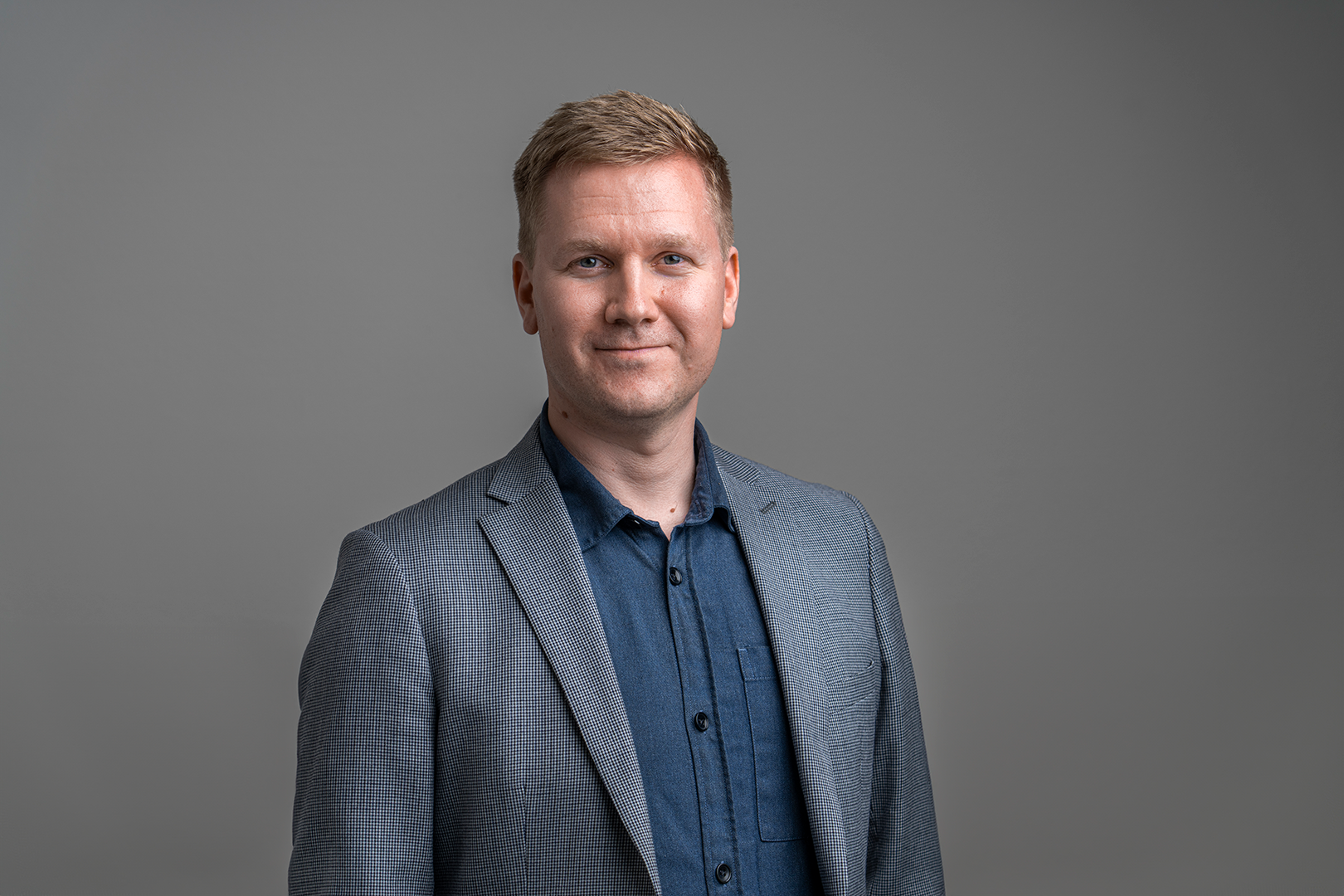
Sander de Jong is a Research Fellow in the Department of Computer Science at Aalborg University's Faculty of IT and Design, focusing on Human-Computer Interaction and Artificial Intelligence . Research Interests: His work explores the intersection of Large Language Models (LLMs) , Artificial Intelligence , and Psychology , with emphasis on: AI-assisted Collaboration: Cognitive and social awareness in group interactions. LLM-generated Advice: User perception and trust in automated systems. Ethical AI: Moral manifestations and bias mitigation in clinical decision support. Human-AI Dynamics: Theory of Mind and self-presentation strategies. Recent Trends: His 2023-2024 publications highlight applications of LLMs in collaborative settings, ethical challenges in AI, and decision-making frameworks. Key methodologies include semistructured interviews and exploratory studies .
Elisa Bassignana is a postdoctoral researcher in the Data Science department at the IT University of Copenhagen , specializing in Natural Language Processing and Computational Social Science . Her work focuses on relation extraction , cross-domain adaptability , and language model biases . Active in AI ethics , cultural awareness in NLP , and domain-specific encoding Lead Principal Investigator for PeachAI (Villum Foundation, 2024–2027) Co-investigator in MultiVaLUe (Danish Free Research Fund, 2020–2024) Her research addresses gender and origin biases in NLP systems and the development of open-source tools like SnakModel , a Danish large language model. Awards include the Outstanding Paper Award at ML Evaluation Standards Workshop (2022) and a Villum postdoctoral grant (2023).
Lennard Hilgendorf is a Researcher at the Department of Computer Science , University of Copenhagen . His work focuses on Machine Learning with applications in quantum computing, medical imaging, natural language processing, and environmental sustainability. Research Trends: His recent publications highlight interdisciplinary work at the intersection of quantum mechanics and machine learning, efficient AI architectures for environmental sustainability, explainable models for medical diagnostics, and multimodal approaches to ecological monitoring. Key keywords include Machine Learning , Quantum Computing , Medical AI , and Environmental Science . Labs & Collaborations: Affiliated with the SCIENCE AI Centre and the TreeSense Centre , which specialize in foundational machine learning research and remote sensing for global tree resources, respectively.
Oliver Mortensen is a PhD Fellow (Research Fellow) at the Machine Learning Section , Department of Computer Science (DIKU) , University of Copenhagen , Denmark. He is affiliated with the university’s Faculty of Science and participates in the cross-faculty SCIENCE AI Centre , a strategic initiative to advance artificial intelligence research and applications. Research Interests Mortensen’s research lies at the intersection of machine learning , quantum computing , and neuro-symbolic AI . His work spans both theoretical foundations—such as entropic risk optimization in reinforcement learning and Riemannian generative models—and highly applied domains including medical AI, recommender-system fairness, and brain-computer interfaces. A recurring theme is trustworthy AI , where he investigates explainability, fairness, and sustainability across large language models and clinical decision-support systems. Scientific Contributions & Trends Across more than 60 peer-reviewed contributions (2024-2025), Mortensen demonstrates a clear trajectory toward hybrid quantum-classical algorithms , energy-efficient AI , and human-centric evaluation . His publications integrate rigorous theoretical guarantees with empirical validation on real-world data from electronic health records, satellite imagery, and conversational corpora. Collaborations & Resources He carries out his doctoral research under the supervision of Professor Yevgeny Seldin within DIKU’s vibrant Machine Learning Section. The group offers access to a dedicated high-performance compute cluster, the SCIENCE AI Centre ’s GPU/TPU pools, and interdisciplinary ties to life-science, geoscience, and humanities researchers across the university.
Jonatan Ruiz-Molsgaard is an Instructor at the Department of Computer Science , University of Copenhagen. His research spans interdisciplinary applications of machine learning in quantum computing , medical data analysis , and environmentally sustainable AI . Research trends include: Quantum-inspired algorithms for biomolecular modeling Interpretability techniques for large language models Fairness frameworks in recommender systems Neural network applications in healthcare and climate science
Ratish Surendran Puduppully is an Assistant Professor in the Department of Data Science at the IT University of Copenhagen. His research focuses on natural language processing (NLP), machine translation, and large language models with particular emphasis on multilingual systems and low-resource languages. He has published extensively since 2014, with over 20 peer-reviewed works in top conferences like ACL and NeurIPS. Key research themes include adapter efficiency analysis, Hindi instruction-tuned LLMs (Airavata), zero-shot MT evaluation for Indian languages, and bidirectional state space models (Hydra). His work bridges theoretical advancements in neural architectures with practical applications in multilingual contexts. Collaborations span international teams addressing challenges in computational linguistics and cross-lingual AI systems. Publications emphasize open access and have been cited over 6 times with significant reader engagement (12+).
Russa Biswas is an Assistant Professor in the Department of Computer Science at Aalborg University, Denmark. Their research focuses on Large Language Models, Knowledge Graphs, and Natural Language Processing, with a particular emphasis on multilingual systems, cybersecurity implications, and improving LLM factuality. Biswas holds a PhD in Computer Science from the Karlsruhe Institute of Technology, a Master’s degree from Saarland University, and completed a postdoctoral fellowship at the Hasso Plattner Institute (2023-2024). Education: PhD in Computer Science, Karlsruhe Institute of Technology (Embedding Based Link Prediction for Knowledge Graph Completion) Master’s in Informatik, Saarland University Postdoctoral Research at Hasso Plattner Institute (2023-2024) Research interests include combating LLM hallucinations through knowledge-graph grounded evaluation (e.g., MultiHal dataset), quantifying LLM vulnerabilities, and enhancing factuality via scalable reasoning techniques. Their work addresses cross-lingual challenges, embedding inversion attacks, and typological analysis of linguistic systems. Recent publications explore topics like multilingual dataset creation, security implications of LLMs, and knowledge-graph completion. Biswas collaborates widely, with contributions to venues like AAAI, NAACL, and the Journal of Web Semantics.
Hans Hüttel is an Associate Professor in the Department of Computer Science at Aalborg University's Technical Faculty of IT and Design. His research focuses on theoretical foundations of computer science with emphasis on programming languages and formal methods. His research interests span process calculi, type systems, concurrency theory, program synthesis, and security protocols. The fingerprint analysis of his work shows strong emphasis on Type Systems (100%), Process Algebra (27%), Cryptographic Protocols (22%), and Branching Time (18%). His recent work demonstrates a growing interest in the intersection of formal methods with emerging technologies like large language models. Hüttel's publication trend shows consistent output with 97 research outputs including 56 articles in proceedings, 17 journal articles, and 9 conference articles in journals. His most recent work (2024-2025) focuses on type systems for programming languages, program synthesis with LLMs, and functional array programming. Scientific Awards: CONCUR Test-of-Time Award (Sept 2020) Hüttel has participated in multiple research projects including TREsPASS (Technology-supported Risk Estimation by Predictive Assessment of Socio-technical Security), BETTY (Behavioural Types for Reliable Large-Scale Software Systems), and educational initiatives like PBL Exchange. He has 35 media appearances where he discusses topics ranging from AI ethics to university education reform. He leads research within the Distributed, Embedded and Intelligent Systems group and has been active in educational development through problem-based learning (PBL) initiatives at Aalborg University.
Euan Lindsay serves as Professor in the Department of Sustainability and Planning within Aalborg University's Technical Faculty of IT and Design. He maintains dual institutional affiliations through the Aalborg Center for Problem Based Learning in Engineering Science and Sustainability and the AI for the People Institute for Advanced Study in PBL. His work bridges sustainability planning with cutting-edge educational technology applications. Research interests center on Engineering Education and Problem-Based Learning methodologies, with significant recent focus on Generative AI applications in educational contexts. Current projects explore digital twins for feedback systems, large language model implementations for course evaluations, and microcredential frameworks supporting sustainable engineering education. His scholarship demonstrates consistent evolution from traditional engineering pedagogy toward AI-integrated learning ecosystems. Analysis of recent publications reveals three dominant trajectories: (1) Ethical implementation of generative AI in educational feedback systems, (2) Institutional change management for academic innovation, and (3) Microcredential development for sustainable engineering competencies. The Digital Twins project funded by The Villum Foundation represents his most significant current research initiative. Lindsay actively contributes to educational innovation through ongoing projects including the Digital Twins for Abundant Feedback initiative (2024-2025). His publication record shows sustained output with 85+ publications through 2025, demonstrating continuous scholarly engagement. While no formal awards are documented in the source material, his leadership in major research projects indicates significant professional recognition within engineering education circles. As principal investigator on multiple large-scale projects, Lindsay directs research teams developing novel AI applications for educational feedback systems. His work through the Aalborg Center for Problem Based Learning establishes him as a key figure in sustainability-focused engineering education reform, particularly in Scandinavian and European contexts.
Johannes Bjerring Bjerva is a Professor at Aalborg University specializing in Language Technology. He leads the Sapere Aude-funded project Building TRUST in Text , which focuses on detecting adversarial manipulation of large language models (LLMs) to ensure their reliability and trustworthiness across languages. Educated at Stockholm University (PhD in NLP) and Hamar Cathedral School Research interests: Computational Linguistics, AI Security, Multilingual NLP, Linguistic Signal Analysis Recipient of Sapere Aude: DFF-Research Leaders 2025 grant and DFF-Forskningsleder-bevillingen His project addresses critical challenges in identifying poisoned LLM outputs through subtle linguistic fingerprints, with societal implications for healthcare, education, and finance. He collaborates with Stockholm University and NVIDIA to develop scalable detection methods. Scientific Awards: Sapere Aude: DFF-Research Leaders 2025 grant DFF-Forskningsleder-bevillingen Johannes advises two PhD students and a postdoc within his research group, emphasizing interdisciplinary approaches to secure AI systems. His work balances foundational research with practical applications to make LLMs safer for global use.
Prof. Dr. Michael Martin serves as Professor for Data Management Systems at TU Chemnitz, where he heads the Emergent Semantics research group as part of the AKSW network. His academic work bridges theoretical research and practical applications of semantic technologies, with strong connections to both TU Chemnitz and the University of Leipzig where he teaches courses in E-Business, Software Engineering and Software Management. Michael Martin's research focuses on Engineering of Web Applications using Semantic Web Technologies, Data Science, and Management of Linked (Open) Data. His work explores how semantic technologies transform traditional web applications into data-driven systems, with particular emphasis on knowledge graph engineering, LLM-assisted semantic technologies, and industrial applications in sectors like steel and copper production. Recent work demonstrates growing interest in applying these technologies to crisis management and resilience research. His publication record shows a clear evolution from foundational semantic web technologies toward integrating large language models with knowledge graphs. Current research trends include developing benchmarks for LLM capabilities in knowledge graph engineering (LLM-KG-Bench), creating ontology-based digital representations for industrial processes (KupferDigital, StahlDigital), and building practical tools for geo-spatial data integration with semantic technologies. These works demonstrate increasing sophistication in applying semantic technologies to real-world industrial challenges. Michael Martin leads significant research projects including LEDS (Linked Enterprise Data Services funded by BmBF), SlideWiki (EU-funded), and previously contributed to major initiatives like LOD2, LATC, OntoWiki, and the Digital Agenda Scoreboard of the European Commission. His work demonstrates strong grant acquisition capabilities across both national and European funding programs, with clear translational impact from academic research to practical applications. As head of the Emergent Semantics research group within the AKSW network, Martin leads a team focused on practical applications of semantic technologies. The group develops tools like OntoWiki for semantic web application development and participates in creating knowledge graph platforms for industrial applications and crisis management, demonstrating strong industry-academia collaboration and real-world impact of semantic technologies.
Dr. rer. nat. Stefan Heinrich is an Associate Professor in the Data Science Section at the IT University of Copenhagen , Denmark, and an Affiliate Researcher at the Pioneer Centre for Artificial Intelligence . His work bridges Artificial Intelligence , Cognitive Psychology , and Computational Neuroscience , focusing on computational principles of brain function and their application in AI systems. Education: 20.06.2016 - Doctor of Natural Sciences (Dr. rer. nat.) in Computer Science, Universität Hamburg, Germany 27.10.2009 - Diplom-Informatiker (MSc) in Computer Science, University of Paderborn, Germany Stefan’s research explores temporally dynamic representation and multi-modal integration in the brain, with applications in Neural Networks , Probabilistic Learning , and Machine Learning for tasks like music/language processing , neurodiversity , and cognitive development . His recent work includes Large Language Models (LLMs) for emotion elicitation, EEG neural decoding , and representation engineering to enhance reasoning in AI. Key trends in his publications include Reinforcement Learning , Neural Decoding , Mathematical Reasoning , and Community Analysis of AI research. His projects span REMARO: Reliable AI for Marine Robotics (funded by the European Commission) and the Pioneer Centre for Artificial Intelligence (Danish National Research Foundation). Scientific Collaborations: REMARO : Collaborator with the European Commission (2020–2025) Pioneer Centre for AI : Collaborator (2021–2034) Crossmodal Learning : Postdoctoral Research Associate (2016–2019) Stefan supervises numerous PhD and Master’s students , including Jonsman, Lumholt, Kazlauskaite, and Mortensen (2025), and has led courses like Advanced Machine Learning for NLP and Human-Robot Interaction projects at ITU Copenhagen and Universität Hamburg. He is associated with the brAIn lab and collaborates internationally with institutions such as the University of Tokyo and Tsinghua University Beijing.
Morten Storm Overgaard is a Professor at Aarhus University's Department of Clinical Medicine, specifically within the Center for Functional Integrative Neuroscience (CFIN), where he holds an External VIP position. His work bridges neuroscience, psychology, and philosophy in the investigation of consciousness. His research focuses on consciousness studies, neural correlates of consciousness, working memory, and neuroimaging methodologies. Overgaard explores fundamental questions about the mind-body problem, free will, and the scientific theory of consciousness, integrating philosophical perspectives with empirical neuroscience. His work spans cognitive psychology, biological psychology, and rehabilitation science, with particular interest in how consciousness relates to brain organization and neurorehabilitation. Analysis of his recent publications reveals three major research thrusts: (1) methodological foundations of consciousness science, including debates between reductionism and dualism; (2) clinical applications of consciousness research in neurorehabilitation, particularly using hypnosis and mindfulness; and (3) theoretical explorations of machine consciousness and large language models. His work consistently integrates philosophical rigor with empirical neuroscience approaches. His scientific awards include: Jens Christian Skou Fellowship (2020) Young Scientist Award (2014 and 2015) Honorary Professorship (2015) Overgaard has served as editor for journals including Psychology of Consciousness: Theory, Research, and Practice (2018) and Scientific Reports (2021), and has supervised PhD students. His collaborative work extends across multiple disciplines, with significant contributions to understanding consciousness through both theoretical frameworks and clinical applications. Based at CFIN, his research environment supports interdisciplinary investigations into brain function, consciousness, and rehabilitation, leveraging advanced neuroimaging techniques and experimental psychology methods.
Qiwei Peng is a Postdoctoral Researcher in the Department of Computer Science at the University of Copenhagen's Faculty of Science, specializing in natural language processing with emphasis on multilingual applications and cross-lingual understanding. His research spans semantic similarity across languages, multilingual concept understanding, and practical implementations in diverse linguistic contexts. Key contributions include advancing multilingual large language model alignment, developing code generation benchmarks, and analyzing tokenization vulnerabilities. Analysis of Peng's 2024 publications reveals concentrated efforts on multilingual NLP challenges, particularly concept space alignment in LLMs, cross-lingual code generation, and subword robustness. His collaborative work extends to multimodal cultural understanding through datasets like FoodieQA for Chinese food culture. Peng actively contributes to the NLP community through publications in premier venues including EMNLP and LREC-COLING, with research networks spanning multiple international institutions as indicated by his co-authorship patterns.
Mathieu Jacomy is an Assistant Professor at Aalborg University's Department of Culture and Learning, affiliated with The Techno-Anthropology Lab and MASSHINE. His work focuses on network visualization, digital methods, and the socio-technical dimensions of AI tools. He leads and participates in projects like CD4T (Co-Design for Transitions) and GE-AI (Generative Ethnographic AI), exploring sustainability design, generative AI applications, and Arctic sustainability research. His research emphasizes critical technical practice through tools like Gephi and Gephisto, addressing issues of algorithmic transparency, network interpretation, and human-AI collaboration. Notable contributions include developing the Hyphe web corpus curation tool and analyzing AI self-consistency in LLMs. He has received awards including the Ziman Award (2020) and the ICWSM19 Test of Time Award for foundational network visualization work. Key Projects : Generative Ethnographic AI, Co-Design for Transitions, Arctic Sustainability Mapping Tools Developed : Gephi, Gephisto, Hyphe Awards : Ziman Award (2020), ICWSM19 Test of Time (2019) His work bridges computer science, anthropology, and critical theory, emphasizing ethical and epistemological dimensions of digital tools. Current projects explore LLM ethics, transdisciplinary design, and the role of networks in public discourse.