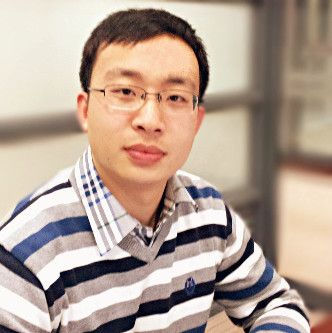
Johannes Schöning is a Professor of Human-Computer Interaction at the University of St. Gallen, where he leads a research group focused on developing novel user interfaces that empower individuals and communities with data-driven decision capabilities. His work bridges rapidly advancing technologies with human needs across diverse contexts including geographic information science, public health, medical applications, and extreme environments such as space missions. He publishes extensively at premier HCI venues including ACM CHI, MobileHCI, and DIS, as well as in interdisciplinary journals like NATURE and PLOS ONE. Professor Schöning's research interests center on understanding the interplay between technology and human activities through rigorous methods from AI, computer graphics, and cognitive psychology. His work emphasizes user-centered design methodologies and mixed methods approaches to create interfaces that fit both technological possibilities and human requirements. Key focus areas include virtual and augmented reality applications, accessibility solutions, navigation technologies, and the social implications of digital interfaces in everyday life. His research mission prioritizes theoretical and practice-based inquiry to develop disruptive solutions for real-world problems. Analysis of his recent publications reveals strong trends in virtual reality applications for emotional regulation and accessibility, with increasing emphasis on generative AI integration, environmental awareness, and space-related HCI challenges. His work consistently demonstrates interdisciplinary collaboration across computer science, psychology, geography, and medical fields, with publications showing growing interest in social implications of technology, particularly regarding navigation systems and their externalities. His scientific contributions have been recognized with numerous awards including: Best Presentation Award at IEEE VR 2023 Best Paper Award & Accessibility Award at Interact 2019 10 Year Impact Award 2021 Multiple Honorable Mention Awards at top conferences Professor Schöning actively mentors students across bachelor, master, and PhD levels, with his lab seeking candidates interested in the intersection of HCI, geoinformatics, and ubiquitous computing technologies. He emphasizes creating a 'detox-free academic environment' that focuses on meaningful teaching and research outcomes rather than academic pressures. His group frequently collaborates with international researchers and institutions on projects spanning medical applications, space exploration interfaces, and public health technologies. The research laboratory led by Professor Schöning maintains strong interdisciplinary connections across multiple domains. Current projects include developing AI-powered wearables for blind and low vision users, exploring VR applications for emotional regulation, investigating navigation technologies' social impacts, and creating interfaces for space mission contexts. The lab's work on CubeSat control software and plant visualization for space greenhouses demonstrates their unique focus on extreme environment applications, while their research on citizen participation through generative AI shows engagement with contemporary societal challenges.





.jpg.jpg)