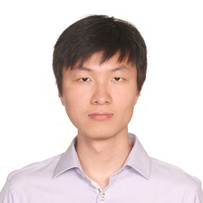
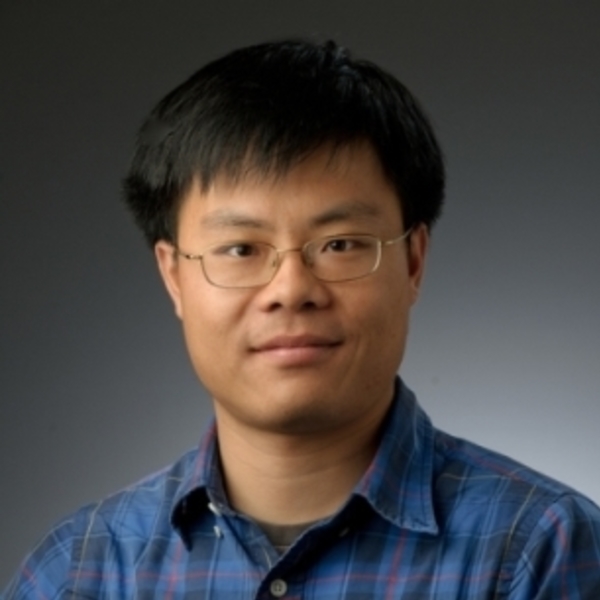
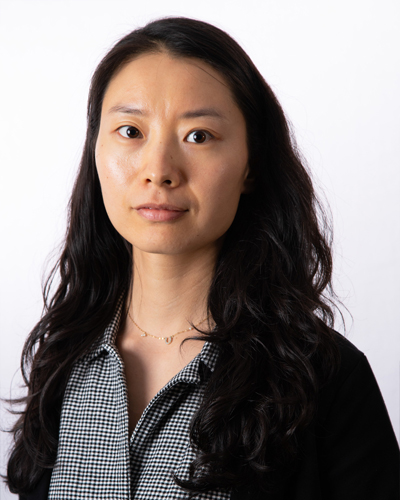
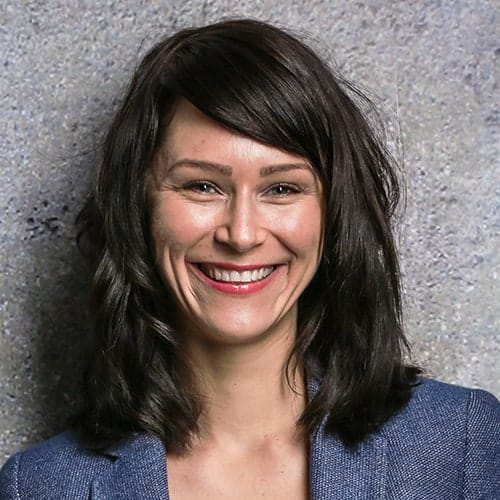
Shiqing Ma is an Assistant Professor in the Manning College of Information and Computer Sciences at the University of Massachusetts Amherst. Previously, he held a faculty position at Rutgers University from 2019 to 2023. He earned his Ph.D. in Computer Science from Purdue University (2019) and B.E. from Shanghai Jiao Tong University (2013). His research focuses on secure, intelligent, and transparent computing systems, particularly at the intersection of security, AI, and software systems. Key areas include integrating machine learning into software systems, ensuring algorithmic security through program analysis, and developing novel system architectures. Professor Ma's work has been recognized with prestigious awards, including the NSF CAREER Award (2023), and distinguished paper awards at USENIX Security (2017) and NDSS (2016). He actively contributes to the academic community through editorial roles and program committees in security, privacy, and software engineering. His research explores topics like backdoor attacks, AI safety, and bias mitigation in large language models. Recent articles emphasize defense mechanisms against adversarial attacks, watermarking techniques, and automated debugging systems for machine learning pipelines.
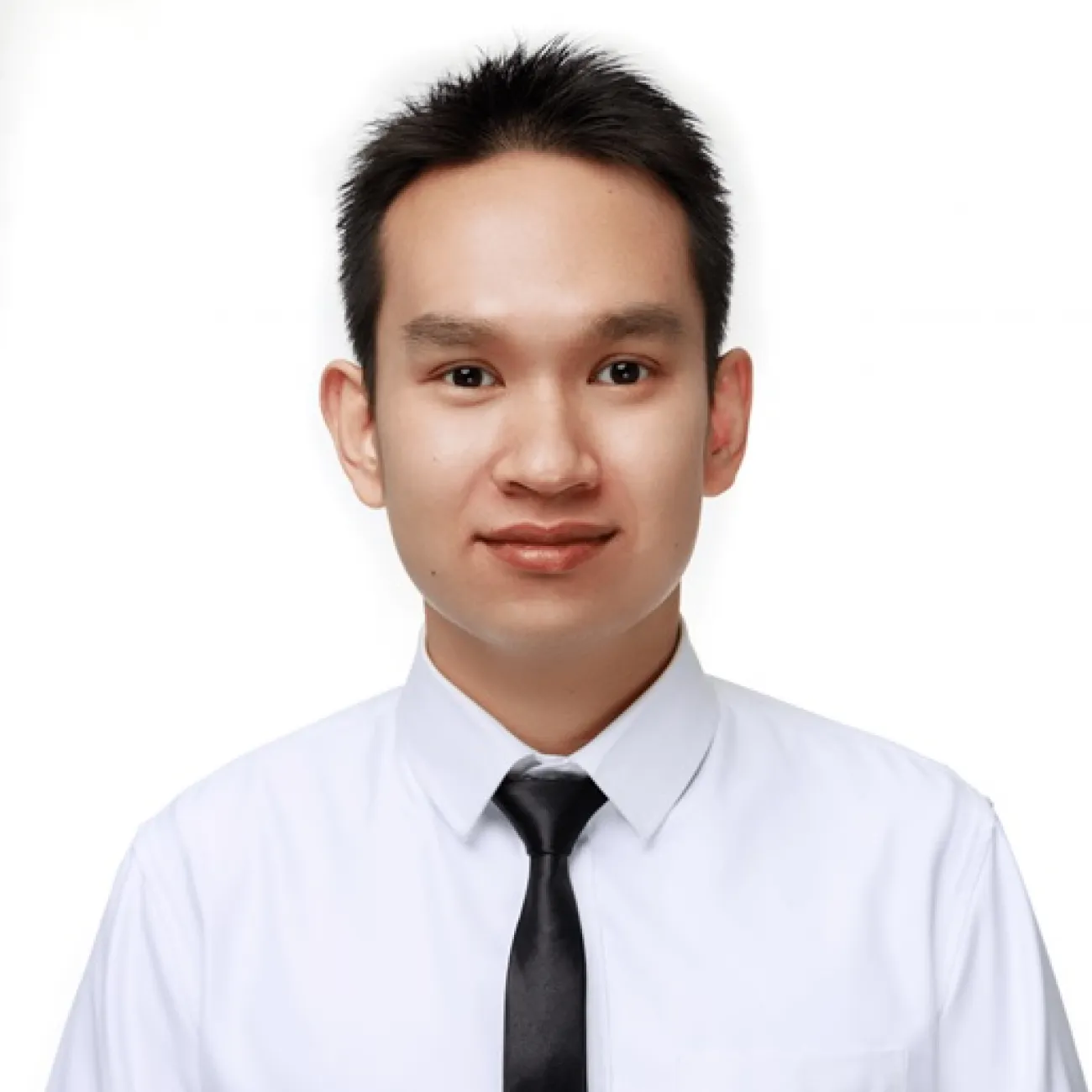
Dr. Tan Viet Tuyen Nguyen is a New Frontiers Fellow (Lecturer) in AI at the University of Southampton, specializing in Human-Centered Artificial Intelligence and Social Human-Robot Interaction. His research focuses on multimodal learning for robots to adapt their behavior to human social needs, with applications in healthcare, education, and service environments. Prior to this role, he was a Research Associate at King’s College London and a Research Assistant on the EU-funded CARESSES project, developing culturally-aware assistive robots for elderly support. Education: PhD in Information Science (Robotics) from Japan Advanced Institute of Science and Technology. He has organized conferences such as the IEEE RO-MAN 2022 special session on nonverbal communication and served as a reviewer for top-tier robotics and AI conferences. Research Interests include: Human-Robot Collaboration, Multimodal Perception, Generative AI for Social Interaction, and Context-Aware Robot Behavior Generation. His work has been recognized with awards including the Best Paper Award at ROMAN 2022 and the Prospective Research Award at ICServ 2023. Teaching Responsibilities include courses on Biologically Inspired Robotics, High-Level Programming, and MSc/Undergraduate project supervision. He currently oversees two PhD students and collaborates on projects like 'Exploring the impact of AI-driven writing of engagement in climate change' and 'Bridging Generations and Cultures through Generative AI.' Labs/Teams: Member of the Agents, Interaction and Complexity Centre and the Centre for Robotics Research at Southampton.
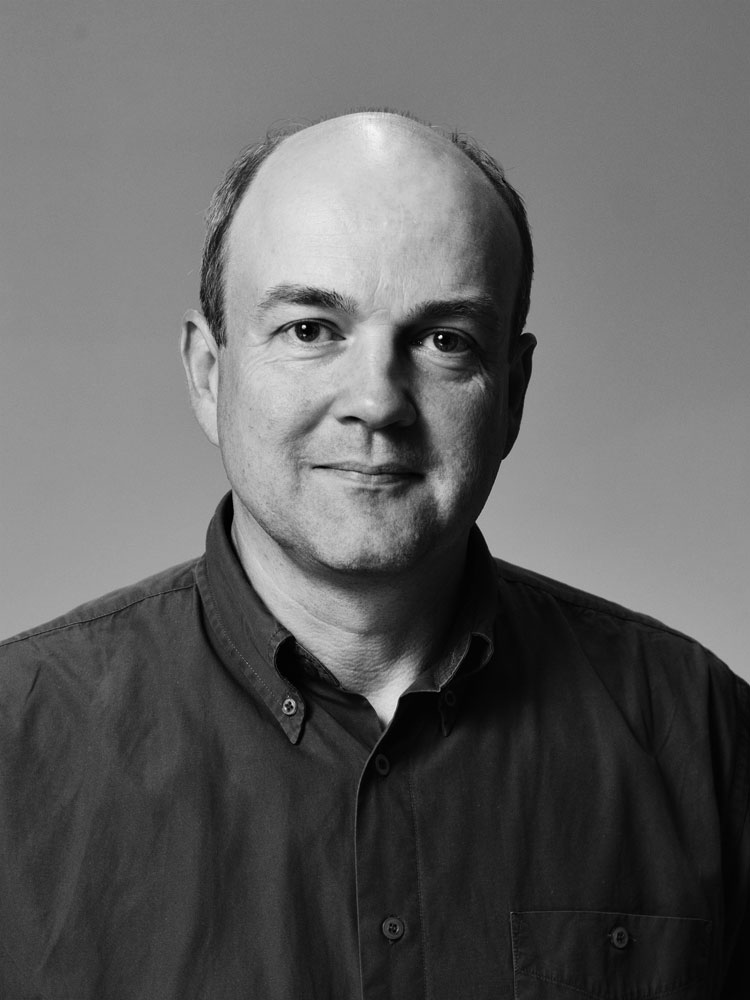
Martin Volk is a Full Professor of Computational Linguistics at the University of Zurich, with a dual affiliation to the Department of Informatics since 2019. He holds a PhD from the University of Koblenz and has held academic positions at institutions including Stockholm University (part-time from 2008-2011), Zurich University of Applied Sciences, and the University of Georgia. His research focuses on grammar engineering, machine translation evaluation, multilingual text analysis, and cross-language information retrieval. Education : Born in Cochem, Germany Studied Computer Science and Computational Linguistics at EWH University, Koblenz Master's in Artificial Intelligence at the University of Georgia (Fulbright Scholar) PhD in Computational Linguistics from the University of Koblenz Research Interests : His work emphasizes data-driven NLP methods, including corpus-based approaches, parsing technologies, and the application of machine learning to historical and multilingual texts. Key focuses include: Machine translation systems and evaluation frameworks Grammar testing environments (e.g., GTU) OCR and digitization of historical documents (e.g., Gothic script) Development of parallel corpora for linguistic research Projects : SMULTRON: Multilingual parallel treebank project Bullinger Digital: Historical document digitization initiative Text+Berg: Digital Humanities project for alpine textual heritage EU-funded MuchMore (cross-language medical IR) Grants & Collaborations : Recipient of grants from the Swiss National Science Foundation, EU projects, and industry partnerships (e.g., Siemens, Xerox). His work integrates academic and industrial perspectives in NLP tool development. Labs & Teams : Leads research teams in the Institute of Computational Linguistics at UZH, focusing on projects like the Zurich Parallel Corpus Collection and MODERN (modeling discourse for MT).
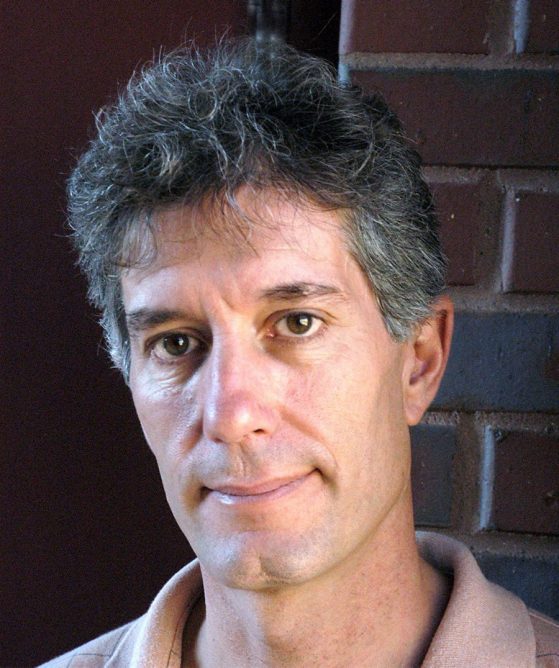
Professor August Evrard is a distinguished academic at the University of Michigan, holding the Arthur F. Thurnau Professorship in Physics and Astronomy. He is affiliated with the Department of Physics within the College of Literature, Science, and the Arts. Known for his contributions to cosmology and astrophysics, he pioneered the Problem Roulette tool, recognized with the Provost's Teaching Innovation Prize. His research focuses on galaxy clusters, dark matter, and cosmological surveys like the Dark Energy Survey (DES) and XXL Survey. He has been honored as an AAS Fellow (2025) and has contributed to advancements in physics education through innovative teaching methods and technologies. In research, Prof. Evrard explores topics such as dark matter halo dynamics, galaxy cluster properties, and weak lensing analyses. His work spans observational cosmology, computational modeling, and multi-wavelength astronomy. Notable projects include studies on galaxy cluster mass distributions, the relationship between X-ray emissions and velocity dispersions, and the application of machine learning to astrophysical data analysis. His contributions to education highlight the integration of AI-driven tools to enhance learning, as seen in initiatives like the Problem Roulette and course recommendation systems. Prof. Evrard's awards include the Provost's Teaching Innovation Prize for Problem Roulette and his AAS Fellowship. His academic leadership and innovative approaches to both research and education solidify his role as a pivotal figure in astrophysics and STEM pedagogy.
Laura Toni is an Associate Professor in the Department of Electronic and Electrical Engineering at University College London's Faculty of Engineering Sciences. She serves as the leader of a research team focused on advanced signal processing and machine learning applications, documented at https://lasp-ucl.github.io . Additionally, she holds prestigious affiliations as an ELLIS (European Laboratory for Learning and Intelligent Systems) Member and Turing Fellow Alumni. PhD in Electrical Engineering, University of Bologna (2009) MS in Electrical Engineering, University of Bologna (2005) Professor Toni's research spans theoretical and applied aspects of machine learning with particular emphasis on graph-based approaches. Her work integrates signal processing techniques with modern AI methodologies to address complex problems in communication systems, multimedia processing, and scientific discovery. She has made significant contributions to reinforcement learning theory, graph signal processing, and their applications across diverse domains including drug discovery and immersive technologies. Analysis of her recent publications reveals a strong focus on graph-based machine learning approaches, with increasing emphasis on reinforcement learning applications. Her work demonstrates a progression from theoretical foundations to practical implementations, particularly in multimedia processing, network science, and drug discovery applications. Many of her recent papers combine graph neural networks with diffusion models and reinforcement learning for complex prediction and generation tasks. Professor Toni has received notable recognition through her ELLIS membership and Turing Fellow Alumni status, which represent significant achievements in the European AI research community. ELLIS (European Laboratory for Learning and Intelligent Systems) Member Turing Fellow Alumni As an academic leader, Professor Toni supervises postgraduate students and leads a research team at UCL, focusing on cutting-edge projects at the intersection of signal processing and machine learning. Her team has secured research funding through various channels including European initiatives and industry partnerships, enabling them to pursue ambitious projects in graph learning, reinforcement learning, and multimedia processing. The team actively collaborates with institutions worldwide, including previous connections with UCSD and EPFL. Professor Toni leads the LASP research group at UCL (https://lasp-ucl.github.io), which focuses on Large-scale Adaptive Signal Processing for intelligent systems. The team comprises researchers working on graph signal processing, reinforcement learning, and multimedia applications, with strong connections to both theoretical foundations and practical implementations across various domains including healthcare, communications, and immersive technologies.
Chanchal K. Roy is Professor of Software Engineering/Computer Science at the University of Saskatchewan and Co-Director of the Software Research Lab. He leads an NSERC CREATE graduate program on Software Analytics Research and co-leads the Data Management group for an NSERC CFREF project on Food Security, with over 170 publications cited 6,000+ times. His research centers on software clone detection using the widely adopted NICAD system, software evolution, empirical studies, and AI-driven software analytics. Recent work integrates large language models for code generation, clone detection in the AI era, and developer interactions with tools like ChatGPT, emphasizing practical applications in maintenance and analytics. Analysis of his 15 most recent publications reveals a strong trend toward AI/ML integration in software engineering: 12 of 15 articles (2025) explore LLMs, quantum computing, or deep learning for tasks like bug localization, code snippet generation, and feature-toggle analysis. Key themes include empirical validation of AI tools, Stack Overflow data mining, and cross-domain frameworks for Society 5.0. His scientific awards include: Most Influential Paper Awards (SANER 2018, ICPC 2018) Outstanding Young Computer Science Researcher Award (CS-Can/Info-Can, 2018) New Researcher Award (University of Saskatchewan, 2019) New Scientist Research Award (College of Arts and Science, 2019) As lead of the NSERC CREATE program and CFREF data group, he mentors graduate students in software analytics while securing major grants. He actively serves on program committees for ASE, ICSE, and FSE, reviewing journals and organizing workshops on clone detection and empirical methods. His lab focuses on real-world applications in food security data management and software evolution. The Software Research Lab, co-directed by Roy, drives projects like NICAD and the NSERC CREATE initiative, emphasizing open-source contributions and industry collaboration. Current efforts include quantum-SE integration and AI-augmented maintenance tools under the CFREF food security mandate.
Anshumali Shrivastava is an Associate Professor of Computer Science, Electrical and Computer Engineering, and Statistics at Rice University, affiliated with the George R. Brown School of Engineering. His research focuses on large-scale machine learning, randomized algorithms for big data, and graph mining. He holds a PhD from Cornell University (2015) and an MSc from the Indian Institute of Technology Kharagpur (2008). His research interests span scalable deep learning, efficient neural network inference, and probabilistic algorithms. He has pioneered techniques in compressed learning, hashing-based search, and distributed optimization for handling massive datasets. Notable contributions include methods for accelerating LLM inference, memory-efficient quantization, and graph processing algorithms. Teaching: Probabilistic Algorithms, Large-Scale ML, and Machine Learning Seminars Awards: Charles W. Duncan Jr. Achievement Award (2023), Young Faculty Research Award (2021), NSF CAREER Award (2017), and multiple best paper awards His work bridges algorithm design with practical applications in recommendation systems, genomics, and edge computing. Current efforts focus on sustainable AI, hardware-aware compression, and efficient training/inference pipelines for large models.
Lizi Liao is an Assistant Professor at the School of Computing and Information Systems , Singapore Management University (SMU) , specializing in Artificial Intelligence and Conversational AI . Her research bridges Machine Learning , Natural Language Processing , and Multimodal Systems , focusing on proactive dialogue systems, multimodal conversational search, and task-oriented interactions. Education : PhD in Computer Science (2019) from the National University of Singapore (NUS) , advised by Professor Tat-Seng Chua . Research Interests center on principles of human conversational understanding and machine implementation, particularly in proactive conversational agents , multimodal dialogue systems , and target-driven conversation planning . Key applications include emotional support systems , intelligent shopping assistants , and learning companions . Recent Publications (2024-2025) highlight her work on LLM-based proactive dialogue , multimodal emotion recognition , and dynamic graph modeling , often integrating NLP , Multimedia , and Knowledge Graphs . Collaborative projects with her CoAgent Lab team emphasize human-AI interaction and ethical response generation . Scientific Awards : Google South Asia & Southeast Asia Research Award 2023 Lee Kong Chian Fellow Teaching includes Visual Analytics for Business Intelligence (undergraduate) and Text Analytics and Application (graduate). She also serves as Associate Editor for TOIS and TOMM , and organizes tutorials at ACL , SIGIR , and WSDM .
Rachel Pottinger is a Professor in the Department of Computer Science at the University of British Columbia within the Faculty of Science. She has been at UBC since 2004, progressing from Assistant Professor to Associate Professor in 2012 and to full Professor in 2021. She is affiliated with research centers including CAIDA (Centre for Artificial Intelligence Decision-making and Action) and DFP (Designing for People), and is part of ICICS (Institute for Computing, Information and Cognitive Systems). Her research focuses on data management, particularly semantic data integration, metadata management, and making data more accessible and understandable to users. She leads the Data Management and Mining Lab and has supervised numerous doctoral and master's students. Her work addresses three main areas: helping people understand and explore their data, managing data not well supported by databases, and coordinating data across multiple databases. Her recent publications demonstrate strong trends in database usability, data provenance visualization, query recommendation systems, and building information modeling integration. Her work bridges theoretical database concepts with practical human-centered applications, particularly in making complex data systems more accessible to non-expert users. UBC Computer Science Department Faculty Teaching Award 2013 Computer Science Department Teaching Award 2010 CS Department Teaching Award Denice Denton Emerging Leader Award 2007 Pottinger has supervised numerous PhD and Master's students, with research focusing on data provenance, database usability, and data coordination. She has been involved in significant research projects related to data lakes, open data navigation, and query recommendation systems. Her current research explores table annotation and discovery in data lakes, query refinement for aggregation queries, and query prediction based on past user behavior. She is actively involved in the academic community, serving as Secretary-Treasurer for SIGMOD, on the VLDB Journal editorial board, and as a member of the Computing Research Association's Board of Directors. She previously served as General Co-Chair of SIGMOD 2020 and as Associate Head for the Undergraduate Program of the Department of Computer Science from 2018-2020.
Caroline Trippel is an Assistant Professor in the Departments of Computer Science and Electrical Engineering at Stanford University. Her research focuses on ensuring correctness and security in computer systems through formal methods, with particular emphasis on hardware verification, memory consistency models, and mitigating vulnerabilities like Spectre/Meltdown. She previously worked at Facebook’s FAIR SysML group before joining Stanford. Education: PhD in Computer Science, Princeton University BS in Computer Engineering, Purdue University Her work has influenced the RISC-V ISA memory consistency model and produced tools like CheckMate, which automatically synthesizes hardware exploits for security verification. She explores privacy-preserving ML, ML-driven hardware optimizations (e.g., neural recommendation), and datacenter reliability. Her research has earned awards including the 2020 ACM SIGARCH Dissertation Award and NVIDIA Fellowship. Key contributions include: Formal analysis of RISC-V memory models Exploitation synthesis frameworks (CheckMate) Hardware-software contracts for security Defenses against microarchitectural side-channel attacks Current projects include: VeriCoder: LLM-enhanced RTL code verification Multi-μPATH synthesis for security validation Near-data processing (RecSSD) for recommendation systems
HaoYu Wang is an Assistant Professor of Computer Science at SUNY Albany. His research focuses on parameter-efficient and data-efficient deep learning, particularly in natural language processing and machine learning, aiming to democratize AI access. He holds a Ph.D. from Purdue University's School of Electrical and Computer Engineering, a B.Eng. from the University of Electronic Science and Technology of China, and an MS from SUNY Buffalo. His work includes innovations like RoseLoRA (sparse low-rank adaptation for knowledge editing), LightLT (lightweight quantization for long-tail data), and FedKC (federated knowledge composition for multilingual NLU). He has received awards such as the Future Leaders in Data Science (2024) and Bilsland Dissertation Fellowship. Key research areas include parameter efficiency, cross-lingual NLU, and model fairness. Recent publications span topics like federated learning optimization, robust retrieval-augmented generation, and mitigating token overfitting in LLMs. He advises students on Ph.D. and intern roles, emphasizing CVs and research interests in applications.
Golnoosh Farnadi is an Associate Professor at the Department of Computer Science and Operational Research at the University of Montreal and an Assistant Professor at the School of Computer Science at McGill University. She holds a Canada-CIFAR Chair in Artificial Intelligence and serves as a Senior Academic Member at Mila - Quebec Institute for Artificial Intelligence. Her interdisciplinary work bridges computer science, operations research, and ethical AI considerations. Her educational background includes a Ph.D. in Computer Science from KU Leuven and Ghent University (2017), followed by postdoctoral positions at the University of Montreal/MILA (2018-2020) and the University of California, Santa Cruz (2017-2018). Her research focuses on algorithmic fairness, responsible AI, deep learning, and probabilistic models, with applications spanning healthcare, recommender systems, and public policy. Farnadi's recent publications demonstrate a strong emphasis on addressing fairness in machine learning systems, with particular attention to cultural diversity in recommender systems, fairness in healthcare optimization (particularly kidney exchange programs), and mitigating hallucinations in large language models. Her work consistently combines theoretical rigor with practical applications, often employing novel mathematical frameworks to tackle complex ethical challenges in AI. Among her notable recognitions are the Google Scholar Award (2021), Facebook Research Award (2021), Google Award for Inclusion Research (2023), and being named one of the 100 Brilliant Women in AI Ethics (2023). She was also recognized as a Rising Star in AI Ethics in 2021. Farnadi supervises numerous graduate students through her EQUAL Lab (EQuity & EQuality Using AI and Learning algorithms), which focuses on developing AI systems that promote fairness and equity. Her teaching includes courses on Responsible AI, Machine Learning, and Trustworthy Machine Learning at both McGill University and HEC Montreal.
Jun Li is a Full Professor in the Department of Applied and Computational Mathematics and Statistics at the University of Notre Dame's College of Science. He specializes in developing statistical and computational methods for big data, with a focus on interdisciplinary applications in bioinformatics, machine learning, and data mining. His career includes tenure as an Assistant Professor (2012–2017) and promotion to Associate Professor (2017) before becoming Full Professor (2020). Dr. Li holds a Ph.D. in Statistics from Stanford University (2012), supervised by Robert Tibshirani, and earlier degrees from Tsinghua University: a B.E. in Automation (2004) and an M.S. in Pattern Recognition and Intelligent Systems (2007). Research Interests : Dr. Li’s work centers on advancing computational frameworks for handling large-scale datasets, integrating statistical rigor with algorithmic innovation. Recent themes include AI-driven code improvement, ethical LLM applications in HCI, and GUI automation. His methodologies emphasize human-AI collaboration and transparency in algorithmic systems. Publications : His 2025 work explores LLM vulnerabilities in GUI agents, AI-assisted education tools like GLITTER, and ethical challenges in HCI research. Earlier studies (2024–2023) address topics such as natural language database queries, privacy-preserving app promotion analysis, and multimodal task learning. Lab/Teams : Affiliated with Notre Dame’s computational statistics research groups, focusing on interdisciplinary projects bridging statistics, computer science, and applied mathematics. His work often involves collaborations with industry and academic partners to translate theoretical advancements into practical applications.
Ke Yang serves as Assistant Professor in the Department of Computer Science at the University of Texas at San Antonio (UTSA), College of Sciences. He founded and leads the Cohort for AI REsponsibility (CAREAI) initiative, while also holding core faculty positions in UTSA's School of Data Science and MATRIX (AI Consortium for Human Well-being). Education: Ph.D. from New York University (supervised by Prof. Julia Stoyanovich) Research Focus: Dr. Yang's work centers on AI trustworthiness and responsibility , with specialized expertise in algorithmic fairness, data ethics, and human-centered data science. His research addresses critical challenges including Large Language Model hallucinations, explainable AI frameworks, and algorithmic accountability mechanisms. He actively develops open-source tools like Ranking Facts and FairDAGs to implement these principles in practical systems. Publication Trends: Recent work (2020-2025) demonstrates evolving focus from foundational fairness in ranking systems toward generative AI safety and medical applications. His publications show strong theoretical grounding combined with real-world implementation, particularly in privacy policy analysis and medical question-answering systems using causal inference techniques. Scientific Recognition: Pearl Brownstein Doctoral Research Award (NYU Tandon School of Engineering) CDS Postdoctoral Fellowship (University of Massachusetts) Professional Development: Dr. Yang has secured significant research funding including the CDS Postdoctoral Fellowship at UMass. His graduate work at NYU and Drexel University was fully supported by research assistantships, demonstrating consistent funding acquisition throughout his career. He actively contributes to academic community building through conference tutorials and educational initiatives. Research Ecosystem: He directs CAREAI at UTSA while collaborating across institutional boundaries through MATRIX and the School of Data Science. Previously, he contributed to the Data systems Research for Exploration, Analytics, and Modeling (DREAM) lab and Center for Data Science at UMass Amherst, maintaining continuity in his responsible AI research trajectory.
Claudia Wagner is a full professor for Applied Computational Social Sciences at RWTH Aachen University and the Scientific Director of the Computational Social Science department at GESIS—Leibniz Institute for the Social Sciences. She is also an External Faculty member at the Complexity Science Hub Vienna. Her work bridges computer science and the social sciences to study algorithmic systems and their societal impacts. Her research focuses on socio-technical phenomena such as inequality, sexism, and perception bias in algorithmically infused societies. She investigates methodological challenges in using digital behavioral data to study human behavior, attitudes, and group dynamics. Her interests span computational social science, algorithmic fairness, network science, and AI ethics. The analysis of her recent publications reveals a strong emphasis on bias, fairness, and methodological rigor in digital data analysis. Her work spans AI psychometrics, gender inequality in online platforms, and validation frameworks for digital traces. She frequently publishes in top-tier venues such as Nature , Science , and AAAI conferences. DOC-fFORTE fellowship from the Austrian Academy of Sciences Four best paper awards at international conferences (ICWSM, CSCW, WWW, AAAI) Associate Editor, EPJ Data Science Steering Committee Member, International AAAI Conference on Web and Social Media Board Member, International Society for Computational Social Science Claudia Wagner has led and co-led substantial research projects funded by national and international agencies. She mentors a diverse group of PhD students working on topics like algorithmic bias, data quality, and dehumanization. She has organized training events such as the CSS Methods Summer School and delivered keynotes globally on inequality and computational social science. She leads the Computational Social Science department at GESIS and collaborates with interdisciplinary teams at RWTH Aachen and the Complexity Science Hub. Her group develops tools for measuring algorithmic impacts and visualizing disparities in socio-technical systems, such as the 'Planets of Disparity' dashboard.