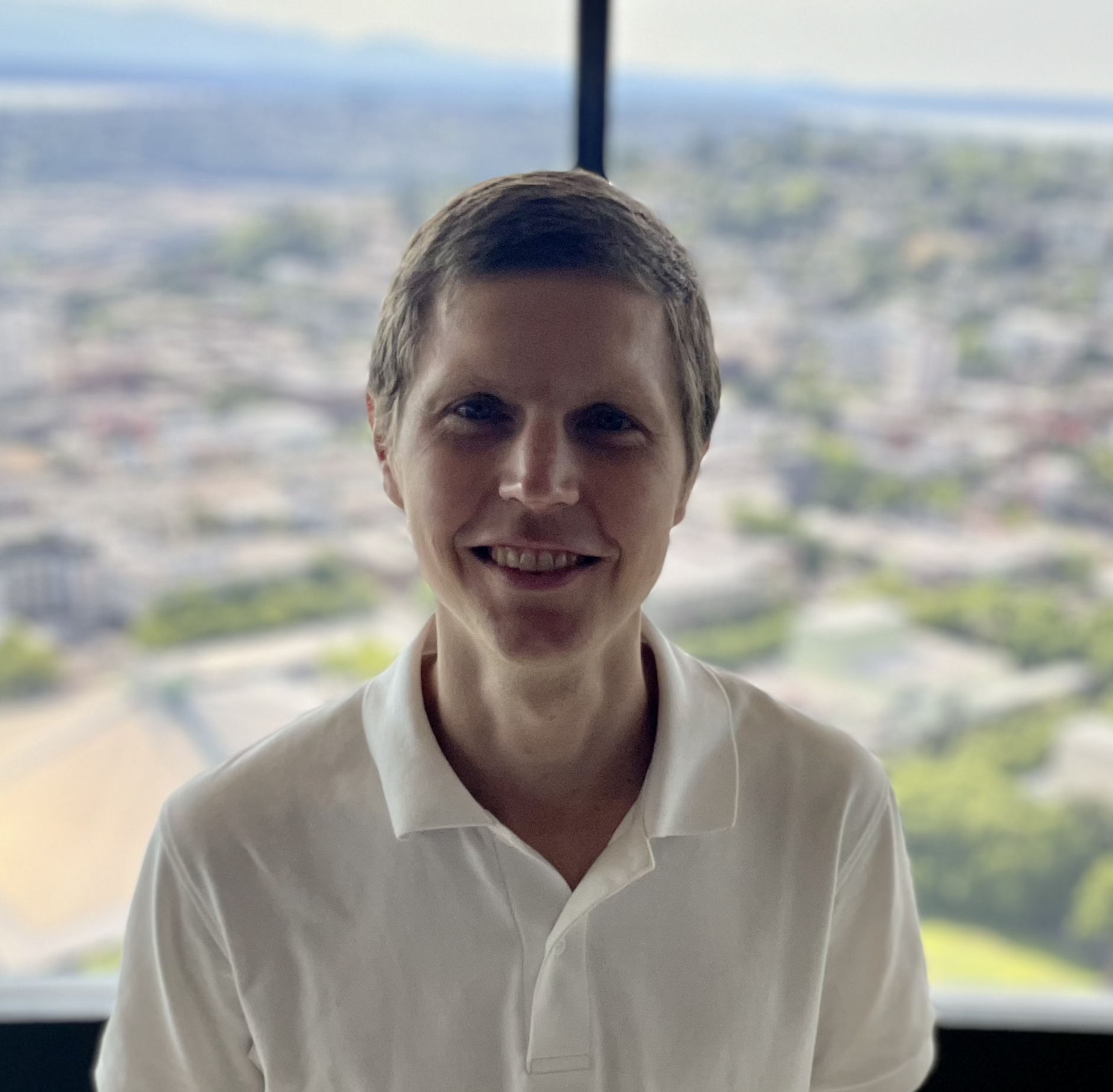
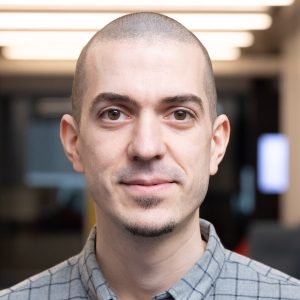
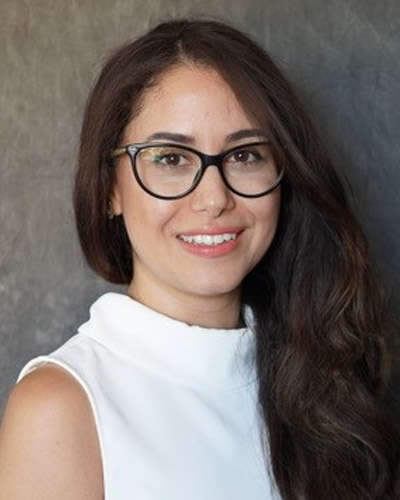
Chris Adrian is a Senior Lecturer in the Department of Accounting at Monash University, specializing in corporate governance, financial accounting, and auditing. His research explores intersections between environmental factors (e.g., climate change, natural disasters) and corporate financial practices, alongside political influences on capital markets. Prior to Monash (since 2017), he held a Lecturer position at Macquarie University. Chris earned his PhD in 2015, focusing on corporate governance stakeholder perceptions. His work has been published in journals like Journal of Business Ethics and International Journal of Auditing , with recent studies examining audit fee dynamics during natural disasters, political connections in audit committees, and pandemic resilience through sustainability disclosures. Education: PhD (2015) Professional Affiliations: American Accounting Association (AAA), European Accounting Association (EAA), Accounting and Finance Association of Australia and New Zealand (AFAANZ) His research projects include applying large language models to sustainability reporting standards and analyzing charity performance during climate disasters. He is currently accepting PhD students and serves as an ad-hoc reviewer for multiple accounting journals. Key themes in his articles include audit risk mitigation during political shifts, disaster-driven corporate tax behaviors, and pandemic impacts on firm valuation. His work consistently bridges financial reporting practices with broader socio-environmental challenges.
Tongguang Li is a Research Fellow at the Department of Human Centred Computing, Monash University. His research focuses on learning analytics, self-regulated learning, and AI applications in education. He has contributed to the development of the FLoRA engine, an AI tool designed to enhance hybrid human-AI regulated learning. Li’s work explores adaptive scaffolding, large language model (LLM) feedback systems, and the integration of multimodal data for educational insights. His recent studies investigate how LLMs like ChatGPT can provide effective feedback to students, analyze rhetorical patterns in writing, and measure the impact of scaffolding on learning processes. Li has been recognized for his research with the Conference Best Full Student Paper Award from the Australiasian Society for Computers in Learning in Tertiary Education (2022). Key themes in his work include understanding self-regulated learning strategies through trace data, optimizing adaptive systems for learner engagement, and leveraging AI for educational innovation. His research bridges cognitive science, data analytics, and educational technology to improve learning outcomes and pedagogical practices.
Valeriy Vyatkin is a Professor at the Department of Electrical Engineering and Automation, Aalto University. His research focuses on advancing industrial automation, control systems, and their integration with emerging technologies like machine learning and digital twins. He specializes in standards such as IEC 61499, addressing interoperability, formal verification, and performance optimization in distributed automation systems. Key research interests include: Physics-informed machine learning for industrial processes (e.g., steel rolling, reservoir engineering) Formal methods for control system validation and safety-critical applications Development of adaptive automation frameworks for Industry 5.0 challenges, including human-robot collaboration and energy systems Interoperability between legacy and modern industrial standards (OPAS, OPC UA) Recent work emphasizes real-time simulation, FPGA-based control prototyping, and AI-driven solutions for energy efficiency and sustainability in manufacturing, horticulture, and process industries. Publications span topics like robotic walker design, probabilistic model checking, and decentralized learning management systems. He collaborates on EU and industry-funded projects, focusing on digital twin implementation, edge computing, and virtual commissioning. His team develops tools for automated code generation, system migration, and anomaly detection in complex industrial settings.
Jiayun (Peter) Wang is a Postdoctoral Scholar Research Associate in the Department of Computing and Mathematical Sciences at the California Institute of Technology (Caltech). His research focuses on advancing AI-driven solutions in medical imaging, computational imaging, and computer vision. Current projects emphasize applying deep learning to diagnose ocular conditions like dry eye syndrome and improving 3D reconstruction techniques. Collaborations with institutions such as UC Berkeley, Microsoft, and NVIDIA highlight his interdisciplinary approach to solving real-world medical and imaging challenges. Research Interests: Medical AI and Healthcare Analytics Deep Learning Applications in Ophthalmology 3D Reconstruction and Scene Understanding Physics-Informed Neural Networks Compressed Sensing MRI Key Contributions: Developed machine learning models predicting dry eye-related outcomes using meibography images Pioneered physics-aware neural operators for ultrasound lung aeration mapping Advanced open-vocabulary 3D object detection systems Labs/Teams: Collaborates with Caltech's AI4Health initiative and NVIDIA's research group, contributing to medical imaging advancements through interdisciplinary teams.
Philip Bille is a Professor and Head of the Algorithms, Logic and Graphs section at the Department of Applied Mathematics and Computer Science, Technical University of Denmark (DTU), College of Engineering. His research centers on the design and analysis of efficient algorithms, particularly for string processing, compressed data, and data structures. His research interests lie at the intersection of theoretical computer science and practical applications. He focuses on algorithms , data structures , string indexing , pattern matching , and compressed computation . His work enables efficient querying and processing of large-scale, repetitive data, with applications in bioinformatics, intrusion detection, and green computing. The recent publications reflect a strong trend in developing space-efficient and fast algorithms for modern computational challenges. Key themes include compressed data structures , sliding window indexing , finite automata compression , and energy-aware matrix operations . These works demonstrate expertise in balancing theoretical rigor with practical performance. Philip Bille actively supervises multiple PhD students and leads several research projects. He contributes to advancing sustainable computing aligned with UN SDGs. His work integrates algorithmic theory with real-world efficiency. Supervises PhD projects on hierarchical compression, adaptive computation, and vector processor algorithms. Involved in research on green computing, compressed formats, and efficient data models. He is affiliated with the Algorithms, Logic and Graphs group at DTU, a hub for theoretical and applied algorithmic research. The team explores fundamental problems in data representation and processing, pushing the boundaries of what is computationally feasible in terms of time and space.
Dr. Silvana Deilen is a Researcher at the Institute for Translation Studies & Technical Communication within the Faculty of Language and Information Sciences at the University of Hildesheim. She joined the university in 2023 after working as a Research Associate at Johannes Gutenberg University Mainz from 2018-2024. Her primary research focus centers on accessible communication, particularly in the areas of Easy Language and Plain Language translation, with special emphasis on cognitive aspects of translation processes and AI-assisted translation technologies. Dr. Deilen earned her B.A. in Multilingual Communication from Cologne University of Applied Sciences (2012-2015), followed by an M.A. in Specialized Translation from the same institution (2015-2018). She completed her doctoral studies (Dr. phil.) in Translation Studies at Johannes Gutenberg University Mainz (2018-2021) with summa cum laude distinction, supervised by Prof. Dr. Silvia Hansen-Schirra and Prof. Dr. Arne Nagels. Her research interests span multiple interconnected domains within translation and communication accessibility. A significant portion of her work examines the cognitive processing of compound words in Easy Language, utilizing eye-tracking methodologies to investigate how visual segmentation affects reading behavior and cognitive load. She has pioneered research on AI-assisted translation for health communication, particularly focusing on how large language models can support the creation of accessible health information. Her work bridges theoretical translation studies with practical applications in healthcare, government communication, and digital accessibility. Dr. Deilen's publication record reveals a clear trajectory toward increasingly sophisticated integration of technology and accessibility. Her recent work shows strong emphasis on evaluating AI systems like ChatGPT for translation tasks, developing editorial workflows for AI-assisted translation of health information, and investigating cognitive aspects of compound translation. The interdisciplinary nature of her research connects linguistics, cognitive science, health communication, and artificial intelligence, demonstrating how translation studies can address real-world accessibility challenges. 2014 & 2016: PROMOS Scholarships 2018-2021: Doctoral Scholarship from Gutenberg Young Researchers College 2020: Best Student Paper Award at Swiss Conference on Barrier-free Communication 2023: Award for Outstanding Dissertation from Johannes Gutenberg University Mainz 2023: Multiple research grants from University of Hildesheim, Wort & Bild Verlag, and Niedersachsen Zukunftsdiskurse 2025: DAAD Postdoctoral Research Grant Dr. Deilen actively collaborates on significant research projects including the KI-GesKom project (AI-Supported Health Communication in Plain Language), which receives funding from the state of Niedersachsen. She works closely with Prof. Dr. Ekaterina Lapshinova-Koltunski, Prof. Dr. Christiane Maaß, and Sergio Hernández Garrido as part of the Research Center for Easy Language. Her work with the Apotheken Umschau demonstrates practical application of research, translating health information into accessible formats for people with communication limitations. Dr. Deilen also contributes to the academic community as a program chair and scientific committee member for international conferences including UCCTS 2025 and Translation in Transition 2024.
Prof. Dr. Ulrich Frank is a full Professor of Business Information Systems and Enterprise Modeling at the University of Duisburg-Essen, Faculty of Computer Science. He serves as Director of IS:link, an international student exchange network he founded. His academic career spans multiple prestigious institutions including University of Mannheim, GMD, IBM Almaden Research Center, University of Koblenz-Landau, and University of Duisburg-Essen since 2004. His educational background includes: Business Administration studies (minor in Applied Computer Science) at University of Cologne Doctorate in Political Science from University of Mannheim (1986) Habilitation at University of Marburg (1993) Prof. Frank's research focuses on multi-perspective enterprise modeling, with particular emphasis on object-oriented and multi-level modeling approaches. His work bridges business administration and computer science, exploring conceptual modeling, knowledge management systems, business process reorganization, and the theoretical foundations of business informatics. He has made significant contributions to modeling languages like FMMLx and XModelerML, advancing multi-level modeling techniques for enterprise information systems. His recent publications demonstrate a strong focus on multi-level modeling languages, with particular attention to UML extensions, language engineering, and the application of large language models in systems engineering. The research trajectory shows consistent development of modeling frameworks that support enterprise architecture, business process modeling, and domain-specific language design, with increasing attention to AI-assisted modeling approaches in recent years. Prof. Frank has received significant recognition through editorial positions at leading journals: Co-Editor of Enterprise Modelling and Information Systems Architectures Co-Editor of Business & Information Systems Engineering Co-Editor of Information Systems and E-Business Management Co-Editor of Software and Systems Modeling Member of the Standing Committee of the European Conference on Information Systems (ECIS) Prof. Frank has served in numerous academic leadership roles including as Chairman of the Examination Board for Business Information Systems, member of the Research Commission at University of Duisburg-Essen, and Appointment Commissioner (2021-2023). He has reviewed for major funding organizations including the German Research Foundation, Federal Ministry of Education and Research, and Swiss National Science Foundation. As founder and senior consultant of IS:link, Prof. Frank leads an international student exchange network connecting universities worldwide. His research group focuses on multi-perspective enterprise modeling (MEMO), developing frameworks and tools for business information systems design and implementation.
Mikael Johansson is a Professor at Kungliga Tekniska Högskolan (KTH), specializing in Control Technology . He teaches and coordinates courses such as Distributed Optimization (FEL3311) and various advanced-level degree projects in computer science, electrical engineering, and systems engineering. His research spans Control Systems , Machine Learning , and Optimization , with a focus on asynchronous algorithms, federated learning, and applications in energy systems and construction. His work includes 15 recent publications on topics like neural networks, distributed optimization, and battery technology. Notable areas of contribution are in asynchronous learning, federated learning with privacy constraints, and quasi-Newton methods for optimization. His research bridges theoretical advancements with practical applications in urban design, healthcare, and autonomous systems.
Sean Welleck is an Assistant Professor at Carnegie Mellon University's School of Computer Science, specifically within the Language Technologies Institute (LTI). He leads the L3 Lab and serves as an advisor for the AI for Math Fund. His academic journey includes a PhD from New York University under Kyunghyun Cho and postdoctoral positions at the Allen Institute for Artificial Intelligence and the University of Washington with Yejin Choi. Dr. Welleck's educational background shows a strong foundation in computer science. He earned his PhD in Computer Science from New York University, where he worked under the mentorship of Kyunghyun Cho and Zheng Zhang. Prior to this, he completed his MSE and BSE in Computer Science from the University of Pennsylvania, demonstrating a long-standing commitment to the field. Dr. Welleck's research focuses on bridging informal and formal reasoning with AI, with particular emphasis on developing learning, inference, and evaluation algorithms for large language models. His work spans multiple cutting-edge areas including mathematical reasoning , code generation , inference algorithms , and AI reasoning agents . A significant portion of his recent work involves combining AI with formal methods for mathematics, where he has developed frameworks like Llemma (an open-source language model for mathematical reasoning) and meta-generation (for inference-time algorithms). His research is characterized by a strong theoretical foundation coupled with practical applications that push the boundaries of what AI systems can achieve in formal reasoning domains. Analysis of Dr. Welleck's recent publications reveals a clear research trajectory focused on enhancing language models' capabilities in formal reasoning and mathematical problem-solving. His work demonstrates an evolution from foundational research in neural text generation to increasingly sophisticated approaches that integrate formal methods with deep learning. Key trends include the development of inference-time algorithms that improve model performance without additional training, frameworks for mathematical reasoning that connect informal and formal proofs, and novel evaluation methodologies for language models. His publications consistently appear in top-tier conferences including NeurIPS, ICLR, ICML, and ACL, reflecting the high impact of his contributions to the field. Dr. Welleck's scientific achievements have been recognized with several prestigious awards: NAACL 2025 Best Paper Award ICLR 2025 Oral Presentation (Top 2%) ICLR 2025 Spotlight Presentation (Top 5%) NeurIPS 2021 Outstanding Paper Award (Top 0.1%) for MAUVE NVIDIA AI Labs Pioneering Research Award (2017 and 2018) As an educator and mentor, Dr. Welleck actively guides the next generation of AI researchers. He currently advises multiple PhD students including Pranjal Aggarwal, Weihua Du, Andre He, and Seungone Kim (some co-advised with other faculty), along with MS students Riyaz Ahuja, Jiewen Hu, Qinyue Tan, and Thomas Zhu, and undergraduate Tate Rowney. At CMU, he teaches advanced courses such as Neural Code Generation and Advanced NLP, and has previously taught at New York University and the University of Washington. His commitment to education extends to creating resources like the Thesis Review Podcast and developing tutorials on neural theorem proving that have been presented at major conferences. Dr. Welleck leads the L3 Lab at CMU, which focuses on the intersection of language, learning, and logic. The lab brings together students and researchers to tackle challenging problems in AI reasoning, with particular emphasis on mathematical reasoning and code generation. Recent initiatives include the development of Llemma, an open-source language model specialized for mathematical reasoning, and work on inference-time algorithms that enable language models to improve their performance through additional computation during inference rather than through additional training.
Natalia Díaz Rodríguez is an Assistant Professor of Artificial Intelligence at ENSTA ParisTech, where she works in the Computer Science and Systems Engineering department within the Autonomous Systems and Robotics Lab (U2IS). She is also affiliated with the INRIA Flowers team, focusing on developmental robotics. Her research spans deep learning, reinforcement learning, continual learning, and symbolic AI, with applications in explainable AI, computer vision, and robotics for social good. Her academic background includes a double PhD in Artificial Intelligence from Abo Akademi University and the University of Granada, alongside MSc degrees in Soft Computing and Computer Engineering from the University of Granada. She contributes to interdisciplinary AI, particularly in robotics, ethics, and healthcare applications, and co-organizes workshops on continual learning. Double PhD in Artificial Intelligence (2015), Abo Akademi University and University of Granada Doctoral diploma on Innovation and Entrepreneurship (2017), EIT Digital MSc in Soft Computing and Intelligent Systems (2012), University of Granada MSc in Computer Engineering (2010), University of Granada Her recent publications focus on trustworthy AI, including bias identification, counterfactual explanations, and continual learning strategies, reflecting her commitment to ethical and robust AI systems. She also explores AI applications in structural engineering, climate visualization, and financial risk assessment, emphasizing practical deployment and interpretability.
Marat I. Latypov serves as Assistant Professor in the Department of Materials Science and Engineering at the University of Arizona's College of Engineering. He is also a member of the Applied Mathematics Graduate Interdisciplinary Program and leads the Materials Informatics Lab. His research spans computational materials science, sustainable alloy design, and machine learning applications for materials development. Dr. Latypov holds a PhD in Materials Science and Engineering from Pohang University of Science and Technology (POSTECH, South Korea, 2014) and a Dipl.-Ing. in Engineering Physics from Ufa State Aviation Technical University (Russia, 2011). His postdoctoral training included appointments at Georgia Tech/CNRS in France and the University of California, Santa Barbara. His research focuses on materials informatics , physics-informed machine learning , and sustainable structural alloys . Key methodologies include graph neural networks for polycrystal mechanics, vision transformers for microstructure representation, and adaptive experimental design for materials optimization. Recent work emphasizes circular economy applications through construction waste recycling and copper mine tailings valorization. Analysis of his publication record reveals strong emphasis on computational microstructure-property linkages (35% of recent work), machine learning for materials design (30%), and sustainable materials processing (25%), with growing integration of large language models for materials knowledge extraction. NSF CAREER Award (2025) : For damage control in recycled aluminum alloys ISTI Distinguished Faculty Scholar (2024) : At Los Alamos National Laboratory Novelis Hackathon First Prize (2021) : Computer vision application Acta Materialia Outstanding Reviewer (2018) Young Researcher Award (2017) : NanoSPD7 Conference Dr. Latypov advises PhD students including Herbold Fellow Zhuocheng Huang and leads projects funded by NSF and the Grantham Foundation. Current initiatives include chalcopyrite leaching optimization for copper mining and graph neural network development for fatigue prediction. His Materials Informatics Lab maintains collaborations with Los Alamos National Laboratory, MIT, and industry partners including Novelis. The lab operates at the intersection of metallurgy , machine learning , and high-performance computing , with capabilities spanning deep learning, Bayesian inference, and cloud-based computational infrastructure. Recent news highlights participation in CODAS-HEP summer school and publication of vision transformer work in Acta Materialia.
Zenun Kastrati is an Associate Professor at the Department of Informatics, Linnaeus University. His research focuses on Artificial Intelligence, Natural Language Processing, Machine Learning, Semantic Web, Sentiment Analysis, and Learning Technologies. He contributes to the Data-driven Business Innovation (DBI) and Interaction Design Research Groups, leading projects like Forest 4.0, RAPID, and IGNITE. His recent work involves Explainable AI, medical imaging, and multilingual NLP. Ph.D. in Computer Science (NTNU, 2018) Master's in Computer Science (EU TEMPUS Programme) Previous Lecturer/Researcher at University of Prishtina His research spans AI applications in medical diagnostics , NLP , sentiment analysis , and semantic technologies . Key projects include Forest 4.0 (environment monitoring) and RAPID (online education in Pakistan). Publications highlight his expertise in deep learning , transformer models , and context-aware systems . Recent publications demonstrate trends in Explainable AI (XAI) for healthcare, medical imaging techniques, and multilingual NLP frameworks. Other work explores social media analytics , student feedback analysis , and pedagogical document classification . Zenun's teaching includes Fundamentals of Programming , Object-Oriented Programming , Web Applications , Data Analytics , and Adaptive Web courses at BSc and MSc levels.
Prof. Dr. Matthias Weidlich is a faculty member at Humboldt University of Berlin within the Institute of Computer Science under the Faculty of Mathematics and Natural Sciences . His research focuses on Process Mining , Complex Event Processing , and Data Privacy with applications in Business Process Management and Scientific Workflows . Research Interests: Business Process Management and Process Mining Complex Event Processing and Stream Data Analysis Data Privacy and Security in Process Systems Scientific Workflow Systems and User Behavior Heterogeneous Network Embeddings Algorithm Design and Optimization Recent Publications (2023-2025) demonstrate expertise in: Efficient stream processing techniques Privacy-preserving process mining frameworks Scientific workflow analysis tools Graph neural network applications Multi-modal data integration Adaptive querying systems Contact: Office: Unter den Linden 6, 10099 Berlin Phone: 030 2093-41277 Email: matthias.weidlich@hu-berlin.de Web: hu.berlin/data
Raul Castro Fernandez is an Assistant Professor of Computer Science at the University of Chicago, where he researches data ecology, a concept he created to study how data shapes our world and how we can shape it back. He is the faculty co-lead of the Data Science Institute's Data Ecology Research Initiative and a member of ChiData, the data systems research group at the University of Chicago. He is also co-founder and Chief Research Officer at invocate and co-runs Chicago Data Night, a forum connecting industry and academia in Chicago. Castro Fernandez's research focuses on data ecology, data discovery, data markets, and data integration. He develops both theory and systems that help people and organizations find, evaluate, and use data effectively. His work often uses techniques from data management, statistics, and machine learning. He has pioneered concepts in data market design, understanding the economics of data, and building platforms to support markets of data. His research on data ecology frames how data moves through and transforms technological, economic, and social systems—and how to design interventions to make those ecosystems more valuable, equitable, and resilient. His publications reveal a strong focus on data markets, data discovery, and LLM applications for data management. Recent work includes Pneuma (leveraging LLMs for tabular data), Solo (data discovery using natural language), and Nexus (correlation discovery for spatio-temporal data). His research spans theoretical foundations of data value to practical systems for data sharing and discovery. SIGMOD Test of Time Award (2023) NSF CAREER Award (2024) Sloan Research Fellowship (2025) Castro Fernandez has advised numerous PhD, Master's, and undergraduate students who have gone on to pursue PhDs at institutions like University of Washington and Stony Brook, joined companies like Google, Anthropic, and Citadel, or founded startups. His teaching includes courses on The Value of Data, Ethics in Data Science, and Introduction to Databases. He serves on program committees for major conferences including SIGMOD, VLDB, and CIDR, and has been recognized as a Distinguished Reviewer by multiple venues.
Mitra Bokaei Hosseini is an Assistant Professor in the Department of Computer Science at the University of Texas at San Antonio (UTSA), part of the College of Sciences. She holds a Ph.D. in Computer Science from UTSA, an M.S. in Information Technology from K.N. Toosi University of Technology, and a B.S. in Information Technology from Qazvin Islamic Azad University. Her research focuses on legal compliance, natural language processing (NLP), privacy, and software engineering, with an emphasis on regulatory compliance frameworks, privacy policy analysis, and automated tools for policy adherence. Her work bridges NLP techniques with practical applications in software development and mobile security. Key research trends in her articles include privacy policy analysis, automated extraction of regulatory requirements, and the use of machine learning (e.g., few-shot learning, large language models) to align code with privacy policies. Her work addresses challenges in disambiguating policy ambiguities, identifying third-party entities, and ensuring compliance in mobile applications. No scientific awards are explicitly mentioned. Her advising record and grants are not detailed in the provided texts. She may be affiliated with research teams or labs focused on privacy and NLP, though specifics are not listed.