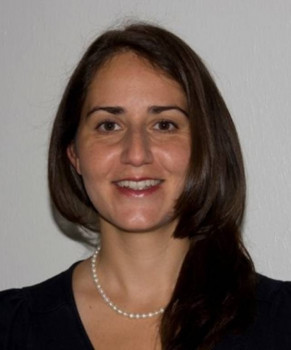
Xavier Lladó Bardera is a Full Professor and ICREA Academia at the University of Girona, affiliated with the Department of Computer Architecture and Technology and the Computer Vision and Robotics Institute (VICOROB). He holds a PhD in Computer Engineering from the University of Girona and completed postdoctoral research at Queen Mary, University of London. B.S. in Computer Science, University of Girona (1999) Ph.D. in Computer Engineering, University of Girona (2004) Post-doctoral Research Assistant, Queen Mary, University of London (2004–2006) His research centers on medical image analysis, particularly in brain MRI, multiple sclerosis, prostate imaging, and deep learning. He has made significant contributions to lesion segmentation, tissue classification, and image registration, with a focus on clinical translation. His work integrates advanced computer vision techniques with biomedical applications, leveraging deep learning, non-rigid modeling, and multimodal imaging. The recent publications reflect a strong trend in deep learning for medical image analysis, especially in stroke, multiple sclerosis, and neonatal imaging. Key themes include lesion segmentation, hematoma expansion prediction, brain atrophy quantification, and end-to-end deep learning frameworks. There is a clear emphasis on clinical applicability, model interpretability, and handling real-world imaging challenges. Scientific Awards and Recognition: Best Project Prize – MAIA Master (Mladen Rakic, 2019) Best Project Prize – VIBOT Master (Jose Bernal, 2017) Best Project Prize – EINF Degree Project (E. Roura, 2011) Best Project Prize – EINF Degree Project (M. Cabezas, 2009) Best Project Prize – ETIG Degree Project (C. Fontanella, 2009) Best Paper Prize – Pattern Recognition (J. Salvi et al., 2010) Dr. Lladó has supervised over 20 PhD and master’s students, many of whom have continued in academia or industry (e.g., Icometrix, Johns Hopkins). He has been involved in numerous research grants and technology transfer initiatives, particularly in CAD systems for breast imaging and MS monitoring tools. His group actively collaborates with clinical partners, ensuring translational impact. He leads the NIC group at the VICOROB Institute, focusing on neuroimage computing and deep learning applications in neurology. The team develops open-source tools and participates in international challenges (e.g., BraTS, WMH), contributing to standardized evaluation in medical image analysis.