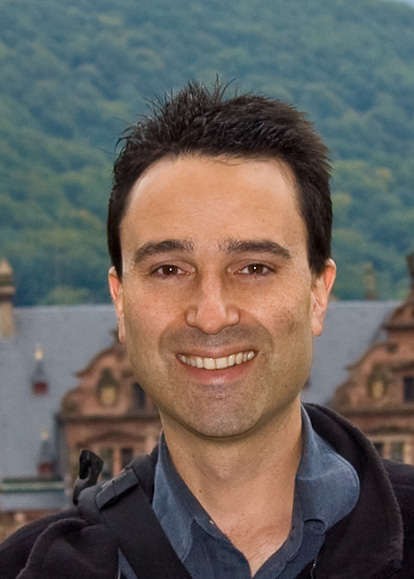
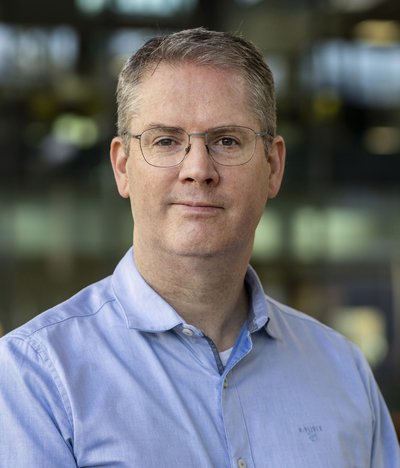
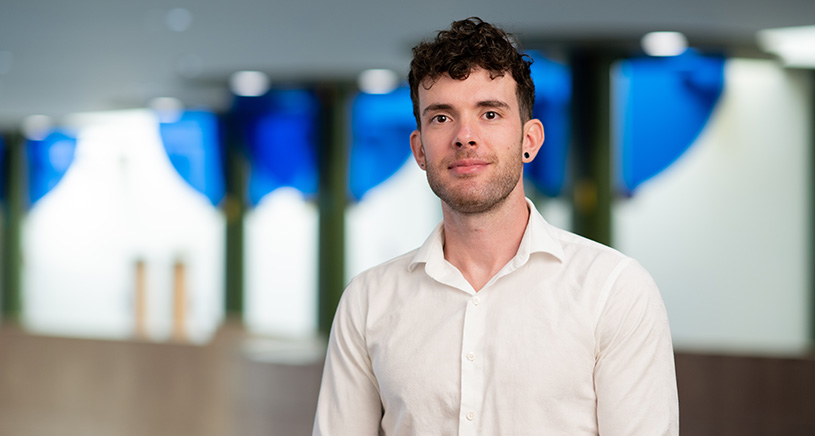
Ali Shariq Imran is an Associate Professor at the Department of Computer Science, Norwegian University of Science and Technology (NTNU), within the Faculty of Information Technology and Electrical Engineering. He holds a Ph.D. from the University of Oslo and a Master's from NUST, Pakistan. His research focuses on deep learning applications in speech analysis, image/video processing, semantic web technologies, and eLearning. He has published extensively in journals like IEEE Access, Engineering Applications of Artificial Intelligence, and Frontiers in Computational Neuroscience, with notable work on hate speech detection, biomedical signal analysis, and sentiment analysis in social media contexts. His awards include the HEC and UIUC scholarships and a 2015 Best Paper Award at HCI Intl. He serves on the board of the HCI International Conference and is an IEEE member. Teaching includes courses on coding/compression, software engineering, and web development. His competencies span AI, digital signal processing, and multimedia systems. Research interests include contextual understanding, OCR, and object identification in multimedia, alongside eLearning innovations like MOOCs and LMS integration. He has co-edited special issues on healthcare systems and software standards in journals like JMIHI and IEEE Access. His work frequently employs explainable AI (XAI) to enhance transparency in medical diagnostics and social media analysis.
Jeffrey A. Bilmes is a Professor in the Department of Electrical and Computer Engineering at the University of Washington, Seattle, with adjunct roles in Computer Science & Engineering and Linguistics. He founded the MELODI Lab, focusing on machine learning, optimization, and data interpretation. Bilmes holds a Ph.D. from UC Berkeley and a Master's from MIT. His research spans graphical models, speech recognition, bioinformatics, and submodular optimization, with notable contributions like the GMTK toolkit and pioneering work in submodularity. He has received prestigious awards including the NSF Career Award (2001), NAE Gilbreth Lectureship (2008), and best paper awards at ICML/NIPS (2013). Bilmes has held leadership roles in UAI and NeurIPS conferences, and his work bridges theoretical foundations with practical applications in computational systems and human-computer interaction. Education: Ph.D., Computer Science, UC Berkeley; M.S., MIT. Research Interests: Machine learning, temporal graphical models, submodularity, speech interfaces, and algorithmic optimization. His work on submodular functions has been recognized with multiple awards, including the 25-year ICS award for his 1997 matrix optimization research. He actively contributes to academic service through conference organization and editorial roles at JMLR. The MELODI Lab develops cutting-edge tools like GMTK, PhiPAC, and Vocal Joystick for real-world applications. Recent Activities: Invited lectures at Yale (2016), Harvard (2015), and IIT Bombay. Co-organized NIPS workshops on discrete optimization (2013–2016). Authored influential papers on submodular optimization, semi-supervised learning, and parallel computing. Current research emphasizes submodular applications in large-scale data management and distributed systems.
Danny Ruijters is a part-time Full Professor at Eindhoven University of Technology (TU/e), specializing in data-driven value-based healthcare in image-guided therapy. His research focuses on developing intelligent systems that optimize data utilization in minimally invasive treatments, particularly translating population-level medical data to individual patient care. He concurrently serves as a Principal Scientist at Philips' Image Guided Therapy Systems Innovation department since 2011. Education: Bachelor's in Engineering, RWTH Aachen University (2001) Master's Thesis at École Nationale Supérieure des Télécommunications (ParisTech, 2001) PhD from TU/e & KU Leuven (2010) on multi-modal image fusion in minimally invasive treatments Research Focus: Hyper-personalized patient treatment through AI-driven analysis of large medical datasets, clinical workflow optimization, and prototype development for interventional therapies. His work bridges technical innovation with clinical and regulatory requirements. Teaching Activities: Signal Processing Image Analysis for Healthcare Technologies DSP Fundamentals (Signals II) Professional Affiliations: Employed by Philips Healthcare since 2001, leading R&D in image-guided therapy systems. Active in translating research into clinically viable solutions through iterative prototyping and clinical validation.
Jemima M. Tabeart is an Assistant Professor at TU Eindhoven, affiliated with the Centre for Analysis, Scientific Computing and Applications . Her research focuses on numerical linear algebra, data assimilation, and covariance matrices. She actively contributes to outreach and scientific crafting, and advises students on final projects in computational science. Education: PhD (2016–2019): University of Reading (supervised by Prof. Sarah Dance and others) MRes (2015–2016): Mathematics of Planet Earth CDT (Imperial College London/Reading) MMath (2011–2015): University of Bath with study abroad at Université Grenoble Alpes Research Interests: Large-scale numerical linear algebra and its applications Development of efficient preconditioners for 4D-Var and data assimilation systems Treatment of covariance matrices in computational models Interdisciplinary applications in environmental and meteorological modeling Teaching & Leadership: Organizing a 2025 Research Semester Programme at CWI on numerical analysis and machine learning Teaching courses on calculus, linear algebra, and optimization at TU Eindhoven Co-lecturing the MasterMath course on Advanced Numerical Linear Algebra Professional Activities: Member of the 4TU.AMI SRI in Bridging Numerical Analysis and Machine Learning Principal investigator in a network funded by the INI Network Support for Mathematical Sciences Advocate for low-carbon travel, documenting her journeys on her blog
Vishal Patel is an Associate Professor of Electrical and Computer Engineering at Johns Hopkins University (JHU), affiliated with the Vision & Image Understanding (VIU) Lab. He previously held the position of A. Walter Tyson Assistant Professor at Rutgers University and was part of the research faculty at the University of Maryland Institute for Advanced Computer Studies (UMIACS). He earned his Ph.D. in Electrical Engineering from the University of Maryland, College Park in 2010. His research focuses on computer vision, machine learning, biometrics, medical image analysis, and signal/image processing. Key areas include cross-spectrum face synthesis, domain adaptation, open-set recognition, and medical image restoration. He leads the VIU Lab, advancing AI-driven visual reasoning and applications in healthcare, autonomous systems, and security. Patel serves as an Associate Editor for IEEE Transactions on Pattern Analysis and Machine Intelligence and holds leadership roles in the IEEE Biometrics Council and Signal Processing Society. He has received numerous awards, including the 2021 IEEE SPS Early Career Award, NSF CAREER Award, and IAPR Young Investigator Award. His work has been recognized through Best Paper Awards at IEEE AVSS, BTAS, and ICPR, and he became an IAPR Fellow in 2024. Recent research highlights include developing novel diffusion models for medical video generation (e.g., GenVOG, EyePose), universal image restoration frameworks (UniRes), and multimodal AI tools for surgical skill assessment and maritime surveillance. His lab’s collaborations span bioengineering, robotics, and defense applications, emphasizing both theoretical advances and real-world impact.
Anna Monfils is a Professor in the Department of Biology at Central Michigan University (CMU), where she also serves as the Director of the CMU Herbarium (CMC) and is affiliated with the Institute for Great Lakes Research. She is a core faculty member in the College of Science and Engineering, contributing to research, teaching, and biodiversity conservation. B.S., University of Notre Dame, 1992 Ph.D., Michigan State University, 2003 Postdoc., Michigan State University, 2004-2005 Dr. Monfils' research is centered on biodiversity science , conservation biology , and plant systematics , with a particular focus on prairie fen ecosystems and endangered species such as the Poweshiek skipperling butterfly . Her work integrates methodologies from museum science , biodiversity informatics , field ecology , and molecular techniques . She investigates the origin, pattern, and maintenance of biodiversity across different scales, from micro to macro levels. Her lab is actively involved in invasive species biology , particularly studying aquatic invasive plants like starry stonewort and European frog-bit, and developing adaptive management frameworks. Her recent publications reveal a strong trend toward leveraging large datasets for conservation. Her research frequently involves species distribution modeling , habitat suitability assessment , and data management workflows for biodiversity. She is a key contributor to initiatives like the Extended Specimen Network , aiming to enhance the use of museum collections for research and education in the 21st century. Her work bridges fundamental science with direct conservation applications, particularly in the Great Lakes region. The Extended Specimen Network: A Strategy to Enhance U.S. Biodiversity Collections, Promote Research and Education Biodiversity Science and the 21st Century Workforce Life history and ecology of the endangered Poweshiek skipperling Oarisma poweshiek in Michigan prairie fens A data management workflow of biodiversity data from the field to data users Local and landscape level variables related to Poweshiek skipperling presence in Michigan, USA prairie fens Dr. Monfils leads a research lab that conducts extensive field surveys and collaborates with state and federal agencies, such as the U.S. Fish and Wildlife Service. Her research has been funded by the Great Lakes Restoration Initiative and the National Science Foundation (e.g., award DBI-1730526 for biodiversity data literacy). She teaches courses including Quantitative Biology , Plant Systematics , and Wetland Plants . While specific advisees are not listed, her leadership of a research lab and graduate scholarships indicates an active role in mentoring students. Her lab and research are deeply integrated with the CMU Herbarium (CMC) and the Institute for Great Lakes Research , which serve as central hubs for her biodiversity data collection, curation, and collaborative projects.
Friedemann Vogel is a full Professor of Socio- and Discourse Linguistics at the University of Siegen, Faculty I (Arts and Humanities), within the German Department. His work bridges linguistics, media studies, and cultural science, focusing on the interplay between language, knowledge, and power. He leads multiple research projects and platforms, including the Diskursmonitor and the DFG-funded subproject on mayoral communication within the Collaborative Research Center 'Transformations of the Popular'. University: University of Siegen School: Faculty I Department: German Department Email: friedemann.vogel@uni-siegen.de Office: HD 4203, Hölderlinstr. 3, 57076 Siegen Education: Dr. Phil. (summa cum laude), University of Heidelberg (2011) Studies in German Linguistics, Psychology, and Philosophy, University of Heidelberg (completed with distinction) Technical High School, Carl-Engler-Schule, Karlsruhe Friedemann Vogel's research centers on discourse analysis, strategic communication, and digital media. He investigates how language shapes collective knowledge, legal systems, and democratic participation. His methodological approach combines empirical analysis with computational tools such as NLP and corpus hermeneutics. Key areas include legal linguistics, computer-assisted analysis of large language datasets, and the role of digital platforms in shaping public discourse. He has pioneered research on authentication practices, online access control, and right-wing discourse in social media. His recent publications reveal a strong trajectory in analyzing political discourse, particularly during crises, and in developing theoretical frameworks for discourse intervention and public discourse cultivation. Themes of linguistic democracy, freedom of expression, and digital citizenship recur across his work, reflecting a commitment to socially engaged scholarship. The integration of digital tools and open-access platforms underscores his innovative approach to linguistic research. Scientific Awards and Honors: President of the International Language and Law Association (ILLA) Appointed to the Board of Trustees of Grimme Research College, University of Cologne (2022) Advisory Board member, virTUos project (TU Dresden) Vertrauensdozent, Rosa-Luxemburg-Stiftung Founder and coordinator of CAL² (Computer Assisted Legal Linguistics) Friedemann Vogel has secured significant research funding from institutions including the German Research Foundation (DFG), the Federal Ministry of Justice, the Hans Böckler Foundation, and the State of North Rhine-Westphalia. He advises students and leads interdisciplinary research teams, fostering collaboration between linguistics, law, and digital humanities. His projects often involve international cooperation, such as with Beijing Foreign Studies University. He is actively involved in academic service, serving on editorial boards and steering committees. He leads the Diskursmonitor research group and the CAL² international research network, both of which function as collaborative platforms for interdisciplinary discourse analysis. His work emphasizes open science, digital education, and public engagement, exemplified by initiatives like the 'Reclaim your data' MOOC and virtual privacy awareness projects.
Overview Michele Peruzzi is an Assistant Professor of Biostatistics at the University of Michigan–Ann Arbor's School of Public Health. His research focuses on Bayesian methods for spatial and multivariate data, particularly in environmental health applications, high-resolution sensor data, and scalable statistical computing. He develops software tools like the meshed and spamtree R packages to address computational challenges in large-scale analyses. Education PhD in Statistics, Università Bocconi (2019) MSc in Economic and Social Sciences, Università Bocconi (2013) BSc in Economic and Social Sciences, Università Bocconi (2010) Research Focus Peruzzi's work addresses three core areas: (1) scalable Bayesian geostatistical methods for environmental sensors (e.g., satellite imaging, air quality), (2) response surface modeling for large health datasets, and (3) climate change impacts on ecosystems and human health. His methods emphasize computational efficiency and reproducibility. Key Contributions Developed meshed Gaussian processes for partitioned domain analysis Pioneered spatial multivariate trees for big data regression Advanced phenology modeling via satellite data for continental-scale vegetation analysis Affiliations Based in Ann Arbor, MI, Peruzzi holds office in SPH II M4531. His work intersects statistics, environmental science, and public health, with applications in climate change mitigation and precision medicine.
Sandra Yuter is a Professor in the Department of Marine, Earth and Atmospheric Sciences at North Carolina State University. Her research focuses on geospatial analytics and remote sensing to study weather and climate dynamics, particularly in shallow marine clouds and winter storm systems. She leads the Environment Analytics Research Group, which develops large-scale meteorological datasets for AI training and climate modeling applications. Her work includes projects like NASA's IMPACTS campaign analyzing winter storm structures, Office of Naval Research studies on marine boundary layers, and collaborations with the University of Nevada-Reno on climate adaptation for Indigenous communities. Key datasets include Northeast US winter storm radar mosaics (1996-2023) and pressure sensor networks for gravity wave research. Publications (2023-2025) emphasize radar-based analysis of snowfall patterns, pressure wave identification, and microscale updraft dynamics. Her group's tools include weather visualization platforms and educational modules for storm structure analysis. Grants span federal agencies (NASA, NSF) and industry (Delta Air Lines) totaling over $20M in active funding. Current Projects: IMPACTS (2020-2025), Marine Boundary Layer Studies (2021-2026), Tribal Climate Adaptation (2025) Labs/Teams: Environment Analytics Group, Northeast Radar Mosaic Archive, Pressure Wave Sensor Networks
Alexei Poludnenko is an Associate Professor at the University of Connecticut, specializing in combustion physics, detonation dynamics, and turbulent flows. His research focuses on numerical simulations of high-speed reacting flows, including spray detonations, hydrogen/hydrocarbon combustion, and astrophysical phenomena like Type Ia supernovae. He employs advanced methods such as Large Eddy Simulations (LES), Direct Numerical Simulations (DNS), and BLASTNet frameworks to study turbulence-chemistry interactions and detonation initiation mechanisms. His work bridges terrestrial combustion systems and astrophysical scenarios, contributing to understanding flame acceleration, detonation cell structure, and turbulence-driven deflagration-to-detonation transitions. Key topics include shock-droplet interactions, multiphase detonations, and the role of compressibility in fast flames. Poludnenko’s research has implications for energy systems, propulsion, and fundamental combustion science. Recent studies emphasize high-Reynolds number turbulence, phase equilibrium effects under high pressure, and the validation of reduced chemical kinetic models. His computational approaches address challenges in capturing multi-scale phenomena and improving predictive accuracy in complex reactive flows.
Dr. Hengshuang Zhao is an Assistant Professor at the Department of Computer Science, University of Hong Kong. He holds a PhD from The Chinese University of Hong Kong and completed postdoctoral research at MIT CSAIL and the University of Oxford. His research focuses on computer vision, machine learning, and AI, emphasizing visual scene understanding, generative modeling, autonomous driving, and embodied AI. He leads a lab actively recruiting PhD students and researchers. Education: PhD in Computer Science, Chinese University of Hong Kong (2017) Bachelor's Degree, Huazhong University of Science and Technology Affiliations: Member of Hong Kong Robotics Institute Organizer of CVPR/ICML workshops on point clouds and embodied AI His research interests include: Scene Understanding (e.g., semantic segmentation, 3D reconstruction), Multimodal Learning (vision-language models), and Generative Modeling (image/video synthesis). Recent work includes Depth Anything (CVPR 2024 Best Demo), Point Transformer V3 (CVPR 2024), and DriveGPT4 series for autonomous driving. He has been recognized with awards including the Excellent Young Scientists Fund (2024), AI 2000 Influential Scholar in CV (2022-2024), and organized multiple top-tier conferences' workshops and tutorials.
Massimiliano Todisco is a Lecturer in the Digital Security department at EURECOM, a leading research institute in digital sciences. His work is centered on enhancing the security and privacy of voice biometric systems, with a strong emphasis on detecting spoofing, deepfakes, and adversarial attacks in automatic speaker verification. His research interests include voice biometrics, adversarial machine learning, spoofing countermeasures, deepfake detection, and privacy-preserving speech technologies. He actively contributes to major international challenges such as ASVspoof and VoicePrivacy, driving innovation in secure and explainable biometric systems. The recent publications highlight a consistent focus on biometric security, with trends in adversarial attack modeling, voice anonymization, and large-scale evaluation of spoofing detection systems. His work bridges signal processing, machine learning, and cybersecurity. NeurIPS 2023 Scholar Award for “StressID: a multimodal dataset for stress identification” Best Paper Award at IBERSPEECH 2022 Best Paper Award in Computer Speech & Language (2017) Best Paper Award at ODYSSEY 2016 Todisco advises PhD students, as evidenced by his HDR (Habilitation à Diriger des Recherches) obtained in 2025, which qualifies him to supervise doctoral research. He has been involved in multiple collaborative research projects and challenges, including ASVspoof and VoicePrivacy, though specific grant details are not listed. His research is highly collaborative, often co-authored with researchers from institutions across Europe and beyond. He is a core member of the Digital Security research group at EURECOM, which serves as his primary research team and laboratory environment. This group focuses on cutting-edge challenges in digital security, particularly in biometrics and privacy.
Betsabé de la Barreda-Bautista is a Research Fellow at the University of Nottingham's School of Geography, specializing in remote sensing and environmental change. She has contributed to projects across the UK, Mexico, Sweden, and Belize, focusing on peatlands, permafrost, and sargassum monitoring. Education: PhD in Geography (University of Nottingham, 2012-2017) Masters in Geomatics (CIGA, 2009-2011) PGCert in Geomatics (CIGA, 2007-2009) BSc in Biology (Faculty of Sciences, UNAM, 1999-2006) Her research integrates satellite-based InSAR techniques for geohazard monitoring and climate resilience projects like the Leverhulme ICARUS Belize initiative. She has collaborated with institutions including the University of Leicester and Centro de Investigación en Ciencias de Información Geoespacial. Key scientific contributions include datasets for CORINE Land Cover maps and publications on coastal carbon stocks, tropical precipitation anomalies, and sargassum spectral analysis. She received a 2020 UK Space Agency grant for the SASAMS project. Scientific Recognition: Candidato a Investigador Nacional, Consejo Nacional de Ciencia y Tecnología (2021)
Wade Schulz, MD, PhD, is an Assistant Professor of Laboratory Medicine at Yale School of Medicine and Director of Informatics for the Department of Laboratory Medicine. He holds secondary appointments in Biomedical Informatics & Data Science. His expertise includes molecular diagnostics, transfusion medicine, and computational health care research, with a focus on leveraging large biomedical datasets for predictive modeling and precision medicine. Schulz leads initiatives in distributed data analysis platforms and has been recognized with the IBM Cognitive Honors Award for his work in data science. Education & Training: BS in Genetics & Microbiology (2006), University of Minnesota PhD in Microbiology, Immunology & Cancer Biology (2012), University of Minnesota MD (2014), University of Minnesota Medical School Residency in Clinical Pathology (2017), Yale School of Medicine Fellowship in Transfusion Medicine (2018), Yale School of Medicine Research Interests: Developing AI-driven tools for medical diagnostics, optimizing electronic health record (EHR) data utilization, and advancing computational phenotyping for disease prediction. His work bridges informatics with clinical practice, emphasizing real-world data applications in healthcare innovation. Key Projects: Implementation of predictive modeling platforms for precision medicine Development of the Kamino architecture for scalable medical AI research Collaborations in quantum computing for healthcare applications Evaluation of SARS-CoV-2 variant transmission and vaccine efficacy Awards: Data Summit IBM Cognitive Honors Award (2023). Grants & Labs: Leads the CORE Center for Computational Health and collaborates with the Center for Outcomes Research & Evaluation (CORE). Active in the Yale Center for Genomic Health and the Biomedical Informatics & Data Science program.
Rebecca Best is an Associate Professor in the Department of Earth and Sustainability at Northern Arizona University, part of the College of the Environment, Forestry, and Natural Sciences. Her research focuses on ecological dynamics, particularly in riparian and aquatic systems, with an emphasis on species interactions, ecosystem functioning, and responses to environmental change. Her research interests include ecosystem function, species diversity, trait plasticity, climate-driven selection, trophic cascades, and post-wildfire forest regeneration. She integrates field ecology, genetics, and ecosystem monitoring to understand how organisms and communities adapt to stressors such as climate change and disturbance. Recent publications highlight trends in climate adaptation of foundation tree species, the role of gross primary productivity in freshwater fish growth, and the impacts of forest management after high-severity wildfires. Her work employs hyperspectral imaging, experimental manipulations, and long-term ecological datasets to advance restoration and conservation planning. Associate Professor, Department of Earth and Sustainability, Northern Arizona University Active researcher in ecological and evolutionary responses to environmental change Contributor to interdisciplinary studies on climate adaptation, trophic interactions, and ecosystem resilience She has contributed to numerous scholarly works and datasets, collaborating with researchers on projects involving consumer guilds, hybridization, and functional trait divergence. Her datasets are publicly archived in repositories such as Dryad and Zenodo, supporting open science and reproducibility.