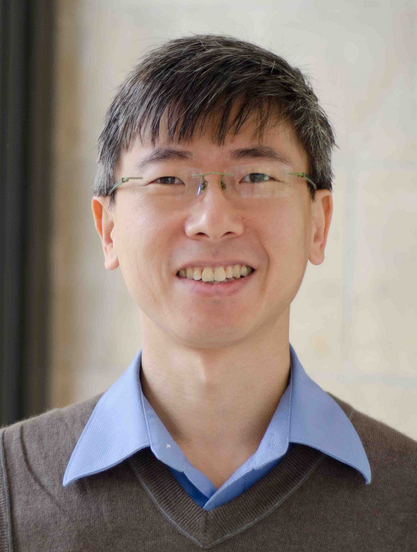
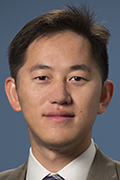
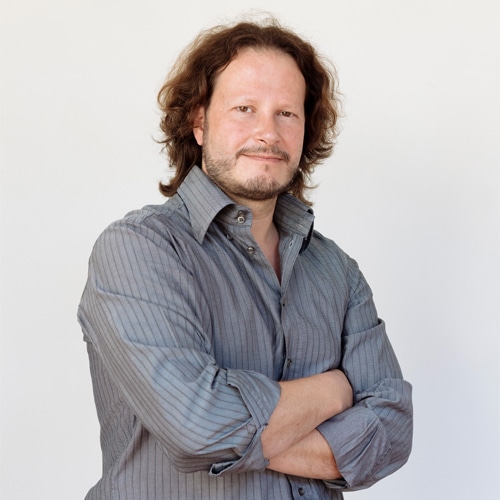
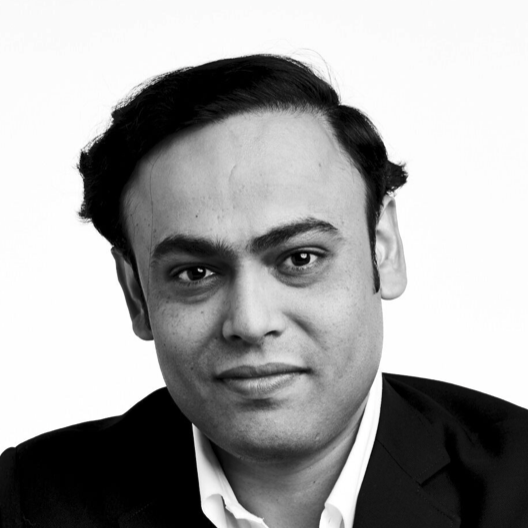
Yee Whye Teh is a Professor at the Department of Statistics, University of Oxford, and a research scientist at DeepMind. His work focuses on statistical machine learning, including probabilistic learning, Bayesian nonparametrics, deep learning, and Monte Carlo methods. He co-directs the ELLIS programme on Robust Machine Learning and has held roles such as Programme Co-chair for ICML 2017. Teh has delivered keynotes at UAI 2019, an IMS Medallion Lecture at JSM 2019, and the Breiman Lecture in 2017. His research emphasizes scalable inference algorithms, hierarchical models, and applications in genetics and natural language processing. Teh's educational background includes a PhD from the University of Toronto (2003) and a Master's from the same institution (2000). He has contributed to widely used software tools like the Sequence Memoizer and has been recognized for his work through prestigious lectureships. Research interests span Bayesian nonparametric models, MCMC methods, and their applications in genetics and data compression. His lab collaborates on projects like fragmentation-coagulation processes for genetic variation modeling and Mondrian forests for online learning. Teh advises students through Oxford's graduate programs, though he notes high demand for mentorship. His work often bridges theory and practice, addressing challenges in big data learning and small data problems.
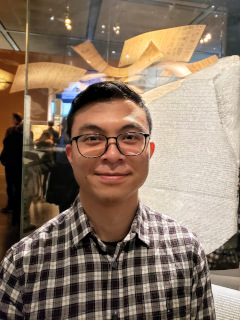
Jackie Chit Kit Cheung is an Associate Professor in the School of Computer Science at McGill University, where he co-directs the Reasoning and Learning Lab. He holds the Canada CIFAR AI Chair and serves as an Associate Scientific Co-Director at the Mila Quebec AI Institute. He is also a consulting researcher at Microsoft Research Montreal. Academic Background: Ph.D. in Computer Science, University of Toronto (2010–2014) M.Sc. in Computer Science, University of Toronto (2008–2010) B.Sc. (Honours) in Computer Science, minors in Linguistics and German, University of British Columbia (2004–2008) Research Interests: Jackie Cheung's research lies at the intersection of natural language processing, machine learning, and cognitive science. He focuses on natural language generation , automatic summarization , commonsense and pragmatic reasoning , and the evaluation of NLP systems . His work aims to build language models that reflect real-world structure and reasoning, with applications in health, education, and language revitalization. He is particularly interested in how implicit meaning is processed in context, a core concern in linguistic pragmatics. Publication Trends: His recent publications (2024–2025) show a strong emphasis on evaluation methodologies (e.g., COSMIC, ECBD), hallucination and factuality in language models, coreference and reasoning , and long-context modeling . He frequently collaborates across institutions and integrates insights from linguistics and psychology into NLP system design and analysis. Scientific Awards: Best Paper Award, ACL 2018 Outstanding Paper Award, NAACL 2018 Student Research Workshop SAC Award, ACL 2024 (for COSMIC) Best Poster Award, CMDO AI-Health Symposium 2024 Advising and Grants: He advises a large and diverse group of graduate students, including PhD and Master’s candidates, often in co-supervision with other faculty. His group has received support from major AI and health research initiatives, including CIFAR and Mila. He has trained alumni who have gone on to faculty and industry research positions. He has served in leadership roles in top NLP conferences, including as Senior Area Chair, Workshop Chair, and Program Chair of Canadian AI 2018. Labs and Teams: He co-directs the Reasoning and Learning Lab at McGill and is deeply involved with Mila – Quebec AI Institute . He founded the NLP Reading Group at McGill, which brings together researchers from computer science, linguistics, and information studies to discuss theoretical and applied NLP topics.
Michael A Osborne is Professor of Machine Learning at the University of Oxford and leads the Bayesian Exploration Lab . He serves as Director of the EPSRC Centre for Doctoral Training in Autonomous Intelligent Machines and Systems and co-directs the Oxford Martin AI Governance Initiative. His research focuses on Bayesian optimization, Gaussian processes, and probabilistic numerics with applications in quantum devices, battery modeling, and AI governance. Key Positions: Professor of Machine Learning, University of Oxford Official Fellow, Exeter College Co-founder of Mind Foundry Lead Researcher, Oxford Martin Programme on Technology and Employment Research Themes: Probabilistic modeling for quantum systems Uncertainty quantification in energy storage AI safety and societal impact analysis Automated experimental design Quantum device calibration Probabilistic numerical methods Technical Contributions: Bridging reality gap in quantum devices Efficient Bayesian quadrature techniques Personalized neurostimulation algorithms Automated measurement protocols Quantum-classical hybrid ML
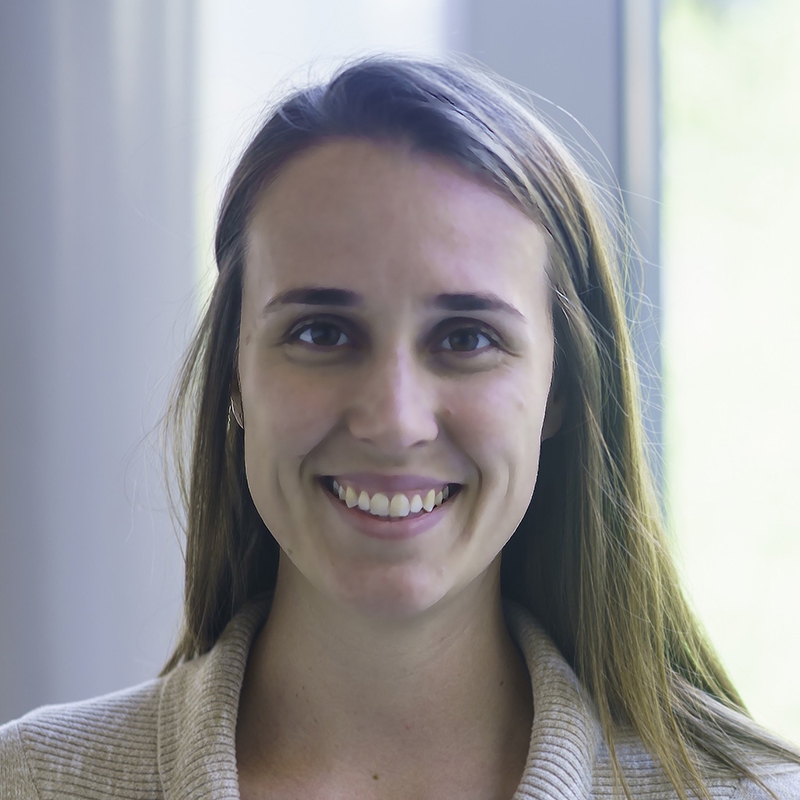
Celestine Mendler-Dünner is a Principal Investigator at the ELLIS Institute in Tübingen, co-affiliated with the Max Planck Institute for Intelligent Systems and the Tübingen AI Center. She leads the Algorithms and Society research group, focusing on machine learning in social contexts and the role of prediction in digital economies. Her work bridges theoretical machine learning with practical societal impact, developing tools for safe, reliable, and equitable AI ecosystems. Her educational background includes a PhD from ETH Zurich in collaboration with IBM Research, followed by an SNSF postdoctoral fellowship at UC Berkeley hosted by Moritz Hardt. She was previously a group leader at the Max Planck Institute for Intelligent Systems before joining the ELLIS Institute. Mendler-Dünner's research spans several interconnected themes including performative prediction (where predictions change the behavior they aim to predict), algorithmic collective action (how participants can steer AI systems toward common goals), and the role of LLMs in social science research. Her work combines theoretical foundations with practical implementations, addressing challenges in interactive machine learning, optimization in dynamic environments, and context-specific evaluation of AI systems. She particularly examines how algorithmic predictions mediate services and platforms at societal scale, exploring concepts of economic power in digital markets. Her publication record shows a clear evolution from system-aware machine learning algorithms (including foundational work on IBM Snap ML) toward increasingly sociotechnical questions at the intersection of machine learning, economics, and policy. Recent work focuses on measuring performative power in digital economies, evaluating LLMs as risk scores, and developing frameworks for algorithmic collective action in recommender systems and labor markets. Among her notable recognitions are the ETH Medal for her dissertation, the IBM Research Division Award, the Fritz Kutter Award, and the IBM Eminence and Excellence Award. She is an ELLIS Scholar, a fellow of the Elisabeth-Schiemann-Kolleg, and affiliated with several prestigious research programs including the International Max Planck Research School for Intelligent Systems and the Max Planck ETH Center for Learning Systems. ETH Medal (dissertation award) IBM Research Division Award Fritz Kutter Award IBM Eminence and Excellence Award SNSF Early Postdoc Mobility Fellowship Mendler-Dünner actively mentors the next generation of researchers, advising PhD student Patrik Wolf and supervising research interns including Joachim Baumann, Haiqing Zhu, and Anna Badalyan, as well as Master's student Dorothee Sigg. She serves as core faculty for the International Max Planck Research School and associated faculty for the Max Planck ETH Center for Learning Systems. Her group has secured significant research funding through fellowships and institutional support, enabling work on projects like Powermeter (measuring search engine influence) and Snap ML (resource-efficient machine learning library with over 1 million PyPI downloads). She leads the Algorithms and Society research group, which examines machine learning as part of broader sociotechnical ecosystems. The group explores human-population interactions with algorithmic systems and incorporates these insights into learning system fundamentals. Current projects include investigating economic incentives in digital platforms, developing tools for systematic LLM evaluation in social science contexts, and creating frameworks for collective action in algorithmic systems. Mendler-Dünner also co-organizes the Algorithmic Collective Action workshop at NeurIPS 2025, demonstrating her leadership in emerging research directions at the AI-society interface.
Tapio Schneider is the Theodore Y. Wu Professor of Environmental Science and Engineering at the California Institute of Technology. His research focuses on atmospheric dynamics across Earth and other planets, climate modeling innovations, and geophysical turbulence analysis. He contributes to the Climate Modeling Alliance (CliMA) and develops advanced computational tools for climate prediction. Albert-Ludwigs-Universität Freiburg (Vordiplom, 1993) Princeton University (M.Sc. 1997, Ph.D. 2001) University of Washington, Seattle (Visiting Graduate Student, 1994-1995) His research spans climate dynamics , atmospheric turbulence , and AI-enhanced climate modeling , addressing challenges in cloud dynamics, extreme weather patterns, and planetary climate systems. Current work emphasizes hybrid machine learning-physical models and computational acceleration for high-resolution simulations. Recent publications highlight trends in AI integration for climate science, with applications in hydrology , cloud microphysics , ocean circulation , snowpack modeling , and climate tipping points . His team develops open-source tools like ClimateMachine for GPU-accelerated simulations. Scientific Recognition: Fellow, American Geophysical Union (2022) Rosenstiel Award (2019) World Economic Forum Young Scientist (2012) David and Lucile Packard Fellow (2005-2010) Alfred P. Sloan Research Fellow (2004-2006) Tapio leads climate dynamics research at Caltech, directs the Linde Center for Global Environmental Science (2011-2012), and serves as Editor for the Journal of Advances in Modeling Earth Systems . His group collaborates with NASA Jet Propulsion Laboratory (2016-2024) and Google Research (2022-present).
Virginia Smith is the Leonardo Associate Professor of Machine Learning at Carnegie Mellon University (CMU), with a courtesy appointment in the Department of Electrical and Computer Engineering. She holds a Ph.D. from UC Berkeley and undergraduate degrees from the University of Virginia. Her research focuses on developing efficient, privacy-preserving machine learning systems, particularly in federated learning, distributed optimization, and resource-constrained settings. Key areas include federated learning frameworks like CoCoA and Ditto, unlearning algorithms, and privacy amplification techniques. Smith's work bridges theory and practice, addressing challenges such as data heterogeneity, fairness, and robustness. She has led initiatives like the LEAF benchmark for federated learning and has contributed to open-source tools for scalable ML systems. Her awards include the Sloan Research Fellowship, Samsung AI Researcher of the Year (2023), and an NSF CAREER Award. She is actively involved in curriculum development, teaching courses on federated learning and large-scale ML at CMU. Her research group explores cutting-edge topics like federated optimization with sparse communication, unlearning in LLMs, and secure ML pipelines. Collaborations span academia and industry, with applications in healthcare, IoT systems, and AI safety. Smith serves as Program Chair for ICML 2025 and frequently contributes to workshops on federated learning and trustworthy AI.
Dr. Nanpeng Yu is a Full Professor at the University of California, Riverside , serving as Vice Chair and Graduate Advisor in the Department of Electrical and Computer Engineering . He maintains cooperative faculty affiliations with the Department of Computer Science and Department of Statistics , and directs the Energy, Economics, and Environment Research Center at UCR. Education : B.S. in Electrical Engineering from Tsinghua University (2006), M.S. in Electrical Engineering and Economics, and Ph.D. from Iowa State University (2010) Prior Industry Experience : Senior Power System Planner and Project Manager at Southern California Edison (2011-2014) Dr. Yu’s research bridges smart grid technologies , data-driven optimization , and machine learning for energy systems. Key areas include voltage control , renewable energy integration , transportation electrification , and grid resilience . His recent work focuses on physics-informed graph learning for unit commitment problems and adversarial purification in power system classifiers. The AI-Energy Nexus Laboratory under Dr. Yu has produced impactful publications in Applied Energy , IEEE Transactions on Power Systems , and Transportation Research series, covering topics like heavy-duty EV charging infrastructure and dynamic distribution network reconfiguration . Lab members have won the American-Made Digitizing Utilities Grand Prize ($300,000) from the U.S. DOE. Leadership Roles : Chair, IEEE Power and Energy Society Distribution System Operation and Planning Subcommittee Chair, IEEE Power and Energy Society Working Group on Data-Driven Modeling for Power Distribution Networks Associate Editor, IEEE Transactions on Smart Grid and IEEE Power Engineering Letters Scientific Awards : Regents Faculty Fellowship Regents Faculty Development Award Multiple IEEE Best Paper Awards
Teruko Mitamura is a prominent researcher at Carnegie Mellon University with over three decades of contributions to natural language processing, computational linguistics, and artificial intelligence. Her work spans from foundational research in event representation to advanced applications in multimodal systems and question answering. Her research interests focus on event detection and understanding, question answering systems, information retrieval, and multimodal processing. She has made significant contributions to event coreference resolution, timeline construction, and cross-document event analysis, developing methodologies that have become standard in the field. Her work often bridges theoretical advances with practical applications, particularly in complex information environments requiring deep semantic understanding. Natural Language Processing : Specializing in event extraction, coreference resolution, and narrative understanding with over 179 publications Question Answering Systems : Developing advanced techniques for complex question answering, particularly through NTCIR QA Lab and PoliInfo tasks Multimodal Processing : Integrating textual, visual, and temporal information for richer understanding in systems like ProMQA Evaluation Methodologies : Creating robust frameworks for assessing NLP systems through TAC KBP Event Tracks Her recent publication trends show a strong focus on leveraging large language models for event understanding, multimodal question answering, and timeline construction. She has expanded her research into specialized domains including patent analysis and novelty examination, demonstrating the breadth of her research impact across academic and practical applications. Active participant in major NLP conferences including ACL, EMNLP, NAACL, and AAAI with consistent publications Long-standing collaborator with researchers at CMU's Language Technologies Institute including Eduard H. Hovy and Eric Nyberg Contributor to shared tasks that have shaped research directions in event processing and question answering Organizer of multiple NTCIR QA Lab tasks focused on political information question answering Dr. Mitamura has mentored numerous researchers who have gone on to make their own contributions to the field, as evidenced by her extensive co-authorship network and the progression of her former students and collaborators into faculty and research positions. Her work continues to evolve with the field while maintaining her focus on deep semantic understanding of events and narratives.
Diego Garlaschelli is Professor of Theoretical Physics at the IMT School for Advanced Studies in Lucca, Italy, and at the Lorentz Institute for Theoretical Physics, University of Leiden, the Netherlands. He leads the NETWORKS research unit at IMT and the Econophysics and Network Theory group at Leiden. He is also an external faculty member at the Complexity Science Hub in Vienna and an associate member of the Enrico Fermi Research Center in Rome. His affiliations reflect a strong international and interdisciplinary research profile in network science and statistical physics. He holds a master's degree in theoretical physics from the University of Rome III (2001) and a PhD in Physics from the University of Siena (2005). His postdoctoral experience includes positions at the Australian National University, the University of Siena, the University of Oxford, and the Sant’Anna School of Advanced Studies in Pisa. Garlaschelli’s research spans network theory, statistical physics, econophysics, financial complexity, ecological networks, and social dynamics. He applies maximum entropy models, information theory, and random graph frameworks to understand complex real-world systems. His teaching includes courses in Network Theory, Econophysics, and Complex Systems at both PhD and MSc levels. The 15 most recent publications highlight a consistent focus on network reconstruction, ensemble inequivalence, renormalization, and applications to financial and socio-economic systems. Key themes include statistical inference in networks, resilience, and multi-scale modeling, with publications in top journals such as Nature Reviews Physics , Physics Reports , Science , and Physical Review Letters . His scientific awards include the Best Paper Award at the 6th International Workshop on Self-Organizing Systems (2012) and the Jan Kijne Prize (2013) as supervisor. He has secured multiple grants from NWO, the European Union, and the Royal Society, and has supervised over 40 students at PhD, master’s, and bachelor’s levels. He also mentors postdocs and visiting scientists. Garlaschelli leads and organizes major international workshops and schools in network science and complex systems. He serves on scientific committees and is an active referee for journals like Nature and Physical Review Letters , as well as funding agencies including the ERC and NWO.
Xiaohui Yu is a Professor and Graduate Program Director in the School of Information Technology at York University. He holds a BSc from Nanjing University, an MPhil from the Chinese University of Hong Kong, and a PhD from the University of Toronto. His research focuses on the intersection of data management and machine learning, including ML-based database systems, large-scale machine learning, and spatio-temporal data analysis in contexts like intelligent transportation systems and social networks. Supported by grants from NSERC and industry partners, his work has been published in top venues such as SIGMOD, VLDB, and TKDE. He serves as an Associate Editor for journals like IEEE TKDE and ACM TKDD, and actively participates in conference program committees. Education: BSc (Nanjing University), MPhil (Chinese University of Hong Kong), PhD (University of Toronto). Research Interests: Big data management, database systems, machine learning, spatio-temporal data analytics, and video query processing. Recent articles emphasize ML-driven database components, efficient video query optimization, and scalable algorithms for large-scale data. His work addresses challenges in query processing, indexing, and real-time systems. Service: Serves on editorial boards (e.g., Information Systems), and chairs/workshops (e.g., Symposium on Data Markets). Active in program committees for SIGMOD, ICDE, and other leading conferences. Advising & Grants: Directs graduate programs and leads research groups. Collaborates with industry on data marketplaces and AI model integration. No specific student names listed, but actively recruits PhD/Master’s candidates.
Saurabh Amin is a Professor in the Department of Civil and Environmental Engineering at the Massachusetts Institute of Technology (MIT), where he also serves as the Edmund K. Turner Professor and Undergraduate Officer. He is a Principal Investigator at the Laboratory of Information and Decision Systems and holds affiliations with the Operations Research Center and the Center for Computational Science and Engineering. His educational background includes: B.Tech. 2002, Indian Institute of Technology (IIT) Roorkee M.S. 2004, University of Texas (UT) Austin Ph.D. 2011, University of California (UC) Berkeley Saurabh Amin's research focuses on the design and control of infrastructure systems using game theory and optimization in networks. His work spans three main areas: resilient network control, information systems and incentive design, and optimal resource allocation in large-scale infrastructure systems. By concentrating on critical infrastructure domains including highway transportation, electric power distribution, and urban water networks, his research develops innovative theory and tools to enhance system performance against both stochastic and adversarial disruptions. His approach involves modeling cyber-physical interactions in infrastructures to assess vulnerabilities, developing detection and response tools for failures at various scales, and designing economic incentive schemes that improve aggregate public good while accounting for dependencies and private information among strategic entities. Amin's work bridges mathematical systems theory with practical civil engineering applications, creating a rigorous theoretical foundation for infrastructure resilience that addresses diverse failure mechanisms from natural disasters to deliberate malicious actions. His recent publications demonstrate a strong focus on decarbonization of energy systems, resilient infrastructure planning under climate uncertainty, optimization methods for complex networked systems, and game-theoretic approaches to sustainable infrastructure management. His work increasingly integrates artificial intelligence and machine learning techniques with traditional control theory to address contemporary challenges in infrastructure resilience and sustainability. The research shows a clear trajectory toward addressing climate change impacts on infrastructure systems while maintaining economic efficiency and operational reliability. Professor Amin has received numerous prestigious awards and honors: Common Ground Excellence in Teaching Award, 2025 HSCC Test-of-Time Award, 2024 MIT CEE, Distinguished Service and Leadership Award, 2023 Samuel M. Seegal Prize (SoE) – inspiring students in pursuing and achieving excellence, 2022 Earll M. Murman for Excellence in Undergraduate Advising, 2022 C3.ai Digital Transformation Institute Research Award, 2020 MIT, Ole Madsen Mentoring Award, 2020 MIT, Energy Initiative Research Award, 2020 National Academy of Engineering, China-America Frontiers of Engineering Symposium speaker, 2019 MIT, Robert N. Noyce Career Development Professor, 2015-2018 Google Faculty Research Award, 2015 National Science Foundation CAREER Award, 2015 Siebel Energy Institute Research Award, 2015 MIT, Solomon Buchsbaum AT&T Research Fund Award, 2012 Professor Amin has been actively involved in significant research projects including the C3.ai DTI project on Causal Reasoning for Real-Time Attack Identification in Cyber-Physical Systems and another on Learning in Routing Games for Sustainable Electromobility. He serves as the chief scientist on multi-institutional NSF grants, including the $9 million Foundations of Resilient Cyber-Physical Systems (CPS) project. His teaching portfolio includes courses such as 1.008 Engineering for a Sustainable World, 1.104 Sensing and Intelligent Systems, 1.020 Engineering Sustainability: Analysis and Design, and 1.208 Resilient Networks. As Undergraduate Officer, he plays a key role in shaping the educational experience for civil and environmental engineering students at MIT. Professor Amin leads the Resilient Infrastructure Networks Lab at MIT, where his team develops theoretical foundations and practical tools for infrastructure resilience. The lab focuses on the intersection of control theory, game theory, and optimization applied to cyber-physical infrastructure systems. Current research directions include pandemic-resilient urban mobility and hurricane-resilient smart grid operations, reflecting the lab's commitment to addressing pressing societal challenges through rigorous systems engineering approaches.
Dr. Dominik Büeler is a Researcher at ETH Zurich's Institute for Atmospheric and Climate Science and staff member of the Center for Climate Systems Modeling (C2SM). His work bridges atmospheric dynamics with practical climate services, focusing on subseasonal prediction systems and their societal applications in Europe. Research Focus: Büeler's work centers on subseasonal-to-seasonal prediction, with emphasis on weather regime dynamics, extratropical cyclone behavior, and stratosphere-troposphere interactions. His research integrates large ensemble modeling, forecast verification, and climate impact assessment, particularly for European weather extremes. Recent projects examine heatwave mortality prediction, energy meteorology applications, and the role of moist processes in atmospheric blocking. Analysis of his publication record since 2021 reveals consistent advancement in subseasonal forecasting methodology, with growing emphasis on societal applications including public health (heat-related mortality) and energy sectors. His work increasingly connects fundamental atmospheric processes with operational forecasting systems, leveraging collaborations through the Subseasonal-to-Seasonal Prediction Project. Affiliations: Center for Climate Systems Modeling (C2SM) - Core Research Staff ETH Zurich Institute for Atmospheric and Climate Science MeteoSwiss Collaborator (Energy Meteorology) Büeler contributes to multidisciplinary teams developing climate services, with recent work supporting Swiss operational forecasting systems. His research group within C2SM focuses on improving subseasonal predictability through advanced diagnostics of model biases and atmospheric processes.
Sarah Ebling is a Full Professor of Language, Technology and Accessibility at the University of Zurich's Faculty of Arts and Social Sciences. She leads the Language, Technology and Accessibility research group within the Institute for Computational Linguistics. Her work focuses on computational linguistics applications for assistive technologies targeting disabilities such as hearing impairments, visual impairments, and cognitive disorders. Key areas include sign language technologies, automatic text simplification, and audio description systems. She directs the large-scale Swiss innovation project 'Inclusive Information and Communication Technologies' (2022-2026, CHF12 million budget) and collaborates on EU H2020 and SNSF Sinergia projects. Education: Holds a doctoral degree (summa cum laude, 2016) from the University of Zurich with research on automatic translation to Swiss German Sign Language. Completed studies in German Linguistics, Computational Linguistics, and English Linguistics at Universities of Zurich and Heidelberg, with research stays in Dublin, Chicago, and Rochester. Research emphasizes multimodal accessibility solutions, including sign language fluency assessment, gesture-based interaction, and AI-driven text adaptation. Current projects explore audio description translation systems (SwissADT), sign language corpus development (SwissSLi), and digital tools for comprehensibility assessment in simplified texts. Her work bridges computational linguistics with ethical considerations in assistive technology deployment. Grants and Leadership: Principal Investigator on major accessibility-focused grants, including the CHF12M Swiss innovation project. Supervises PhD candidates in areas like sign language assessment tools and text simplification algorithms. Active in international collaborations, publishing extensively in computational linguistics and accessibility journals/conferences. Technology Development: Created the 'DigiSpon' benchmark for language sample analysis and developed open-source tools for sign language translation baselines. Her team's innovations include the SignCLIP model connecting text and sign language via contrastive learning, and pose estimation frameworks for sign language recognition.
Prof. Dr. Heiko Paulheim is a Professor of Data Science and currently serves as University Vice President at the University of Mannheim. He leads the Data and Web Science Group (DWS), which focuses on Web Data Mining, Knowledge Graphs, and Semantic Web technologies. His research group contributes to open source knowledge graphs like DBpedia and develops new knowledge graphs such as WebIsALOD and DBkWik. As of October 1, 2024, he has limited teaching capacity due to his vice presidential duties. Prof. Paulheim's research interests span Knowledge Graphs, Semantic Web, Web Data Mining, Machine Learning, and Natural Language Processing. His work particularly focuses on knowledge graph refinement, embedding techniques (notably RDF2vec), and applications in various domains including news recommendation, biomedical informatics, and environmental monitoring. His group develops practical tools like the RapidMiner Linked Open Data Extension and RDF2vec for knowledge graph applications. His recent publications demonstrate a strong focus on knowledge graph embeddings, with particular attention to RDF2vec variants, applications in news recommendation systems, biomedical data integration, and spatio-temporal knowledge graphs for environmental monitoring. His work bridges theoretical advances in knowledge representation with practical applications across multiple domains. Among his notable achievements are a nomination for the Best Paper Award at CAiSE 2025 and securing an Open Science Grant for the SpatialBenchRAG project. His research has significant impact in both academic and industrial contexts, with multiple papers accepted at top conferences like ISWC and ESWC. Prof. Paulheim has supervised numerous PhD students including Alexander Brinkmann and Michael Schlechtinger, and has led several research projects including the DFG Project Mine@LOD, State of BW Project SyKoW², and BMBF Project DS4DM. His group maintains strong industry connections with partners like SAP AG, Daimler AG, and IDS.
Mingzhou Jin is a Professor and Department Head in the Department of Industrial and Systems Engineering at the University of Tennessee, Knoxville, within the Tickle College of Engineering. He also directs the Institute for a Secure and Sustainable Environment (ISSE) and the FERSC Center, a DOT/UTC Tier-1 Center. Holding the John D. Tickle Professorship, he is a recognized leader in sustainability, optimization, logistics, and smart manufacturing. PhD, Industrial and Systems Engineering, Lehigh University, 2001 MS, Management Science, Zhejiang University, 1998 BS, Electrical Engineering and Mixed Class, Zhejiang University, 1995 Dr. Jin's research focuses on sustainability, climate change, transportation and logistics, supply chain engineering, additive and smart manufacturing, and energy efficiency. His work integrates operations research and systems engineering to solve complex environmental and industrial challenges. He has secured over $19 million in research funding from agencies including NSF, DOE, DOT, DHS, and industry partners like FedEx, Boeing, and Schneider Electric. His recent publications span high-impact journals such as Nature , Nature Communications , and European Journal of Operational Research , with themes in net-zero strategies, wildfire modeling, smart manufacturing, and sustainable supply chains. The research demonstrates a strong trend toward interdisciplinary, data-driven solutions for global environmental and industrial systems. 2023 Dr. Kenneth Kirby Endowed Faculty Award 2021 UTK Award for Success in Multidisciplinary Research 2020 UTK Chancellor’s Research and Creative Achievement Award 2020 TCE Research Achievement Award IISE Fellow (2018) Multiple teaching, advising, and service awards from TCE and UTK Dr. Jin has advised numerous graduate students and led large-scale research initiatives. He has served as Editor-in-Chief of Cleaner and Circular Bioeconomy , Executive Editor of Journal of Cleaner Production , and held leadership roles in IISE. His research has been supported by extensive grants from federal agencies and industry, reflecting strong collaboration and real-world impact. He also held adjunct professorships at Zhejiang University and Central South University of Forestry and Technology. He leads the Institute for a Secure and Sustainable Environment (ISSE) and the FERSC Center, fostering interdisciplinary research in sustainability, energy, and resilient infrastructure. These centers bring together experts from engineering, environmental science, and policy to address pressing global challenges through systems-level innovation.