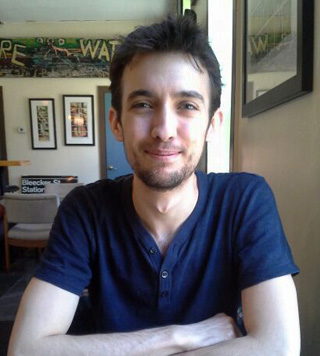
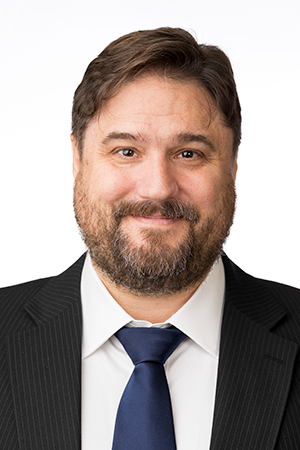
Dr. Muhammad Abdul-Mageed is an Associate Professor in the School of Information at The University of British Columbia, with joint appointments in Linguistics and an associate membership in Computer Science. He holds the Canada Research Chair in Natural Language Processing and Machine Learning. His research focuses on deep learning, socio-pragmatics, and speech/language technologies, particularly for Arabic and African languages. He leads the UBC Deep Learning & NLP Group and co-directs SSHRC-funded grants like I Trust AI and Ensuring Full Literacy. He is a founding member of the Center for Artificial Intelligence Decision making and Action and a member of the Institute for Computing, Information, and Cognitive Systems. His work spans automatic speech recognition, machine translation, computational socio-pragmatics, and low-resource language technologies. Notable projects include developing Arabic speech recognition systems, multidialectal Arabic benchmarks, and tools for African language processing. He has authored over 100 peer-reviewed papers and leads initiatives like the NADI Arabic Dialect Identification shared task and the NileChat project for culturally-aware LLMs. His research aims to create equitable, socially-aware AI systems for health, social media, and information management.
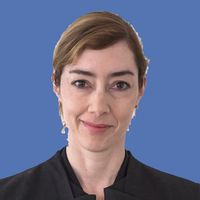
Raquel Fernández is Full Professor of Computational Linguistics and Dialogue Systems at the University of Amsterdam, where she leads the Dialogue Modelling Group at the Institute for Logic, Language & Computation (ILLC). As Vice-Director for Research at ILLC and a Fellow of the ELLIS Society, she bridges computational linguistics, cognitive science, and artificial intelligence through her research on language use in multimodal and conversational contexts. PhD in Computational Linguistics from King's College London Prior research positions at University of Potsdam and Stanford University's CSLI Her work explores how cognitive constraints, social interaction, and perception shape language use, with a focus on: Visually-grounded language processing Multimodal dialogue modeling Model uncertainty and calibration Language grounding in multimodal data Language learning and semantic change Dialogue reference resolution Recent publications analyze multimodal reasoning limitations, cross-lingual knowledge consistency, and uncertainty modeling in dialogue systems. She has received multiple accolades including an ERC Consolidator Grant , NWO VENI/VIDI/Aspasia fellowships , and EMNLP/GenBench awards . Outstanding Paper Award (EMNLP 2023) Best Data Award (GenBench Workshop 2023) ELLIS Society Fellow ERC Consolidator Grant #819455 recipient NWO VENI/VIDI/Aspasia awardee As a leader in academic service, she serves on the SIGDAT Executive Committee and chairs multiple conference committees. Her lab develops models for multimodal dialogue, visual storytelling, and grounded language understanding.
Elaine J. Francis is a Professor of English and Linguistics at Purdue University, where she also serves as the Associate Head of the Department of English. She holds affiliate appointments in the Department of Linguistics and the Department of Speech, Language, and Hearing Sciences. At Purdue, she directs the Experimental Linguistics Lab and teaches linguistics courses at both graduate and undergraduate levels. Francis completed her B.A. in Linguistics at the College of William and Mary in 1993, followed by her M.A. (1995) and Ph.D. (1999) in Linguistics at the University of Chicago under the direction of Salikoko Mufwene. Her dissertation examined variation among members of the same lexical category in English using Sadock's Autolexical Grammar framework. Prior to joining Purdue in 2003, she served as an Assistant Professor at the University of Hong Kong from 1999 to 2002, where she collaborated with Stephen Matthews on research concerning syntactic categories and relative clauses in Cantonese. Her research focuses on syntax and its interfaces with semantics, discourse information structure, and language processing in production and comprehension. Francis employs experimental methods to investigate syntactic, semantic, discourse-pragmatic, and cognitive factors underlying the grammar and usage of complex sentence structures. Her specific interests include word order alternations, filler-gap dependencies, resumptive pronouns, relative clauses, grammatical categories, and syntactic alternations. She has published extensively in top linguistics journals including Language and Cognition, Glossa Psycholinguistics, Linguistics, Lingua, Cognitive Linguistics, and the Journal of Psycholinguistic Research. Analyzing her recent publications reveals a consistent focus on experimental approaches to syntactic phenomena. Her work demonstrates a strong interest in gradient acceptability, syntactic priming, cross-linguistic comparison (particularly involving English and Cantonese), and the relationship between grammatical theory and language processing. Her 2022 book Gradient Acceptability and Linguistic Theory represents a major contribution that synthesizes experimental findings with theoretical linguistics frameworks. Francis plays an active role in the broader linguistics community. She regularly teaches short courses at the Linguistic Society of America Linguistic Institutes, serves on the LSA Ethics Committee, and is on the editorial board of Glossa Psycholinguistics. She has also edited several books and special journal issues, including Mismatch: Form-Function Incongruity and the Architecture of Grammar (2003) and Polymorphous Linguistics: Jim McCawley's Legacy (2005). As an educator and administrator, Francis has supervised numerous graduate students and currently serves as Associate Head of the Department of English at Purdue. Her Experimental Linguistics Lab provides research opportunities for students interested in the intersection of theoretical syntax and experimental methodology. While she recently announced she will not be accepting new graduate students for the 2025-2026 cycle, her established mentorship record demonstrates her commitment to training the next generation of linguists. The Experimental Linguistics Lab, which she directs, serves as a hub for research combining theoretical linguistics with experimental methods. Her collaborative work extends across disciplines, including collaborations with researchers in speech-language pathology, cognitive science, and computational linguistics, reflecting the interdisciplinary nature of modern linguistic research.
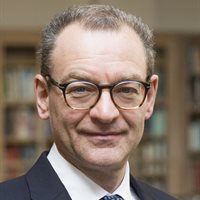
Jonathan David Bobaljik is a leading linguist whose research spans formal syntax, phonology, and the documentation of endangered languages, particularly Itelmen. He is actively involved in multiple international research collaborations and regularly presents at major linguistic conferences across Europe and North America. His work is published in top journals such as Natural Language and Linguistic Theory and Language . His research interests lie at the intersection of theoretical and descriptive linguistics. He investigates universal patterns in morphology and syntax, including suppletion, vowel harmony, ergativity, and control structures, often using data from understudied languages like Itelmen. His work combines rigorous formal analysis with deep empirical grounding in language documentation. The recent publications reflect a strong trend toward integrating typological diversity with formal theory. Key areas include morphosyntactic universals (e.g., suppletion in pronouns), information structure in verb-final languages, and the phonology of ejective consonants. There is also a growing emphasis on sociolinguistic and community-based aspects, as seen in collaborative work on language revitalization and the social life of the Itelmen language. He has received recognition through numerous scholarly publications and invited talks, though specific awards are not listed in the provided text. His collaborative projects suggest active grant involvement, particularly in language documentation and cross-linguistic typology. Bobaljik plays a central role in the Itelmen documentation and revitalization project, contributing to the creation of a dictionary app, the publication of historical manuscripts, and public exhibits on Siberian Indigenous knowledge. He collaborates with a team including David Koester, Chikako Ono, Tatiana Degai, and Maria Pupynina.
Prof. Anya Belz is Full Professor of Computer Science at Dublin City University's School of Computing and Science Lead at ADAPT Research Centre. A leading NLP researcher with PhD-level expertise, she specializes in natural language generation, evaluation methodologies, and multimodal systems. Recipient of multiple best paper awards and NAACL Test of Time Award nomination. Research innovations include foundational work on statistical language generation (deployed in weather forecasting systems), comparative evaluation frameworks, vision-language integration, and reproducibility quantification. Current EPSRC-funded ReproHum project coordinates 20 global labs studying evaluation consistency. Achievements : Developed industry-deployed generation systems for accessibility applications Pioneered cross-modal alignment techniques for image description Authored 100+ publications spanning generation, evaluation, and reproducibility
Prof. Marianne Pouplier is a Professor at the Institute of Phonetics and Speech Processing (IPS) at Ludwig Maximilian University of Munich. Her research focuses on speech production mechanisms, particularly coarticulation, phonetic universals, and language-specific variations. She investigates articulatory timing, speech errors, and cross-linguistic differences in consonant clusters using advanced methodologies like real-time MRI and electromagnetic articulography. Her work bridges theoretical models (e.g., Articulatory Phonology) with empirical data, emphasizing the interplay between phonological representation and motor execution. Key contributions include studies on nasal coarticulation, larynx dynamics, and the role of articulatory effort in speech production. Selected publications highlight her expertise in analyzing speech motor control through interdisciplinary approaches. She collaborates internationally, contributing to projects like the Bavarian Archive for Speech Signals (BAS). No awards or grants are explicitly listed, but her extensive publication record underscores her scholarly impact.
Dr. Vincent Fortuin is a tenure-track Assistant Professor at the Technical University of Munich (TUM) and a research group leader at Helmholtz AI in Munich. He leads the Efficient Learning and Probabilistic Inference for Science (ELPIS) group and holds multiple prestigious fellowships including the Branco Weiss Fellowship. His academic affiliations include the TUM School of Computation, Information and Technology, the Konrad Zuse School of Excellence in Reliable AI, and the Munich Center for Machine Learning. Dr. Fortuin earned his BSc in Molecular Life Sciences from the University of Hamburg (2012-2015), followed by an MSc in Computational Biology and Bioinformatics from ETH Zürich (2015-2017), where he received the ETH Excellence Scholarship and the Willi Studer Prize. He completed his PhD in Machine Learning at ETH Zürich (2017-2021) under the supervision of Gunnar Rätsch and Andreas Krause, supported by a Swiss Data Science Center PhD Fellowship. Prior to joining TUM, he was a Research Fellow at St. John's College, University of Cambridge (2022-2023). His research focuses on the intersection of Bayesian statistics and deep learning, specifically developing methods for more robust, data-efficient AI systems with reliable uncertainty estimates. His work addresses critical limitations in standard deep learning approaches, particularly their tendency to be overconfident in predictions and require large datasets for training. He investigates better priors and more efficient inference techniques for Bayesian deep learning, deep generative modeling, meta-learning, and PAC-Bayesian theory, with applications in scientific and biomedical domains. Dr. Fortuin's recent publications demonstrate a consistent focus on improving uncertainty quantification in deep learning systems, with increasing emphasis on practical applications in scientific contexts. His work spans from theoretical foundations of Bayesian deep learning to practical implementations in protein design, materials science, and medical applications. A notable trend is his exploration of how to make Bayesian methods more scalable and applicable to modern large-scale AI systems while maintaining theoretical guarantees. Branco Weiss Fellowship (2023) St John's College Research Fellowship (2022) Swiss National Science Foundation Postdoc.Mobility Fellowship (2022) Swiss Data Science Center PhD Fellowship (2018) ETH Excellence Scholarship (2015) Willi Studer Award (2018) Dr. Fortuin actively supervises PhD and Master's students through his ELPIS research group at Helmholtz AI. He serves as a regular reviewer and area chair for major machine learning conferences and is an action editor for TMLR. He co-organizes the Symposium on Advances in Approximate Bayesian Inference (AABI) and the ICBINB initiative, demonstrating his commitment to advancing the field through community building. His research group receives funding from multiple sources including Helmholtz AI, the Branco Weiss Fellowship, and collaborations with international institutions. Dr. Fortuin leads the Efficient Learning and Probabilistic Inference for Science (ELPIS) group at Helmholtz AI, which focuses on fundamental machine learning research motivated by real-world scientific problems. The group collaborates extensively with researchers across Helmholtz centers and international institutions, particularly in biomedical applications where reliable uncertainty estimates are crucial.
University of California, Los AngelesUnited States
Ethan Poole is an Assistant Professor in the Department of Linguistics at the University of California, Los Angeles (UCLA). His research focuses on syntax, the syntax-semantics interface, and morphological case, particularly in Finnish. Key areas include reconstruction effects, quirky subjects, and cross-clausal dependencies, with recent work on the Williams Cycle and Hindi-Urdu binding. His research interests span syntactic movement interpretation, morphological case (especially Finnish), and quirky subjects. He explores topics like embedding, intervention effects in tough-constructions, and NPI grammaticality illusions. Collaborative work includes studies on Hindi-Urdu scrambling and tough-constructions. His articles analyze reconstruction effects, trace semantics, and syntactic phases, reflecting a focus on formal syntax and interface constraints. Notable themes include case assignment mechanisms and the theoretical implications of syntactic movement for semantic interpretation. No specific scientific awards or grants are listed in the provided information. He advises no students in the given data. His work contributes to foundational questions in syntactic theory and cross-linguistic variation.
Prof. Dr. Pia Knoeferle is a leading academic at Humboldt-Universität zu Berlin , where she serves as a Professor in the Department of German Language and Linguistics . She is a principal investigator in the Collaborative Research Center (CRC 1412) focused on register phenomena and leads the Reaction Time, Eye-tracking, and EEG Laboratories . Her research spans psycholinguistics , cognitive neuroscience , and computational modeling of language , with a central interest in how real-time language comprehension interacts with social context , formality-register congruence , and morphosyntactic processing . Appointments: Professor at Humboldt-Universität (2024), CRC 1412 member Methodologies: Eye-tracking, EEG, Visual World Paradigm, ERP Her work investigates lifespan language processing (children, adults, older adults) through contextual cue integration , including emotional , spatial , and social context such as gender cues , eye gaze , and facial expressions . Key questions include: How do pragmatic and contextual factors modulate lexical and grammatical processing ? What representations underlie register sensitivity in spoken and written comprehension ? Recent articles (2022-2024) focus on register congruence effects in German sentence processing, age-related differences in formality-register anticipation , and interactions between register and morphosyntactic knowledge . Using eye-tracking and visual world paradigms , her team examines incremental integration of socially-situated context with verb-argument relations and grammatical constraints . Findings suggest subtle late-stage register effects and interference between pragmatic and syntactic processing . Her lab collaborates with researchers like Katja Maquate , Valentina Nicole Pescuma , and Camilo Ronderos , contributing to the Frame text of the Second Phase Proposal for CRC 1412 (2020) and subsequent reviews in Frontiers in Psychology (2023). The work emphasizes complementary methods to model register variability across languages , modalities , and cultural contexts .
Rutgers, The State University of New JerseyUnited States
Mark Baker is a Professor of Linguistics and Cognitive Science at Rutgers University. His work focuses on comparative syntax, linguistic universals, semantic roles, and the study of Amerindian and African languages. He holds the title of Distinguished Professor and maintains an office in Scott Hall. As of 2021, his office hours were by appointment due to sabbatical leave. His research interests include syntactic diversity, its limits, and patterns across languages. Notable themes in his work involve logophoric pronouns, switch-reference mechanisms, and the relationship between case systems and agreement structures. He has contributed to discussions on language typology, formal syntax, and the cognitive foundations of linguistic structures. Baker teaches advanced syntax courses and has published extensively on topics ranging from Panoan languages to theoretical models in generative grammar. His recent articles explore syntactic variation, morphosyntactic alignment, and interdisciplinary connections between linguistics and cognitive science. He serves on editorial boards and has reviewed for journals such as Journal of East Asian Linguistics and Yearbook of Corpus Linguistics and Pragmatics . His work bridges formal linguistic theory with empirical cross-linguistic analysis, emphasizing the interplay between universal grammatical principles and lineage-specific traits.
Brita Wårvik is a Professor in the Department of Languages at Åbo Akademi University, affiliated with the Faculty of Humanities, Psychology and Theology. She holds a Doctor of Philosophy (Phil. Dr.) from the same institution, awarded in 2013, and has been actively contributing to linguistic research for decades. Doctor of Philosophy (Phil. Dr.), Åbo Akademi University, 2013 Her research centers on discourse analysis, pragmatics, and historical English linguistics, with a particular focus on Early Modern and Medieval English texts. She investigates discourse interaction, textual structures, and pragmatic conservatism in religious prose, often employing corpus-based and textual analysis methods. Her work bridges micro and macro perspectives in discourse, exploring how semantic units contribute to broader text worlds. Analysis of her recent publications reveals a consistent trajectory in historical discourse studies, with increasing emphasis on corpus linguistics, manuscript variation, and the evolution of discourse markers. Her editorial work, such as the 2024 volume Structures in Discourse , highlights her leadership in synthesizing interdisciplinary perspectives on language use. Scientific Awards: Teacher of the Year (2001) ÅAU Student Union's Rose (2007) Brita Wårvik actively supervises and mentors academic visitors and collaborators, as seen in her hosting of scholars like Carmen Lee and Lieselotte Anderwald. She is the coordinator of the ongoing Project ICLE (International Corpus of Learner English) , securing research continuity and international collaboration. Her involvement in organizing workshops, such as the ICLE+30 FI-subcorpus Workshop in 2024, underscores her role in fostering academic exchange. In terms of research infrastructure, she is deeply embedded in the ICLE network, contributing to the development of learner language corpora. Her activities reflect strong international collaborations, particularly in the fields of historical linguistics and discourse studies, with a visible presence in both research and academic community-building.
London School of Economics and Political Science (LSE)United Kingdom
Wim A Van der Stede is a **Professor of Accounting and Financial Management** at the **London School of Economics (LSE)**, specifically within the **Department of Accounting**. He holds the prestigious **CIMA Professorship** and serves in leadership roles such as LSE Council Member and Houghton Street Ventures Advisory Board member. His research focuses on **management control systems**, **corporate governance**, **executive compensation**, and **performance measurement**, with notable contributions to understanding incentive systems and organizational design. He has authored influential books like *Management Control Systems: Performance Measurement, Evaluation, and Incentives*, translated into multiple languages. Van der Stede’s academic leadership includes editorial roles in top journals like *Management Accounting Research* (Editor-in-Chief 2015–2024), and he has received awards such as the LSE Teaching Excellence Award (2016/17) and the AAA Outstanding International Educator Award (2019). His work integrates empirical studies with practical insights, addressing topics like budgeting, innovation selection, and the impact of information technology on organizations. He actively contributes to global accounting discourse through research, teaching, and advisory roles.
Alis Oancea is Professor of Philosophy of Education and Research Policy at the University of Oxford's Department of Education, part of the Social Sciences Division. She holds additional roles including ESRC Centre for Global Higher Education Deputy Director and Social Sciences Division Advocate for Responsible Engagement. With dual doctoral degrees (DPhil from Oxford and PhD from Bucharest), she also received a Doctor Honoris Causa from University of the West Timisoara. Her research focuses on meta-research, research policy, and higher education governance. Key areas include research assessment frameworks, impact measurement, ethics, open knowledge practices, and teacher education. She co-edited the 2024 Handbook of Meta-Research and leads international studies on research cultures and policies. Education: DPhil (Oxford), PhD (Buc), DipLATHE (Oxford), Dhc (UWT) Roles: Director of Research (2016-20), REF2021 Coordinator, ESRC CGHE Deputy Director Leadership: Over 30 funded projects including the RKEEI initiative and BERA Observatory Her 150+ publications span research policy, impact evaluation, and education systems. Awards include FAcSS Fellowship and numerous international advisory roles across Europe and Norway. Advises on global education reforms and chairs panels for EU, UK, and Nordic research councils. Current doctoral supervision focuses on research policy, higher education systems, and teacher education innovations. Active in editorial roles for Oxford Review of Education and Review of Education .
Massachusetts Institute of TechnologyUnited States
Nick Montfort is a Professor of Digital Media at Massachusetts Institute of Technology (MIT) and Professor II & Principal Investigator at the University of Bergen 's Center for Digital Narrative. He directs MIT's Trope Tank lab/studio and contributes to platform studies, critical code studies, and electronic literature. Ph.D. in Computer and Information Science from University of Pennsylvania (2007) M.A. in Creative Writing (Poetry) from Boston University (2001) S.M. in Media Arts and Sciences from MIT (1998) B.S./B.A. in Computer Science and Liberal Arts from University of Texas at Austin (1995) Montfort's research focuses on computational creativity and digital poetics , particularly through exploratory programming and constraint-based writing . He has developed over ten computer-generated print books and co-edited MIT Press volumes like The Future and The New Media Reader . His work bridges computer science and literary arts , emphasizing algorithmic expression and platform-specific creation. His recent computational works include All the Way for the Win (2025), written entirely in three-letter words, and collaborations like The Deletionist and Sea and Spar Between . Notable books cover interactive fiction ( Twisty Little Passages ), platform studies ( Racing the Beam ), and generative literature ( 10 PRINT ). He also co-edits the Hardcopy and Using Electricity book series. Montfort's academic contributions span digital narrative systems , creative code , and computer-generated literature . His 101 BASIC Poems and Output: An Anthology of Computer-Generated Text exemplify his focus on code as cultural artifact and algorithmic literary practice . He has presented at major conferences including ELO, C&C, and Digital Arts and Culture, addressing topics from minimalist computational poems to narrative modeling . Through collaborations with institutions like University of Bergen and MIT's Comparative Media Studies/Writing, Montfort explores digital storytelling , machine-generated poetry , and platform-specific creativity . His academic leadership includes directing the Trope Tank and co-founding Bad Quarto press.
Jonathan Santo is a Professor of Psychology at the University of Nebraska at Omaha (UNO), where he serves as Director of the Graduate Developmental Psychology Program and as a faculty member in the Office of Latino/Latin-American Studies. His research explores peer relations, cultural differences in self-esteem, and classroom-level influences on child and adolescent development, with a focus on improving school environments and fostering positive social interactions. ORCA Faculty Fellow His research spans broad areas including Developmental Psychology , Social Support Systems , and Cross-Cultural Peer Dynamics , with specific attention to peer victimization , self-continuity , school climate , and developmental trajectories in Brazilian and Colombian youth . Recent publications analyze topics like hikikomori experiences , friendship security , and HPA axis dysregulation in adolescents. Scientific awards include the ORCA Faculty Fellow recognition. His work often involves longitudinal assessments of peer relationships cross-cultural comparisons (Brazil, Colombia, China, Nigeria, Singapore, U.S.) policy-focused blog posts on family separations and school interventions