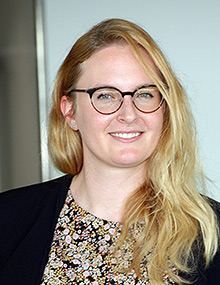
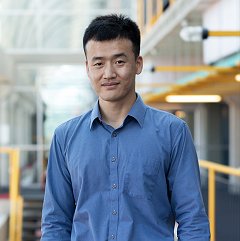
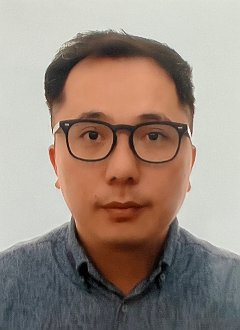
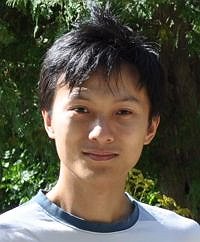
Jeffrey Considine is an Adjunct Associate Professor in the Faculty of Computing & Data Sciences (CDS) at Boston University, where he returned in 2024 after 19 years in industry. He holds a PhD in Computer Science from Boston University, specializing in distributed randomized algorithms and data structures. Education: PhD in Computer Science from Boston University (2005) His research spans theoretical computer science , algorithms , compressed parallel execution , and generative AI , with industry applications in bioinformatics and linguistics . Recent work includes compressed parallel execution for game solving and mathematical hypothesis testing, with plans to collaborate across disciplines. The trends in his publications reflect a focus on distributed systems , data aggregation , and overlay networks , evolving into neural implicit representations and generative AI . His teaching includes DS 542: Deep Learning for Data Science and foundational modules in the OMDS program. Scientific Awards IEEE ICDE 2014 Influential Paper Award for work on approximate aggregation techniques His industry experience includes 15 years at Cogo Labs as Chief Scientist and a brief tenure as CTO at Solved Technologies. He is available to advise master’s theses, with one project extending into ongoing research.
Yaxin Bi is a Professor in the School of Computing at Ulster University and a core member of the Artificial Intelligence Research Centre, with over thirty years of research experience in AI applications. His work bridges theoretical advances in machine learning with real-world problem-solving across diverse domains. His educational background includes a BSc (Hons) in Computing Science, an MSc by research in Computing Application, and a PhD in Text Categorization with ensemble learning approaches. These qualifications established the foundation for his pioneering work in evidence theory and classifier systems. Professor Bi's research centers on machine learning and ensemble learning integrated with Dempster-Shafer theory of evidence, focusing on developing robust data analytics methods for decision-making under uncertainty. Key application areas include satellite data anomaly detection, manufacturing process optimization, energy systems analysis, agricultural monitoring through crop classification and disease detection, digital twin development, sentiment analysis, and multi-sensor activity recognition. His methodology emphasizes practical implementation of theoretical frameworks to address complex real-world challenges. Analysis of recent publications (2024-2025) reveals a strategic focus on high-impact applications of AI in critical infrastructure and environmental monitoring. Key trends include the convergence of deep learning (LSTM, GAN) with evidence theory for seismic prediction, optimization of industrial manufacturing processes, and advancement of information retrieval systems. These works consistently address uncertainty quantification and demonstrate cross-domain applicability from semiconductor fabrication to disaster response. His scientific recognition includes: Senior Fellow of the Higher Education Academy, UK Professor Bi has secured over £5 million in competitive research funding from major international bodies including the European Space Agency, EU Frameworks and Horizon 2020 programs, Knowledge Transfer Partnership, Invest NI, and the Royal Society. He actively shapes the academic community through editorial roles as Associate Editor for the International Journal of Intelligent Systems and editorial board membership for Real-World Data Science (Royal Statistical Society), alongside steering committee positions for KSEM and SAI conferences. His consultancy projects demonstrate direct industry translation of research. As a core member of Ulster University's Artificial Intelligence Research Centre, he leads initiatives in satellite data analytics, digital twin development, and AI-driven solutions for sustainable development goals, directing current projects including Electromagnetism Anomaly Detection and Seismic Deformation Monitoring through generative AI approaches.
Dr. Heiko Maus is a researcher and department leader at the German Research Center for Artificial Intelligence (DFKI) GmbH in Kaiserslautern, Germany. As (co-)author of over 20 publications since 2005, he specializes in knowledge management, semantic technologies, and context-aware systems. Second Deputy Head of Smart Data & Knowledge Services Department (2022–) Team Leader of Topic Field Knowledge Work (2017–) Key projects: CoMem, EPOS, ForgetIT, myRPA His research focuses on knowledge graph applications for corporate memory systems, combining context modeling with semantic desktop environments . He develops personal knowledge assistants that integrate information silos through evolving knowledge graphs , with recent work exploring LLM-based adaptive relevance prediction for entity recommendation systems. Scientific contributions include the LDK 2019 Best Research Paper Award and multiple ACM/IEEE/ESWC publications . His 2024–2025 articles examine context-aware recommendation systems for knowledge workers, cyber mapping financial systems , and real-life knowledge work datasets .
Sergey Shershakov is an Associate Professor at the Faculty of Computer Science, Department of Software Engineering at the National Research University Higher School of Economics (HSE University). He serves as the Academic Director of the Systems and Software Engineering educational program and has been with HSE University since 2010. His academic journey includes a PhD from HSE University (2020) and a Master's degree in Software Engineering from the same institution (2012). Dr. Shershakov's research focuses primarily on Process Mining and Software Engineering, with specific interests in: Process Mining methodologies and tools Software Process Mining and analysis Object-Oriented and Component-Oriented Programming Information Systems Architecture Verification of Algorithms Embedded Systems development His scholarly contributions demonstrate a consistent focus on developing practical tools and methodologies for process mining, with particular emphasis on creating graphical interfaces (like VTMine for Visio), improving performance of process mining algorithms, and applying these techniques to real-world systems. His work bridges theoretical computer science with practical software engineering applications, especially in the domain of business process analysis and optimization. Dr. Shershakov has received numerous recognitions for his academic work: Best Teacher award (2014, 2017-2021) Best Academic Supervisor in the category 'Admission of Foreign Students' (2024) Multiple Gratitude awards from HSE University leadership (2017-2024) Academic Work Allowance (2016-2021) Member of the 'New Researchers' category in the High Professional Potential Group (2014-2015) As an educator, Dr. Shershakov teaches multiple courses in C++ programming, Algorithms and Data Structures, and Introduction to Programming across different departments at HSE University. He leads research projects including an RFBR grant focused on 'Development of methods for efficient implementation of algorithms of process mining based on large event logs' (2018). He is also an active member of the IEEE Task Force on Process Mining. Dr. Shershakov is affiliated with the Laboratory of Process-Aware Information Systems (PAIS Lab) at HSE University, where he conducts research on process mining techniques and their applications. His work has significant implications for business process optimization, system verification, and software engineering practices.
Benedikt Haag is a Researcher at the Institute of Management (IFM) , Department of Economics, Bonn-Rhein-Sieg University of Applied Sciences. Based in Sankt Augustin, Germany, he focuses on data literacy, IT controlling, and agile methodologies in digital education contexts. Email: benedikt.haag@h-brs.de Location: Room G133, Grantham Avenue 20, 53757 Sankt Augustin Research Interests His work bridges digital education frameworks with practical implementation strategies, emphasizing soft skills in data-driven environments. Key areas include: Data literacy for modern workforce development Agile IT controlling systems Digital transformation in educational contexts Connected learning path design Soft skill integration with technical competencies Recent Publications (2021-2023) demonstrate expertise in data modeling, agile control systems, and educational policy development. Collaborative projects with Bechtle AG and the German Federal Ministry of Education and Research highlight cross-sector partnerships. Projects Active contributor to the E365 Maverick initiative under the "National Education Platform" framework, focusing on connected learning paths in digital education.
Annie Liu is a Professor of Computer Science at Stony Brook University. Her research spans programming languages, algorithms, and distributed systems, with a focus on formal methods and system assurance. She earned her Ph.D. and M.S. from Cornell University, M.Eng. from Tsinghua University, and B.S. from Peking University, all in Computer Science. Research highlights: Distributed algorithms, logic programming, program analysis, security, and domain-specific language design. Recent publications integrate logic rules with AI, blockchain consensus, and incremental computation. Awards include the SUNY Chancellor's Award for Excellence in Scholarship and a Best Student Paper Award. Teaches courses in programming, algorithms, and distributed systems (e.g., CSE 526, CSE 626). Leads the Design and Analysis Research Laboratory, focusing on optimizing compilers, real-time systems, and big data analysis.
Reham Mohamed Aburas is an Assistant Professor in the Department of Computer Science and Engineering at the American University of Sharjah (AUS) in Sharjah, UAE. Her academic career spans research and teaching in mobile computing security, with a focus on advancing secure and privacy-preserving technologies for modern devices across multiple platforms including smartphones and emerging virtual reality systems. Dr. Aburas earned her Ph.D. in Computer Science from Purdue University, where she worked with Professor Z. Berkay Celik at the PurSec Lab. Prior to that, she completed both her B.Sc. and M.Sc. degrees in Computer and Systems Engineering from Alexandria University in Egypt, establishing her technical foundation in systems engineering. Her primary research centers on the advancement of security, privacy, and usability of mobile computing technologies. In today's world, where modern devices are ubiquitous and technology is deeply integrated into various aspects of daily life, Dr. Aburas focuses on developing advanced systems that enrich user experiences while preserving security and privacy. Her work spans multiple domains including: Mobile security and privacy vulnerabilities Virtual and augmented reality security Biometric authentication systems User-centered security design Location privacy in mixed reality environments Arabic natural language processing Dr. Aburas's publication record demonstrates a strong trajectory from foundational work in mobile computing and indoor localization to cutting-edge research in virtual reality and mixed reality security. Her recent work (2023-2025) has focused on emerging threats in WebXR and VR environments, including UI attacks, speech extraction from sensors, and semantic location inference. She has published in top security venues including USENIX Security Symposium and NDSS, indicating the high impact and relevance of her research in the security community. Her earlier work (2014-2020) established expertise in mobile security, biometric authentication, and Arabic language processing through the Al-Bayan project. As an educator, Dr. Aburas has served as a course instructor at AUS, teaching subjects including COE 59412: Usable Security and Privacy and CMP 340: Design and Analysis of Algorithms. She has also served as a Teaching Assistant at Purdue University for courses including Great Issues in Computer Science, Data Mining, and Data Engineering in Python. At Alexandria University, she taught Probability Theory, Statistics, Data Mining, and Data Structures, demonstrating expertise across both theoretical computer science and practical security applications. Her research appears to be conducted in collaboration with the PurSec Lab at Purdue University, where she completed her Ph.D. Her work shows strong interdisciplinary connections between computer science, human-computer interaction, and security engineering, with particular attention to the practical usability aspects of security systems.
Sebastian Erdweg is a Professor at the Institute of Programming and Software Engineering at Johannes Gutenberg University Mainz (JGU Mainz) in Germany. He actively contributes to the programming languages research community as evidenced by his extensive involvement in major conferences including PLDI, ECOOP, SPLASH, and ICFP. His leadership roles include serving as Workshops Co-Chair for ECOOP and ISSTA 2023, Steering Committee Chair for GPCE, and various program committee positions across multiple conferences. His research primarily focuses on programming language design and implementation, with particular expertise in incremental computation, Datalog-based systems, abstract interpretation, and language workbenches. Erdweg's work bridges theoretical foundations with practical applications in static analysis, compiler construction, and program transformation. His research demonstrates a consistent thread of improving developer productivity through better language design and tooling, with recent work emphasizing efficient incremental program analysis techniques. Erdweg's publication record shows a strong emphasis on Datalog as a foundation for program analysis, with increasing focus on incremental techniques and WebAssembly analysis in recent years. His work combines theoretical rigor with practical implementation, often resulting in open-source tools that advance the state of the art in language engineering. The consistent appearance of Datalog, incremental computation, and abstract interpretation across his publications indicates a cohesive research vision spanning over a decade. As an active member of the programming languages community, Erdweg has served in numerous organizational roles including Workshops Co-Chair for ECOOP and ISSTA 2023, Steering Committee Chair for GPCE, and various program committee positions. His contributions to conference organization demonstrate his standing within the academic community and commitment to advancing research in programming languages and software engineering.
Xiaokang Qiu serves as Associate Professor in Purdue University's Elmore Family School of Electrical and Computer Engineering, specializing in Programming Languages and Software Engineering with core expertise in program verification, program synthesis, and automated deduction. His research establishes critical bridges between enumerative and deductive synthesis methodologies, developing novel frameworks for verified program generation. Key contributions include string transformation synthesis with concurrency guarantees, bit-vector manipulation optimization via syntax-guided enumeration, and network design automation through comparative learning techniques. This work consistently advances formal verification foundations while addressing practical software engineering challenges. Publication trends from 2017-2025 reveal escalating complexity in synthesis targets—from basic data-structure manipulations to concurrent string operations and network configurations. His approach increasingly integrates machine learning elements with formal methods, demonstrating how query-based learning can drive near-optimal system design while maintaining provable correctness guarantees across diverse computational domains.
Dr. Brent T. Langhals serves as Associate Professor of Information Resource Management at the Air Force Institute of Technology (AFIT), Department of Systems and Engineering Management, Wright-Patterson AFB, OH. He directs the AFIT Data Analytics Program and chairs the Information Systems specialization curriculum, actively contributing to defense-focused research and graduate education. Education: Ph.D. in Management - Management Information Systems Concentration (minor: Systems and Industrial Engineering), University of Arizona, Eller College of Management (2011). Dissertation: "Using Eye and Head Based Psychophysiological Cues to Enhance Screener Vigilance" M.S. in Information Resource Management, Air Force Institute of Technology (2001). Thesis: "The Effect of Varying Arousal Methods upon Vigilance and Error Detection in an Automated Command and Control Environment" B.S. in History, United States Air Force Academy (1995) Research Focus: Dr. Langhals' work integrates data analytics , database systems , and human-computer interaction with systems engineering principles. His investigations into psychophysiological cues and operator vigilance bridge cognitive science with defense applications, yielding practical solutions for security screening, aviation interfaces, and military decision-making. Current projects emphasize machine learning for predictive analytics in high-stakes environments. Publication Trends: Recent work demonstrates interdisciplinary reach across defense logistics (F-22 sortie cancellations, construction contracts), public health (marijuana use, food insecurity), and emerging technologies (UAS applications, NoSQL databases). His scholarship consistently applies data science to military challenges while advancing fundamental research in human factors and database engineering. Scientific Recognition: Two-time Sigma Iota Epsilon Instructor of the Year (2024, 2018) Department Educator of the Year (2013) Multiple Air Force commendations including Field Grade Officer of the Quarter (2008, 2006) Mentorship & Leadership: Dr. Langhals has graduated 59 Master's/PhD students (38 residential, 21 distance learning) while teaching core courses in Database Systems, Data Analytics, and Strategic Information Management. His research leadership spans contracts in data management, systems engineering, and human performance optimization for Department of Defense applications. Research Infrastructure: As Data Analytics Program Director, he oversees AFIT's research ecosystem for defense data science, coordinating faculty and resources across the Department of Systems and Engineering Management to develop next-generation analytical capabilities for Air Force missions.
Prof. Dr. Katja Zeume serves as Professor and Dean of the Faculty of Computer Science and Communication at the Westphalian University of Applied Sciences in Gelsenkirchen, Germany. Her academic leadership spans theoretical and applied database systems research with emphasis on semi-structured data management. Her educational foundation includes a PhD from the University of Bayreuth (2015), where she completed her thesis "Foundations of Regular Languages for Processing RDF and XML" under the name Katja Losemann. Dr. Zeume's research centers on the theoretical underpinnings of database query languages, particularly investigating regular expressions in SPARQL for RDF and XML data models. Her work bridges formal language theory with practical database applications, addressing challenges in query complexity, data federation, and schema design for unstructured information. Key contributions include foundational analyses of deterministic regular expressions and their computational properties in semantic web contexts. Her publication trajectory reveals consistent focus on theoretical database foundations, evolving from XML schema research toward SPARQL complexity analysis. The body of work demonstrates deep integration of automata theory, complexity analysis, and practical query language design for modern data ecosystems. As Dean of the Faculty of Computer Science and Communication, she oversees academic strategy while maintaining active research engagement. Her teaching portfolio includes core database systems courses covering traditional SQL, NoSQL architectures, web-scale data management, and theoretical database principles.
Chengnian Sun is an Associate Professor in Software Engineering and Programming Languages at the University of Waterloo, Canada. His research spans program reduction, software testing, and compiler-related technologies, with a focus on developing practical tools for debugging and testing. Dr. Sun's research interests center on Software Engineering and Programming Languages , particularly in program reduction techniques, compiler testing, and software security. His work bridges theoretical foundations with practical applications, developing frameworks like Perses and Latra that have become influential in the software engineering community. His research demonstrates a consistent evolution from basic program reduction techniques to incorporating modern approaches like LLMs for compiler testing. His recent publications show a strong trend toward language-agnostic transformation frameworks and practical debugging tools , with increasing emphasis on security applications and integration of AI techniques. The research spans both theoretical foundations and practical implementations, with several tools developed becoming widely used in the software engineering community. Dr. Sun has served on program committees for major software engineering conferences including ASE, ICSE, ESEC/FSE, and ISSTA, demonstrating his standing in the research community. His extensive publication record shows consistent high-impact contributions across multiple venues, with particular emphasis on program reduction and compiler testing techniques. His work has led to the development of several influential tools including Perses (syntax-guided program reduction), Latra (template-based transformation framework), and AddressWatcher (memory leak localization). These tools have been widely adopted in both academic and industrial settings for debugging and testing purposes.
DongGyun Han is a Lecturer (equivalent to Assistant Professor) in the Department of Computer Science at Royal Holloway, University of London. His research specializes in Software Engineering, with emphases on Empirical Study, AI for Software Engineering (AI4SE), Software Engineering for AI (SE4AI), and Code Review. He holds a PhD from University College London (UCL), an MPhil from Hong Kong University of Science and Technology (HKUST), and a B.Eng from Jeju National University. Dr. Han's research integrates empirical methods with AI techniques to address challenges in software maintenance, code quality, and developer productivity. His work spans automated code review, defect prediction, vulnerability repair, and AI model applications in software artifacts. He actively collaborates with industry partners including Amazon Web Services. His recent publications focus on leveraging large language models for software tasks, analyzing dataset biases, and improving automated developer tools. Common themes include empirical validation of AI techniques, security enhancement, and optimizing developer workflows. Awards: No scientific awards mentioned in source materials. Academic Service: Dr. Han contributes extensively to program committees for top-tier conferences including ICSE, FSE, ASE, and MSR. He has chaired tracks at ICTSS 2024 and reviewed for journals including TOSEM, EMSE, and JSS. Affiliations: Previously affiliated with Singapore Management University's SOftware Analytics Research (SOAR) group and Secure Mobile Centre. Maintains industry connections through past roles at Amazon Web Services.
Yingfei Xiong is an Associate Professor at Peking University specializing in Software Engineering and Programming Languages. His research focuses on program synthesis, automated program repair, and software analysis techniques with extensive contributions to top-tier conferences including ASE, ICSE, PLDI, and SPLASH/OOPSLA. Dr. Xiong's primary research interests include: Program Synthesis and Inductive Programming Automated Program Repair and Bug Fixing Static and Dynamic Program Analysis Machine Learning Applications in Software Engineering Compiler and Language Implementation Techniques Software Testing and Verification His publication trends show a strong shift toward neural approaches in program repair, with significant integration of large language models in synthesis tasks since 2023. His work bridges theoretical foundations with practical applications, evidenced by industrial collaborations such as the Alibaba case study on static taint analysis. Recent contributions include GrammarT5 for code generation, Tare for type-aware neural repair, and Equality Saturation techniques guided by LLMs. At Peking University, Dr. Xiong is affiliated with the School of Electronics Engineering and Computer Science (SEI) as indicated by his institutional website domain. He actively contributes to the academic community through program committee service for major software engineering conferences and mentoring student researchers.
Fredrik Wahlberg serves as Assistant Professor in Computational Linguistics at Uppsala University's Department of Linguistics and Philology, where he develops computational methods for historical manuscript analysis. His work bridges computer science and humanities through machine learning applications in paleography and digital archives. His research encompasses: Computational Linguistics for historical texts Handwriting recognition and word spotting in medieval manuscripts Deep learning for scribal attribution and dating Neural networks for archival image restoration AI-driven metadata enrichment in cultural heritage Analysis of his 2011-2022 publications reveals consistent innovation in combining image processing and language modeling for large-scale manuscript analysis. Key trends include advancing convolutional neural networks for dating accuracy, developing quill-curvature features for writer identification, and extending into critical AI applications for gender-inclusive historical collections. His methodologies significantly enhance accessibility of pre-modern documents through computational approaches.