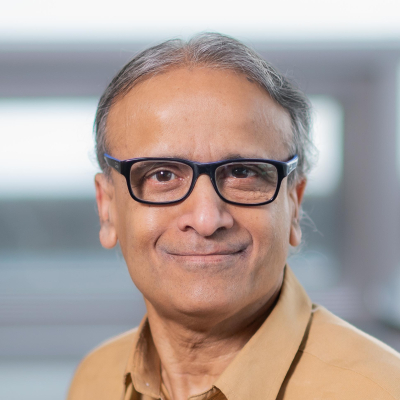
Mohamed Abuella is a Research Fellow at Northumbria University's School of Engineering Physics and Mathematics, specializing in energy efficiency and renewable energy systems. His work bridges maritime engineering with data analytics and machine learning. Educational Background: PhD (expected 2099) His research focuses on Time-Series Analysis for maritime energy optimization, Renewable Energy Modeling (wind and solar), and Machine Learning Applications in power forecasting. Recent publications highlight advancements in sustainable shipping and solar/wind energy systems. Key trends in his recent articles include Explainable AI for maritime efficiency, Hybrid Forecasting Models for renewable energy, and Geospatial Analysis for vessel navigation. Notable collaborations span energy analytics and maritime technology domains.
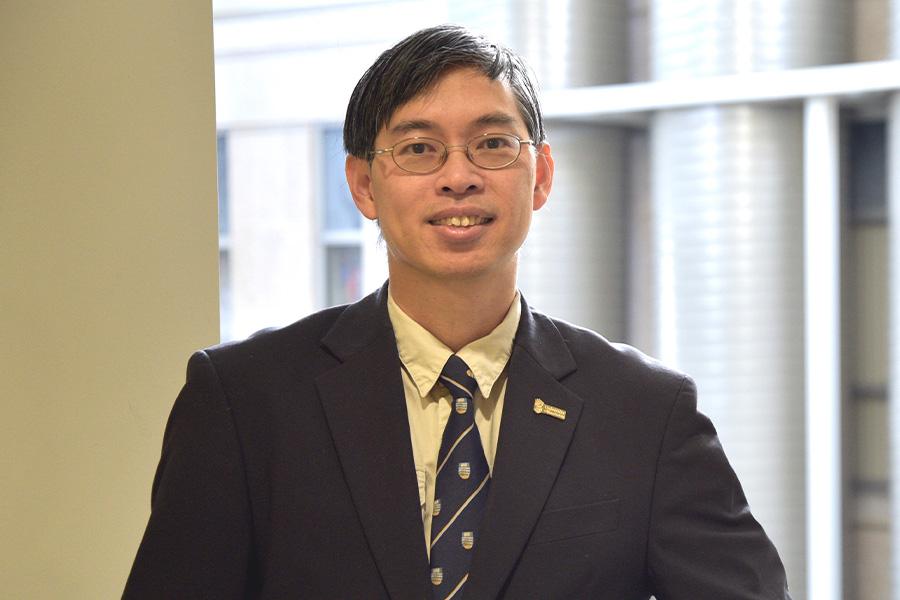
Dr. Carson Kai-Sang Leung is a Full Professor in Computer Science at the University of Manitoba's Faculty of Science. He founded and directs the Database & Data Mining Lab. His research focuses on big data science, data mining, machine learning, health informatics, and visual analytics. He holds SMIEEE and SMACM fellowships, reflecting his contributions to the field. Education: B.Sc., M.Sc., and Ph.D. from the University of British Columbia (UBC). Research interests include human-centered exploratory data mining, image databases, and scalable algorithms. He emphasizes user-driven constraints in mining processes and has developed techniques like the segment support map and OSSM for optimized frequency counting. His work on subimage queries in large image databases addresses real-world challenges in visual data retrieval. Publications span data mining, healthcare analytics, and transportation systems. His lab collaborates on projects like visual analytics for motor vehicle accidents and environmental data science for smart cities. He is affiliated with institutions such as the Institute of Industrial Mathematical Sciences (IIMS) and TRLabs. Key awards: Senior Member of IEEE (SMIEEE) and Senior Member of ACM (SMACM).
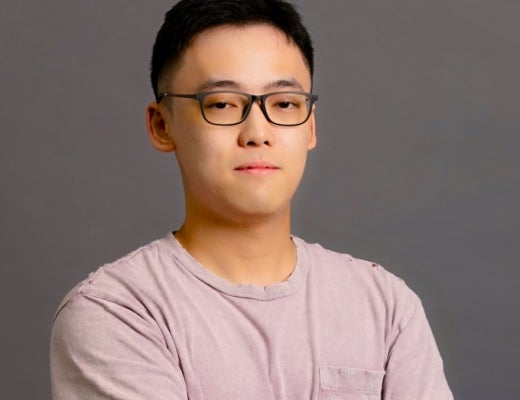
Ryan Shi is an Assistant Professor at the School of Computing and Information (SCI) at the University of Pittsburgh. His research focuses on applying AI to address societal challenges in food security, environmental conservation, and public health, collaborating with nonprofit organizations globally. He specializes in game theory, online learning, and reinforcement learning, emphasizing deployable solutions. Shi holds a B.A. in Mathematics and Computer Science from Swarthmore College and a Ph.D. in Societal Computing from Carnegie Mellon University's School of Computer Science. He interned at Microsoft and Facebook during his Ph.D. and has been recognized with awards such as the 2023 IAAI Deployed Application Award and the 2022 Siebel Scholar Award. His work includes developing systems like Newspanda for environmental media monitoring and Maviper for interpretable multi-agent reinforcement learning. Recent projects involve optimizing food bank logistics, improving crowdsourcing platforms, and advancing low-resource language NLP for environmental conservation. Key Research Themes: Interpretable AI, Social Good Deployment, Responsible Algorithms Notable Deployments: Food rescue platforms, conservation monitoring tools Shi's research bridges theoretical foundations and real-world impact, with a focus on scalability, sustainability, and ethical considerations in AI applications.
Martha W. Alibali is a Professor in the Department of Psychology and Department of Educational Psychology at the University of Wisconsin-Madison. She directs the Cognitive Development & Communication Lab (CD&C Lab), which focuses on the intersection of developmental psychology, cognitive psychology, and mathematics education. Her research investigates mathematics learning and development with a special emphasis on the role of gesture in mathematical thinking and knowledge change. Her primary research interests include: The role of gesture in mathematical thinking and knowledge change Gesture in thinking and communication in educational settings Mathematics learning across developmental stages Embodied cognition and its implications for education Dr. Alibali's recent publications showcase her continued focus on gesture studies, mathematical cognition, and educational interventions. Her work spans from theoretical investigations of cognitive processes to applied educational research, with particular attention to visual representations, multimodal learning, and embodied cognition. She frequently collaborates with researchers across psychology, education, and cognitive science. Dr. Alibali has secured substantial funding from the National Science Foundation and Institute for Education Sciences for projects including intelligent tutoring systems for algebra, mathematical equivalence instruction, and visual representations in biology education. Her lab maintains an active research program with multiple graduate students, postdoctoral researchers, and undergraduate assistants. The CD&C Lab is committed to creating an inclusive research environment that values diversity of identities, backgrounds, and perspectives. The lab follows open science practices including pre-registration of studies and sharing research materials. Weekly lab meetings provide opportunities for all members to present their ongoing work and receive feedback.
Mark Stamp is a Professor in the Department of Computer Science at San Jose State University (SJSU), part of the College of Engineering. His research focuses on information security, machine learning, malware analysis, and cryptography, with a strong emphasis on applying these fields to cybersecurity challenges. He has authored multiple textbooks, including Information Security: Principles and Practice and Introduction to Machine Learning with Applications in Information Security . Education: PhD in Mathematics (Texas Tech University, 1992), MS in Mathematics (Texas Tech, 1988), BS in Computer Science (Morningside College, 1983). Research interests include malware detection using machine learning, cryptographic algorithms, and adversarial attack analysis. His work spans theoretical research and practical applications, such as developing tools for malware clustering, steganography analysis, and secure communication protocols. Recent projects include AI-driven precision agriculture and detecting AI-generated content. Teaching includes courses on information security (CS 166), machine learning (CS 171), and cryptography. He advises numerous graduate and undergraduate students, many of whom contribute to his research in cybersecurity and AI. Publications span over 200 papers in journals like Journal of Computer Virology and Hacking Techniques and IEEE Transactions . He has also contributed to conferences and edited several Springer volumes on AI and cybersecurity. His work often bridges academic research with real-world security challenges.
Dr. Daniel H. Jarvis is a professor at the Schulich School of Education, Nipissing University, where he teaches in both undergraduate (BEd) and graduate (MEd/PhD) programs. His research focuses on mathematics education, technology integration, curriculum development, and STEAM education initiatives. He has led several collaborative research projects including a SSHRC-funded international study on Computer Algebra Systems (CAS) technology in undergraduate mathematics instruction. Dr. Jarvis's research interests span mathematics pedagogy, workplace technology applications, interdisciplinary curriculum integration, and innovative educational approaches. His work consistently explores the intersection of mathematical concepts with technology-enhanced learning environments. His publications demonstrate a strong focus on educational technology integration, mathematics pedagogy, and curriculum innovation. Recent work examines exergames in wellbeing education, communities of practice for language teachers, and technology-enhanced assessment methods in mathematics education. Dr. Jarvis has held significant administrative roles including Chair of Graduate Studies in Education (2011-2013) and Associate Dean (Interim) of the Bachelor of Education programs (2022-2024). He has collaborated on cross-disciplinary projects with colleagues in Geography, Computer Science, Nursing, and Physical Education.
Dr. Maria Pampaka is a Professor at the University of Manchester, holding joint appointments in the Manchester Institute of Education and the Department of Social Statistics. Her research focuses on mathematics education, particularly learners’ attitudes and dispositions, advanced quantitative methods, and the application of complex systems theory. She has led projects on mathematics anxiety, gender equality measurement, and longitudinal survey analysis. Pampaka employs methodologies like Rasch modeling, missing data imputation, and agent-based simulations. She has collaborated internationally on studies ranging from regional gender gaps to tourist behavior analysis. Her work contributes to UN Sustainable Development Goals related to quality education and gender equality. Her research interests span mathematics education, quantitative research methods, and social statistics. Notable projects include a systematic review of mathematics anxiety and the development of the Extended Regional Gender Gaps Index (eRGGI). She has also explored applications of machine learning in tourism and healthcare, such as predicting revisit intentions and optimizing hospital resource allocation during the pandemic. Projects: Systematic review of mathematics anxiety, eRGGI development, analysis of sexual assault survivor support needs, and requirements discovery for smart driver assistive technologies. Key methodologies: Rasch modeling, multilevel modeling, thematic analysis, agent-based simulations, and machine learning. Collaborations: Cross-disciplinary work with social scientists, engineers, and healthcare professionals internationally. Pampaka’s work bridges education, statistics, and policy, aiming to inform equitable practices in learning and societal structures. She is engaged in impact initiatives like the Good Behavior Game evaluation and policy-informed gender equality research.
David Karger is a Professor of Computer Science at MIT, affiliated with the Computer Science and Artificial Intelligence Laboratory (CSAIL). He holds a B.A. from Harvard University and a Ph.D. from Stanford University. His research spans algorithms, information retrieval, human-computer interaction, and theory of computation. He leads the Haystack group, focusing on information management systems and collaborative tools. Notable contributions include the Scatter/Gather browsing system, the Mavo web application framework, and projects like Wikum and Squadbox for online collaboration and harassment prevention. Education: A.B. Summa cum Laude in Computer Science, Harvard University (1989) Ph.D. in Computer Science, Stanford University (1994) Research Interests: Karger’s work integrates algorithmic theory with practical systems, emphasizing human-centered design. Current projects address misinformation detection, social interaction systems, and educational tools. His research bridges theoretical computer science and applied domains such as web technologies and healthcare informatics. Awards: ACM Doctoral Dissertation Award (1994) Mathematical Programming Society Tucker Prize (1997) National Academy of Sciences Award for Initiative in Research (2004) Advising & Grants: Karger has advised over 30 students, many of whom have gone on to leadership roles in academia and industry. His work has been supported by grants from the MIT Schwarzman College of Computing and collaborations with companies like Akamai and Google. Labs & Teams: He leads the Haystack Group within CSAIL, collaborating with interdisciplinary teams on projects such as Mavo, Wikum, and Eyebrowse. His research also intersects with the Theory of Computation and Algorithms groups at MIT.
Laks V.S. Lakshmanan is a Professor in the Department of Computer Science at the University of British Columbia (UBC), within the Faculty of Science. His research focuses on data management, graph computing, machine learning, and algorithms, with notable contributions to dense subgraph discovery, influence maximization, and healthcare informatics. He teaches advanced courses on databases and data management, including CPSC 404 (Advanced Relational Databases) and CPSC 534L (Topics in Data Management). His awards include the ACM SIGMOD Research Highlight Award, the IEEE Data Science Best Paper Award, and recognition as an ACM Distinguished Scientist (2016). His work bridges theoretical algorithm design with practical applications in social networks, bioinformatics, and healthcare. Key research themes include optimizing graph algorithms for large-scale data, combating misinformation through network analysis, and developing efficient methods for subgraph enumeration and influence propagation. His recent publications explore topics like clinical event prediction (TRACE), cost-effective LLM selection (ThriftLLM), and cross-modal consistency in AI systems. Education: Details not explicitly provided in sources. Grants & Funding: Recipient of NSERC Discovery Accelerator Supplements. Labs/Teams: Engaged in UBC's data management research groups and collaborative initiatives with industry partners.
Natesh Pillai is a Professor in the Department of Statistics at Harvard University and a Distinguished Engineer at LinkedIn, focusing on Responsible AI. He holds a Bachelors from IIT Madras, a PhD from Duke University's Department of Statistical Science (2008), and completed a postdoc at the University of Warwick's CRiSM (2008-2010). His research spans applied probability, computational methods, MCMC theory, algorithmic fairness, and climate science. He serves on editorial boards for journals like SIAM Journal on Mathematics of Data Science and Harvard Data Science Review . Key awards include the 2018 Young Statistical Scientist Award and 2021 Fellowship in the Institute of Mathematical Statistics. His work emphasizes bridging theory and practice, with contributions to statistical methodology, causal inference, and scalable computational techniques. Recent collaborations include industry roles at Amazon (2021-2023) and interdisciplinary climate science projects analyzing agricultural yield predictability. Education: Bachelor's: Indian Institute of Technology (IIT) Madras PhD: Duke University, Department of Statistical Science Research Focus: MCMC mixing times, Bayesian methodology, reinforcement learning, climate data modeling Publications emphasize algorithmic efficiency, fairness in AI, and probabilistic frameworks for complex systems. His lab integrates theoretical rigor with real-world applications, including climate modeling and healthcare analytics.
Dr. Min Sun is a Professor in the Department of Educational Policy, Organization and Leadership at the University of Washington's College of Education. Her research focuses on teacher learning, AI/ML integration in education, and policy-driven educational reforms. She leads interdisciplinary teams developing AI tools like the NSF-funded Colleague lesson planning platform and the IES-funded AmplifyGAIN Center. Her work addresses inequities in education through policy analysis and partnerships with K-12 schools and EdTech industries. Dr. Sun holds a Ph.D. in Educational Policy and Measurement from Michigan State University. She teaches courses such as EDLPS 302: Intro to Educational Policy and EDLPS 564: Economics of Education. Her research spans four key areas: AI/ML method development, AI-powered educational tools, data science training programs, and policy research with multi-sector collaborations. Notable grants include a $10 million IES grant for the AmplifyGAIN Center and a $1.5 million NSF grant for AI-driven math lesson planning. Her policy work emphasizes equitable education access and data-driven solutions. She directs the Education Policy Analytics Lab (EPAL) and collaborates with stakeholders to translate research into actionable strategies.
Professor Danielle Matthews is a Professor of Psychology at the University of Sheffield's School of Psychology and an academic at the Interdisciplinary Centre of the Social Sciences (ICOSS). Her research focuses on how children learn language, particularly pragmatic development (e.g., communicative repair, referential adaptation) and the impact of deafness and socio-economic factors on language acquisition. She has pioneered interventions to support communication in deaf infants and families from disadvantaged backgrounds, collaborating with organizations like the BBC’s Tiny Happy People initiative. Research Interests: Pragmatic abilities in communication, language development in deaf children, socio-economic influences on language, and word learning mechanisms. Grants: Nuffield Foundation, BBC Education, Leverhulme Trust, and UKRI GCRF grants for projects on language interventions and communication development. Teaching: Undergraduate courses on Developmental Psychology and Pragmatic Development; postgraduate supervision and ethics training. Her work emphasizes practical interventions, such as video-based communication strategies for parents of deaf infants and randomized controlled trials to improve caregiver responsiveness. She has also explored how conversational experience shapes pragmatic skills and mitigates disparities linked to hearing loss or socio-economic status. Recent studies include investigations into the cognitive underpinnings of conversational skills in autistic children and the long-term mental health implications of early language delays. Her research bridges theory and practice, aiming to inform educational and clinical practices globally.
Marta Romeo is an Assistant Professor in the Department of Computer Science at the School of Mathematical and Computer Sciences, Heriot-Watt University, United Kingdom. Her research focuses on human-robot interaction, social robotics, and affective computing within the broader field of intelligent systems. Her primary research interests include Human-Robot Interaction (HRI), Social Robotics, Affective Computing, and Cognitive Robotics. She investigates how robots can interact with humans in natural and supportive ways, with particular emphasis on explainability in human-robot collaboration, facial expression recognition systems, brain-robot interfaces for exercise applications, and the integration of large language models in social robots. Her interdisciplinary work bridges computer science, cognitive science, and healthcare applications. Analysis of her 2025 publications reveals strong trends in socially assistive robotics for healthcare settings, with significant focus on cognitive monitoring for elderly care, explainability challenges in collaborative robotics, and novel applications of AI in human-robot alignment. Key subfields include trust dynamics in human-robot teams, transfer learning for affective computing, and viability assessments of domestic robotic systems. Her work consistently addresses real-world implementation challenges while advancing theoretical frameworks in social robotics.
Evimaria Terzi is a Professor and Department Vice Chair at Boston University (BU), affiliated with the Data Management Lab@BU. Her research focuses on algorithmic data mining with applications in network analysis, recommendation systems, ranking, and clustering. She holds a PhD from the University of Helsinki and has held prior roles at IBM Almaden Research Center (2007–2009) and the Helsinki Institute for Information Technology (HIIT) before 2007. Her work spans theoretical and applied domains, including team formation algorithms, fairness in AI, and large language model evaluation. Notable contributions include studies on LSM tree optimization, counterfactual explanations for auditing fairness, and the dynamics of memorization in LLMs. Her recent publications emphasize flexibility in database systems and ethical AI practices. Evimaria’s research has been recognized through her contributions to conferences like WSDM and KDD, where she has served in organizing roles. The themes of her work consistently bridge algorithmic innovation with real-world applications in social networks, healthcare, and collaborative systems.
Boqing Gong is an Assistant Professor in the Department of Computer Science at Boston University. He concurrently serves as a part-time research scientist at Google. His research focuses on advancing visual recognition, video analysis, and the safety/generalization of AI models through novel algorithms in computer vision and machine learning. He holds editorial roles as an Associate Editor for IEEE TPAMI (since 2024) and TMLR. He has organized major conferences including co-chair roles for WACV 2023, CVPR 2022/2025 tutorials, and ICCV 2025 workshops. Education: Ph.D. Computer Science, University of Southern California (2011-2015) Visiting Graduate Student, University of Texas at Austin (Summer 2012) MPhil Information Engineering, Chinese University of Hong Kong (2008-2010) Bachelor's in Electronic Information Engineering, University of Science and Technology of China (2004-2008) Research Interests: Dr. Gong develops algorithms to understand objects, human activities, and scene relationships. His work emphasizes mathematical structures for effective and efficient solutions with strong analytical guarantees. Key areas include domain adaptation, long-tailed recognition, adversarial robustness, few-shot learning, and generative models. He explores intersections between language, vision, and reinforcement learning. Professional Contributions: Senior/Area Chair for CVPR, ICCV, ECCV, NeurIPS, ICML, ICLR, AISTATS, AAAI Outstanding Reviewer Awards (CVPR 2017/2021)