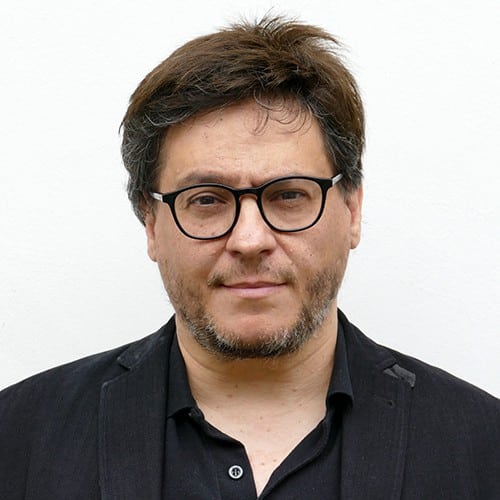
Katja Ørsnes Jansen serves as a Research Fellow at the Department of Nordic Studies and Linguistics within the Faculty of Humanities at the University of Copenhagen. Her institutional contact includes phone number +4535325633 and email kaoj@hum.ku.dk, with her office located at Emil Holms Kanal 2, 2300 København S. Her research spans core linguistic disciplines with Nordic specialization, including Scandinavian Philology and Language History. As a PhD fellow, she investigates sociolinguistic patterns and dialectological variations across Nordic regions, contributing to the department's focus on historical and contemporary language evolution in Scandinavian contexts. This work integrates philological methods with modern sociolinguistic frameworks to analyze cultural-linguistic intersections.
Patrizia Paggio serves as an Associate Professor and Senior Researcher within the Department of Nordic Studies and Linguistics at the University of Copenhagen's Faculty of Humanities, concurrently holding a full professorship at the University of Malta's Institute of Linguistics and Language Technology since September 2011. Her scholarly work centers on the intricate relationship between verbal and nonverbal communication modalities, with international recognition for advancing methodologies in multimodal analysis. Academic Background: PhD in Computational Linguistics from the University of Copenhagen (1997), dissertation: "The Treatment of Information Structure in Machine Translation" Professor Paggio's research program investigates how gestures, head movements, and other nonverbal cues interact with spoken language to construct meaning in natural communication. She has pioneered methodologies for constructing and analyzing multimodal corpora, while maintaining technical expertise in machine translation systems, grammar engineering, and content-based querying frameworks. Her theoretical work spans formal syntactic structures, discourse phenomena, information packaging, and ontological representations for linguistic data, consistently bridging computational methods with linguistic theory. Analysis of her recent publications (2020-2025) reveals a sustained focus on computational approaches to nonverbal communication, particularly the automatic detection and annotation of head movements and gestures in both physical and digital environments. Key contributions include the GEHM Zoom corpus for online interaction analysis, eye-tracking studies of emoji processing, and diachronic modeling of historical language change. Her work strategically integrates eye-tracking, corpus linguistics, and machine learning techniques, establishing her at the convergence of linguistic theory, cognitive science, and artificial intelligence applications. Professional Leadership: Coordinator of the international GEHM (Gestures and Head Movements in Language) research network Organizer of MULTIMODAL CORPORA 2018, 4th European/Nordic Symposium on Multimodal Communication, and LREC2022 Workshop on People in Vision, Language and the Mind
Ricard Solé is an ICREA Research Professor at the Catalan Institute for Research and Advanced Studies, based at Universitat Pompeu Fabra (UPF), where he leads the Complex Systems Lab within the Department of Experimental and Health Sciences. He is also External Professor at the Santa Fe Institute (USA), fellow of the European Centre for Living Technology (Italy), and external faculty at the Center for Evolution and Cancer at UCSF. He teaches undergraduate courses in Biomathematics, Biological Design, and Complex Diseases. Research Interests: Ricard Solé's work focuses on the emergence of complexity in biological systems. He investigates the evolutionary origins of major transitions—such as the rise of protocells, multicellularity, symbiosis, cognition, and language—through the lens of synthetic biology and mathematical modeling. He introduced the concept of 'synthetic major transitions' to simulate evolutionary innovations in the lab. Another key area involves unstable evolutionary dynamics in RNA viruses and cancer, where high mutation rates drive adaptation. He also explores 'terraforming' ecosystems to prevent catastrophic shifts, advocating for a multiscale synthesis across synthetic biology, ecology, and systems theory. The recent publications highlight his interdisciplinary approach, bridging virology, network theory, and evolutionary dynamics. His 2021 review on phase transitions in virology and 2018 paper on mutualistic networks as evolutionary spandrels reflect his focus on critical transitions and emergent structures in complex biological systems. Scientific Awards and Recognitions: ERC Advanced Grant (2012) Fellow, European Centre for Living Technology Advising and Grants: While specific students are not listed, Ricard Solé leads a research lab and likely mentors graduate students and postdoctoral researchers. His research is supported by major grants, including funding from the European Research Council and Fundación Botin, enabling long-term, high-risk theoretical and experimental work in synthetic and evolutionary systems. Labs and Teams: He heads the Complex Systems Lab at the PRBB in Barcelona, fostering interdisciplinary research at the intersection of physics, biology, and computation.
Sandra Greiner is an Assistant Professor in the Department of Mathematics and Computer Science at the University of Southern Denmark (SDU), where she conducts research in artificial intelligence, cybersecurity, and programming languages. Her work is centered on improving the reliability and adaptability of control software in cyber-physical production systems through advanced software engineering techniques. Her research interests include software variability modeling , design by contract , and the application of generative AI in automating software development tasks. She focuses on ensuring high reliability in software-intensive systems, particularly in industrial automation contexts. Her work bridges theoretical computer science with practical software engineering challenges. The recent publications highlight a strong trend in leveraging AI for software contract generation, enhancing feature tracing with reliable knowledge, and managing variability in complex production systems. Her research contributes to model-driven engineering, software product lines, and intelligent software assistance, with a consistent emphasis on empirical validation through case studies. Sandra actively collaborates with researchers across Europe, particularly in Austria and Germany, contributing to top-tier conferences such as SPLC, MODELS, and GPCE. Her work has been published in high-impact journals and conference proceedings, reflecting active engagement in the global software engineering community. She is affiliated with the IMADA research center at SDU, as evidenced by her institutional email. No formal awards or fellowships are mentioned in the provided data. Sandra advises no publicly listed students, and there is no indication of lab leadership or team management in the text. However, her collaborative publications suggest participation in research teams focused on software product lines and AI-driven software engineering.
Morten Rievers Heiberg serves as Professor at the Department of English, Germanic and Romance Studies within the Faculty of Humanities at the University of Copenhagen. His academic home is located at Emil Holms Kanal 6, Copenhagen S, where he conducts research and teaching primarily focused on Spanish and international history. He has held various leadership positions including Deputy Head of Department (Head of Research) since 2019 and previously served as PhD Coordinator (2019-2021). His educational background includes a dr.phil. (2013), PhD in Humanities (2002), and an M.A. in Romance Languages (Spanish and Italian) from the University of Copenhagen (1997). His academic career demonstrates steady progression from PhD student (1998) through postdoctoral positions to his current professorship. Professor Heiberg's research primarily centers on Spanish History, International History, International Relations, and International diplomacy, with additional expertise in security policy, war history, and Italian history and politics. His work often examines the intersection of historical events with contemporary international relations, particularly focusing on Spain's diplomatic engagements and foreign policy decisions. His research methodology combines historical analysis with political science frameworks to understand state behavior in international contexts, especially regarding smaller states navigating complex international systems. His publication record shows a clear trajectory toward increasingly sophisticated analyses of Spain's international positioning, with particular emphasis on the post-Franco era and the Zapatero administration. The recurring themes across his work include the dynamics of weak states in international relations, multilateral diplomacy, and security policy evolution. His most recent project on foreign fighters represents an expansion of his research interests into contemporary security challenges with historical roots. HM Dronning Margrethe II's Videnskabspris (2018) Professor Heiberg currently leads externally funded research projects including 'Foreign Fighters: Past, Present and Future' (funded by the Carlsberg Foundation with DKK 2,600,000) and 'The Book of Books. Hernando Colón's Libro de Epítomes' (co-PI with Professor Matthew Driscoll, also funded by the Carlsberg Foundation). His research network spans multiple countries as indicated by his international collaborations. He has served on various committees including the Research Committee of the Royal Danish Society for Letters and Science and the Board of the Danish Academy in Rome.
Fanar Haddad is an Assistant Professor (Tenure Track) at the University of Copenhagen's Department of Cross-Cultural and Regional Studies, within the Faculty of Humanities. His research focuses on Iraqi politics, sectarianism, and post-2003 state formation. He contributes to HUM:Global initiatives, exploring global phenomena through interdisciplinary humanities approaches. His work examines identity politics, militia dynamics, and governance challenges in conflict-affected states. Research interests include the transformation of sectarian identities, the role of armed groups in state structures, and the interplay between nationalism and communalism in the Middle East. He investigates how historical narratives shape contemporary political struggles and how post-conflict societies navigate hybrid power systems. He is part of the Professional Project Group (PPG) coordinating HUM:Global programs, ensuring broad disciplinary inclusion across departments like Cultural Studies, Communication, and the Saxo Institute. His work bridges academic analysis with policy-relevant insights on global challenges. Labs/Teams: Active in the Department of Cross-Cultural and Regional Studies and HUM:Global's interdisciplinary research network.
Davide Mottin is an Associate Professor at the Department of Computer Science, Aarhus University. His primary research focuses on graph theory, machine learning, and data mining, with significant contributions to knowledge graphs, algorithm design, and interdisciplinary applications in drug discovery and material science. He holds a leadership role in large international conferences such as CIKM 2024 as a Program Chair. His research explores scalable graph algorithms (e.g., subgraph matching, alignment), robust knowledge graph cleaning, and leveraging large language models for scientific tasks. Mottin has pioneered work on spectral methods for graph analysis (e.g., NetLSD, VERSE embeddings) and developed frameworks for interactive data exploration (e.g., X2Q, MetaExp systems). Key contributions include FUGAL for graph alignment and Ucode for community detection Active in reproducibility efforts, as seen in retraction notices and algorithmic redesigns Focus on practical applications in drug discovery via evolution-based models (EvolMPNN) He has authored over 60 peer-reviewed publications and holds grants supporting interdisciplinary research at the intersection of computer science and life sciences. Mottin is affiliated with the university's AI and data science initiatives, contributing to both theoretical advancements and real-world system implementations.
Mircea Lungu is an Associate Professor in Software Engineering at the IT University of Copenhagen. His research focuses on software ecosystems, software architecture, technical debt management, and immersive technologies for software development. He actively contributes to academia through publications, projects, and teaching. Affiliation: IT University of Copenhagen Academic Rank: Associate Professor Research Interests: Mircea explores the intersection of software engineering and virtual reality through projects like Immersive Software Archaeology , which leverages 3D environments for legacy system analysis. His work also addresses educational paradigms in software engineering, emphasizing live systems and experiential learning. Project Highlights: He leads the HPL-PATHS initiative (2023–2026) on hyper-personalized language education and collaborates on the ISA project (2020–2024) for virtual reality-based software exploration. Publication Trends: Recent work combines virtual reality with software engineering challenges, including collaborative exploration tools, technical debt visualization, and immersive analytics. His academic output spans conference proceedings, journal articles, and systematic reviews. Contact: Email: mlun@itu.dk
Johan Heinsen is a Professor at the Department of Politics and Society, Faculty of Social Sciences and Humanities, Aalborg University. His research focuses on coercion, convict labor, and colonial history, particularly within the Danish Atlantic world context. Current projects: 'Run Away: Coercion and autonomy, c. 1800' (PI), 'Empire in Disarray' (Project Coordinator) Key datasets: Carceral Copenhagen, Interrogations of runaway convicts, Aalborg Adresseavis Online He leads the History Research Group at the Centre for the Study of Coercion and Accountability, and contributes to the MASSHINE MIX research center. His work intersects with UN Sustainable Development Goals through historical analysis of penal systems and labor practices. Recent publications analyze coercive networks in Copenhagen and develop dynamic historical dataset frameworks. He has received four major awards, including the Atlantic Studies Early Career Essay Prize and educational honors. Scientific awards: Årets historiske forskningsresultat (2018) Årets underviser (2020) Det Obelske Familiefonds Undervisningspris (2019) Atlantic Studies Early Career Essay Prize (2017) Heinsen actively presents at conferences on topics ranging from prison systems to maritime colonial networks, and contributes to public history initiatives through media appearances and digital archiving projects.
Peter Dalgaard is a Professor at the Center for Statistics, affiliated with the Department of Finance at Copenhagen Business School (CBS). He holds editorial roles, including co-editor of the Scandinavian Journal of Statistics (2015–2018) and membership in the editorial board of the R Journal. His research focuses on statistical computing, biostatistics, medical data analysis, and R programming. Notable contributions include developing the R package 'pwr' for power analysis and co-authoring textbooks on statistical methods in healthcare and R programming. His publications span medical research, statistical methodology, software development, and econometrics. He has collaborated on studies involving chemotherapy side effects, migraine mechanisms, diabetes complications, and financial modeling. His work emphasizes rigorous statistical techniques and open-source tools for reproducible research. Professional activities include serving on academic assessment committees, such as for an associate professor position at Syddansk Universitet (2018–2019). His contributions to the R ecosystem highlight his role in bridging statistical theory with practical applications.
Jens Pedersen is an Assistant Professor at the Aarhus School of Architecture , affiliated with the Research Laboratory 2: Technology, Building Cultures and Settlement . His work focuses on robotic fabrication, timber construction, and computational design. Education : Master of Architecture (2012-2014) MSc in Associative Hydrological Urban Metabolism (2010-2011) Research Interests : Dr. Pedersen explores the intersection of digital fabrication and sustainable construction. Key areas include parametric timber design, robotic automation in architecture, and computational material management. His work emphasizes practical applications of emerging technologies in built environments. Projects : ParaWood (2019-2023): A PhD project on on-site parametric timber construction Regenerative Construction (2025-2026): Investigating paradigm shifts in sustainable building practices Professional Activities : He has presented at international venues such as the Advances in Architectural Geometry conference (2018) and organized workshops on architectural geometry. Recent lectures include topics like 'Frameworks for On-site Robotic Timber Fabrication' (2022). Labs/Teams : Active contributor to the Research Laboratory 2, focusing on technology integration in building cultures and settlement patterns.
Morten Baarvig Thomsen is a PhD Fellow in History at the Department of Culture and Language, University of Southern Denmark, specializing in Danish and global refugee migration history. His research focuses on Allied Displaced Persons in Denmark (1945-1953), refugee agency, and systemic development of care networks during post-war reconstruction. PhD in History (2024-2027): University of Southern Denmark Master's in History and English (2021-2023): University of Southern Denmark Bachelor's in History and English (2018-2021): University of Southern Denmark His research spans social history, gender theory, and political history, with a focus on refugee camps, displaced persons, and liberation narratives. He applies interdisciplinary frameworks including street-level bureaucracy and gendered discourse analysis. Recent publications address Soviet refugees in 1945 Denmark, gender dynamics in Holocaust memory, and institutional development of post-war refugee systems. His work bridges cultural representations with systemic analysis of humanitarian practices. Thomsen actively engages public discourse through media contributions and conference presentations on refugee history, delivering guest lectures on Danish post-war refugee care and participating in seminars about minority histories.
Vibeke A Pedersen serves as a Guest Lecturer in the Department of Nordic Studies and Linguistics at the University of Copenhagen. Her academic career is grounded in extensive research on Danish literary history spanning medieval, renaissance, and baroque periods, with particular expertise in folk ballads and metrics. Her research interests encompass Medieval Literature, Renaissance Literature, Baroque Literature, Folk Ballads, Danish Literature of the 1800s, Metrics and Metrical History, and Classical Ballet. Dr. Pedersen's scholarly work demonstrates a consistent focus on the evolution of Danish literary traditions, particularly examining how folk ballads transitioned into formal literature during the 19th century. Her publication record shows significant contributions to the field, primarily through book chapters in comprehensive works on Danish literary history. These publications reveal a methodical approach to analyzing literary forms across historical periods, with particular attention to the linguistic and structural elements of Danish poetry and prose. Dr. Pedersen has been actively engaged in academic discourse through numerous lectures and presentations between 2007-2009, focusing on Scandinavian literary traditions and collaborative research initiatives. Her work with Lund University indicates her commitment to international scholarly cooperation in Scandinavian studies. Her teaching supervision covers Medieval, Renaissance, and Baroque literature, Folk ballads and their afterlife in the 1800s, Metrics, and Ballet-related areas, reflecting the interdisciplinary nature of her expertise.
Guy Geffen serves as a Teaching Associate Professor in the Department of Cross-Cultural and Regional Studies at the University of Copenhagen, where he leads Hebrew language instruction at all levels for the Middle Eastern Languages and Societies program. Originally from Israel with Hebrew as his native language, he maintains an active academic profile in Copenhagen. His scholarly work centers on: Sociolinguistic dynamics of minority languages Technology integration in language pedagogy Language policy frameworks Political discourse in Israeli society Hebrew language evolution Professional experience includes prior teaching roles at Lund University and Vytautas Magnus University, alongside work as an ICT consultant, translator/interpreter, and mother-tongue instructor. His current responsibilities encompass courses ranging from Hebrew propaedeutics to advanced literary analysis and media studies within Middle Eastern contexts.
Kristian Kristiansen is an Affiliate Professor at the Section for Geogenetics within the Globe Institute at the University of Copenhagen. His research sits at the intersection of archaeology, genetics, and linguistics, focusing on European prehistory through the lens of ancient DNA analysis. He collaborates extensively with leading researchers in the field including Eske Willerslev and Guus Kroonen. His research interests center on archaeogenetics, with particular emphasis on population movements in prehistoric Europe, the spread of Indo-European languages, Neolithic demographic transitions, and the integration of archaeological and genetic data. His work has fundamentally reshaped our understanding of how ancient migrations influenced cultural and linguistic developments across Europe. He has pioneered approaches that combine archaeological theory with cutting-edge genomic techniques. Kristiansen's recent publications reveal a strong focus on the relationship between genetic ancestry and language spread, particularly regarding Germanic and Celtic languages. His work demonstrates how ancient DNA can illuminate major demographic transitions, including population replacements in Neolithic Denmark and the emergence of disease vulnerabilities in ancient populations. The interdisciplinary nature of his research spans archaeology, linguistics, population genetics, and evolutionary medicine. He was awarded the Annual Book Award (Scholarly) of the Society for American Archaeology in 2024, which received significant attention with coverage in 254 news outlets, mentions in 34 Wikipedia pages, and discussion across numerous social media platforms. As a leading figure in archaeogenetics, Kristiansen has established extensive international collaborations that bring together archaeologists, geneticists, linguists, and anthropologists. His work has generated substantial public interest, with his research being widely covered in both academic and popular media, demonstrating the broad impact of his interdisciplinary approach to understanding human prehistory.